Key Takeaways
- Only known planet to support life, with 71% of its surface covered in liquid water
- Located in the 'Goldilocks zone' - the perfect distance from the Sun for life
- Protected by a magnetic field that shields us from harmful solar radiation
Table of Contents

What is the Earth Made of?
The land mass of Earth is mostly made of 32% iron, 30% oxygen, 15% silicon, 14% magnesium, 3% sulfur and 2% nickel. The remaining 4% is made up of much smaller piles of calcium, aluminum, and other trace elements.
Why is There Life on Earth?
There are many factors that make life possible on Earth. These unique conditions work together to create and sustain the incredible diversity of life we see today.
Distance from the Sun
Earth's distance from the Sun makes the Earth a comfortable temperature for life to exist. Any closer to the Sun and it would be far too hot like Venus, and further away and it would be too cold like Mars. This perfect positioning places Earth in what scientists call the "habitable zone" or "Goldilocks zone."
Liquid Water
Water covers over 70% of the Earth's surface. Without liquid water on Earth, life simply would not exist. It's important to note liquid water specifically, because there is water on other planets such as Mars, but the water on Mars is restricted to its polar ice caps. For life to exist, there needs to be liquid water that can support biological processes.
Atmosphere and Magnetic Field
Earth's atmosphere is made mostly of nitrogen and oxygen (78% and 21% respectively). This combination of gases along with Earth's strong magnetic field protects us from all of the harmful rays from the Sun.
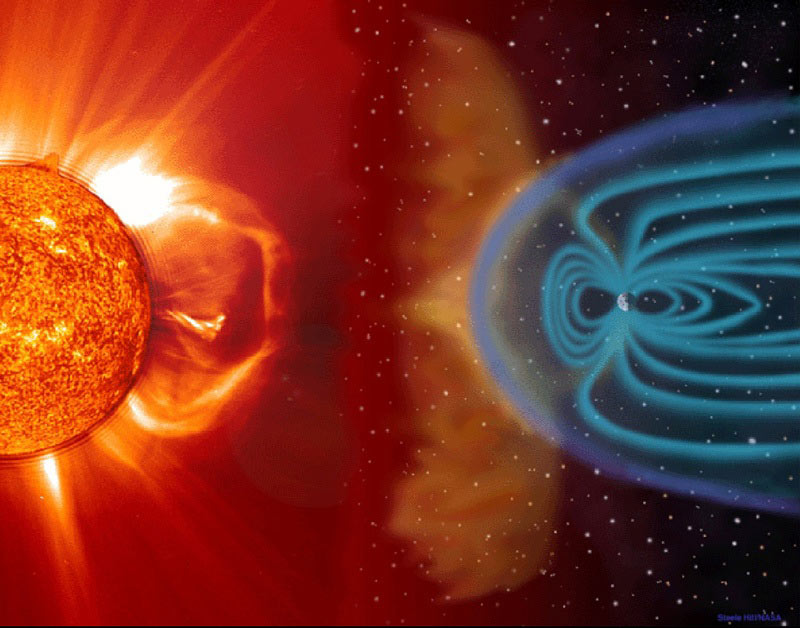
Earth's atmosphere acts as a heat shield during the daytime and a heat trap at night. Without it, the temperatures during the day and night would move between the extremes of hot and cold, making life very, very difficult.
Earth's atmosphere also provides us with air to breathe. Obviously, without air there would be no life on Earth.
All of these factors - distance from the Sun, liquid water, atmosphere composition, and magnetic protection - work together in perfect harmony to create the only known planet that supports life.
Earth's Moon plays a vital role in stabilising our planet's axial tilt, driving ocean tides, and influencing life on Earth. Understanding the lunar cycle — from New Moon to Full Moon and back — is one of the most rewarding things a beginner astronomer can learn.