~100mi SW San Diego
VFA-41 Black Aces
USS Nimitz (CVN-68)
27 April 2020
No Explanation Given
The USS Nimitz incident is widely regarded as the most credible and best-documented UAP encounter in history. Unlike many UFO reports, it involves multiple trained military observers, corroborating radar data from two independent platforms, and official thermal camera footage that the United States Department of Defense has authenticated.
When the New York Times broke the story in December 2017 — alongside the first public acknowledgement that the Pentagon had been running a classified UAP programme called AATIP — the Nimitz case was the centrepiece. It did more to shift mainstream conversation about UAPs than any event in the preceding sixty years.
The DoD has never offered an explanation for what the pilots encountered that morning. In congressional testimony, military and intelligence officials have confirmed that the performance characteristics of the object — instant acceleration, hypersonic speed, no visible propulsion — remain beyond anything the United States, or any known adversary, is capable of.
The USS Nimitz Strike Group
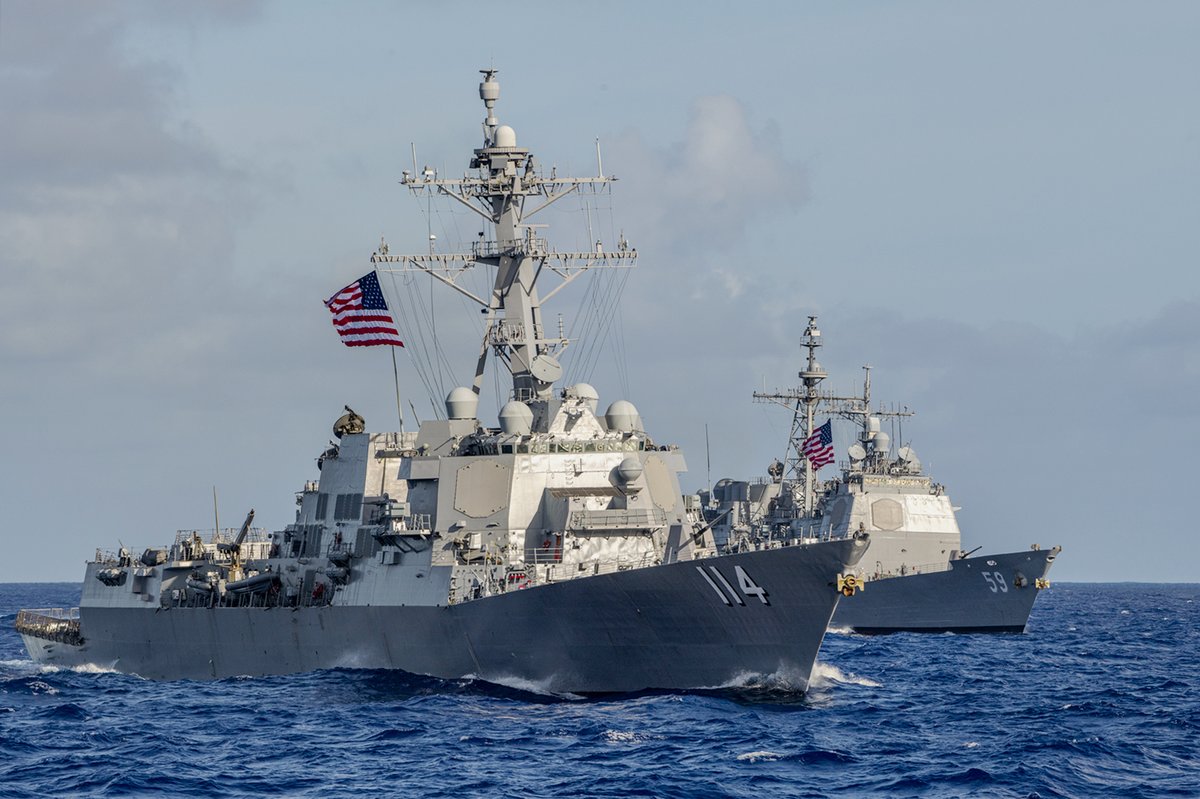
In November 2004, the USS Nimitz Carrier Strike Group was conducting routine pre-deployment training exercises in the Pacific Ocean, roughly 100 miles south-west of San Diego off the Baja California coast. The group included the aircraft carrier USS Nimitz (CVN-68) — at the time one of the most powerful warships in the world — along with the Ticonderoga-class guided-missile cruiser USS Princeton (CG-59), which carried the AN/SPY-1 radar system, one of the most capable air-search radars in the US Navy.
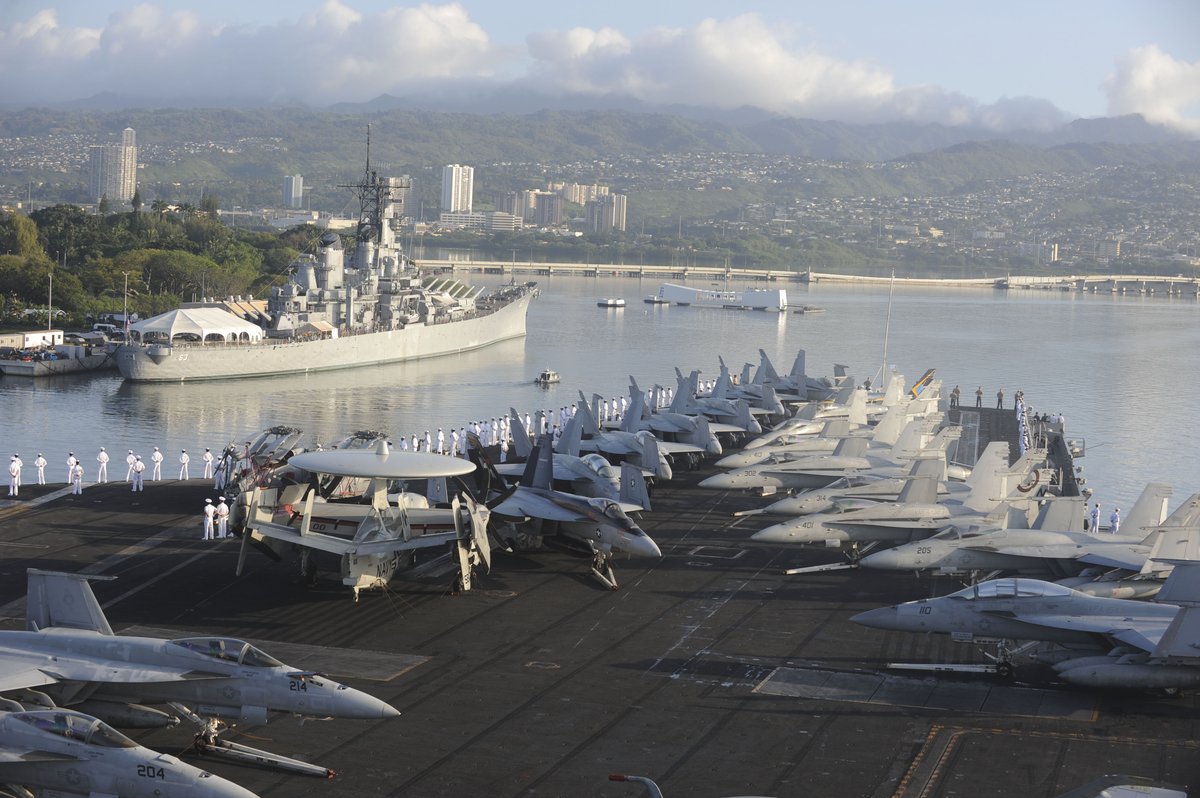
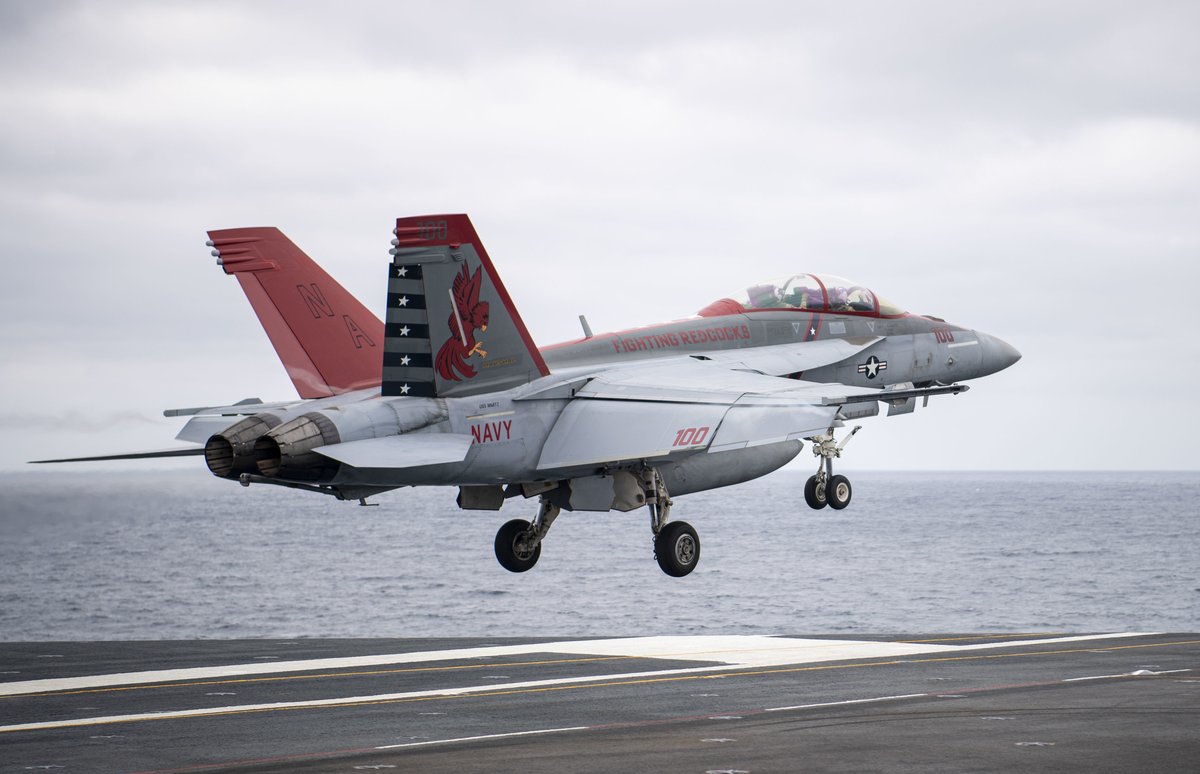
The Nimitz Strike Group was in the middle of an intensive training cycle. The pilots of VFA-41 "Black Aces" — the squadron from which Commander David Fravor and his wingman flew — were logging hours to maintain combat readiness ahead of their deployment to the Persian Gulf. Nobody was expecting to encounter anything unusual.
Two Weeks of Unexplained Radar Contacts
What most accounts of the Nimitz incident miss is that the famous 14 November intercept was not a one-off event. Senior Chief Petty Officer Kevin Day, an operations specialist and radar operator aboard USS Princeton, has stated publicly that the ship's AN/SPY-1 radar had been tracking anomalous objects for approximately two weeks before the intercept.
The objects were appearing consistently at extremely high altitude — around 80,000 feet, well above the operational ceiling of any aircraft the US Navy would routinely encounter. They would then descend rapidly to lower altitudes before disappearing from radar. Day described the radar returns as "solid" — not the kind of noise or artefact a radar technician might dismiss — and the objects appeared to be over a specific area of ocean, sometimes called the "cap point" or "CAP" by the pilots involved.
Day has said that he initially assumed the objects were birds or some kind of anomalous atmospheric effect, and that it took several days of repeated contacts before he started taking them seriously. He has also said that he warned the ships in the group about the objects but was not sure anyone knew what to make of the reports. Two weeks of data therefore pre-dated the intercept — and much of that data would later go missing.
The Intercept: 14 November 2004
On the morning of 14 November, USS Princeton directed two F/A-18F Super Hornets from VFA-41 to investigate the radar contacts. The aircraft were flown by Commander David Fravor and Lieutenant Commander Jim Slaight, each with a weapons systems officer in the rear seat. They were told to proceed to a location where the radar was showing a track, and to investigate.
When Fravor and his section arrived, they saw churning white water on the ocean surface — approximately 50 to 100 feet in diameter — as if something large were disturbing the sea from beneath. Hovering roughly 50 feet above this disturbance was a white, oblong, wingless object. Fravor has described it consistently as looking like a "40-foot Tic-Tac" — smooth, white, no visible control surfaces, no exhaust plume, no markings. It was moving erratically, darting left and right above the churned water.
"It had no wings. It had no rotors. There was no exhaust plume. It was just... a white object, roughly the size of my aircraft, and it was mimicking my movements. Whatever it was, it knew I was there."
— Commander David Fravor, USN (Ret.), VFA-41 Black AcesFravor descended in a left-hand circle to get a closer look, trying to cut off the object. As he spiralled down, the Tic-Tac mirrored his movements — ascending in a counter-clockwise arc. When he turned to intercept it directly, the object accelerated instantaneously toward him, then shot away at extreme speed. Fravor has described the acceleration as unlike anything he had ever seen in 18 years of fighter aviation. There was no build-up, no afterburner glow — it simply ceased to be where it was.
When Fravor returned to the carrier and reported what he had seen, a second section of F/A-18s was scrambled. One of those aircraft, flown by Lieutenant Commander Chad Underwood, was equipped with the AN/ASQ-228 Advanced Targeting Forward-Looking Infrared (ATFLIR) pod. Underwood acquired the object and recorded what would become the FLIR1 video — the most scrutinised UAP footage in history.
The Witnesses
What distinguishes the Nimitz case from most UAP reports is the number and calibre of the witnesses. These are not anonymous bystanders — they are career military officers and technical specialists trained to identify aircraft and assess threats.
Cmdr. David Fravor
Primary visual witness to the Tic-Tac. 18 years of naval aviation, including combat deployments. Has given extensive interviews to the NYT, 60 Minutes, Joe Rogan, and Congress. His account has been entirely consistent for two decades.
Lt. Cmdr. Jim Slaight
Fravor's wingman during the intercept. Also observed the object visually. Has corroborated Fravor's account. Less publicly prominent but has confirmed the encounter to investigators and journalists.
Lt. Cmdr. Chad Underwood
Flew the follow-on mission with the ATFLIR targeting pod. Recorded the FLIR1 footage. Publicly identified himself in 2019 and confirmed the video is authentic. Said the object's behaviour was "not normal."
Sr. Chief Kevin Day
Tracked the anomalous objects on SPY-1 radar for approximately two weeks before the intercept. Has spoken publicly about the radar data, the frequency of the contacts, and the missing hard drives.
Petty Officer Gary Voorhis
Recalibrated the Princeton's radar three times because operators thought it must be malfunctioning — the contacts were so unusual. Has publicly stated the radar was fully functional and the targets were real.
Petty Officer Patrick "P.J." Hughes
Has said that shortly after the incident, unknown men arrived on the Nimitz and confiscated hard drives containing the radar data. He was told not to discuss what had happened. The identity of those men has never been established.
The FLIR1 Video
The FLIR1 video is 1 minute 16 seconds of black-and-white thermal camera footage recorded by Lt. Cmdr. Chad Underwood's ATFLIR pod. It shows an oblong object tracked against a grey sky. The camera operator — Underwood's weapons systems officer — can be heard saying "There's a whole fleet of them, look on the SA" (Situation Awareness display), and "Oh my gosh." The object rotates on its axis, maintains a consistent infrared signature, and at the end of the clip suddenly accelerates out of frame.
The video had been in circulation in UAP research circles for years before its official release. In December 2017, the New York Times published it alongside the story of the Pentagon's Advanced Aerospace Threat Identification Programme (AATIP). On 27 April 2020, the DoD formally released FLIR1 — along with two other Navy videos, GIMBAL and GoFast — stating that the decision was made to "clear up any misconceptions by the public on whether or not the footage that has been circulating was real."
In that same statement, the DoD confirmed the footage "does not reveal any sensitive capabilities or systems, and does not impinge on any subsequent investigations of military air space incursions by unidentified aerial phenomena." Crucially, the department did not identify what the objects were.
"I can tell you that I have never seen anything in my life, in my aviation career, that behaved in the extraordinary ways this object did. If it's not ours, and it's not a foreign adversary's... then what is it?"
— Lt. Cmdr. Chad Underwood, USN (Ret.), pilot who recorded FLIR1Performance Characteristics: Beyond Known Physics
The most remarkable aspect of the Nimitz encounter is not the footage itself — it is what the witnesses and radar data describe the object doing. Taken together, these reported capabilities represent a performance envelope that no known aircraft, whether US, Russian, or Chinese, can match. Aerospace engineers and defence analysts who have reviewed the case publicly have struggled to offer any conventional explanation.
Reported Performance Characteristics — No Known Aircraft Can Match These
- Instant acceleration from a hover to hypersonic speed with no observable propulsion or exhaust
- Descent from ~80,000 ft to sea level in seconds — well beyond any known aircraft's dive capability
- No visible propulsion system — no jet exhaust, rotor wash, rocket plume, or aerodynamic control surfaces
- Hovering with no aerodynamic lift apparent — no wings, rotors, or downwash
- Radar cross-section inconsistency — highly visible on SPY-1 radar but seemingly undetectable to some sensors
- Appeared at Fravor's CAP point after the first intercept — as if it tracked the pilots back to their holding position
- Observed continuously for two weeks in the same general area of ocean with no apparent fuel requirement
- Mirrored Fravor's banking manoeuvre in real time, suggesting some form of awareness of the approaching jet
It is worth noting what these characteristics rule out. They rule out all known conventional aircraft. They rule out balloons and weather phenomena. The radar data rules out sensor malfunction — the Princeton's SPY-1 is one of the most reliable air-search radars in existence, and it was recalibrated multiple times before the incident. The consistency of accounts from multiple independent witnesses, across two different ship platforms and four different aircraft, rules out individual misidentification.
The Missing Data
Perhaps the most disturbing aspect of the Nimitz case is what happened afterwards. Multiple witnesses have testified that hard drives containing radar data from USS Princeton were confiscated by unknown individuals shortly after the incident. Petty Officer Patrick Hughes has described two men arriving in plain clothes — not in uniform, not officially identified — who removed the hard drives and told the crew not to discuss what had happened.
Gary Voorhis, the radar technician aboard Princeton, has said that data tapes from the ship's Combat Engagement Centre were also taken. Kevin Day has said that his own logs and records from the two-week tracking period seem to have been removed or are no longer accessible. The FLIR1 video itself was apparently circulating on a classified server aboard Nimitz, and Fravor has said that a copy was made and kept private before any official action was taken — which is likely why it survived.
Who ordered the seizure of the data? This remains unknown. The men who arrived on the ship have never been officially identified. No official explanation for the data removal has ever been provided. Luis Elizondo, the former head of AATIP, has said that this kind of post-incident data seizure was not uncommon in cases that AATIP investigated.
Evidence Summary
The Road to Official Acknowledgement
The Nimitz case sat in near-obscurity for over a decade. Fravor reportedly discussed the encounter informally with colleagues, but it was not widely known outside military circles. The breakthrough came through a combination of the Freedom of Information Act and the work of journalists and UAP researchers who had been quietly gathering testimony from ex-military witnesses.
The Encounter
November 14: Fravor and Slaight intercept the Tic-Tac. Underwood records FLIR1. Princeton radar data is confiscated by unknown individuals within days.
AATIP Begins
The Pentagon's Advanced Aerospace Threat Identification Programme launches under Luis Elizondo. The Nimitz case becomes one of its primary subjects of investigation.
AATIP Defunded
The programme loses its dedicated funding, though Elizondo says work continued informally. Classified reports on the Nimitz and other cases remain in the system.
New York Times Story
December 16: The NYT publishes its landmark story on AATIP. FLIR1 is released publicly for the first time alongside the article. The Nimitz case becomes global news overnight.
Navy Acknowledges UAPs
The US Navy formally updates its guidelines for pilots to report UAP encounters, and a spokesperson confirms that the objects in the three videos remain unidentified.
DoD Official Release
April 27: The Department of Defense officially releases FLIR1, GIMBAL, and GoFast videos, confirming their authenticity and stating the objects remain unidentified.
Congressional Hearings
The Nimitz incident is cited in multiple Congressional UAP hearings. Witnesses including David Fravor testify before the House Armed Services Committee. Fravor tells Congress the object's capabilities exceeded anything in the US inventory.
Why the Nimitz Case Matters
The Nimitz incident is the cornerstone of the modern UAP conversation for a simple reason: it satisfies every criterion a serious investigator could ask for. The witnesses are credible, trained professionals with nothing to gain and careers to lose. The evidence is multi-sensor — radar, optical, infrared. The footage is authenticated by the government itself. The reported performance characteristics are extraordinary enough to defy conventional explanation, but they were observed by multiple people independently.
Before 2017, the mainstream assumption was that UAP reports were either hoaxes, misidentifications, or the domain of fringe enthusiasts. The Nimitz case made it impossible to maintain that position without wilfully ignoring the available evidence. It is also what prompted the US government to formally acknowledge, for the first time in decades, that unidentified objects are operating in restricted airspace — and that they do not know what they are.
David Fravor has said in interviews that he is not making any claims about the origin of what he saw. He is not saying it was alien. He is not saying it was a government black programme. He is saying only what he knows: that he saw something that moved in ways no aircraft he had ever encountered could move, that it appeared to be aware of his presence, and that he has never received an explanation. Twenty years on, neither has anyone else.
"I want to fly it. Whatever it is. The technology is so far beyond what we have — if it's ours, we've been keeping one hell of a secret."
— Commander David Fravor, interviewed on the Joe Rogan Experience, 2019The Ongoing Questions
Two decades after the encounter, the fundamental questions remain unanswered. The DoD has never identified the object. No government has claimed the technology. The individuals who confiscated the Princeton's radar data have never been identified. The two weeks of pre-intercept tracking data is gone. The object that appeared at Fravor's CAP point — seemingly having followed the aircraft back — is unexplained.
What the Nimitz case has done is change the conversation. It moved UAPs from the tabloid fringe to the pages of the New York Times and the floor of the US Congress. It gave other military witnesses the confidence to come forward. It led directly to the creation of the All-domain Anomaly Resolution Office (AARO) and legislative requirements for annual UAP reporting to Congress. Whether the Tic-Tac was an advanced adversary drone, a classified US technology, or something else entirely, its existence — and the government's inability or unwillingness to explain it — is now a matter of official record.