Our Solar System
One star, eight planets, hundreds of moons, and billions of smaller bodies: all bound together by gravity in a 4.6 billion year old family stretching billions of kilometres from the Sun to the edge of the Oort Cloud.
Our Star
The Sun contains 99.86% of all mass in the Solar System. Everything else, every planet, moon, comet, and asteroid, orbits this single G-type yellow dwarf star.
Planets of the Solar System
From the scorched rock of Mercury to the frozen blue giant Neptune: each planet is a world unto itself, with its own geology, atmosphere, moons, and mysteries. Where a planet sits relative to Earth's orbit also changes how it looks in a telescope: it's why Venus and Mercury show phases but Mars doesn't.
Browse all planet guides for size comparisons, facts and 2026 viewing dates, including the Moon and Pluto.
Mercury
The smallest planet and the fastest, completing an orbit in just 88 days. With virtually no atmosphere, surface temperatures swing from −180°C at night to 430°C by day: the widest range of any planet.
Venus
Almost identical to Earth in size, but a vision of hell beneath: the hottest planet in the Solar System at 465°C, with a crushing CO₂ atmosphere and sulphuric acid clouds. It rotates backwards, and slower than it orbits the Sun.
Earth
The only known world to harbour life: a blue marble of liquid water, oxygen-rich atmosphere, and a magnetic field that shields its surface from the worst of the Sun's radiation. Uniquely placed in the habitable zone.
The Moon
The most rewarding object in the entire night sky: craters, mountains and ancient lava seas visible through any binoculars, and a south pole both NASA and China are racing to reach. Every month's full moon carries its own traditional name.
Mars
A frozen desert world with the Solar System's largest volcano (Olympus Mons, three times the height of Everest) and a canyon system, Valles Marineris, wide enough to span the USA. Once had liquid water flowing on its surface.
Jupiter
More than twice as massive as all other planets combined. The Great Red Spot, a storm wider than Earth, has raged for at least 350 years. Jupiter's four Galilean moons, including ocean-harbouring Europa, are worlds in their own right.
Saturn
The jewel of the Solar System, wearing a ring system of ice and rock spanning 282,000 km. Saturn is so light it would float on water. Its moon Enceladus shoots geysers of liquid water into space, and Titan has a thick nitrogen atmosphere and liquid methane lakes.
Uranus
The oddest planet in the Solar System: tilted 98° on its side, so it rolls along its orbit like a spinning top on its side. Its blue-green colour comes from methane ice, and it holds the record for the coldest planetary atmosphere at −224°C.
Neptune
The most distant planet, never visible to the naked eye, and host to the fastest winds in the Solar System, reaching 2,100 km/h. Its largest moon Triton orbits backwards, almost certainly a captured Kuiper Belt Object, and is slowly spiralling inward to its doom.
Moons of the Solar System
More than 450 moons orbit the planets, and a few of them are stranger than the planets themselves. Our own Moon sits with the planets above. Here are some of the others, and our guide to the moons of the Solar System has the full set.
Io
The most volcanic world in the Solar System, with about 400 volcanoes kept erupting by Jupiter's tides.
Europa
A cracked shell of ice over a salty ocean that may hold twice as much water as all of Earth's oceans. Europa Clipper is on its way.
Ganymede
The largest moon in the Solar System, wider than Mercury, and the only moon known to make its own magnetic field.
Callisto
The most heavily cratered object known, with a surface that has barely changed in billions of years and very likely an ocean below.
Titan
Hazy orange air thicker than Earth's and seas of liquid methane. Huygens landed there in 2005 and Dragonfly is next.
Enceladus
Geysers at its south pole spray a hidden salty ocean into space, making it one of the best places to look for life.
Triton
Orbits Neptune backwards, probably a captured Kuiper Belt world, with nitrogen geysers seen by Voyager 2.
Dwarf Planets
The IAU defines a dwarf planet as a body that orbits the Sun and has sufficient mass for a roughly spherical shape, but has not cleared the neighbourhood around its orbit. Hundreds may exist, mostly in the Kuiper Belt.
Pluto
Loved and debated in equal measure. Reclassified from planet to dwarf planet by the IAU in 2006, Pluto is a complex, geologically active world with a nitrogen-ice heart, Tombaugh Regio, visible in the stunning New Horizons flyby images of 2015.
Eris
More massive than Pluto and the trigger for the 2006 IAU planet debate, Eris orbits in the scattered disc on a highly elliptical path taking 559 years to complete one revolution.
Ceres
The only dwarf planet in the inner Solar System, residing in the main asteroid belt between Mars and Jupiter. Visited by the Dawn spacecraft, which found mysterious bright spots of sodium carbonate in its craters.
Regions & Small Body Populations
Beyond the planets, the Solar System is shaped by vast regions of rocky and icy debris: remnants of formation that still influence planetary orbits and deliver comets and meteors to the inner system today.
The Asteroid Belt
A region of over a million rocky and metallic bodies, the largest of which is the dwarf planet Ceres, occupying the gap between the inner and outer Solar System. Far less dense than Hollywood would have you believe.
The Kuiper Belt
A vast disc of icy bodies beyond Neptune: the home of Pluto, Eris, Makemake, and Haumea, and the source of short-period comets like Halley's Comet. The New Horizons probe is currently travelling through this region.
The Oort Cloud
A theorised spherical shell of icy bodies surrounding the entire Solar System at enormous distance: the source of long-period comets. Its outer edge, about 1.6 light-years away, marks the true gravitational boundary of our solar neighbourhood.
Planet 9
A predicted planet of about six Earth masses far beyond the Kuiper Belt, invoked to explain why the most distant known objects have orbits that all point the same way. Is Planet Nine real, has it been found, and why the Rubin Observatory should settle it.
The Local Interstellar Cloud
The thin wisp of warm gas the Sun is drifting through, floating inside a 1,000 light-year bubble blown out by supernovae. Why it counts as a cloud, when we leave it, what the Voyagers found there, and the dense cloud that may have reached Earth two million years ago.
How the Solar System Formed
A brief primer on the origin and structure of our cosmic neighbourhood.
The Solar System formed approximately 4.6 billion years ago from the gravitational collapse of a giant molecular cloud: a vast region of gas and dust in the Milky Way. As the cloud collapsed, it spun faster and flattened into a protoplanetary disc around the young Sun. Over millions of years, dust grains collided and stuck together, growing into planetesimals and eventually into the planets we see today. The inner planets, rocky and dense, formed where it was too hot for volatile ices to survive. The outer planets, rich in hydrogen, helium, and ice, formed beyond the frost line, where those materials could condense.
The Solar System's structure is not entirely stable over billions of years. Planetary migrations early in its history, particularly Jupiter's inward and outward movement described by the Nice Model, dramatically reshaped the orbits of other planets and may have been responsible for the Late Heavy Bombardment, a period of intense cratering on the Moon and inner planets around 4 billion years ago. Today's configuration is relatively settled, but the gravitational dance between the outer planets continues to slowly influence the Solar System's long-term future.
What to use to explore the Solar System
Five planets are naked-eye objects. With binoculars or a small telescope, you can see Jupiter's moons, Saturn's rings, and Mars's polar caps. Here's where to start.
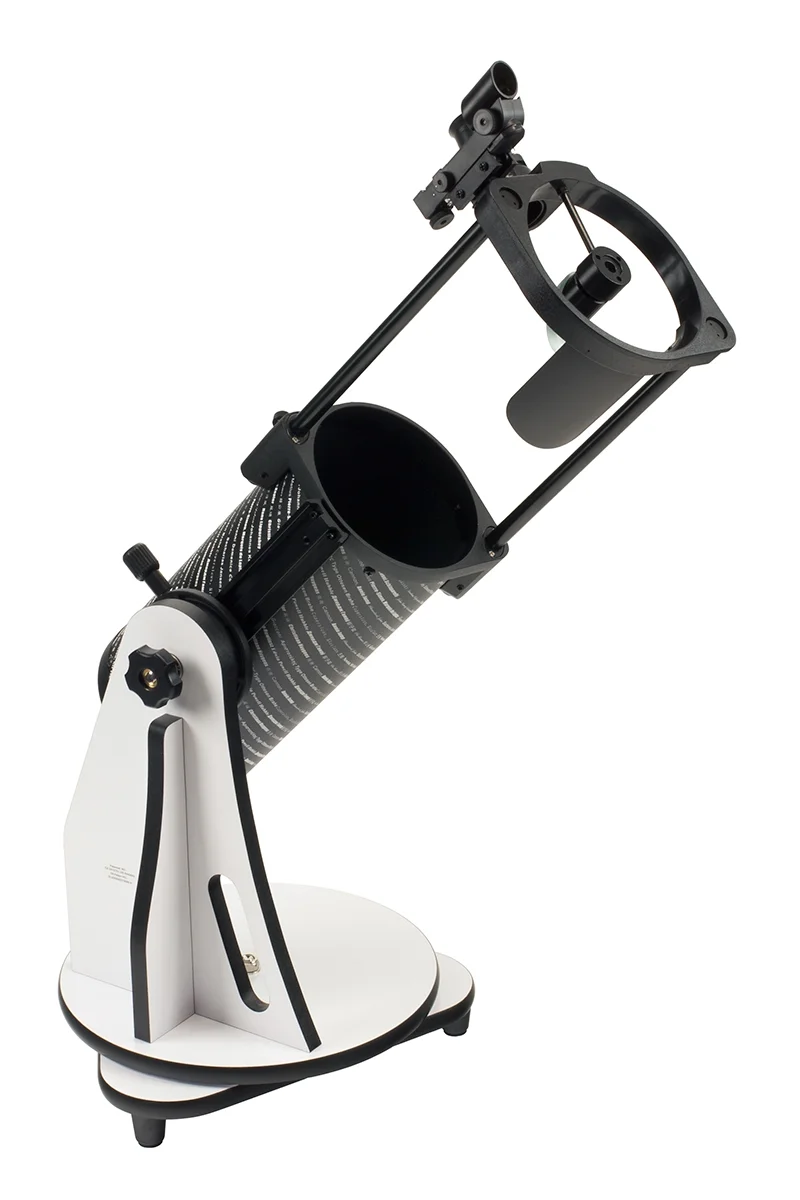
Shows Jupiter's cloud bands and four moons, Saturn's rings, the crescent of Venus, and Mars's polar caps at opposition. Compact enough to grab on a clear night without a lengthy setup.
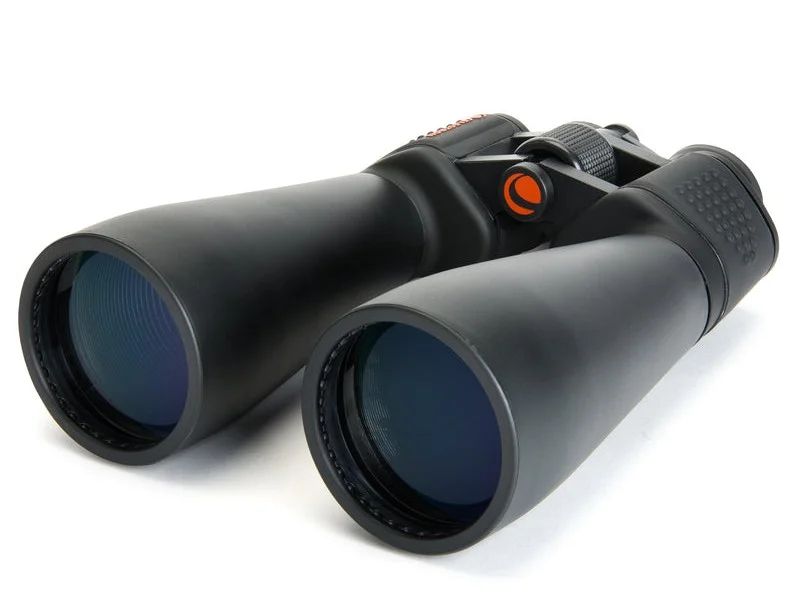
Jupiter's Galilean moons appear as tiny dots in a line. Venus shows a clear disc. Mars glows orange. All five naked-eye planets look distinctly different from stars, no twinkling. A great entry point before committing to a telescope.
Equipment guides
Telescopes, binoculars, mounts, cameras, and accessories: honest recommendations for every budget, from first purchase to serious upgrades.
Browse all →Affiliate links: you pay the same price, we earn a small commission that helps keep WatchTheStars free.
Affiliate disclosure: links to First Light Optics use our referral code. You pay the same price. We earn a small commission.