Key Takeaways
- A helium flow issue was discovered in the Interim Cryogenic Propulsion Stage (ICPS) on 21 February 2026, triggering a rollback to the Vehicle Assembly Building
- NASA completed a successful second wet dress rehearsal on 19 February — a positive sign before the new setback emerged
- NASA Administrator Jared Isaacman has officially ruled out a March 2026 launch
- The next available launch windows are April 1, 3, 4, 5, 6, and 30, 2026
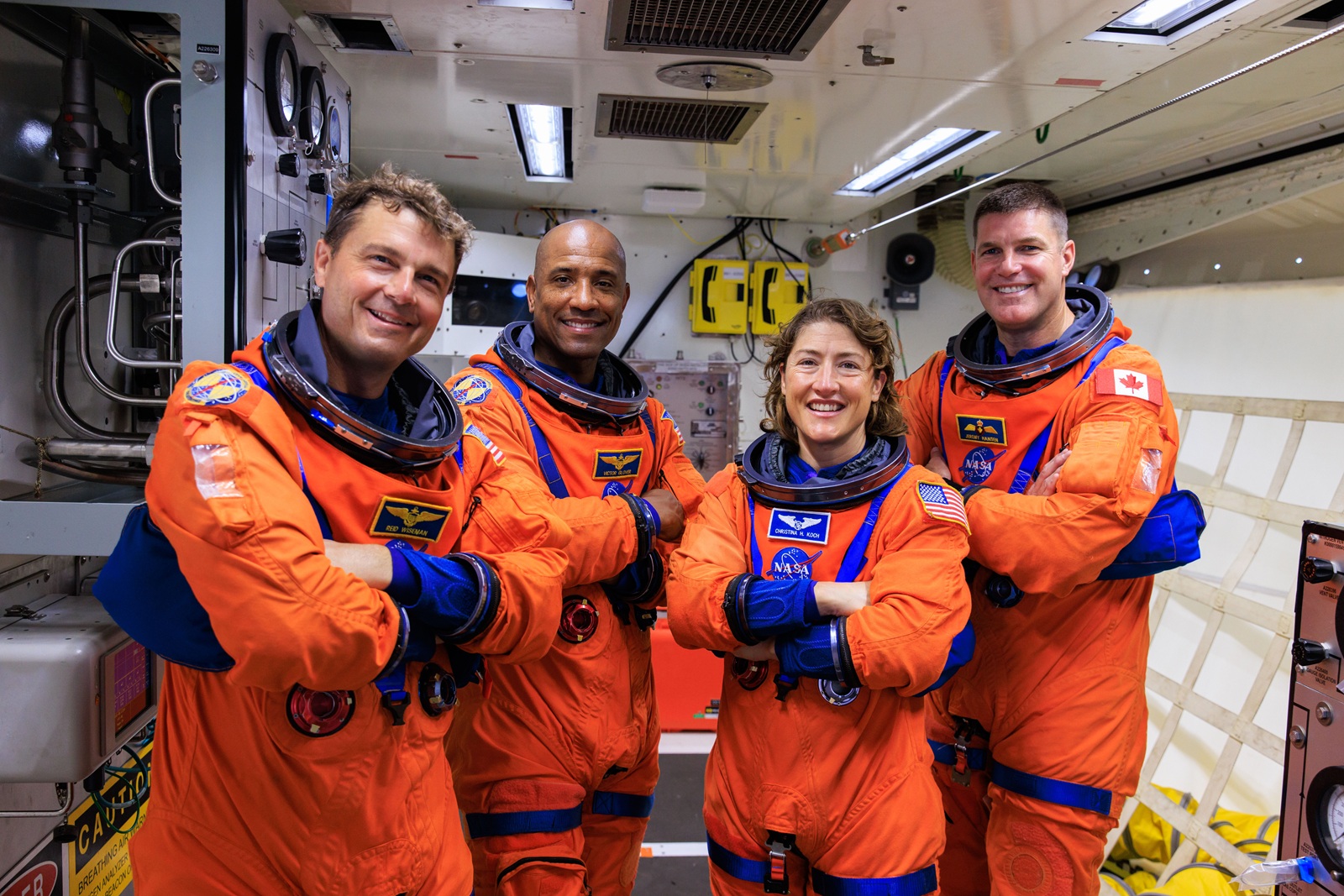
- The crew — Reid Wiseman, Victor Glover, Christina Koch, and Jeremy Hansen — were released from quarantine and returned to Houston
📑 Table of Contents
What Happened: The Helium Flow Issue Explained
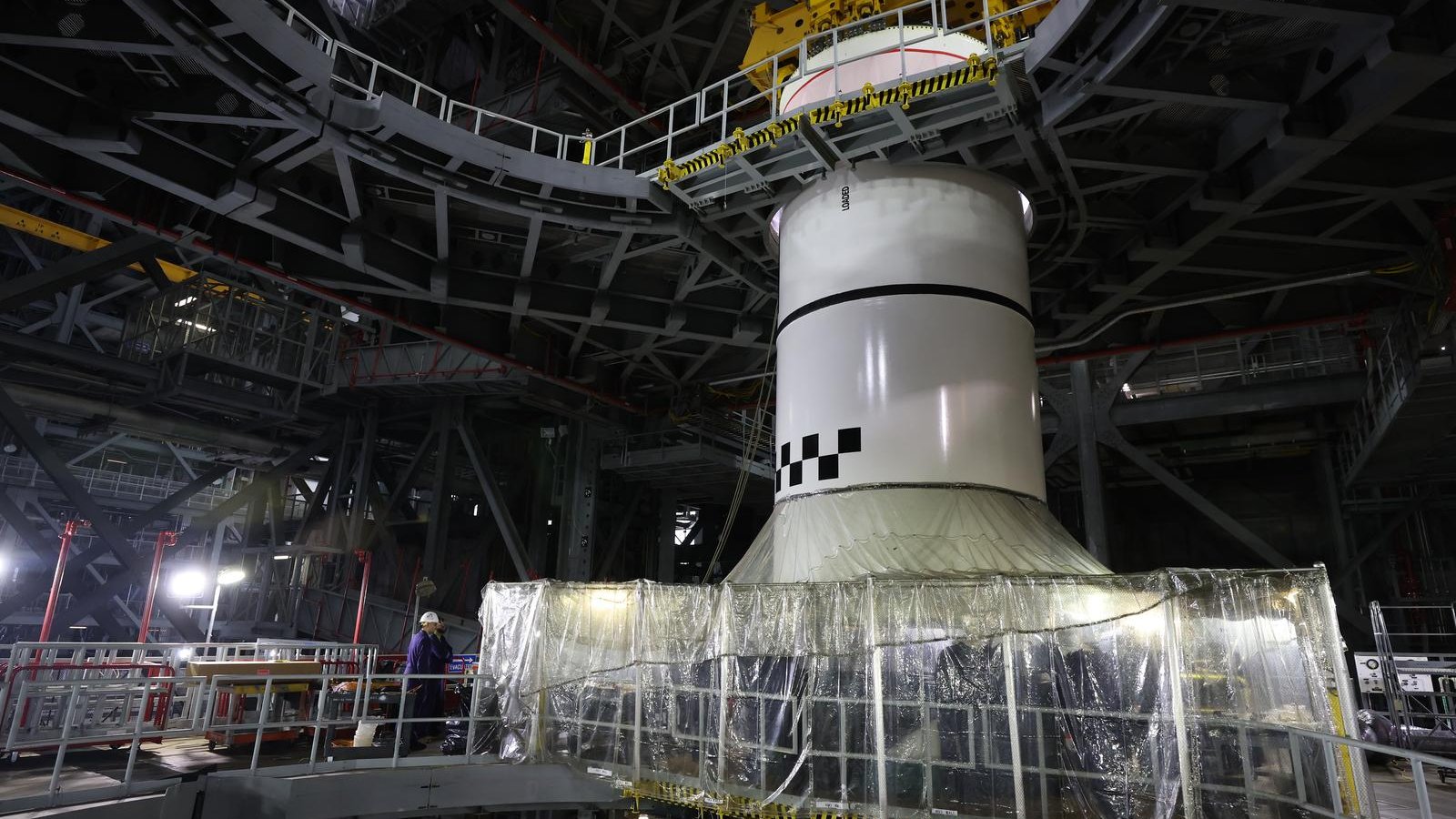
In the early hours of 21 February 2026, engineers monitoring NASA's Space Launch System (SLS) at Kennedy Space Centre in Florida detected an anomaly that would bring the Artemis II programme to yet another halt. The problem lies in the Interim Cryogenic Propulsion Stage (ICPS) — the upper stage of the SLS rocket responsible for pushing the Orion spacecraft from Earth orbit toward the Moon.
Specifically, engineers identified an issue with helium flow within the ICPS. Helium plays a critical role aboard rockets: it is used to pressurise propellant tanks and purge systems, keeping them operating safely at cryogenic temperatures. Any irregularity in helium flow can affect tank pressure during fuelling and ascent — something NASA cannot risk on a crewed mission.
The discovery triggered an immediate stand-down. NASA engineers and managers began reviewing data and planning next steps, which ultimately led to the decision to roll the rocket back to the Vehicle Assembly Building (VAB) for inspection and likely repairs. Weather around 22–23 February initially delayed the rollback, which is now targeting 25 February.
A Brief History of Artemis II Delays in 2026
It would be easy to feel frustrated by this latest setback — but it is worth putting it in context. Artemis II has faced a steady stream of technical challenges throughout early 2026:
- Early February 2026 — the first wet dress rehearsal was cut short when engineers detected a hydrogen leak in the tail service mast umbilical. Two seals were replaced and further analysis was sent to Stennis Space Centre in Mississippi.
- 19 February 2026 — a second wet dress rehearsal was conducted, and this time it went smoothly. The full fuelling sequence completed without incident — a genuine milestone.
- 21 February 2026 — less than 48 hours after that positive news, the helium flow anomaly was detected overnight, dashing hopes of a March launch attempt.
The pattern reflects the inherent complexity of crewed deep-space missions. The SLS and Orion combination is an extraordinarily sophisticated system, and NASA has made clear it will not place crew aboard the rocket until every technical concern has been properly resolved.
The Wet Dress Rehearsal: Some Good News
Amid the gloom, it is worth highlighting what went right. The second wet dress rehearsal on 19 February was considered a genuine success. A wet dress rehearsal involves fuelling the rocket with its full load of cryogenic propellants — liquid hydrogen and liquid oxygen — running through the full launch countdown sequence, and then safely detanking the vehicle. It is the closest simulation to an actual launch without leaving the ground.
The fact that this rehearsal completed without issue means that the core stage and its RS-25 engines, the launch mount systems, and the ground support infrastructure all performed correctly. The helium issue in the ICPS is a discrete, isolated problem — not a systemic failure across the entire vehicle.
That is an important distinction. If the second wet dress rehearsal had also failed, the outlook would be far grimmer. As it stands, the fundamental systems appear sound, and the current setback is — in theory — a containable one.
What the Rollback Means
Rolling SLS back to the VAB is not a trivial operation. The full rocket and mobile launcher stack weighs several thousand tonnes, and the journey on the crawler-transporter takes several hours at a maximum speed of about 0.8 miles per hour. Once inside the VAB, engineers will need to:
- Access the ICPS — which sits roughly 90 metres off the ground — to carry out a detailed inspection
- Diagnose the helium flow issue — determining whether this is a faulty component, a seal, a valve, or something in the pressurisation plumbing
- Carry out any necessary repairs or replacements
- Re-test the affected systems to confirm the fix before rolling back to the pad
The duration of this work is uncertain. It could take weeks. NASA has not yet publicly committed to a revised timeline, though NASA Administrator Jared Isaacman was unambiguous in confirming that a March launch is off the table. With NASA's safety-first culture, the agency will take whatever time is needed — and that is exactly how it should be.
The Crew: Standing Down Again
The four astronauts assigned to Artemis II have been living with these delays with remarkable composure. They had entered pre-launch quarantine in preparation for a potential February or early March launch attempt. Following the stand-down, all four were released from quarantine and returned to Houston:
- Reid Wiseman (Commander) — NASA astronaut, veteran of the International Space Station
- Victor Glover (Pilot) — NASA astronaut, who will become the first Black astronaut to reach the lunar vicinity
- Christina Koch (Mission Specialist) — NASA astronaut, who will become the first woman to travel beyond low Earth orbit
- Jeremy Hansen (Mission Specialist) — Canadian Space Agency astronaut, who will be the first Canadian to fly to the Moon
The crew have consistently spoken about the mission with patience and professionalism, understanding that their safety depends on the rocket being fully ready before they climb aboard. They continue training, sim sessions, and systems reviews in Houston as engineers work to resolve the helium issue.
When Will Artemis II Actually Launch?
With March ruled out, attention turns to April. NASA's trajectory and launch window analysis has identified the following available opportunities in April 2026:
- April 1, 3, 4, 5, 6 — a cluster of windows in the first week of the month
- April 30 — a single window at the end of the month
These windows exist because of the geometry between the Earth, Moon, and the SLS rocket's required trajectory — they occur when the orbital mechanics align to allow the trans-lunar injection burn to send Orion on the correct path around the Moon. Outside these windows, the mission cannot fly.
If the April 1–6 windows are missed — due to ongoing repairs, additional technical issues, or weather — the next opportunity is April 30. After that, May windows would need to be calculated and cleared. Each delay means more time the crew spends waiting and more pressure on the Artemis programme's schedule and budget.
Our Verdict: A Realistic Launch Date
Based on everything we know, here is an honest assessment of the Artemis II launch timeline.
Best-case scenario: April 1–6, 2026. If engineers can access the ICPS quickly, diagnose the helium flow problem as a straightforward component fault, repair or replace it within two to three weeks, and re-test successfully, there is a realistic path to the pad by mid-to-late March in time for an early April launch attempt. This would require everything going smoothly — something that has not come easily to Artemis II so far.
Most likely scenario: April 30 or early May 2026. The history of this programme suggests that timelines tend to slip rather than compress. Cryogenic upper stage repairs are technically demanding, and re-verification work is thorough. A repair campaign of three to four weeks — which would be quite optimistic — might just squeeze into early April, but the more realistic expectation is that the early windows will be missed. April 30 then becomes the primary target, with May as a fallback.
Pessimistic scenario: Summer 2026 or beyond. If the helium issue turns out to be more complex than a simple component swap — or if the inspection reveals additional concerns — there is no reason a further significant delay should be ruled out. NASA has shown throughout the Artemis programme that it will delay indefinitely rather than fly with known risk.
What seems almost certain is that 2026 will be the year Artemis II flies. The political and budgetary pressure is significant, the crew is ready, and the core systems have demonstrated they can pass a wet dress rehearsal. The question is simply which month.
For now, the world watches as the crawler-transporter begins its slow journey back to the VAB — and the four astronauts who should have been preparing for the Moon return to Houston for a few more weeks of patient waiting. When launch day finally comes, it will be worth every delay.
Sources:
- Artemis II Mission Overview — NASA
- NASA's Space Launch System — NASA
- All-domain Anomaly Resolution Office — U.S. Department of Defense
- Kennedy Space Centre Launch Schedule — NASA/KSC