Key takeaways
- Uranus reaches opposition on 25 November 2026 in Taurus: best viewing runs October through December.
- At magnitude +5.6 it's just at the naked-eye limit on a very dark night; binoculars show it clearly as a faint blue-green 'star'.
- Through a telescope at 150x or more it resolves into a tiny cyan disk, about 3.8 arcseconds across, featureless but distinctly non-stellar.
Jump to section 6 sections
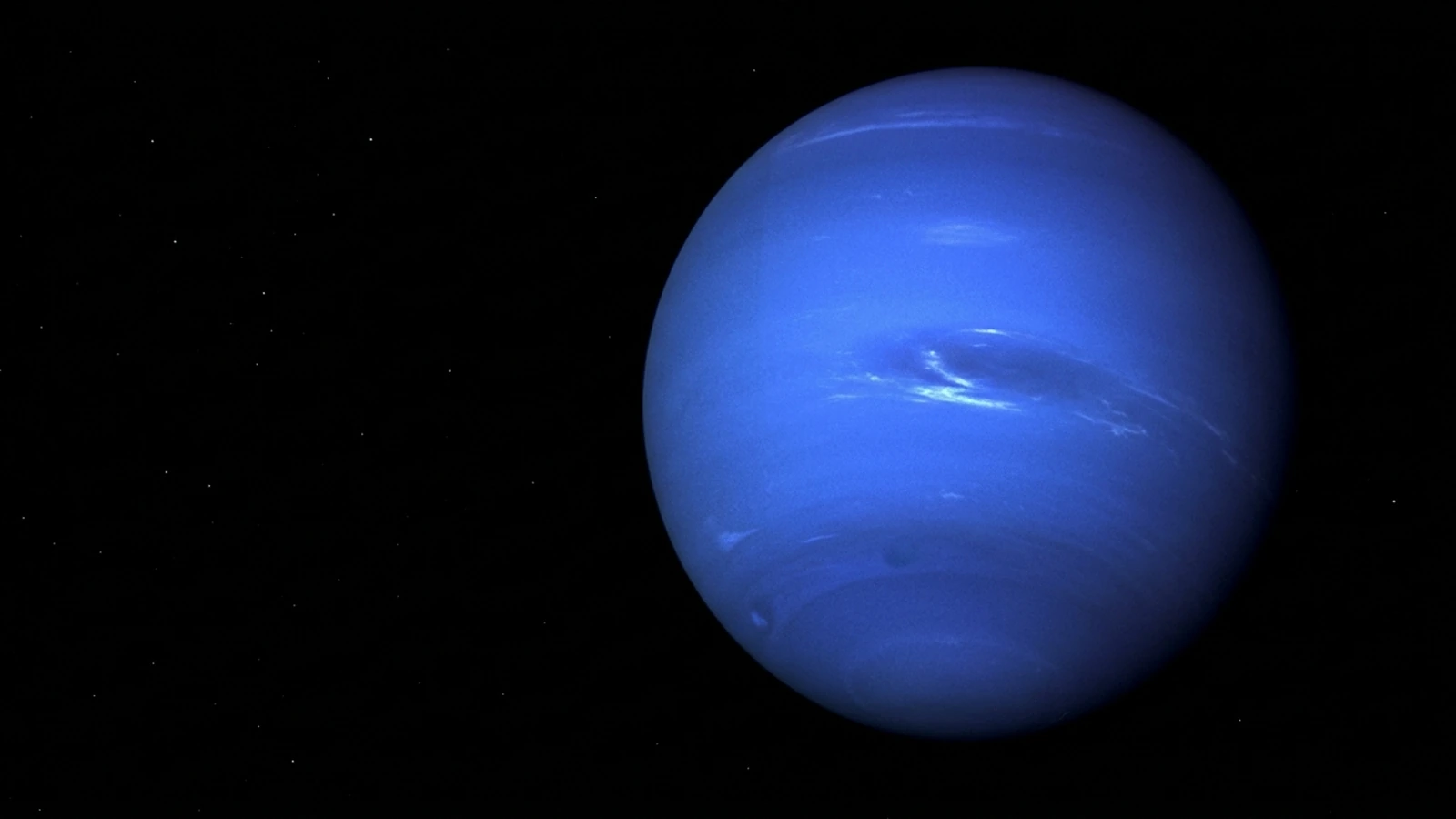
Uranus is a genuinely interesting challenge. At magnitude +5.6 it's just within naked-eye reach from a dark field, yet it looks exactly like a faint star: no rings, no obvious colour, nothing to set it apart until you put a telescope on it. When you do, you get a tiny cyan disk hanging in the eyepiece: unmistakably a world, unmistakably far away.
Opposition falls on 25 November 2026 in Taurus, not far from the Pleiades, making it one of the easier years to find. This guide walks you through when and how to look, what different telescopes will show you, and what to realistically expect.
When to See Uranus in 2026
Uranus orbits so slowly, once every 84 years, that it barely shifts across the sky from month to month. In 2026 it spends the entire year in Taurus, drifting gradually westward through the year, staying roughly 5 to 6 degrees south-east of the Pleiades cluster. That's useful: once you've found Uranus once, it's in roughly the same spot next time.
The headline date is opposition on 25 November 2026, when Earth passes between Uranus and the Sun. At that point Uranus sits about 18.4 AU (roughly 2.76 billion km) from Earth, shines at magnitude +5.6, and shows a disk 3.8 arcseconds across. It rises at sunset and is visible all night.
Here's how the year breaks down:
- January to mid-May: Uranus is in the evening sky in Taurus, sinking lower each week after dusk
- 22 May: Solar conjunction: Uranus passes behind the Sun and is unobservable
- Late June onwards: Back in the morning sky, climbing each week
- September: Rising before midnight, moving into convenient evening territory
- October to December: The prime season: opposition and its aftermath
How to Find Uranus
The main challenge with Uranus is that it looks just like a star. There's no ring, no obvious colour, no brightness that makes it stand out. You need to know exactly where to look.
Use a planetarium app
This is the simplest approach. Stellarium, SkySafari or Star Walk 2 all show Uranus's exact position. Point the phone at Taurus, zoom in until you can see stars down to about magnitude 7, and it's there with a label. Print or screenshot the view so you've got a chart to use at the eyepiece.
Star-hop from the Pleiades
The Pleiades, the compact, obvious cluster in Taurus, are your landmark. In 2026 Uranus sits roughly 5 to 6 degrees south-east of the cluster. Scan that area with binoculars while comparing against your chart: Uranus will be the object whose position matches the prediction but appears on no standard star chart, with a faint blue-green tint in the eyepiece.
Aldebaran (the bright orange eye of the Bull) and the V-shaped Hyades cluster give you additional reference points to triangulate from.
Confirm by motion
If you're not certain which "star" is Uranus, sketch or photograph the field and return two or three nights later. All the stars stay put; Uranus shifts very slightly westward. That movement, slow as it is, is definitive proof.
Use GoTo if you have it
Any GoTo mount will slew straight to Uranus. Enter the planet from the hand controller, let it track, then verify by the colour and position. It removes all the searching.
Month-by-Month Viewing Guide
January to mid-May
Uranus starts the year in the evening sky, already past its 2025 opposition and sinking. It's a valid target in January and February, low in the west after dark, but high enough for a look. By April it's dropping toward the horizon and difficult; by mid-May it's effectively gone in the evening glow.
22 May: Solar conjunction
Uranus passes behind the Sun. Nothing to do here but wait.
Late June
Uranus re-emerges in the morning sky, very low in the east before sunrise. The elevation is poor and the views are compromised by atmosphere. Worth noting, but not worth a special session.
July
A genuine morning target now, rising a couple of hours before the Sun and getting higher each week. At 100x the blue-green colour is visible and the disk is just beginning to be distinguishable from a stellar point. Mars and Uranus are in close conjunction in early July, an interesting pairing in binoculars.
August
Rising before midnight by month's end. Uranus is now a practical observing target: high enough in the pre-dawn sky to see the colour well and to resolve the disk cleanly at 150x or more. A good month to start a regular run.
September
Uranus is transitioning to an evening object, rising in late evening and well placed for observation from midnight onwards. Magnitude is +5.7 and brightening. This is a good time to get familiar with the field before the opposition rush.
October
Prime season begins. Uranus rises in early evening, climbs well above the horizon by midnight, and the magnitude has reached +5.6. At 150 to 200x the disk is a clean cyan oval, clearly distinguishable from the stars around it. Use the Pleiades to locate it and then bump up the magnification.
November: opposition month
25 November is the best night of the year. Uranus is up all night, rises at sunset, and is at its closest and brightest. The disk measures 3.8 arcseconds, which sounds small but is enough to show a clear non-stellar shape at 150x and a definite disk at 250x.
Through binoculars: a faint blue-green point, obvious once located. Through a small telescope at 100x: the colour is unmistakable and the object looks distinctly "soft" compared to the sharper stars around it. At 150 to 200x it's clearly planetary. Push to 250x or 300x on a steady night and it's a small blue-green ball, uniformly lit, with no surface detail, but satisfying in the way all distant things are.
Moon hunting is possible for those with a 10-inch or larger scope. Titania and Oberon sit at magnitude 13.7 and 13.9 and appear as faint points close to the planet on a very dark, steady night. You'll need a detailed finder chart of expected moon positions from Stellarium or Sky & Telescope.
December
Post-opposition, Uranus is still excellent. It's up from dusk and well placed throughout the evening. The disk is marginally smaller now as Earth pulls away, but the views are still the best of the year. December often brings cold, still nights in the UK, good seeing conditions.
What You Can See
With the naked eye
Possible, but only from a genuinely dark site with good transparency and knowing exactly where to look. Even then it appears as an extremely faint, unremarkable point: no colour, no motion visible in a single session. The challenge is part of the appeal: William Herschel was the first person to recognise it as a planet (1781), having initially thought it was a comet.
With binoculars (7x50 or 10x50)
This is the recommended starting point. Uranus shows up clearly as a faint "star" once you've identified the right field. The blue-green colour is just visible: you're looking for something slightly cooler in tone than the white and yellowish stars around it. It's a genuine binocular object, especially from October through December.
With a small telescope (60–90mm)
At 50 to 100x the colour becomes obvious. At 100 to 150x Uranus looks noticeably non-stellar: it doesn't snap to a point the way stars do, and the colour contrast with surrounding stars is clear. This aperture won't show the disk cleanly but will confirm the planetary nature.
With a medium telescope (100–150mm)
At 100 to 200x the disk is visible and the cyan colour is striking. Uranus is clearly a disk, not a point, uniformly lit, with no surface features. On a steady night at 200x this is a very satisfying view. The colour is the main attraction.
With a large telescope (200mm and up)
The disk is larger and the colour richer. At 200 to 300x you might occasionally see very subtle brightening toward the centre on an exceptional night, but Uranus is genuinely featureless: even Hubble struggles to show atmospheric detail. The reward is the scale: you're looking at a planet four times Earth's diameter, 2.76 billion km away. On the right night with a 10-inch scope, Titania and Oberon are on the table.
Equipment Guide
Binoculars
Uranus is genuinely findable in binoculars: its blue-green tinge is just visible once you know exactly where to look. The Helios Stellar II 10x50 or Opticron Adventurer 10x50 are good choices, combining solid light gathering with a manageable magnification for star-hopping. A printed finder chart is essential alongside any binoculars: Uranus looks exactly like a star at this magnification. A tripod or table makes steady comparison to chart stars much easier.
Telescopes
- Minimum: 80–100mm at 100x or more shows Uranus as a noticeably non-stellar disk. The Sky-Watcher Heritage 130P is more than up to the job and a pleasure to use
- Recommended: The Sky-Watcher Heritage 150P gives a cleaner, larger disk and makes the cyan colour more obvious at 150 to 200x
- Advanced (moon hunting): 10 inches or more for Titania and Oberon. The Sky-Watcher Skyliner 200P at 8 inches is marginal but can occasionally show them under exceptional conditions
- A GoTo mount removes all the star-hopping difficulty. The Celestron NexStar 6SE handles Uranus trivially
Eyepieces
- Finding (50–100x): The Explore Scientific 68° 20mm gives enough field to match the star pattern to your chart confidently
- Observing (150–200x): The BST StarGuider 12mm is the sweet spot: Uranus resolves into a disk and the colour is unmistakable
- High power (250x+): The BST StarGuider 8mm for moon hunting on steady nights, ideally with the Astro Essentials 2x Barlow
Filters
Observe Uranus filter-free. It's faint enough that filters only make it harder to see. The blue-green colour you're looking for is inherent to the planet: no filter needed.
Kit for finding the ice giant
Kit we've tested and reviewed in full
Uranus rewards patience more than aperture. These three options cover every level, from a first binocular hunt to serious disk work.
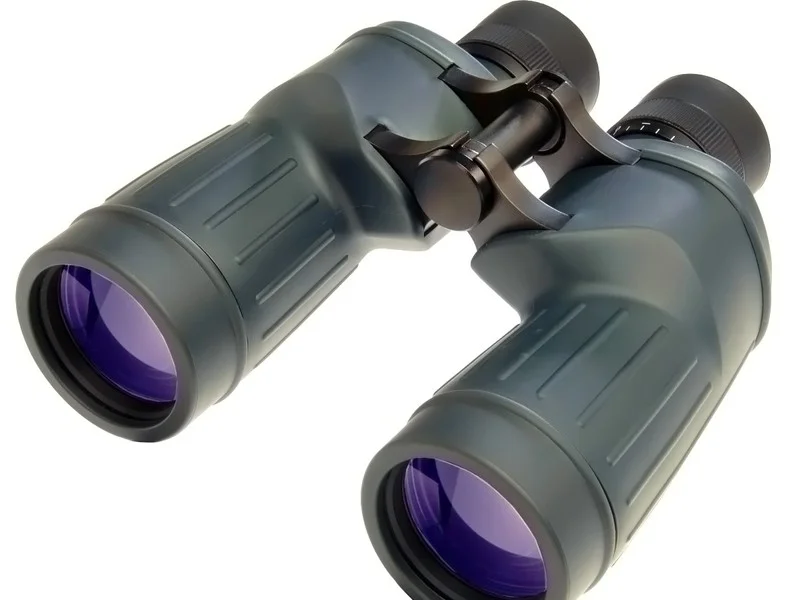
Steady 10x magnification plus good light grasp: enough to pick out the blue-green tint once you know the field. Great all-round astronomy binocular.
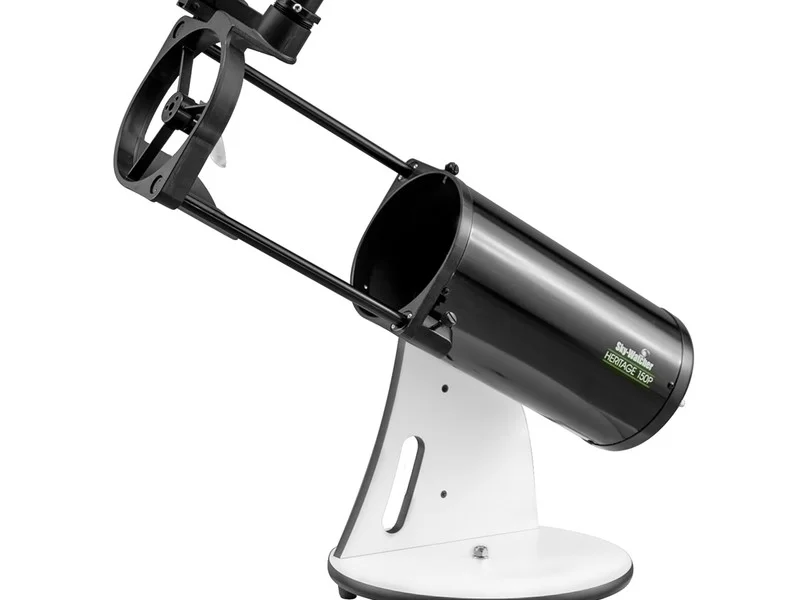
At 150 to 200x the disk is clearly resolved and the cyan colour is obvious. A very capable compact Dobsonian at a sensible price.
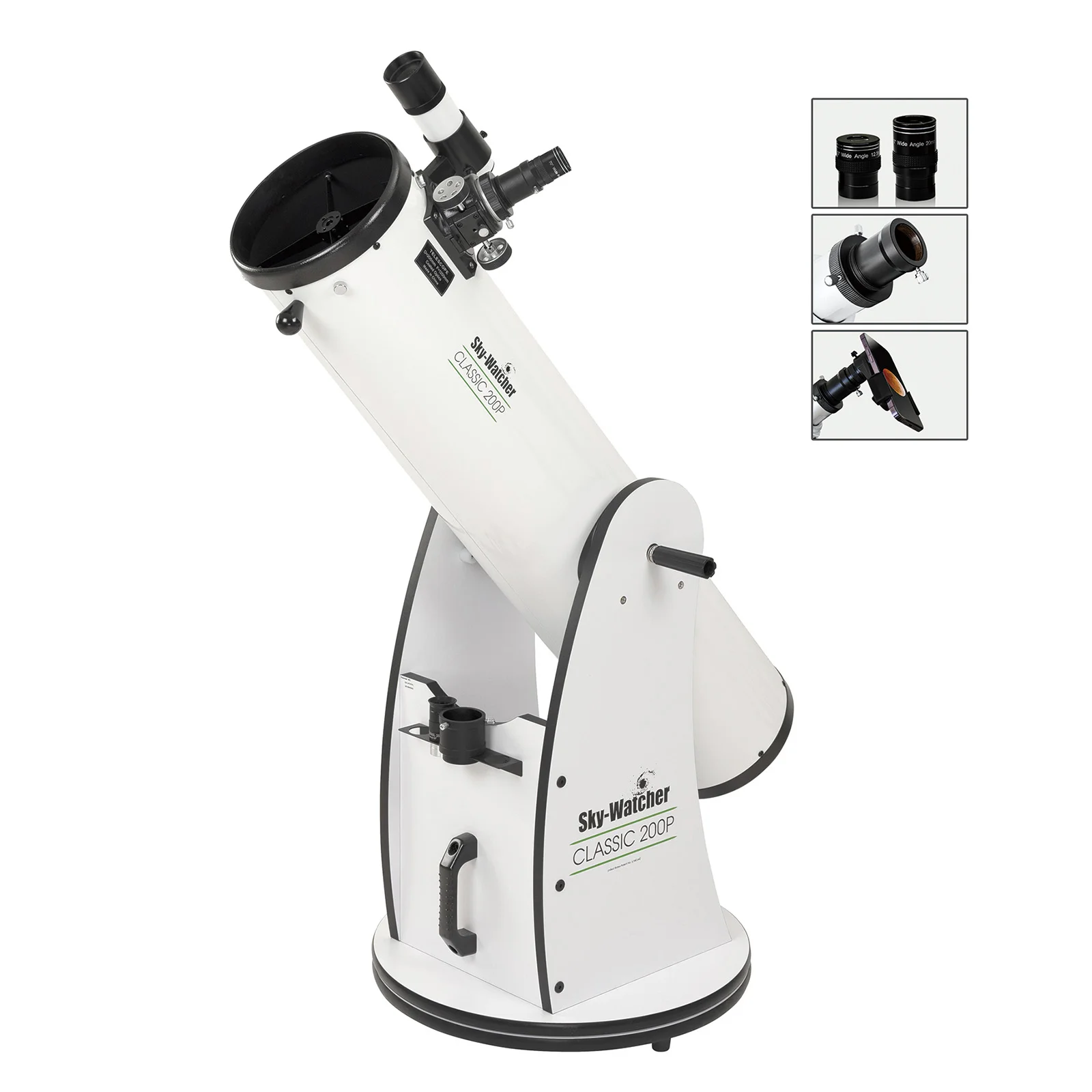
8 inches of aperture gives you the best shot at Titania and Oberon (magnitude 13.7 and 13.9) on a dark, steady night, though you'll still need a detailed moon chart and some patience.
Affiliate links: you pay the same price, we earn a small commission that helps keep WatchTheStars free.
Observing Tips
Get a finder chart, not just a star atlas. Uranus doesn't appear in standard printed charts, so you need a chart generated for a specific date: Stellarium, SkySafari or Heavens-Above all do this. Print it, put it in a plastic sleeve against dew, and bring it outside. Without it you're scanning thousands of stars hoping one is slightly the wrong colour.
Use the Pleiades as your anchor. In 2026 Uranus sits about 5 to 6 degrees south-east of the Pleiades all year. Find the cluster in binoculars, then sweep south-east until you hit the field shown on your chart. This is quicker and more reliable than trying to hop from Aldebaran.
The colour is your confirmation. At 100x and up, Uranus has a distinctly cyan-green tone that none of the surrounding stars share. Stars can be white, yellow, orange, red, or blue-white, but not this particular shade. If something in the field looks that colour and matches the chart position, you've found it.
Start at low power, then climb. Find Uranus at 50 to 75x using a wide-field eyepiece. Centre it, then swap up to 150x for the main view. The disk isn't visible at low power, but you need the wide field to confirm position against your chart.
150 to 250x is the working range. At 150x Uranus resolves cleanly from a stellar point into a disk on any decent night. At 200 to 250x it's clearly a small sphere. Pushing beyond 300x rarely adds anything: the disk is simply too small and too featureless, and the image just gets dimmer.
Observe when it's high. Low down near the horizon, the atmosphere smears and dims the view. Around opposition, Uranus is highest near midnight. That's when to push the magnification.
Come back several nights. If you're not confident in your identification, sketch the field and return three or four nights later. Uranus will have shifted very slightly westward; all the stars will be in exactly the same positions. The motion settles any doubt.
Manage expectations for what the planet shows. Even at 300x in a large telescope, Uranus is a featureless blue-green disk. There are no visible cloud bands, no storm features, no rings visible to amateur equipment. The atmosphere is genuinely calm and the methane haze hides any structure below it. The satisfaction is in the finding: seeing a world nearly 3 billion kilometres away, tilted 98 degrees on its axis, glowing that distinctive cyan. That's enough.
The sideways rotation is worth knowing. Uranus's 98-degree axial tilt means it essentially rolls around the Sun on its side. At various points in its 84-year orbit, we look almost straight down onto one pole for decades. This is completely invisible in an amateur telescope, but it changes how the moons appear to orbit: they circle the planet in roughly the same plane as the equator, which means they appear to orbit top to bottom rather than left to right. Worth having in mind when you're looking.
Your 2026 Uranus calendar
Best viewing: October through December, centred on 25 November opposition (magnitude +5.6, disk 3.8 arcseconds, up all night).
Good viewing: August and September as Uranus builds toward opposition: morning to evening transition.
Challenging but viable: Late June and July, morning sky, lower altitude.
Not observable: Mid-May to late June around solar conjunction (22 May).
Uranus is not the most spectacular thing in the night sky. That's part of what makes finding it satisfying: it doesn't announce itself. It's sitting there in Taurus right now, a pale cyan point among thousands of stars, waiting for someone with a chart and a bit of patience. Clear skies.
Resources
- Uranus at opposition · EarthSky
- Uranus opposition 25 Nov 2026 · In-The-Sky.org
- Stellarium Web: shows exact Uranus position with date
- Heavens-Above: finder charts and visibility predictions
- Sky & Telescope planet locator: monthly finder charts
Frequently Asked Questions
Equipment guides
Related topics

Ian ClaytonAmateur astronomer and founder of WatchTheStars.co.uk, dedicated to helping others explore the wonders of our universe. Full profile →