Key Takeaways
- Artemis I (2022) proved SLS and Orion work — the uncrewed test flight exceeded all objectives
- Artemis II (April 2026) is the first crewed flight, a 10-day Moon flyby — no landing
- Artemis III (2027) was redesigned in February 2026 — it will now test lunar landers in low Earth orbit, not land on the Moon
- Artemis IV (early 2028) is now the first planned crewed Moon landing
- NASA has cancelled the more powerful SLS Block 1B upper stage in favour of a standardised 'near Block 1' design to increase launch frequency
📑 Table of Contents
Why the Plan Changed
The Artemis programme has never quite gone to plan. Originally conceived to land astronauts on the Moon by 2024, it has been reshaped by budget pressures, technical setbacks, and — most recently — a deliberate strategic rethink by NASA Administrator Jared Isaacman, who took over in early 2025.
On 27 February 2026, Isaacman announced the most significant restructure since the programme began. The first crewed Moon landing, long assigned to Artemis III, was pushed back to Artemis IV. A new Artemis III mission was slotted in for 2027 to test the commercial lunar landers in low Earth orbit before attempting an actual landing. The more powerful SLS Block 1B rocket — in development for years — was cancelled. The rationale was blunt: "Launching a rocket as important and as complex as SLS every three years is not a path to success."
The chart below gives you the current picture before each mission is explored in detail.
| Mission | Date | Type | Crew | Key objective |
|---|---|---|---|---|
| Artemis I | Nov 2022 | ✅ Complete | Uncrewed | Prove SLS and Orion can fly |
| Artemis II | Apr 2026 | 🚀 Upcoming | 4 astronauts | First crewed Moon flyby in 54 years |
| Artemis III | Mid-2027 | 🔄 Redesigned | Crewed | Test landers in low Earth orbit |
| Artemis IV | Early 2028 | 🌕 First landing | Crewed | First humans on Moon since 1972 |
| Artemis V | Late 2028 | 🌕 Second landing | Crewed | Lunar south pole surface ops |
| Artemis VI+ | 2029 onwards | 🏗️ Planned | Crewed | Annual landings, lunar base |
Artemis I — November 2022
Status: Complete ✅
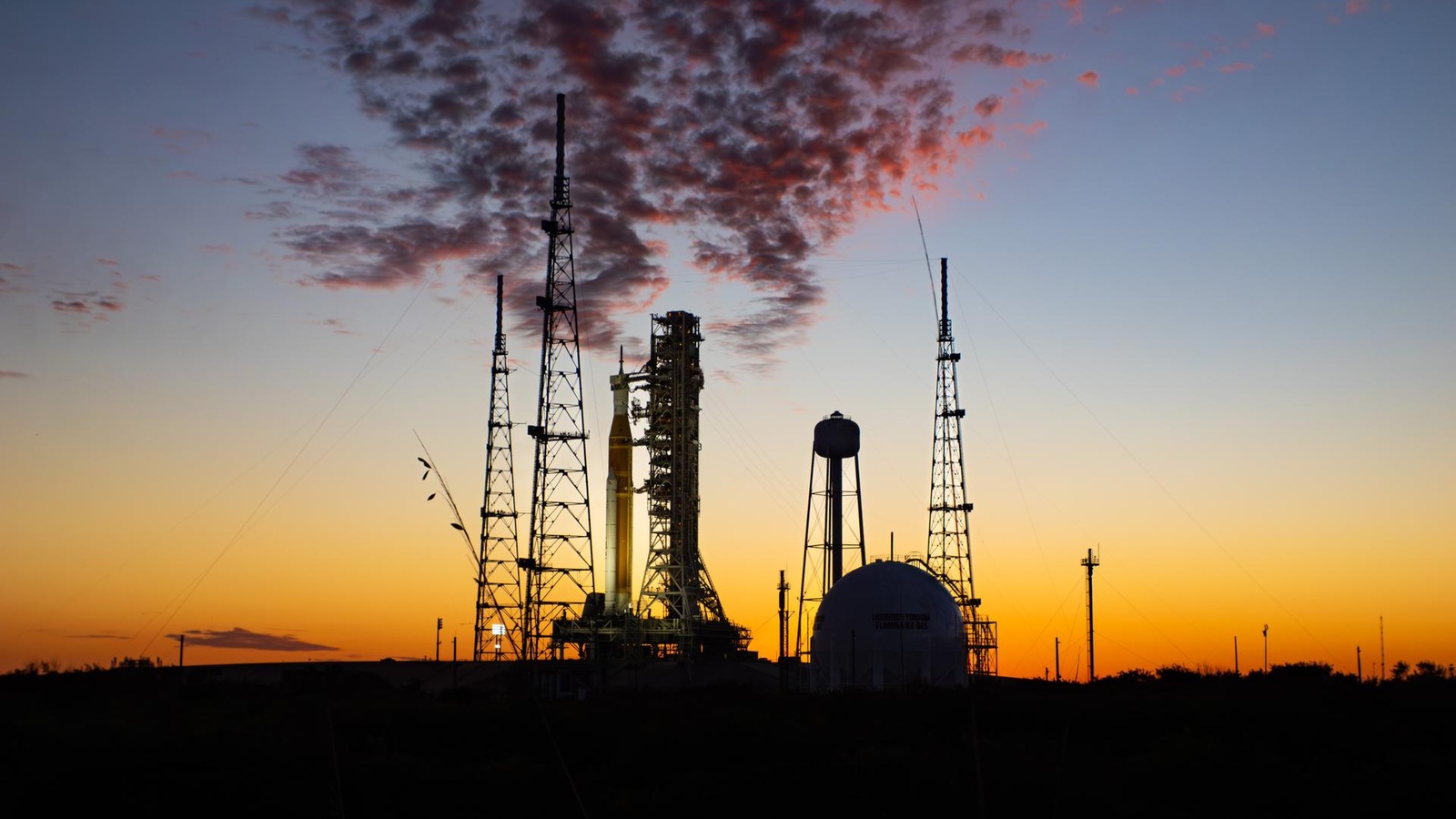
NASA's first launch of the Space Launch System (SLS) rocket lifted off on 16 November 2022 at 01:47 EST from Launch Complex 39B at Kennedy Space Center — the same pad that sent Apollo missions to the Moon. The mission lasted 25.5 days and covered more than 2.3 million kilometres.
Carrying an uncrewed Orion capsule (fitted with mannequins and science experiments in the crew seats), Artemis I flew a free-return trajectory around the Moon, coming within just 130 kilometres of the lunar surface at closest approach. The Orion capsule then re-entered Earth's atmosphere at 39,400 km/h — faster than any crewed spacecraft in history — and splashed down in the Pacific Ocean on 11 December 2022.
The splashdown occurred exactly 50 years to the day since Apollo 17 astronauts last walked on the Moon. Every primary objective was met or exceeded. The heat shield, navigation systems, life support, and communications all performed as required. The programme had its foundation.
Artemis II — April 2026
Status: Launching April 1, 2026 🚀
The first crewed Artemis mission is weeks away. Four astronauts will fly aboard Orion, launched by the SLS rocket from Pad 39B:
- Reid Wiseman (Commander) — NASA, former ISS commander
- Victor Glover (Pilot) — NASA, first Black astronaut assigned to a lunar mission
- Christina Koch (Mission Specialist 1) — NASA, first woman assigned to a lunar mission
- Jeremy Hansen (Mission Specialist 2) — Canadian Space Agency, first non-American to fly toward the Moon
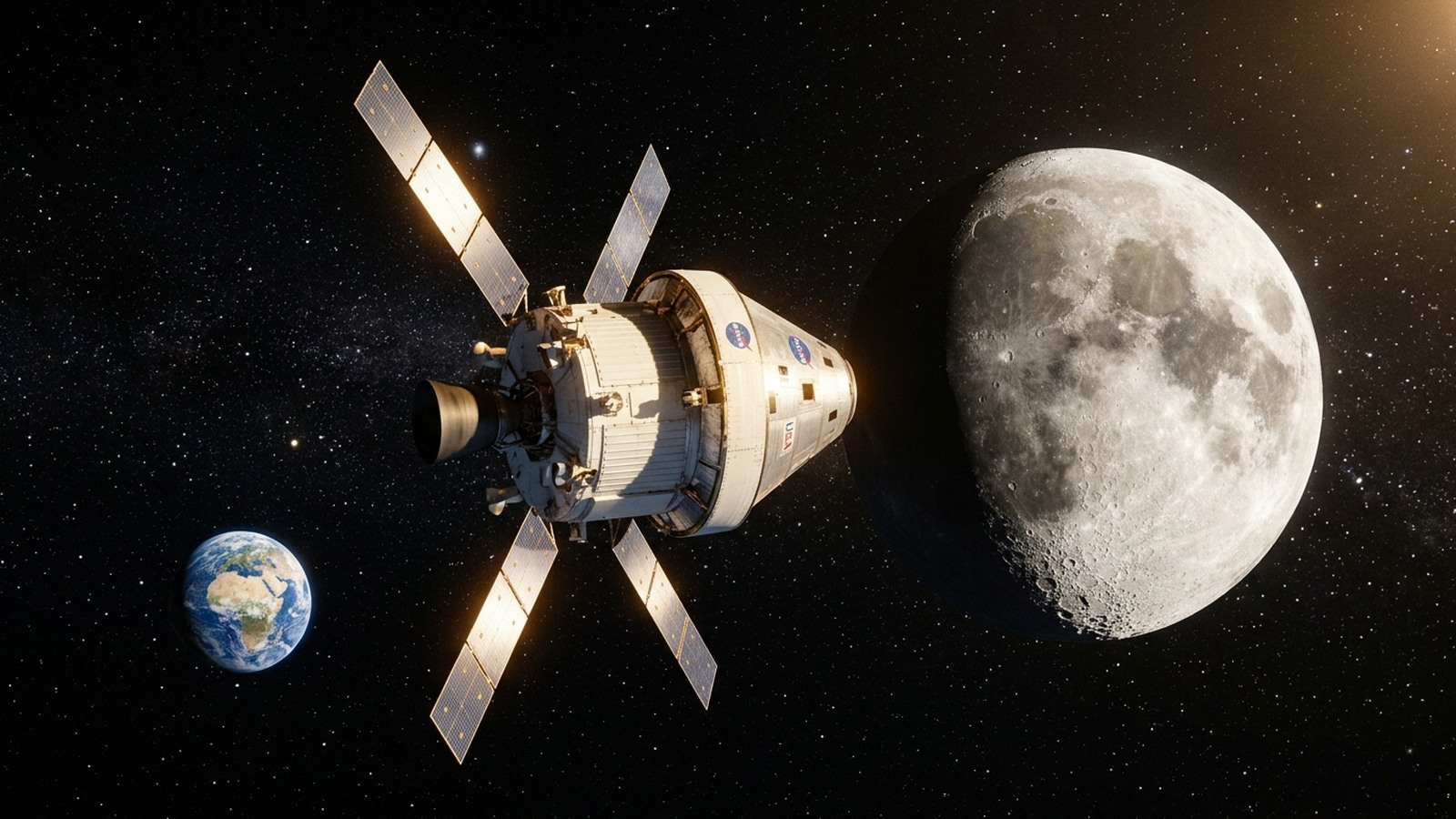
The 10-day mission follows the same free-return trajectory as Artemis I, looping around the far side of the Moon before gravity slings the crew back to Earth. There is no landing. This is a crewed demonstration of the hardware — life support, propulsion, communications, and crew systems all being validated with people on board for the first time.
The crew will also conduct science during the journey, including the AVATAR experiment studying how radiation and microgravity affect human tissue at the cellular level — critical data for future long-duration deep space missions.
Launch is targeted for 6:24 p.m. ET on April 1, following the completion of the Flight Readiness Review on March 12 and rollout to the pad on March 19. Backup windows are available on April 2, 3, 4, 5, 6, and 30.
Artemis III — Mid-2027
Status: Redesigned — no Moon landing 🔄
This is the mission that surprised everyone. Artemis III was the centrepiece of the original programme — the one that was supposed to land astronauts on the Moon. In February 2026 that changed entirely.
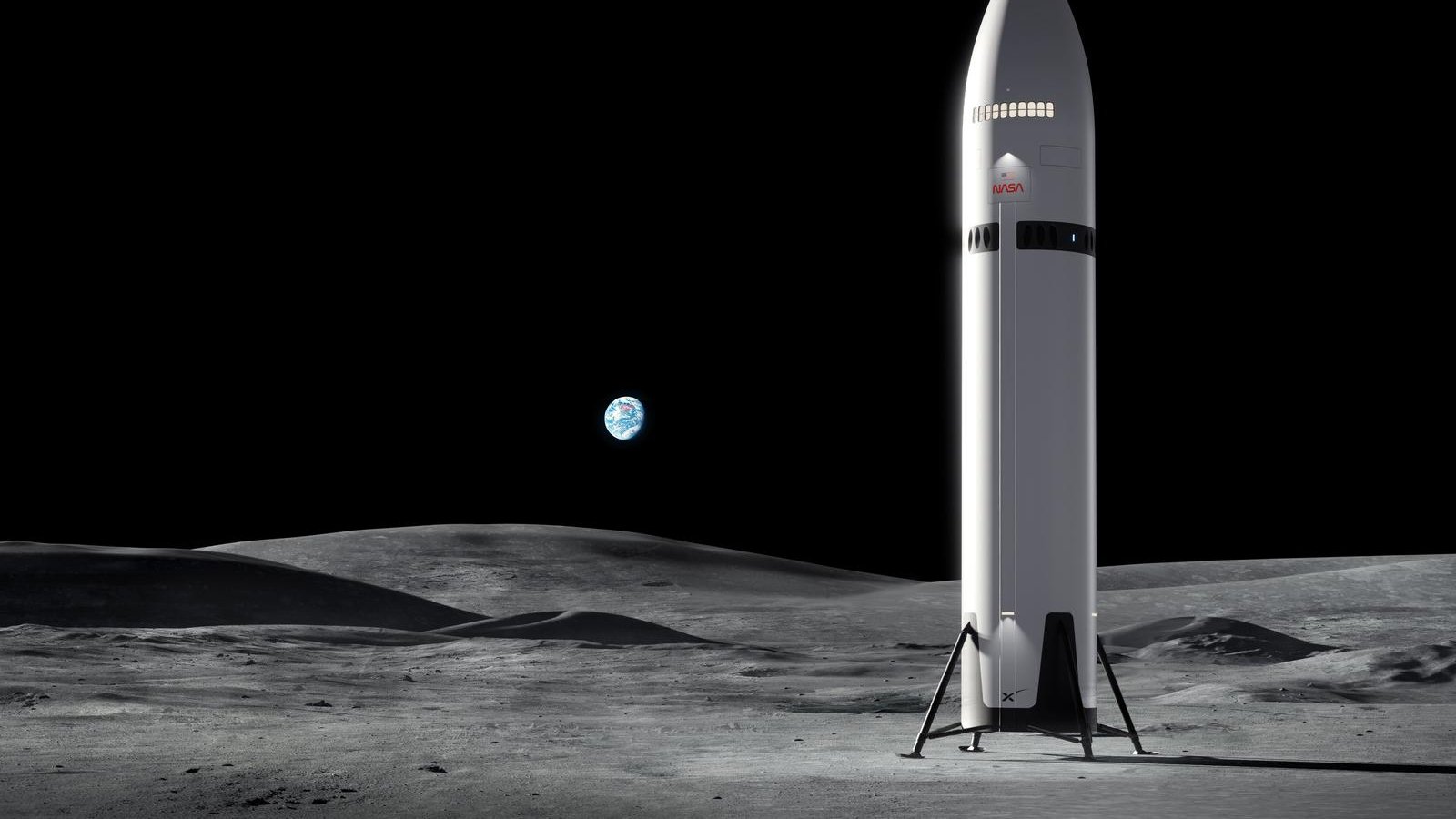
Under the new plan, Artemis III will launch to low Earth orbit, where the crew will rendezvous and dock with one or both commercially developed lunar landers: SpaceX's Starship Human Landing System (HLS) and Blue Origin's Blue Moon. The crew will board the landers, test their systems, conduct extravehicular activities (spacewalks) in the new Axiom AxEMU spacesuit, and return to Orion — all without leaving Earth orbit.
The logic is sound even if it is frustrating: both landers are new, unproven vehicles. Testing them in the relative safety of low Earth orbit — where rescue is possible — before trusting them to land humans on the Moon is a reasonable precaution. NASA has been burned before by accepting too much risk too soon.
Artemis IV — Early 2028
Status: First crewed Moon landing 🌕
If all goes to plan, Artemis IV will be the mission that ends humanity's 56-year absence from the lunar surface. The crew — not yet named — will fly to the Moon aboard Orion, rendezvous in lunar orbit with a commercial lander, and touch down near the lunar south pole.
The south pole is not an arbitrary destination. Permanently shadowed craters near both poles are believed to contain billions of tonnes of water ice, confirmed by orbital observations. Extracting that ice — for drinking water, breathable oxygen, and hydrogen fuel — is the cornerstone of any plan for a permanent human presence on the Moon. Artemis IV is the first step toward that goal.
The mission will use a standardised SLS configuration and one of the commercial landers validated during Artemis III.
Artemis V and Beyond
Status: Planned, late 2028 onwards 🏗️
Artemis V, targeting late 2028, will be the second crewed landing. Blue Origin's Blue Moon lander is expected to be used for this mission, carrying crew to a site near where NASA plans to deploy the Lunar Terrain Vehicle (LTV) — a pressurised rover that will allow astronauts to travel further from the landing site than was ever possible during Apollo.
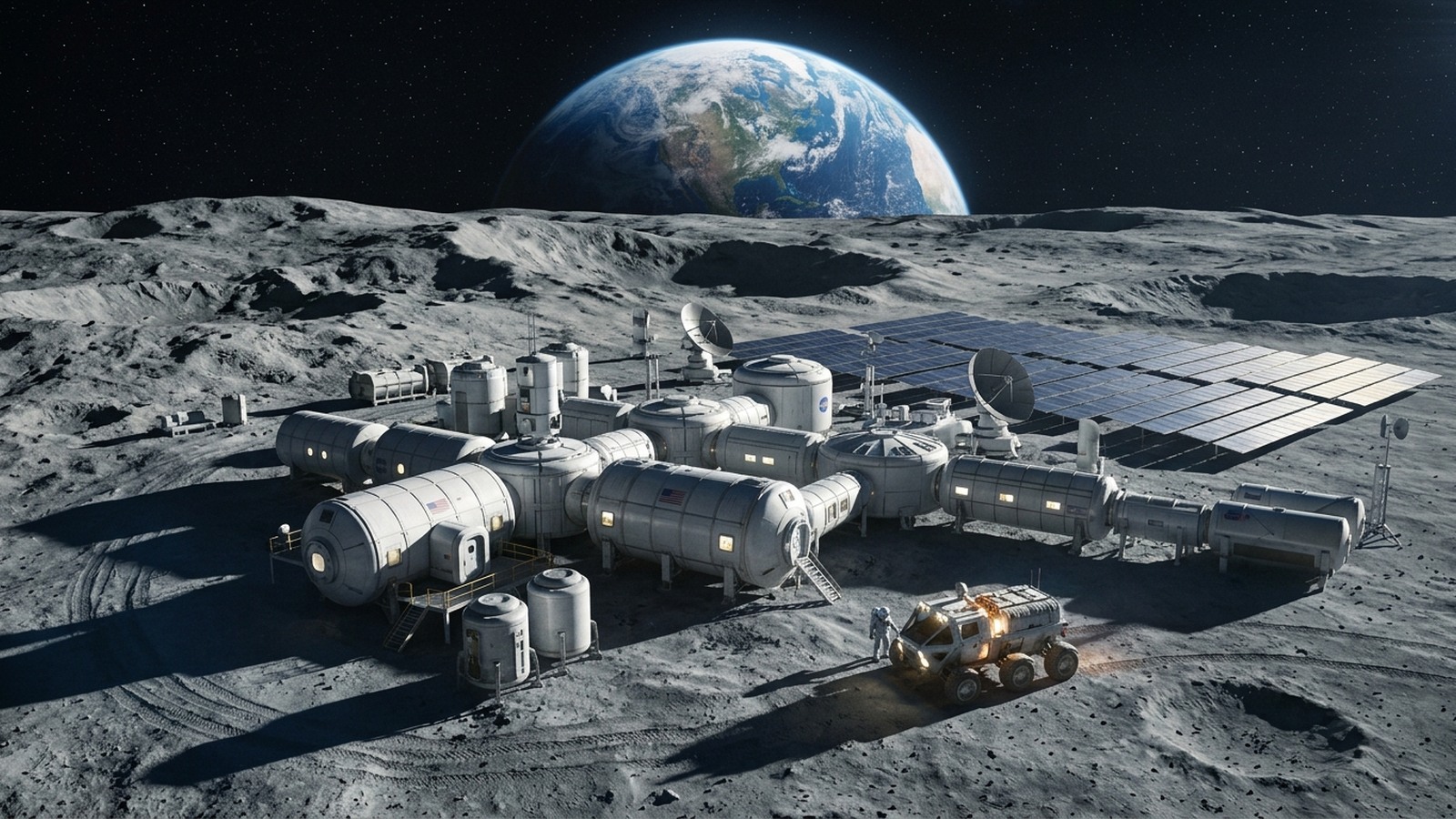
From Artemis VI onward, NASA is planning at least one surface mission per year, building incrementally toward a permanent lunar outpost. The long-term vision includes the Lunar Gateway — a small space station in lunar orbit — acting as a staging post for surface operations, though Gateway's timeline has also shifted with the broader programme changes.
The SLS Hardware Shakeup
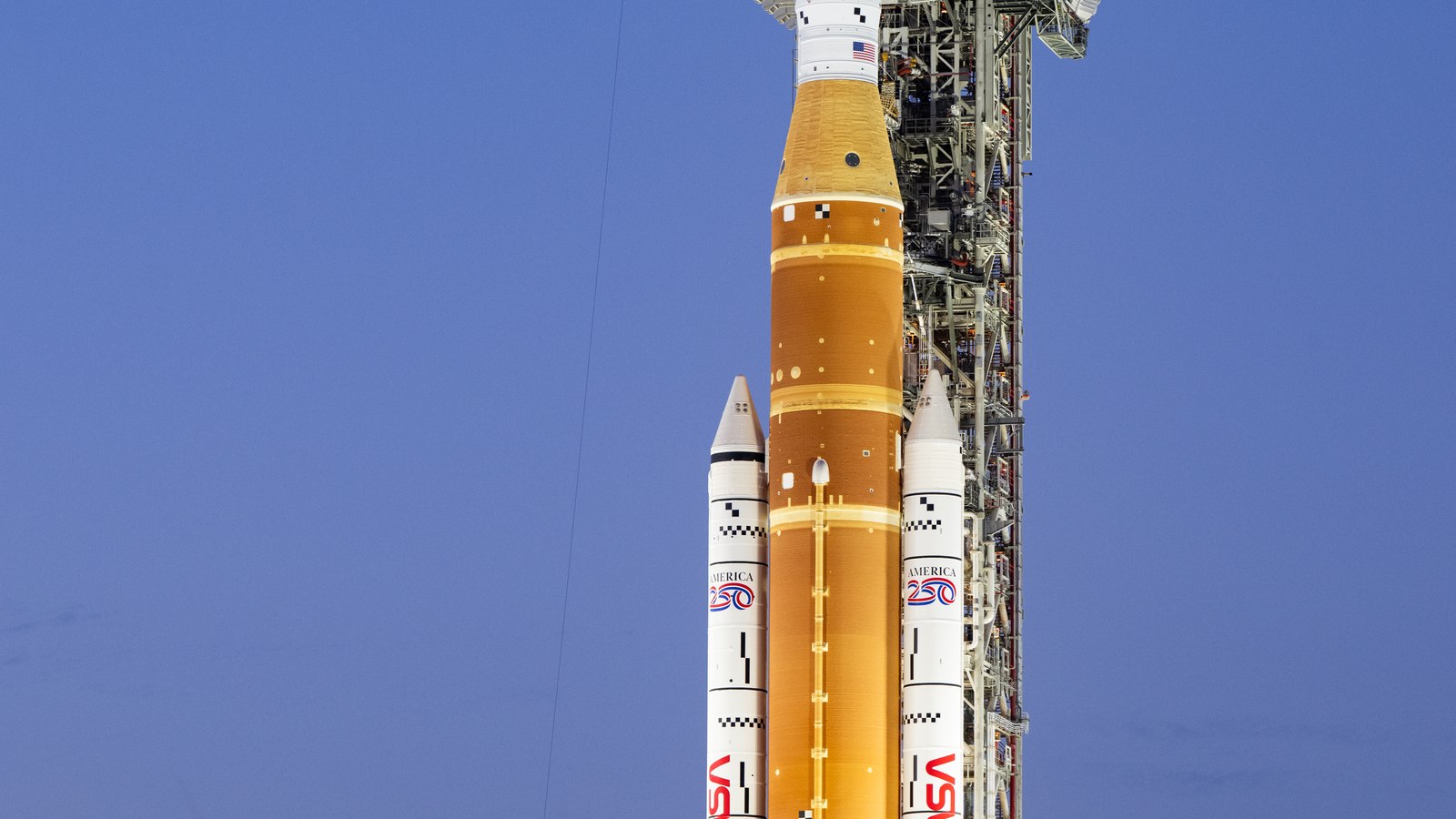
One of the biggest changes announced in February 2026 was the cancellation of the more powerful version of the SLS rocket. The original roadmap called for SLS to evolve from Block 1 (used for Artemis I and II) to Block 1B, which would use a larger, more capable upper stage called the Exploration Upper Stage (EUS) and require a new launch tower called Mobile Launcher 2.
Both have been cancelled. The EUS and ML-2 were years behind schedule and billions over budget. NASA will instead fly a standardised "near Block 1" configuration — a modified version of the existing rocket using a new but less ambitious upper stage — across all future Artemis missions. The goal is simple: build the same rocket repeatedly, catch problems earlier, and launch more often.
Isaacman's philosophy mirrors how SpaceX operates: frequency beats capability when it comes to improving reliability.
The Race to the Moon
Artemis does not exist in a vacuum. China's Chang'e programme has already returned lunar samples to Earth and has publicly stated its intent to land taikonauts on the Moon by 2030. The race is not just about national prestige — it is about establishing who defines the rules for extracting and using the Moon's resources.
The 2024 Artemis Accords, signed by over 30 nations, set out a framework for peaceful lunar exploration. China and Russia are not signatories. The south pole water ice — potentially worth trillions as a space-based resource — sits at the centre of this geopolitical competition.
When Artemis II lifts off on April 1, it will be the first move in what is, quietly, the most consequential space race since the 1960s.