Key Takeaways
- Sunday 29 March: the Moon occults (covers) Regulus — watch the star vanish behind the lunar limb
- Thursday 2 April at 02:11 UTC: the Pink Full Moon rises — the Paschal Moon that sets the date of Easter
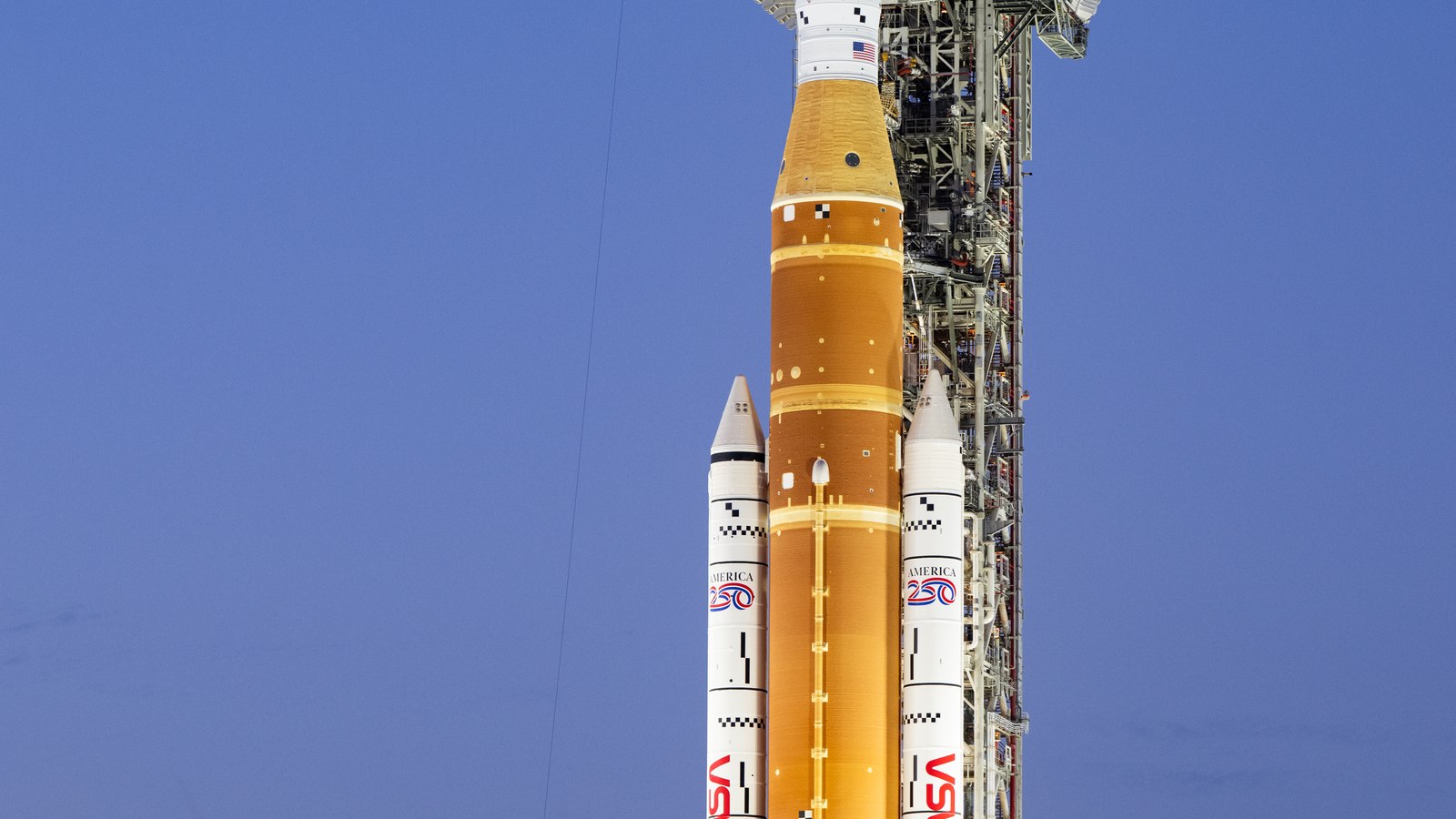
- Wednesday 1 April: Artemis II launches from Kennedy Space Center — the first crewed Moon mission in 54 years
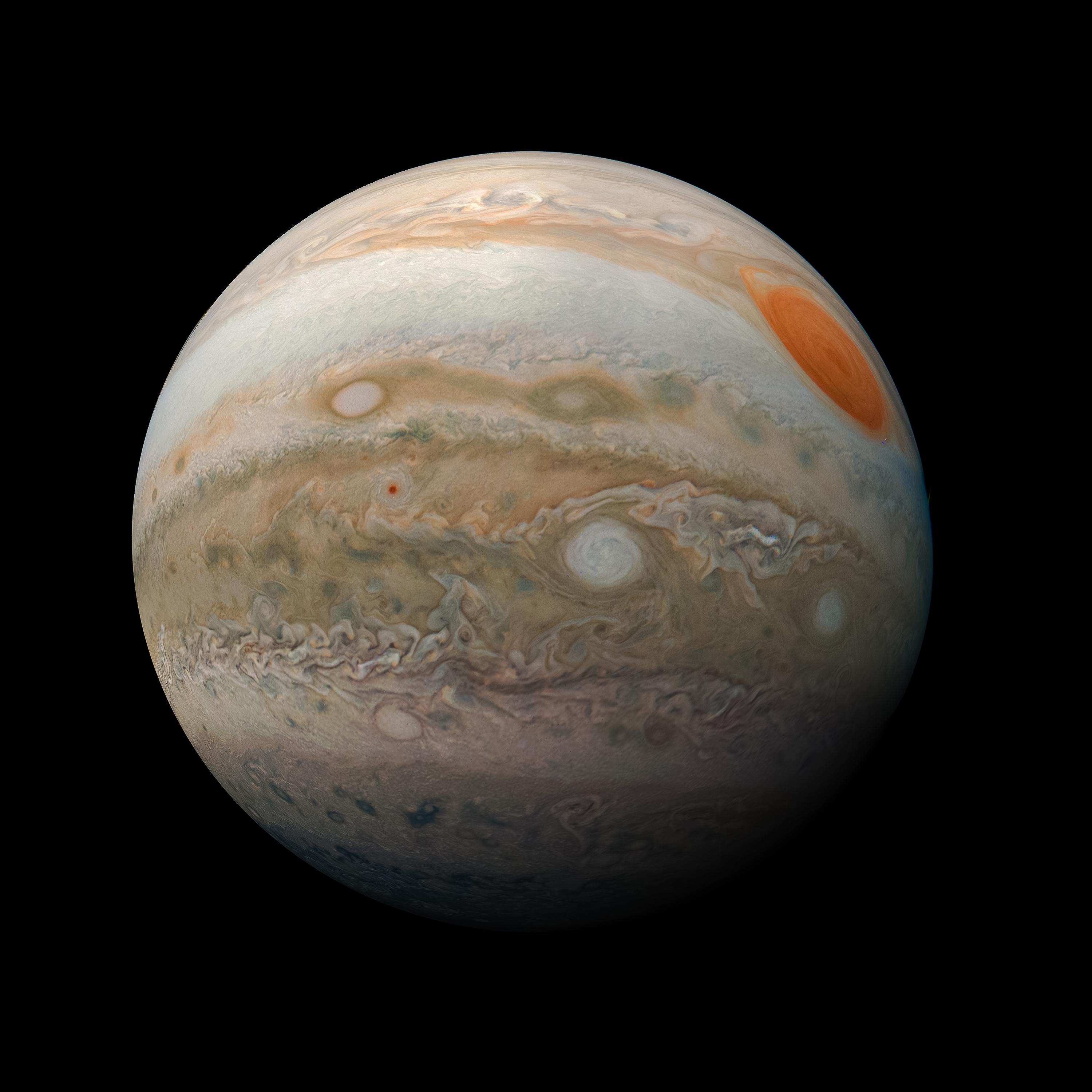
- Jupiter blazes in Gemini all week — point binoculars at it to see four moons lined up beside it
- Friday 3 April: Mercury reaches greatest elongation — challenge yourself to spot it before dawn
📑 Table of Contents
It's rare that a single week hands you a lunar occultation of a bright star, a full moon with a name and a history, a planetary launch, and a crewed spaceflight all at once. But here we are. Whether you're stepping outside for five minutes or setting up a telescope for an evening session, 28 March to 3 April 2026 has something for every level of observer.
Here's your night-by-night guide.
Saturday 28 March — Moon Meets the Beehive
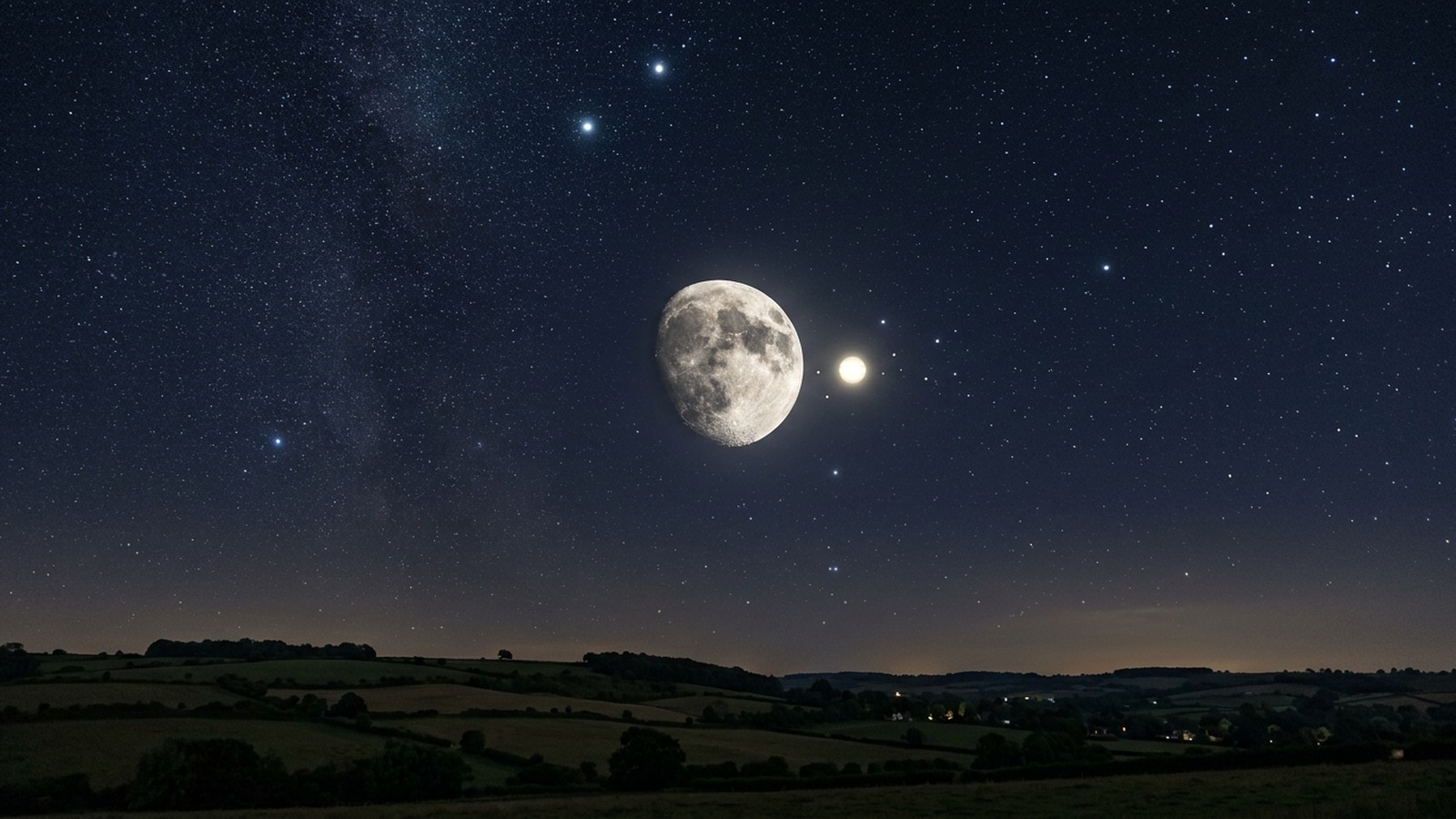
If you're out tonight, look south from around 9pm and you'll find the Moon at 75% illumination sitting just 1.4° from M44 — the Beehive Cluster in Cancer. At that separation, both objects just squeeze into the same binocular field of view.
The Beehive (also called Praesepe, meaning "the Manger") is one of the closest open clusters to Earth, sitting around 577 light-years away and containing over 1,000 stars. On a dark night without the Moon nearby, it's visible to the naked eye as a faint misty patch. Tonight the Moon will wash much of it out, but binoculars should still reveal the cluster's brighter members scattered beside the glowing lunar disc — a genuinely lovely sight.
The best window is early evening before the Moon climbs too high and the glare becomes overpowering. Look south-southeast from around 21:00 GMT, roughly 35° above the horizon from central England.
Sunday 29 March — The Moon Swallows a Star
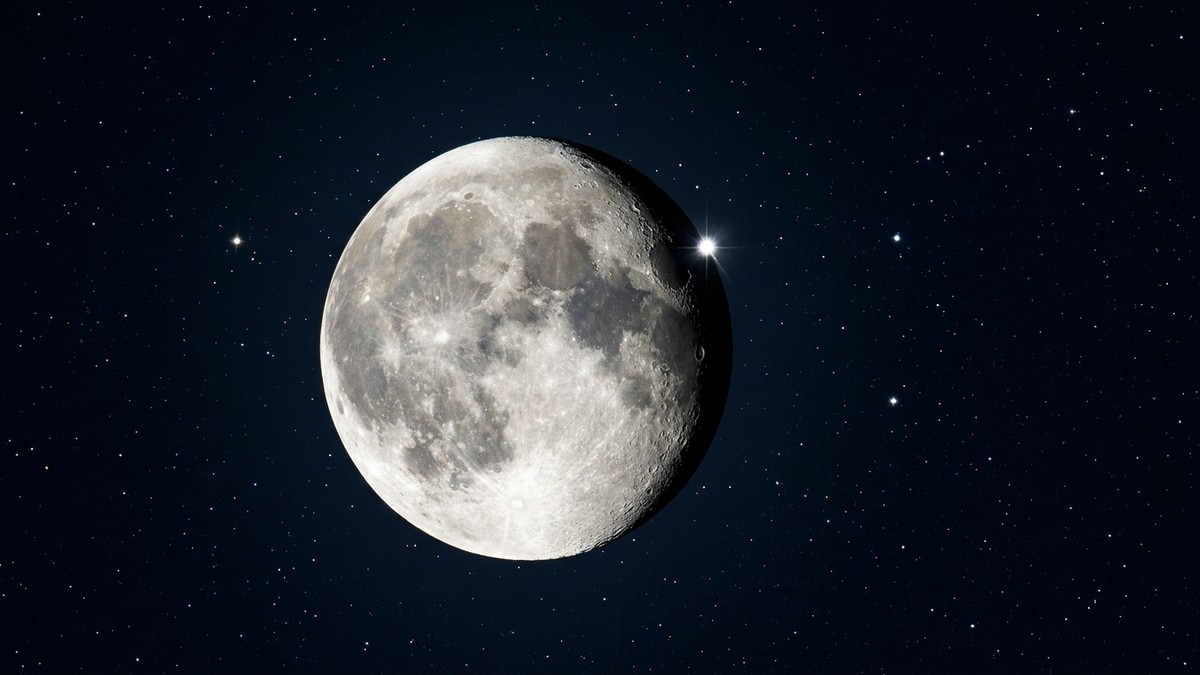
This is the headline event of the week. On Sunday evening, the Moon — now 89% illuminated — will pass directly in front of Regulus, the brightest star in Leo, magnitude +1.35. This is a lunar occultation: the star will simply vanish behind the Moon's limb, and then reappear on the other side minutes later.
Occultations are one of the most satisfying events in amateur astronomy. There's no slow fade, no gradual dimming — one moment Regulus is there, the next it's gone. The star disappears almost instantaneously behind the Moon's leading edge, snuffed out mid-twinkle. The reappearance on the dark limb is even better: without warning, a point of light blinks back into existence from what seemed like empty space.
The event is visible from the UK, Europe, Asia, and Africa. The exact timing of disappearance and reappearance depends on your location within the UK — southern England will see it slightly earlier than Scotland. Generally, disappearance occurs in the late evening hours with Regulus and the Moon well placed in the southeast sky. Check a local astronomy app (Stellarium or SkySafari) for times specific to your postcode.
No telescope is needed — binoculars are ideal. But if you do have a telescope, even a small one at low power will make the moment of disappearance and reappearance genuinely dramatic.
Planet Watch This Week
Jupiter is the dominant planet of the evening sky right now, sitting in Gemini at magnitude −2.3 — that brilliant white-cream point in the southwest that doesn't twinkle. It's perfectly placed for observation throughout the week, high enough above the atmospheric murk by 9pm and not setting until the early hours. Point binoculars at it and you'll see up to four of the Galilean moons arranged in a line to either side of the disc — the same moons Galileo first observed in 1610. Their positions change noticeably from night to night, which is worth checking across the week.
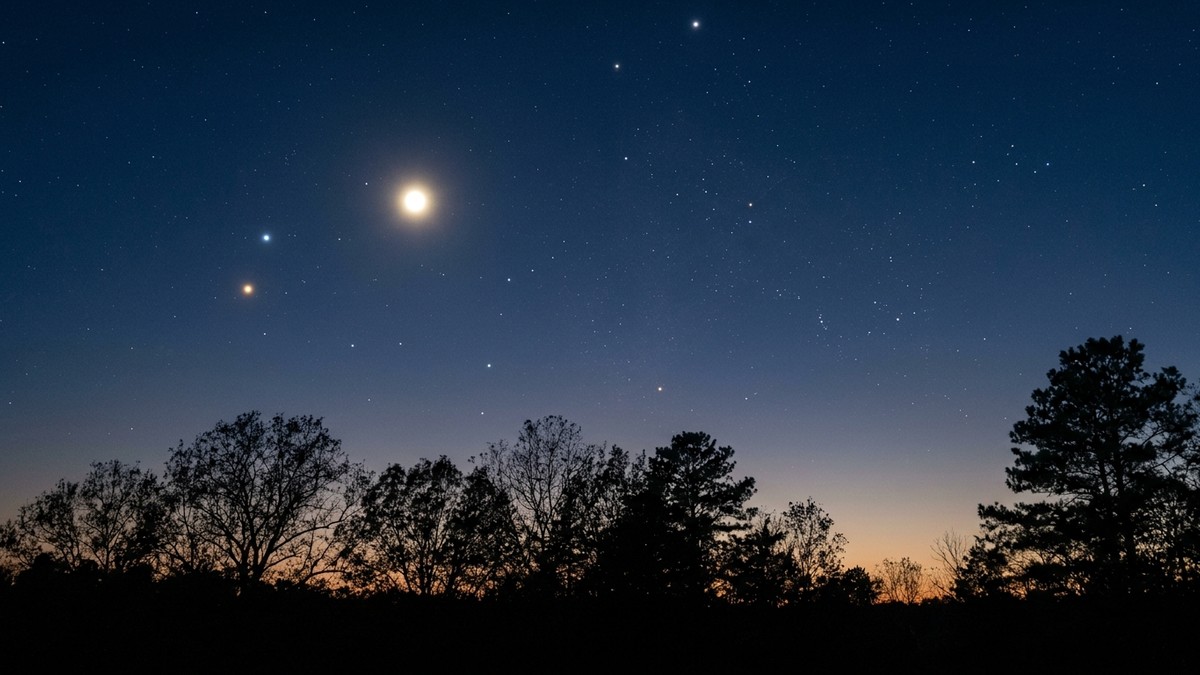
Venus is the Evening Star in the west after sunset, already at magnitude −4.5 and impossible to miss in the hour after dusk. It's getting a little higher in the sky each week as it moves away from the Sun, which is good news — for much of the past few months it's been frustratingly low. By April it will be climbing noticeably higher, offering a longer evening window. For now, catch it in the 45 minutes after sunset before it drops into the murk.
Mars is still visible in the west after dark, now at around magnitude +1.0 and showing its characteristic warm reddish tint. It's fading week by week as Earth pulls away from it following opposition, but it's still easily identifiable in Gemini not far from Jupiter. The pairing of Jupiter (brilliant white) and Mars (fainter, reddish) is easy to pick out and worth a look.
Vega — the fifth-brightest star in the sky — is returning to the midnight scene. From Wednesday 1 April, Vega climbs above 10° in the northeast by local midnight, the leading star of the Summer Triangle. Its return to the late-evening sky is one of those quiet seasonal signposts that rewards regular sky-watchers: it means summer constellations are coming.
Wednesday 1 April — Artemis II Launches
April Fools' Day 2026 brings anything but a joke: Artemis II launches from Kennedy Space Center in Florida, carrying four astronauts — Reid Wiseman, Victor Glover, Christina Koch, and Canadian Jeremy Hansen — on a ten-day free-return trajectory around the Moon and back. It will be the first time humans have flown beyond low Earth orbit since Apollo 17 in December 1972.
The SLS rocket is scheduled to lift off in a window that should make it visible as a fast-moving bright point from parts of the UK, depending on the precise launch time. Worth checking the confirmation from NASA on the day. The timing of a human Moon mission and the week's Pink Full Moon is a poetic coincidence that won't go unnoticed.
Thursday 2 April — The Pink Full Moon
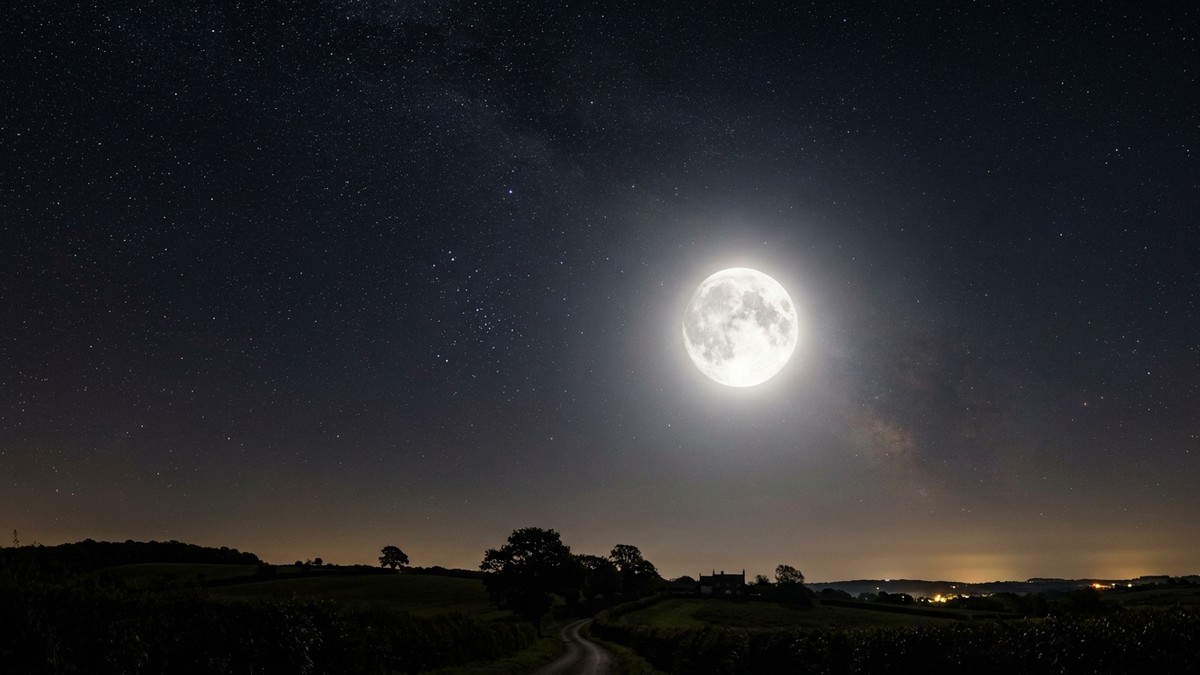
At 02:11 UTC on Thursday 2 April, April's full moon reaches its peak illumination — and this one comes with unusual historical weight.
The April full moon is traditionally called the Pink Moon — not because it appears pink (it won't), but because it coincides with the blooming of wild ground phlox, one of the first widespread spring flowers in North America. The name comes from Native American and early colonial traditions of naming full moons by the seasonal markers they accompanied.
More significantly, this is the Paschal Moon: the first full moon after the spring equinox (which fell on 20 March). This is the moon that determines the date of Easter. Under the traditional calculation, Easter falls on the first Sunday after the Paschal Moon — so this full moon directly sets this year's Easter date.
For observers, the practical significance is simple: a beautiful, fully illuminated Moon rising in the east at sunset and arcing across the sky through the night. Moonrise is always spectacular when the Moon is close to the horizon and appears enormous against earthly landmarks — plan to be somewhere with a clear eastern horizon shortly before your local sunset time.
Friday 3 April — Mercury at Dawn
Mercury reaches greatest elongation east on Friday, sitting 28° from the Sun — its furthest angular distance from the sunrise point. In theory this makes it easiest to spot in the morning sky. In practice, from UK latitudes (50–58°N), Mercury is always a low-horizon challenge: its elongation from the Sun doesn't translate cleanly into altitude because of the shallow angle at which the ecliptic meets our horizon in spring mornings.
If you want to try, set your alarm for about 45 minutes before sunrise, find a location with a completely flat eastern horizon, and look for a bright star-like point (magnitude around +0.1) rising just above the brightening sky. Binoculars help enormously. Mercury will be well to the lower-left of where the Sun will rise. Don't attempt it if there's haze or cloud on the horizon — the contrast simply won't be there.
Stargazing Tips for the Week
The waxing Moon — bright and high for most of the week — will significantly limit deep-sky observing until after the full moon on April 2. This isn't the week to chase faint nebulae or galaxies. Instead, lean into what the Moon itself offers: the Beehive pairing on Saturday, the Regulus occultation on Sunday, and the rising full moon on Thursday are all enhanced by its presence rather than hampered by it.
For planets, no dark skies are needed. Jupiter and Venus are bright enough to observe from city centres. For the Regulus occultation, binoculars and a stable mount (or just resting your elbows on a wall) will make the moment of disappearance much more satisfying than trying to hold them steady freehand.
Clear skies this week — it's shaping up to be a memorable one.