Key Takeaways
- The Artemis II lunar flyby completed successfully on Flight Day 6 — all mission objectives met
- Closest approach was 4,070 miles above the lunar surface at 7:02 p.m. EDT on April 6
- The crew broke the Apollo 13 distance record at 252,757 miles from Earth — the furthest humans have ever travelled
- Orion is now on its free-return trajectory back to Earth, with splashdown expected April 11 off San Diego
- Every critical system performed nominally — clearing the path for Artemis III's Moon landing
📑 Table of Contents
The Flyby in Numbers
It happened exactly as planned — and that's precisely the point.
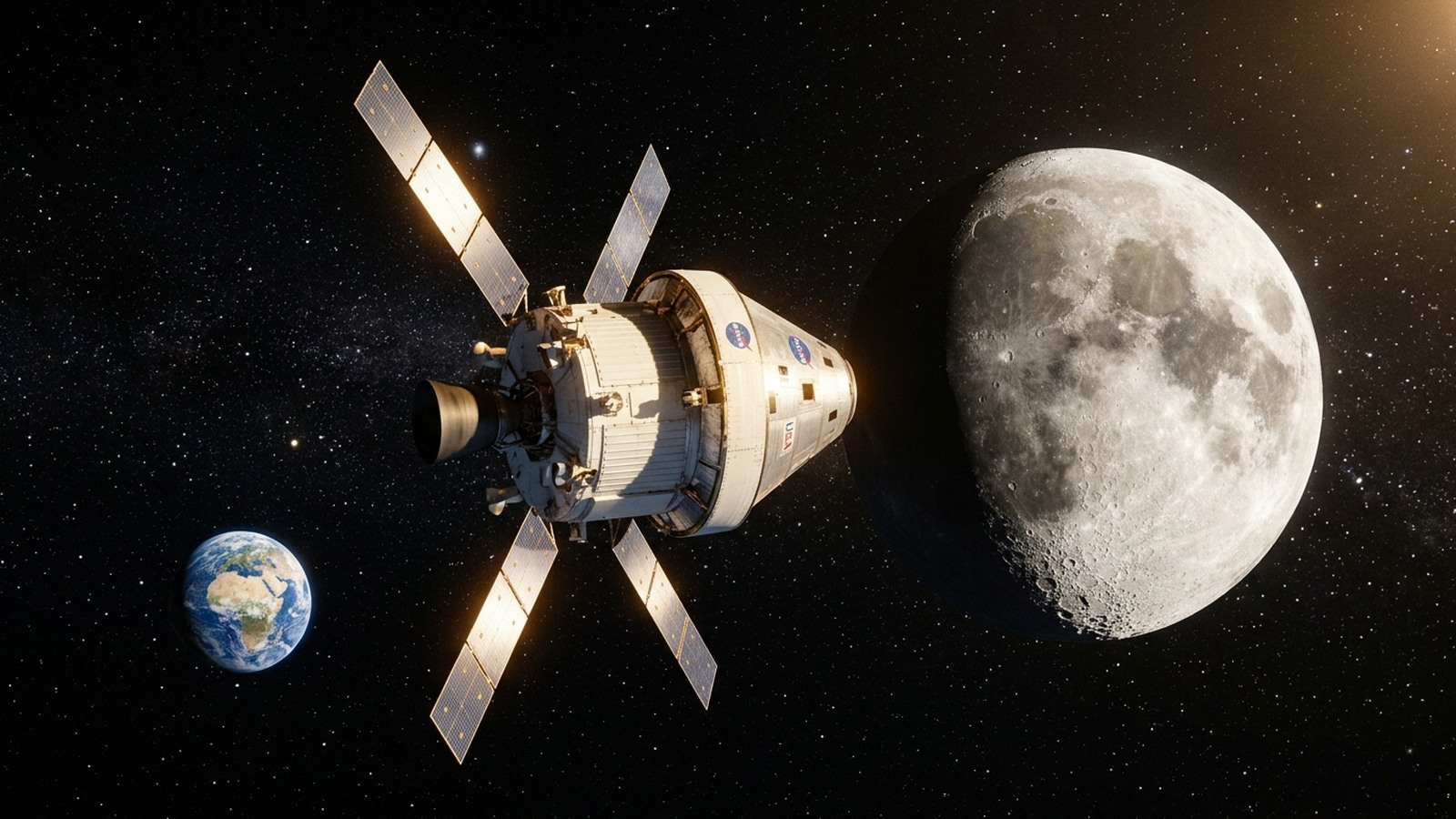
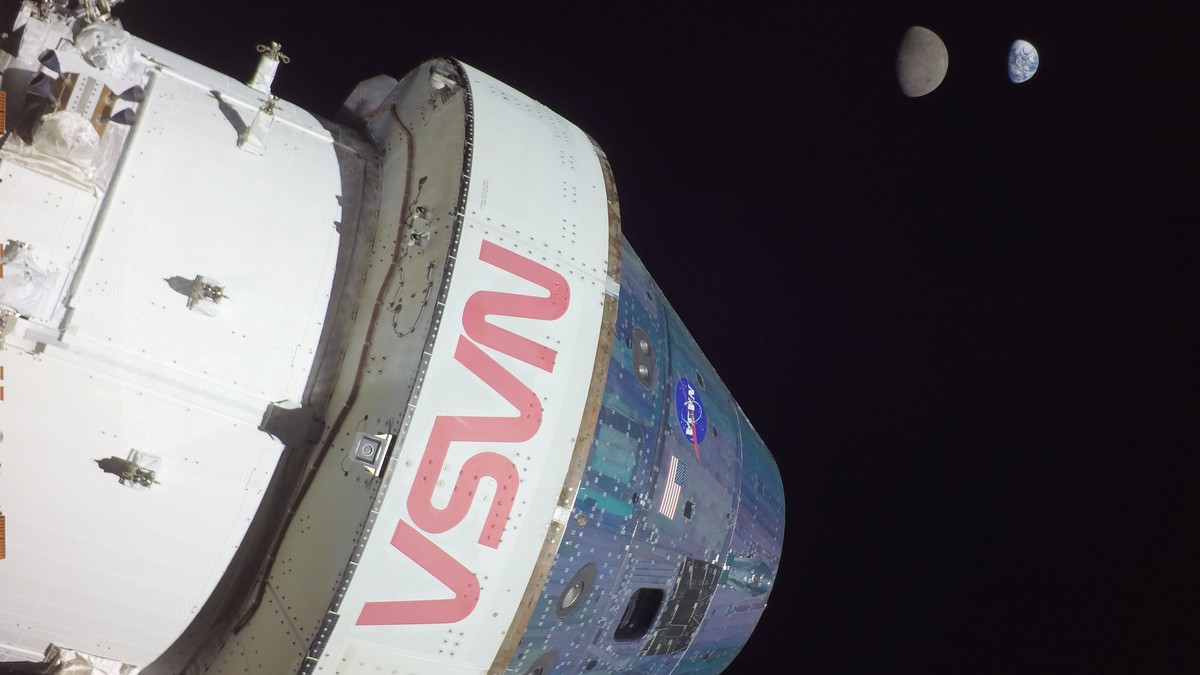
At 7:02 p.m. EDT on Monday April 6, the Orion spacecraft carrying Reid Wiseman, Victor Glover, Christina Koch, and Jeremy Hansen reached its closest point to the Moon: 4,070 miles above the far-side surface. Earlier in the day, at 1:56 p.m. EDT, the crew crossed 252,757 miles from Earth — breaking the distance record set by the Apollo 13 crew in April 1970, a record that had stood for 56 years.
At 6:45 p.m., Orion slipped behind the Moon and all communications with Earth were lost — a planned 40-minute blackout as the spacecraft passed through the radio shadow of the far side. Mission Control in Houston went quiet. When the signal came back at 7:25 p.m., Wiseman's voice was the first thing anyone heard: "Houston, Artemis. We're through the far side. All systems nominal."
What the Crew Saw
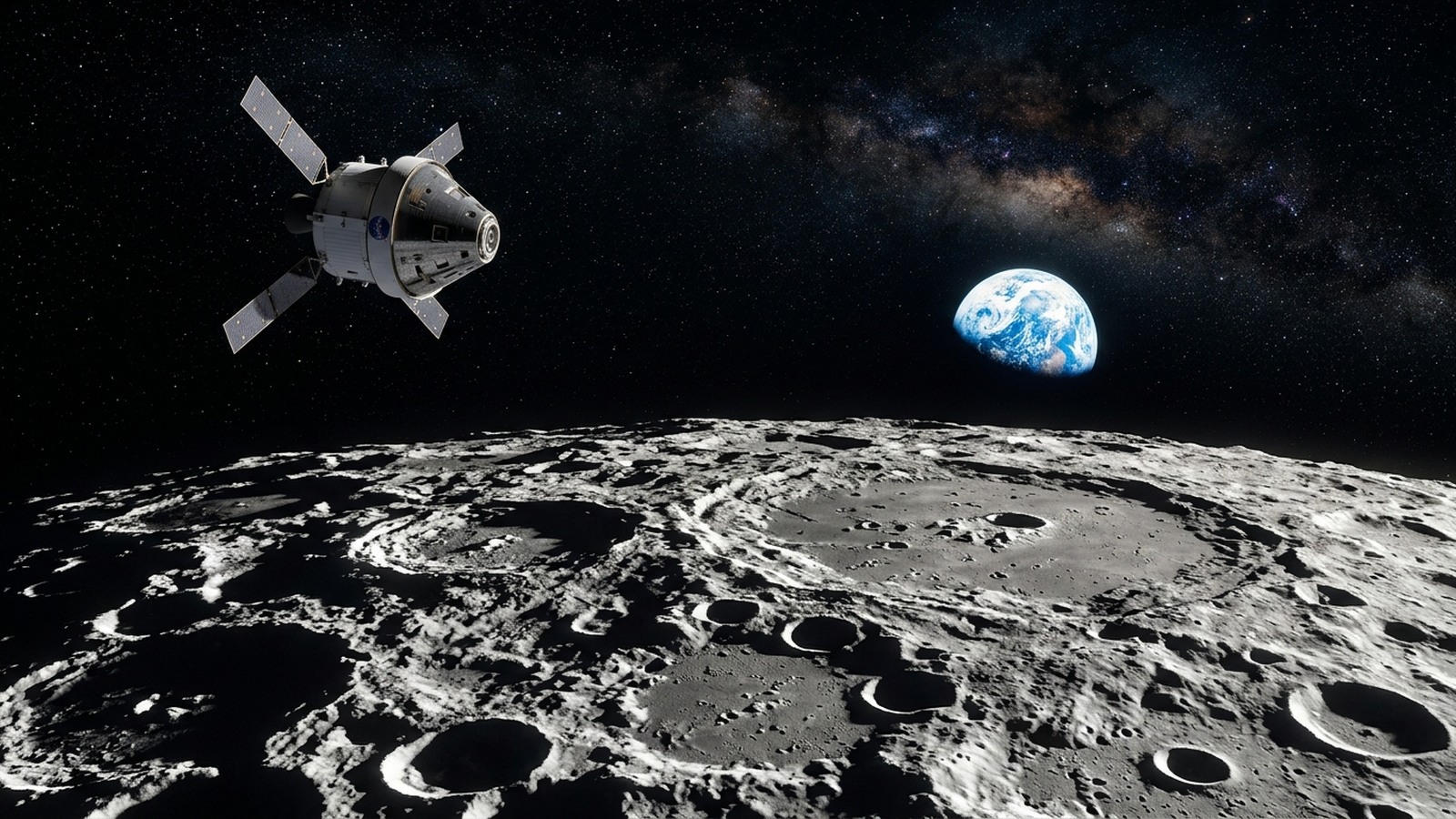
The far side of the Moon is one of the strangest places in the solar system — a heavily cratered hemisphere that no human eye had ever seen until 1968, and that has never been seen from the ground. During the blackout, the Artemis II crew spent 40 minutes alone over it with their cameras. The images they captured of the ancient impact basins — including the Orientale Basin, one of the largest impact craters in the Solar System — are expected to be among the most scientifically valuable from the entire mission.
Then, as Orion emerged from behind the Moon, the crew witnessed Earthrise.
At 7:25 p.m., Earth came back into view over the lunar limb — exactly as Bill Anders photographed it from Apollo 8 in December 1968. The crew had rehearsed the shot carefully. Wiseman later described it in a post-blackout message: "We all went to the windows at the same time. Nobody had to say anything."
The Artemis II Earthrise photograph — taken with modern digital cameras from a spacecraft with far greater resolution than Apollo 8 carried — will be released by NASA in the coming days.

The Journey Home
Orion is now on the homeward leg of its free-return trajectory — the gravitational slingshot that carries the spacecraft around the Moon and back to Earth without requiring a propulsive burn. It's the same basic trajectory used by Apollo 8 and 13, refined over five decades of mission planning.
The return coast takes approximately five days. The crew will continue their science programme throughout: testing the suit ventilation system under extended wear, collecting biological samples for the post-flight medical study, calibrating Orion's navigation systems, and resting. After the intensity of the flyby and the blackout, Flight Days 7 and 8 are by design the quietest of the mission.
One trajectory correction burn may be performed if ground tracking requires a small course adjustment, but as of this morning Mission Control reports Orion's path is sufficiently precise that none is currently planned.
Splashdown: When and Where
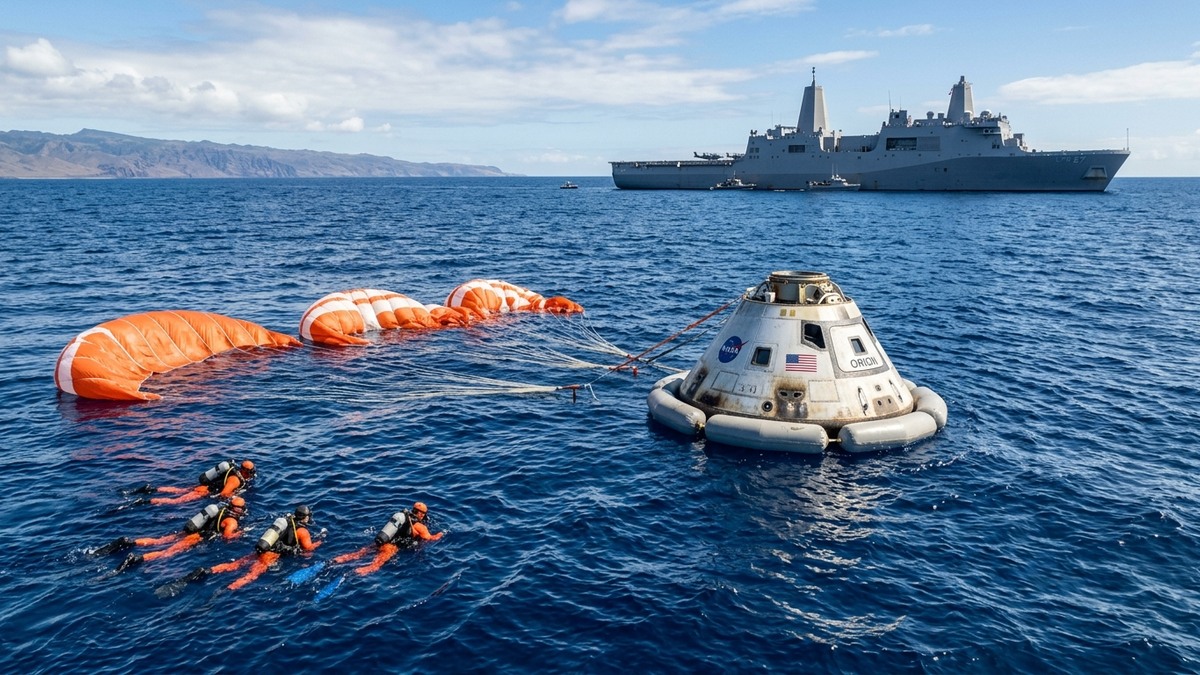
Splashdown is targeted for Saturday April 11 at approximately 9:00 a.m. PDT (5:00 p.m. BST), in the Pacific Ocean off the coast of San Diego, California.
The re-entry sequence will be the most demanding part of the return journey. Orion will hit the upper atmosphere at around 25,000 mph — about 32 times the speed of sound. The heat shield, the largest ever flown, will experience temperatures approaching 2,800°C (5,000°F) during the approximately 10-minute peak heating phase. This is the primary engineering test of the mission: Artemis II's entry velocity is faster than a typical ISS return precisely because it is coming from the Moon rather than low Earth orbit.
If the heat shield performs as expected, three drogue parachutes will deploy at around 25,000 feet, followed by three main parachutes at 5,000 feet, lowering Orion gently to the ocean. The USS San Diego and its recovery team of Navy divers and helicopters are already in position.
NASA will broadcast splashdown live on NASA TV, YouTube, and the NASA+ app. Coverage begins approximately two hours before entry interface.
What This Means for Artemis III
Artemis II was never about landing on the Moon. It was about proving that every element of the system — the rocket, the spacecraft, the life support, the deep-space communications, the heat shield — works with a crew on board. Based on what Mission Control is reporting today, it has done exactly that.
The data from this flight will be analysed intensively over the coming months. But barring any late-mission surprises, NASA is now on track to proceed with Artemis III — the mission that will put the first woman and first person of colour on the lunar surface, targeting a landing site near the South Pole where permanently shadowed craters hold water ice.
For the first time since December 1972, humans have left the Earth-Moon neighbourhood, gone further than anyone before them, and are coming home safely. Artemis III will go further still — all the way to the surface.
Splashdown coverage begins Saturday April 11 from approximately 7:00 a.m. PDT on NASA TV and YouTube.