Key Takeaways
- Comet MAPS disintegrated at approximately 08:15 UTC on 4 April 2026 — about six hours before it would have reached perihelion — after reaching an apparent magnitude of –0.6 in CCOR-1 coronagraph imagery.
- The comet never emerged from behind the Sun. The hoped-for naked-eye Easter Comet display will not happen.
- MAPS followed the same fate as Comet ISON in 2013: a promising brightening phase, then a sudden outburst and complete disintegration before closest approach. Of more than 5,000 Kreutz sungrazers observed by SOHO, Comet Lovejoy remains the only one to have survived perihelion.
📑 Table of Contents
The Easter Comet is not coming.
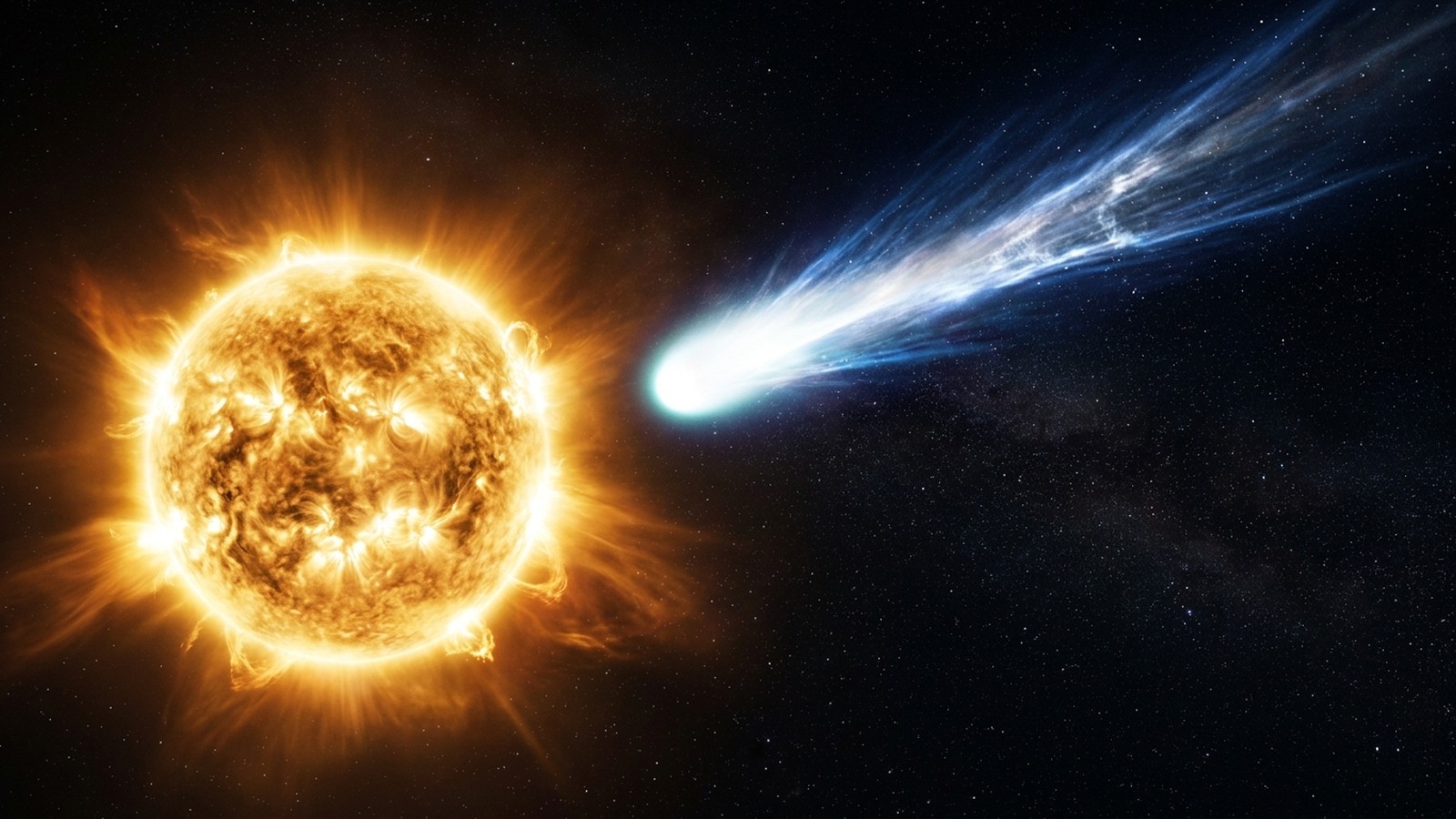
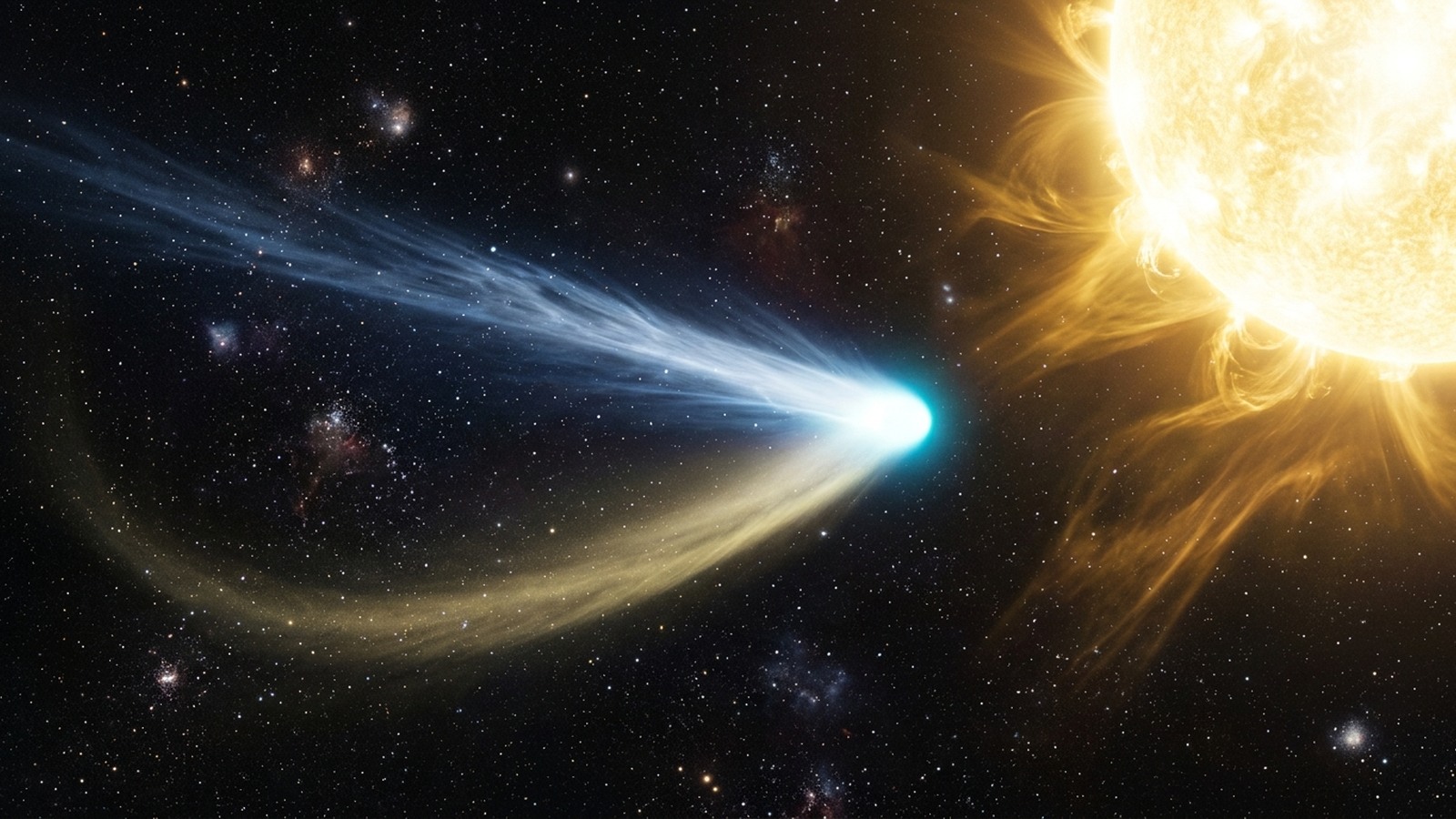
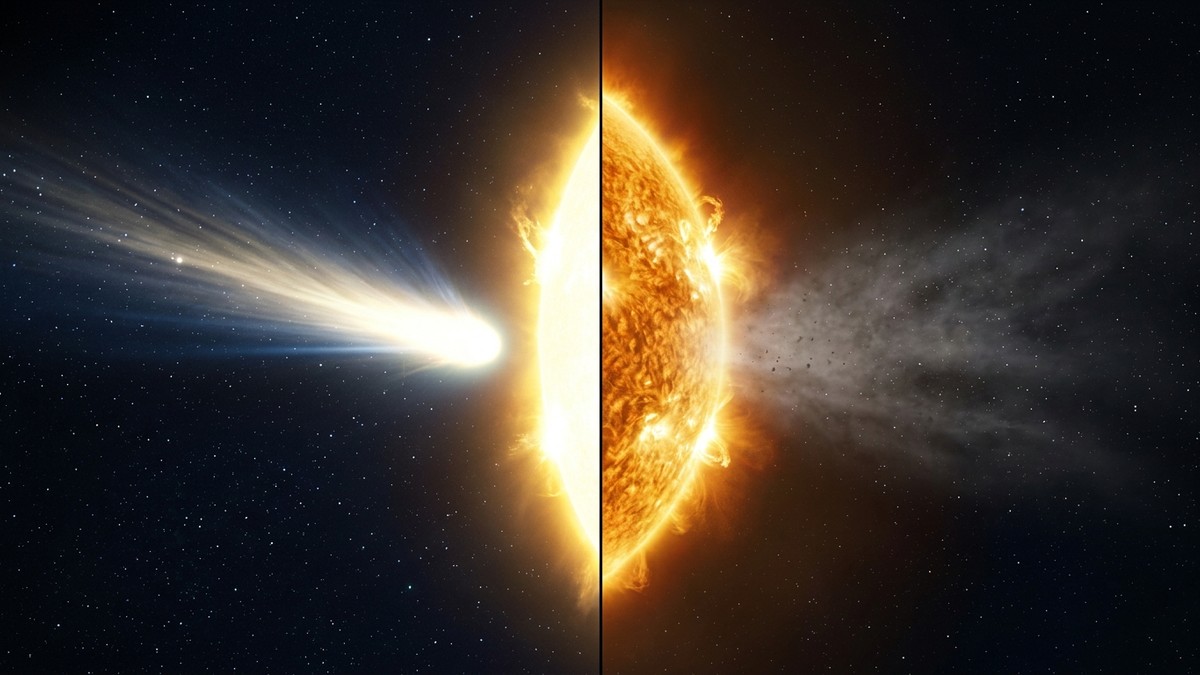
Comet C/2026 A1 (MAPS) — the Kreutz sungrazer that had captivated astronomers and stargazers since its discovery in January — disintegrated on 4 April 2026, roughly six hours before it would have reached its closest approach to the Sun. The comet never emerged from behind our star. There will be no naked-eye spectacle, no sweeping tail over the western horizon, no photographs from hilltops.
It is a disappointing outcome, but not a surprising one. The Sun wins almost every time.
What Happened
Perihelion — the moment of closest approach — was scheduled for 14:22 UTC on 4 April, when MAPS would have passed just 161,000 kilometres above the Sun's surface at roughly 500 km/s. The comet never made it that far.
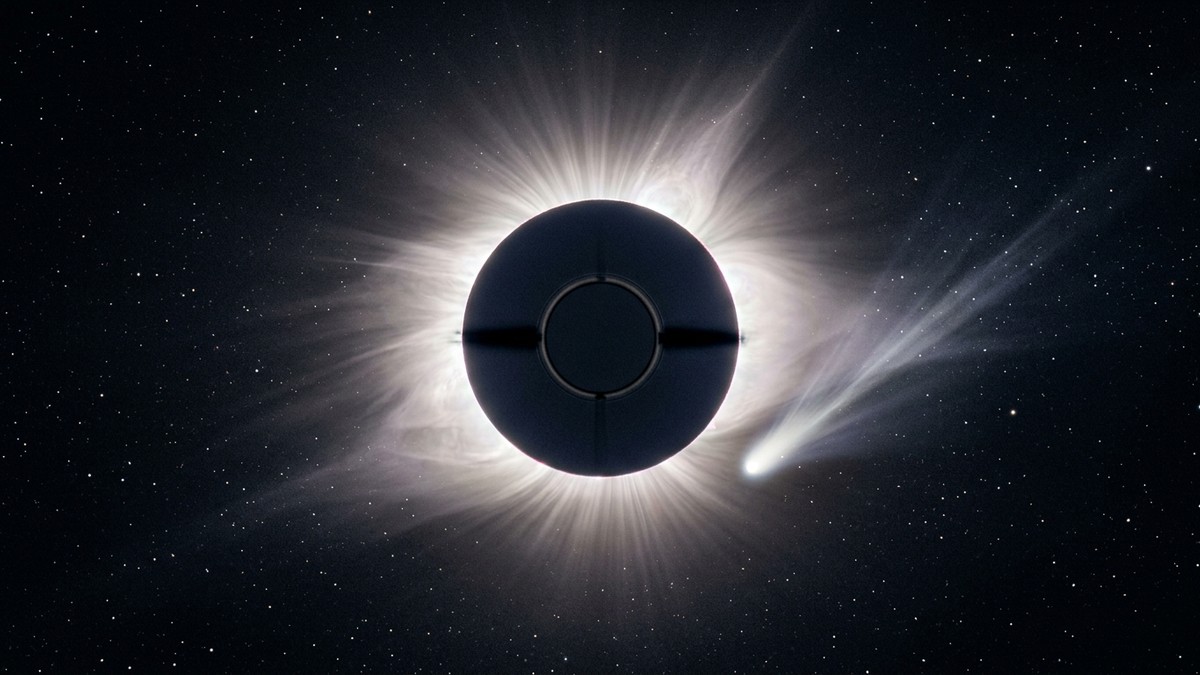
At approximately 08:15 UTC — six hours before perihelion — the CCOR-1 coronagraph (aboard the GOES-U satellite) recorded MAPS at an apparent magnitude of about –0.6. That is brighter than the star Canopus and comfortably naked-eye brightness, at least from the vantage point of a space-based coronagraph.
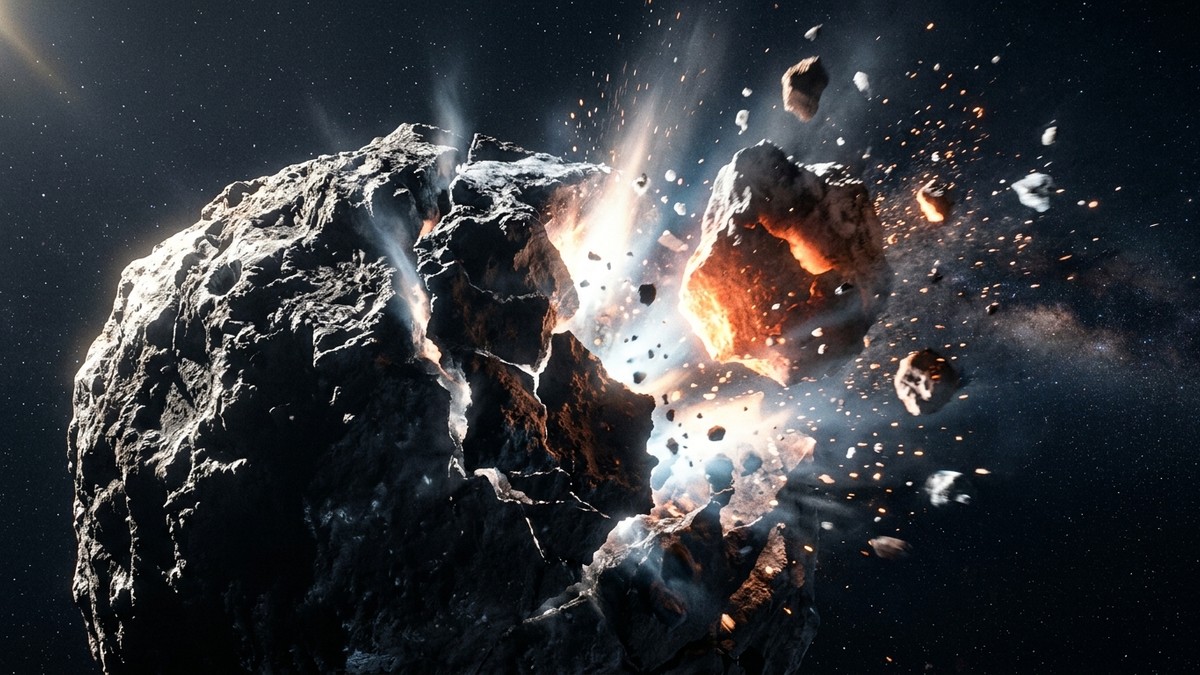
Shortly after that measurement, the comet's signal faded and dispersed. The compact, bright nucleus that had been tracking steadily toward the Sun was replaced by a diffuse smear — the telltale signature of a nucleus that had broken apart, releasing its remaining dust and gas into an expanding, formless cloud.
MAPS did not reappear on the outbound side of the Sun in any SOHO or STEREO imagery. It was gone.
The Final Hours in SOHO Data
The timeline of MAPS' final days, reconstructed from SOHO LASCO and CCOR-1 data, tells a story that was simultaneously hopeful and ominous:
2 April: MAPS entered the field of view of SOHO's LASCO C3 coronagraph, the wide-field instrument that can see objects out to about 30 solar radii from the Sun. The comet was at approximately magnitude 4.2 and brightening steadily — a promising sign.
3 April: MAPS appeared in the narrower-field CCOR-1 camera. It continued to brighten, and the coma remained compact — no obvious signs of fragmentation. Observers monitoring the data in real time allowed themselves cautious optimism.
4 April, early hours: The comet was now deep inside the coronagraph fields, racing toward perihelion. By 08:15 UTC, it had brightened to magnitude –0.6 — a genuine beacon, clearly visible against the solar corona in the coronagraph data.
4 April, ~08:15–09:00 UTC: Something gave way. A sudden outburst of dust — likely the catastrophic failure of the nucleus — was followed by rapid fading. The tight, bright coma elongated, then dissolved. Within an hour, there was nothing left but a diffuse haze drifting away from the Sun.
4 April, 14:22 UTC: Perihelion time arrived, but there was no comet left to round the Sun.
Why MAPS Broke Apart
At 161,000 km from the Sun's surface, MAPS faced conditions that would destroy almost any small body. Surface temperatures on the sunlit side exceeded 2,000°C — hot enough to vaporise rock, let alone ice. The Sun's gravity imposed immense tidal forces, pulling the near side of the 400-metre nucleus harder than the far side. And internally, the rapidly heating ices were generating gas pressure that the fragile, porous structure of a comet nucleus simply could not contain.
The JWST measurements from February had pegged the nucleus at roughly 400 metres across — comparable to Comet Lovejoy, the only Kreutz sungrazer known to have survived a similar passage. But 400 metres is still perilously small. The general consensus among cometary scientists is that a Kreutz sungrazer needs a nucleus of at least 2–3 kilometres to virtually guarantee survival. Below that threshold, it becomes a matter of structural integrity, internal composition, and luck.
The erratic lightcurve that astronomers had flagged throughout March — those punctuating flare-ups and pauses — now looks like a clear warning in hindsight. Each brightness spike likely represented a surface fracture or a pocket of volatile ice being exposed, releasing a burst of gas and dust. The nucleus was weakening from the inside out, long before it reached the killing zone.
The ISON Parallel
The parallels with Comet ISON (C/2012 S1) are striking — and MAPS' fate was, in many ways, a replay of ISON's dramatic end in November 2013.
ISON, like MAPS, was a sungrazer that generated enormous public excitement in the months before perihelion. It brightened steadily, looked compact and healthy in telescope images, and appeared on track to become a Great Comet. Then, approximately 8.5 hours before perihelion, ISON suffered a violent outburst — a massive release of dust that signalled the nucleus had begun to disintegrate. After that outburst, dust production stopped completely within hours. When the comet rounded the Sun, only a faint, headless smear emerged on the other side, which dissipated within days.
MAPS followed almost exactly the same script. A steady brightening phase. A compact coma suggesting an intact nucleus. Then a sudden, fatal outburst in the final hours — at 08:15 UTC, about six hours before perihelion. And then nothing.
The leading explanation for both events is the same: outgassing torques. As a comet's nucleus heats up, jets of gas erupting from its surface create asymmetric forces that spin the nucleus faster and faster. If the rotation rate exceeds the nucleus's structural strength, it flies apart — not from the outside in, but from the inside out. A 400-metre body made of loosely compacted ice and dust simply cannot withstand the centrifugal forces generated by a runaway spin-up at 161,000 km from the Sun.
Lovejoy Remains the Exception
The destruction of MAPS means that Comet Lovejoy (C/2011 W3) remains the only Kreutz sungrazer observed by SOHO to have survived perihelion — and it did so against staggering odds.
Since SOHO began operating in 1995, it has discovered more than 5,000 Kreutz sungrazers. The vast majority were tiny fragments — house-sized or smaller — that simply evaporated without anyone on the ground noticing. A handful were large enough to be detected from Earth before perihelion. But only Lovejoy, with its ~400-metre nucleus, actually emerged intact on the other side.
Even Lovejoy's survival was temporary. Its nucleus, fatally weakened by the perihelion passage, fragmented within weeks of its dramatic appearance. By February 2012, the comet had dissolved entirely. But for a few glorious weeks in December 2011, it gave Southern Hemisphere observers a naked-eye comet with a sweeping tail — proof that survival, while vanishingly rare, was at least possible.
MAPS had similar odds. Same nucleus size, slightly greater distance from the Sun (161,000 km vs Lovejoy's 140,000 km). But the coin toss went the other way.
What MAPS Taught Us
The destruction of MAPS is disappointing for skywatchers, but it is not a loss for science. In fact, MAPS was one of the most thoroughly studied Kreutz sungrazers in history — precisely because it was discovered so far from the Sun.
Most Kreutz sungrazers are only spotted days or hours before perihelion, when they first appear in SOHO coronagraph data. MAPS was discovered at 2.056 AU from the Sun — a record for the Kreutz family — giving astronomers nearly three months to study it. In that time:
JWST measured the nucleus diameter (~400 m) using its Mid-Infrared Instrument, providing one of the most precise size estimates ever made for a Kreutz sungrazer.
Ground-based observatories tracked its lightcurve through January, February, and March, producing a detailed record of how a mid-sized sungrazer behaves as it approaches the Sun — including those tell-tale flare-ups that, we now know, were signs of progressive structural failure.
SOHO and CCOR-1 captured the final hours in coronagraph imagery, providing a frame-by-frame record of the disintegration process that will be compared with ISON and other sungrazer deaths for years to come.
And there is a broader lesson here about the Kreutz family itself. These comets — all fragments of a parent body that Aristotle may have observed in 371 BC — are still arriving at the Sun two millennia later, still breaking apart, still spawning smaller fragments that will return in their own time. Each one that disintegrates feeds the zodiacal dust cloud and teaches us something about the composition and structure of these ancient icy wanderers.
MAPS carried a piece of history that stretched back over 2,000 years. It made its final journey. And even in its destruction, it told us something new about the comets that dive into the Sun — and almost never come back.
The next Kreutz sungrazer large enough to be seen from the ground could arrive next year, or not for another decade. When it does, we will be watching. And maybe — just maybe — the next one will be the next Lovejoy.