Key Takeaways
- Brightest natural object in the night sky after the Moon
- Hottest planet in the solar system at 900°F despite being second from the Sun
- A day on Venus lasts longer than its year - 243 Earth days vs 225 Earth days
Table of Contents
Finding Venus
Of all of the planets in our solar system, Venus is the easiest to find. Venus begins the year as the evening star. You will see it high in the western sky at sunset. It stays in the evening sky until late March when it will disappear completely as it passes between the Earth and the Sun.
In early April, Venus will start to appear in the morning sky and will stay there until December. Often referred to as the morning star and evening star, Venus glitters like a jewel in the sky, making it unmistakable even in light-polluted areas.
Venus is brightest during its evening star phase in the western sky after sunset, or as the morning star in the eastern sky before dawn. No telescope is needed - it's brilliant enough to be seen with the naked eye!
History and Venus
Because of its beauty, the Romans named it Venus after the Roman goddess of love and beauty. Prior to 1610, it was widely believed that the Earth was the center of the universe and that the Sun and all of the planets revolved around it. This belief is commonly referred to as the Ptolemaic worldview or the geocentric model.

Phases of Venus - Galileo's Discovery
In 1610, Galileo first observed the phases of Venus (similar to the lunar phases). This discovery proved that the Sun did not orbit the Earth but in fact the Earth orbited the Sun! This was revolutionary evidence that challenged centuries of accepted astronomical theory.
Venus's Extreme Environment
Venus is often referred to as Earth's sister planet. It is of a similar size, mass, and composition, but there the similarities end. Venus is a searing hot planet covered in a thick blanket of fast-moving toxic clouds. These clouds are composed of sulfuric acid and are many miles thick, which is why we cannot see the surface of Venus.
The surface of Venus is so hot that it would melt lead. If you were to stand on Venus, the pressure would be the same as if you were half a mile under the sea. The reason for Venus being so hot is because of the atmosphere. It is mostly made up of carbon dioxide, which produces a runaway greenhouse effect.

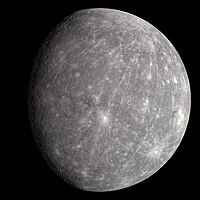
Despite being the closest planet to the Sun, Mercury is not the hottest planet in our solar system - that title goes to Venus. Venus's thick atmosphere traps heat through an extreme greenhouse effect, making it hotter than Mercury even though it's farther from the Sun.
Retrograde Rotation
Venus spins slowly retrograde, which means it spins in the opposite direction to Earth. The Sun rises in the west and sets in the east on Venus. Combined with its extremely slow rotation, this creates one of the most unusual day-night cycles in the solar system - a single day on Venus lasts longer than a Venusian year!