| Key Specifications | |
|---|---|
| Sensor | APS-C 24.1MP (6000×4000) CMOS |
| Mount Type | Canon EF (removable lens, use T-ring for astro) |
| ISO Range | 100–6400 (expandable to 12800) |
| Shutter Speed | 1/4000 to 30 seconds (bulb mode available) |
| Bulb Mode Limit | 30 seconds without external remote |
| Live View | Yes, USB tethering via EOS Utility |
| Cooling | None (no astro-mod available) |
| Connectivity | USB, HDMI, microphone jack |
Who Is This For?
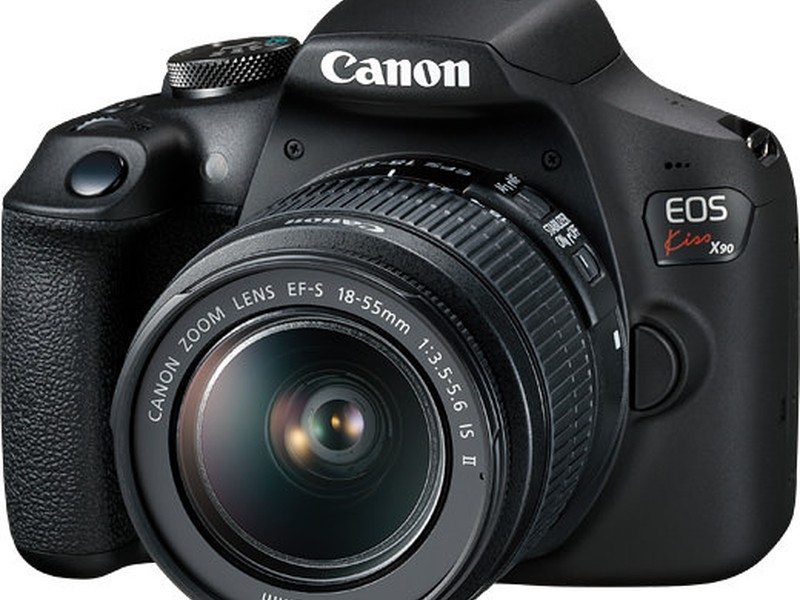
The Canon EOS 2000D is the entry point to wide-field and deep-sky astrophotography — the Milky Way, nebulae, and galaxies shot with a telescope or star tracker.
- People wanting to photograph the Milky Way. The 24MP APS-C sensor excels at landscape astrophotography and wide-field constellation shots.
- Those ready to learn stacking and processing. One 30-second exposure shows the Milky Way; ten stacked exposures show detail and reduce noise dramatically.
- Astrophotographers wanting a learning camera. Every astrophotography tutorial, forum post, and YouTube guide assumes you have a Canon DSLR — usually this one.
- Dual-purpose users. It's a full DSLR, not a specialist astronomy camera, so you can take daytime photos, portraits, and video too.
Skip this if you're only interested in planetary imaging — planetary USB cameras (ASI120MC-S, Svbony SV105) are better. But for deep-sky and nightscapes, this is where most photographers start.
What Can You Capture?
Milky Way Panoramas
Wide-angle lenses (16–35mm) on a tripod capture the entire Milky Way core. Stack 10+ exposures and you'll resolve dust lanes and nebulae invisible to the naked eye.
Nebulae & Clusters
Orion Nebula (M42), Crab Nebula (M1), Pleiades, and the Double Cluster show beautiful detail in 30-second exposures at ISO 3200–6400. Stacking improves signal-to-noise ratio dramatically.
Galaxies
Andromeda (M31), the Whirlpool Galaxy (M51), and the Pinwheel Galaxy (M101) require telescopic focal lengths and stacking. A 200mm focal length or attached to a telescope shows spiral structure.
Comet Photography
Bright comets (mag 5–6) show dramatic tails when captured with wide lenses on a star tracker. Each year produces 1–2 naked-eye comets worth chasing.
The 24MP sensor captures enormous detail. One 30-second exposure at ISO 3200 is impressive; stack five of them and you'll rival professional observatories for nebula and galaxy detail.
The Astrophotography Workflow
Setup: Remove the lens, attach a Canon T-ring (£10–£20) to the camera body, and mount it to your telescope's focuser (prime focus) or on a star tracker/mount (wide-field). Manual focus or live view focusing via USB.
Capture: Set ISO 1600–6400, aperture (if using lens), shutter to 30 seconds or bulb mode (with external remote), and capture multiple exposures. Tip: capture 10–20 frames for stacking, not just one.
Processing: Use free Siril or paid Astro Pixel Processor to stack exposures (subtracts noise, enhances detail), then Photoshop or GIMP for final tweaks (curves, colour balance, levels).
Learning curve: Moderate. Taking photos is easy; stacking and processing take practice. Hundreds of YouTube tutorials exist.
What the Community Says
The standard recommendation. Every astrophotography forum recommends the EOS 2000D (or its slightly more expensive variant, the Rebel T7) as the first DSLR to buy.
Excellent value on the used market. Plenty of people buy these, use them for a year, and sell them. eBay regularly has used EOS 2000Ds at £300–£350 — a good option if budget is tight.
IR modification is possible but controversial. Some astronomers convert Canon DSLRs by removing the IR filter (costs ~£150 from a specialist), making them more sensitive to hydrogen-alpha light from nebulae. But it makes daytime photography difficult, so most astrophotographers skip it.
Bulb mode time limit is annoying. The 30-second maximum without a remote is a minor frustration, but a £15 remote timer solves it instantly.
Stacking is essential for deep-sky. One 30-second exposure looks okay; ten stacked exposures look professional. Accept that you'll spend processing time on the computer.
Known Limitations & Tradeoffs
- No cooling. Thermal noise increases visibly in 30-second exposures, especially at ISO 6400. For modest exposures (15–30 seconds) it's fine; for longer work, you'd want a cooled dedicated camera.
- Bulb mode limited to 30 seconds without external remote. This is a Canon firmware quirk. Buy a 2-second or 30-second remote timer (£15) and this problem vanishes.
- IR filter not optimised for astro. Canon restricts IR (infrared) light to improve daytime colour. This makes the camera less sensitive to hydrogen-alpha emission from nebulae. You can buy modified versions, but they're pricier and no longer work well for daytime photography.
- Single-card slot. Only one SD card slot. If a card fails mid-session, you've lost data. Budget £40 for redundant storage (two high-speed cards and backup).
- Requires a tracking mount for most deep-sky. Unlike Milky Way panoramas (where short exposures avoid star trails), galaxy imaging needs a star tracker or equatorial mount to track the sky's rotation during 2–5 minute exposures.
- Processing complexity. Stacking, aligning, and post-processing takes learning and time. It's not as passive as planetary imaging with USB cameras — expect a month of learning.
Pairs Well With
Canon Remote Timer (TC-80N3 equivalent)
Allows exposures longer than 30 seconds, essential for galaxy and nebula imaging. Eliminates the camera's bulb mode time limit.
~£15–£50Star Tracker or Equatorial Mount
For wide-field Milky Way photography, a £50 Photo Star Tracker works. For deep-sky with long exposures, step up to a proper equatorial mount (£200+).
~£50–£400Wide-Angle Lens (16–35mm f/2.8 or similar)
The best value lens for Milky Way photography. Captures enormous sky area and gathers light quickly (wide f/stop). Used versions ~£200–£400.
~£200–£500Stacking Software
Siril and DeepSkyStacker are free. Astro Pixel Processor (paid, £60) is easier but not essential.
Free–£60The Upgrade Path
Wide-field & Milky Way specialist: Stay here for 2–3 years. The EOS 2000D is excellent for Milky Way work. When you upgrade, it's usually to a higher-resolution body (EOS 5D Mark IV, ~£800) or a dedicated astronomy camera (ZWO ASI294MC Pro, ~£750).
Want better planetary imaging too: Keep this for wide-field and buy the ZWO ASI120MC-S (£150) to your observatory for planetary work. This camera becomes your planetary camera; the Canon handles deep-sky.
Serious deep-sky only: Graduate to the ZWO ASI294MC Pro (£750) — cooled sensor, larger pixels, optimised for long exposures. The EOS 2000D becomes a backup or darkroom camera.