Apollo 17's Unknown Companion
The Object That Followed the Crew for 24 Hours
On 9 December 1972, two days into Apollo 17's translunar coast, Commander Gene Cernan looked out his window and saw something that wasn't supposed to be there: a bright object, far from the spacecraft, flashing with precise rhythmic regularity: alternating between a brilliant flash and a dimmer one, over and over, on a clockwork cycle.
Lunar Module Pilot Jack Schmitt had already been watching it for roughly 24 hours. He had noticed it the day before but hadn't put it together. Now both men were looking at the same thing, and it was clearly not one of the nearby debris particles: there were particles close by to compare against, and this was something else entirely, distant and rotating.
Houston was called. The crew gave position marks. Mission Control tried to triangulate its location using gimbal angles and NOUN 20 spacecraft attitude readings. The object was observed, debated, and logged. It appears in the official Apollo 17 flight transcript, timestamped and verbatim, exactly as the crew reported it.
Apollo 17: The Last Mission to the Moon
Apollo 17 launched on 7 December 1972, the only night launch of the Apollo programme, and remains the most recent mission to carry humans to the lunar surface. The crew were Commander Eugene "Gene" Cernan, a veteran of Gemini 9 and Apollo 10; Lunar Module Pilot Harrison "Jack" Schmitt, a geologist and the only professional scientist to walk on the Moon; and Command Module Pilot Ron Evans, who remained in lunar orbit while Cernan and Schmitt descended to the Taurus-Littrow valley.
The mission broke records across the board: longest time on the lunar surface (75 hours), longest EVAs, most samples collected. Schmitt's scientific training was considered a primary mission asset: he was trained to notice things others might not. Which makes his account of the following encounter all the more striking.
| Event 1: The Rotating Flasher | A bright object far from the spacecraft, clearly distinct from nearby debris, rotating rhythmically and flashing alternately bright then dim. Observed by Schmitt for ~24 hours and confirmed by Cernan. Houston attempted triangulation via gimbal angles. MET 02:18:47. |
| Event 2: Two Simultaneous Flashers | CMP Ron Evans later reported two separate objects showing the same bright/dim alternating flash pattern, widely separated. Both had consistent intensity. Evans suggested SLA (Spacecraft LM Adapter) panels but this was not confirmed. MET ~02:20:56. |
| Event 3: Flash on the Lunar Surface | Jack Schmitt interrupted a geology report mid-sentence to call out a bright flash north of Grimaldi crater during lunar orbit. 'A thin streak of light.' Houston checked seismometers for a meteorite impact. Recorded at MET 03:15:38. |
The Encounter: Verbatim From the Transcript
The exchange begins at mission elapsed time 02:18:47. The spacecraft is roughly two days into translunar coast. Cernan spots the object and begins describing it to Houston, with Schmitt confirming:
"Hey, Bob, I'm looking at what, what Jack was talking about; and it's definitely not a particle that's nearby because there is another one I can look at and get a three-dimensional comparison with. It is a, it is a bright object, and it's obviously rotating because it's flashing. It's way out in the distance, as I say, because there are particles that are close by and it's obviously not one of those. It's apparently rotating in a very rhythmic fashion because the flashes come around almost, almost on time. And it's as we look back at the Earth, it's up at about 11:00, about, oh, maybe 10 or 12 Earth diameters. I don't know whether that does you any good, but there is something out there."· CDR Gene Cernan, Apollo 17 Flight Transcript, MET 02:18:47
Houston's response is measured but engaged, and they take it seriously and try to nail down a position:
"Roger. We don't doubt it, Gene. And we might work out a set of gimbal angles or something here; maybe we can get a look at it through the optics."· CAPCOM Bob Parker, Apollo 17 Flight Transcript
Cernan presses the point. He wants it understood that this is not the kind of spurious sighting that could be explained away as a nearby particle or lens flare:
"Okay. And I, I just want to emphasise that it's definitely not, not one of these particles that tends to look like a star out there. It's something physical in the distance."· CDR Gene Cernan, Apollo 17 Flight Transcript, MET 02:18:49
Houston requests a position mark. Cernan and Schmitt work together to give it: the object is at roughly 45 degrees pitched up from the spacecraft's centre window, in the XZ plane. Cernan gives a mark as it crosses the XX axis. Schmitt adds his own detail:
"One unique thing about it, Bob, is that it's got two flashes. As it comes around in, in rhythmic fashion, you get a very bright flash; and then you get a dull flash. And then it'll come around with a bright flash, and then a dull flash."· CDR Gene Cernan, Apollo 17 Flight Transcript, MET 02:18:51
"It's something physical in the distance."
· Commander Gene Cernan, Apollo 17, 9 December 1972The S-IVB Explanation: Why the Crew Wasn't Convinced
During the observation, Schmitt offers an explanation: the object might be the mission's spent S-IVB third stage, the 58-foot rocket body that had been jettisoned during translunar injection and was drifting ahead of them. He thought he could make out the engine bell through his monocular.
Cernan flatly disagreed. In the transcript, he says Schmitt "couldn't see the engine bell on that thing" if he had "10 monoculars." Later, Schmitt qualifies his own suggestion: noting he had been watching the object for roughly 24 hours without connecting it to the S-IVB, thinking it was "just some other particle out there." That timeline makes the S-IVB hypothesis more complicated: if Schmitt had been observing it for a full day, it would have been maintaining a consistent relative position to the spacecraft for an unusually long period.
For context: the S-IVB was intentionally crashed into the Moon during Apollo 17 to generate seismic data. Its precise trajectory was tracked by NASA throughout the mission. Whether it would have appeared as a rhythmically rotating, dual-flashing object at the described angular position has never been formally confirmed in the mission record.
Later, Evans reports a second object, then two simultaneous objects, with the same bright/dim alternating flash signature, widely separated. He suggests SLA panels (the four petals of the Spacecraft LM Adapter that separated during launch). This remains unconfirmed.
The Flash on the Lunar Surface
Three days later, in lunar orbit, Schmitt's observational instincts produce another unexpected report. Mid-sentence during a geology description of the Grimaldi region, he interrupts himself:
"Hey, I just saw a flash on the lunar surface! It was just out there north of Grimaldi. Just north of Grimaldi. You might see if you got anything on your seismometers, although a small impact probably would give a fair amount of visible light."· LMP Jack Schmitt, Apollo 17 Flight Transcript, MET 03:15:38
He elaborates: "a bright little flash right out there near that crater... a thin streak of light." Houston asks him to mark the location on his map and checks the seismometer network left on the surface by earlier missions. This is a documented Transient Lunar Phenomenon (TLP): a category of unexplained optical events on the lunar surface that has been reported by observers since the 18th century.
"Hey, I just saw a flash on the lunar surface!"
· LMP Jack Schmitt, Apollo 17, in lunar orbit, December 1972The Apollo 17 Debriefing Tapes: What NASA Released in July 2026
On 10 July 2026, more than 53 years after the mission, NASA released nearly two hours of audio from the Apollo 17 post-mission medical debriefing (files NASA-UAP-D028 and NASA-UAP-D029, published through the Pentagon's PURSUE programme). The recordings were made at the Manned Spacecraft Center, now Johnson Space Center, in Houston, days after splashdown in December 1972. For the first time, you can hear Cernan, Evans and Schmitt being questioned about anomalous lights, in their own voices.
The subject of the tapes is the "light flash phenomena": brief streaks and flashes of light that Apollo astronauts perceived even with their eyes closed. Two of the three Apollo 17 crew members reported seeing them at various points in the mission, including in lunar orbit and while standing on the lunar surface. In 1972 the effect was new and genuinely puzzling. Today it is well documented: high-energy cosmic rays pass through the eye and strike the retina, and the brain registers a flash that isn't there. NASA released matching debriefing audio from Apollo 14 in the same batch.
It's worth being clear about what the tapes are not. They do not discuss the flashing object Cernan and Schmitt tracked through the window during translunar coast. That encounter lives in the flight transcript, quoted above. The debriefing flashes were inside the astronauts' eyes; the object was outside the spacecraft, physically distant, and rotating on a clockwork cycle. One of those two anomalies was eventually solved by science. The other was never formally explained. Listening to the crew methodically help investigators pin down the solvable one makes the unsolved one stand out more, not less: these were careful, precise observers who knew the difference between a trick of the eye and a thing in the sky.
Gene Cernan
Veteran of Gemini 9 and Apollo 10. Formally reported the flashing object to Houston at MET 02:18:47. Gave position marks. Rejected the S-IVB explanation. The last human to walk on the Moon.
Jack Schmitt
Professional geologist and the only scientist to walk on the Moon. Had been observing the object for approximately 24 hours before Cernan raised it. Also reported a flash on the lunar surface in orbit.
Ron Evans
Orbited the Moon alone while Cernan and Schmitt were on the surface. Later reported seeing two simultaneous objects with identical bright/dim flash signatures, widely separated, possibly SLA panels.
Bob Parker
Astronaut and physicist serving as capsule communicator during this leg of the mission. Responded to the crew's report: 'We don't doubt it, Gene.' Requested gimbal angles to attempt triangulation.
Launch: the only night launch of Apollo
Apollo 17 lifts off from Kennedy Space Center at 00:33 UTC. The night launch illuminates the Florida coast for hundreds of miles. Crew: Cernan, Schmitt, Evans.
Schmitt first notices the object
Lunar Module Pilot Jack Schmitt begins observing a flashing object from his window during translunar coast. He watches it for approximately 24 hours without formally reporting it, assuming it's 'just some other particle out there.'
Cernan confirms, and reports to Houston
Commander Cernan independently identifies the object and keys the radio. He emphasises it is clearly not a nearby debris particle, is physically distant, and is rotating rhythmically with two distinct flash levels: one bright, one dim.
Houston attempts triangulation
CAPCOM Bob Parker requests gimbal angles and NOUN 20 spacecraft attitude data to attempt to locate the object through onboard optics. Cernan and Schmitt provide a position mark as the object crosses the XZ plane.
S-IVB hypothesis raised, and disputed
Schmitt suggests the object might be the mission's spent S-IVB stage. Cernan strongly disagrees: suggesting Schmitt couldn't distinguish the engine bell even with 10 monoculars. The debate is recorded verbatim in the transcript.
Evans reports two simultaneous flashers
CMP Ron Evans calls in two separate objects with the same bright/dim alternating signature, widely separated. He suggests SLA panels but cannot confirm. Both objects maintain similar intensity and rhythm.
Apollo 17 enters lunar orbit
The spacecraft completes its translunar coast and enters lunar orbit. Cernan and Schmitt prepare to descend to Taurus-Littrow.
Schmitt reports a flash on the lunar surface
In lunar orbit, Schmitt interrupts a geological description to call out a bright flash north of Grimaldi crater: 'a thin streak of light.' Houston checks seismometers for a meteorite impact signature.
PRIMARY SOURCE
Official NASA Flight TranscriptThe full exchange is recorded in the official Apollo 17 flight transcript, published by NASA. Timestamped, verbatim, and publicly available. Not disputed or redacted.
MULTIPLE WITNESSES
Three Independent Crew MembersCernan, Schmitt and Evans all observed separate anomalous flashing objects during the mission. Each provided independent descriptions consistent with one another.
MISSION CONTROL
Houston Took It SeriouslyCAPCOM Bob Parker's response ('We don't doubt it, Gene') and the subsequent request for gimbal angles indicates Mission Control treated the sighting as a genuine object worth attempting to locate.
CHARACTERISATION
Rhythmic, Dual-Phase FlashingCernan described a precise, clockwork alternation: bright flash, dim flash, bright flash, dim flash. This regularity is inconsistent with random debris tumbling and was noted by both crew members.
OBSERVATION DURATION
~24 Hours of Continuous ObservationSchmitt had been watching the object for approximately 24 hours before it was formally reported. This sustained relative position to the spacecraft is difficult to account for with random debris.
CREW DISPUTE
S-IVB Explanation Rejected In Real TimeWhen Schmitt offered the S-IVB as an explanation, Cernan disputed it immediately and vigorously. The disagreement is recorded in the transcript. No formal NASA resolution appears in the record.
TRANSIENT LUNAR PHENOMENON
Lunar Surface Flash Also UnexplainedSchmitt's flash report north of Grimaldi is consistent with Transient Lunar Phenomena, a long-documented but not fully explained category of optical events on the lunar surface.
NO FORMAL RESOLUTION
Never Officially ClassifiedUnlike some mission anomalies, there is no formal post-mission NASA analysis of the flashing objects in the publicly available Apollo 17 documentation. The transcript record stands without a definitive explanation.
Why This Case Stands Apart
Most UAP sightings from the Apollo programme involve brief visual observations: a flash, a particle, a brief glimpse of something anomalous before it passes out of frame. The Apollo 17 encounter is different in several respects.
It lasted approximately 24 hours before being formally reported, which means the object maintained a consistent angular position relative to the spacecraft for an extended period. It was observed by two crew members independently and cross-confirmed. It was precise enough in its behaviour, the alternating dual-flash cycle, to be described consistently by both Cernan and Schmitt without prompting each other. And Houston's response was to attempt to locate it, not to dismiss it.
The S-IVB explanation may ultimately be correct: it was the closest large piece of hardware following the same general trajectory. But Cernan's rejection of that explanation in real time, Schmitt's observation duration, and the fact that no formal post-mission analysis appears in the public record leaves the question open.
What is not in question is that three of NASA's most rigorously selected and trained crew members reported it, that Mission Control took it seriously, and that the exchange is preserved verbatim in the official transcript.
You don't need a spacecraft window
Kit we've tested and reviewed in full
Cernan and Schmitt tracked their object from lunar orbit. You can track satellites, the ISS and tumbling rocket bodies from your own garden with a decent pair of binoculars.
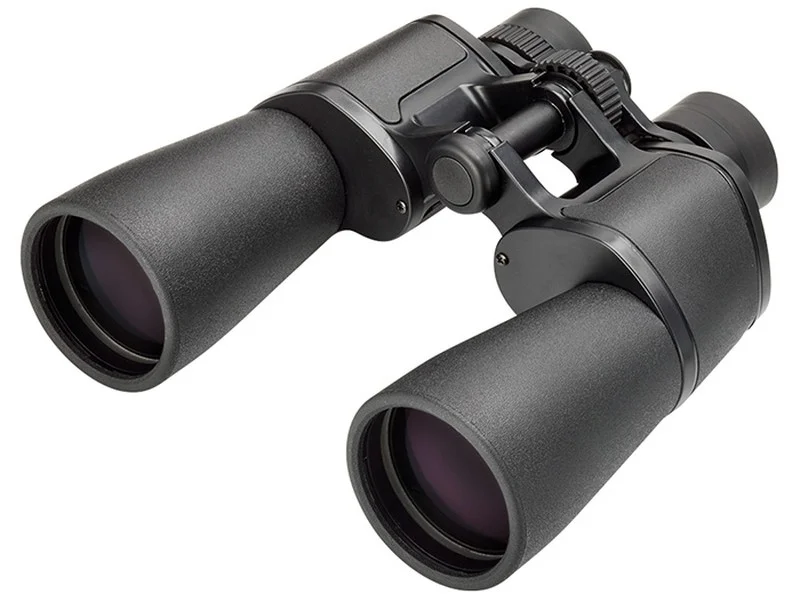
Wide, bright view that makes it easy to track a moving satellite, and to catch the periodic flash of a tumbling rocket body, the same behaviour the S-IVB explanation relies on.
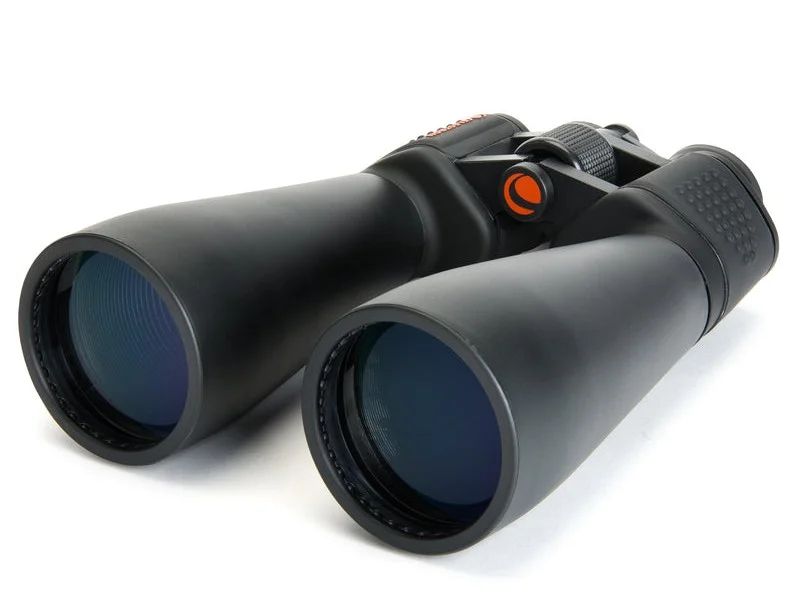
Enough aperture to follow dimmer objects and pick up detail on the ISS as it crosses, about as close as a garden gets to a command module window.
Affiliate links: you pay the same price, we earn a small commission that helps keep WatchTheStars free.
Primary Source Documents
The three NASA documents below are the actual sources behind this page, released as part of the PURSUE programme in May 2026 and hosted here directly.
Apollo 17 Flight Transcript
NASA-UAP-D2 · 1972 · 453 KB
Official mission transcript including the MET 02:18:47 exchange in which the crew discusses an unidentified object seen through the window shortly after translunar injection.
Download PDFTechnical Crew Debriefing
NASA-UAP-D6 · 1973 · 502 KB
Post-mission technical debriefing with the Apollo 17 crew. Covers mission systems, observations, and anomalies reported during the flight.
Download PDFCrew Debriefing for Science
NASA-UAP-D5 · 1973 · 208 KB
Scientific debriefing of the Apollo 17 crew, covering lunar surface observations and any anomalous phenomena noted during the mission.
Download PDFMedical Debriefing Audio: Part 1
NASA-UAP-D028 · Dec 1972 · 53 min · released 10 Jul 2026
First segment of the post-mission medical debriefing at the Manned Spacecraft Center, Houston. The crew describe the light flash phenomena they observed in lunar orbit and on the lunar surface.
Listen on DVIDS ↗Medical Debriefing Audio: Part 2
NASA-UAP-D029 · Dec 1972 · 51 min · released 10 Jul 2026
Second segment of the medical debriefing, continuing the crew's account of the light flashes and the investigators' questioning.
Listen on DVIDS ↗📌 Note: These are official NASA records released through the US government's PURSUE declassification programme: the documents in Release 01 (8 May 2026), the medical debriefing audio in Release 04 (10 July 2026). Document copies are hosted here to ensure permanent availability.
More UAP cases
- The RB-47 Encounter: 700 Miles, Three Sensors, No ExplanationMississippi → Texas → Oklahoma → Kansas · 17 July 1957 · ~0200–0340 CST
- The 1976 Tehran UFO Incident: F-4 Jets, Weapons Failure and the Declassified DIA Report
- RAF Lakenheath: The Night Britain's Air Defences FailedSuffolk, England · 13–14 August 1956 · 2130–0330 hrs
- The Chupa-Chupa AttacksSeptember–December 1977 · Colares, Vigia & the Pará coast · Status: Documented, Unexplained
- The Senator Russell Sighting4 OCTOBER 1955 · SOVIET TRANSCAUCASUS (PRESENT-DAY AZERBAIJAN) · FULL CIA FILE RELEASED 10 JULY 2026
- Operação PratoOctober–December 1977 · Colares, Pará, Brazil · Status: Files Released