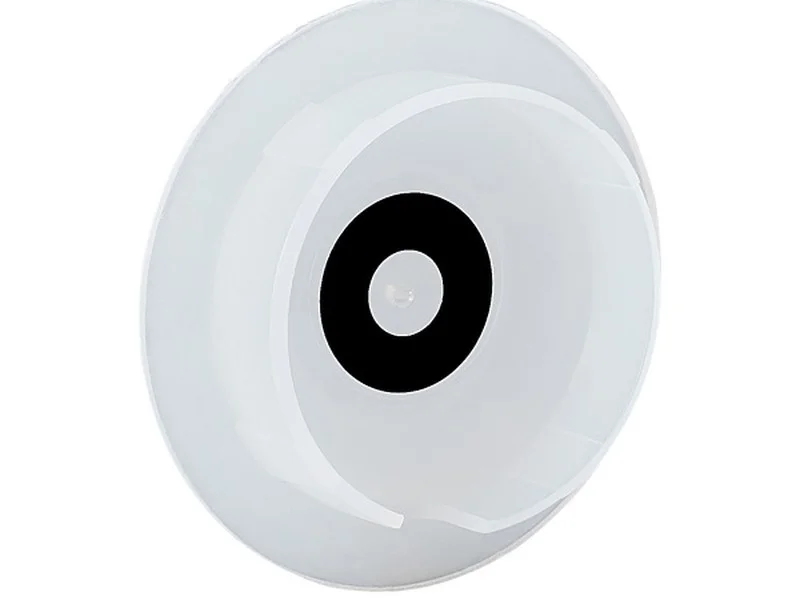
Rigel Aline Collimation Cap
| Key Specifications | |
|---|---|
| Type | Collimation alignment tool |
| Material | Black plastic (durable) |
| Fits | Standard 1.25" focuser opening |
| Viewing Port | Precisely centred hole with crosshairs |
| Time to Collimate | ~2–5 minutes once aligned |
| Required For | Newtonian reflectors only |
| Endorsed By | First Light Optics, YouTube astronomers, Stargazers Lounge |
| Durability | Lasts for years with typical use |
Who Is This For?
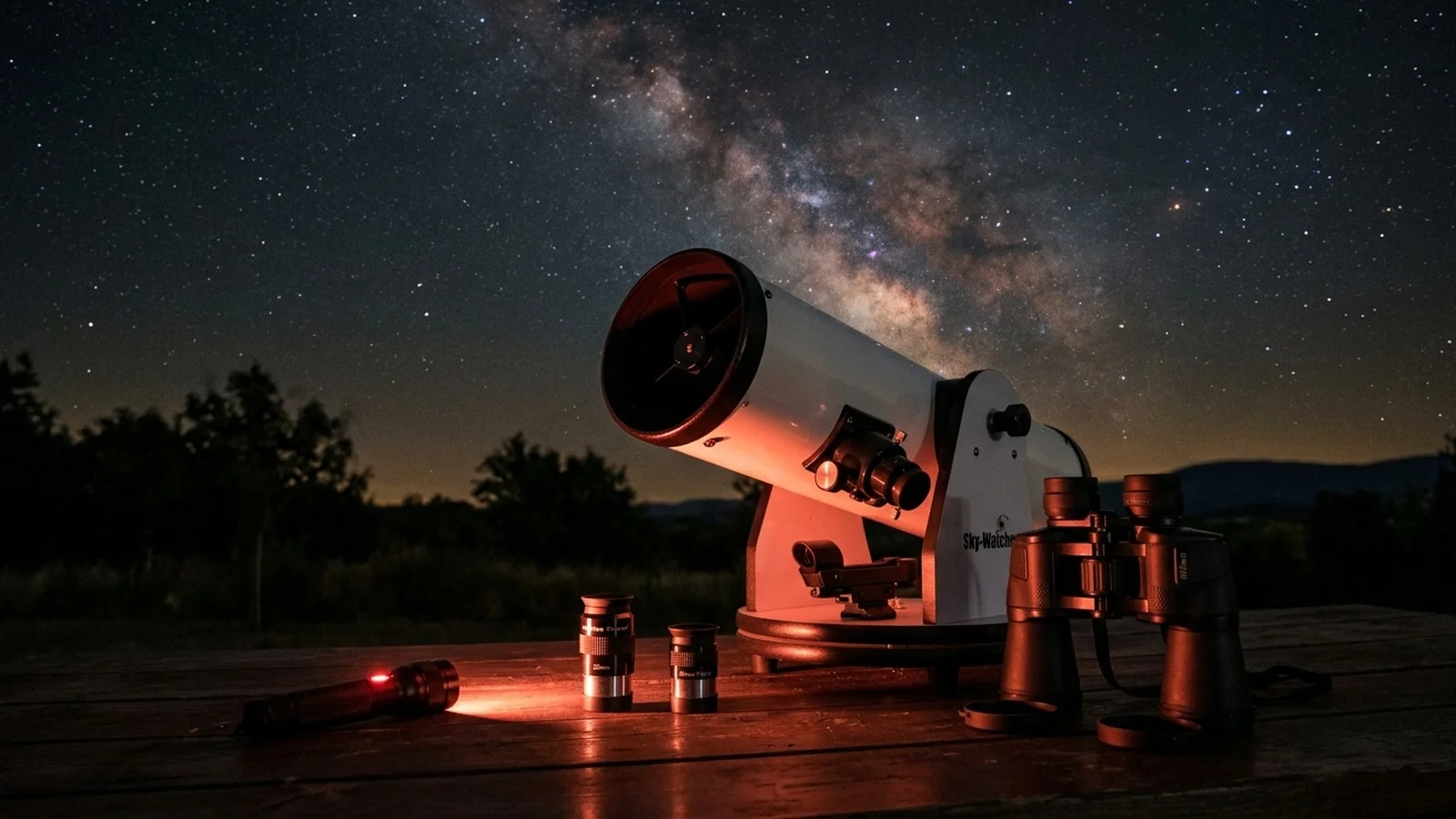
If you own a Newtonian reflector (a mirror-based telescope like a Heritage Dobsonian or Skyliner), this is mandatory. If you own a refractor or any other telescope type, you don't need it.
- Newtonian reflector owners: this applies to you, no question
- People who find collimation confusing: this removes that confusion entirely
- Beginners with Dobsonians: the perfect tool to learn collimation properly
- Anyone observing regularly: you'll check collimation before sessions, and this makes that fast and certain
Refractor owners: skip this. Your optical design doesn't require it.
What Does It Do?
Newtonian reflectors have two mirrors: a large primary mirror at the bottom and a small secondary mirror tilted at 45° to reflect light toward the focuser. Over time, these mirrors drift out of alignment: temperature changes, rough handling, even vibration can move them slightly. When they're misaligned, image quality degrades: stars look blurry, detail disappears, contrast suffers.
Collimation is the process of realigning them. The hard part isn't the adjustment (that's mechanical and straightforward): it's working out whether they're actually aligned. Most people use the "star test" method, which involves looking at a star's diffraction pattern and trying to interpret subtle visual clues. This is confusing, especially for beginners.
The Rigel Aline cap solves the hard part by giving you a defined viewing point. You drop the cap into your focuser and look through the precisely drilled hole. You immediately see the primary mirror and the secondary mirror's reflection in it. If the secondary mirror's reflection is centred on the primary (which is obvious if you look), the mirrors are aligned. If not, you know exactly which way to adjust. No guessing, no confusion: just simple visual feedback.
How to Use It
Before you start: Observe the cap first without the telescope: just hold it up to a light and look through the hole. Notice the crosshairs and the centred viewing port. This is what alignment looks like.
Collimation process:
- Point your telescope at the sky (doesn't matter where; you're not looking through the main eyepiece)
- Drop the Rigel cap into the focuser opening (where your eyepiece normally goes)
- Look through the hole from the focuser end
- You'll see the primary mirror and the secondary mirror's reflection in it
- The secondary mirror should appear as a small circle centred in the primary mirror
- If it's off-centre, loosen the mirror adjustment screws on the secondary mirror and nudge it until centred
- Once centred, tighten the screws gently
- Remove the cap and go observing
Total time: 2–5 minutes, depending on how far out of alignment the mirrors are.
Frequency: Check before each observing session if you're serious. Most mirrors drift slowly, so weekly checks are fine for casual observers.
What the Community Says
Near-universal recommendation. First Light Optics (the UK retailer) includes "Every Newtonian owner should have one" in their product description. YouTube channels devoted to collimation recommend it immediately. Stargazers Lounge threads on Newtonian maintenance assume you have one.
Transforms collimation from confusing to straightforward. Owners report that they were intimidated by collimation before using the cap: the star test method seemed too subjective. With the cap, it becomes mechanical and obvious.
Often a revelation. Many owners use this cap for the first time and realise their scope has been misaligned for months. After collimating, image quality improves noticeably.
Lasts for years with normal use. The plastic is durable. Some observers have owned the same cap for 5+ years of regular use without degradation.
Known Limitations & Tradeoffs
- Newtonian only. Refractors don't have adjustable secondary mirrors. SCTs and other catadioptrics use different collimation methods. This tool applies only to Newtonians.
- Works only on 1.25" focusers. Some large telescopes use 2" focusers. A 2" version exists, but if you own a 1.25" Newtonian, this is your tool.
- Collimation is about alignment, not optical quality. If your mirrors are actually damaged (scratched coatings, cracked glass), collimation won't help. This assumes your optics are intact.
- Requires accessing the focuser. On some Dobsonians where the focuser is recessed, getting the cap in and out can be slightly awkward. Not a deal-breaker, just a minor inconvenience.
Alternatives & Related Tools
Star Test Method (Free)
Using an out-of-focus star to judge collimation. Works, but requires experience to interpret visual clues. Most beginners find it frustrating.
FreeArtificial Star Collimator
A small LED light source placed at distance. Expensive and less practical than the Rigel cap. Only needed for advanced observers.
~£40–£60 View on Amazon →Cheshire Eyepiece (Alternative)
A more expensive collimation tool (essentially a cap with a built-in lens). Works similarly but costs more. Not necessary if you have the Rigel cap.
~£25–£40 View at FLO →Where It Sits on the Accessory Path
For Newtonian owners, this comes right after the Moon filter. Once you've had a few observing sessions and realised that maintaining your scope is part of the hobby, this is the second purchase. At £4, it's cheap enough to be an impulse buy.
For non-Newtonian owners: skip it entirely. There's nothing wrong with this product. It's just not applicable to your telescope type.
This enables a fundamental skill. Collimation is one of the three core competencies of amateur telescope ownership (alongside observing technique and eyepiece selection). This cap lets you learn and perform collimation confidently for decades of observing.