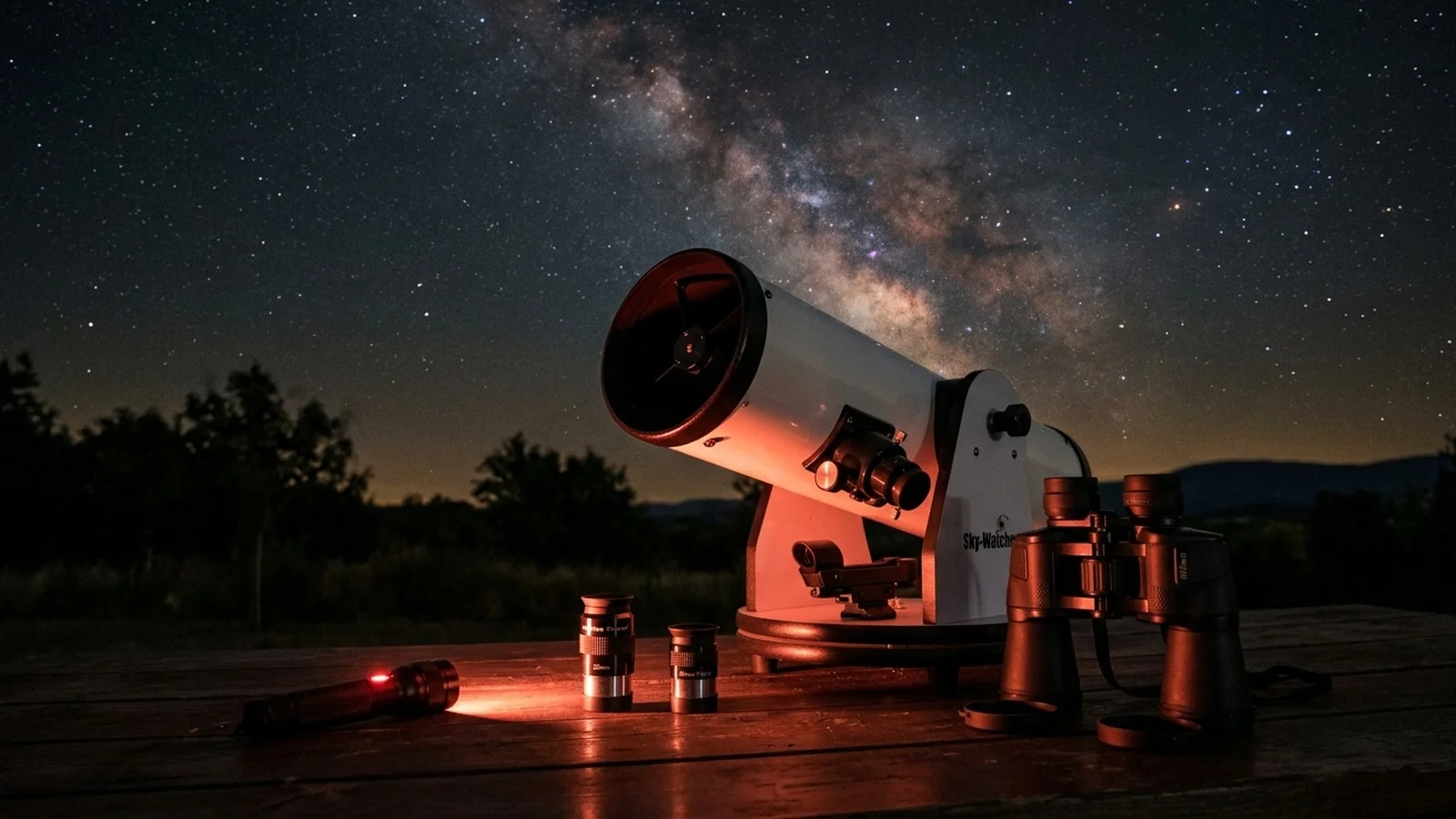
Best Telescope Accessories 2026
Small purchases that solve big problems. From a £4 collimation cap to a £127 atmospheric dispersion corrector, every one earns its place in your kit bag.
| Accessory | What It Does | Price | Level |
|---|---|---|---|
| Moon Filter ND 0.9 | Reduces lunar glare | around £11 | Beginner |
| Astro Essentials Red Light Torch | Preserves night vision while reading charts | around £16 | Beginner |
| Telrad Finder | Reflex sight for finding objects | around £43 | Beginner |
| Collimation Cap | Mirror alignment tool | around £4 | Beginner |
| Variable Polarising Filter | Adjustable brightness control | around £24 | Intermediate |
| Celestron Dew Shield for C6/C8 | Prevents corrector plate condensation | around £49 | Beginner |
| #23A Light Red Filter | Mars surface markings, Jupiter belts | around £9 | Beginner |
| #21 Orange Filter | Best all-round planetary filter | around £9 | Beginner |
| #82A Light Blue Filter | Venus phase, Mars polar caps, Jupiter GRS | around £9 | Beginner |
| ZWO ADC | Corrects colour smearing on low planets (imaging) | around £127 | Intermediate |
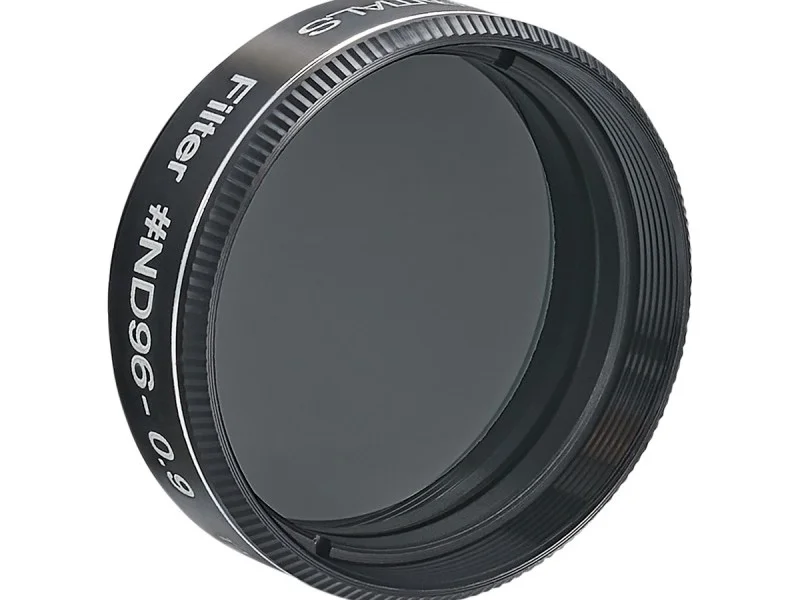
Astro Essentials Moon Filter 1.25" ND 0.9
BeginnerThe Moon through a telescope is bright. Painfully, squint-inducingly bright, especially through a 6" or 8" scope near full Moon. An ND 0.9 filter cuts the light by about 87%, bringing the glare down to a comfortable level and actually revealing more surface detail because your eye isn't being overwhelmed.
It screws onto the barrel of any standard 1.25" eyepiece. Put it on, point at the Moon, and suddenly you can see craters, mountain ranges, and rilles without feeling like you're staring at a car headlight. At £11, this is the most cost-effective accessory in astronomy, and almost certainly the first one you'll wish you'd bought sooner.
Buy this the same day you buy your telescope. You will use it on your very first session and every lunar observation after that. Eleven pounds well spent.
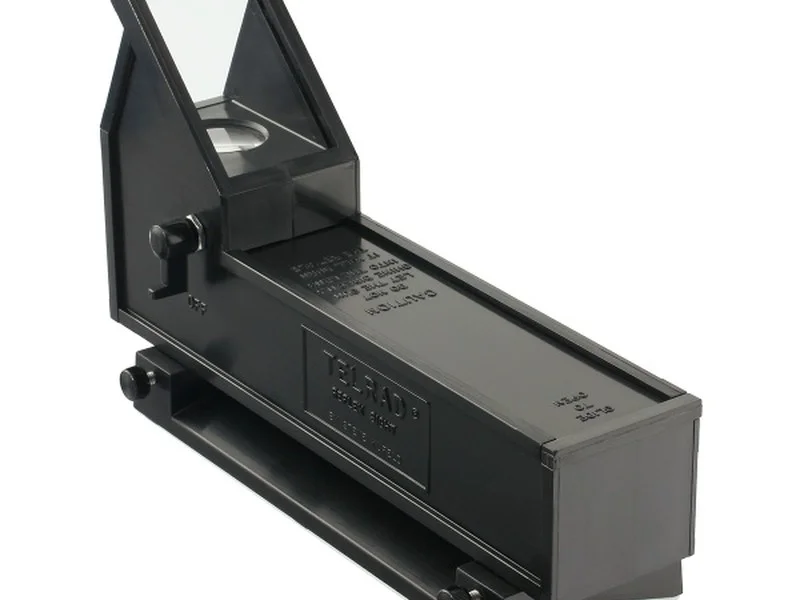
Telrad Reflex Finder
BeginnerThe Telrad is the single most popular finder upgrade in amateur astronomy, and it's been in production largely unchanged since the 1970s, because it works. It projects three concentric red circles (0.5°, 2°, and 4° diameter) onto a tilted glass screen. You look through it with both eyes open and see the circles overlaid on the real sky, making it trivially easy to point your telescope at the right patch of sky.
Most beginner telescopes come with a small optical finderscope or a basic red-dot finder. The Telrad is better than both because the circles give you a sense of scale: the 4° circle is roughly the width of your fist at arm's length, and many star atlases are designed with Telrad circles in mind. Star-hopping from a known star to a faint target becomes a matter of "move two Telrad circles east and one north."
It attaches to the telescope tube with an adhesive base (included) and runs on two AA batteries that last months. The brightness is adjustable: use the dimmest setting that's visible to preserve your night vision.
If you find yourself struggling to locate objects beyond the Moon and bright planets, the Telrad will transform your experience. It's one of those accessories that makes you wonder how you managed without it.
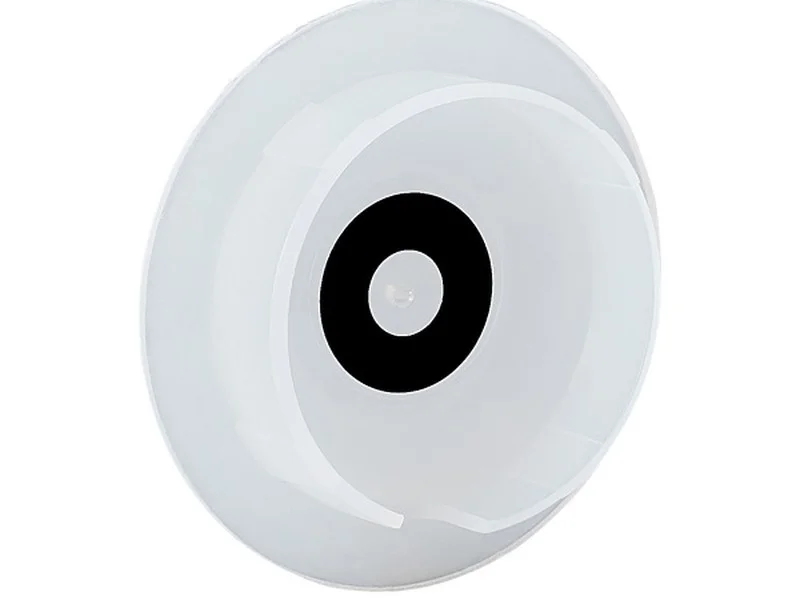
Rigel Aline Collimation Cap
BeginnerIf you own a Newtonian reflector (Heritage 130P, Heritage 150P, Skyliner 200P, or similar), your mirrors need to be aligned, collimated, for the telescope to produce sharp images. Transport, temperature changes, and the odd bump can knock them slightly out of alignment. A miscollimated scope shows bloated, asymmetric stars and soft planetary detail.
The Rigel Aline is the simplest collimation tool: a plastic cap with a precisely centred peephole and crosshairs. You slot it into the focuser, look through the hole, and check whether the reflections of your primary mirror, secondary mirror, and the crosshairs are all concentric. If they're not, you adjust the mirror screws until they are. The whole process takes 2–3 minutes once you've done it a few times.
At £4, there is no reason not to own one. First Light Optics themselves say "every Newtonian owner should have one."
The best six pounds you'll spend in astronomy. Collimation sounds intimidating until you've done it once, then it becomes a quick pre-session ritual that takes less time than setting up a deckchair.
Astro Essentials Variable Polarising Moon Filter
IntermediateThe fixed ND 0.9 Moon filter (#1 on this list) is perfectly good for most lunar observing. But a variable polarising filter gives you continuous control: rotate the two polarising layers against each other and you can dial the transmission from roughly 1% to 40%. This means you can match the filter to the Moon's phase: a thin crescent needs barely any filtering, while a near-full Moon wants heavy attenuation.
It also works on bright planets. Venus, in particular, benefits from some attenuation: it's so bright it can overwhelm detail in a telescope. Jupiter at opposition can also be slightly too bright in larger scopes.
The Astro Essentials version fits 1.25" eyepieces and has a knurled ring for easy adjustment in the dark. It's £13 more than the fixed filter but considerably more flexible.
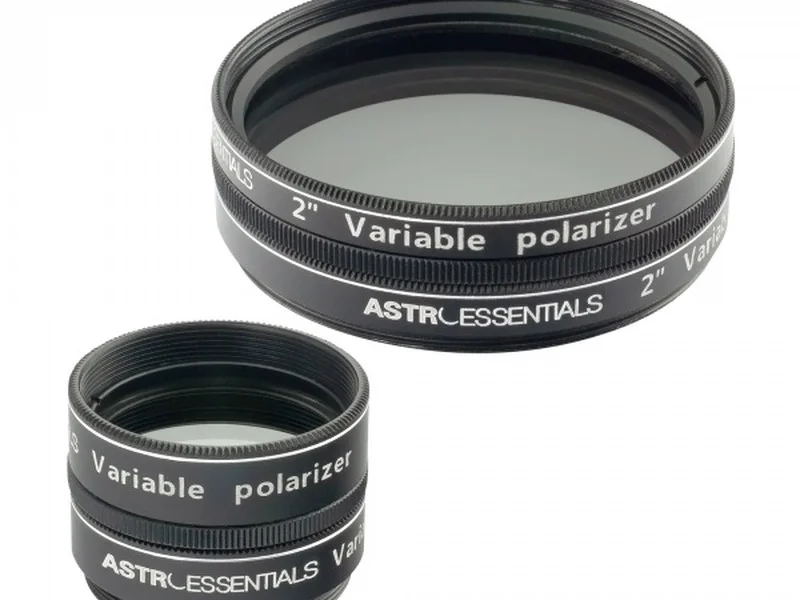
A worthwhile upgrade from the fixed Moon filter once you're observing regularly. The ability to fine-tune brightness for different lunar phases and planets makes every session more comfortable. If you can stretch to £24 from the start, skip the fixed filter and buy this instead.
Celestron Dew Shield for C6 and C8 OTAs
BeginnerThe UK's maritime climate means one thing for Schmidt-Cassegrain owners: dew. On a typical clear night, moisture condenses on your corrector plate within 30 to 60 minutes. Once it fogs, observing is over unless you have a heater or a hairdryer.
This is the official Celestron dew shield, designed specifically for C6 (150mm) and C8 (200mm) OTA tubes, including the hugely popular NexStar 6SE. It's not a generic universal shield. It fits perfectly, stays secure, and extends beyond the corrector plate to create a protective zone that delays dew formation significantly.
The shield also acts as a light blocker, reducing stray light from streetlamps and neighbors' security lights, a bonus benefit that improves contrast on deep-sky targets and planets. For all-night observing, combine with a dew heater strip (£40–£60). Shield alone extends sessions by 2–3×. Shield + heater = problem solved.
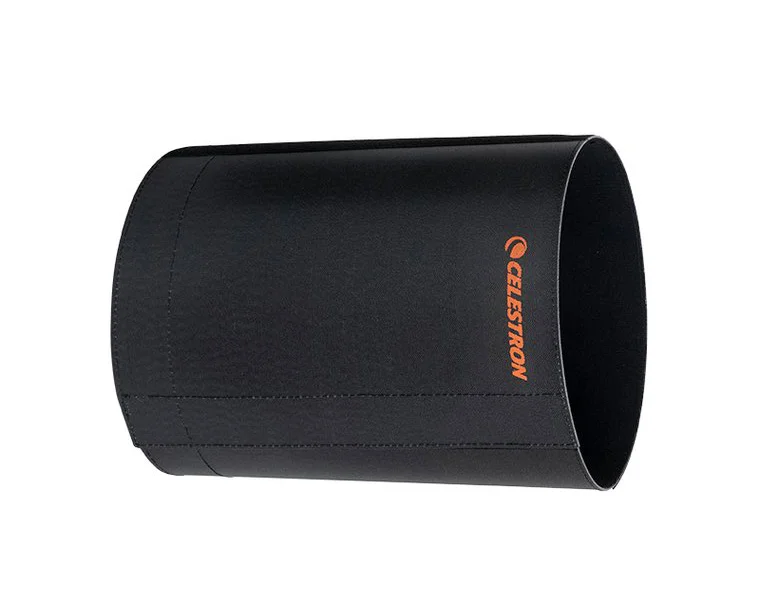
If you own a C6, C8, or NexStar 6SE, buy this before you buy anything else. Dew is the #1 frustration for UK SCT observers. This shield is the first step to fixing it. Essential day-one accessory.
Astro Essentials #23A Light Red Filter 1.25"
BeginnerThe #23A is the essential Mars filter. It blocks blue and green wavelengths and transmits red and orange, which makes the reddish desert regions of Mars punch dramatically brighter while darkening the blue-grey polar hazes and sky features. Dark surface markings like Syrtis Major and Sinus Meridiani, which blend into an orange haze in unfiltered views, snap into clear contrast. If you observe Mars and have 100mm+ aperture, this is the most impactful £9 you can spend.
On Jupiter, it enhances contrast in the equatorial belts: the NEB and SEB become more distinct against the lighter zones. Less transformative than on Mars, but a worthwhile secondary use. At ~25% transmission it requires at least 100mm aperture; smaller telescopes will find the image too dim.
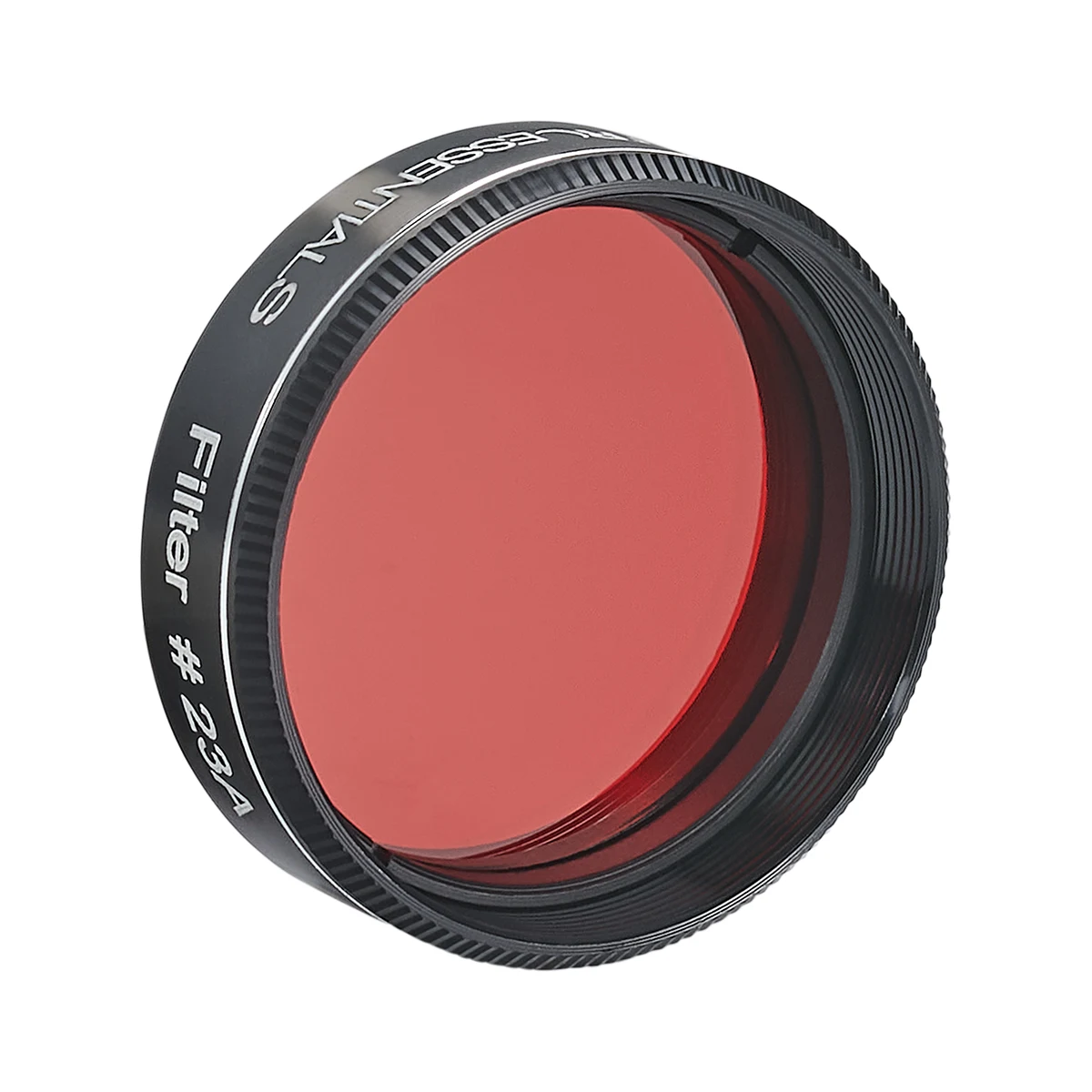
If Mars is on your target list, buy this. The before/after comparison when you first use a red filter on Mars is one of the most satisfying moments in visual planetary astronomy.
Astro Essentials #21 Orange Filter 1.25"
BeginnerThe #21 orange filter is the best all-round planetary filter for beginners: it enhances contrast on Mars, Jupiter, and Saturn without the aggressive light cut of a full red filter. At ~46% transmission it works from 80mm aperture upwards, which means it's suitable for virtually any telescope in this guide. Where the red filter is the Mars specialist, the orange is the Jupiter and "everything" choice: the equatorial belts become noticeably crisper, the Great Red Spot appears warmer and better defined, and Saturn's globe picks up some subtle band detail.
If you're buying your first colour filter and aren't sure where to start, this is it. It delivers a meaningful improvement on Jupiter (the most-observed planet in the UK sky) without darkening the image enough to cause problems on smaller scopes.
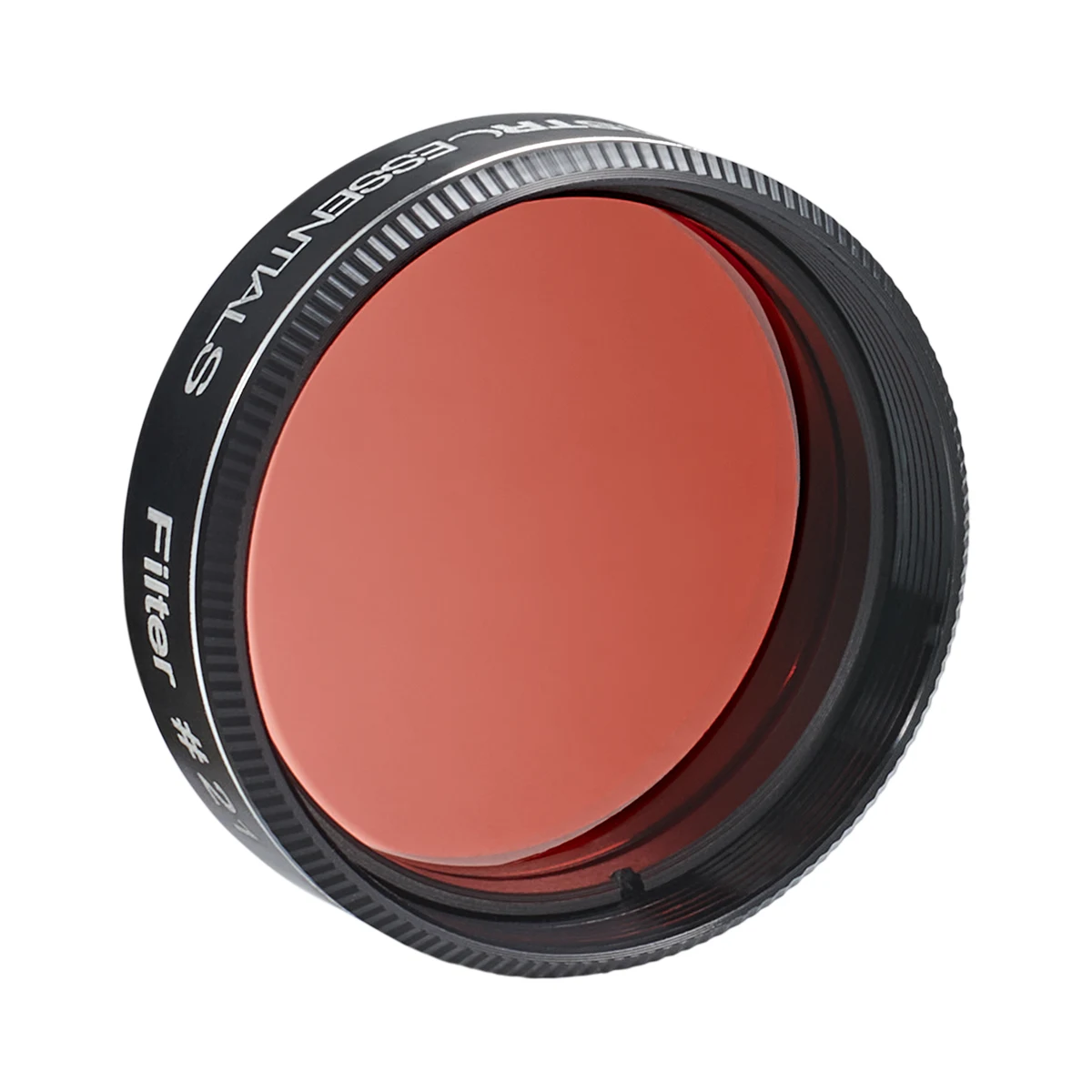
The safest first colour filter to buy. Works on more targets than any other single filter, requires less aperture than the red, and costs just £9. Most planetary observers who try it keep it in their eyepiece case permanently.
Astro Essentials #82A Light Blue Filter 1.25"
BeginnerThe #82A is the classic Venus filter and the recommended companion to the orange or red filters. At 73% transmission it barely dims the image at all: it just cools down the overpowering white glare of Venus, making the crescent or gibbous phase much more comfortable to observe and occasional cloud detail more accessible. Ask any experienced planetary observer for a Venus filter recommendation and the #82A is the near-universal answer.
On Mars it works the opposite way to the red filter: enhancing the bright polar ice caps and atmospheric hazes that the red filter suppresses. On Jupiter it makes the Great Red Spot marginally more distinct against the lighter Equatorial Zone. At 73% transmission, it works with any telescope from 60mm upwards.
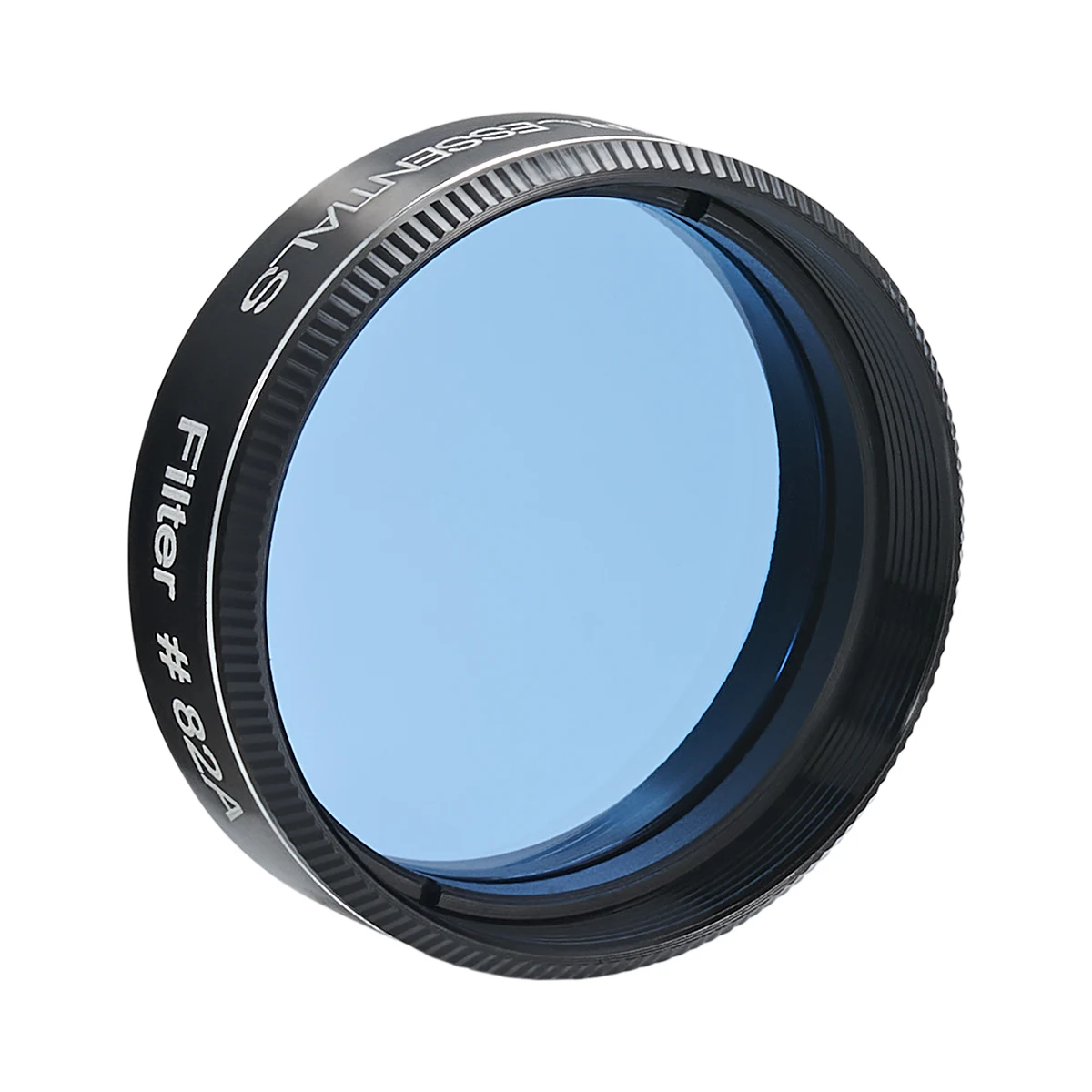
Buy this alongside the orange or red filter. Together they cover every planetary target. The #82A alone is the essential Venus accessory: nine pounds for a noticeably more comfortable and detailed view of the planet is an obvious decision.
ZWO 1.25" Atmospheric Dispersion Corrector (ADC)
IntermediateIf you're imaging planets and wondering why your captures don't look as sharp as the best images you've seen online, the answer is almost certainly atmospheric dispersion. Earth's atmosphere acts like a prism: it bends different wavelengths of light by different amounts, smearing red, green, and blue channel images into slightly different positions on your sensor. At UK latitudes, where Saturn never gets above 25° altitude and Jupiter peaks at around 40°, the effect is significant and will noticeably blur fine detail even on good seeing nights.
The ZWO ADC inserts between your telescope focuser and camera and corrects this by passing the light through two adjustable prisms that introduce equal and opposite dispersion. Once dialled in, colour fringing disappears and the image sharpens dramatically, particularly in the blue channel, where dispersion is strongest. This is an imaging-only accessory and the consensus best upgrade for UK planetary imagers.
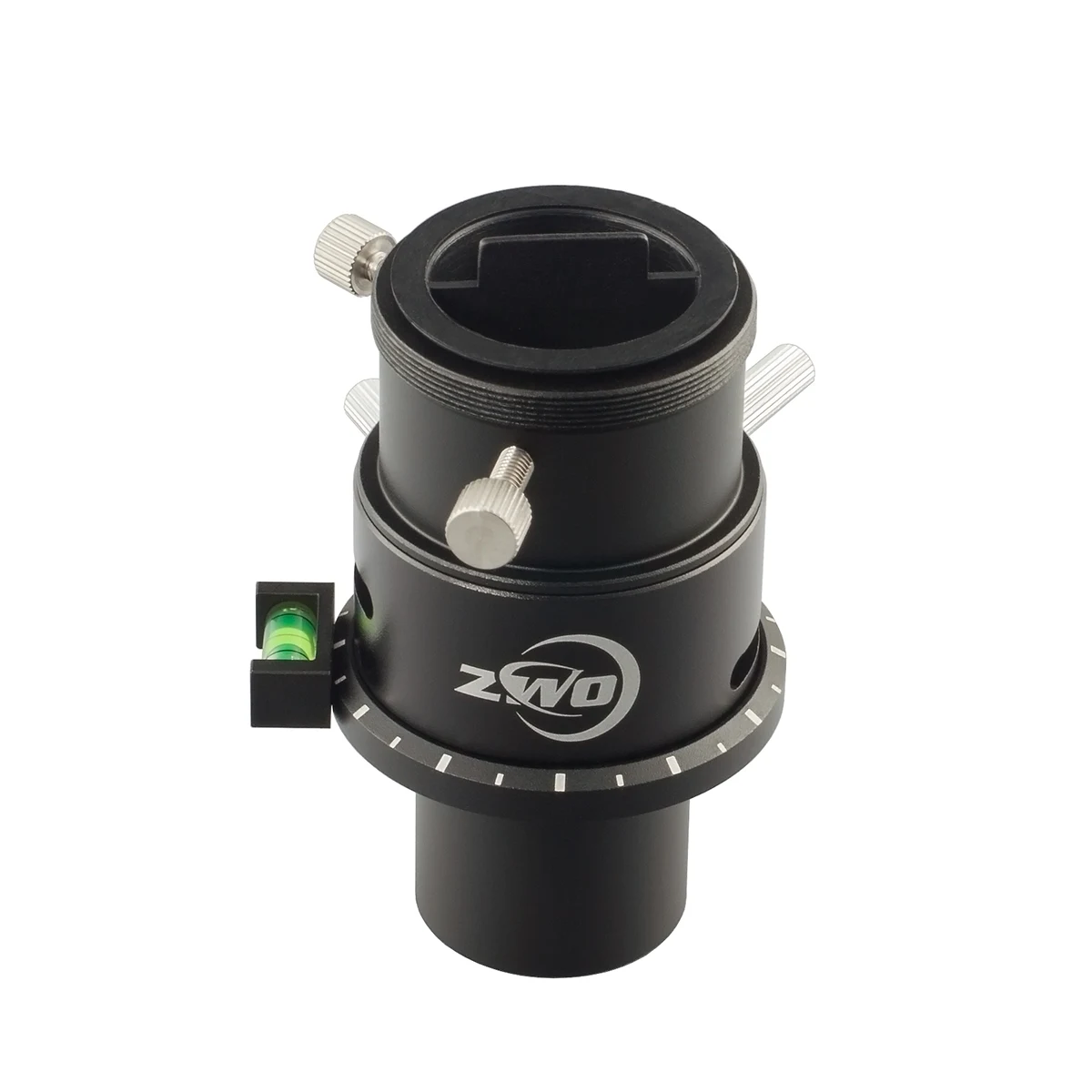
The single biggest upgrade for UK planetary imaging. If you're capturing Saturn, Jupiter, or Mars with a camera and your images are showing colour fringing or unexpected softness, this is what fixes it. UK imagers consistently rate it as more impactful than additional aperture.
Astro Essentials Red Light Torch
BeginnerWhite light quickly resets the dark adaptation your eyes build up outdoors. This compact astronomy torch has a red mode for reading star charts, changing eyepieces and finding controls without washing out faint detail when you return to the telescope.
A thumbwheel lets you turn the brightness down to the minimum you need, while a separate white mode gives you a brighter light for packing away or finding something you have dropped. The battery is included, so it is ready to go straight into your observing bag.
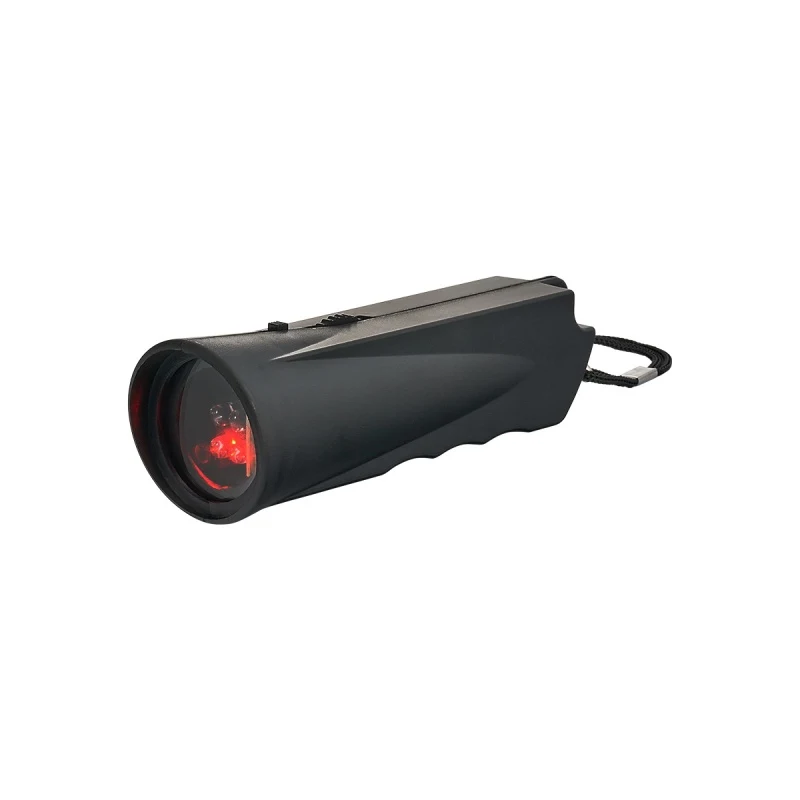
A simple accessory that earns its place on every observing night. Keep it dim, use red mode while observing, and save the white light for packing up.
Building Your Accessory Kit
Suggested buy order
Don't buy everything at once. Start with what solves your most immediate problem, then add as you go: (1) Red light torch: useful from your first session for reading charts and handling equipment. (2) Moon filter: essential for comfortable bright lunar views. (3) Collimation cap: if you own a Newtonian, get this immediately. (4) Telrad finder: once you want to find deep-sky objects. (5) Dew shield: once fogging starts cutting sessions short. (6) Variable polarising filter: when you want finer control than the basic Moon filter.
The UK dew problem
Dew is the number one frustration for UK observers. Our humid maritime climate means that on most clear nights, exposed optical surfaces will fog up within 30–90 minutes. Prevention options range from a simple dew shield (passive, no power) to dew heater strips with a controller (active, needs 12V power). Start with the shield: it's cheap and usually enough for sessions under two hours.
Collimation: why it matters
A miscollimated Newtonian reflector produces soft, blurry images no matter how good the mirror. The good news: checking and adjusting collimation takes 2–3 minutes with a collimation cap, and most scopes only need minor tweaks between sessions. It's a skill that sounds daunting but becomes routine very quickly. Refractor owners can skip this entirely. Refractors don't need collimation.
Finder upgrades explained
Most beginner scopes come with a basic red-dot finder or a small optical finderscope. The Telrad is the most popular upgrade because it shows you the real sky with overlaid circles at known angular sizes, making star-hopping intuitive. An alternative is a right-angle correct-image (RACI) finderscope, which shows a magnified, correctly oriented view, useful for very faint targets. Many experienced observers use both: a Telrad for rough pointing and a RACI for fine targeting.