Opticron Adventurer T WP 10×50
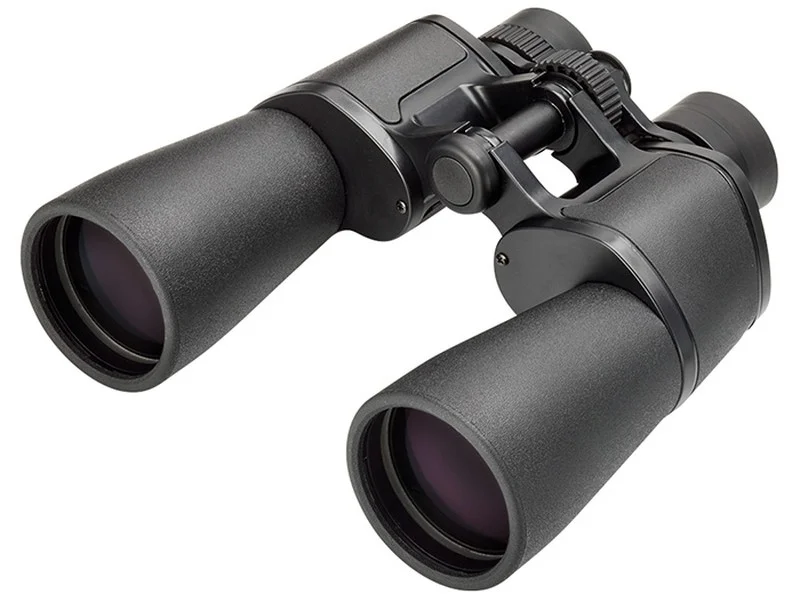
| Opticron Adventurer T WP 10×50 Specifications | |
|---|---|
| Magnification | 10× |
| Objective Diameter | 50mm |
| Field of View | ~6.3° |
| Exit Pupil | 5mm |
| Weight | ~850g |
| Prism Type | BAK-4 (premium) |
| Coatings | Fully multi-coated |
| Waterproof | Yes (IPX7 rated) |
| Best For | All-round astronomy, serious hand-held stargazing |
Who Is the Opticron Adventurer T WP 10×50 For?
The Opticron Adventurer is where you stop compromising. It's the first pair where you get genuinely trustworthy optics without paying a premium-brand price. Most UK astronomy communities (Stargazers Lounge, BinocularSky, local clubs) point beginners here as the sensible starting point.
- People upgrading from budget binoculars: the jump in optical quality is immediately noticeable and worth the extra investment
- Serious amateur astronomers who want a reliable, durable pair for regular observing sessions
- All-rounder astronomers: these perform excellently across Milky Way, clusters, nebulae, and even planets
- People wanting waterproofing: the IPX7 rating means you can use these in drizzle or morning dew without worry
- Long-term observers: the BAK-4 prisms and multi-coated optics mean these will feel fresh 10 years from now
If you're still testing the hobby, the Cometron at £35 is smarter. If you know you're committed, this is the default choice.
What Can You See with the Opticron Adventurer 10×50?
At 10×50, you're looking at a magnification that reveals detail whilst remaining hand-holdable with discipline. The fully multi-coated optics mean you're capturing and transmitting more light than budget binoculars: the view is noticeably brighter and higher-contrast.
Jupiter's Moons
All four Galilean moons are clearly visible as separate discs. You can track their movement night-to-night.
Lunar Craters
Excellent resolution of the lunar surface. Craters, rilles, mountains, and shadow details are sharp across the field.
Star Clusters
M13 (Great Globular in Hercules) shows individual stars resolved. M51 (Whirlpool Galaxy) shows spiral structure on good nights from dark skies.
The Orion Nebula (M42)
Clear nebulosity with the Trapezium asterism visible. The Sword of Orion is beautiful: context and detail combined.
Saturn's Rings
Crisp and unmistakable. On steady nights, you can hint at structure within the rings.
Milky Way
Excellent for wide-field sweeping. The 10× is the sweet spot: magnified enough to show detail, wide enough to see context.
Note: Views depend on observing location light pollution and atmospheric transparency. These observations are realistic from a moderately dark UK site.
What Buyers Say About the Opticron Adventurer 10×50
Consistently rated as "best 10×50 under £125". BinocularSky and Stargazers Lounge threads repeatedly single out the Adventurer T WP as the default recommendation in this price bracket.
Optical quality is trustworthy. Owners report sharp views across 80% of the field, minimal chromatic aberration, and excellent contrast. Not top-tier optical glass, but reliably good.
Waterproofing is genuine. The IPX7 rating (1m submersion for 30 minutes) means you don't baby these. Morning dew, light rain, and drizzle are fine. Multiple owners report using these in UK winter conditions without hesitation.
Ergonomics are decent. The barrel feel is solid, the focus wheel is smooth, and the eyecups rotate smoothly for glasses-wearers. No complaints about build quality at this price.
Tripod adapter bracket recommended for extended sessions. At 10×, hand-held observing for more than 30 minutes becomes tiring. An adapter (£15–30) transforms these into comfortable observing tools.
Known Limitations & Trade-offs
- 10× is at the edge of hand-held steadiness. Without bracing your arms or supporting the binoculars, hand tremor becomes visible. For serious observing, budget a tripod adapter and mounting bracket.
- 6.3° field is narrower than 7×50. You're seeing less sky context and more magnified detail. For Milky Way sweeping, you'd prefer lower magnification. For target-specific work, this is fine.
- Not fully corrected for edge distortion. Stars at the very edge of the field show slight coma. The centre 80% is excellent; the extreme edges are slightly softer. For astronomy, this is acceptable.
- Central focus wheel requires occasional adjustment. Temperature changes shift the focus point slightly. You'll refocus several times during a 2-hour session. Not a deal-breaker, but worth knowing.
- No tripod bracket included. If you want to mount these, you need to buy an adapter separately (~£20–30).
Best Accessories for the Opticron Adventurer 10×50
These binoculars work well standalone, but some accessories genuinely improve the experience:
Tripod Adapter Bracket
Converts these to tripod-mounted observing. Eliminates hand fatigue completely. Standard 1/4" mount, works with any camera tripod.
~£18–28 View on Amazon →Padded Harness
Distributes weight across shoulders. Makes 30+ minute sessions comfortable. Essential for regular use.
~£14–20 View on Amazon →Rotating Eye Cups
Already included on the WP model, but spare cups are available if damaged.
~£8–12 View on Amazon →Sky Chart / Stellarium App
These binoculars only show you what's there. A star map (printed or digital) tells you where to look. Essential for systematic observing.
Free–£15Opticron Adventurer 10×50 vs Helios Stellar II 10×50: Which Should You Buy?
The Opticron Adventurer T WP is where most people start serious binocular astronomy. It's the first pair with genuinely reliable optics at a price that doesn't hurt.
If you want more magnification and don't mind a tripod, the SkyMaster 15×70 (~£229) is the obvious next step: much more light-gathering, much more detail on deep-sky objects.
If you want better optics in the same 10×50 format, the Helios Stellar II 10×50 (~£149) adds premium glass and individual eyepiece focusing. Same aperture, noticeably better views.
Many observers never move on from a 10×50. It's a complete tool, not a stepping stone.