Best Astronomy Binoculars 2026
Five binoculars worth your money: from a compact 7x50 around £35 that fits in a backpack to a powerful 20x80 around £305 that needs a tripod. Every pick is available from UK retailers and recommended by the stargazing community.
| Binoculars | Magnification × Aperture | Price | Level |
|---|---|---|---|
| Adventurer T WP 8×42 | 8×42 | around £79 | Beginner |
| Adventurer T WP 10×50 | 10×50 | around £84 | Beginner |
| SkyMaster 15×70 | 15×70 | around £229 | Intermediate |
| Stellar II 10×50 | 10×50 | around £149 | Intermediate |
| SkyMaster Pro 20×80 | 20×80 | around £305 | Intermediate |
| SkyMaster Pro ED 7×50 | 7×50 | around £189 | Intermediate |
Opticron Adventurer T WP 8×42: Best All-Round Beginner Binocular
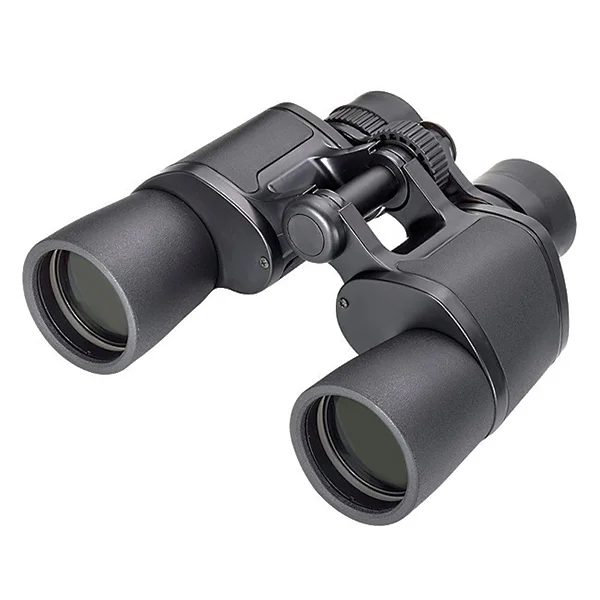
The Opticron Adventurer T WP 8×42 is the versatile all-rounder, excellent for astronomy, equally brilliant for daytime use. The 8× magnification is the sweet spot: comfortable to hand-hold, powerful enough to reveal cluster detail and nebula structure, yet wide enough to scan the Milky Way without feeling constrained. Around £79, it's affordable without feeling budget.
The real-world advantage for UK astronomers is waterproofing. These are fully waterproof (nitrogen-filled) and fog-proof. No anxiety about dew, drizzle, or sudden showers. You just observe. For a country where clear skies can be fleeting and weather unpredictable, that peace of mind is invaluable. The compact roof prism design makes them pocketable: you can slip them into a backpack or jacket pocket.
The optics are fully multi-coated across all air-glass surfaces, meaning bright, sharp views with good contrast. This is a genuine upgrade from the basic multi-coating on budget models. You get respectable light transmission and flat field performance across the view. The community rates these as exceptional value: for the price, you're getting optics that feel like they cost more.
The best all-rounder for UK stargazers. If you want one pair of binoculars for both astronomy and daytime use, fully waterproof and durable, the Adventurer 8×42 delivers at a fair price. Opticron is a trusted British brand (Luton-based), so you're buying reliability.
Opticron Adventurer T WP 10×50: Best Value Astronomy Binoculars
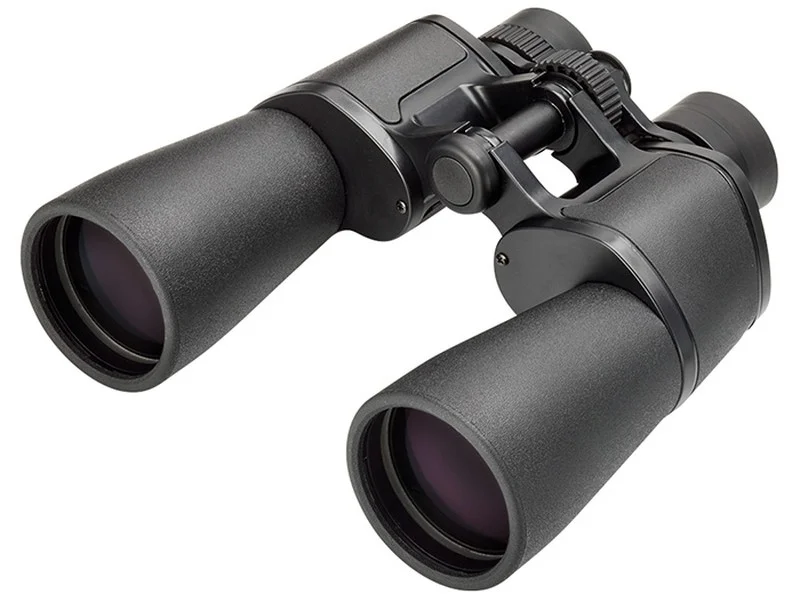
The Opticron Adventurer T WP is what BinocularSky.com calls "the best 10×50 under £125", and they're right. This is the sweet spot where the Cometron's value proposition meets actual optical quality. The 10× magnification reaches into cluster detail and nebula structure that the 7× misses, whilst the 50mm aperture still gathers enough light for dark-sky observing.
The optics are multi-coated across all air-glass surfaces, which means sharper stars, better contrast, and dramatically improved light transmission compared to the Cometron. The BAK-4 prisms (premium glass) deliver a bright, flat field across most of the view. Around £99, this is where most UK astronomy groups recommend new binocular buyers start: the jump in image quality is noticeable and worth the extra cost.
The 10× magnification is at the edge of hand-holding steadiness. You'll benefit from a tripod adapter bracket (£15–30) for extended observing sessions, but you can manage without one if you're disciplined about bracing your arms. The field is narrower than the 7×50, so you're seeing more detail in a smaller area, a trade-off worth making at this aperture.
The community default recommendation. If you're buying one pair of binoculars and want a solid all-rounder, this is it. The price is right, the optics are trustworthy, and owners consistently report happiness with the decision.
Celestron SkyMaster 15×70: Best Budget Big-Aperture Binoculars
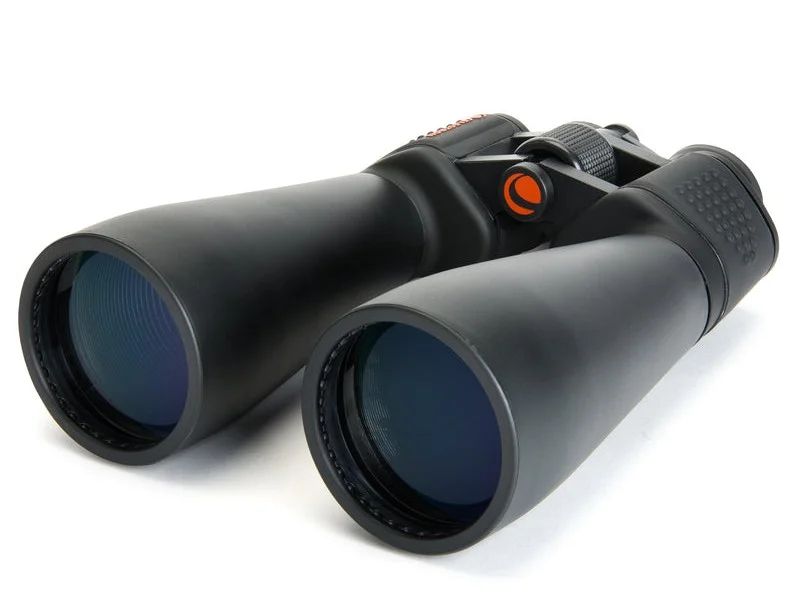
The SkyMaster 15×70 is where binocular astronomy gets interesting. The jump from 50mm to 70mm objectives represents a 96% increase in light-gathering area: you're collecting nearly twice as much photons. This transforms what you see: resolved clusters become spectacular, nebulae show internal structure, and distant galaxies reveal themselves as more than smudges.
At 15× magnification and 70mm aperture, you cannot hand-hold these steadily. They weigh 1.5kg and require a tripod (budget an extra £40–80 for a decent mount). The Celestron tripod bracket is included, which is convenient. Once mounted, the view is stunning: 15× reveals detail that would require a small telescope, but with the two-eyed convenience of binoculars. Around £229, this is exceptional value for the light-gathering power.
The field of view shrinks to 3.7°: you're seeing a narrower slice of sky, which is a trade-off. On clusters this is fine, even nice. On wide nebulae like the North America Nebula, you'd switch back to lower magnification. The optics are multi-coated but not fully multi-coated, so contrast isn't quite as punchy as the Opticron, but the extra light more than compensates.
The gateway to serious binocular astronomy. If you have the patience to set up a tripod and the desire to see deep-sky objects in detail, the SkyMaster 15×70 delivers at a bargain price. Most owners regret not buying this sooner.
Helios Stellar II 10×50: Best Premium Hand-Held Astronomy Binoculars
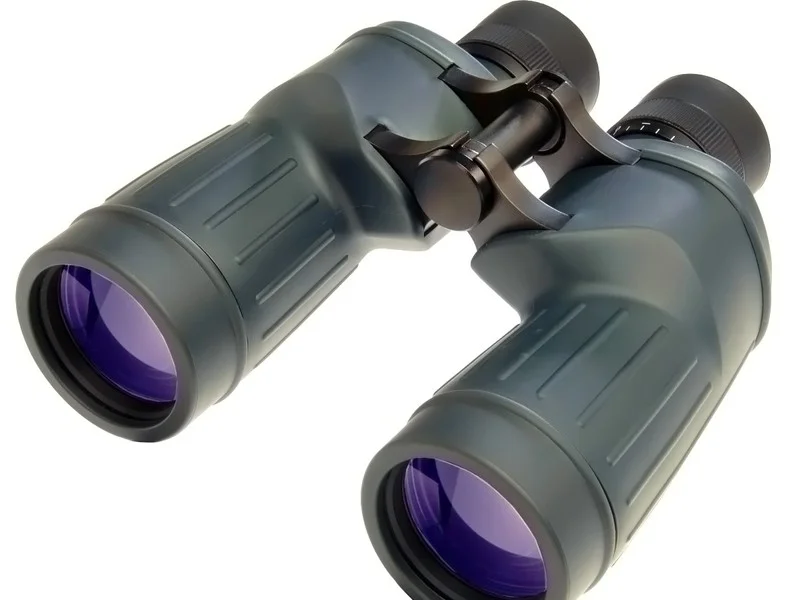
The Helios Stellar II 10×50 is the premium hand-held choice. Whilst the Opticron Adventurer is excellent value, the Helios represents what you get when a manufacturer prioritises optical performance over cost reduction. The main difference: individual eyepiece focusing instead of central focusing. Once you set the focus on each eye, you leave it alone: no more refocusing as temperature changes or your eyes shift.
The optics are sharper across a wider field than the Opticron: 6.5° instead of 6.3° might not sound different, but combined with superior coatings and premium glass, the Stellar II delivers a noticeably crisper, higher-contrast view. Stargazers who spend hours at the eyepiece report this makes a real difference. For people buying their "final" 10×50 rather than an entry-level pair, this is the choice.
Around £169, the Stellar II costs more than the Opticron. Whether the upgrade justifies the cost depends on how seriously you take binocular astronomy. For casual Milky Way scanning and cluster hopping, the Opticron is perfectly fine. For dedicated observing sessions tracking Jupiter's moons or tracing nebula structure, the Stellar II's superior optics shine.
The serious observer's hand-held option. If you know you'll be spending regular evenings at the eyepieces and you want the best optics money can buy at this aperture, the Stellar II is worth the premium.
Celestron SkyMaster Pro 20×80: Best Large-Aperture Astronomy Binoculars
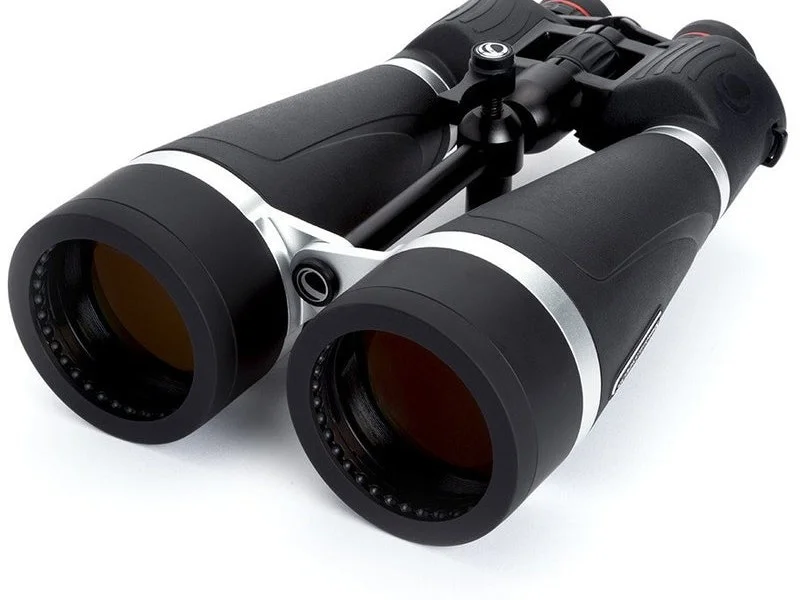
The SkyMaster Pro 20×80 is the gateway to "big binoculars", the kind that approach small telescope territory. With 80mm objectives, you're collecting 2.3 times more light than the 15×70, and nearly 3 times more than the 50mm models. The magnification jumps to 20×, revealing detail that smaller binoculars can't reach. Globular clusters resolve into individual stars. Faint galaxies show structure and extent. Jupiter's belts show fine detail; Saturn's rings become spectacular. Around £249, these are a serious investment, but owners consistently rank them as their best equipment purchase.
These are 2.3kg and require a tripod. They're a serious piece of kit. The included adapter is adequate, but many owners invest in a better scope mount (£50–100) for smoother tracking. Once set up, the 20×80 views rival a decent 90mm refractor, but with the binocular advantage: two eyes mean the view feels more three-dimensional, contrast is higher, and fatigue is lower than looking through a single eyepiece.
The narrow 2.5° field is a limitation: you're seeing a postage stamp view of the sky. For Milky Way sweeping, you'd switch back to lower magnification or a wider binocular. But for target-specific observing (globular clusters, galaxies, nebulae) the combination of magnification and light-gathering makes these exceptional.
The biggest binoculars in this guide, and genuinely impressive. If you have the space for a tripod and you want deep-sky power without the commitment of a large telescope, the SkyMaster Pro 20×80 delivers. This is where binoculars meet telescope performance.
Celestron SkyMaster Pro ED 7×50: Best Wide-Field Astronomy Binoculars
The 7×50 specification is the traditional astronomy binocular, and the SkyMaster Pro ED is the best version of it at this price. Where most 7×50s use standard glass, the Pro ED adds Extra-low Dispersion optics that reduce colour fringing on bright stars and the Moon's limb, giving cleaner, higher-contrast views. The 7.1mm exit pupil is as large as a dark-adapted human eye can use: maximum light to your retinas.
The wide 7.1° field is ideal for Milky Way sweeping, comet hunting, and wide-field cluster work. Jupiter's four Galilean moons appear as distinct points alongside a tiny disc. The full Moon fits in the field with room to spare. Hand-holdable at ~1kg, and properly waterproof, these are grab-and-go astronomy binoculars that work as well on a damp UK night as on a dry summer one.
If you find 10×50s too shaky to hand-hold comfortably for long sessions, the 7× magnification of these SkyMaster Pro EDs will be a revelation: you can hold them steady indefinitely and the immersive wide field makes it easy to forget you're not looking through a telescope.
The classic astronomy binocular done properly. If wide-field Milky Way observing and comet hunting appeal to you, or if you want hand-holdable binoculars with premium ED glass, the SkyMaster Pro ED 7×50 is the choice at this price point.
How to Choose Your First Binoculars
What Do the Numbers Mean?
Binocular specs are written as magnification × aperture (e.g. 7×50). The first number is how many times closer objects appear. The second is the diameter of the objective lens in millimetres. A larger aperture gathers more light, which matters enormously for night-sky observing. For astronomy, the sweet spot is usually 7×50 (widest field, hand-holdable) or 10×50 (more detail, still manageable without a tripod).
Hand-held vs. Tripod-mounted
Below 10× magnification, you can steady binoculars against your face and keep the image stable. 10× is borderline: possible without a tripod, but exhausting for long sessions. Above 12×, a tripod becomes essential. If you want to observe without equipment, stick to 7× or 10×. If you're willing to use a tripod, 15×70 or 20×80 binoculars deliver telescope-like views with binocular advantages.
Coatings Explained
Light bounces off air-glass surfaces inside optics, and you lose brightness with each reflection. Coatings reduce this loss. Multi-coated means some surfaces have anti-reflection coatings. Fully multi-coated means all surfaces are coated. Phase-coated (on premium models) adds an additional optical treatment to prisms that boosts contrast. For astronomy, fully multi-coated is a meaningful upgrade over basic multi-coated.
When Binoculars Beat a Telescope
Binoculars have real advantages over telescopes for Milky Way observing (incomparable field of view and easy scanning), open clusters (you see the whole cluster in one shot), and nebulae (the two-eyed view reveals subtle structure that one eye misses). Telescopes are better for planetary detail and faint galaxies. Many serious astronomers own both: binoculars for wide-field wandering, a scope for target-specific observing.