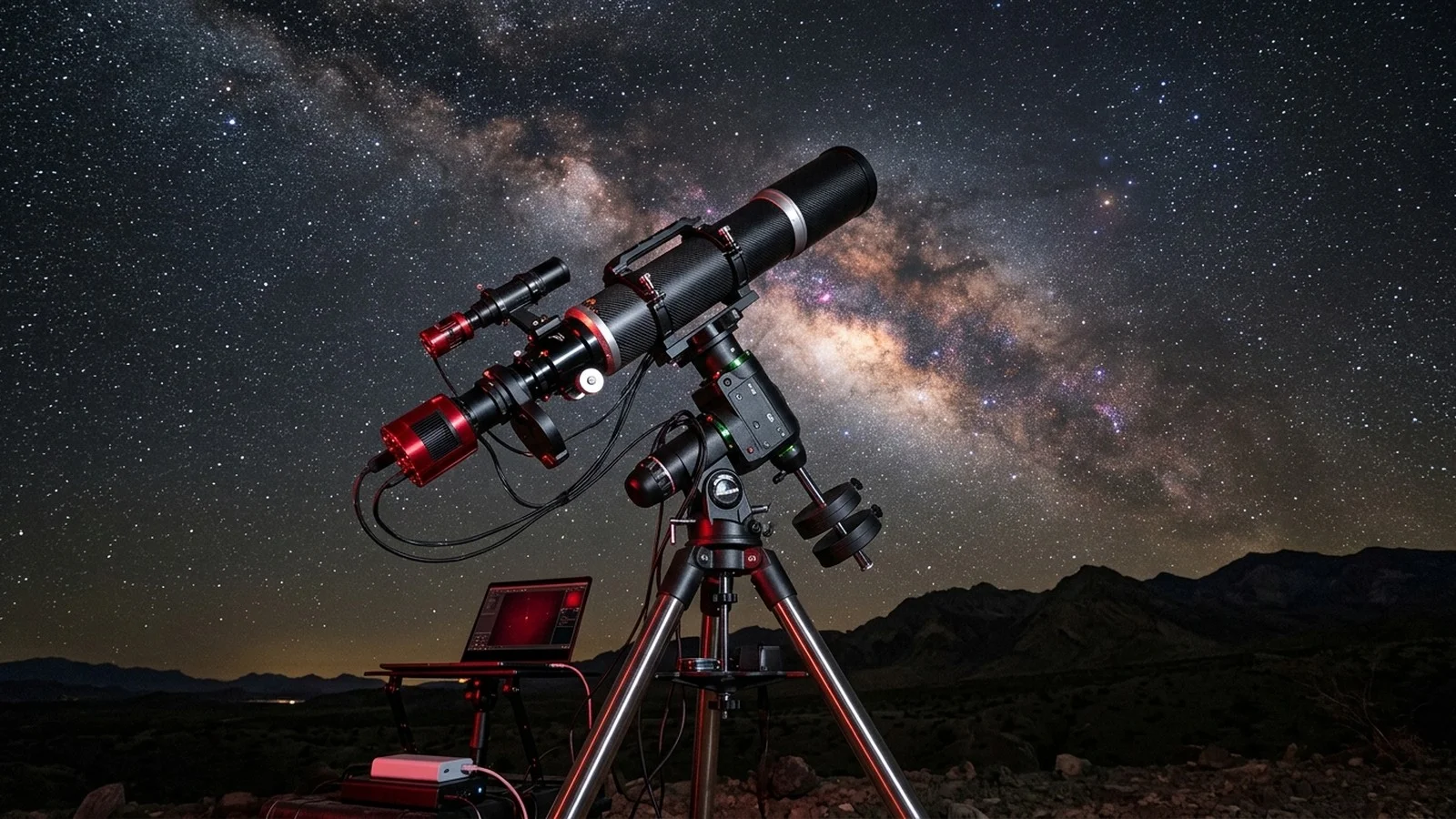
Esprit 100EDX + EQ6-R Pro: Complete Advanced Astrophotography Kit
The Esprit 100EDX on an EQ6-R Pro is the benchmark serious imaging rig on Stargazers Lounge. FLO individually test-tunes every Esprit before shipping. The EQ6-R's belt-drive tracking has headroom for heavy filter wheel and focuser setups. This is the combination that removes the ceiling on what you can capture from UK skies.
Why the Esprit 100EDX + EQ6-R Pro?
The Esprit 100ED is widely considered the benchmark premium short refractor for astrophotography: a factory-tuned 100mm triplet APO with a flat field designed from the ground up for imaging. First Light Optics individually test every Esprit before shipping, which matters at this price point. The EQ6-R Pro steps up from the HEQ5 with a 20kg payload capacity, belt-drive for smoother tracking, and a USB port for direct computer connection: giving imaging headroom for heavy camera, filter wheel, and focuser setups without approaching the weight limit. This combination appears on SGL as the target setup that hobbyists work towards over years.
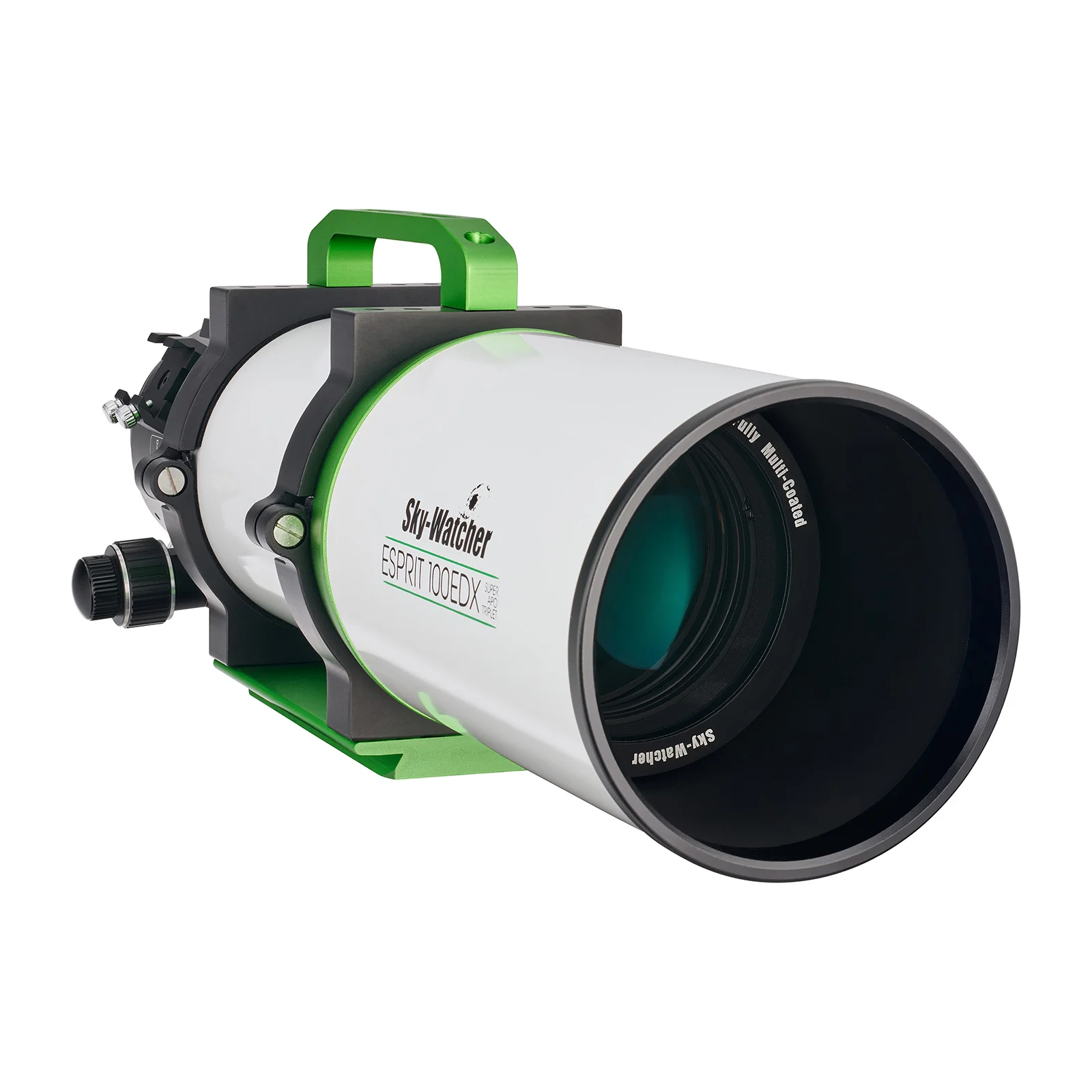
What's Included in This Esprit 100EDX + EQ6-R Kit?
At this level, none of these are optional. Each one addresses a specific imaging constraint that will otherwise show up in your data.
Sky-Watcher Field Flattener for Esprit-100
The Esprit 100EDX OTA does not include the field flattener: it is a required separate purchase. Without it, stars elongate progressively toward the corners of the frame. With it, the Esprit delivers its famous edge-to-edge sharpness across full-frame sensors. This is the first accessory to buy with the scope. Add it to your FLO basket alongside the Esprit for the automatic bundle discount.
ZWO ASI2600MC Pro Cooled Colour Camera
The ASI2600MC Pro is the flagship one-shot colour camera for this setup tier. Its large APS-C sensor (26MP) pairs beautifully with the Esprit 100's 550mm focal length: giving a wide enough field for large nebulae while having the resolution to capture fine detail. The back-illuminated Sony IMX571 sensor delivers exceptional sensitivity and very low read noise. The TEC cooling brings the sensor to −35°C below ambient, almost eliminating thermal noise from UK summer nights. The camera that serious UK imagers step up to after the ASI533 or the ASI294MC Pro.
ZWO Electronic Auto Focuser (EAF)
Refractors drift focus across a night as temperature drops: a problem that compounds the longer your exposure sessions run. The EAF motorises the focuser and allows autofocus routines to run from your imaging software every 30–60 minutes without touching the telescope. At this investment level, protecting the consistency of your data is essential. Connects via USB and integrates with NINA, Sequence Generator Pro, and all major imaging platforms.
Sky-Watcher EvoGuide 50ED + ZWO ASI120MM Mini Bundle
Autoguiding corrects the EQ6-R's periodic tracking errors in real-time, extending usable sub-exposures from 3–5 minutes to 15+ minutes: critical for capturing faint nebula detail. The EvoGuide 50ED is a dedicated guidescope that mounts piggyback on the main scope, and the ASI120MM Mini is the guide camera. FLO sell them as a tested bundle. At this imaging level, guiding is not optional.
ZWO Filter Wheel
A filter wheel allows you to switch between broadband and narrowband filters during a session without touching the camera or disturbing focus. At this setup level it's the natural next step: allowing you to capture Ha and OIII data on the same night and combine them in processing for UK light-polluted skies. FLO stocks several ZWO filter wheels; the 7-slot and 5-slot versions are the most popular for this scope/camera combination.
Powered USB 3.0 Hub (7-port)
This setup has five to six USB devices: the ASI2600MC Pro, the EAF, the guide camera, the EQ6-R Pro, the filter wheel, and possibly a dew controller. A powered hub with its own PSU ensures no device is power-limited, and reduces the number of cables running back to your laptop to one. The Sabrent 7-port is the standard recommendation in UK imaging threads: reliable, well-powered, and available from Amazon at under £25.
12V Regulated Power Supply for Mount
The EQ6-R Pro requires regulated 12V DC: not included with the mount. An unregulated supply can introduce electrical noise that affects tracking accuracy. A quality regulated PSU delivers stable power across the full session load. For portable setups, a 12V lithium battery pack (~£80–120, Amazon) is the portable alternative: look for one with at least 20Ah capacity for a full night's imaging.
Red Torch
Even at a full automated imaging session, you'll need to check cable connections, read mount labels, and navigate around equipment in the dark without lighting up the setup or destroying your adapted vision. A red torch with variable brightness covers everything from "read a label" to "navigate the garden" without affecting your equipment's alignment to the night sky.
Total Cost: £5,210 to £5,260
Esprit 100EDX + EQ6-R Pro + 8 accessories
The single best upgrade for UK light-polluted skies
A duo-band narrowband filter, such as the Optolong L-eNhance (~£120–150, available from FLO), is the most impactful single addition for UK suburbs. It passes hydrogen-alpha (Ha) at 656nm and oxygen-III (OIII) at 500nm while rejecting the broad LP gradient from streetlights. One-shot colour cameras (like the ASI2600MC Pro) work very well with duo-band filters for emission nebulae: you lose some colour balance but gain dramatic contrast improvements from light-polluted sites. Worth adding to your FLO order. Also consider a ZWO ASIAir wireless imaging controller (~£250, Amazon) if you want to run sessions from a phone or tablet rather than a laptop.