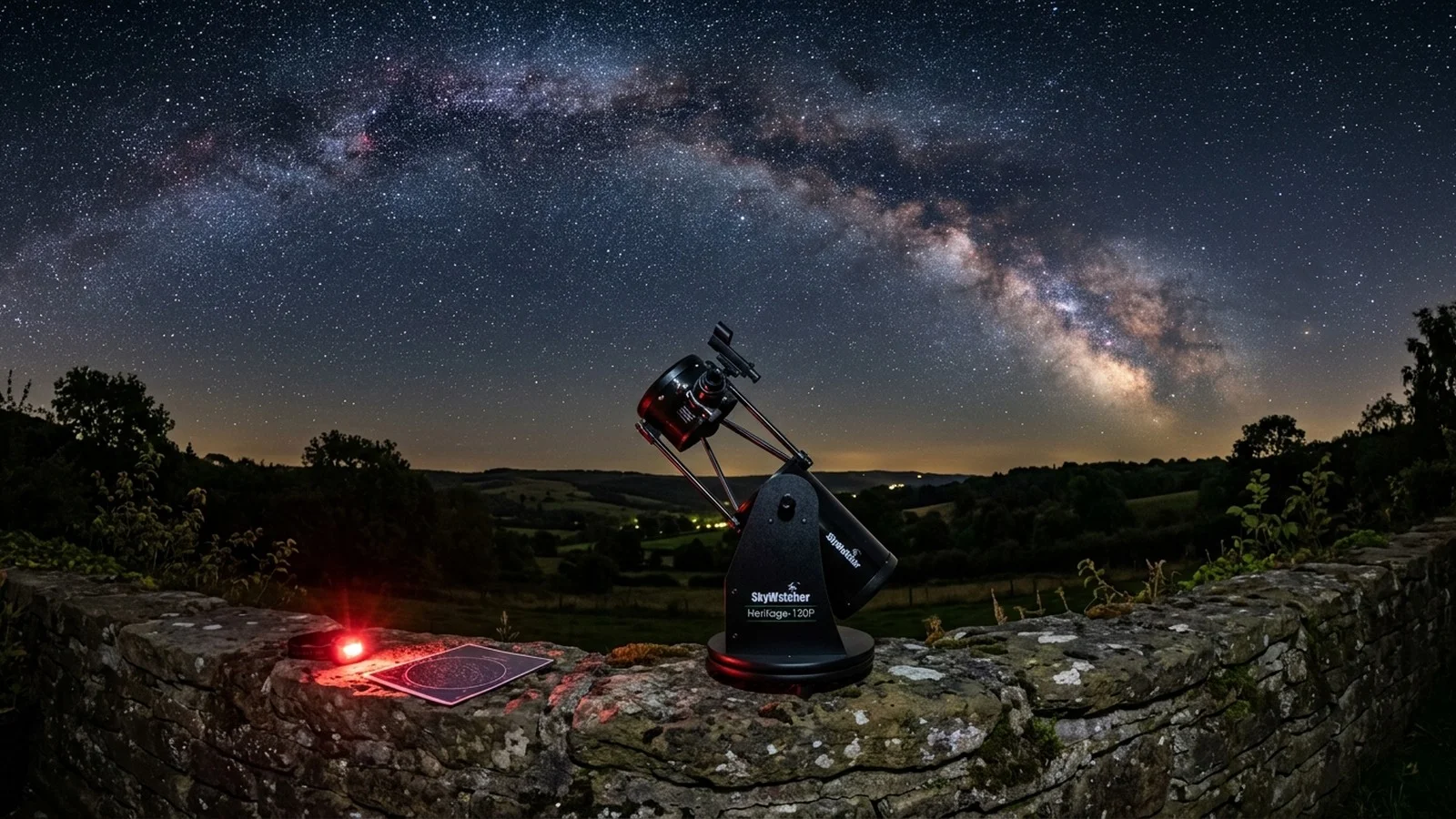
Sky-Watcher Heritage 130P: Complete Budget Telescope Kit
Why the Sky-Watcher Heritage 130P?
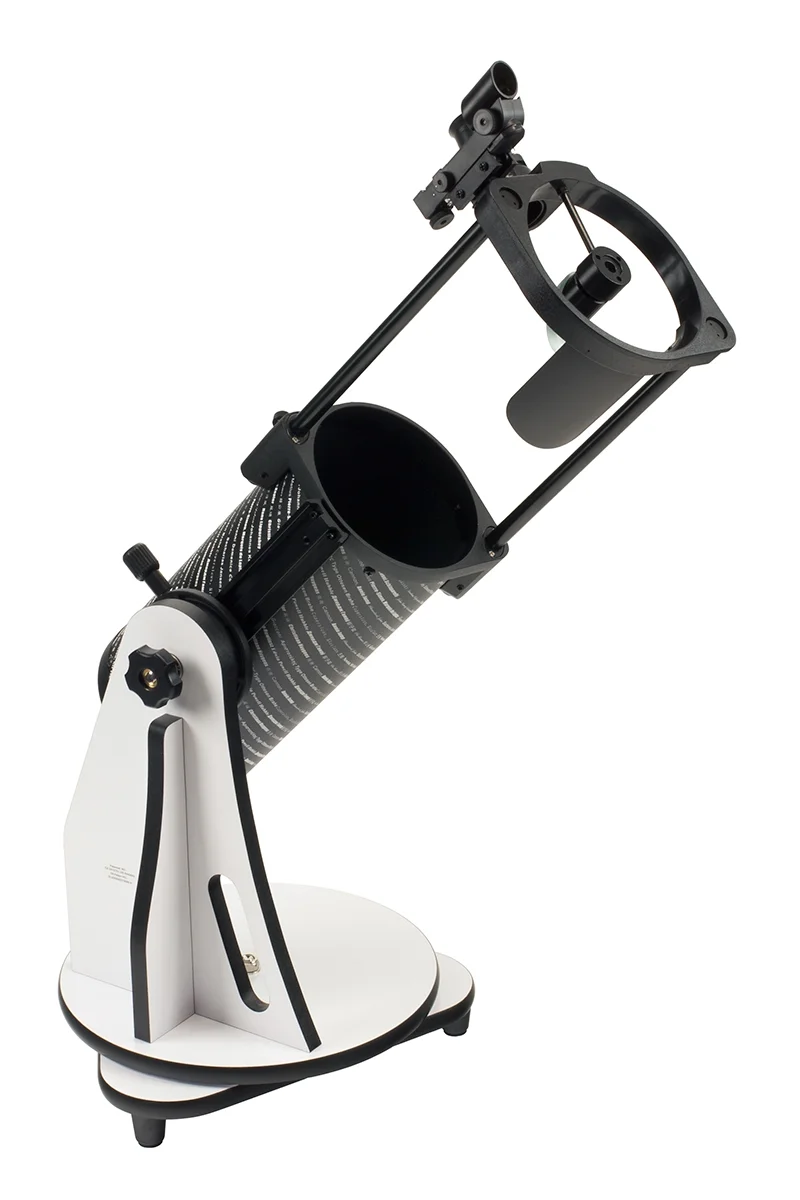
Ask "what telescope should I buy?" on Stargazers Lounge, Cloudy Nights, or any UK astronomy Facebook group and the same answer comes back: the Heritage 130P. Not because it's flashy. It isn't. Because 130mm of aperture on a rock-solid tabletop Dobsonian mount means you actually see things that take your breath away: Saturn's rings, Jupiter's cloud belts, lunar craters sharp enough to count, deep-sky objects you never thought binoculars could reach. And it works right out of the box with nothing to go wrong.
What Can You See with the Heritage 130P?
The Heritage 130P will show you all of this from a dark UK garden on a clear night.

What's Included in This Heritage 130P Kit?
6 accessories · chosen by the communityThese are the items Stargazers Lounge regulars say they wish they'd bought at the same time rather than discovering they needed them on the second session.
BST StarGuider 8mm ED Eyepiece
The first upgrade everyone recommends. Gives you 81× magnification on the 130P: enough for sharp planetary detail, double star splits, and globular cluster resolution. The 60° apparent field is generous and the glass is genuinely good for the price. The supplied eyepieces are fine, but this one is the difference between "I can see Jupiter" and "I can see Jupiter's cloud belts."
BST StarGuider 18mm ED Eyepiece
Buy both BSTs at the same time and you have a two-eyepiece system that covers almost everything. The 18mm gives you 36×: perfect for sweeping clusters, the Orion Nebula, and large open clusters. One eyepiece for wide views, one for high power. You won't need a third for months. Don't separate them.
Moon Filter: ND 0.9 (1.25")
The Moon through a 130mm scope is genuinely blinding. You'll leave an afterimage on your retina. An ND 0.9 filter screws onto any 1.25" eyepiece and cuts the glare down to something you can actually observe comfortably. Cost: £11. You'll thank yourself the very first night you point the scope at the Moon without one.
Collimation Cap (1.25")
The Heritage 130P is a Newtonian reflector: its mirrors need occasional alignment (collimation) to perform their best. Without a collimation cap you're just guessing. With one, it takes two minutes: pop it in the focuser, look through the pinhole, adjust until the reflection looks centred. Six pounds. No excuses for not owning one.
Telrad Finder
The Heritage 130P comes with a basic red-dot finder that works but isn't exactly joyful to use in the dark. The Telrad is a step up: it projects three concentric circles (0.5°, 2°, 4°) onto the sky, and those circles match the scale on most star atlas charts. Star-hopping to a faint nebula or galaxy becomes dramatically easier. Once you've used one you won't go back.
Red Astronomy Torch
White light wrecks your night vision in an instant, and it takes 20 minutes to recover. A red torch lets you read a star chart, locate an eyepiece, or check your phone without starting that 20-minute clock again. This is not optional. It's the cheapest thing on this list and the one you'll use every single session. Get one with variable brightness.
Total Cost: £370 to £378
Prices correct April 2026, subject to change
Worth thinking about
The Heritage 130P sits on a table, and crouching for two hours gets old fast. A camping stool at the right height costs £10–20 and your back will be grateful. When you're ready for more magnification, the Celestron X-Cel LX 9mm (~£115) is the natural next eyepiece: splits the gap between the BSTs with better eye relief for glasses wearers. Already have binoculars? Pair this scope with the Binocular Starter setup for a genuinely complete home observatory.