Finding & Observing Cetus

Abbreviation
Cet
Area (sq degrees)
1,231 (4th largest)
Brightest Star
Diphda / β Ceti (2.02)
Visibility (UK)
Oct – Jan
Best Month
November
Zodiacal
No (Sun transits Dec–Jan)
Neighbours
Pisces, Aries, Taurus, Eridanus, Aquarius, Sculptor
Special Feature
Mira — prototype long-period variable

How to Find Cetus

Diphda (β) Menkar (α) Mira (ο) τ Ceti δ γ ζ η θ ι μ M77 Head Body Tail N E

Finding Steps

Step 1: Find Diphda (the Tail)
Start with Diphda (Beta Ceti, magnitude 2.02) — the brightest star in Cetus and its easiest entry point. In autumn evenings, look due south to roughly south-southwest. It sits noticeably below and to the right of the Great Square of Pegasus. An orange-tinged star at a moderate altitude, it stands out against the sparse surrounding sky.
Step 2: Trace the Body Northeastward
From Diphda, the body of Cetus runs in a broad curve eastward and slightly north toward the star Zeta Ceti. Several 3rd and 4th magnitude stars trace this path — Iota, Theta, and Eta Ceti form a loose arc. This is the "belly" of the sea monster.
Step 3: Find the Head (around Menkar)
The head of Cetus sits much further east and somewhat higher — a small irregular loop of stars centred on Menkar (Alpha Ceti, magnitude 2.53). The head region is more condensed and easier to identify as a distinct shape. Look for an irregular pentagon of stars. Menkar glows distinctly orange-red.
Step 4: Locate Mira and M77
Along the neck connecting body to head, you'll find Mira (Omicron Ceti) — when near maximum brightness it shines as a deep-red star, unmistakable. M77, the Seyfert galaxy, sits just over 1° south-southeast of Delta Ceti — part of the neck/head region. Both repay close attention with binoculars or a telescope.

Seasonal Visibility

Month Direction Altitude at 10 PM Observability
August East, rising late ~5° Very low, late night only
September East-southeast ~15° Becoming accessible after midnight
October South-southeast, rising ~25° Good evening visibility for head region
November Due south, highest ~30° BEST MONTH — highest altitude, both head and tail visible
December South-southwest ~25° Still good, setting earlier
January Southwest, sinking ~15° Last good opportunities before conjunction

Key Stars of Cetus

Diphda — β Ceti (Deneb Kaitos)
Magnitude 2.02
Distance 96 ly
Type K0 III orange giant
Colour Orange
Brightest star in Cetus despite being Beta rather than Alpha. An orange giant marking the tail of the sea monster, it is one of the most southerly bright stars visible from the UK — and a reliable anchor for finding the constellation. Its Arabic name "Deneb Kaitos" means "tail of the sea monster."
Menkar — α Ceti
Magnitude 2.53
Distance 220 ly
Type M1.5 III red giant
Colour Orange-red
Alpha Ceti is the brightest star in the head region and marks the monster's nose or jaw. A genuine red giant — five times more luminous than it might appear because it lies further away. Its Arabic name means "nostrils." Menkar is ending its life; in a few hundred thousand years it will shed its outer layers as a planetary nebula.
Mira — ο Ceti (Omicron Ceti)
Magnitude 2.0 to 10.1 (variable)
Distance 299 ly
Type M5e–M9e III red giant
Period ~332 days
One of the most historically important stars in the sky. Discovered to be variable by David Fabricius in 1596 — the first definitive proof that stars could change. At maximum, Mira outshines Polaris; at minimum it completely vanishes without a telescope. It is the prototype of the Mira variables: a class of pulsating red giant stars in the late stages of life, slowly losing their outer layers into space.
Tau Ceti — τ Ceti
Magnitude 3.50
Distance 11.9 ly
Type G8.5 V — Sun-like
Planets 5+ confirmed
One of the most tantalising stars in the sky — a Sun-like yellow dwarf just 11.9 light-years away, harbouring a planetary system with at least five confirmed planets. It has long been a prime target for SETI. Faint but visible to the naked eye on clear nights, it sits alone in the body of Cetus. Read the full Tau Ceti guide →
UV Ceti (Luyten's Flare Star)
Magnitude 12.4 (quiescent)
Distance 8.7 ly
Type M5.5–6 Ve flare star
Significance Prototype flare star
Normally invisible to all but large telescopes, UV Ceti is the prototype of a class of violent stellar flares. At only 8.7 light-years distance, it is one of our nearest stellar neighbours — a dim red dwarf that erupts unpredictably, briefly brightening by 5–6 magnitudes within minutes. The UV Ceti flare star class is now known to be extremely common throughout the galaxy.
Delta Ceti — δ Ceti
Magnitude 4.07
Distance 720 ly
Type B2 IV blue subgiant
Feature M77 guide star
A hot blue subgiant and the key guide star for locating M77 — the galaxy sits just over 1 degree to the south-southeast of Delta. Despite being 720 light-years away, it appears reasonably bright because of its intrinsic luminosity. A good example of the hot, short-lived massive stars that pepper the Milky Way.

Mythology & History

Greek & Roman Mythology
Cetus was the sea monster sent by Poseidon (Neptune) to ravage the kingdom of King Cepheus and Queen Cassiopeia, after Cassiopeia boasted that her daughter Andromeda surpassed the Nereids (sea nymphs) in beauty. The oracle declared the only solution was to sacrifice Andromeda to the creature. She was chained to a coastal rock — but Perseus, returning from slaying Medusa, encountered her, fell in love, and turned Cetus to stone by displaying the Gorgon's severed head. The entire myth is written in the autumn sky: Cassiopeia, Cepheus, Andromeda, Perseus, and Pegasus (the winged horse Perseus rode) all surround Cetus.
The Discovery of Mira — 1596
The most important historical event associated with Cetus was the discovery on 13 August 1596 by Dutch astronomer David Fabricius of a bright star in Cetus that had not been there before — then faded and disappeared. When it returned the following year, astronomers realised a star could change brightness over months. This was a revolutionary discovery: it challenged the Aristotelian view that the heavens were eternal and unchanging. The star was later named Mira — "the Wonderful" — by Johannes Hevelius in 1662.
Babylonian Tradition
The Babylonians knew this region of sky as the constellation of the Tail (MUL.KUUN or similar) and associated it with the deep waters below the earth — the cosmic ocean presided over by the god Ea (Enki). Cetus and the neighbouring constellations of Pisces and Aquarius were all part of the "Sea" region of the Babylonian sky, reflecting the time of year when seasonal rains fell in the Middle East. This region was sometimes called the "Great Sea."
SETI and Modern Significance
In the modern era, Cetus has acquired new mythological weight: Tau Ceti became one of the first targets in Frank Drake's original SETI radio search (Project Ozma, 1960), and the concept of "Tau Ceti-like civilisations" entered popular science culture. The discovery of its planetary system, combined with the JWST revelations about M77 (the nearest major active galaxy), makes Cetus one of the most scientifically significant constellations in the night sky for contemporary astronomy.
Egyptian and Arabian Traditions
Arabian astronomers called the brightest star Deneb Kaitos ("the southern tail of Cetus") and Menkar ("the nostrils"). In some Egyptian traditions, the sea monster was associated with Set, the god of chaos and storms, threatening the ordered cosmos. The defeat of Cetus by Perseus mirrored the eternal Egyptian cycle of order triumphing over chaos.

Deep-Sky Objects

M77 (NGC 1068) — Seyfert Galaxy
Moderate
Type Barred spiral galaxy (Seyfert 2)
Magnitude 9.6
Distance 47 million ly
Size 7'×6' apparent
The showpiece of Cetus — one of the nearest and brightest active galaxies in the sky. At its core is a supermassive black hole 8 million times the mass of our Sun, actively feeding and powering a brilliant active galactic nucleus. In a 10cm telescope it shows as a bright, almost stellar nucleus with a faint oval halo. A 20cm+ reveals the extended disc. In May 2026, NASA's James Webb Space Telescope captured it in extraordinary infrared detail — read the full story: Webb Reveals the Blazing Heart of M77 →
Mira (ο Ceti) — Long-Period Variable
Easy (at maximum)
Type Mira-type variable star
Range Magnitude 2.0 to 10.1
Distance 299 ly
Period ~332 days
The most important variable star in the sky — discoverable on some nights with the naked eye, completely invisible on others. Check its current magnitude before you observe (the AAVSO website at aavso.org gives real-time predictions). At maximum, Mira glows deep ruby-red and transforms this region of Cetus. When invisible, a 15cm telescope is needed. Monitoring Mira over months gives a direct sense of stellar pulsation.
NGC 246 — Skull Nebula
Photo
Type Planetary nebula
Magnitude 10.9
Distance 1,600 ly
Size 3.8' diameter
A large, low-surface-brightness planetary nebula — the expanding shell of a dying star. Its popular nickname "Skull Nebula" comes from photographs showing two dark circular patches that resemble eye sockets. Visually it is a challenging, extremely low-surface-brightness disc requiring dark skies, a UHC or OIII nebula filter, and at least a 20cm aperture. In photographs it is beautiful — a pale blue-green disc with subtle internal structure. The central white dwarf is unusual in that it is still extremely hot and luminous.
NGC 1055 — Edge-on Spiral Galaxy
Medium
Type Edge-on spiral galaxy
Magnitude 10.6
Distance 60 million ly
Feature M77 companion galaxy
An edge-on spiral galaxy that forms a physical pair with M77, lying just over 30 arcminutes to the north. In a 20cm telescope it appears as an elongated streak — a classic edge-on disc silhouette with a brighter central bulge. A long-exposure photograph shows a dark dust lane running along the equatorial plane. Observing both M77 and NGC 1055 in the same session gives a compelling picture of galactic diversity in one small patch of sky.
NGC 247 — Caldwell 62
Medium
Type Dwarf spiral galaxy
Magnitude 9.1
Distance 11 million ly
Group Sculptor Group
A member of the Sculptor Group — one of our nearest galaxy groups at ~11 million light-years. NGC 247 is a large, nearly edge-on dwarf spiral that appears as a faint elongated smear in a 15cm scope. Its low surface brightness makes it challenging, but it is an accessible representative of our cosmic neighbourhood. A fascinating dark "void" region in its disc (nicknamed the "Cetus Void region") has been observed in deep images.
Tau Ceti System — Nearest Sun-Like Star
Easy (naked eye)
Type G8.5 V + 5+ planets
Magnitude 3.50
Distance 11.9 ly
Planets 5+ confirmed
Not a traditional deep-sky object, but one of the most compelling naked-eye targets in the sky. The faint star Tau Ceti in the body of Cetus is one of our nearest stellar neighbours — and harbours a planetary system. When you look at it, you're looking at another solar system just 11.9 light-years away, potentially with worlds orbiting in the habitable zone. It was one of the first two stars searched for radio signals in Project Ozma in 1960.

Beginner Observing Guide

1
Find Diphda on a November evening. Look due south from the UK at around 9–10 PM in November. You'll find a moderately bright, distinctly orange-tinged star sitting in relative isolation south of the V-shape of Pisces. This is Diphda — Beta Ceti, and your first step into the constellation.
2
Sweep northeast to find the body stars. From Diphda, sweep your binoculars slowly northeast. You'll trace a curving line of 3rd and 4th magnitude stars — Iota, Theta, and Eta Ceti — forming the body of the creature. This region of sky is sparse and gives the constellation its appropriately desolate quality.
3
Identify the head region around Menkar. Continue northeast to the brighter, more compact group of stars forming the head — an irregular loop around the orange-red Menkar (Alpha Ceti). Note the colour contrast: Diphda is warm orange, Menkar glows more distinctly orange-red. The head pentagon is easiest to see with binoculars.
4
Check Mira's current brightness. Before or after observing, check the AAVSO website (aavso.org) for Mira's predicted magnitude. If it's above magnitude 6, locate it with binoculars in the neck region between the body and head. Look for the deep ruby-red colour — it is the most strongly red star in this entire region of sky.
5
Observe M77 with a telescope. Point your telescope at Delta Ceti in the head/neck region, then move 1.1° south-southeast. You should see M77 as a small, bright oval nucleus — almost star-like at low magnification, but distinctly non-stellar. Increase magnification: the brighter nucleus should become more apparent. This is an active galactic nucleus — a feeding supermassive black hole 47 million light-years away.
6
Locate Tau Ceti naked eye. Finish the session by finding Tau Ceti in the body of Cetus — a naked-eye 3rd magnitude star, faint but distinct in dark skies. Knowing that 11.9 light-years separates you from what may be another inhabited solar system makes this one of the most contemplative targets in the sky. Just look. Think about the distance.

Observing Kit

Naked Eye
Diphda, Menkar, Mira (at max), Tau Ceti
Binoculars
Mira (all phases), constellation sweep
10cm Refractor
M77 nucleus, NGC 247
20cm Dobsonian
M77 disc, NGC 1055, NGC 246 attempt
DSLR Camera
M77 spiral, NGC 246 Skull Nebula
Best Time
November, 9–11 PM local

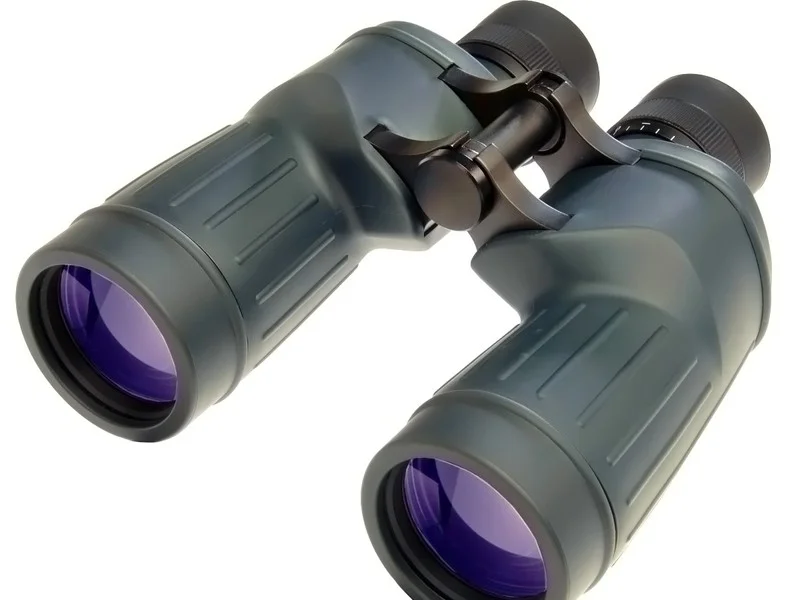
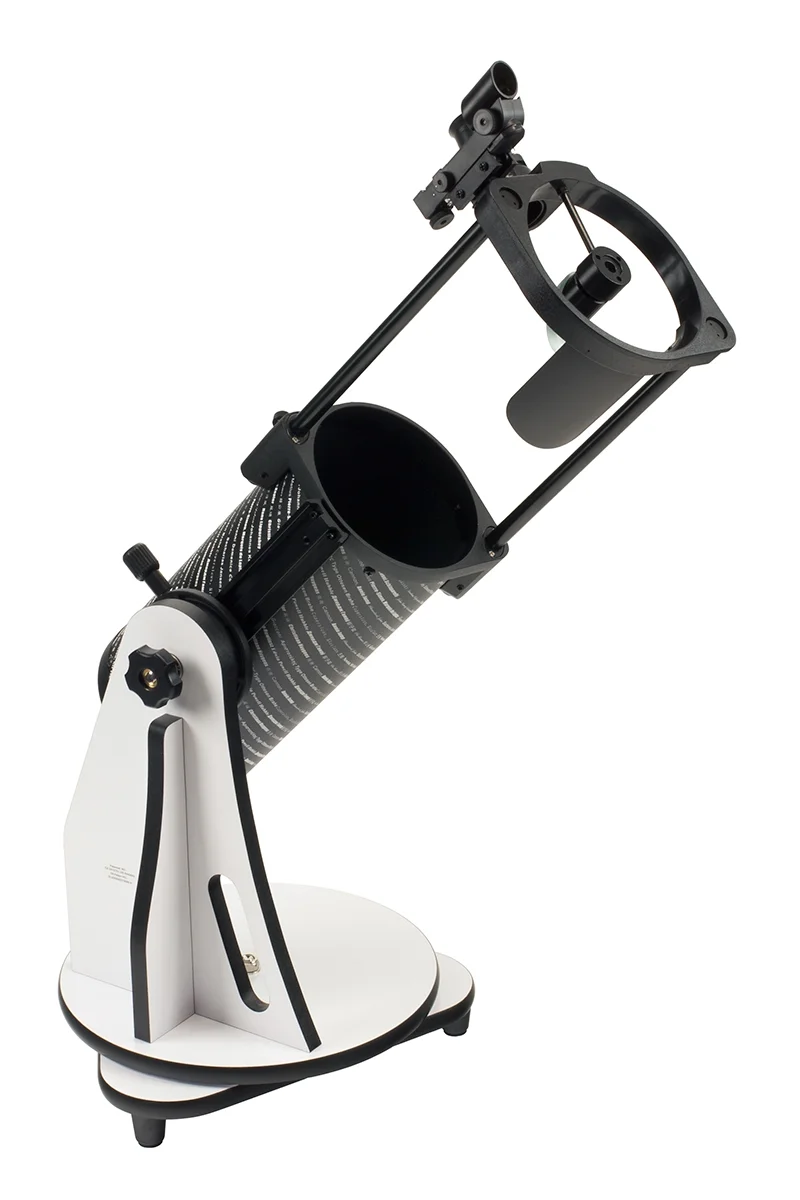
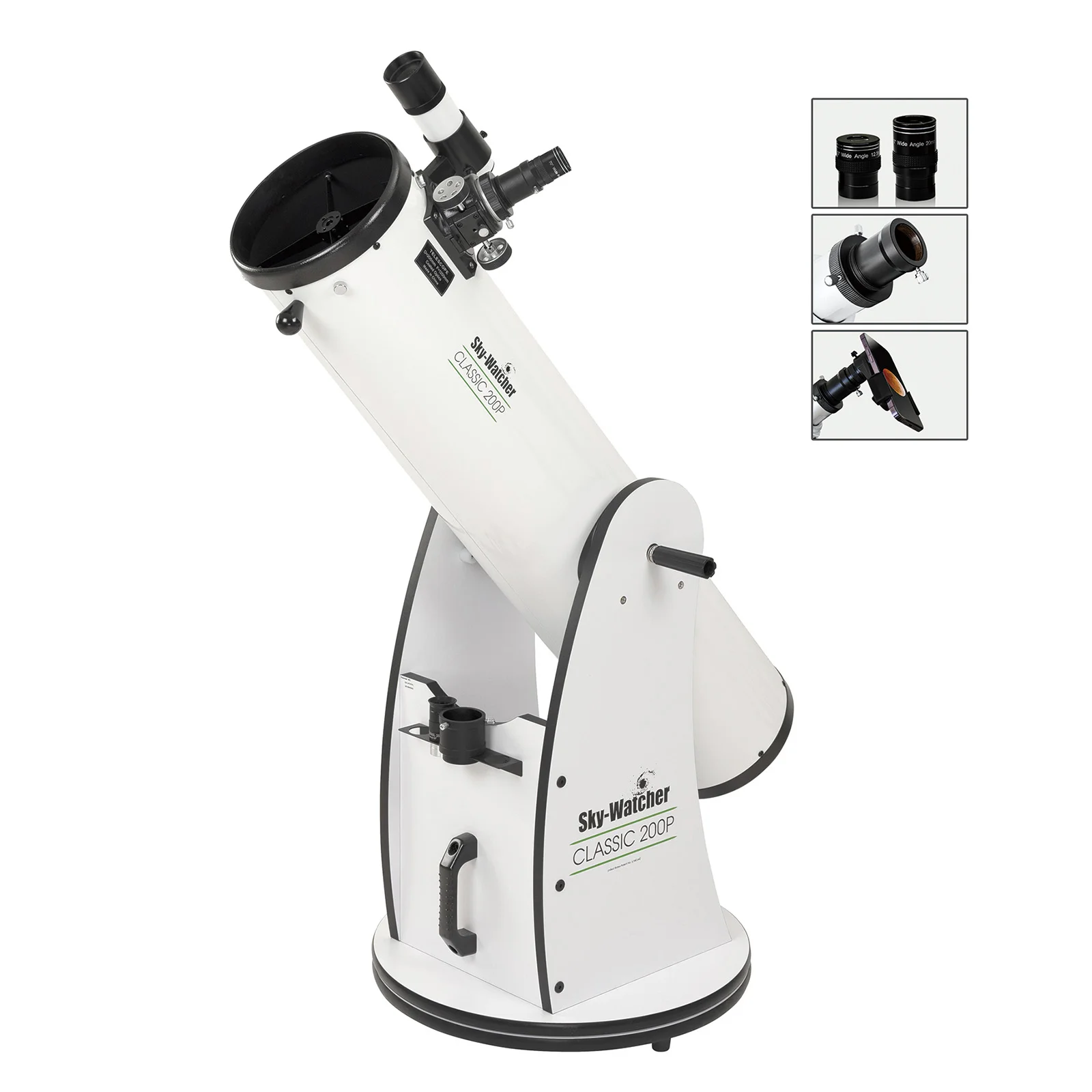
Need help choosing? See our binoculars and telescope guides.

Advanced Observing

Monitoring Mira's Cycle
Mira is one of the best targets for systematic amateur variable star observation. Using a DSLR and photometry software (or simply careful visual estimates against comparison stars from the AAVSO chart), you can track its pulsation cycle over months. Each maximum and minimum is slightly different in timing and brightness — your observations contribute to the ongoing analysis of this star's behaviour. The AAVSO has Mira observations stretching back more than a century.
M77 Core with High Magnification
With a 25cm+ aperture telescope and 200× magnification under excellent seeing, the nucleus of M77 should reveal some non-stellar structure — a slightly extended, fuzzy core rather than a perfect point. This is the outer edge of the AGN region. Sketch the nucleus shape and compare across sessions: atmospheric turbulence makes this a challenging observation, but the core is genuinely brighter and more compact than a normal galaxy nucleus.
NGC 246 with OIII Filter
The Skull Nebula (NGC 246) is almost impossible without a narrowband nebula filter. An OIII filter dramatically increases contrast by blocking light pollution and passing only the oxygen emission line at 501nm. Under dark skies with a 25cm scope and OIII filter, the large disc should become visible — look for the subtle darker patches forming the "skull" pattern. This is one of the more satisfying filter-dependent targets in the autumn sky.
The M77 + NGC 1055 Galaxy Pair
M77 and NGC 1055 form a physical pair separated by less than a million light-years — genuine companions at 47–60 million light-years distance. In a 20cm scope at low magnification (~50×), both galaxies can be seen in the same field. One is face-on with a brilliant nucleus; the other is edge-on showing a dusty streak. Compare the two morphologies: the difference in appearance is entirely a matter of our viewing angle, not any intrinsic physical difference.
Pro Tip: Mira's Colour at Maximum
When Mira approaches maximum brightness, it becomes one of the most dramatically coloured naked-eye stars in the sky — deeper red than Betelgeuse, deeper even than Antares. Compare it through binoculars against nearby Zeta Ceti (blue-white) for one of the most striking stellar colour contrasts in the autumn sky. The deep red comes from titanium oxide molecules forming in its cool, swollen outer atmosphere.

Related Guides

Get weekly sky highlights and UAP news

One email a week. No spam. Unsubscribe any time.