Best Telescope Mounts 2026: UK Buyer's Guide
Six telescope mounts that actually get used, from the AZ-GTi that puts 40,000 objects in reach of a refractor to the HEQ5 Pro that opens astrophotography without the £3,000 entry price. Every pick is UK-stocked and matched to the scopes that suit them, and if you already own a manual EQ5 there is a GoTo upgrade kit that saves buying a new mount.
| Mount | Type | Payload | Price | Level |
|---|---|---|---|---|
| Sky-Watcher AZ-GTi | Alt-Az GoTo | 5kg | around £249 | Intermediate |
| Sky-Watcher EQ3-2 | Manual Equatorial | 6kg | around £230 | Beginner |
| Star Adventurer 2i | Motorised Equatorial | 2kg | around £249 | Beginner |
| iOptron SkyTracker Pro | Single-axis Star Tracker | 3kg | around £189 | Intermediate |
| Star Adventurer GTi | GoTo Equatorial | 5kg | £435 – £525 | Beginner |
| Sky-Watcher EQ5 Pro | Motor-Ready Equatorial | 10kg | around £699 | Intermediate |
| SynScan GoTo Upgrade Kit for EQ5 | GoTo kit for a manual EQ5 | ~9kg (EQ5 limit) | around £373 | Intermediate |
| Sky-Watcher HEQ5 Pro | GoTo Equatorial | 13kg | around £1,039 | Intermediate |
Sky-Watcher AZ-GTi: Best Portable GoTo Mount
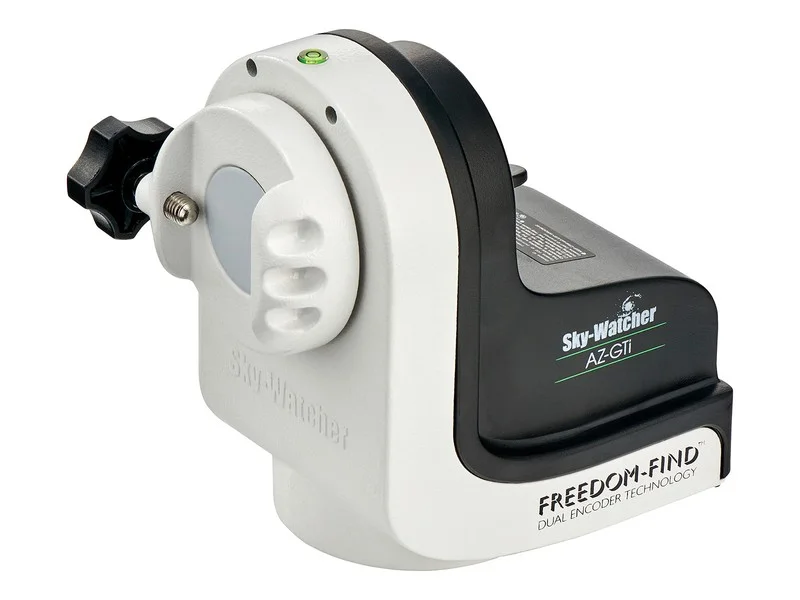
The AZ-GTi is the smallest GoTo mount that actually works properly. It mounts on a standard camera tripod, fits in a backpack, and requires nothing but two AA batteries. The hand controller automatically finds and tracks any object in its 40,000+ star database: point, click, observe.
It's brilliant for grab-and-go stargazing with a scope up to about 5kg: think refractors, compact Newtonians, or even a larger finderscope for photography. Slew speeds are smooth, and the tracking is accurate enough to keep high-magnification views centred without manual nudging.
The entry point to computerised observing. If you're tired of manually finding objects, the AZ-GTi removes that barrier without requiring setup space or mains power. Not suitable for heavy scopes, but perfect for refractors and compact reflectors.
Sky-Watcher EQ3-2: Best Budget Equatorial
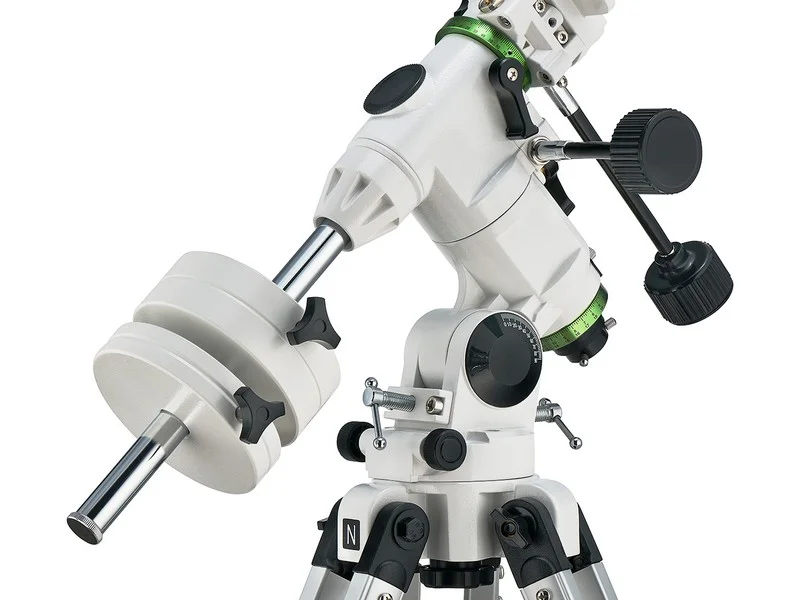
The EQ3-2 is the equatorial mount that comes bundled with the Evostar 90 EQ2, and it's also available as a standalone head. It's manual only, no motors, but once you align it to Polaris, a single slow-motion knob lets you track objects across the sky instead of constantly nudging in two directions.
It's a learning mount. You'll discover what equatorial mounts do and why some observers prefer them. At £140, it's cheap enough that you can see whether you actually like the equatorial workflow before spending serious money on motorised systems.
The budget entry to equatorial observing. Not for serious observers or long exposures, but perfect for learning how these mounts work and for casual visual observing of brighter targets.
Sky-Watcher Star Adventurer 2i: Best Astrophotography Tracker
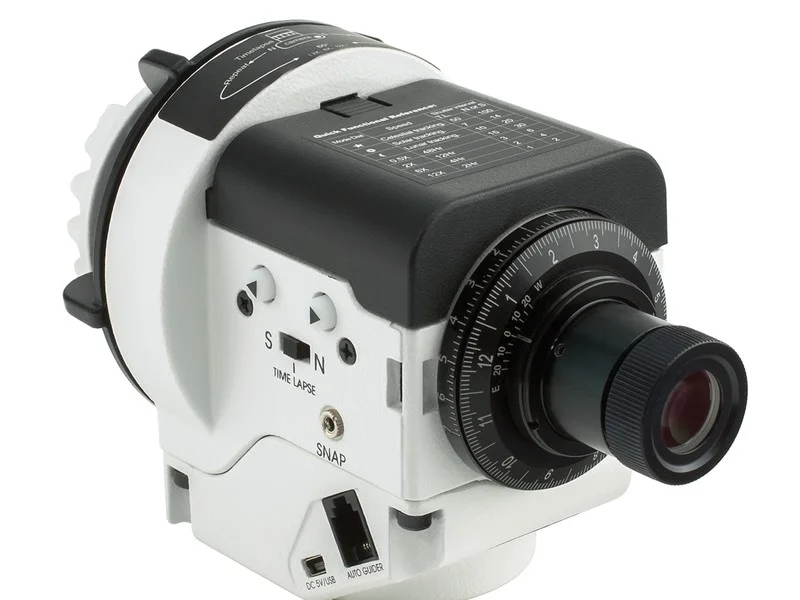
The Star Adventurer 2i is a tiny motorised equatorial tracker, nothing more. It doesn't find objects (you do), it doesn't carry heavy scopes, but it will track the sky accurately enough for 15–20 minute exposures with a camera or for comfortable observation through binoculars or a small refractor.
It's controlled via smartphone app, which means you can adjust tracking rates, select different sky motion profiles, and even do polar alignment checks all from your phone. It runs on four AA batteries and weighs almost nothing.
Its closest rival is the iOptron SkyTracker Pro: £60 cheaper, lighter, with a built-in rechargeable battery, but a 3kg payload and no guider port. Our SkyTracker Pro review compares the two in detail.
The entry point to smart equatorial tracking for astrophotography or light-duty visual observing. Not a goto mount, not a heavy-duty scope mount, but perfect for what it does: track the sky accurately without fuss.
Sky-Watcher Star Adventurer GTi: Best Portable GoTo for Astrophotography
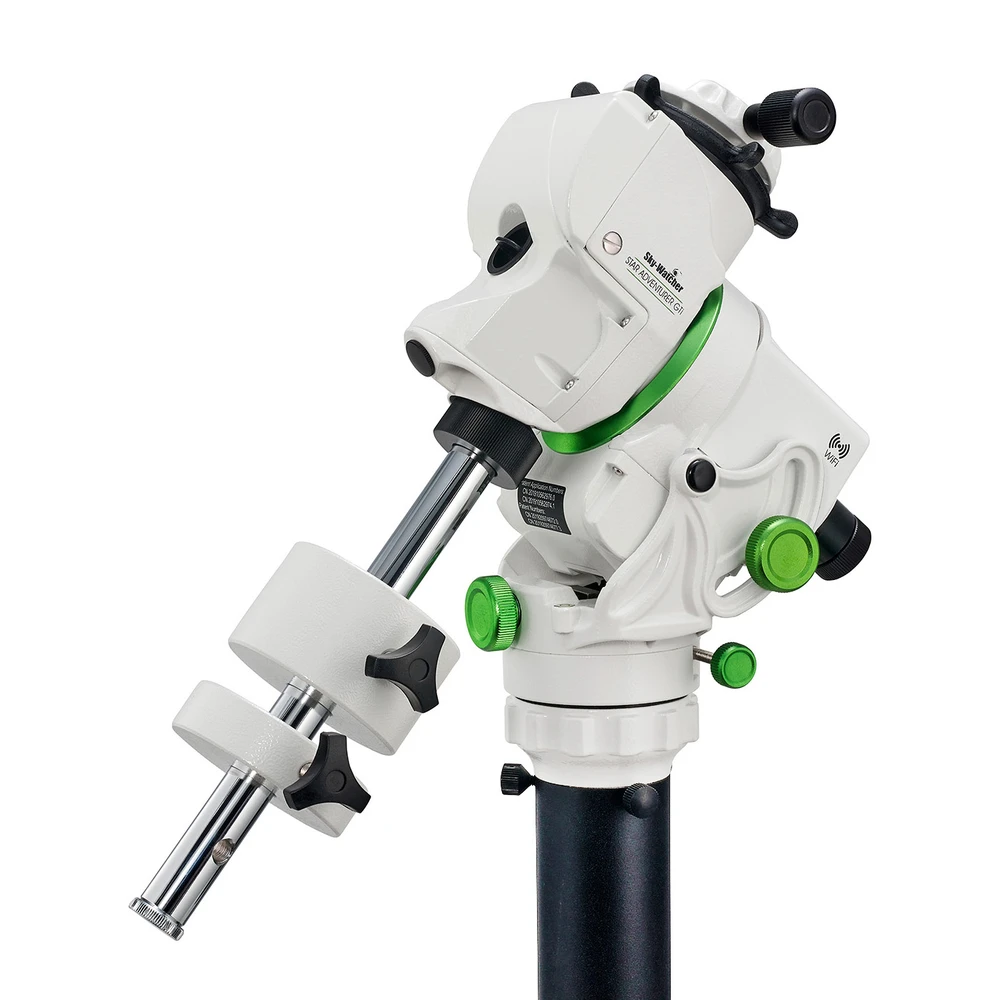
The GTi is what the Star Adventurer 2i grows into: the same portable, battery-powered idea, but with motors on both axes, full GoTo from the SynScan app on your phone, a proper counterweight bar and an ST-4 port for autoguiding. It weighs about 2.6kg for the head, runs on eight AA cells or a power bank, and sets up in ten minutes with the built-in illuminated polar scope.
The rating is 5kg but treat 3.5kg as the real imaging limit: a 72mm refractor with a DSLR or small cooled camera and a guide scope is the sweet spot, and that combination will happily do five-minute guided exposures. It is the mount most UK imagers buy when they outgrow a tracker but are not ready for the weight and price of an HEQ5. The kit version with the steel tripod and pier extension is worth the extra if you do not already own a solid tripod.
The best first "proper" astrophotography mount under £500: GoTo, guiding and portability in one. If your scope is over 4kg, skip straight to the HEQ5 Pro.
Sky-Watcher EQ5 Pro: Best Mid-Range Equatorial
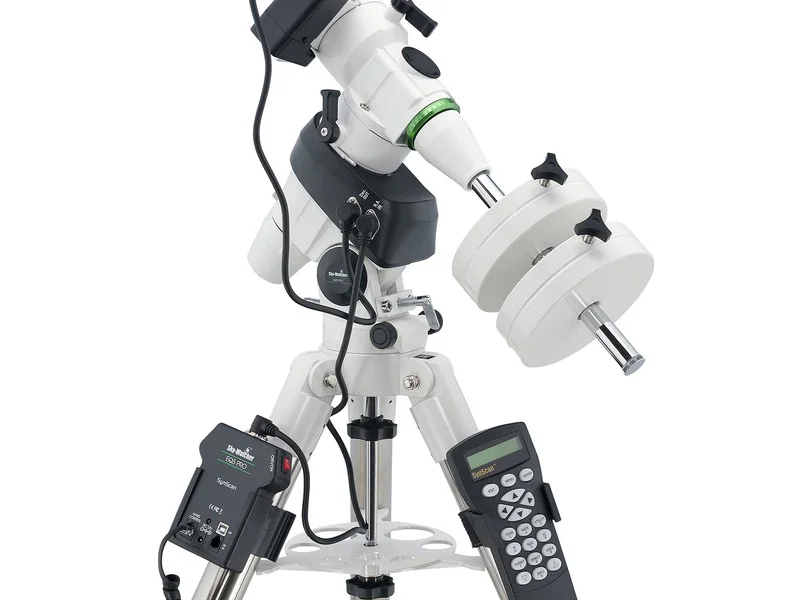
The EQ5 Pro is the workhorse equatorial mount. It carries 10kg comfortably, has solid steel worm drives, and is absolutely stable once you've done a proper polar alignment. Many observers use it manually; if you want GoTo later, the SynScan Pro upgrade kit below adds it to any manual EQ5.
It's the mount that grows with you. Start with manual slow-motion controls, add a motor later if you want longer observation sessions, or keep it manual forever. The build quality is professional-grade: this mount will outlast three scopes.
The true workhorse for intermediate observers. Not computerised, but solid, stable, and a bargain for what you get. Add a motor later if you want semi-automated tracking.
Sky-Watcher SynScan Pro GoTo Upgrade Kit for EQ5: Best Upgrade for a Manual EQ5
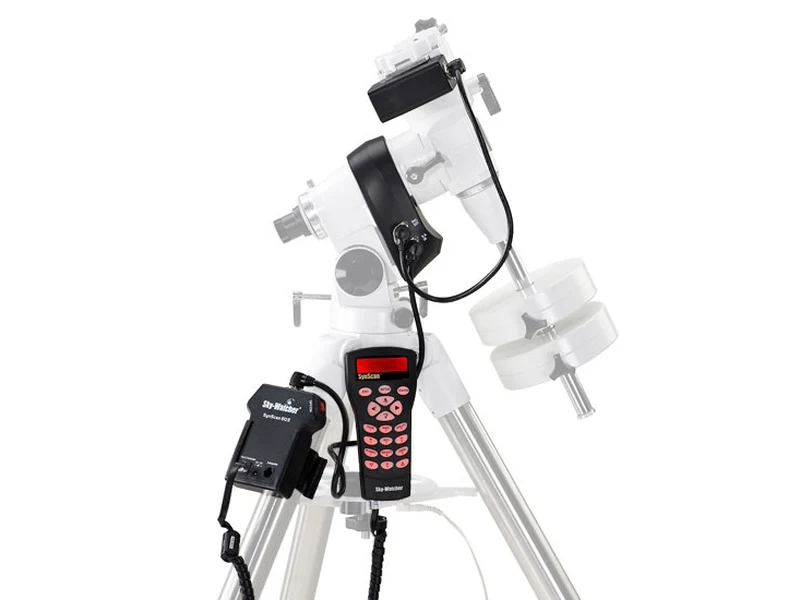
If you bought a scope on a manual EQ5 (the Explorer 200P EQ5 bundle is the usual route), this kit is the cheaper path to GoTo. It replaces the slow-motion knobs with stepper motors on both axes and adds the same SynScan handset that ships on the EQ5 Pro. You get automatic slewing to 13,740 objects, one-, two- or three-star alignment, periodic error correction, and a guide port for autoguiding. Slew speed tops out at 800x sidereal, and it talks to a laptop over ASCOM if you want to run it from software.
Fitting takes an evening with an Allen key and a bit of patience over the gear mesh. You will need a 12V 2A power supply, which is not in the box. Payload is unchanged at roughly 9kg for imaging, so it will not turn an EQ5 into an HEQ5, but for a 150mm or 200mm Newtonian doing visual work or short-exposure imaging it is the upgrade that makes the mount feel new.
The sensible upgrade if you already own the mount. At around £373 it is roughly half the price of buying an EQ5 Pro outright, and you end up with the same GoTo system. If you are buying from scratch, get the EQ5 Pro instead.
Sky-Watcher HEQ5 Pro: Best GoTo Equatorial for Astrophotography
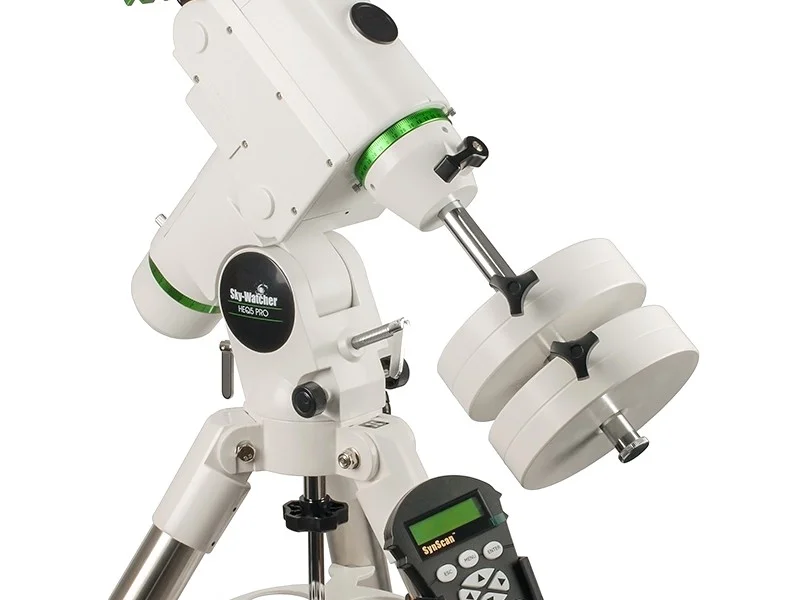
The HEQ5 Pro is the EQ5's computerised sibling. It carries 13kg, has a SynScan GoTo hand controller with 40,000+ objects, and tracks smoothly enough for long exposures. Polar alignment is aided by a laser pointer, and the whole system is equally at home doing visual observing or imaging.
It's in the sweet spot between serious hobbyist and professional equipment. Heavy enough to be stable with large scopes, computerised enough to remove the tedium of manual star-hopping, affordable enough that you won't weep if the weather spoils three clear nights.
The go-to mount (no pun intended) for intermediate to advanced observers wanting computerised tracking without the cost or complexity of fully professional gear. Stable, reliable, and future-proof.
How to Choose Your Mount
Alt-Az vs. Equatorial
An alt-azimuth mount (like the AZ-GTi) moves up/down and left/right: simple and intuitive. An equatorial mount aligns with Earth's axis, so one motor can track the whole sky. Alt-Az is easier; equatorial is better for long observing or imaging.
GoTo vs. manual tracking
GoTo mounts find objects automatically (great for visual observing), but they're heavier, more complex, and cost more. Manual mounts require some effort but are lighter and more reliable. First-time buyers often find manual surprisingly good enough.
What's the cheapest GoTo mount?
The Sky-Watcher AZ-GTi, at around £249, is a full 40,000-object GoTo mount that runs off AA batteries and your phone. It's alt-azimuth, so it suits visual observing rather than long-exposure imaging. If you specifically need a cheap GoTo equatorial mount, the realistic entry point is the HEQ5 Pro: the cheaper EQ mounts here are manual or motor-ready rather than full GoTo, and second-hand is worth a look before stretching the budget new.
Payload matters
Never load a mount beyond its rated payload. A 5kg mount carrying a 6kg scope will vibrate badly and track poorly. If your scope is heavy, either go up to the next mount class or stay with manual tracking.
Polar alignment is the difference between okay and excellent
The HEQ5 Pro and Star Adventurer 2i have laser pointers to help; the manual EQ3-2 requires patience and YouTube. But get polar alignment right, and your tracking becomes 10× better instantly.
Motorised doesn't mean GoTo
A manual EQ5 works well with a single RA (right ascension) motor, and that is often enough for visual work. Full two-axis GoTo, via the SynScan Pro upgrade kit or by buying the EQ5 Pro outright, earns its keep once you start imaging or get tired of star-hopping.