Key takeaways
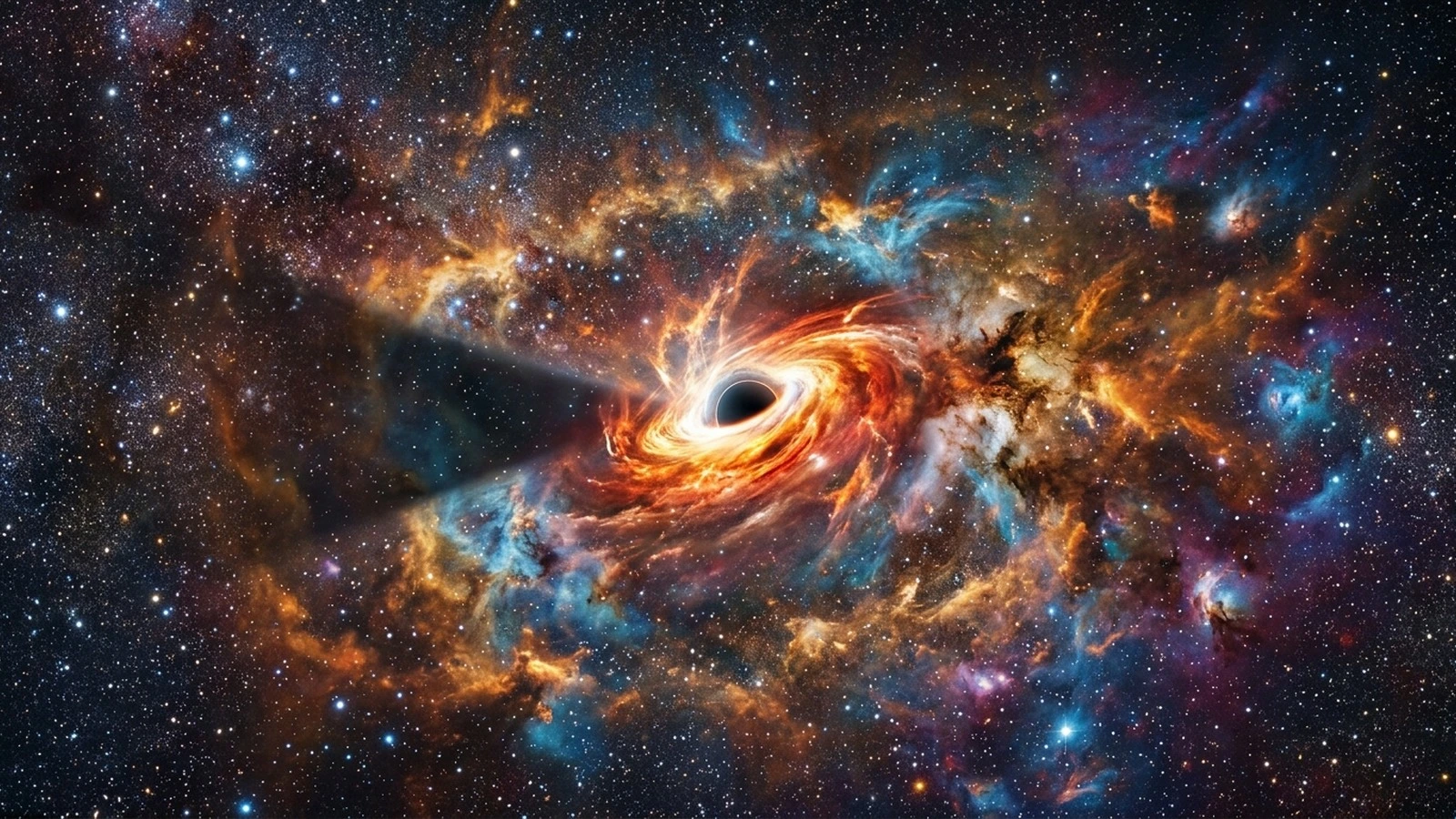
- A supermassive black hole in galaxy J1007+3540 has reawakened after nearly 100 million years of silence
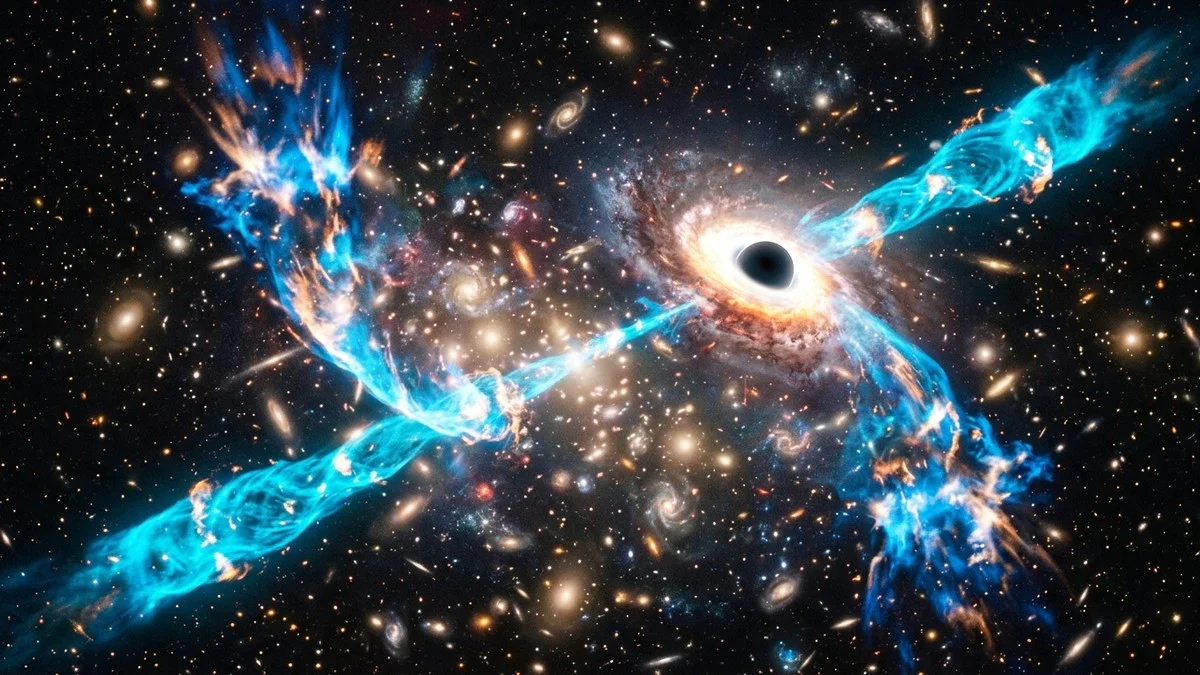
- Its plasma jets now stretch almost a million light-years, roughly 10 times wider than our entire Milky Way
- Radio telescopes LOFAR and uGMRT revealed multiple eruption cycles, proving black holes can switch on and off repeatedly over cosmic time
- The jets are being dramatically bent and distorted by the crushing pressure of the surrounding galaxy cluster
- The study, published in Monthly Notices of the Royal Astronomical Society, is one of the clearest examples of an 'episodic' black hole ever observed
Jump to section 7 sections
The Dormant Giant
At the heart of a distant galaxy called J1007+3540, there is a supermassive black hole that spent roughly 100 million years doing absolutely nothing.
No jets. No radiation. No outbursts. Just silence, while on Earth, dinosaurs rose and fell, mammals spread across continents, and eventually humans looked up at the sky and started wondering what was out there.
Then it woke up.
A new study published in Monthly Notices of the Royal Astronomical Society has captured this black hole restarting its engines in spectacular fashion, blasting twin plasma jets outward through the surrounding galaxy cluster in what lead researcher Shobha Kumari of Midnapore City College in India described as "a cosmic volcano erupting again after ages of calm, except this one is big enough to carve out structures stretching nearly a million light-years across space."
It is one of the most dramatic examples of a so-called "reborn" black hole ever observed, and it is telling astronomers something important about how these colossal engines shape the galaxies around them.
What the Radio Telescopes Revealed
The discovery came from two of the world's most powerful radio telescope arrays working together: the Low Frequency Array (LOFAR) in the Netherlands, and India's upgraded Giant Metrewave Radio Telescope (uGMRT).
Radio telescopes are the tool of choice for this kind of research because the jets fired by supermassive black holes emit most of their energy at radio wavelengths, invisible to the human eye but unmistakable to an antenna pointed at the sky.

What LOFAR and uGMRT showed when they turned their attention to J1007+3540 was a striking two-part structure. In the centre: a compact, intensely bright jet, fresh, energetic, clearly active right now. Surrounding it: a vast, fading cocoon of older plasma, the ghostly remnant of eruptions from long ago.
The contrast tells the whole story. The faded outer material represents the black hole's ancient activity. The bright inner jet is its current tantrum. Between the two is roughly 100 million years of silence.
"J1007+3540 is one of the clearest and most spectacular examples of episodic AGN with jet-cluster interaction," said co-author Dr. Sabyasachi Pal, also of Midnapore City College.
The Scale Is Almost Unimaginable
The full structure, the jets, the old lobes, all of it, spans nearly one million light-years across space.
To put that in perspective: our Milky Way galaxy is roughly 100,000 light-years in diameter. The plasma structures erupting from J1007+3540 are approximately ten times wider than the entire galaxy you live in.
If you could somehow see the whole system at once, the Milky Way would be a smudge. The jets from this single black hole would dwarf it entirely.
Why Do Black Holes Switch Off?
The term astronomers use for a black hole that periodically fires jets, goes quiet, then fires again is "episodic AGN": episodic active galactic nucleus. J1007+3540 is an unusually clear-cut example.
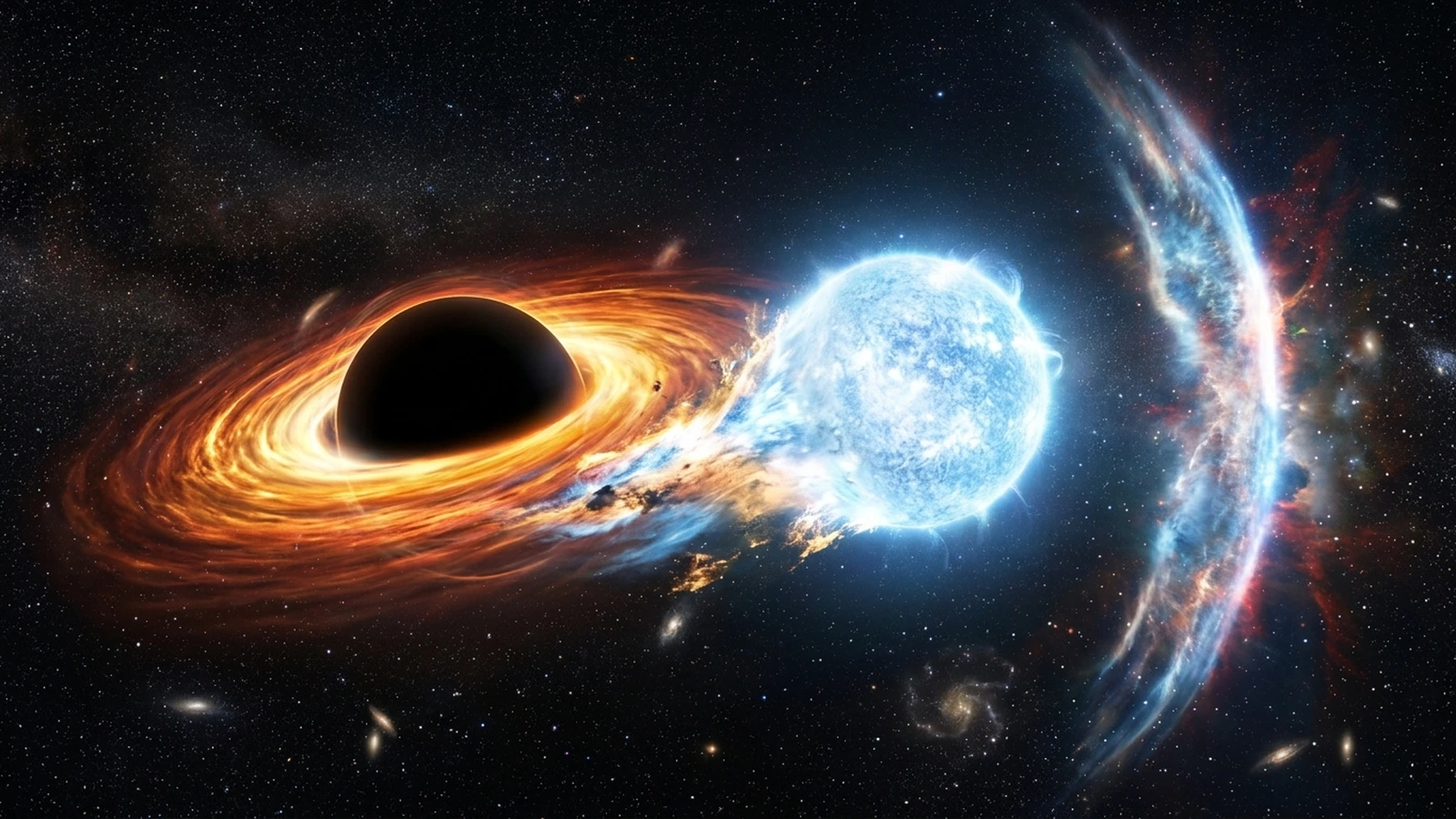
The leading theory for why this happens comes down to fuel. Supermassive black holes at galactic centres become active when material, gas, dust, even stars, falls into the accretion disc around them. As this matter spirals inward, enormous amounts of energy are released, and some of it is channelled into the jets. The black hole roars.
But black holes are extraordinarily efficient feeders. They consume the nearby material, and eventually the supply runs thin. Without fresh fuel, the jets sputter and die. The black hole goes dormant. It might stay that way for millions, or in this case, hundreds of millions, of years.
Then something new falls in. A cloud of gas drifts too close. Two galaxies interact, stirring up material. A stream of infalling gas finally reaches the threshold. The engines restart. The volcano erupts again.
You Can't See a Black Hole, But You Can See Its Neighbours
Kit we've tested and reviewed in full
J1007+3540 is a radio-telescope target, invisible in an eyepiece. But galaxies and star clusters within reach of modest equipment give you the same sense of scale a lot closer to home.
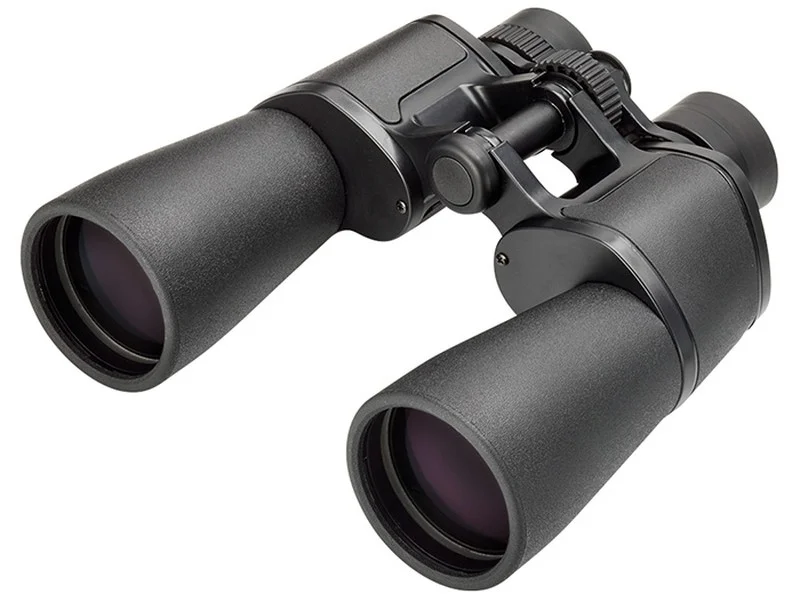
A good first step for sweeping the Milky Way and picking out star clusters, the visible building blocks of galaxies like the one hosting this black hole.
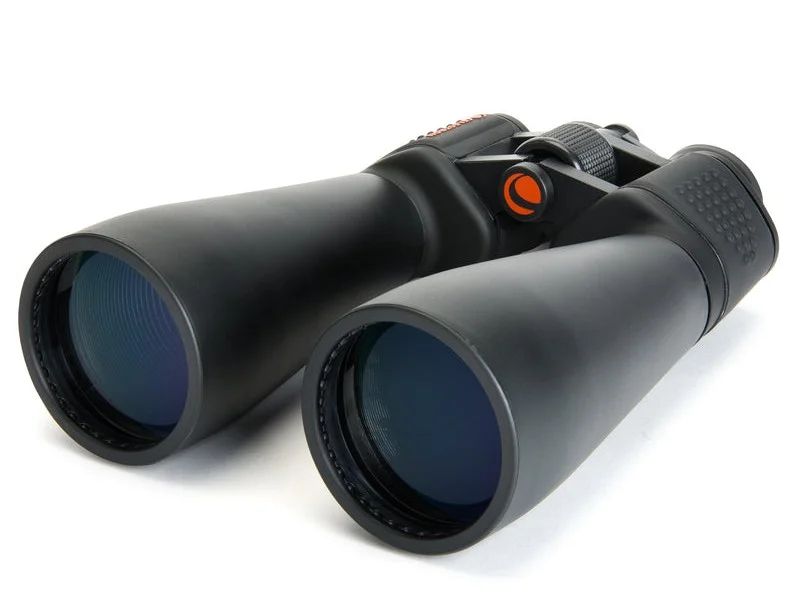
Big enough objectives to hunt down bright galaxies like Andromeda, hinting at the kind of distant structures radio telescopes study in far more detail.
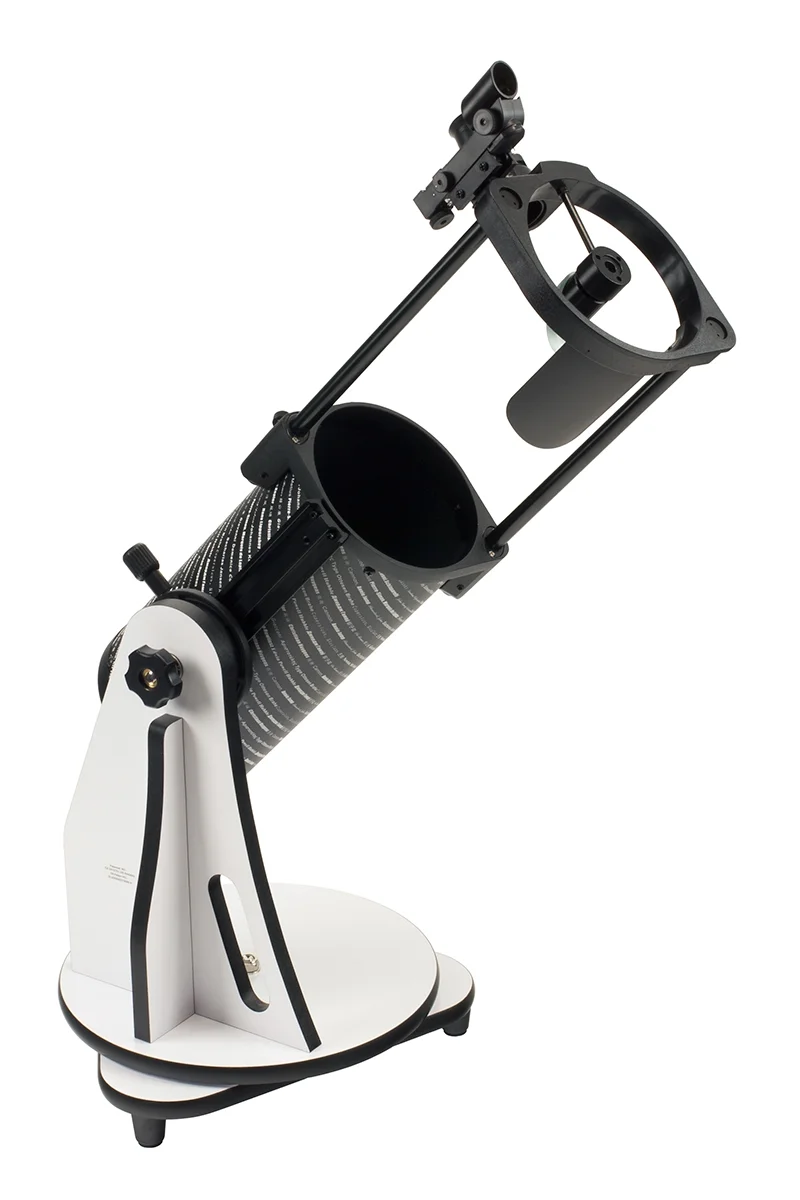
A proper tabletop telescope that opens up galaxies, nebulae and star clusters well beyond what binoculars can reach.
Affiliate links: you pay the same price, we earn a small commission that helps keep WatchTheStars free.
A Brutal Environment
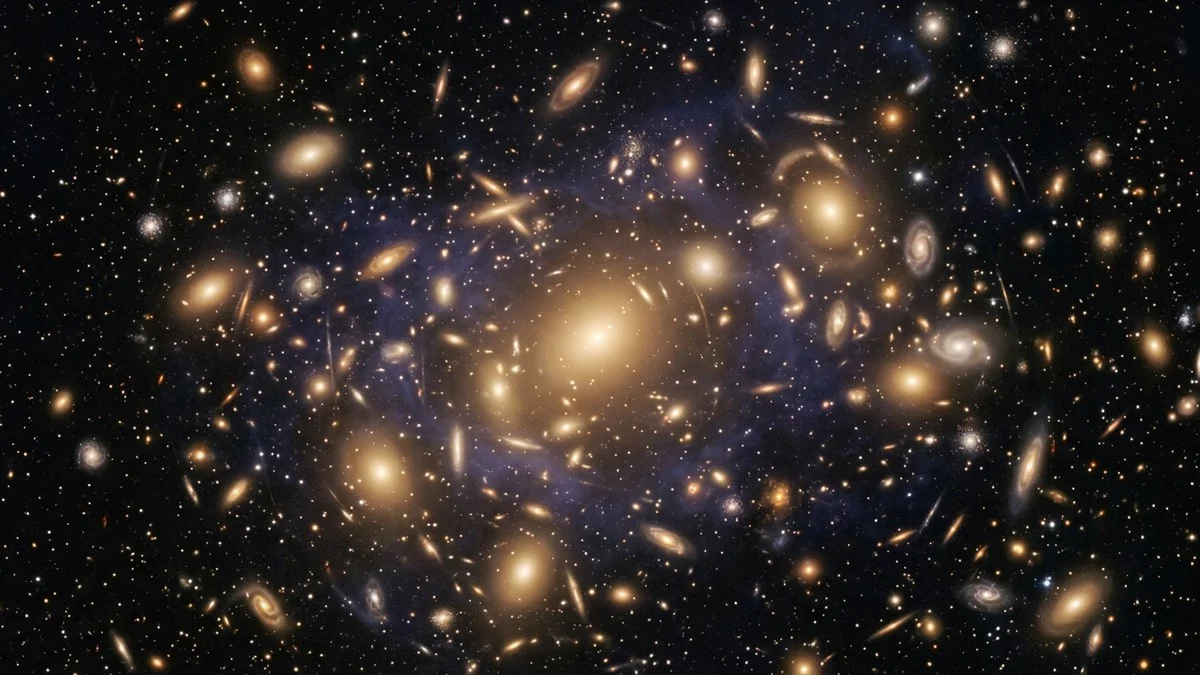
What makes J1007+3540 particularly striking is where it lives. The galaxy sits inside a massive galaxy cluster: an enormous concentration of hundreds of galaxies, dark matter, and vast quantities of extremely hot gas, all held together by gravity.
That hot gas creates intense external pressure. When the black hole fires its jets outward, they don't travel in straight, tidy lines. They are squeezed, bent, and twisted by the cluster environment. LOFAR images show the northern lobe dramatically compressed, warped into a curved backflow as the surrounding gas pushes back against the eruption. The uGMRT data shows this compressed region has an "ultra-steep radio spectrum", meaning the plasma there is very old and has lost most of its energy, consistent with it being a remnant of a much earlier eruption.
The interaction runs both ways. While the cluster gas warps the jets, the jets are also depositing enormous amounts of energy into the cluster gas itself: heating it, preventing it from cooling and forming new stars. This feedback loop between black holes and their host environments is one of the central puzzles of galaxy evolution.
What This Means for Galaxy Evolution
For decades, astronomers have puzzled over why the largest galaxies in the universe, massive ellipticals like the host of J1007+3540, are essentially "dead": they form very few new stars, even though they sit in clusters full of gas that should, in principle, collapse and spark star formation.
The current best explanation is that periodic black hole eruptions keep injecting energy into the surrounding gas, keeping it too hot and turbulent to collapse into stars. In other words, the black hole acts as a thermostat for its entire galaxy, and potentially for its entire cluster.
But this only works if the black hole fires regularly. A single eruption then permanent silence wouldn't do the job. J1007+3540's multiple eruption cycles, now laid out clearly in the radio data, provide direct observational evidence that black holes really do cycle through repeated on/off phases, exactly the kind of episodic feedback that models of galaxy evolution have long needed to account for.
The paper by Kumari, Pal, Dr. Surajit Paul (Manipal Centre for Natural Sciences), and Dr. Marek Jamrozy (Jagiellonian University, Poland) is, as the title says, probing the "AGN duty cycle", essentially measuring how often this engine switches on and off, and how its environment shapes the result.
How Do We Even See This?
It is worth pausing to appreciate just how remarkable it is that we can observe any of this. J1007+3540 is so distant that the light, or rather, the radio waves, reaching LOFAR and uGMRT left the galaxy long before humans existed. We are watching this cosmic drama in slow motion, our snapshot of the past conveying the structure of something incomprehensibly large.
Radio astronomy has transformed our understanding of the violent universe. The jets from active black holes are essentially invisible in optical light. You would never spot them with a conventional telescope. But at low radio frequencies, LOFAR can pick out the fading ghosts of eruptions that happened hundreds of millions of years ago, laid out in the sky like geological strata recording ancient activity.
That is how we know J1007+3540's black hole has erupted before, gone quiet, and erupted again. The archive is written in radio waves, and we are only just learning to read it fluently.
The full study, "Probing AGN duty cycle and cluster-driven morphology in a giant episodic radio galaxy", is published in Monthly Notices of the Royal Astronomical Society, 2026, volume 545(4). DOI: 10.1093/mnras/staf2038.
Frequently Asked Questions
Equipment guides
Related topics

Ian ClaytonAmateur astronomer and founder of WatchTheStars.co.uk, dedicated to helping others explore the wonders of our universe. Full profile →