Key takeaways
- The US government released 6 declassified UAP documents and 57 sensor videos on 22 May 2026 via PURSUE
- Documents span 1948 to 2025: including Manhattan Project physicists, Soviet nuclear sites, and a modern helicopter encounter
- The 116-page Sandia report names the investigation 'Project Grudge' and documents hundreds of unexplained green fireball sightings near US nuclear facilities
- 11 videos were pre-flagged 'Interesting' by the DoD: they show FLIR and night-vision footage of objects over water, a multi-object cluster, and a striking ground-level sighting at what appears to be an airfield
- The Pentagon confirms none of the material establishes extraterrestrial origin, but several objects remain officially unexplained
Jump to section 9 sections
- What Is PURSUE, and Why Does It Matter?
- Document 1: A Modern Helicopter Encounter (2025)
- Document 2: A Soviet Green Object Over a Nuclear Test Site (1973)
- Document 3: Radar Images From America's Own Nuclear Facility
- Document 4: When Manhattan Project Scientists Asked the Same Questions
- Document 5: The Pajarito Astronomers 1986 UFO Talk Invitation
- Document 6: Project Grudge, 116 Pages the Government Never Wanted You to Read
- The Videos: 57 Clips, 11 Flagged as 'Interesting'
- What the Pentagon Says (and What It Doesn't)
On 22 May 2026, the US government quietly posted a new package of declassified UAP files to war.gov/ufo. No press conference, no fanfare: just six documents totalling around 66 megabytes and a 5.6-gigabyte bundle of 57 sensor videos. All released under the PURSUE programme: the Presidential Unsealing and Reporting System for UAP Encounters, established under Trump's executive order earlier this year.
I've read every page of the documents and reviewed video footage from all 11 clips the DoD pre-flagged as "Interesting." This is what they actually contain.
What Is PURSUE, and Why Does It Matter?
PURSUE is the formal mechanism by which previously classified UAP-related government records are being reviewed and released to the public. It's the infrastructure behind the "disclosure" moment that UAP researchers have been pushing for since the 2017 New York Times revelations.
This May 2026 package is the second PURSUE release: the first, in early May, contained 162 documents and caused significant media attention. This second batch is smaller but, in some ways, more historically significant. It reaches further back in time and connects UAP activity specifically to America's nuclear weapons infrastructure: a thread researchers have been pulling on for decades.
The documents span from 1948 to 2025. The videos are almost all recent military sensor footage, with dates and coordinates redacted.
Document 1: A Modern Helicopter Encounter (2025)
The most recent document in the release is a 2025 ODNI (Office of the Director of National Intelligence) narrative report about a US intelligence community helicopter crew that encountered an unknown aerial object.
The crew reported the object approached to within ten feet of their aircraft: close enough that they described feeling the encounter as a near-collision. The object was observed to manoeuvre in ways inconsistent with known aerial platforms. The report is written in clipped intelligence prose and is only a few pages long, but it's notable for two reasons: it's one of the most recent declassified UAP encounters on record, and it comes from within the intelligence community itself rather than the military.
The document confirms the encounter was formally reported and investigated. No explanation is offered.

Document 2: A Soviet Green Object Over a Nuclear Test Site (1973)
This is a CIA intelligence information report from 1973, declassified with significant redactions. It describes a luminous green spherical or elliptical object observed over the Sary Shagan missile test facility in the Soviet Union, one of the USSR's most sensitive strategic installations.
The object was reported by Soviet observers and the information was obtained through intelligence channels (the precise collection method is redacted). It's described as hovering or moving slowly at altitude before departing. The CIA report is matter-of-fact in tone: this is treated as a legitimate intelligence report, not a curiosity.
What makes this striking is the location. Sary Shagan was, and remains, a major Soviet/Russian strategic missile defence testing site. The appearance of an unidentified luminous object there in 1973 mirrors almost exactly the patterns documented over US nuclear sites in the late 1940s. The same colour, the same type of location, half a world away, 25 years later.
Document 3: Radar Images From America's Own Nuclear Facility
The Department of Energy contributed a short document containing radar and enhanced imagery from the Pantex Plant in Texas, the only facility in the United States that assembles and disassembles nuclear warheads. This is about as sensitive an installation as exists on American soil.
The document carries a UCNI marking (Unclassified Controlled Nuclear Information) which is a restricted category used for nuclear-related material that, while not classified Top Secret, is still subject to access controls.
The images show radar returns and processed/enhanced imagery of what appear to be unidentified objects near or over the facility. The document is brief and descriptive rather than analytical: it reads like a formal record of detections, not an investigation report. No conclusions are drawn.
The fact that this document exists at all is significant. Pantex security is extremely tight. The presence of unidentified radar contacts there, documented in official DoE records, is not something that would have been submitted to PURSUE lightly.
We've written a full deep-dive on this incident, covering the 2015 encounter in detail, the Sandia analysis, the history of UFO sightings at Pantex going back to 1957, and what the declassified images actually show: The Pantex Plant UFO Incident →
Watch the Sky Yourself, No Clearance Required
Kit we've tested and reviewed in full
These files took decades to surface. If you fancy doing your own unclassified sky-watching in the meantime, a solid pair of binoculars is all you need to start.
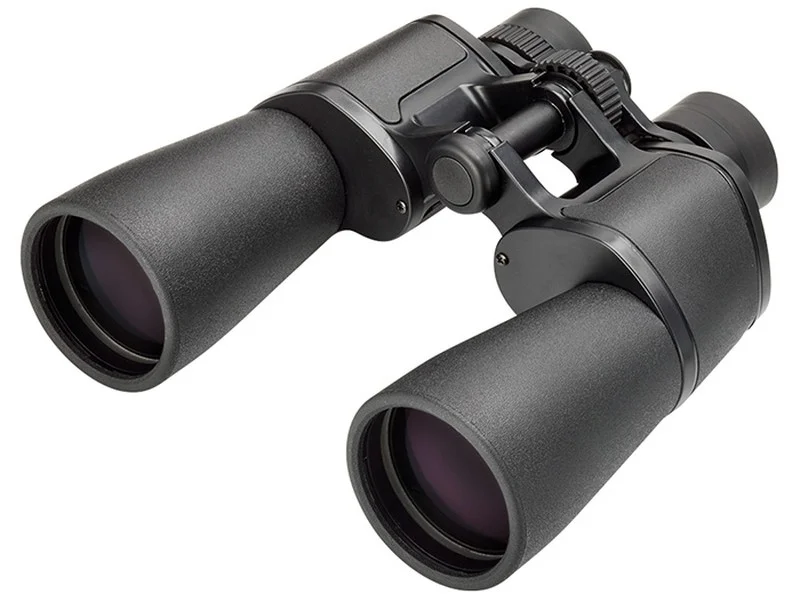
Reliable and easy to use for casual sky checks whenever something catches your eye overhead.
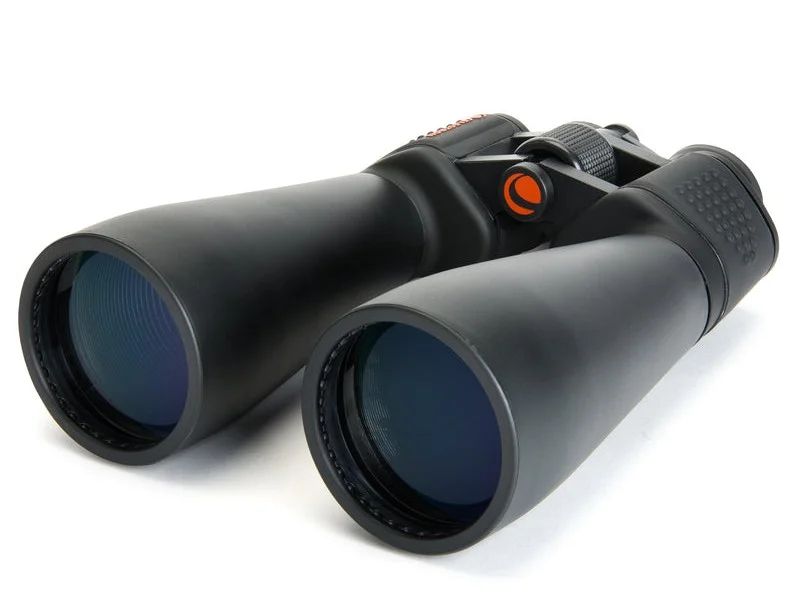
Good for scanning larger patches of sky if you want to keep an eye out the way those 1940s New Mexico observers did.
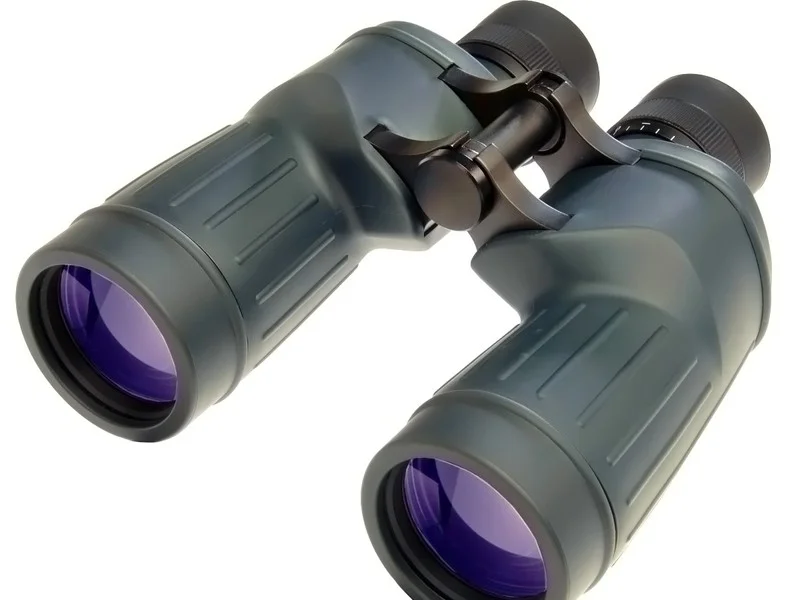
A step up in build quality for anyone planning to make a regular habit of watching the skies as these releases continue.
Affiliate links: you pay the same price, we earn a small commission that helps keep WatchTheStars free.
Document 4: When Manhattan Project Scientists Asked the Same Questions
This is the most personally compelling document in the release: a series of letters written by Dr James Tuck, a British-born physicist who worked on the Manhattan Project and later became a senior scientist at Los Alamos National Laboratory.
Tuck's correspondence, from the late 1940s, discusses what he describes as unexplained luminous phenomena observed near Los Alamos. He was clearly troubled by what was being seen and was attempting to find a scientific explanation. The letters show a man of serious scientific standing, someone who helped build the first nuclear weapons, genuinely wrestling with observations that didn't fit any known framework.
At one point, Tuck invokes Edward Teller, another Manhattan Project physicist and the "father of the hydrogen bomb", who apparently suggested the observed objects were "not material objects" in the conventional sense. Whether that was a serious scientific hypothesis or an offhand remark is unclear from the correspondence, but its inclusion is remarkable.

Document 5: The Pajarito Astronomers 1986 UFO Talk Invitation
The fifth document (DOE-UAP-D003) is a one-page notice from the Pajarito Astronomers, the amateur astronomy club in Los Alamos, dated 20 May 1986. It is addressed to the club's own members and announces a meeting on 29 May 1986 at Fuller Lodge, with a talk by Dr John Warren of the Laboratory's AT-6 group titled "Why Should a Scientist be Concerned about UFO's?".
Correction (16 September 2026): an earlier version of this section said the letter was addressed to Laboratory officials and described observations of unusual aerial phenomena. Having read the page in full, that was wrong. It contains no sighting at all. It is a meeting invitation that survived in Laboratory records because the club's officers used their Los Alamos mail stops as addresses. We have written up what the Pajarito Astronomers letter actually says as a Document of the Week.
What the document does show is that interest in the subject never left the town: forty years after the green fireball investigations were closed, a room full of Los Alamos scientists and amateur astronomers still turned out on a Thursday evening to hear a colleague talk about UFOs.
Document 6: Project Grudge, 116 Pages the Government Never Wanted You to Read
The largest and most historically significant document in the release is a 116-page Sandia Laboratories general correspondence file covering 1948 to 1950. At 66 megabytes, it dwarfs the other five documents combined.
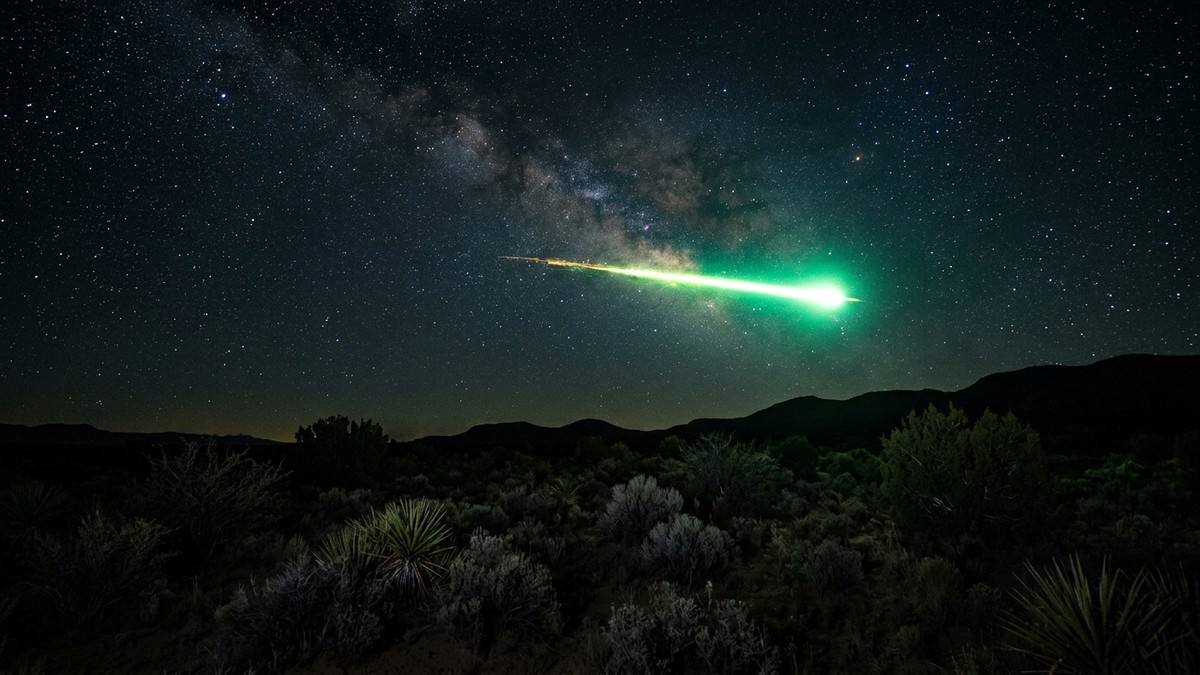
This is the real heart of the package. The file documents the internal investigation into the green fireball phenomenon: mysterious luminous objects repeatedly observed over New Mexico nuclear sites including Los Alamos, Sandia, Kirtland Air Force Base, and the Trinity test site. The investigation was conducted by some of the most distinguished scientists in the US nuclear establishment.
Crucially, the file names the investigation Project Grudge: revealing that "Grudge" was not, as previously understood, solely an Air Force public-relations effort to explain away UFO sightings, but was also the classified name for this specific scientific investigation into the nuclear-site phenomena. We've written a full deep-dive on the Green Fireball Incidents covering the complete investigation, all key witnesses, and the Soviet parallel.
Key findings documented across the 116 pages:
- Scale of the phenomenon: Hundreds of sightings over a two-year period, many by trained military and scientific observers
- Object descriptions: Consistently described as large, bright green objects, sometimes showing concentric colour rings, sometimes travelling in formation (T-shapes and triangles were specifically noted)
- Orange orbs: A secondary category of sightings describes "countless orange orbs" appearing in swarms against mountain backdrops
- Behaviours: Objects documented making right-angle turns, hovering, accelerating from stationary positions, and travelling at speeds inconsistent with 1940s aircraft
- Scientific bafflement: The file's tone is one of genuine scientific frustration: these were not credulous observers, and they could not explain what they were seeing
- No conclusion: The investigation was eventually wound down without resolution. The file ends without a definitive explanation.
The Videos: 57 Clips, 11 Flagged as 'Interesting'
Alongside the documents, the release includes 57 MP4 video files, 5.6 gigabytes in total. The DoD pre-tagged 11 of them as "Interesting" in their filenames. All telemetry (dates, coordinates, altitude, platform identity) has been redacted with black boxes.
The footage comes from multiple different sensor types: FLIR infrared, night-vision goggles (NVG), colour electro-optical cameras, and at least one older targeting system with a different HUD design. That variety suggests the clips were pooled from different units, platforms, and time periods rather than coming from a single incident.
The 11 flagged videos contain the following:
The most compelling footage comes from a 10-minute FLIR clip (#111719800) that shows a distinctly shaped, angular bright white object sitting on or very near a water surface. The 50% frame, roughly the halfway point of the video, gives the clearest static image of the object: it has an irregular, jagged perimeter unlike any wave or vessel shape, and is significantly warmer (brighter in infrared) than the surrounding water. This is the closest thing to a clear, unambiguous object image in the entire release.
The most dramatic footage is a 17-second clip (#111720752) that's unlike anything else in the set: it's shot from ground level, not aerial, with no military sensor HUD. The camera appears to be at an airfield or military installation. Red and white aircraft navigation lights are visible along the horizon. Then, in the final frames, a small bright oval/rounded object appears just above the horizon, significantly brighter than its surroundings, glowing white against a dark sky. It's brief, but the shape is distinct.
A multi-object sighting appears in the longest video (#111719833, running over 17 minutes). Near the 75% mark, NVG footage shows 2-3 small glowing white point sources clustered together against a cloudy sky: the clearest "multiple object" imagery in the release.
A vessel or USO appears in clip #111720696: aerial NVG footage of open ocean where, late in the video, an elongated bright object with a visible wake appears at the crosshair centre. It could be a vessel being tracked, but no ship that size appears in the earlier frames, and the wake pattern is unusual.
Several of the other flagged videos are less dramatic: open ocean with nothing clearly visible at the crosshair, desert terrain surveillance, and cloud-tracking footage. It's worth being honest about this: not every "Interesting" clip is immediately visually striking. Some appear to show sensors tracking something that simply isn't visible in the three frames I was able to examine.
What the Pentagon Says (and What It Doesn't)
The Department of Defense has been careful to attach standard disclaimer language to the PURSUE releases: nothing in this material establishes extraterrestrial origin or non-human technology. That's consistent with their position on all UAP releases since 2021.
What the Pentagon doesn't say, and what the documents themselves make clear, is that many of these phenomena remain unexplained. The Sandia file doesn't reach a conclusion. The 1973 CIA report offers no explanation for the Sary Shagan object. The 2025 helicopter encounter has no identified culprit. These are not cases where the government investigated and found a mundane answer. They're cases where the government investigated and couldn't find any answer.
The geographical and thematic concentration on nuclear sites is the detail that most serious researchers will focus on. The green fireball phenomenon of 1948–1950 occurred almost exclusively over the most sensitive nuclear installations in the United States. The same colour, the same type of location, appears in Soviet intelligence files from 1973. That's not a pattern you can easily dismiss.
Whether that pattern points to a surveillance programme by an adversarial power, some unknown natural phenomenon that's drawn to electromagnetic activity, or something else entirely, the documents don't say. They just show that the pattern was real, was observed by credible people, and was never explained.
Sources:
- war.gov/ufo PURSUE release: Document bundle (May 22, 2026)
- ODNI UAP-D001: USPER Narrative Senior USIC
- CIA UAP-D001: Intelligence Information Report USSR 1973
- DOE UAP-D001: Pantex Plant Image
- DOE UAP-D002: James Tuck Correspondence
- DOE UAP-D003: Pajarito Astronomers Letter
- DOW UAP-D017: General Correspondence of Sandia (1948–1950)
Frequently Asked Questions
Equipment guides
Related topics
Ian ClaytonAmateur astronomer and founder of WatchTheStars.co.uk, dedicated to helping others explore the wonders of our universe. Full profile →