Key takeaways
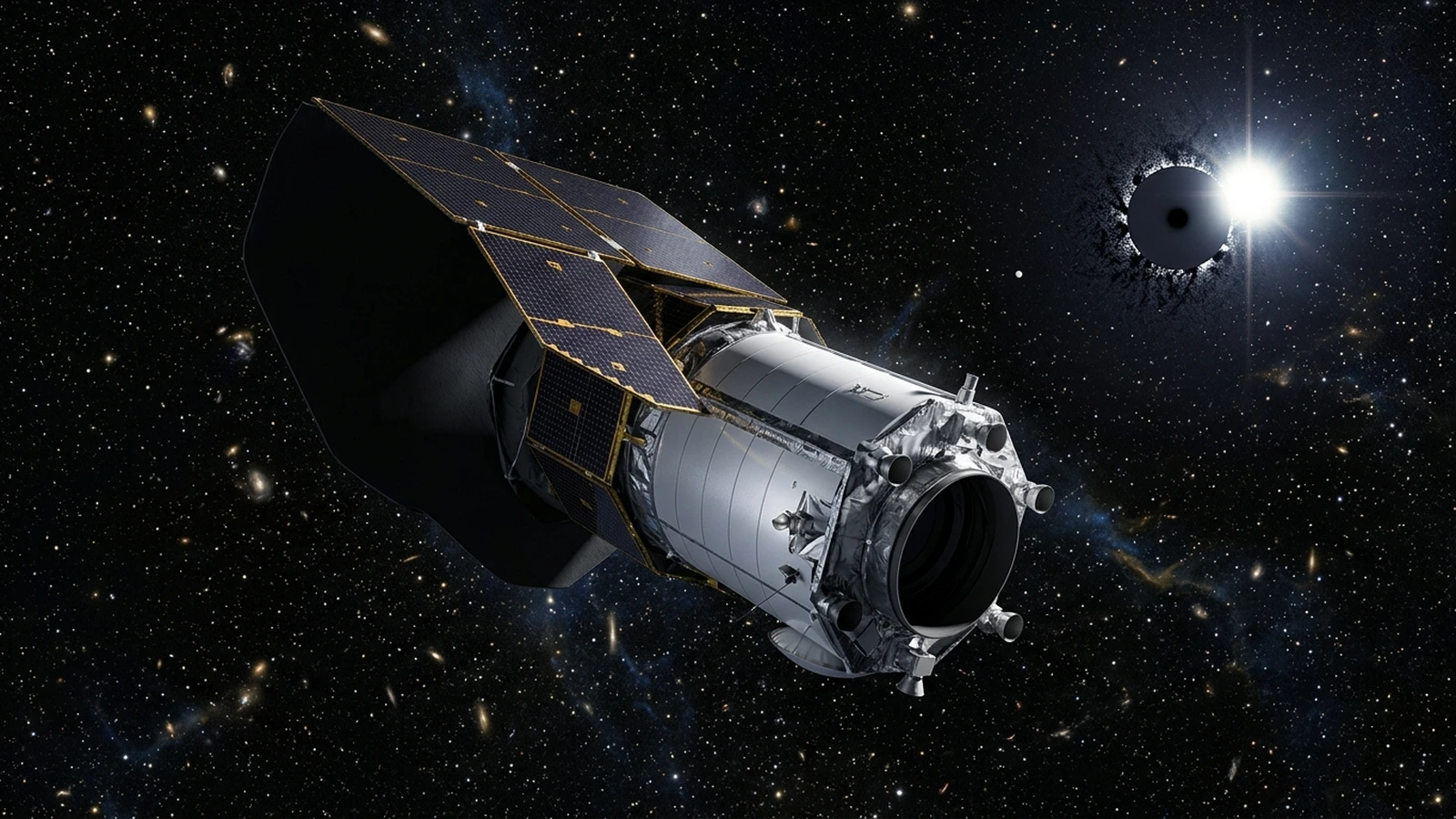
- NASA's Roman Space Telescope is fully built and could launch as early as autumn 2026: the most powerful wide-field space observatory ever constructed
- Its 288-megapixel camera has 200 times Hubble's field of view at the same resolution, meaning it can photograph a patch of sky larger than the full Moon in a single exposure
- Roman will discover thousands of exoplanets through gravitational microlensing, map billions of galaxies to probe dark energy, and directly photograph planets around other stars using its coronagraph
Jump to section 7 sections
What Happened Today
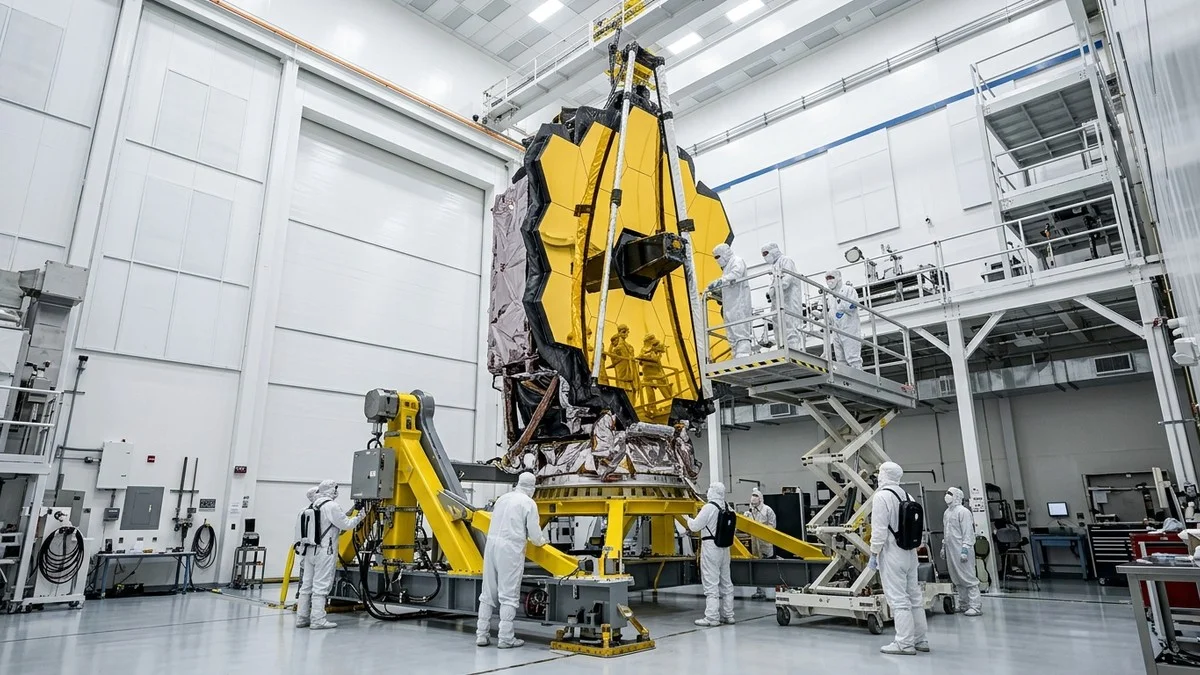
On Monday 21 April, NASA pulled back the curtain on one of the most ambitious space observatories ever constructed. At Goddard Space Flight Center in Greenbelt, Maryland, engineers and scientists gathered in the agency's largest clean room to present the fully assembled Nancy Grace Roman Space Telescope to the world for the last time before it ships to Florida for launch.
The briefing at 4 p.m. EDT, streamed live on NASA+ and YouTube, featured Roman project scientist Julie McEnery and project manager Jamie Dunn, who walked viewers through the telescope's progress and its extraordinary science goals. NASA Administrator Jared Isaacman was also on hand to mark the milestone.
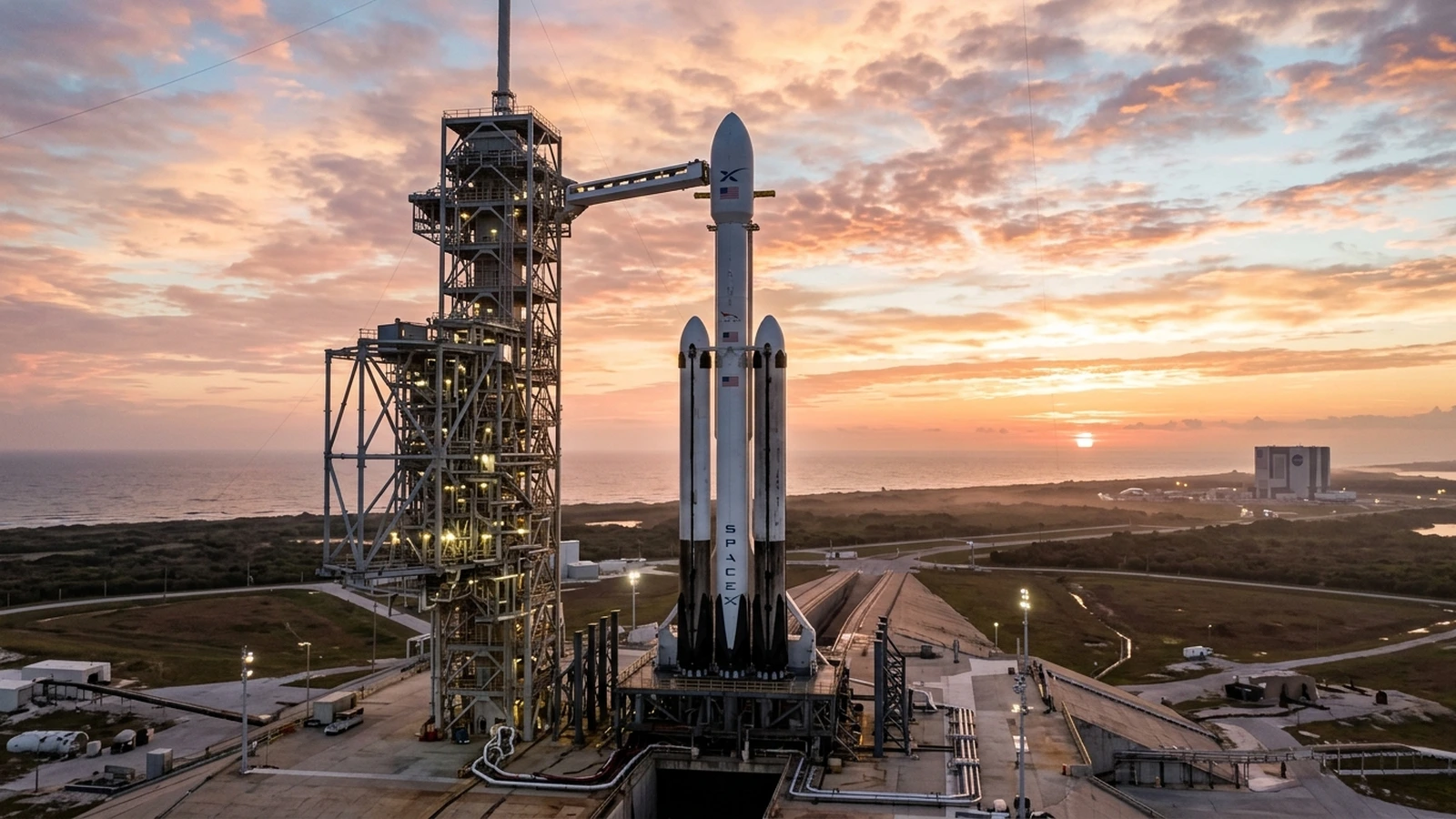
"This will be one of the last opportunities to view the fully integrated flagship telescope before it ships to NASA's Kennedy Space Center," NASA said in its announcement. After final testing wraps up this summer, Roman will be packed up and transported to Florida, where a SpaceX Falcon Heavy rocket will carry it to its permanent home 1.5 million kilometres from Earth.
What Is the Roman Space Telescope?
The Roman Space Telescope is NASA's next flagship space observatory: a wide-field infrared survey telescope designed to answer some of the biggest questions in astrophysics. Think of it as the missing piece between Hubble and JWST.
Hubble and the James Webb Space Telescope are extraordinary at studying objects in exquisite detail, but they see the universe "through pinholes," as NASA puts it. Their fields of view are tiny. If you wanted to map a large region of the sky at Hubble resolution, it would take decades of continuous observing.
Roman changes that equation entirely. It carries a primary mirror the same size as Hubble's, 2.4 metres across, but weighs less than a quarter as much. And crucially, its camera sees a vastly wider area of sky in every single exposure.
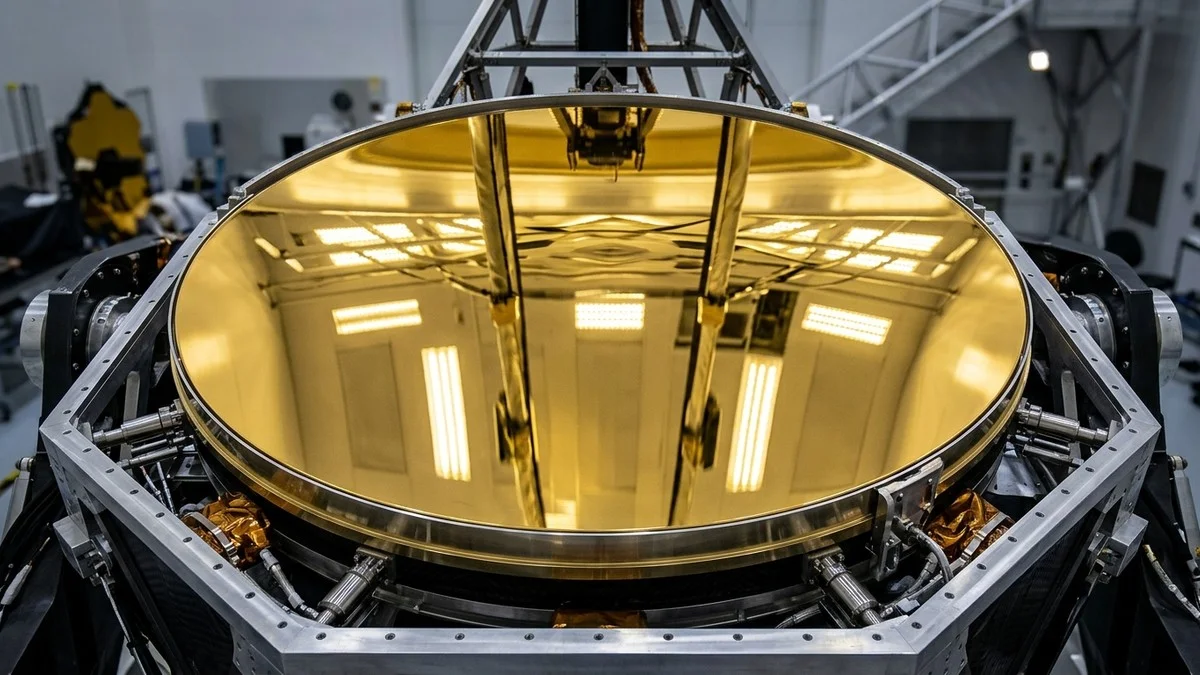
The observatory carries two instruments. The Wide Field Instrument (WFI) is a 288-megapixel infrared camera: the heart of the mission. The Coronagraph Instrument is a technology demonstrator that will block starlight to directly photograph planets and dusty discs around nearby stars in visible light. If it works as hoped, it will be the most advanced coronagraph ever flown in space.
200 Times Hubble's View
This is the number that makes Roman revolutionary: each single exposure from the Wide Field Instrument covers an area of sky 200 times larger than Hubble's infrared camera, at the same resolution.
To put that in perspective: a single Roman image captures a patch of sky larger than the apparent size of the full Moon. It would take Hubble 432 separate pointings to cover the same area that Roman photographs in just two.
Or think of it this way: it would take Hubble 85 years of continuous observing to match what Roman will survey in just 63 days.
This is not a small upgrade. It is a fundamentally different way of doing astronomy. Instead of studying individual galaxies one by one, Roman will photograph hundreds of millions of them in enormous panoramic sweeps, building up a three-dimensional map of the universe's structure on the largest scales ever attempted from space.
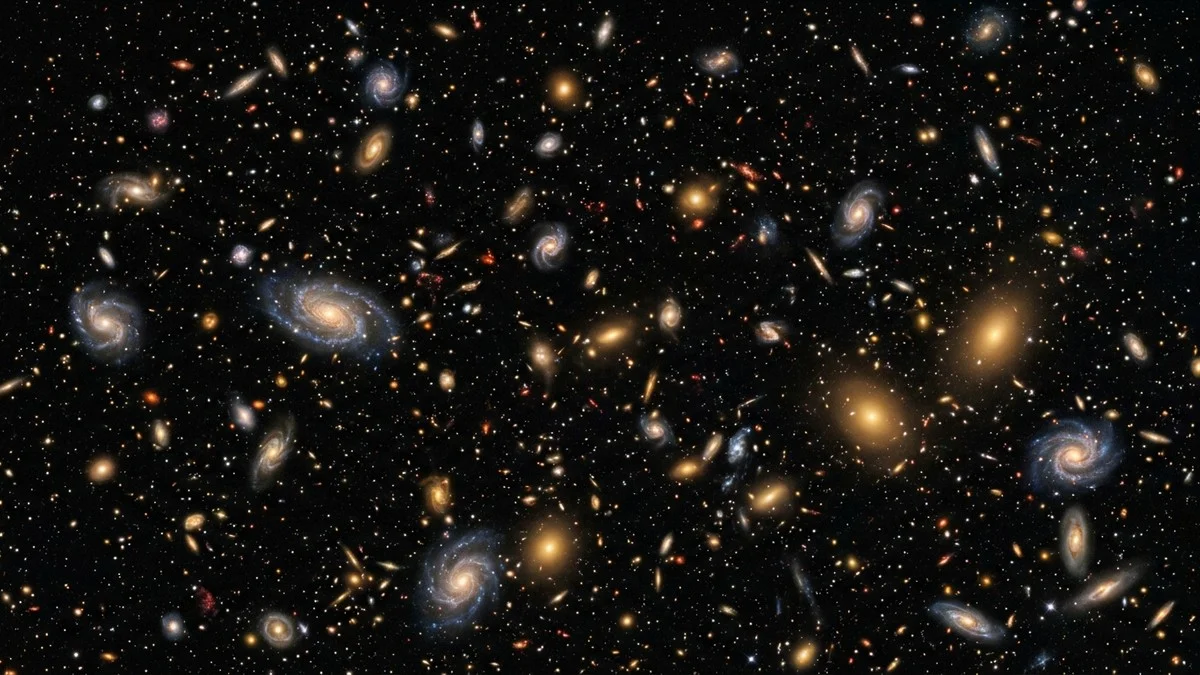
Over its five-year primary mission, Roman is expected to generate 20 petabytes of data, 20,000 terabytes, unveiling more than 100,000 distant worlds, hundreds of millions of stars, and billions of galaxies.
The Three Big Science Goals
1. Solving the Mystery of Dark Energy
The universe is not just expanding: it is expanding faster and faster, pushed apart by a mysterious force called dark energy. We know dark energy makes up roughly 68% of the total energy content of the universe, but we have almost no idea what it actually is.
Roman will attack this problem from three independent directions simultaneously. First, it will measure baryon acoustic oscillations, a kind of cosmic ruler imprinted by sound waves in the early universe, by mapping the positions of millions of galaxies across 11 billion light-years. Second, it will observe thousands of distant Type Ia supernovae, whose consistent brightness makes them reliable distance markers. Third, it will use weak gravitational lensing, the subtle bending of light by intervening matter, to map the invisible dark matter scaffolding of the cosmos.
By combining all three methods, Roman should be able to determine whether dark energy is truly constant (as Einstein's cosmological constant suggests) or whether it has been changing over time, which would point to entirely new physics.
2. The Biggest Exoplanet Census Ever
Roman will conduct the most comprehensive exoplanet survey in history using a technique called gravitational microlensing. When a foreground star passes directly in front of a more distant star, the closer star's gravity briefly amplifies the distant star's light. If the foreground star has planets, those planets produce additional brief spikes in the light curve, revealing their presence.
By staring at roughly 200 million stars in the dense central bulge of the Milky Way, Roman is expected to discover thousands of new exoplanets: including types that previous surveys have largely missed, such as free-floating "rogue" planets that drift through the galaxy untethered to any star, and planets in wide orbits similar to Jupiter's and Saturn's.
Kepler found planets close to their stars. TESS finds planets around nearby bright stars. Roman will fill in the gaps, giving us the first truly complete picture of how common different types of planetary systems are across the galaxy.
3. Directly Photographing Exoplanets
Roman's Coronagraph Instrument is a technology demonstrator: essentially a proof of concept for future missions. It uses dual deformable mirrors to block the overwhelming glare of a host star, allowing the faint reflected light of orbiting planets and dusty discs to be seen directly.
If successful, it will photograph worlds around nearby stars in visible light: something no space telescope has done before at this level of contrast. The coronagraph covers wavelengths from 575 to 825 nanometres and aims to achieve contrast levels roughly 1,000 times better than any existing coronagraph.
Even as a technology demo, this could produce some of the most striking images in the history of exoplanet science.
You can't see what Roman will see, but you can start exploring tonight
Kit we've tested and reviewed in full
Roman's job is mapping billions of distant galaxies, well beyond anything a back garden setup could ever reach. But the same curiosity that gets you excited about dark energy and exoplanets is exactly what a night with binoculars or a small scope rewards.
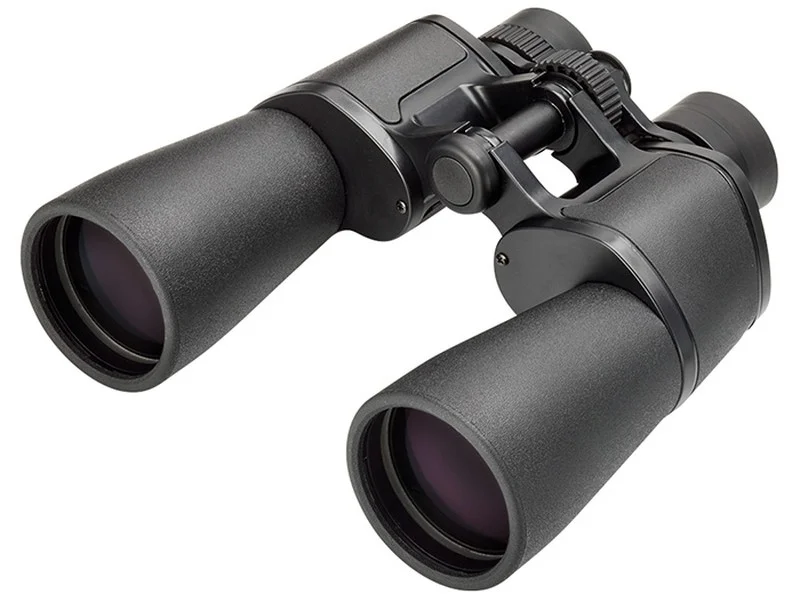
An easy, affordable way to start exploring the same sky Roman will one day map in extraordinary detail.
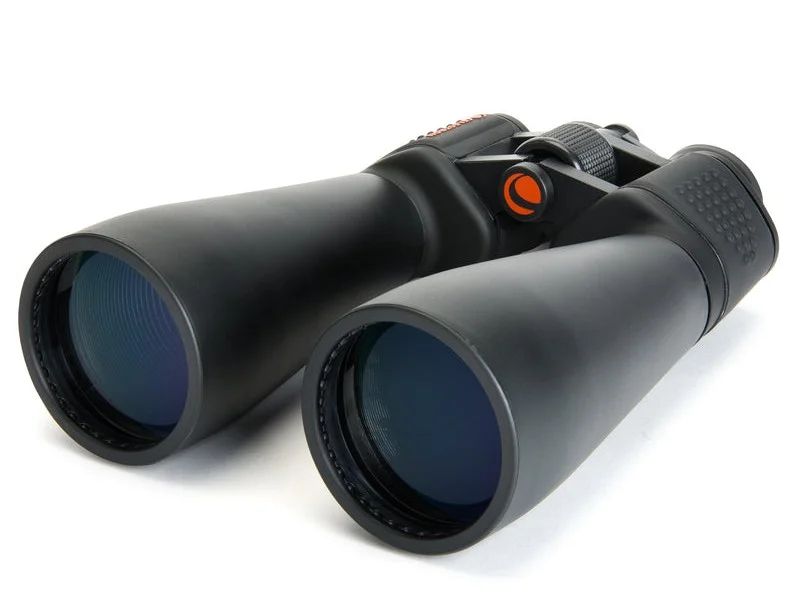
A wider aperture that starts to reveal fainter star clusters and galaxies, a small taste of the deep-sky science Roman will do on a vastly bigger scale.
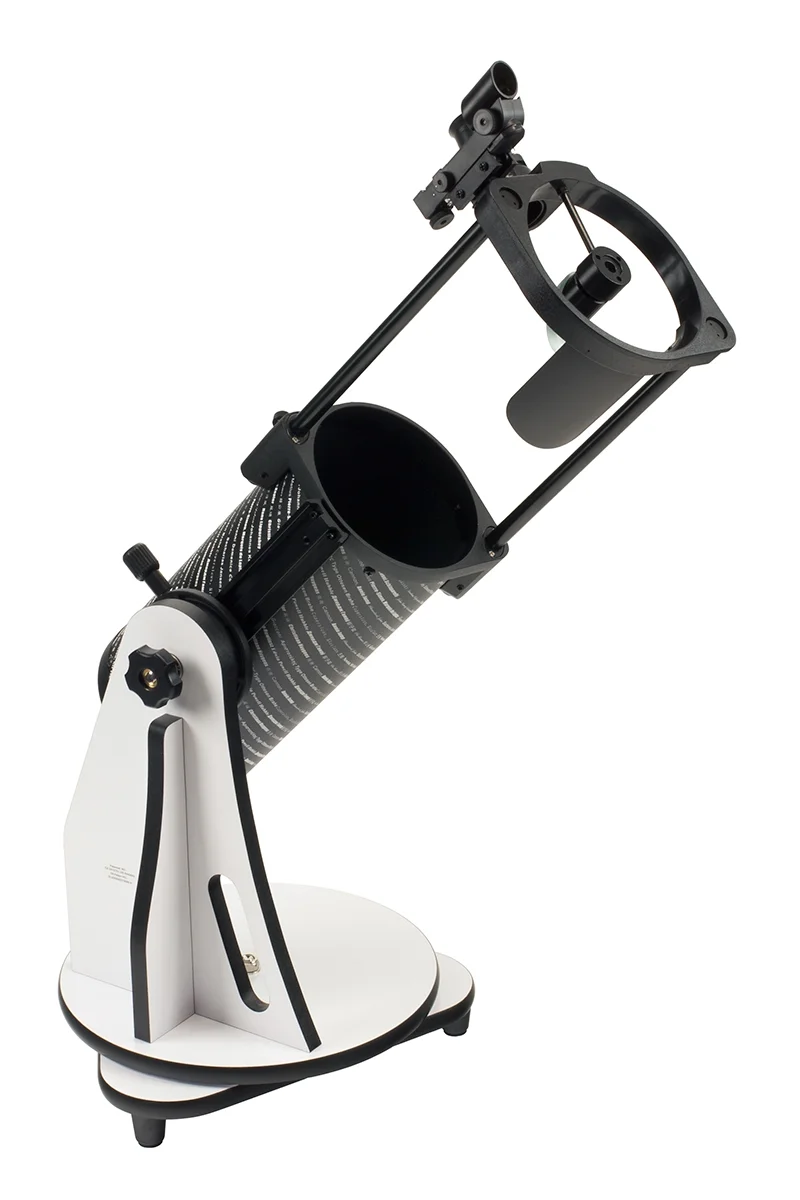
A proper beginner telescope for anyone inspired by exoplanet hunting who wants to start observing star clusters and nebulae for themselves.
Affiliate links: you pay the same price, we earn a small commission that helps keep WatchTheStars free.
Who Was Nancy Grace Roman?
The telescope is named after Dr Nancy Grace Roman (1925–2018), NASA's first Chief of Astronomy and the first woman to hold an executive position at the agency. Known as the "Mother of Hubble," Roman spent two decades in the 1960s and 1970s championing the idea of a large space telescope, lobbying Congress, briefing officials, and bringing together the scientists and engineers who would eventually make Hubble a reality.
"I was told from the beginning that women could not be scientists," Roman often recounted. She proved them wrong at every turn: earning her PhD from the University of Chicago in 1949, pioneering stellar classification work at Yerkes Observatory, and then reshaping the future of space astronomy from inside NASA.
When the telescope was renamed in her honour in May 2020, it felt fitting. Without Nancy Grace Roman, there would have been no Hubble. And without Hubble, there would have been no JWST, no Roman Space Telescope, and no modern era of space-based astronomy. She started it all.
When Does It Launch?
The official target is no later than May 2027, but the team is working toward a launch as early as autumn 2026, potentially just months away.
After final testing at Goddard wraps up this summer, the telescope will be transported to NASA's Kennedy Space Center in Florida, where it will be integrated with a SpaceX Falcon Heavy rocket. Roman will then travel to the Sun-Earth L2 Lagrange point, roughly 1.5 million kilometres from Earth: the same neighbourhood where JWST currently operates.
From L2, Roman will have an unobstructed view of the sky and a stable thermal environment, essential for its infrared observations. The primary mission is planned for five years, but like Hubble and JWST before it, there is every hope it will operate far longer.
What This Means for Stargazers
Roman will not produce the jaw-dropping close-up nebula portraits that Hubble and JWST are famous for. Its strength is panoramic: vast cosmic landscapes rather than individual objects.
But the science it enables will reshape our understanding of the universe in ways that matter to every stargazer. If dark energy is changing over time, that changes the ultimate fate of the cosmos. If rogue planets are common, that changes how we think about planetary formation. If the coronagraph can photograph exoplanets in reflected light, that opens a direct path toward one day imaging an Earth-like world.
Roman will also work hand-in-hand with JWST, which will still be operational when Roman launches. When Roman discovers something intriguing in its wide surveys, JWST can zoom in for a closer look. When JWST finds something unusual in a single galaxy, Roman can provide context by showing thousands of galaxies around it.
Together, they represent the most powerful pair of space telescopes humanity has ever operated simultaneously. And the woman who made it all possible, who was told women couldn't be scientists, now has her name on both the legacy she built and the future she inspired.
Frequently Asked Questions
Equipment guides
Related topics
Ian ClaytonAmateur astronomer and founder of WatchTheStars.co.uk, dedicated to helping others explore the wonders of our universe. Full profile →