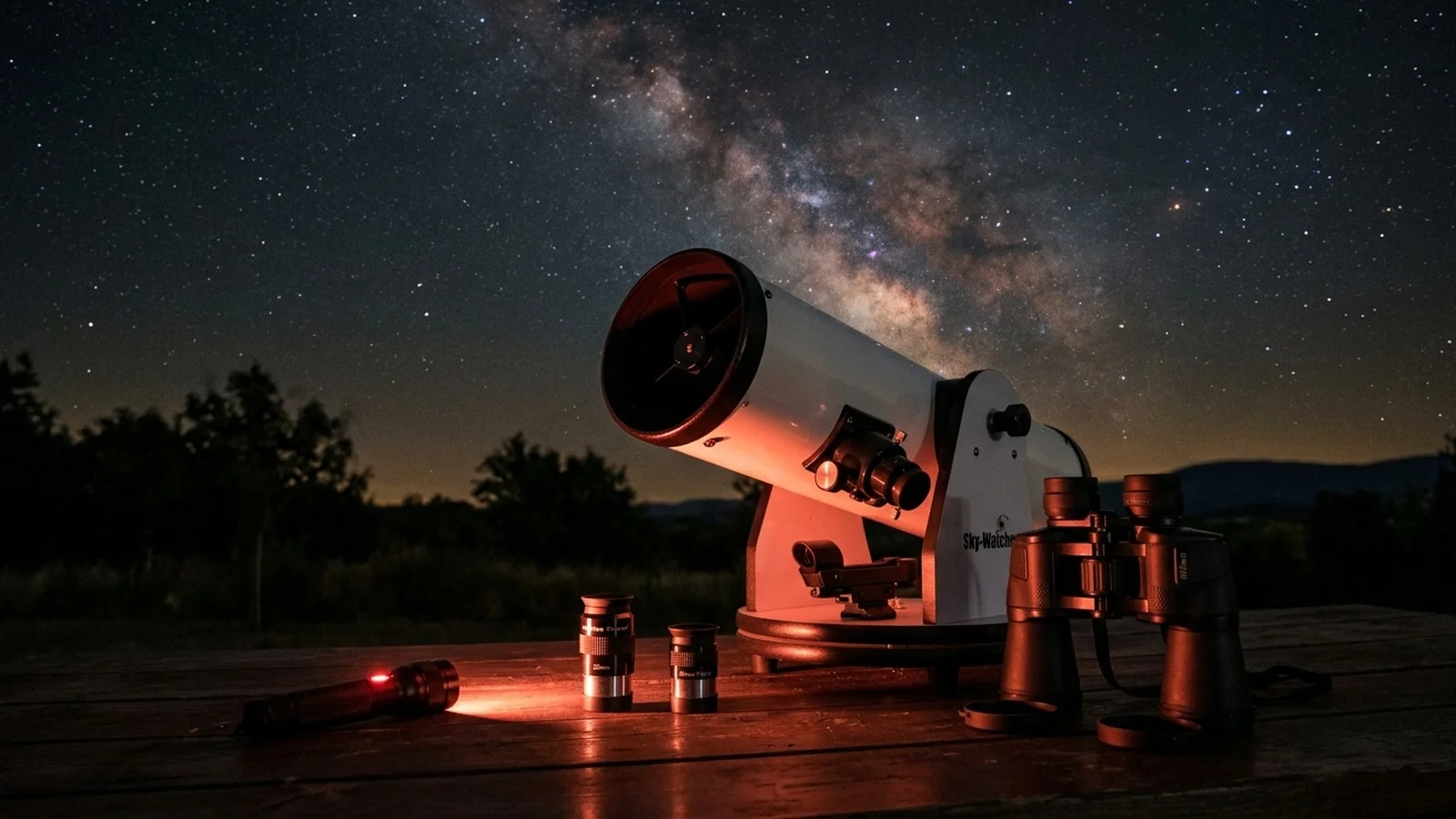
Best Telescope Eyepieces 2026: UK Buyer's Guide
Five eyepieces worth your money: from the BST StarGuiders at £55 that punch well above their price to the 68° Explore Scientific that changes how deep-sky observing feels. Every pick is available from UK retailers and genuinely recommended by the community.
| Eyepiece | Focal Length | Field | Price | Level |
|---|---|---|---|---|
| BST StarGuider 8mm | 8mm | 60° | around £55 | Beginner |
| BST StarGuider 18mm | 18mm | 60° | around £55 | Beginner |
| BST StarGuider 12mm | 12mm | 60° | around £55 | Beginner |
| Explore Scientific 68° 20mm | 20mm | 68° | around £145 | Intermediate |
| Astro Essentials 2× Barlow | Lens (×2) | N/A | around £55 | Beginner |
BST StarGuider 8mm 60° ED
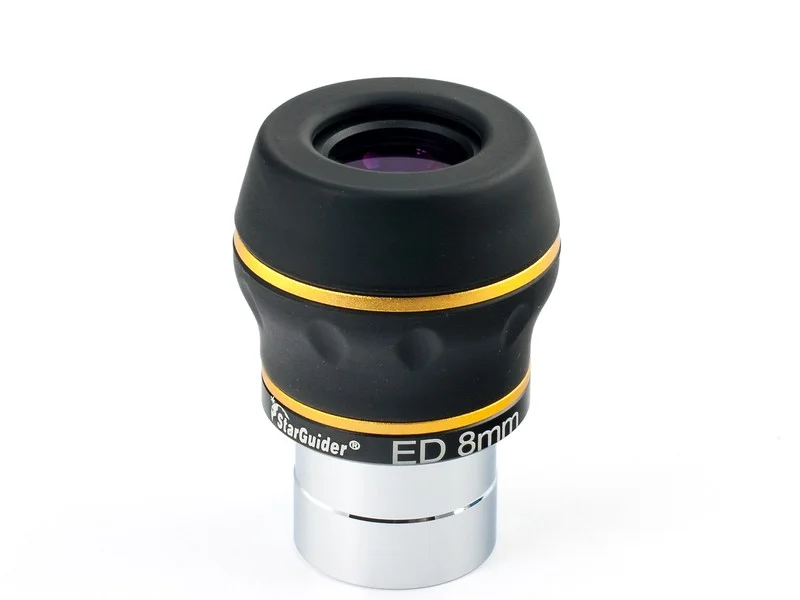
The BST StarGuider 8mm is the single most recommended budget eyepiece on UK astronomy forums. It appears in virtually every "what's your first upgrade?" thread on Stargazers Lounge, and for good reason: it's sharp, comfortable, and transforms what you see through any mid-range telescope.
It delivers magnification in the sweet spot for planetary work: 94× in a Heritage 150P (f/5), 150× in a Skyliner 200P (f/6). That's enough to reveal Jupiter's storm systems, Saturn's cloud bands, and fine crater detail on the Moon. The 60° apparent field gives you a wide-ish view without being disorienting, and the 20mm eye relief means even glasses-wearers stay comfortable for extended sessions.
The build quality punches well above the price. ED glass (extra-low dispersion) minimises chromatic aberration, and the multi-element design keeps stars sharp edge-to-edge. This is the eyepiece that makes you realize the bundled 25mm and 10mm that came with your scope were just the opening act.
The safest eyepiece upgrade you can make. If you're spending your first £120 on eyepieces, spend around £55 here and around £55 on the 18mm companion. You'll use both every clear night.
BST StarGuider 18mm 60° ED
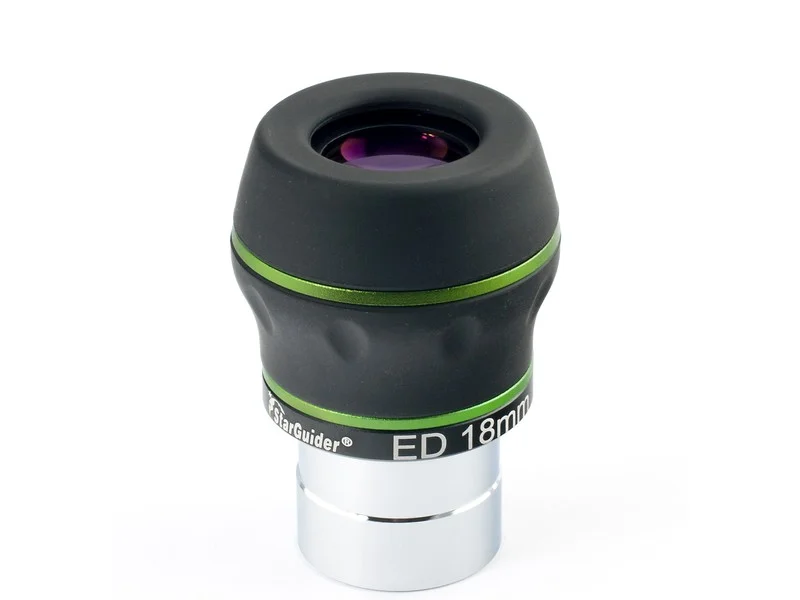
The 18mm is the wide-field companion to the 8mm. Where the 8mm specialises in planetary detail, the 18mm shows you the full context: open clusters like the Pleiades, the sprawling Orion Nebula, and large nebulae across multiple eyepiece fields. It's the eyepiece you reach for when you want to explore rather than scrutinise.
At 42× in a Heritage 150P and 66× in a Skyliner 200P, it's perfectly pitched for deep-sky work on a clear night. The same ED glass and generous eye relief as the 8mm mean the pair feels like a matched set, which is exactly what they are. Many experienced observers own nothing but the 8mm and 18mm for months, finding them sufficient for 90% of their observing.
The pair together costs around £110 and covers almost all observing scenarios. Yes, you'll eventually want a 6mm (high power), but these two are the core set that justify keeping every scope.
Buy the 8mm and 18mm as a pair. They're the foundation of a complete eyepiece collection and together cost less than a single premium eyepiece. The 18mm specifically is the "I just want to see pretty things" eyepiece.
BST StarGuider 12mm 60° ED
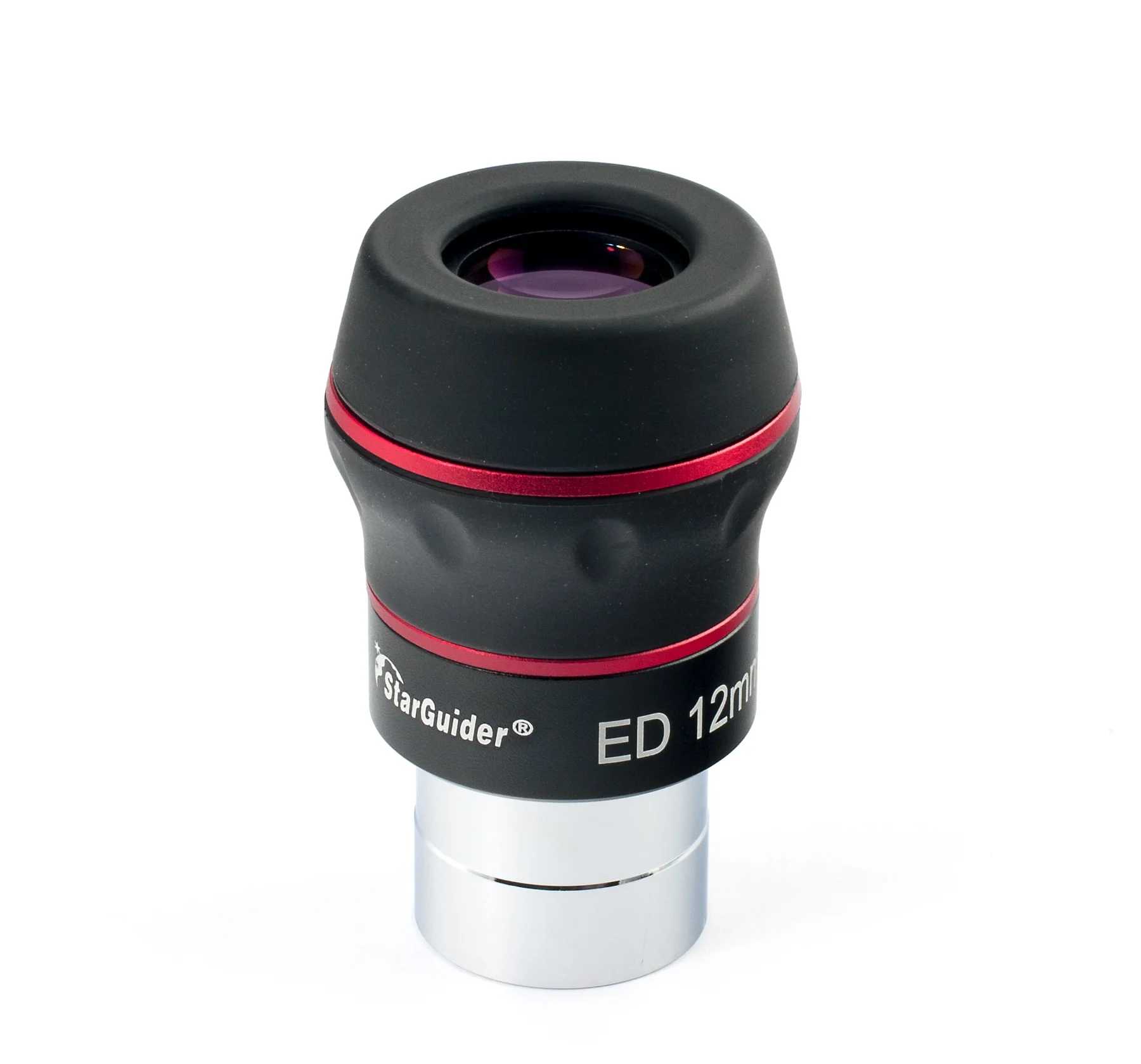
The BST StarGuider 12mm is the perfect third eyepiece if you own the 8mm and 18mm. It fills the gap between them: mid-power versatility that works beautifully for planetary detail, Moon craters, and open clusters without the price jump of premium alternatives.
At 54× in a Heritage 150P, 62× in a 150P, and 125× in an SCT like the NexStar 6SE, it's the true all-rounder. The ED glass delivers sharp, colour-free views even at these magnifications, and at only £55 it outperforms eyepieces costing twice as much. Together with the 8mm and 18mm, you have a complete core observing system that covers virtually every scenario.
This is where the BST StarGuider range truly shines. Three eyepieces under £170 total that feel like a matched set and deliver the optics usually found in premium designs.
If you own the 8mm and 18mm, the 12mm is your next purchase. The three together form the foundation of a complete eyepiece collection. For £55 more you unlock genuine mid-power versatility that transforms how you observe.
Explore Scientific 68° 20mm
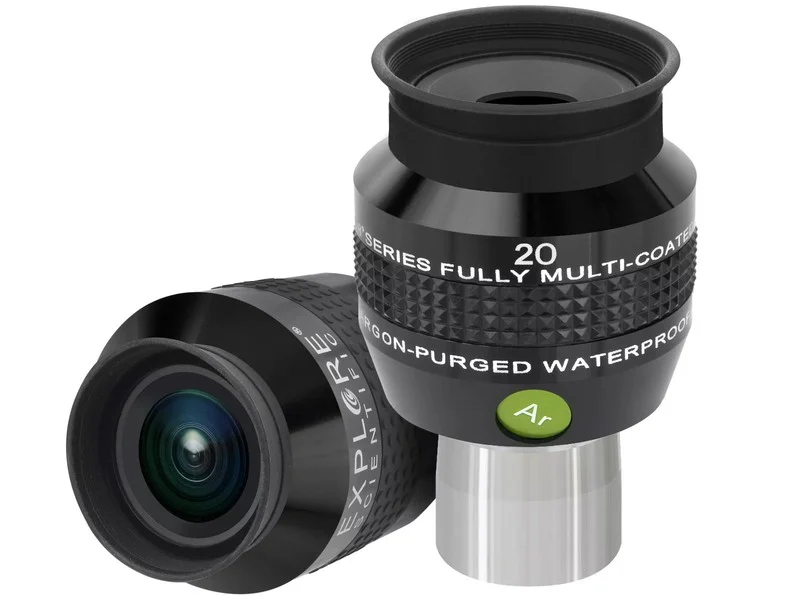
The Explore Scientific 68° 20mm is the "wow factor" eyepiece. The 68° apparent field is noticeably wider than the 60° Plössls and BSTs: you get an immersive, wraparound view that's frankly intoxicating once you experience it. Looking at the Pleiades through this eyepiece feels like being surrounded by stars instead of looking at a postcard of them.
It's a 2" eyepiece, so it won't fit in the focuser of your Heritage 130P or 150P, but if you own a Skyliner 200P, Evostar 90, or any scope with a 2" focuser, this is the eyepiece that reminds you why you bought a bigger scope. At 60× in a 200P (f/6) it's perfect for open clusters and large nebulae. The image quality is sharp edge-to-edge, and the waterproof barrel means you can use it in damp conditions without worry.
It's expensive by eyepiece standards: around £145 is serious money. But it's the eyepiece that makes observers who've owned it for five years still talk about the first night they used it.
Only buy this if you have a 2" focuser (Skyliner 200P and larger). If you do, save up for it: it transforms the experience of stargazing and makes you appreciate aperture in a way a 60° eyepiece can't.
Astro Essentials 2× Barlow Lens
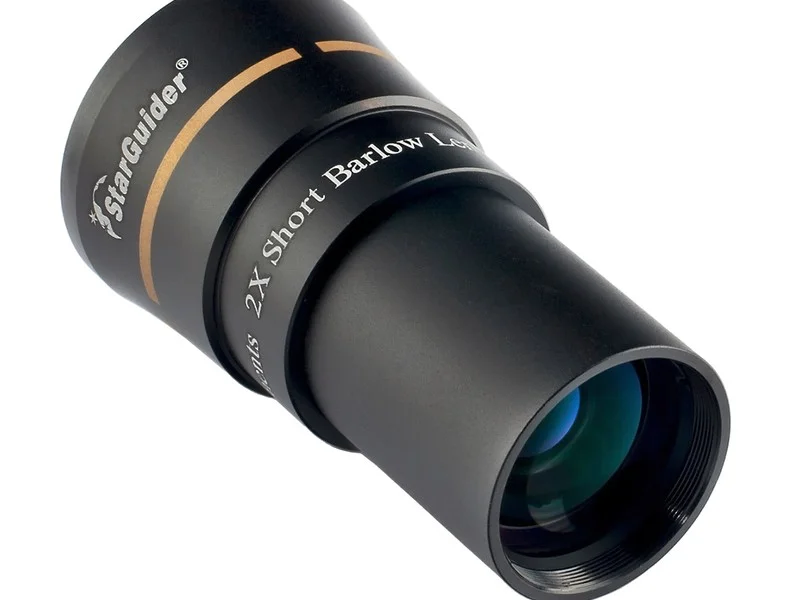
A Barlow lens is not technically an eyepiece, but it's the cheapest way to double your eyepiece collection. Put it in the focuser, screw an eyepiece into the top, and the focal length is halved. Your 25mm becomes 12.5mm. Your 10mm becomes 5mm. Suddenly you have high-power options you couldn't afford.
The Astro Essentials 2× is a solid mid-range Barlow. The multi-coated doublet keeps image quality respectable even at doubled magnification, and the T-thread at the rear means you can attach a planetary camera. At around £55 it's not premium, but it does the job reliably.
Barlows have limits: they halve eye relief (making high magnification uncomfortable), they add another optical element (slight image dimming), and they only work down to about 4× (your scope's absolute minimum magnification). But for planetary work on a tight budget, a Barlow is force-multiplier thinking.
Don't buy this as your first upgrade: buy the BST 8mm instead. But once you own three eyepieces and want high-power options without spending £120+ per piece, a Barlow becomes very sensible. Planetary observers swear by them.
How to Choose a Telescope Eyepiece
The magnification formula
Magnification is the telescope's focal length divided by the eyepiece's focal length. A scope with a 650mm focal length (Heritage 130P) and a 25mm eyepiece gives 650÷25 = 26×. A 10mm eyepiece in the same scope gives 650÷10 = 65×. Longer eyepieces = lower power. Shorter eyepieces = higher power. This is the one formula that matters.
Apparent field of view explained
The apparent field is how wide the view looks when you look through the eyepiece. A 50° Plössl feels narrow: the sky looks like a small circle. A 60° eyepiece (like the BST) feels notably wider. A 68° eyepiece (like the Explore Scientific) feels immersive: it's like the universe wraps around you. As a rule: wider is better, but it costs more and only matters if you have a decent aperture scope.
Eye relief matters
Eye relief is how far your eye sits from the eyepiece lens. Long eye relief (20mm+) is comfortable for extended viewing and works well with glasses. Short eye relief (8mm or less) is uncomfortable: you feel like you're glued to the eyepiece. Every eyepiece on this guide has 20mm+ eye relief. Anything less is a false economy.
1.25" vs 2" eyepieces
Most budget and mid-range scopes have 1.25" focusers. Most mid-to-large Dobsonians and serious scopes have 2" focusers. The barrel diameter doesn't determine quality: it's just a physical constraint. You can't use a 2" eyepiece in a 1.25" focuser. If you have a Heritage 130P or 150P (both 1.25"), stick with 1.25" eyepieces. If you own a Skyliner 200P (2"), you unlock a much wider range of options including wide-field eyepieces.
How many eyepieces do you need?
Three: one low-power (wide field, finding objects), one medium-power (general observing), and one high-power (planetary detail). For a Heritage 150P, that's roughly a 25mm (30×), a 12mm (62×), and an 8mm (94×). The BST 18mm and 8mm pair fills two of those. Add a Barlow and you get the third for around £55 instead of around £80. That's a complete system for under £165.