Key takeaways
- NASA has formally approved its ROSA project to support ESA's Rosalind Franklin Mars rover, moving into Phase B implementation
- SpaceX's Falcon Heavy will launch the mission from Kennedy Space Center no earlier than late 2028: the company's first-ever Mars launch
- The rover will drill up to 2 metres below the Martian surface to search for ancient biosignatures: deeper than any previous Mars mission
- After the loss of its Russian launch vehicle following the Ukraine invasion in 2022, the mission now has a confirmed path to the Red Planet
Jump to section 6 sections
A Mission That Refused to Die
The Rosalind Franklin rover has had one of the most troubled journeys to the launchpad in the history of planetary science. Originally conceived as part of a joint ESA–Russia ExoMars programme, the mission was on track for a 2022 launch when Russia's invasion of Ukraine forced ESA to sever ties with its Russian partner Roscosmos almost overnight. The Proton rocket that was to carry Rosalind Franklin to Mars was cancelled. The landing platform hardware that had been built in Russia had to be abandoned. Years of collaboration, hardware integration, and launch preparation were lost.
For a time, the mission's future was genuinely uncertain. But ESA pressed on, redesigning the landing system and seeking a new launch partner. Now, this week, the path is finally clear.
NASA announced on 16 April 2026 that its Rosalind Franklin Support and Augmentation (ROSA) project has passed its Key Decision Point review and formally entered Phase B: the implementation phase. A SpaceX Falcon Heavy rocket has been selected as the launch vehicle, lifting off from Launch Complex 39A at Kennedy Space Center in Florida, with a launch window targeting no earlier than late 2028.
What NASA Is Actually Providing
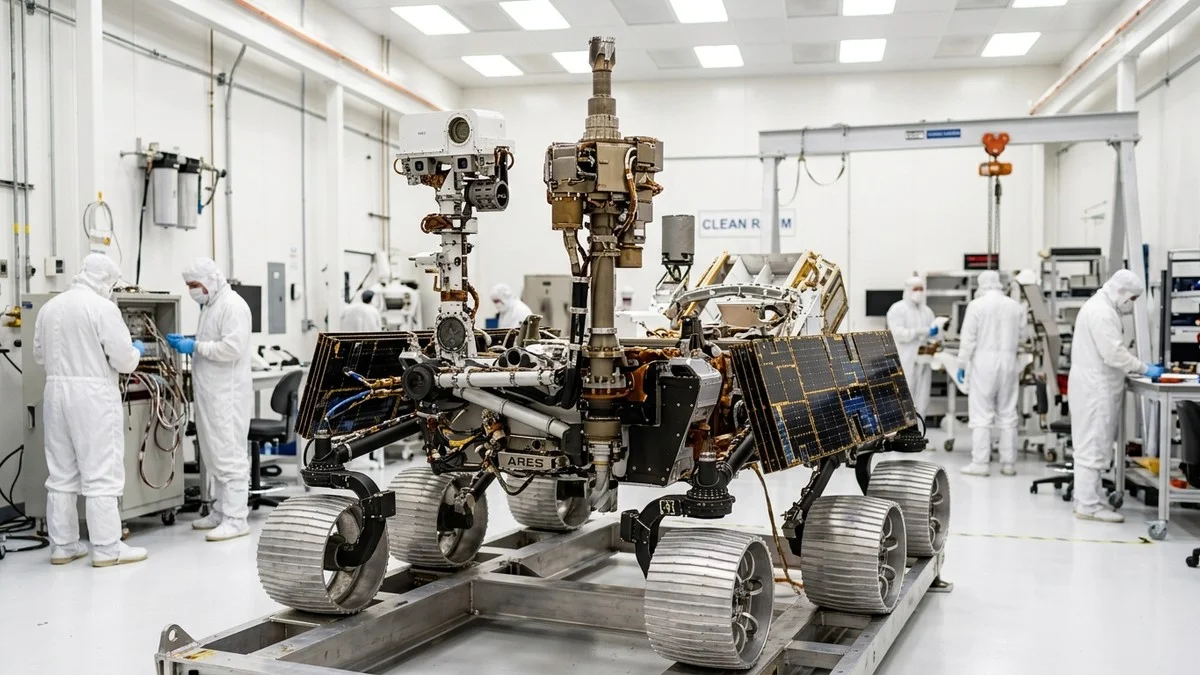
This is a genuinely unusual mission in that it straddles two space agencies in a deeply integrated way. ESA built the rover itself and the science payload. NASA is providing the hardware and services needed to actually get it to Mars and keep it alive once it's there.
Specifically, NASA's ROSA project covers four key contributions. First and most visibly, the launch vehicle: the Falcon Heavy ticket to Mars. Second, the propulsion system for the rover's lander platform, the hardware that will slow Rosalind Franklin from interplanetary cruise speed down to a survivable landing. Third, radioisotope heater units (RHUs): small pellets of plutonium-238 that generate heat passively, keeping the rover's electronics from freezing during the brutal Martian nights. These are a US speciality; Europe doesn't independently produce them. And fourth, NASA is contributing portions of the Mars Organic Molecule Analyzer (MOMA) instrument: a mass spectrometer that forms the heart of the rover's life-detection science package.
The mission successfully passed its Preliminary Design Review as part of the KDP-A/B approval, meaning the design is mature enough to begin building and testing flight hardware in earnest.
Why Drilling Two Metres Down Matters
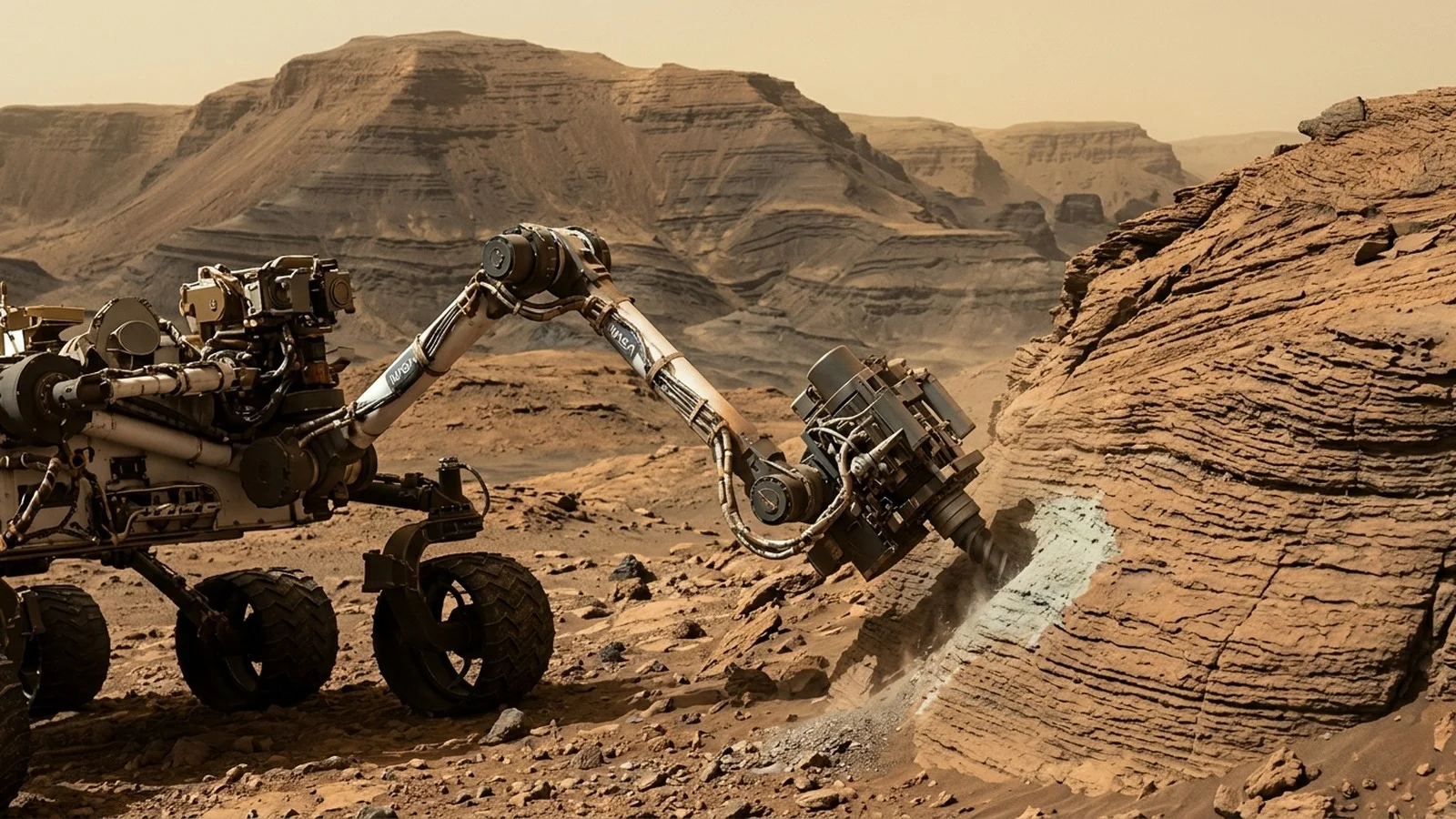
Every Mars rover before Rosalind Franklin has searched for signs of life on or very near the surface. Curiosity drills a few centimetres. Perseverance collects surface and near-surface samples. The problem is that the Martian surface is absolutely hostile to organic molecules: bombarded by ultraviolet radiation, bathed in reactive perchlorates, scoured by dust storms. If life ever existed on Mars, anything it left behind on the surface has almost certainly been destroyed.
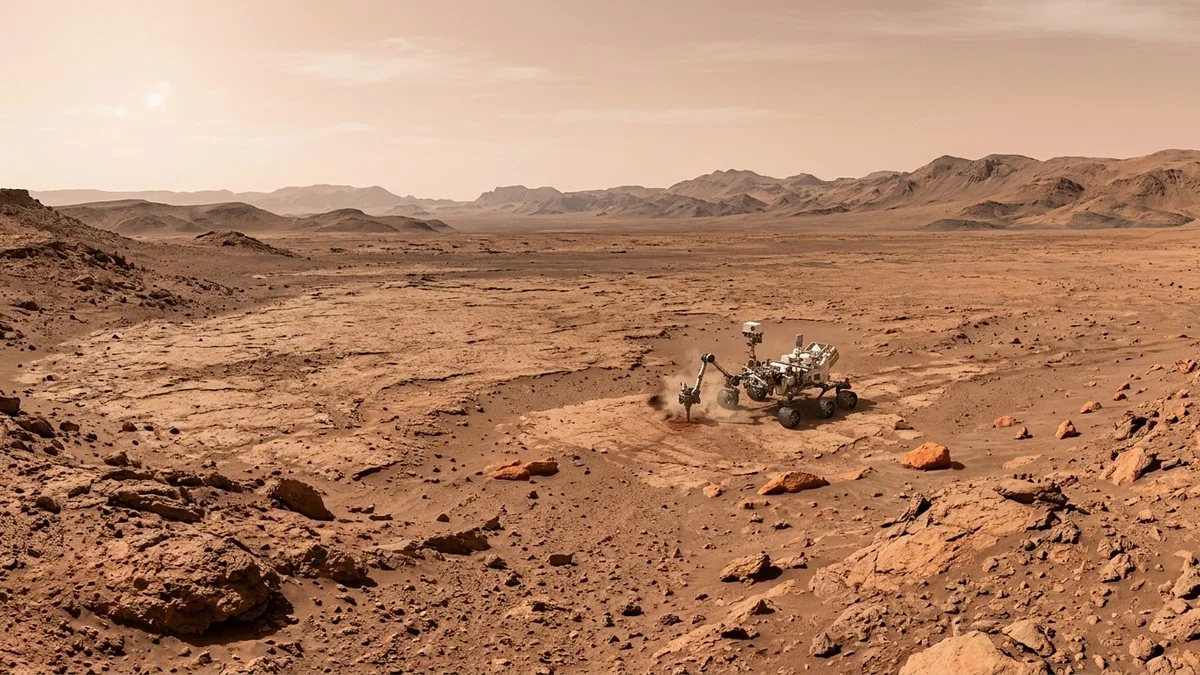
Two metres down is a different story. At that depth, you're shielded from UV radiation. You're accessing rock and sediment that hasn't been exposed to the surface environment for potentially billions of years. If Mars ever had microbial life, particularly in the ancient wet period more than 3.5 billion years ago, the chemical traces of that life are far more likely to have survived at depth than anywhere on the surface.
This is why Rosalind Franklin's drill is considered a genuine step change in Mars astrobiology. No previous mission has reached this depth. The landing site, Oxia Planum, was chosen specifically because it's one of the best-preserved ancient clay-bearing terrains on Mars: a place where liquid water pooled for extended periods billions of years ago, exactly the kind of environment where early Martian life, if it existed, might have flourished.
Mars Is Too Small for a Rover View, But You Can Still Find It
Kit we've tested and reviewed in full
Rosalind Franklin's drill cores are years away, but you don't need to wait to spot Mars yourself. It's a distinct reddish point to the naked eye, and binoculars or a small scope bring out real colour and, at opposition, a hint of surface detail.
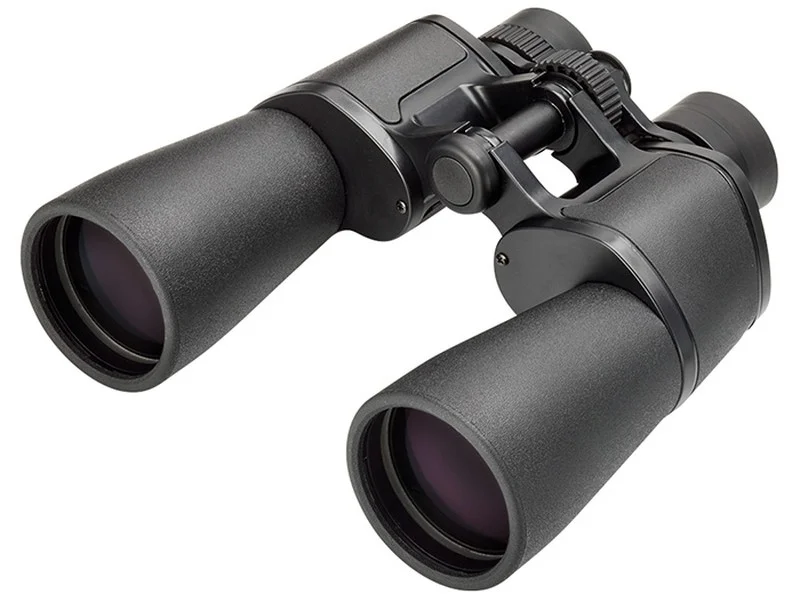
Enough magnification to confirm Mars's rusty colour and separate it clearly from the background stars.
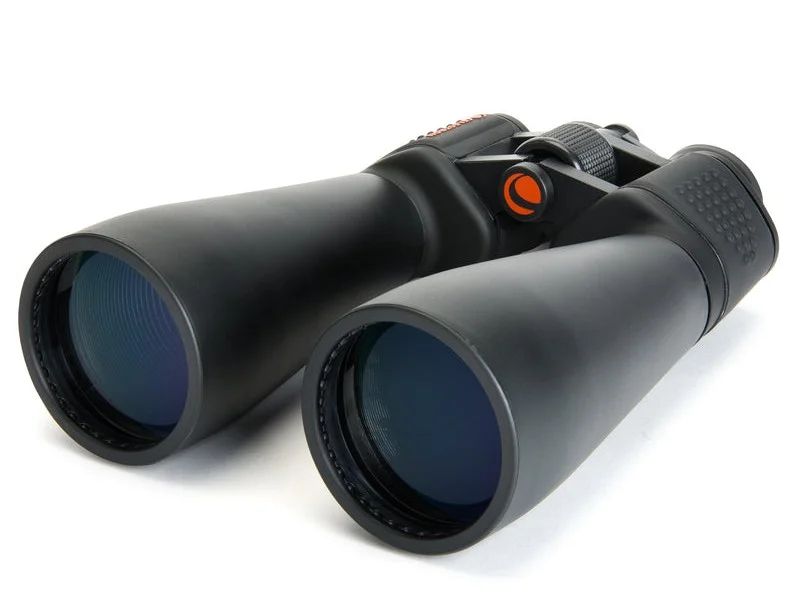
Extra aperture makes Mars a punchy, unmistakable orange dot even in a light-polluted sky.
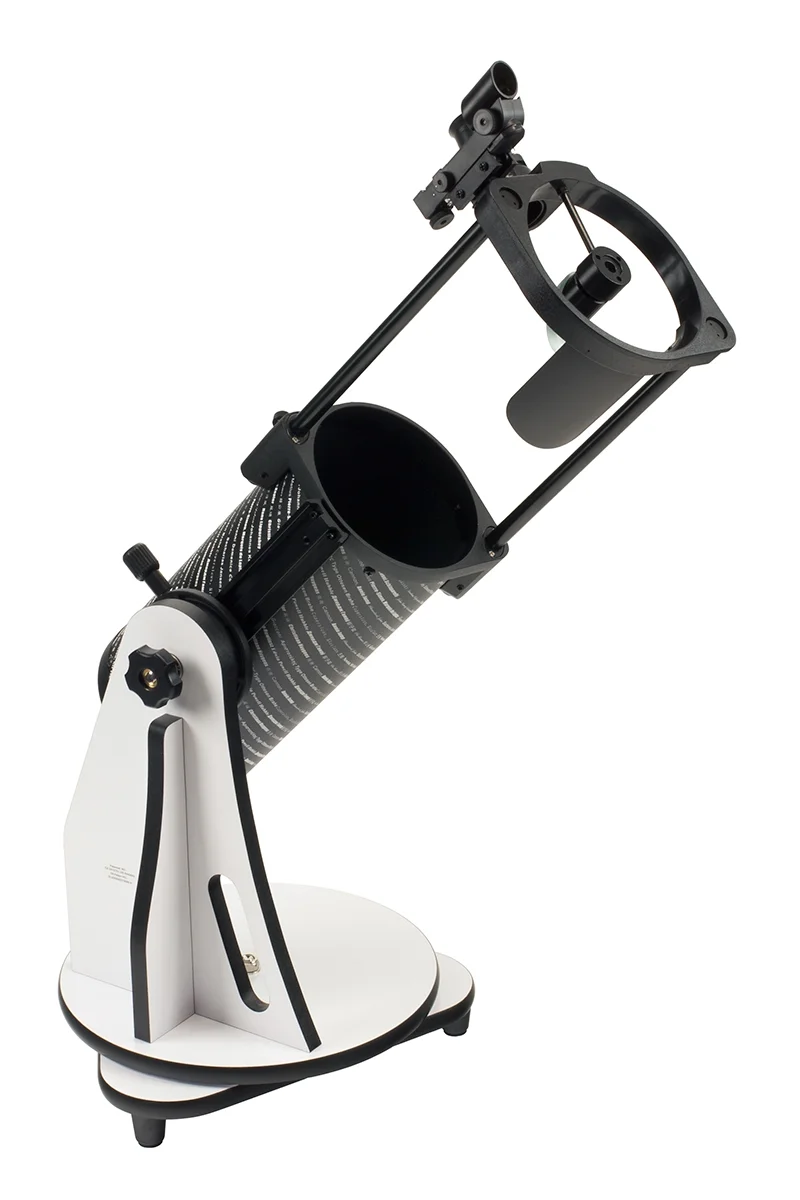
At Mars opposition, this little reflector can just about show a hint of the polar cap and dusky surface markings.
Affiliate links: you pay the same price, we earn a small commission that helps keep WatchTheStars free.
SpaceX's First Trip to Mars
There's a secondary story here that's easy to overlook: if the current schedule holds, the Rosalind Franklin launch will be SpaceX's first-ever mission to Mars.
SpaceX has long talked about sending Starship to Mars, and Elon Musk has built his entire public identity around the idea of becoming a multi-planetary species. But all of that remains in the future. In the nearer term, it will be the Falcon Heavy, SpaceX's workhorse heavy-lift rocket, that makes the first SpaceX journey to the Red Planet, carrying a European rover searching for ancient alien microbes.
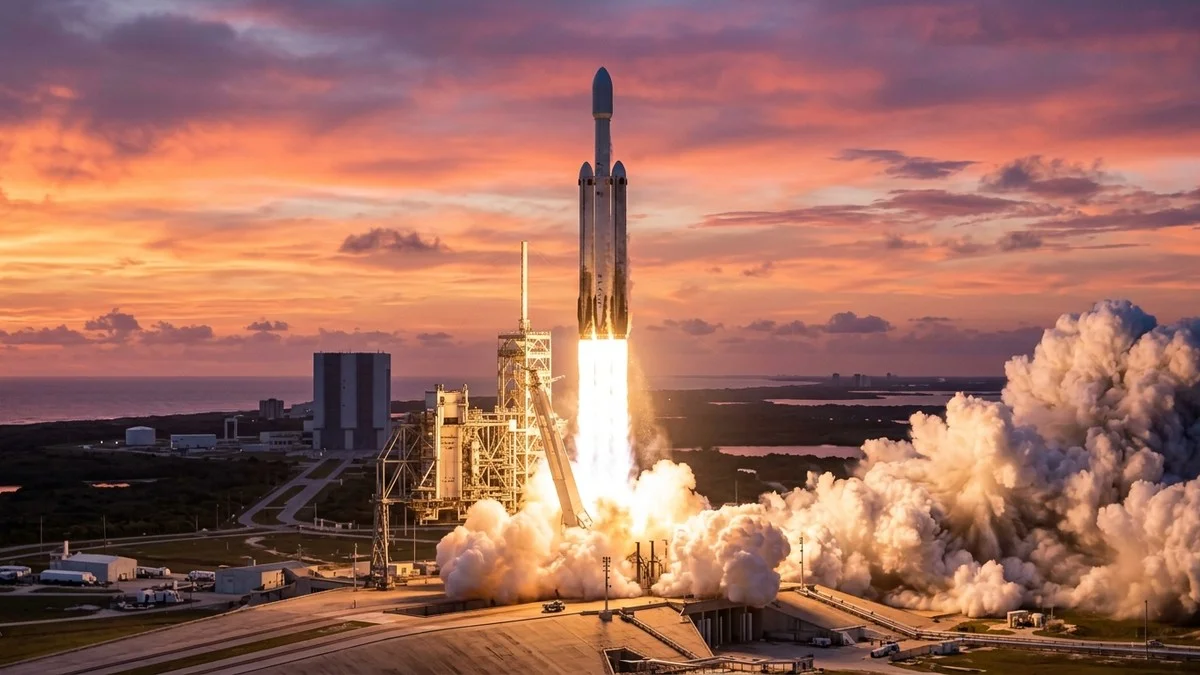
The Falcon Heavy has a proven record of delivering large payloads to high-energy trajectories. The specific challenge for a Mars mission is the so-called C3 (characteristic energy) requirement: the energy needed to escape Earth's gravitational pull and follow a path that intercepts Mars. Falcon Heavy handles this comfortably for a mission of this mass class.
What Rosalind Franklin Is Looking For
The rover is named after Rosalind Franklin, the British chemist and X-ray crystallographer whose work was essential to understanding the structure of DNA: work for which she never received full credit during her lifetime. It's a fitting name for a mission that is fundamentally about the chemistry of life.
The MOMA instrument at the heart of the science package will analyse rock samples extracted by the drill, looking for amino acids, lipids, nucleobases, and other complex organic molecules that could indicate biological origin. It uses two complementary techniques, a laser desorption mass spectrometer and a gas chromatograph mass spectrometer, to characterise the chemical fingerprint of whatever the drill brings up.
The rover also carries a panoramic camera system (PanCam), a ground-penetrating radar (WISDOM) to help select drilling targets, a Raman laser spectrometer (RLS) for mineral identification, and a close-up imager (CLUPI) for detailed surface inspection.
The mission does not expect to find living microbes. What it's hunting is molecular evidence that life existed billions of years ago: the chemical equivalent of a fossil.
When Will We See Results?
A late 2028 launch means arrival at Mars in mid-2029, after a roughly seven-month cruise. The primary science mission is planned to run for at least one Martian surface year (about 687 Earth days), though ESA typically extends missions that remain healthy.
That means the first significant scientific results from Rosalind Franklin's drill, the samples from deep below the Martian surface, are unlikely before 2030 at the earliest. It's a long wait. But given how long this mission has already waited to get to the launchpad, a few more years feels almost routine.
The mission represents the most ambitious attempt yet to answer one of the oldest questions in science: did life ever arise somewhere other than Earth? Mars is the most accessible candidate we have. The Oxia Planum drill cores could settle the question, one way or another.
Even a negative result, drilling two metres down, finding pristine ancient rock, and detecting no organic biosignatures whatsoever, would be scientifically profound. It would tell us that either Mars was never inhabited, or that the conditions for life's emergence were narrower than we hoped.
And a positive result? Well. That would change everything.
Frequently Asked Questions
Equipment guides
Related topics

Ian ClaytonAmateur astronomer and founder of WatchTheStars.co.uk, dedicated to helping others explore the wonders of our universe. Full profile →