Key takeaways
- A Japanese team has detected a thin atmosphere around (612533) 2002 XV93, a Kuiper Belt plutino just 500 km across, the smallest object beyond Pluto ever found to have one
- The surface pressure is 100–200 nanobars, roughly 50 to 100 times thinner than Pluto's atmosphere and 5–10 million times thinner than Earth's
- The atmosphere should dissipate in under 1,000 years unless something is actively replenishing it: either cryovolcanism or a recent cometary impact
- The discovery, published in Nature Astronomy, suggests other small Kuiper Belt objects may also harbour atmospheres, challenging assumptions about the outer Solar System
Jump to section 6 sections
In the frozen outer reaches of the Solar System, more than five billion kilometres from the Sun, a tiny icy world is doing something it has no business doing. It has an atmosphere.
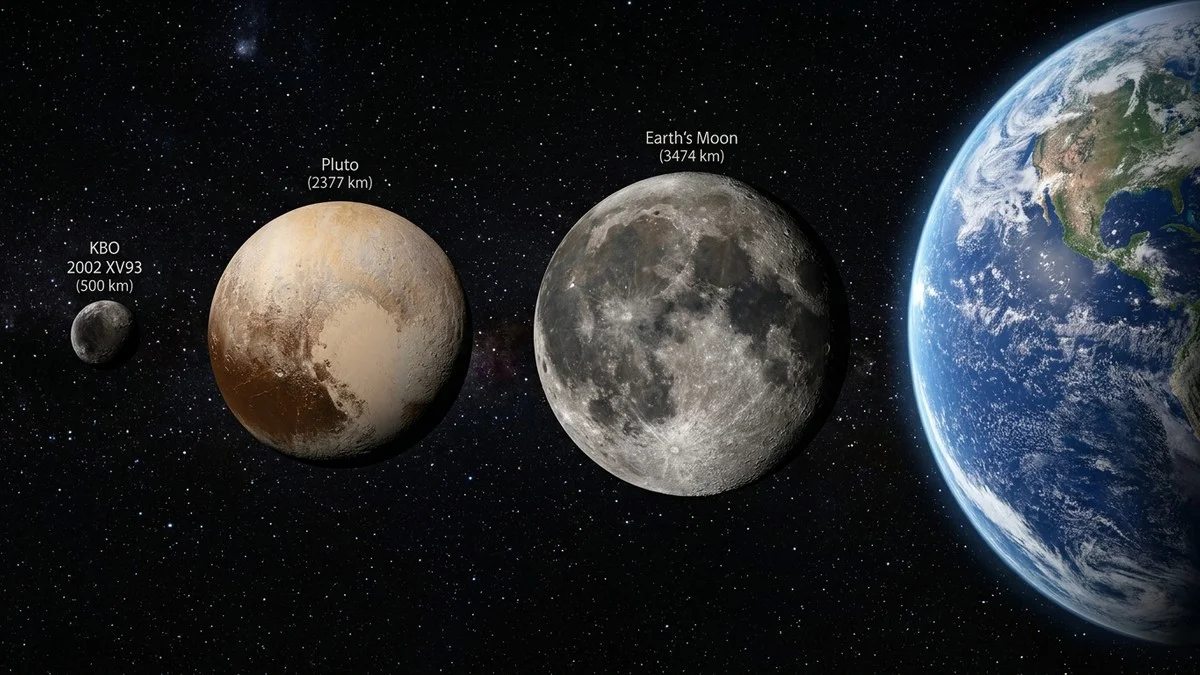
The object is called (612533) 2002 XV93. It is a plutino, a Kuiper Belt object locked in the same 2:3 orbital resonance with Neptune as Pluto, and it is roughly 500 kilometres across. That is about one-fifth the diameter of Pluto. At that size and distance, the conventional expectation is straightforward: it should be a frozen, airless rock. But a team of Japanese astronomers has now shown that it is anything but.
Their findings, published in Nature Astronomy on 5 May 2026, represent the first detection of an atmosphere on a trans-Neptunian object beyond Pluto, and the discovery raises questions that nobody was expecting to answer.
What Did They Find?
The team, led by Dr Ko Arimatsu of the National Astronomical Observatory of Japan, detected a thin gaseous envelope surrounding 2002 XV93. The surface pressure is estimated at 100 to 200 nanobars, roughly 50 to 100 times lower than Pluto's already tenuous atmosphere, and between 5 million and 10 million times thinner than the air we breathe on Earth.
To put that in perspective: if Earth's atmosphere were scaled down to the depth of an Olympic swimming pool, the atmosphere of 2002 XV93 would be thinner than a single drop of water spread across the pool's surface.
The atmosphere is likely composed of nitrogen, methane, or carbon monoxide: the same volatile ices found across the Kuiper Belt. Intriguingly, JWST has previously detected frozen carbon dioxide on 2002 XV93's surface, but no signs of the hypervolatile compounds (methane, nitrogen, carbon monoxide) that would most easily sublimate into gas. That mismatch is part of what makes this discovery so puzzling.
How They Caught It
Detecting an atmosphere this thin on an object this far away is extraordinarily difficult. You cannot simply point a telescope at it and see a haze. Instead, the team used one of the most elegant techniques in observational astronomy: a stellar occultation.
On 10 January 2024, 2002 XV93 passed directly in front of a distant star as seen from Earth. As the object crossed the star's line of sight, it briefly blocked the starlight: an event that lasted just seconds and was visible only from a narrow strip across Japan. The team observed from three stations: the rooftop observatory at Kyoto University, the professional 1.05-metre Schmidt telescope at Kiso Observatory, and, in a detail that speaks to the collaborative spirit of astronomy, a 25-centimetre telescope operated by an amateur astronomer in Fukushima.
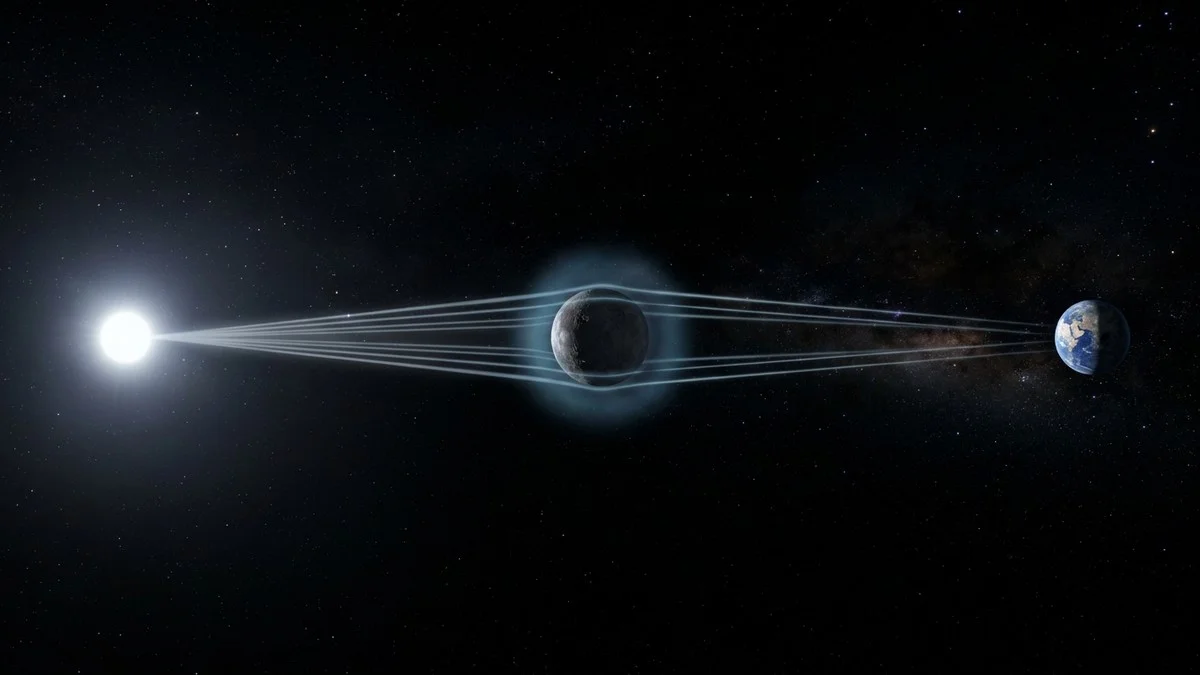
What they expected to see was a clean, sharp drop in brightness: the star winking out and then winking back on as the solid body passed across it. Instead, they saw something different. The starlight faded gradually over about 1.5 seconds before the object fully blocked it, and then gradually brightened again as the object moved on. That smooth transition is the telltale signature of refraction: starlight bending as it passes through a thin gaseous envelope.
The refractive signature was consistent across multiple observation stations, ruling out instrumental artefacts or atmospheric effects on Earth.
Why It Shouldn't Exist
This is where the story gets strange. At just 500 kilometres in diameter, 2002 XV93 is far too small to hold onto an atmosphere through gravity alone for geological timescales. Its surface gravity is vanishingly weak: a few hundredths of a metre per second squared, compared to 9.8 m/s² on Earth. At the temperatures found in the Kuiper Belt (around 40 Kelvin, or −233°C), gas molecules move slowly, but even at those frigid temperatures, the escape velocity of a body this size is low enough that atmospheric gases should drift off into space relatively quickly.
Calculations suggest the atmosphere would dissipate entirely in less than 1,000 years unless something is actively replenishing it. In Solar System terms, a thousand years is the blink of an eye. For this atmosphere to exist right now, something must be generating it right now, or at least within the very recent past.
Until this discovery, Pluto was the only trans-Neptunian object with a confirmed atmosphere, and Pluto is nearly five times wider, with far stronger gravitational hold. Even larger KBOs like Makemake (1,430 km) and Haumea (1,560 km) have only the faintest hints of transient atmospheres. Yet here is a body one-third their size, stubbornly holding onto a gaseous envelope.
You can't see 2002 XV93, but you can see plenty tonight
Kit we've tested and reviewed in full
A 500 km speck five billion kilometres away needs a professional observatory, not a back-garden telescope. But the same curiosity that makes this story interesting is worth pointing at things you actually can see. Here's what we'd suggest.

Won't show you a Kuiper Belt object, but it'll show you Jupiter's moons and the craters on ours, a good way to get hooked on the outer Solar System before you upgrade.
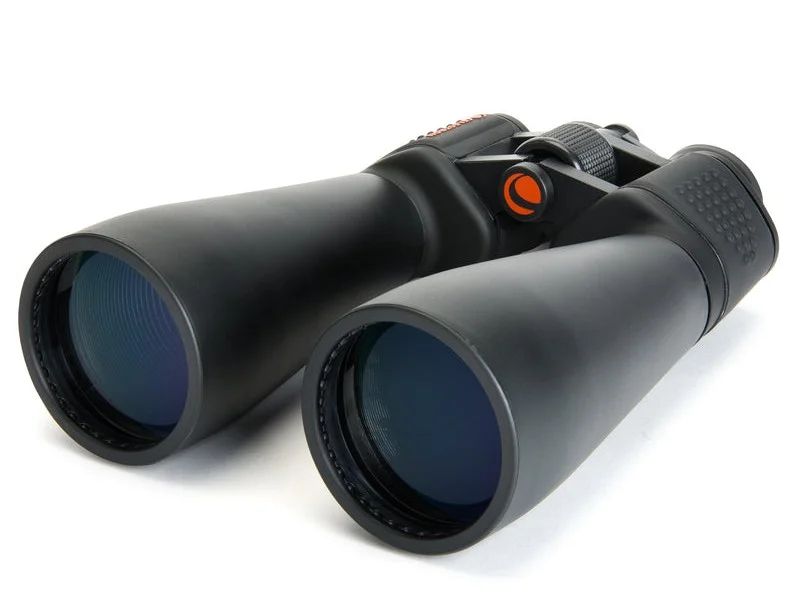
Big enough to pull in fainter deep-sky targets, which is about as close as most of us will get to peering toward the edge of the Solar System.
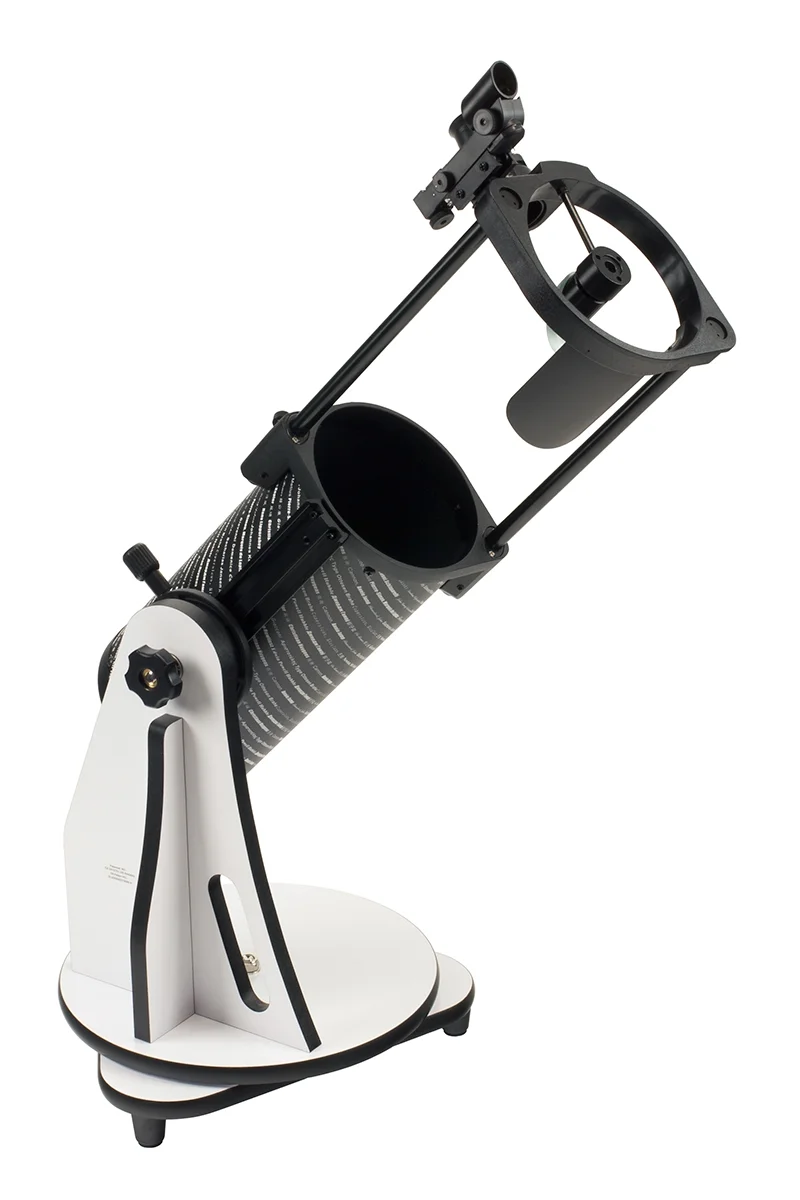
A tabletop Newtonian that's small enough for a shelf but sharp enough to hunt down the bigger, brighter members of the outer Solar System, like Neptune and Uranus.
Affiliate links: you pay the same price, we earn a small commission that helps keep WatchTheStars free.
Two Possible Explanations
The paper proposes two mechanisms that could explain what the team observed.
Cryovolcanism is the first possibility. If 2002 XV93 has reservoirs of liquid or semi-liquid volatiles beneath its surface, perhaps sustained by antifreeze compounds like ammonia, or by tidal heating from an undiscovered companion, then cryovolcanic eruptions could periodically release gas from the interior. This is not without precedent: Saturn's moon Enceladus famously vents water vapour and ice particles through fissures in its south polar region, and Ceres in the asteroid belt has the cryovolcano Ahuna Mons. But for a body as small as 2002 XV93, sustaining internal heat is extremely difficult. Small bodies radiate heat efficiently and should have frozen solid long ago.
A recent cometary impact is the second, and perhaps more likely, explanation. If a smaller icy body struck 2002 XV93 within the past few hundred or thousand years, the energy of impact could have vapourised surface ices and released a burst of gas. This transient atmosphere would then slowly dissipate, and we would simply be observing it during the window before it vanishes. The Kuiper Belt is not a crowded place, but collisions do occur over geological time, and a relatively recent impact could explain the atmosphere without requiring any exotic internal processes.
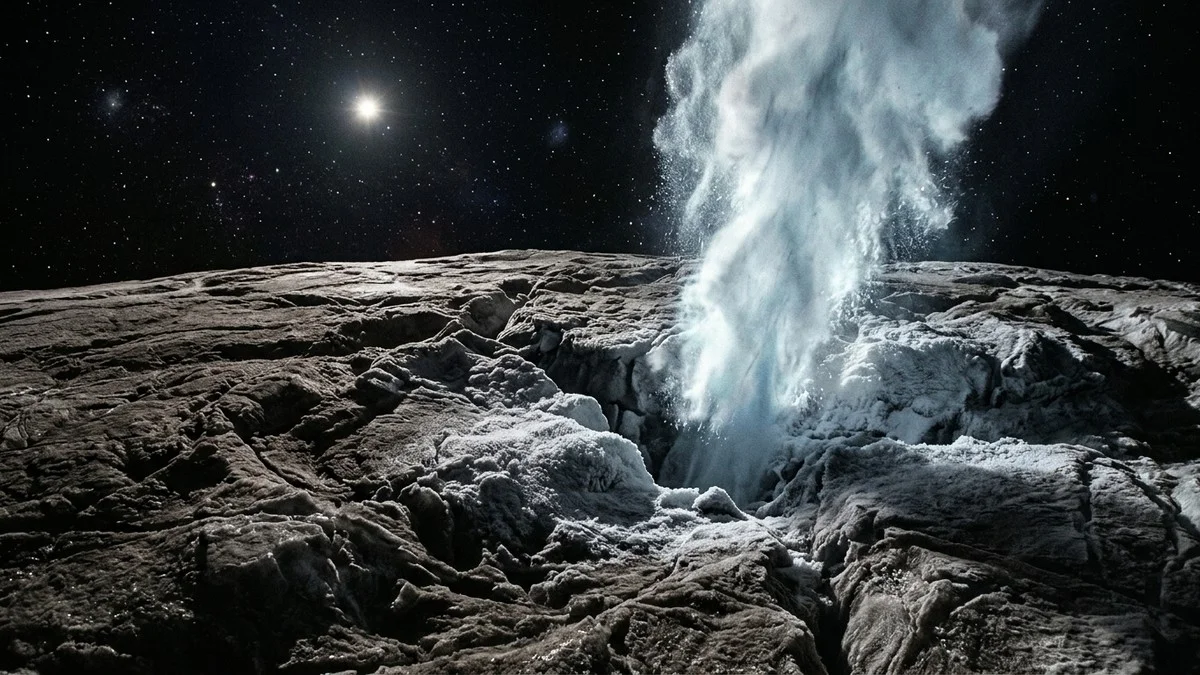
There is a third, more speculative possibility that the paper does not fully explore but which other researchers have noted: the atmosphere could be evidence of a subsurface ocean. If liquid reservoirs exist beneath the surface, kept warm by radioactive decay or tidal interactions, then outgassing could be semi-continuous rather than impact-driven. This would be extraordinary for a body of this size, but the outer Solar System has repeatedly surprised us: Pluto's suspected subsurface ocean, Enceladus's confirmed one, and even hints of briny reservoirs beneath Ceres all suggest that liquid water may be far more common in cold, small bodies than once believed.
What This Means for the Kuiper Belt
The immediate implication is that the Kuiper Belt is more geologically active than astronomers assumed. If a 500-kilometre plutino can harbour an atmosphere, how many other small trans-Neptunian objects might also possess thin gaseous envelopes, cryovolcanic activity, or recent impact signatures? The Kuiper Belt contains an estimated 100,000 objects larger than 100 kilometres: the vast majority of which have never been studied in detail.
Previous occultation surveys of larger KBOs, including Makemake, Haumea, Quaoar, and Sedna, have placed upper limits on their atmospheric pressures, but most have come up empty. Finding an atmosphere on a smaller body, when larger ones appear airless, is genuinely counterintuitive. It suggests that atmospheric formation in the Kuiper Belt may depend less on size and more on individual geological history: recent impacts, unusual compositions, or fortuitous internal processes.
The discovery also has implications for the ongoing debate about what counts as a "world" in the outer Solar System. Geologically active bodies with atmospheres occupy a different category, scientifically and philosophically, from inert ice rocks. If even 500-kilometre plutinos can have dynamic, changing surfaces and gaseous envelopes, the line between "world" and "debris" becomes harder to draw.
What Comes Next
The immediate priority is independent confirmation. Stellar occultations are rare and depend on precise alignment, so the next opportunity to observe 2002 XV93 occulting a bright star may not come for months or years. When it does, a larger network of ground stations could provide higher-resolution light curves and potentially constrain the atmospheric composition.
JWST could also contribute. While it has already detected CO₂ ice on the surface, targeted spectroscopic observations might reveal emission or absorption features from any gaseous species, particularly if the atmosphere varies with the object's orbital position (2002 XV93 ranges from 34.4 to 44.2 AU over its 246-year orbit, and atmospheric pressure may change as it moves closer to or further from the Sun, much as Pluto's atmosphere inflates and deflates over its orbit).
Beyond 2002 XV93, this discovery will likely trigger a wave of occultation surveys targeting other mid-sized KBOs. If even a small fraction of Kuiper Belt objects turn out to harbour temporary atmospheres, it would fundamentally change our picture of the outer Solar System: from a frozen, static graveyard to something far more dynamic and alive.
The Kuiper Belt keeps its secrets well. But every now and then, a tiny world at the edge of everything decides to surprise us.
Frequently Asked Questions
Equipment guides
Related topics

Ian ClaytonAmateur astronomer and founder of WatchTheStars.co.uk, dedicated to helping others explore the wonders of our universe. Full profile →