Key takeaways
- NASA released over 40 official photos from the Artemis II lunar flyby, the first crewed images from beyond low Earth orbit in 53 years
- The crew captured a 54-minute total solar eclipse from lunar orbit, the longest totality any human has ever witnessed
- The iconic 'Earthset' shows our planet sinking behind the cratered lunar far side, a view never seen by human eyes before
- Close-up geology shots of Vavilov Crater and Hertzsprung Basin reveal far-side terrain in unprecedented handheld detail
- Every image is public domain, NASA released them for the whole world to use, study, and share
Jump to section 8 sections
On April 6, 2026, four astronauts aboard NASA's Orion spacecraft flew within 4,070 miles of the lunar surface, the closest any human has been to the Moon in more than half a century. For seven hours, they turned their cameras on everything: the cratered far side, the setting Earth, and a solar eclipse that lasted nearly an hour.
NASA has now released the official gallery. Over 40 photographs, all public domain, all taken by human hands from a place no human had visited since 1972. These are the images that will define the Artemis era, and several of them are genuinely unlike anything we have ever seen before.
Here are the most extraordinary shots from the flyby, what they show, and why they matter.
Earthset: The Defining Image of Artemis II
This is the photograph that will end up in the history books.
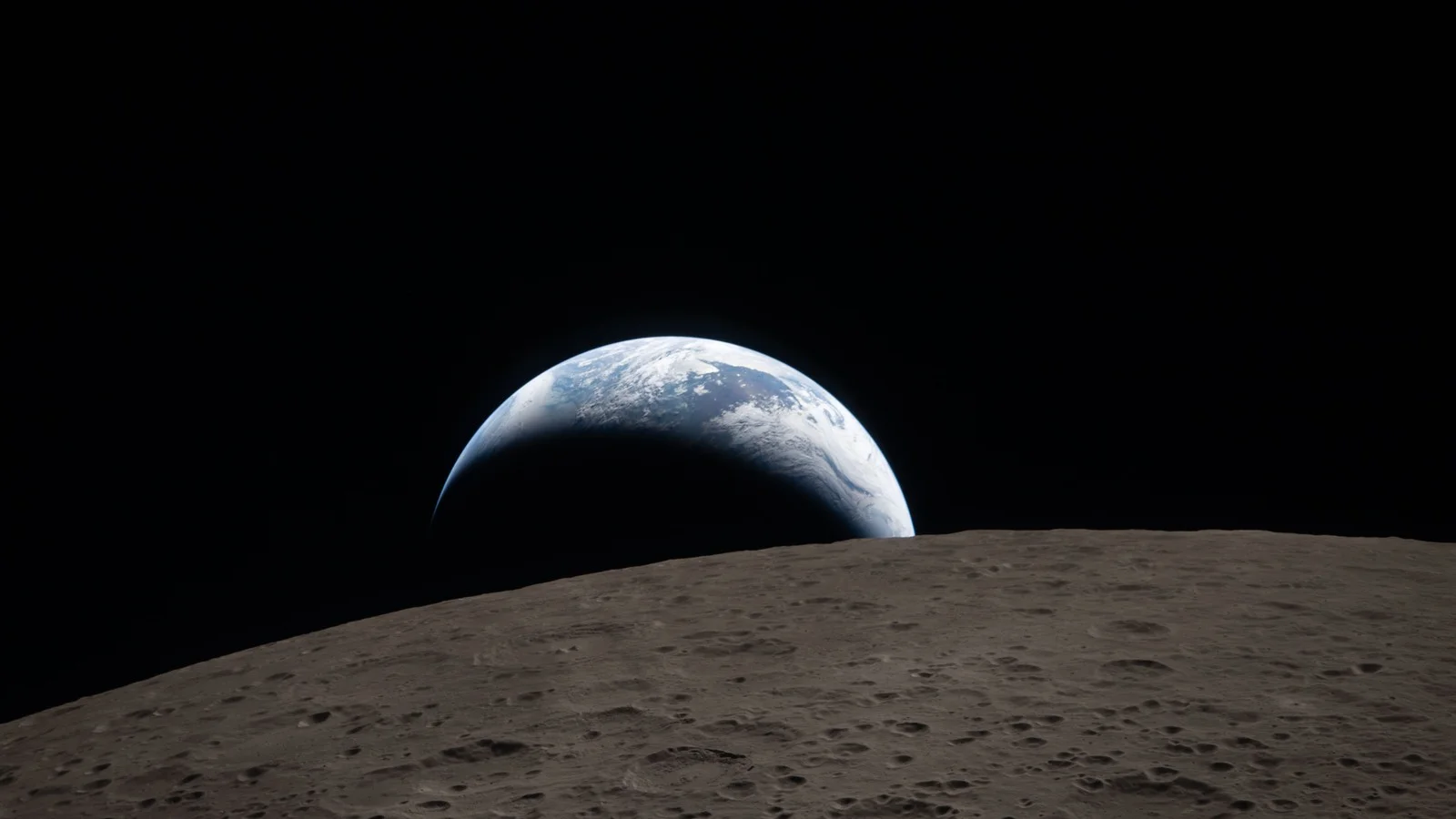
At 6:41 p.m. EDT on April 6, as Orion passed behind the Moon's far side, the crew watched the Earth sink below the lunar horizon. The Earthset image captures that exact moment: a muted blue crescent flecked with white cloud systems, dropping behind a foreground of ancient, cratered terrain. On Earth's sunlit side, the weather systems over Australia and Oceania are clearly visible.
The composition is remarkable. The foreground crater, Ohm Crater, shows terraced walls and a flat floor interrupted by central peaks, all rendered in sharp detail. Behind it, our entire world fits into a sliver of blue light. Three minutes after this photograph was taken, the crew lost radio contact with Mission Control as Orion slipped into the 40-minute communications blackout behind the Moon.
No human had ever seen the Earth set behind the Moon before. The Apollo crews flew similar trajectories, but their film cameras and flight timelines didn't capture this exact geometry. This is genuinely a first.
A Solar Eclipse Like No One Has Ever Seen
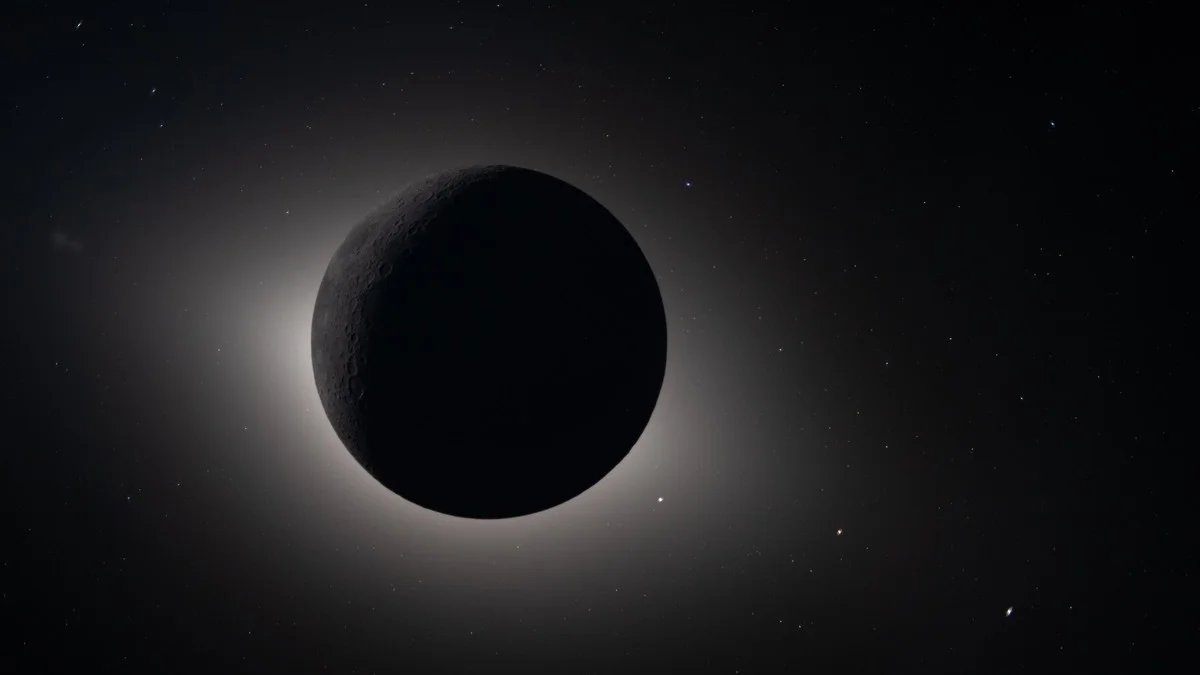
From Earth, a total solar eclipse lasts a maximum of about seven and a half minutes. From the Artemis II crew's vantage point behind the Moon, totality lasted nearly 54 minutes.
The physics is straightforward: the Moon's apparent size from Orion's position was vastly larger than it appears from Earth, so it blocked the Sun for far longer. But knowing the physics doesn't diminish the image. The photograph shows the lunar disk as a perfect black circle, ringed by the Sun's corona, streamers of superheated plasma extending outward in delicate, feathery filaments. The corona is normally invisible except during a total eclipse, and no human has ever had 54 uninterrupted minutes to study and photograph it from this perspective.
Commander Reid Wiseman described the view as "the most extraordinary thing I have ever seen." The crew used multiple cameras and exposure settings to capture the corona at different levels of detail.
The New Earthrise
Everyone knows the Apollo 8 Earthrise photograph, the one taken by Bill Anders on Christmas Eve 1968 that showed humanity its home for the first time. It became one of the most reproduced images in history and is widely credited with launching the environmental movement.
On April 6, 2026, the Artemis II crew captured the sequel.
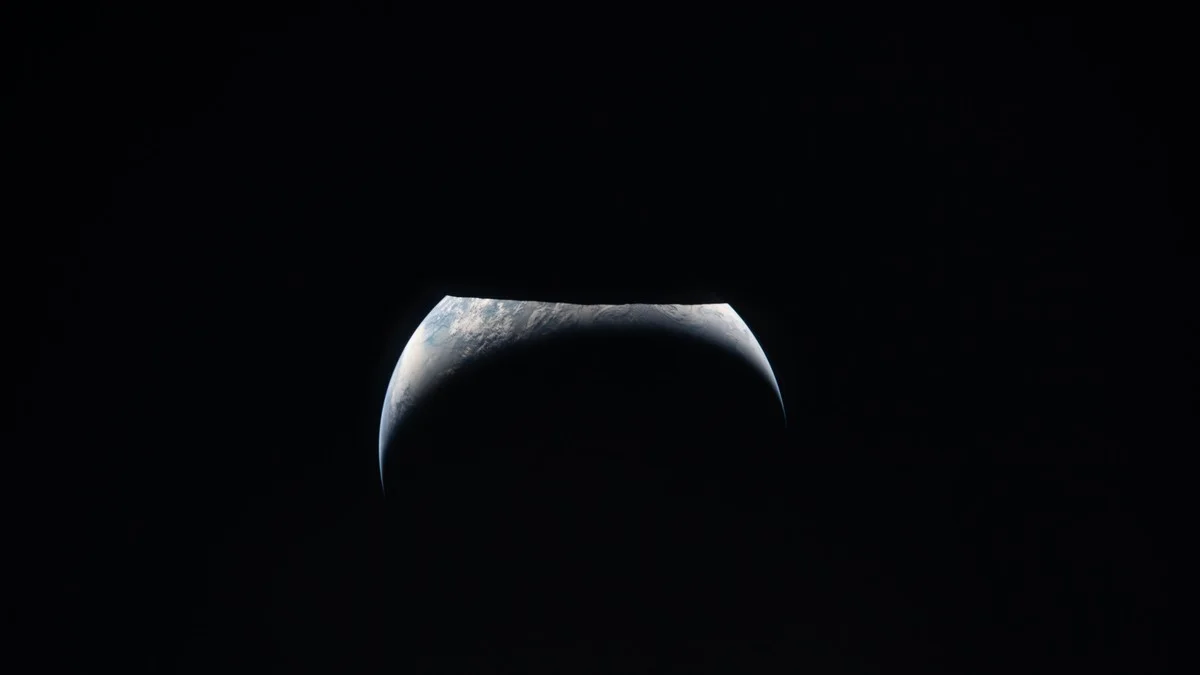
At 7:22 p.m. EDT, as Orion emerged from behind the far side and radio contact was restored, the crew photographed the Earth rising over the lunar limb. But where Anders' 1968 image showed a half-lit, vivid blue marble, the Artemis II Earthrise is something quite different: Earth appears as a razor-thin crescent, barely illuminated, with only its upper edge catching the sunlight. The planet's blue hue and scattered white cloud systems are visible, but the overall effect is far more fragile and ethereal than the Apollo photograph.
The difference is geometry. Apollo 8 saw a nearly half-phase Earth. Artemis II, flying its particular free-return trajectory, caught the Earth in a much thinner crescent phase, making it look smaller, more delicate, more alone.
Venus Photobombs the Eclipse
One of the most surprising details in the eclipse photographs is the appearance of Venus.
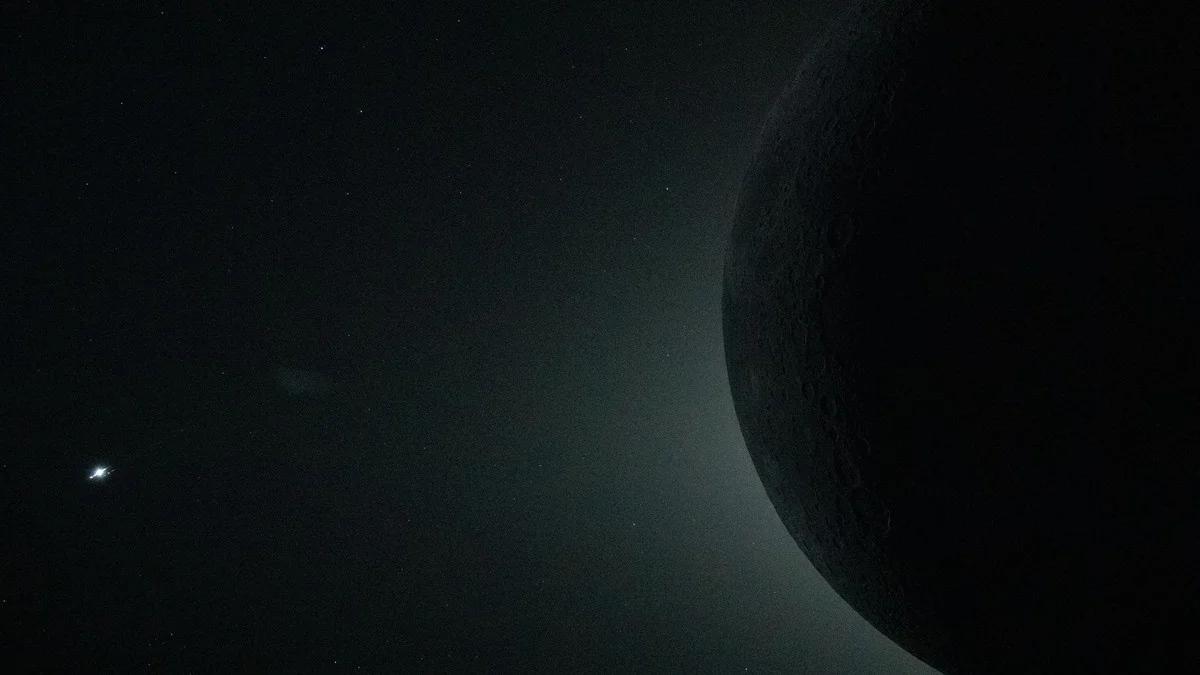
In a partial-frame shot of the eclipse, a bright silver glint appears to the left of the Moon's silhouette, that's Venus, roughly 162 million miles from the camera. Along the Moon's curved edge, the dark patch of Mare Crisium (the "Sea of Crises") is identifiable, one of the few near-side features visible from this angle.
It's a small detail, but it adds depth to the image in a way that's hard to overstate: you're looking at three celestial bodies in a single photograph taken by a human 250,000 miles from home. The Sun is blocked, the Moon is in silhouette, and Venus, another entire world, is photobombing the scene.
See the far side's near neighbours from your garden
Kit we've tested and reviewed in full
You'll never see Vavilov Crater from Earth, but the near side is packed with detail that rivals these Orion shots. A pair of binoculars turns the Moon from a flat white disc into a landscape of craters, mountain ranges and maria you can pick out in minutes.

A steady, lightweight pair that reveals real crater detail along the terminator on any clear night.
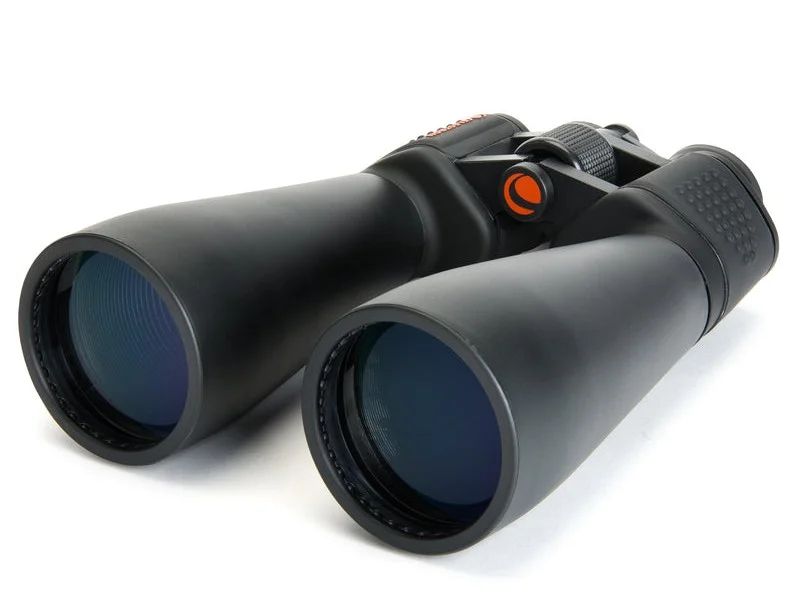
Closer to the 400mm telephoto shots of Vavilov Crater than any beginner pair has a right to be, especially on a tripod.
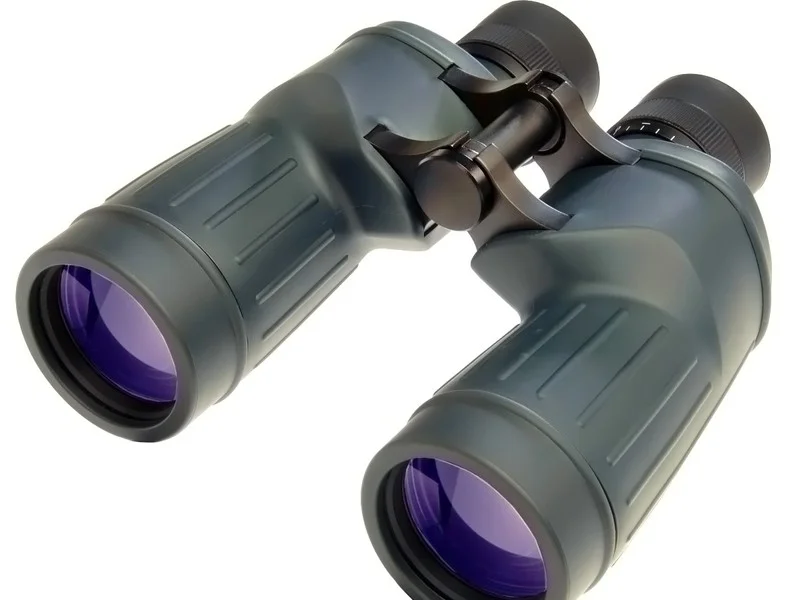
Sharper glass brings out shadow and contrast on craters near the terminator, the same low-Sun-angle detail that makes these NASA photos so striking.
Affiliate links: you pay the same price, we earn a small commission that helps keep WatchTheStars free.
Vavilov Crater: Geology From 4,000 Miles Up
Not every great photograph needs to show the Earth or the Sun. Some of the most scientifically valuable images from the flyby are the close-up geology shots.
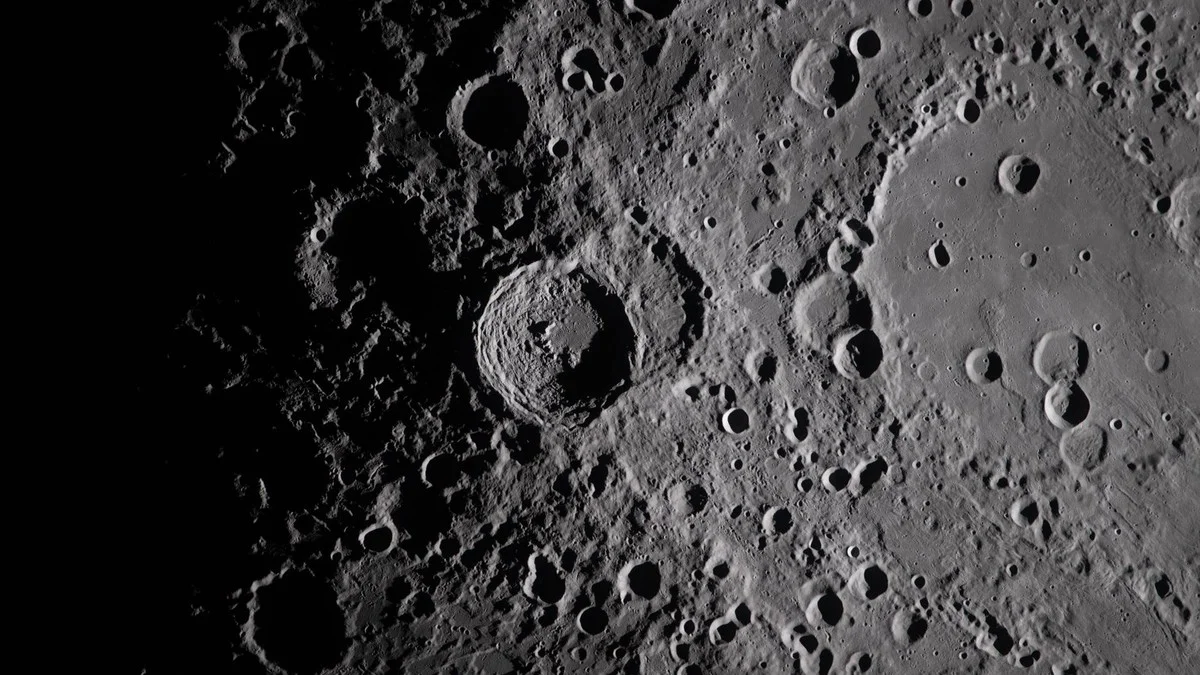
Vavilov Crater sits on the rim of the much larger and older Hertzsprung basin on the Moon's far side. The image was captured with a handheld camera at a 400mm focal length, essentially a telephoto shot from 4,000 miles up. Long shadows thrown by the low Sun angle reveal the transition from the smooth material within an inner ring of mountains to the more rugged, impact-battered terrain around the rim.
The crew also photographed the eastern edge of the South Pole-Aitken basin, the largest, deepest, and oldest impact basin on the Moon, stretching roughly 2,500 kilometres across. These are features that orbiting spacecraft have mapped, but never with the compositional eye of a trained observer choosing angles and exposures in real time. The Hertzsprung Basin image reveals concentric mountain rings, and an "intricate snapshot" of the Orientale basin captured one of the Moon's youngest and best-preserved large impact structures.
The scientific teams will be working with these images for months, comparing what the crew captured with existing orbital data from the Lunar Reconnaissance Orbiter.
The Crew Behind the Cameras
Several of the released photos show the crew at work, and they tell their own story.
In one image, Pilot Victor Glover, Commander Reid Wiseman, and Mission Specialist Jeremy Hansen are configuring their camera equipment before the observation window opened, checking lenses and adjusting settings for the rapidly changing lighting conditions. In another, Hansen is photographing through a specially designed camera shroud covering window 2, which blocked cabin light reflections from contaminating the shots. Christina Koch and Victor Glover were photographed working side by side, gathering images through adjacent windows.
The crew spent approximately seven hours documenting the Moon during the flyby, working in shifts to ensure continuous coverage. After the observation period ended, one final image stands out: the "Moon Joy" photograph, taken on April 7 as Orion headed home, showing all four crew members in a group hug inside the spacecraft. Koch, Hansen, Wiseman, and Glover, grinning at each other in microgravity. Mission accomplished.
Why These Photos Matter
It would be easy to dismiss these as "just photographs", after all, we have orbital imagery of the Moon at sub-metre resolution from robotic spacecraft. But that misses the point in two important ways.
First, there's the human element. Every one of these images was composed, framed, and timed by a person floating in a spacecraft 250,000 miles from home. The choices they made, what to point the camera at, when to press the shutter, which exposure settings to use, reflect human judgement and curiosity in ways that no robotic camera can replicate. The Earthset image works as a photograph because a human recognised the moment and captured it. An orbiting probe would not have paused to frame Ohm Crater in the foreground.
Second, there's the cultural power. The Apollo Earthrise photograph changed how humanity thought about its own planet. It showed the Earth as small, finite, and alone in the darkness, and it arrived at a moment when the environmental movement was ready to run with that image. The Artemis II photographs arrive in a different era with different concerns, but the thin-crescent Earthrise hits just as hard. Our planet looks even more fragile than it did in 1968.
These images are already being shared millions of times. They're public domain, NASA released them for the whole world to use, study, remix, and print. They belong to all of us.
Where to See the Full Gallery
NASA has published the complete collection across several pages:
- Artemis II Lunar Flyby Gallery: all flyby images with full captions and download links
- Artemis II Journey to the Moon: transit images from the outbound journey
- Artemis II Flight Day Highlights: day-by-day crew photos and mission operations
- Artemis II Multimedia Hub: videos, podcasts, and the full image archive
All images are public domain and available for download at full resolution. If you want to print one for your wall, the Earthset and Earthrise originals are over 5,000 pixels wide, more than enough for a large framed print.
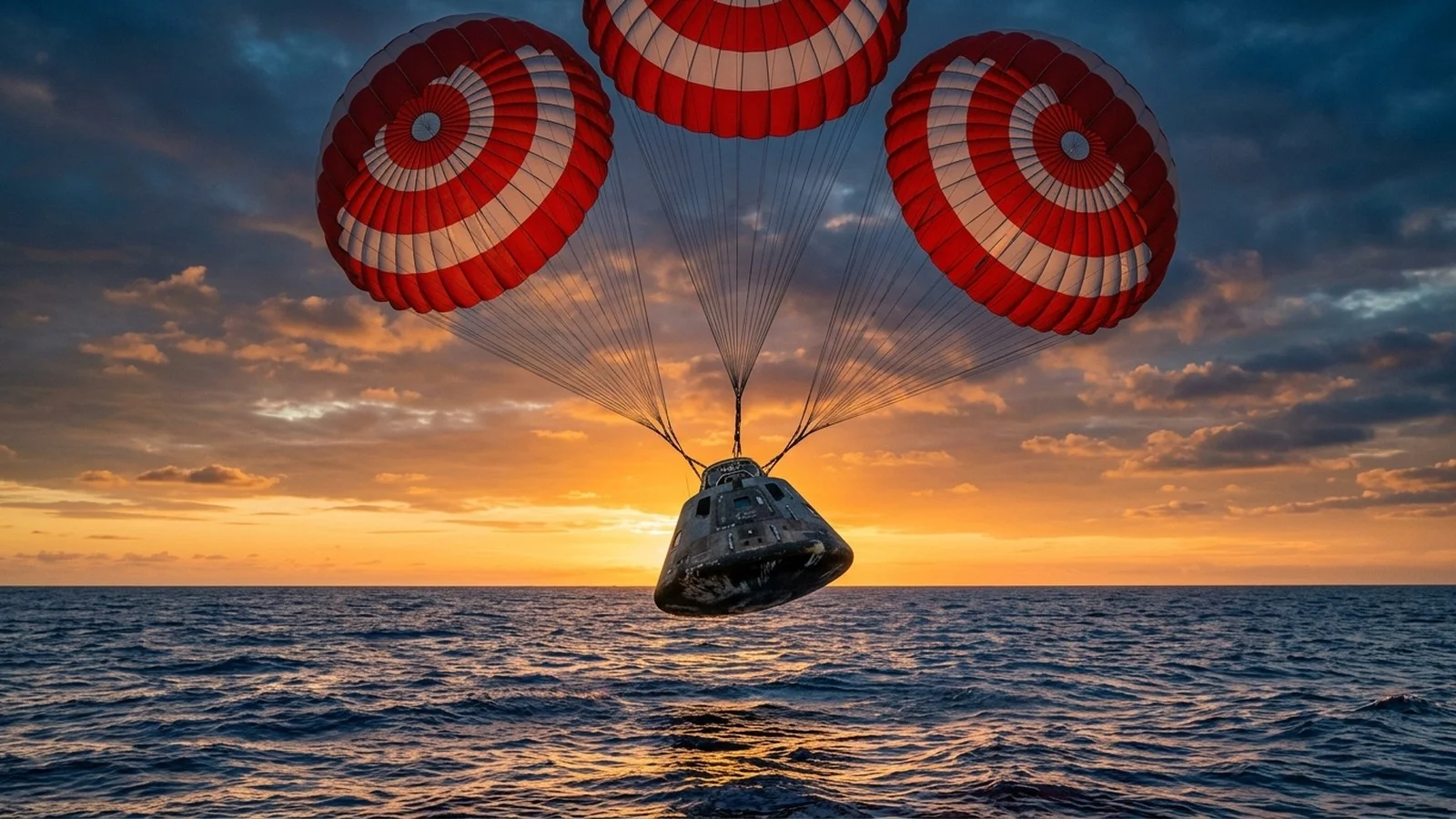
Splashdown is expected on April 10, off the coast of San Diego. The Artemis II crew will return to Earth having travelled further from our planet than any human in history, and having brought back images that remind us, once again, just how extraordinary the view is from out there.
Many of these photos show features with names, the maria, the highlands, Shackleton at the south pole. Our Moon page has an interactive map so you can identify exactly what you're looking at.
Frequently Asked Questions
Equipment guides
Related topics

Ian ClaytonAmateur astronomer and founder of WatchTheStars.co.uk, dedicated to helping others explore the wonders of our universe. Full profile →