Key takeaways
- NASA's Psyche spacecraft will swing past Mars on 15 May 2026, flying just 4,500 km from the surface at 12,000 mph
- The gravity assist is a fuel-saving technique that will redirect and accelerate the spacecraft toward the asteroid belt
- Psyche's target, asteroid 16 Psyche, may be the exposed iron-nickel core of a long-dead planetary embryo
- The spacecraft will reach the asteroid in August 2029, giving scientists their first close look at a metal world
- During the flyby, Psyche will take thousands of images of Mars, practice for its real job at the asteroid
Jump to section 6 sections
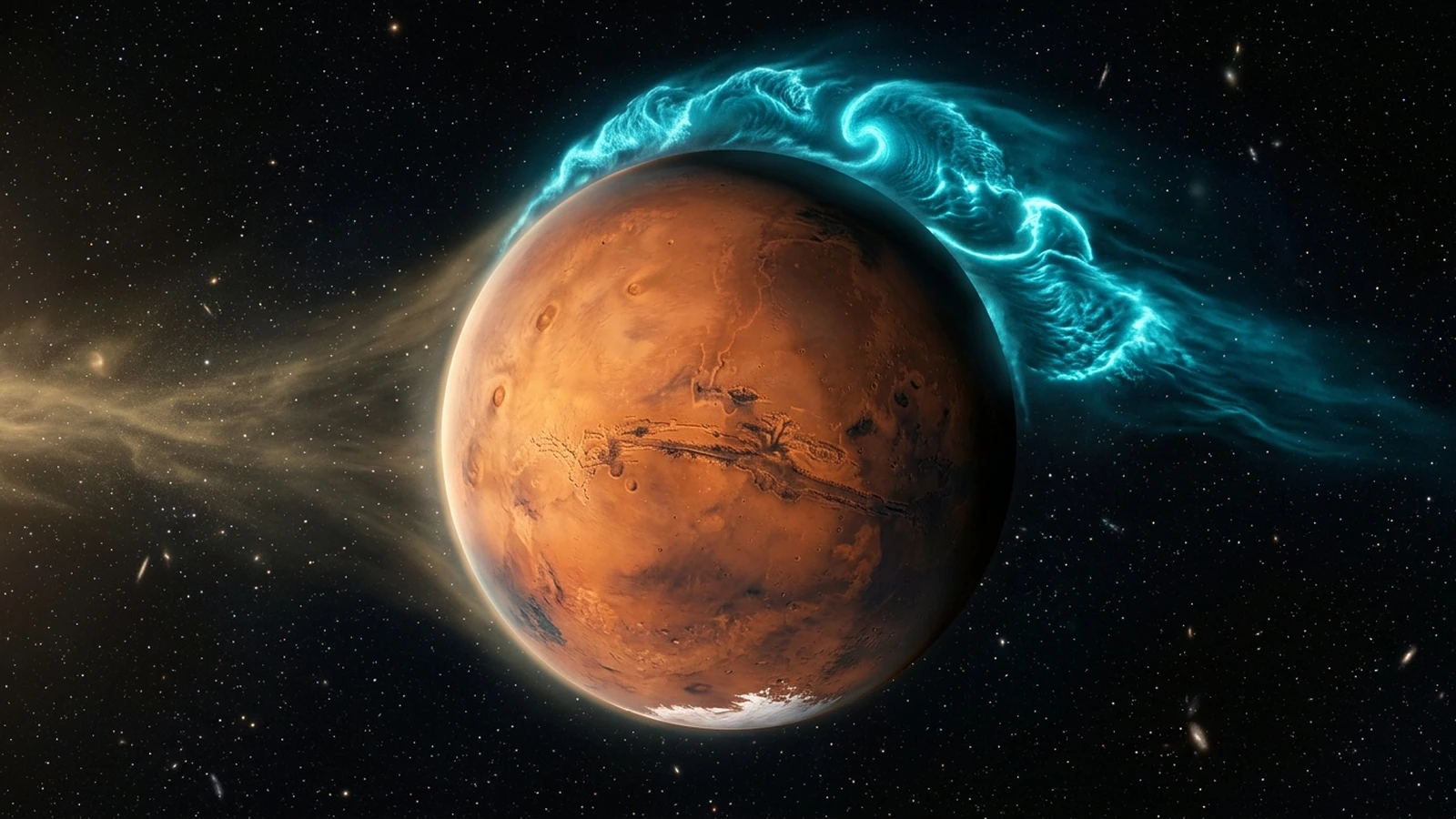
On Friday 15 May 2026, a spacecraft travelling at over 12,000 mph will pass just 4,500 kilometres above the surface of Mars, closer than many satellites orbit Earth. It won't stop, it won't land, and it won't even slow down. In fact, that's rather the point.
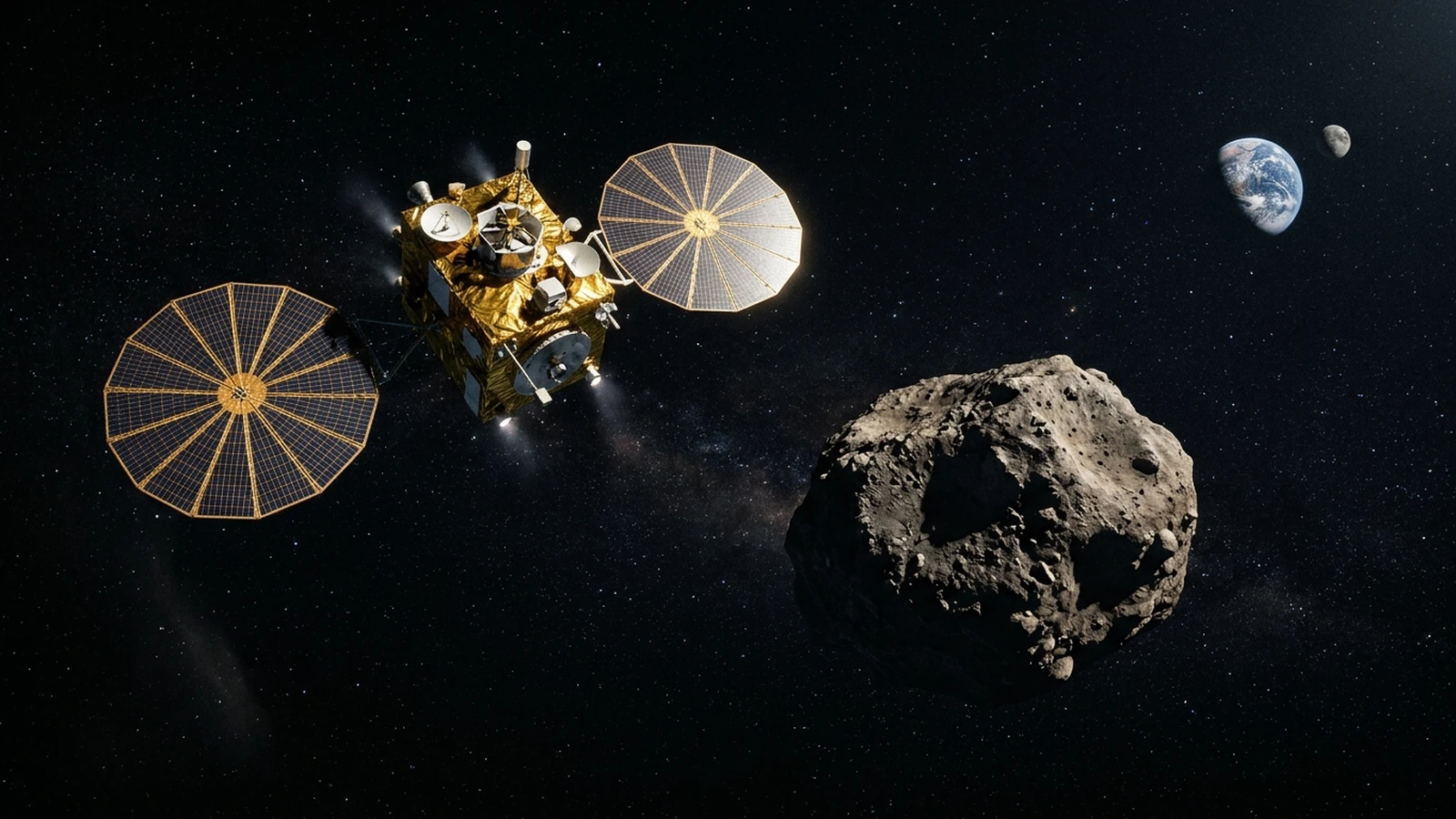
NASA's Psyche probe is using Mars as a giant gravitational slingshot, stealing a tiny fraction of the Red Planet's momentum to send itself hurtling deeper into the solar system. Its destination: a world so strange, so unlike anything we've ever visited, that scientists genuinely aren't certain what they'll find when it arrives in 2029.
The Flyby: What's Happening on 15 May
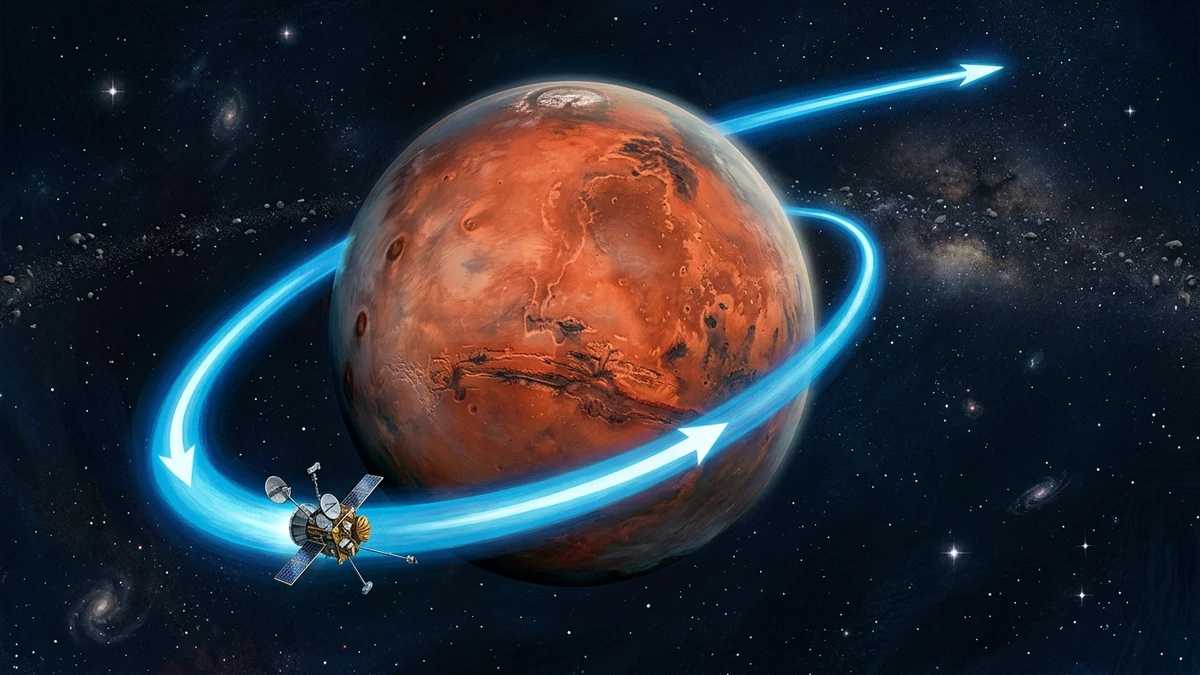
At its closest point on Friday, Psyche will pass just 2,800 miles (4,500 km) from Mars's rust-red surface, zipping past at 12,333 mph (19,848 kph) relative to the planet. The encounter will last only minutes in terms of closest approach, but its effects will be felt for years.
During the flyby, Psyche's science team won't waste the opportunity. The spacecraft's multispectral imager, the same camera that will eventually map the surface of asteroid 16 Psyche, will capture thousands of observations of Mars. It's essentially a dress rehearsal, letting engineers fine-tune the instrument's settings and test the team's operational procedures while there's still something familiar to look at.
The magnetometer will detect how Mars's magnetic field redirects charged particles from the Sun, and the gamma-ray and neutron spectrometer will monitor changes in cosmic ray flux throughout the flyby. None of this is the mission's main event, but it all feeds into a database of calibration data that will prove invaluable at the asteroid.
Several other spacecraft will be watching too. NASA's Mars Reconnaissance Orbiter, Mars Odyssey, and the Curiosity and Perseverance rovers on the surface will all observe the flyby, as will ESA's Mars Express and ExoMars Trace Gas Orbiter.
What Is a Gravity Assist?
Gravity assists, sometimes called slingshot manoeuvres, are one of the most elegant tricks in spaceflight. The basic idea is beautifully simple: by flying close to a planet, a spacecraft can steal a tiny sliver of that planet's orbital energy around the Sun.
From Mars's perspective, the effect is negligible: like a truck nudging a continent. But for a spacecraft weighing just over two tonnes, the difference is enormous. Without the Mars flyby, Psyche would need to carry significantly more propellant to reach the asteroid belt on its own: extra mass that would have made the mission far more expensive and complex.
The technique dates back to the Voyager missions of the 1970s, which used Jupiter and Saturn to fling the probes out of the solar system entirely. Cassini used Venus twice and Earth once before finally reaching Saturn. It's tried-and-tested physics: elegant, fuel-free, and utterly reliable.
You Can't See Psyche, But Mars Is Right There
Kit we've tested and reviewed in full
No back garden telescope is picking up a two-tonne spacecraft skimming past Mars this week. But Mars itself is an easy, rewarding target right now, and it's the perfect excuse to get set up for the next clear night.
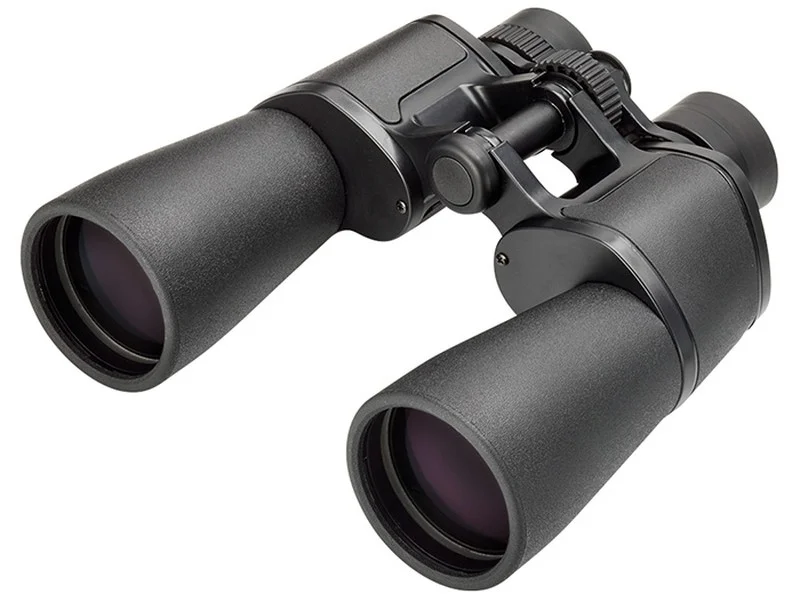
Grab-and-go binoculars that'll show you Mars as a distinct reddish point and let you sweep past Jupiter's moons on a clear night. A cheap way to get familiar with the sky before you commit to anything bigger.
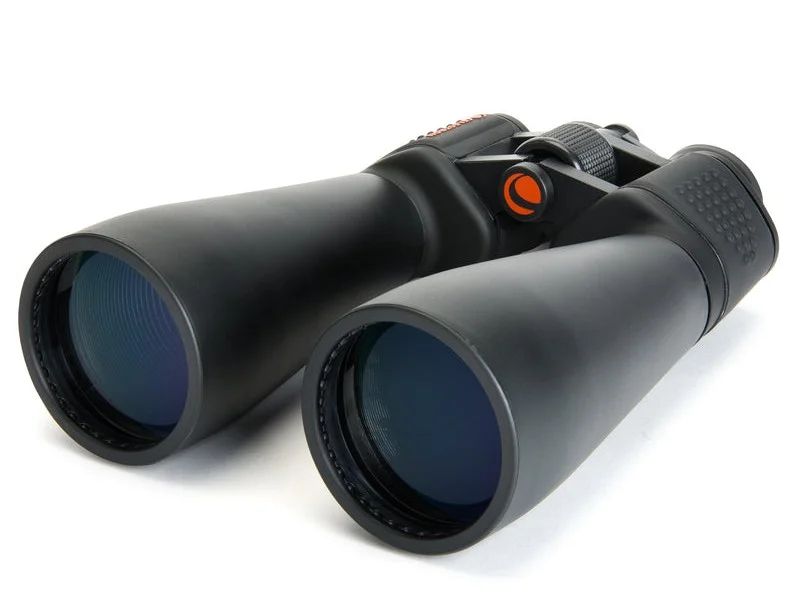
Bigger lenses mean a noticeably brighter view of Mars and the asteroid belt's neighbourhood, plus the wider Milky Way behind it. A nice middle step between binoculars and a proper telescope.
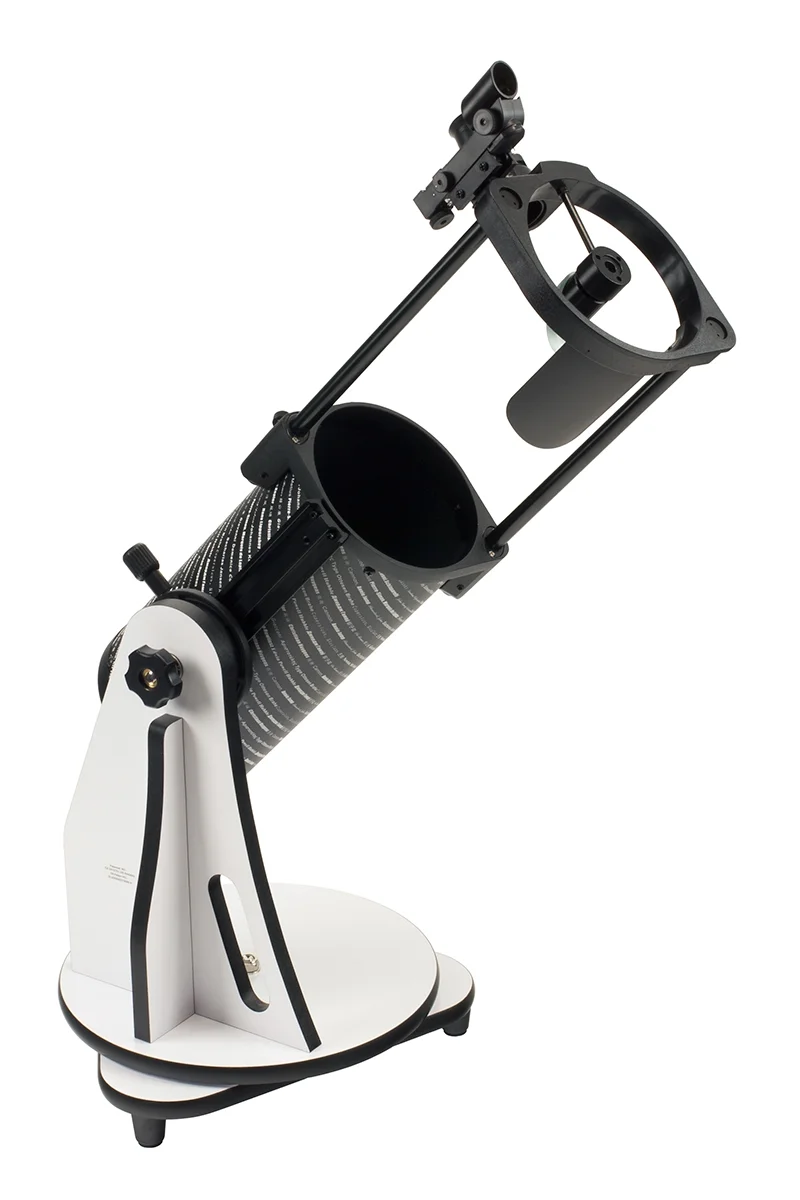
This little tabletop reflector will actually show Mars as a disc, with hints of its polar cap on a steady night. It's the closest thing to a home telescope that can keep up with your curiosity about what Psyche is heading towards.
Affiliate links: you pay the same price, we earn a small commission that helps keep WatchTheStars free.
The Mission: Why Psyche Matters
Psyche launched on 13 October 2023 aboard a SpaceX Falcon Heavy rocket from Kennedy Space Center in Florida. It's headed for asteroid 16 Psyche, a lumpy, vaguely potato-shaped object sitting in the main asteroid belt between Mars and Jupiter.
But this isn't just another asteroid mission. Scientists believe 16 Psyche might be one of the most scientifically significant objects in the entire solar system, and the reason comes down to what's hiding inside every rocky planet, including Earth.
Deep within our planet, beneath thousands of kilometres of mantle and crust, lies an iron-nickel core roughly the size of Mars. We know it's there, we can feel its effects through Earth's magnetic field and seismic waves, but we have never seen it, and we almost certainly never will. No drill could reach it. No probe could survive it.
But what if a planet's core were exposed? What if, billions of years ago, a young planetary embryo was smashed apart in the violent early solar system, leaving its naked metal heart drifting in space? That, scientists think, may be exactly what asteroid 16 Psyche is.
Asteroid 16 Psyche: A World Unlike Any Other
Discovered in 1852 by Italian astronomer Annibale de Gasparis, 16 Psyche is a genuinely odd object. At its widest, it measures around 173 miles (280 km) across, roughly the distance from London to Manchester. It's not spherical; it's more of a squashed, cratered oval, tumbling slowly through the asteroid belt.
What makes it extraordinary is its composition. Unlike the vast majority of asteroids, which are made of rock, ice, or carbonaceous material, Psyche is classed as an M-type asteroid: metallic. Early studies suggested it could be 90% metal. More recent radar and infrared observations have revised that estimate downward, suggesting a mixture of metal and silicate rock, but the metallic fraction still appears to be extraordinary by any asteroid standard.
If Psyche really is the core of a long-dead protoplanet, it offers something no other mission has ever attempted: a direct look at the kind of iron-nickel core that gives Earth its magnetic field, and that formed at the heart of every rocky planet in our solar system. Studying it is the closest we'll ever get to exploring our own planet's deepest interior.
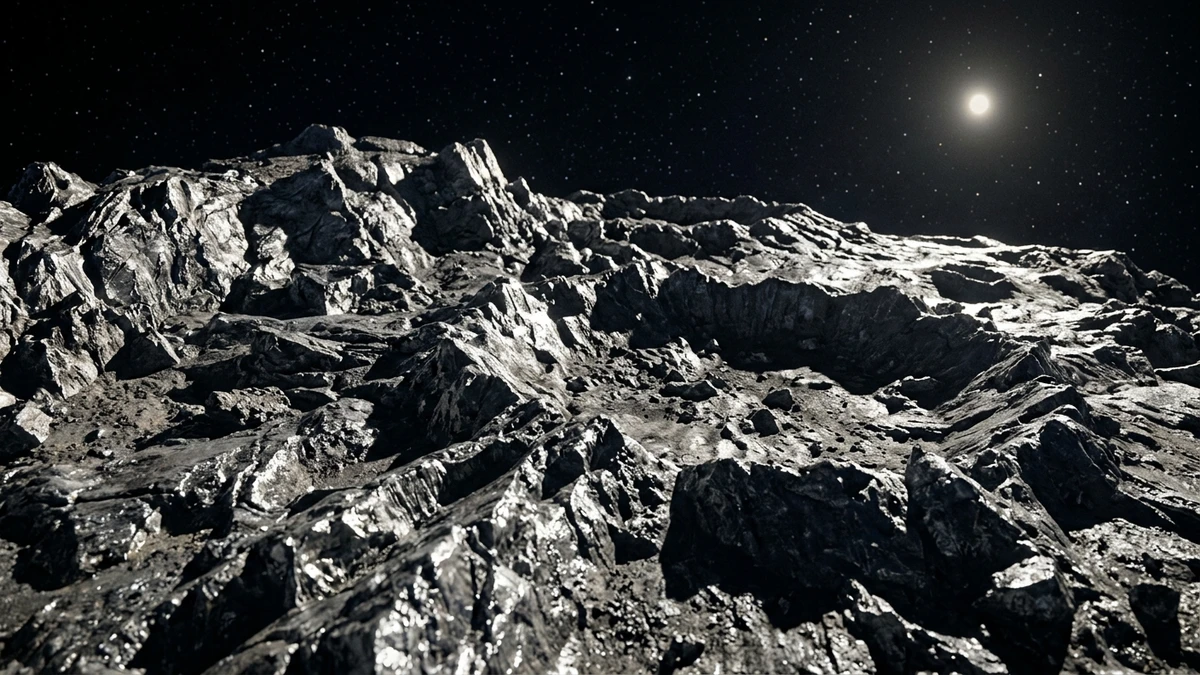
There are other possibilities too. Psyche could be a core that was smashed apart and gravitationally re-assembled. It might have been shaped by a form of iron volcanism: vast lava flows of molten metal rather than rock. Or it could be something else entirely, something that doesn't fit neatly into any existing category. That uncertainty is part of what makes the mission so exciting.
A Spacecraft Built for a Metal World
The Psyche spacecraft is a remarkable piece of engineering in its own right. It's about the size of a small van, with a pair of large rectangular solar panels, each nearly 7.3 metres long, that extend outward like wings to capture sunlight at the distances involved.
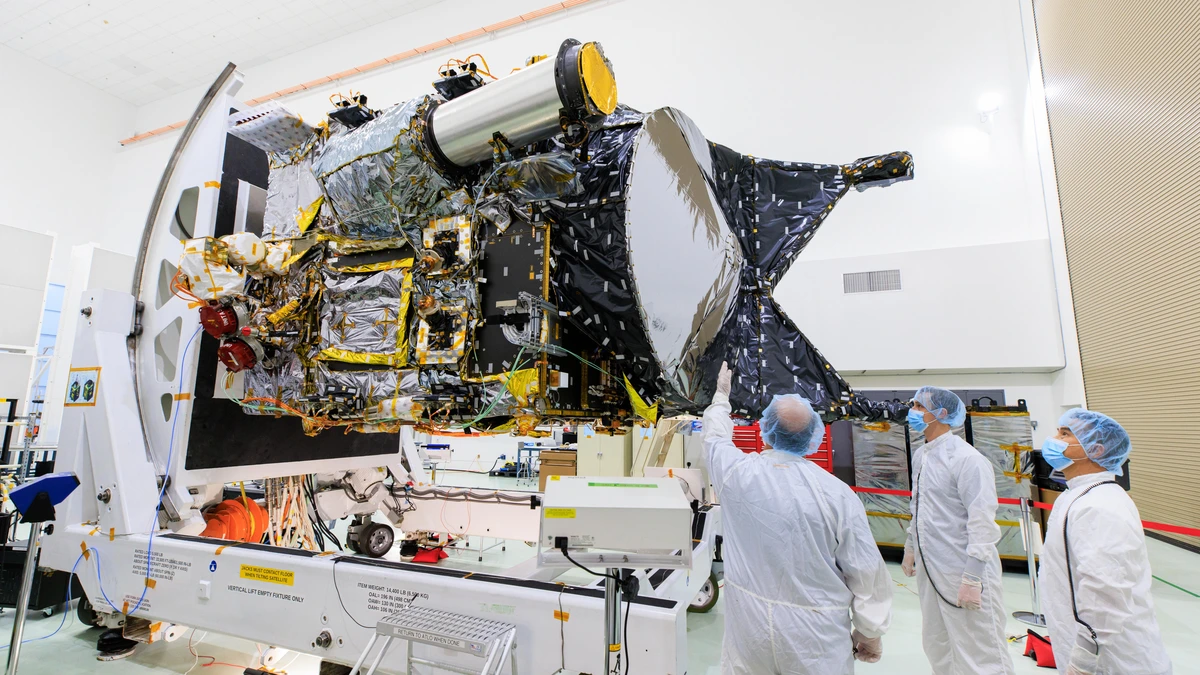
Rather than conventional chemical rockets, Psyche uses Hall-effect ion thrusters: a technology that ionises xenon gas and expels it at high velocity using electric fields powered by those solar panels. The thrust is extremely gentle (comparable, NASA scientists like to say, to the pressure of a coin resting in the palm of your hand) but it's extraordinarily efficient, and in the vacuum of space, a gentle, sustained push adds up over years of travel.
This makes Psyche only the second spacecraft to use solar electric propulsion beyond the orbit of Mars (after Dawn, which visited Vesta and Ceres). It's also the first mission to test a laser optical communications system, called Deep Space Optical Communications (DSOC), beyond the Earth-Moon system. The technology transmits data using near-infrared laser light rather than radio waves, potentially sending information back to Earth at far higher bandwidth than conventional deep space communications allow.
What Happens Next?
After Friday's Mars flyby, Psyche will continue its journey through the inner solar system, gradually spiralling outward under the influence of its ion thrusters. It's expected to enter orbit around asteroid 16 Psyche in August 2029, where it will spend approximately two years mapping the surface, measuring the magnetic field, and analysing the composition of what may be the exposed core of a lost world.
The science returned from those two years of observation could fundamentally reshape our understanding of how planets form, including how Earth came to have the layered structure it does today. Every piece of data about the distribution of metals in the early solar system helps fill in the gaps in our models of planetary formation.
For now, though, the mission team's attention is on Friday. A Mars flyby is a rare and genuinely tricky event: the timing has to be precise to within seconds, the navigation perfect, and every instrument ready to capture data during the brief window of closest approach. After nearly three years in space, Psyche is about to prove it's ready for the real work that lies ahead.
The most distant destination is still three years away. But the journey there just got a whole lot more interesting.
Frequently Asked Questions
Equipment guides
Related topics

Ian ClaytonAmateur astronomer and founder of WatchTheStars.co.uk, dedicated to helping others explore the wonders of our universe. Full profile →