Key takeaways
- Blue Origin flew a previously-used New Glenn booster for the first time on 19 April 2026, only the second company in history to achieve orbital-class rocket reuse.
- The booster 'Never Tell Me the Odds' previously launched NASA's EscaPADE Mars probes in November 2025 and successfully landed on the droneship Jacklyn.
- New Glenn boosters are designed to fly at least 25 times each. If Blue Origin achieves that, the economics of heavy-lift spaceflight change dramatically.
- The payload, BlueBird 7, is part of a satellite constellation that will deliver broadband internet directly to unmodified smartphones, no special hardware needed.
Jump to section 6 sections
There's a rocket sitting on a launchpad at Cape Canaveral today that has already been to space. It launched five months ago, dropped off a pair of NASA Mars probes, fell back through the atmosphere at thousands of miles per hour, and landed itself gently on a ship in the middle of the Atlantic Ocean.
Today, it did it again.
Blue Origin's New Glenn rocket completed its third-ever mission on 19 April 2026, carrying a commercial broadband satellite to low Earth orbit, but the headline isn't the satellite. It's the booster. A previously-flown orbital-class rocket stage flying for a second time makes Blue Origin only the second company in history to pull this off. The first, of course, was SpaceX.
Here's why that matters, and what it means for the future of getting to space.
What Is New Glenn?
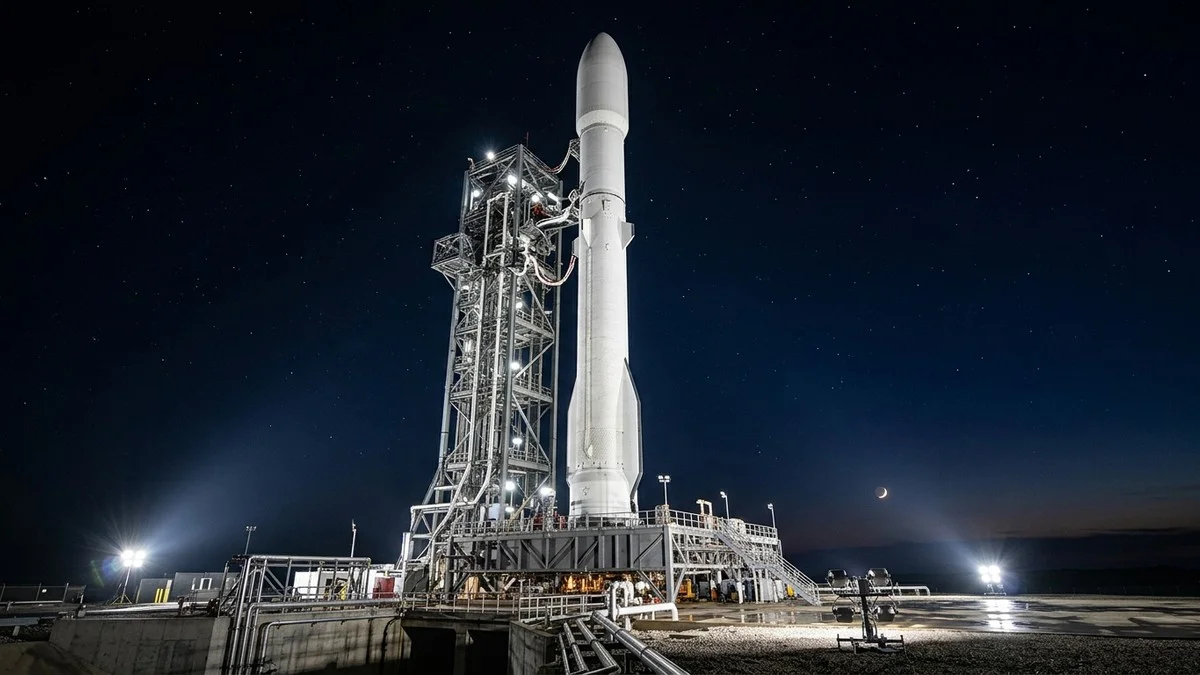
New Glenn is Blue Origin's heavy-lift rocket: the company's first vehicle capable of reaching orbit. It's a big machine. Standing 98 metres tall, it dwarfs the Falcon 9 and uses liquid methane and liquid hydrogen as fuel, burning through seven BE-4 engines on its first stage to generate around 3.85 million pounds of thrust at liftoff.
It's named after John Glenn, the first American to orbit the Earth, and it's been years in the making. Blue Origin, founded by Jeff Bezos in 2000, spent much of the previous two decades perfecting sub-orbital reusability with its New Shepard tourist rocket before turning its attention to orbital launches. New Glenn is the result: a heavy-lift vehicle designed from the outset to be reflown, with first-stage boosters rated for at least 25 flights each.
The Road to NG-3: A Short History
New Glenn's story so far has been a rapid, occasionally bumpy climb toward credibility.
NG-1 (January 2025) was the debut. The rocket reached orbit successfully, no small thing for a first flight, but Blue Origin lost the booster during its descent attempt. The landing on the droneship didn't happen. Still, the company and the industry considered it a genuine win: the payload worked, the rocket reached orbit, and the engineering team learned what they needed to learn. Most rockets don't reach orbit on their first attempt at all.
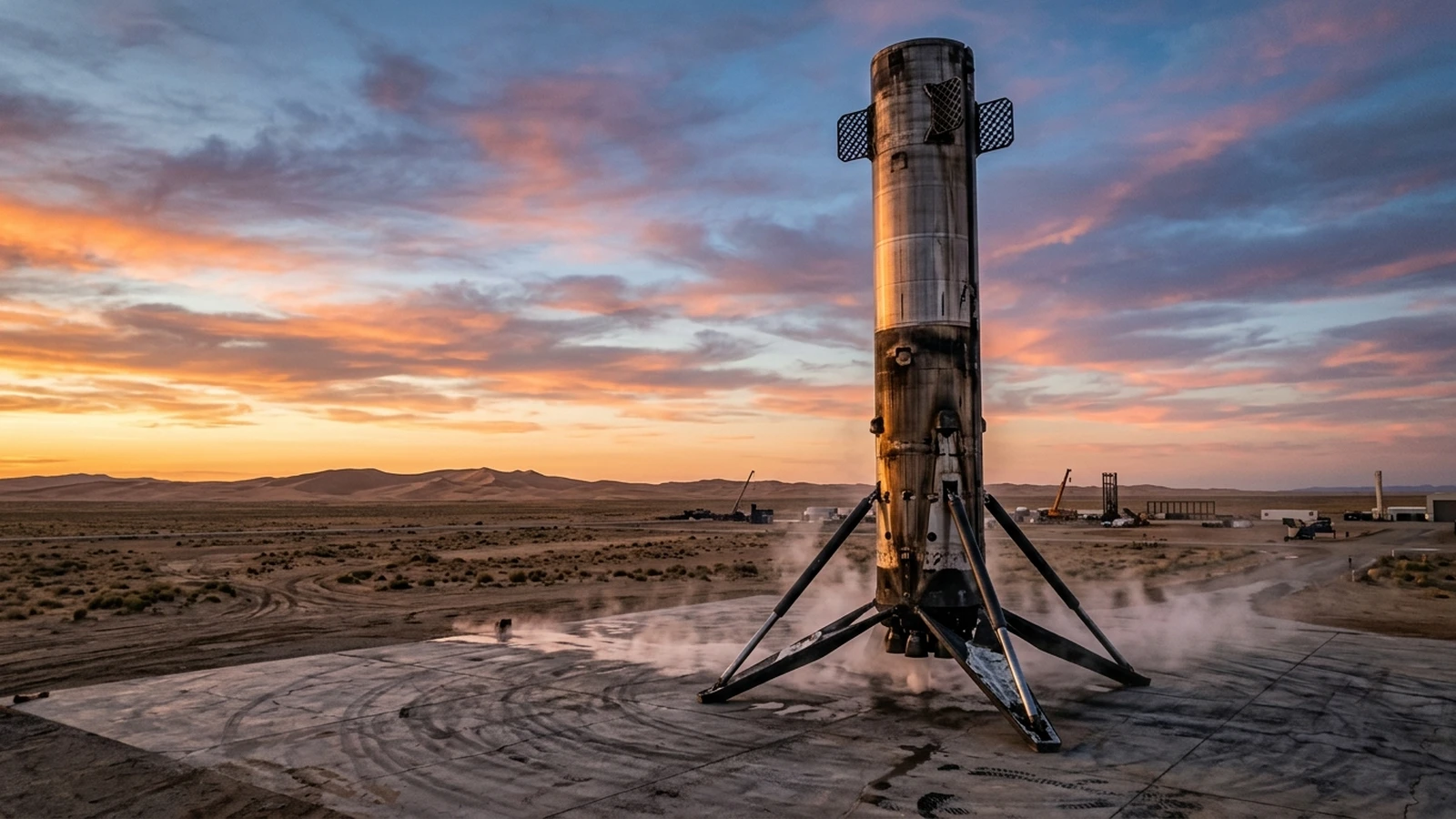
NG-2 (November 2025) was where everything changed. Blue Origin launched NASA's twin EscaPADE probes, a pair of small spacecraft bound for Mars to study the planet's magnetosphere, and executed a flawless mission. But the moment everyone in the space community was watching for came about three and a half minutes after liftoff, when the first stage separated, turned around, fired its engines to slow down, and landed on the droneship Jacklyn in the Atlantic Ocean. First ever successful New Glenn booster recovery. The booster, which the team named Never Tell Me the Odds, was brought back to shore and headed into refurbishment.
That brings us to today.
What Makes Today Different
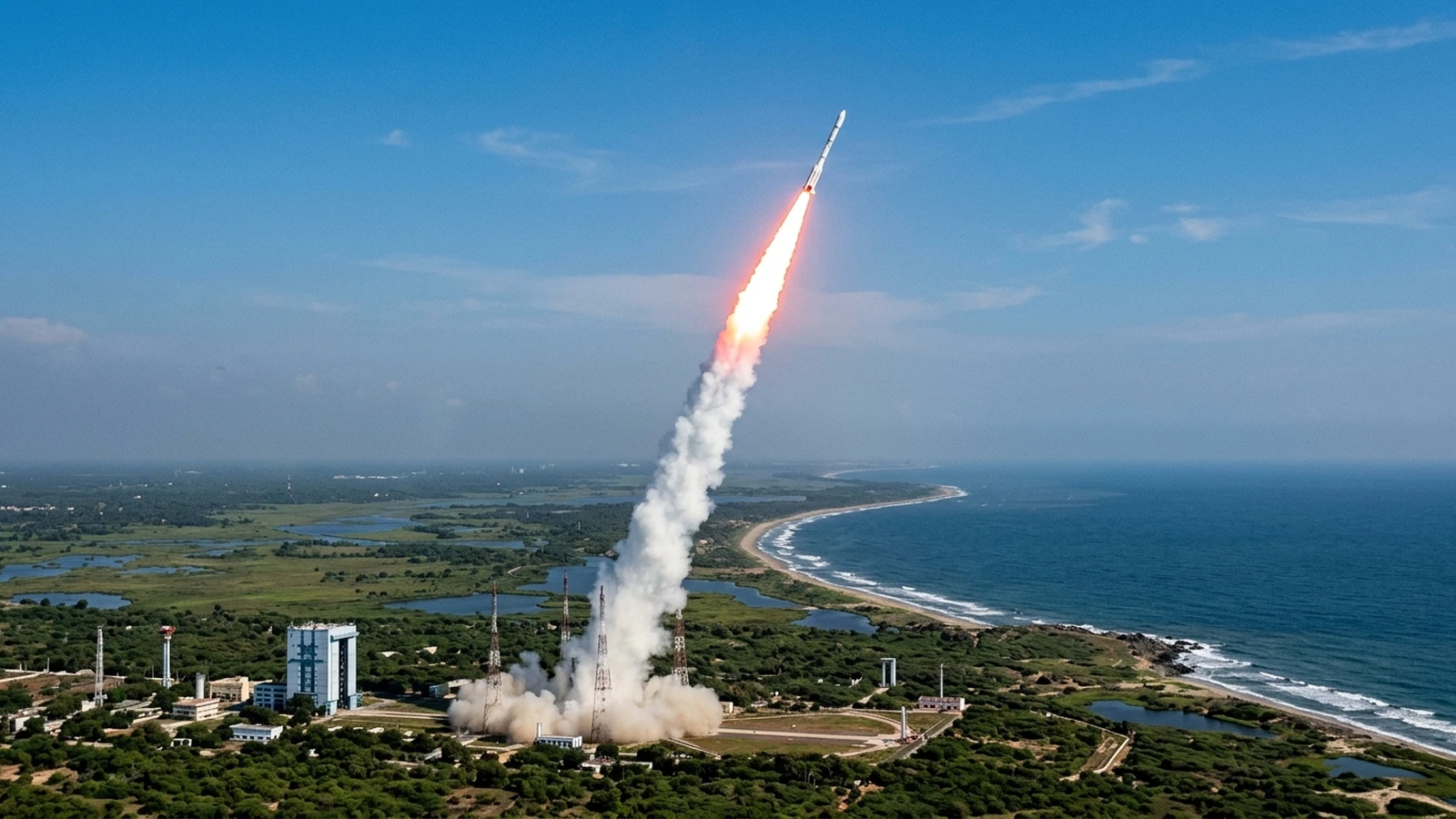
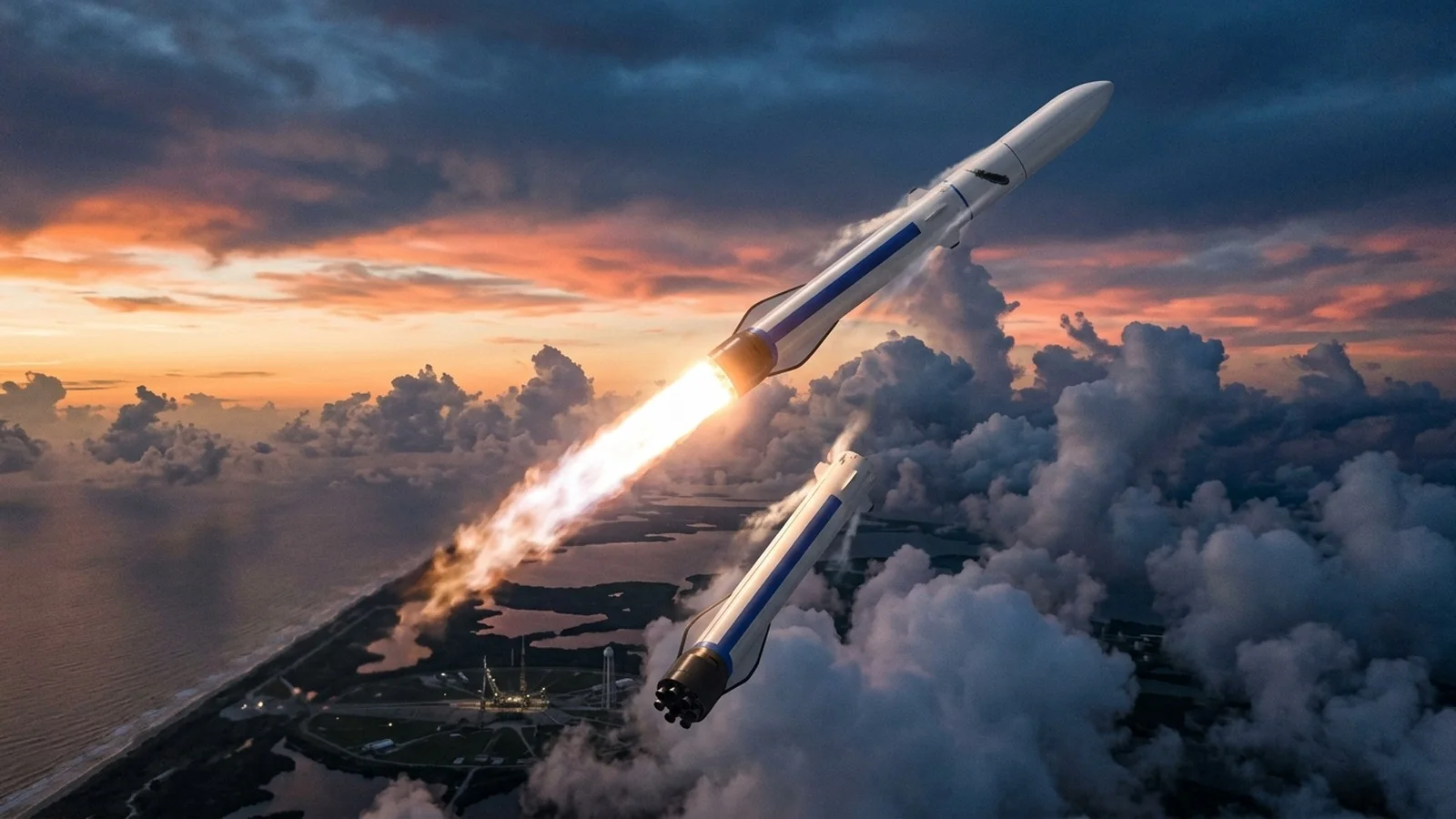
Never Tell Me the Odds is back. The same booster that launched NASA's Mars probes in November is the one that lifted off from Launch Complex 36 this morning, carrying AST SpaceMobile's BlueBird 7 satellite to low Earth orbit.
There's an important detail worth understanding: while most of the booster structure was reused, Blue Origin replaced all seven BE-4 engines rather than reflying the originals. CEO Dave Limp explained the decision in an April post: "With our first refurbished booster we elected to replace all seven engines and test out a few upgrades including a thermal protection system on one of the engine nozzles." It's a cautious approach: treating this first reflight as a learning flight, validating the booster structure and all the systems around the engines before committing to reflying the engines themselves.
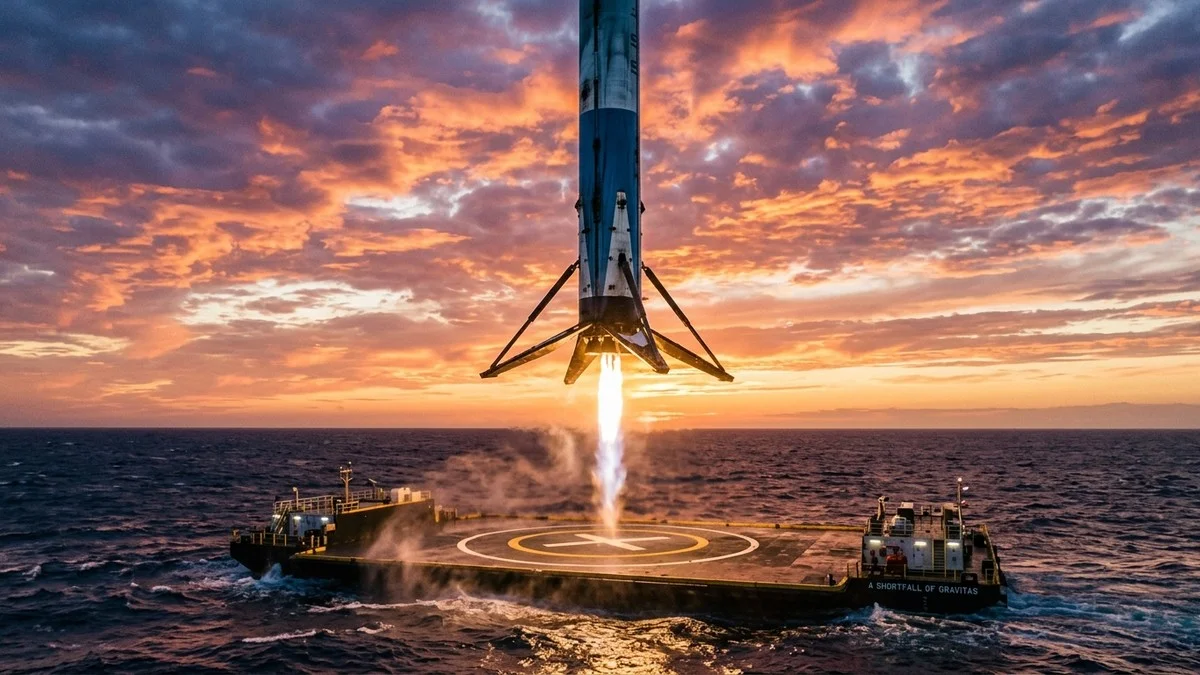
SpaceX, by comparison, now routinely reflies both Falcon 9 boosters and their Merlin engines, a level of confidence that comes from having done it dozens of times. Blue Origin is at the beginning of that same curve, and the decision to swap the engines this time is a sensible one. The goal is to eventually refly every component, which is where the real economics kick in.
Track the Next Launch From Your Garden
Kit we've tested and reviewed in full
New Glenn launches from Florida aren't visible from the UK, but a good pair of binoculars is exactly what you want for watching satellites, the ISS, and bright objects like BlueBird cross the evening sky.

A steady, wide field of view makes it easy to catch a satellite pass without losing track of it.
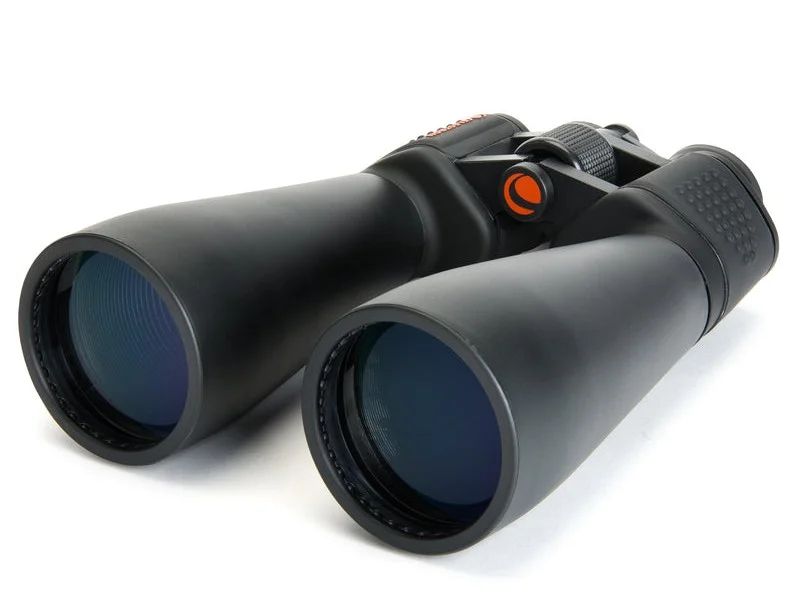
Bright optics help pick out fainter satellites in the growing constellations passing overhead each night.
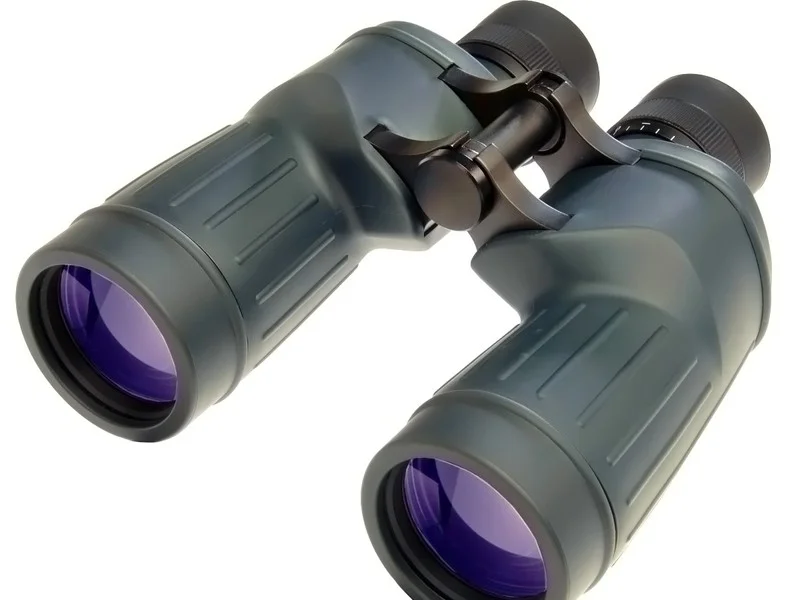
Solid value for anyone who wants to start spotting satellite trains without breaking the bank.
Affiliate links: you pay the same price, we earn a small commission that helps keep WatchTheStars free.
Why Reusability Changes Everything
To understand why booster reuse is such a big deal, you have to understand how rockets used to work. For most of the history of spaceflight, rockets were effectively single-use machines. You built them, fuelled them, flew them once, and they fell into the ocean. The engines, the tanks, the plumbing: all of it, gone. The cost of getting a kilogram of cargo to orbit reflected that: you were, in essence, building a new vehicle every time.
SpaceX changed that calculation dramatically with the Falcon 9. A Falcon 9 booster has now been flown as many as 25 times in a single vehicle. The economics are transformative: when you're not rebuilding the most expensive part of the rocket from scratch each time, launch costs fall, and launch frequency can rise. That's what enabled SpaceX to dominate the commercial launch market through the late 2010s and 2020s.
Blue Origin is now on that same path, with a larger vehicle. New Glenn's boosters are rated for at least 25 flights, the same headline number the Falcon 9 has achieved in practice. If Blue Origin hits that target, the cost of launching with New Glenn falls significantly with each successive flight. AST SpaceMobile, BlueBird 7's owner, is planning to use Blue Origin launches to deploy 45 to 60 satellites by the end of 2026, with a target of reflying the booster every 30 days. That cadence would only be possible with reuse.

What's On Board: The BlueBird 7 Satellite
The payload, BlueBird 7, is itself worth a moment of attention. AST SpaceMobile is building a constellation of satellites designed to deliver broadband internet directly to standard, unmodified smartphones. No special terminal, no satellite dish on your roof, no extra hardware. The same phone in your pocket right now could, in theory, connect directly to one of these satellites when you're out of range of a mobile tower.
BlueBird 7 is a Block 2 model, featuring a 2,400-square-foot phased array antenna, one of the largest commercial antenna arrays ever deployed in low Earth orbit. It's capable of delivering peak data rates of up to 120 megabits per second per coverage cell, supporting voice calls, text messages, and video. The practical upshot for UK stargazers: if AST SpaceMobile's constellation reaches full deployment, remote dark-sky sites that currently have no signal could eventually have reliable connectivity, useful for weather updates, navigation, and sharing those late-night views from a hilltop in the Brecon Beacons.
What Comes Next for Blue Origin
Blue Origin has ambitions well beyond commercial satellite launches. The company has contracts with the US Department of Defense, is developing its Blue Ring in-space propulsion vehicle, and is building New Glenn in growing numbers at its Merritt Island factory near Cape Canaveral. The NG-3 mission is the first step toward what CEO Dave Limp has called a "rapid reuse" cadence, a schedule aggressive enough to challenge SpaceX's dominance of the heavy-lift market.
For now, what matters is this: a rocket that was already in space is back in space again. The booster named Never Tell Me the Odds lived up to its name twice over: first by landing on a ship in the middle of the Atlantic, and now by flying again. Blue Origin's long, sometimes mocked journey from tourist hops to orbital reuse has reached a milestone that very few in the industry have managed.
The space race isn't just about getting there first. It's about getting there repeatedly, reliably, and cheaply enough to make it routine. Today was another step toward that future.
Frequently Asked Questions
Equipment guides
Related topics

Ian ClaytonAmateur astronomer and founder of WatchTheStars.co.uk, dedicated to helping others explore the wonders of our universe. Full profile →