Key takeaways
- Falcon Heavy launched today (April 27) for the first time in 18 months, carrying the ViaSat-3 F3 satellite
- The two side boosters landed simultaneously at Cape Canaveral, the 601st and 602nd Falcon booster landings
- ViaSat-3 F3 completes a global broadband constellation covering the Americas, EMEA, and Asia-Pacific
- Falcon Heavy remains the most powerful operational rocket in the world, generating 5.1 million pounds of thrust from 27 engines
Jump to section 6 sections
The Launch
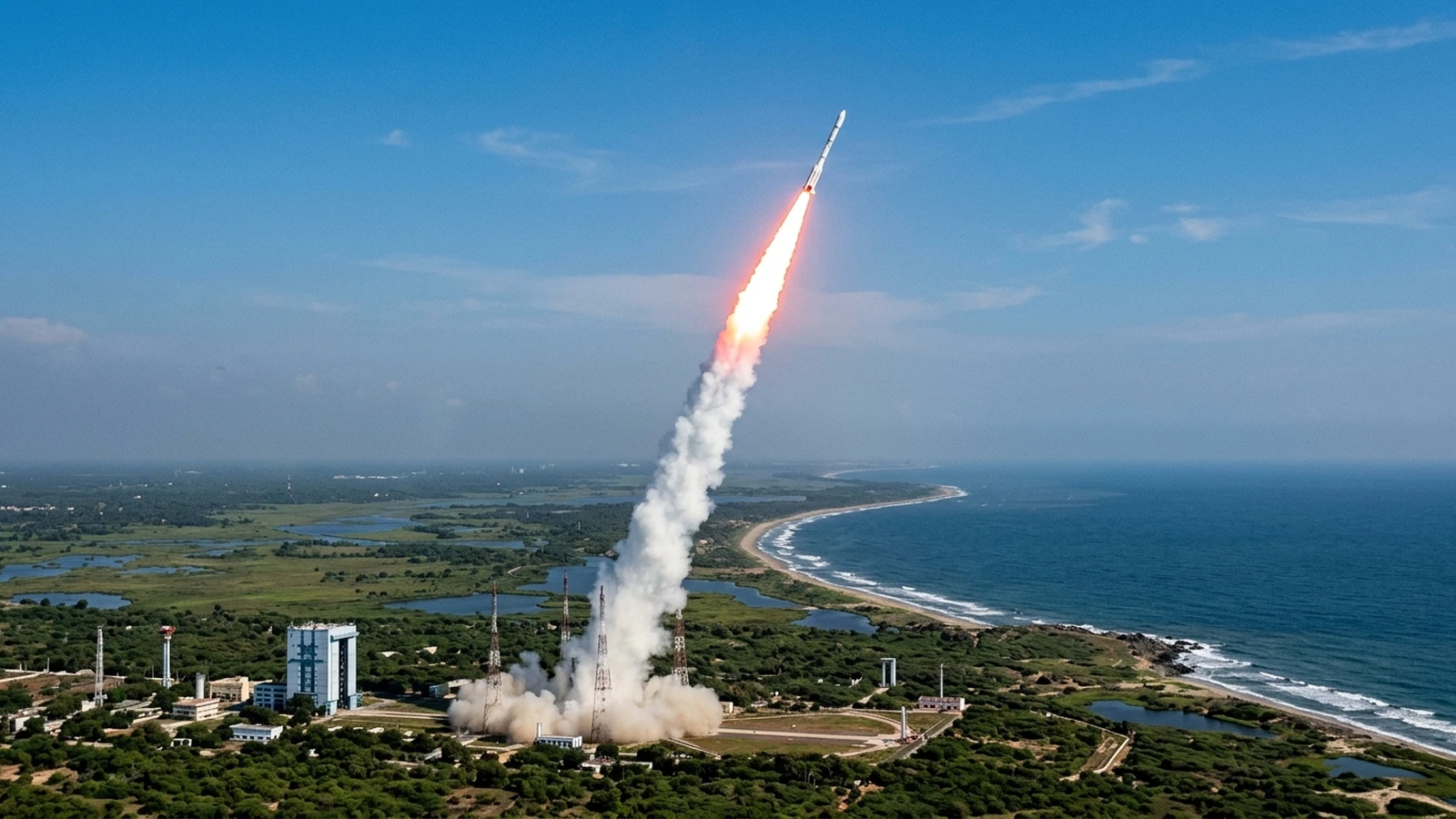
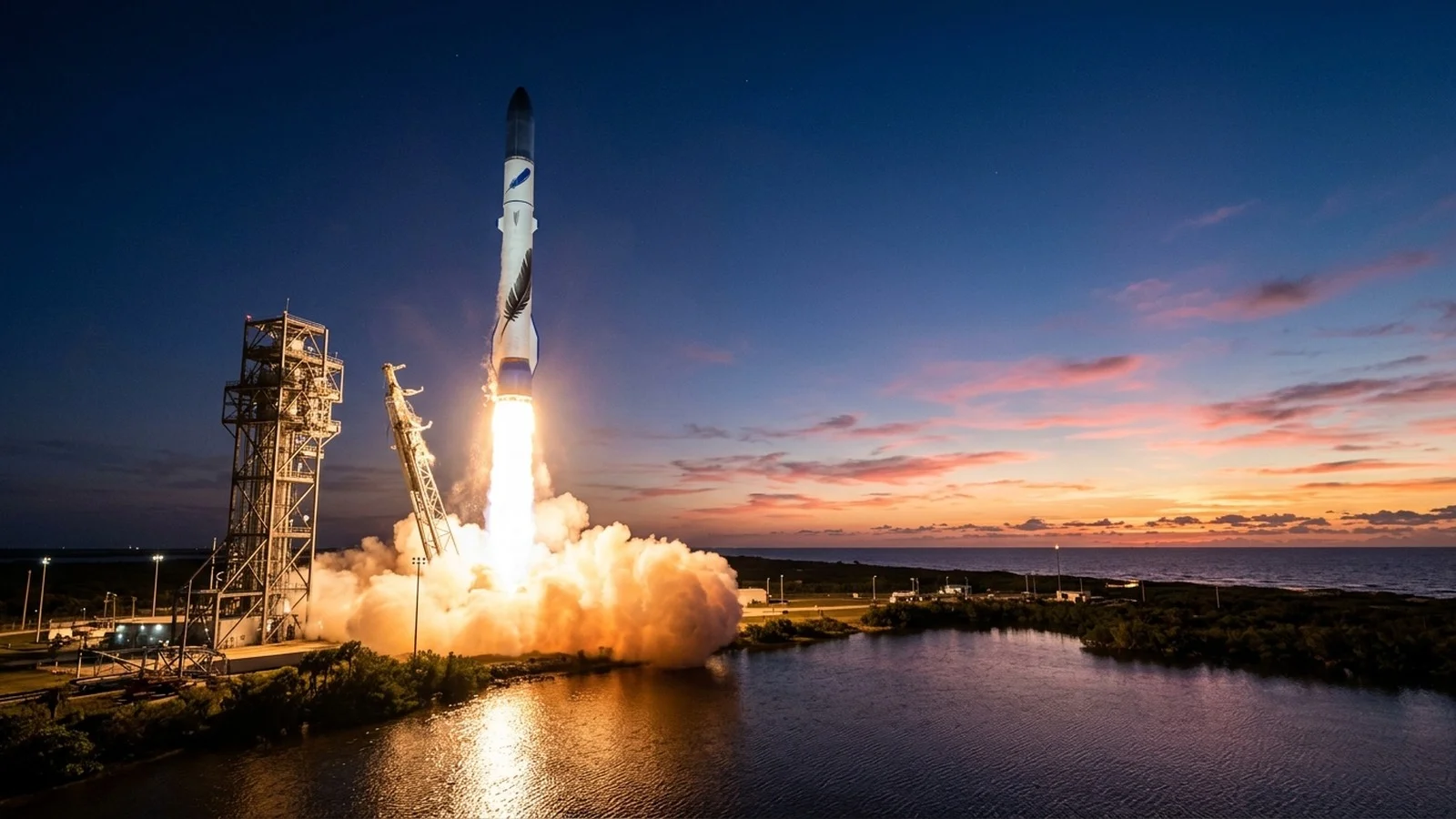
SpaceX's Falcon Heavy, the most powerful operational rocket in the world, lifted off from Launch Complex 39A at Kennedy Space Center today, Monday 27 April 2026, at 10:21 a.m. EDT (3:21 p.m. BST).
It was the vehicle's first flight in 18 months, and it was flawless.
The enormous three-core rocket punched through Florida's morning sky on a column of flame from its 27 Merlin engines, generating approximately 5.1 million pounds of thrust at liftoff. Its payload: the ViaSat-3 F3 communications satellite, a 6.6-ton spacecraft bound for geostationary orbit 35,786 kilometres above the Earth.
The launch window was 85 minutes long, but SpaceX didn't need the buffer. Everything ran to schedule.
What Is Falcon Heavy?
If you've seen a Falcon 9 launch, and at 50 missions already in 2026, there's a good chance you have, Falcon Heavy is essentially three Falcon 9 first stages strapped together, with a beefed-up centre core and a second stage on top.
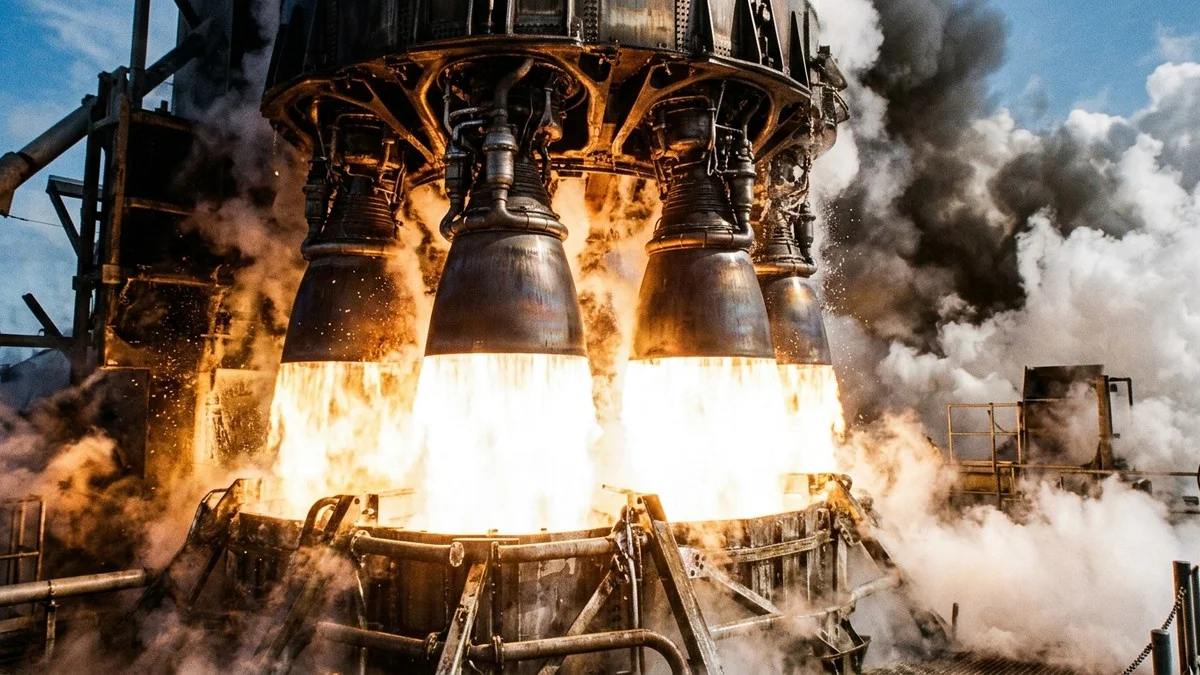
The numbers are staggering. Twenty-seven Merlin 1D engines firing simultaneously. A liftoff thrust of 22.8 meganewtons, more than twice the power of a Delta IV Heavy or an Ariane 5. Only NASA's Space Launch System (the rocket that sent the Artemis II crew to the Moon earlier this month) produces more thrust among currently operational vehicles.
Falcon Heavy can loft 63,800 kg to low Earth orbit, 26,700 kg to geostationary transfer orbit, or 16,800 kg to Mars. It first flew in February 2018 carrying Elon Musk's cherry-red Tesla Roadster as a dummy payload, a stunt that put the rocket on the map and the car on a billion-year solar orbit.
Today's flight was the vehicle's 12th mission overall. All 11 previous operational missions (after the test flight) have been successful.
Fancy watching a launch with your own eyes?
Kit we've tested and reviewed in full
You won't catch a Cape Canaveral liftoff from a UK back garden, but plenty of satellites (including Starlink trains) drift overhead most clear nights, and a decent pair of binoculars turns a five-minute scan of the sky into a proper hobby.
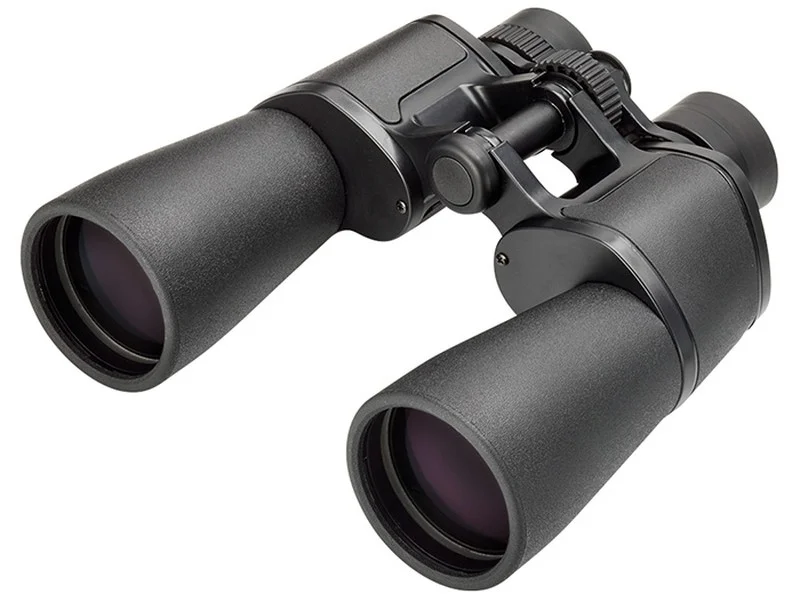
Light enough to keep by the back door for whenever something's due to pass overhead. Good all-round choice for casual sky-watching.
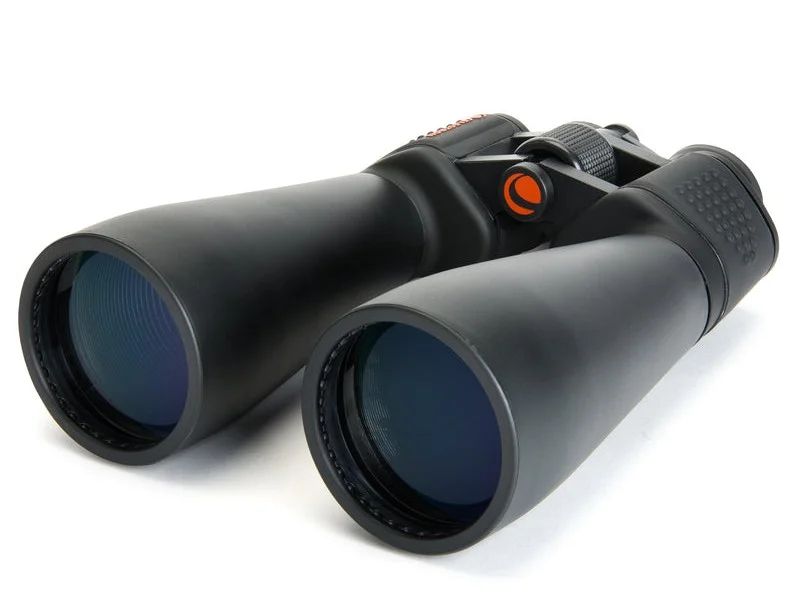
Same idea as SpaceX's hardware, really: bigger is better. These pull in enough light to make Jupiter's moons and the Moon's craters properly sharp.
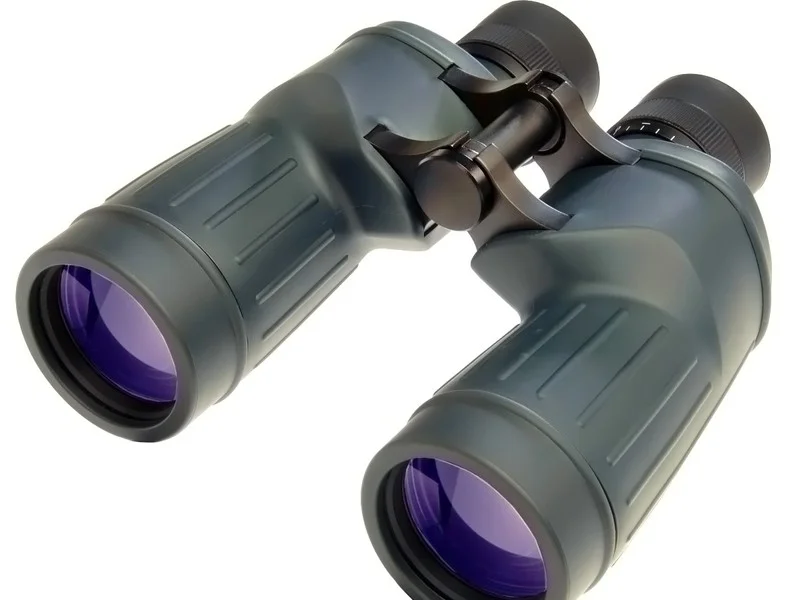
A sharper build than most budget pairs, and a nice upgrade if you find yourself tracking satellite passes and rocket contrails more often than expected.
Affiliate links: you pay the same price, we earn a small commission that helps keep WatchTheStars free.
The Payload: ViaSat-3 F3
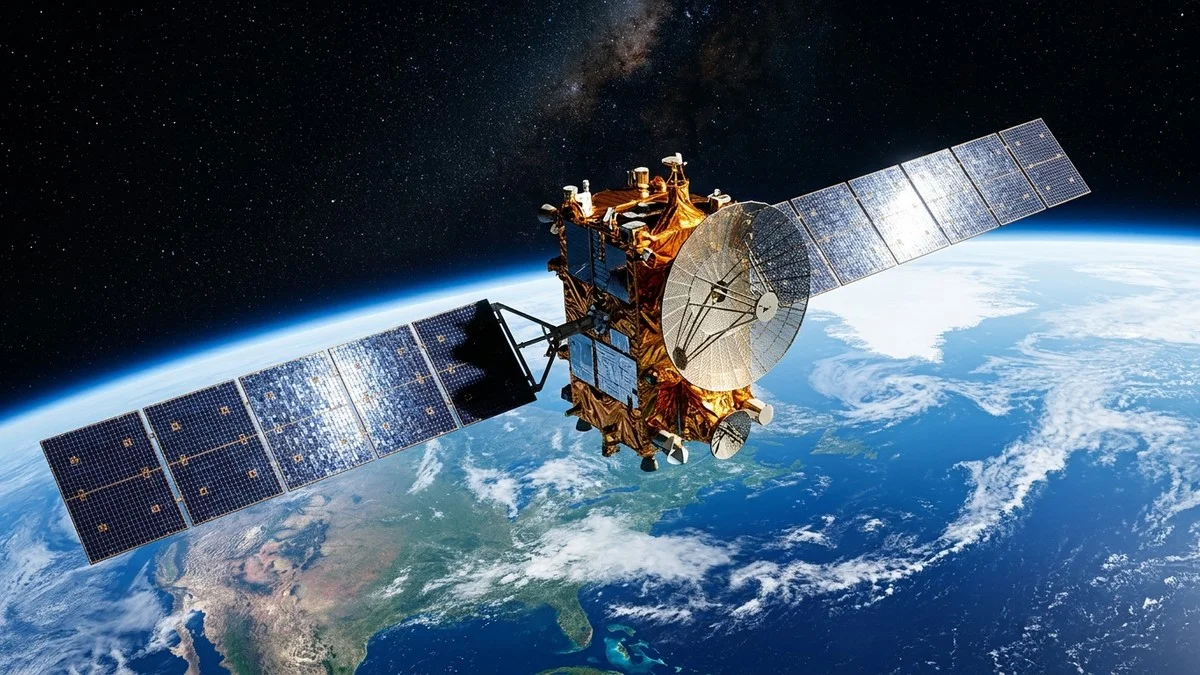
The satellite riding atop Falcon Heavy today is ViaSat-3 F3, the third and final spacecraft in Viasat's next-generation broadband constellation.
Each ViaSat-3 satellite is designed to deliver over one terabit per second of total network capacity. The three satellites divide the globe between them:
- F1 (launched May 2023 on Falcon Heavy): Originally targeted the Americas, but suffered an antenna deployment problem that reduced it to less than 10% capacity. It's since been repositioned to cover Europe, the Middle East, and Africa at reduced performance.
- F2 (launched November 2025 on Atlas V): Now covers the Americas, stepping in for the hobbled F1.
- F3 (launched today): Covers the Asia-Pacific region, completing global coverage.
The F1 satellite's troubles, which resulted in a $421 million insurance claim, make today's launch particularly important for Viasat. F3 needs to work properly. If it does, the full constellation will deliver broadband internet service to aircraft passengers, maritime vessels, and remote communities across virtually the entire planet.
The Falcon Heavy's upper stage will carry F3 on a five-hour coast to geosynchronous transfer orbit before deployment. From there, the satellite will spend several months raising its orbit to geostationary altitude using onboard electric propulsion, with commercial service expected by late summer 2026.
The Double Booster Landing
The best bit of any Falcon Heavy launch, the part that still makes people stop what they're doing and watch, is the synchronised booster landing.
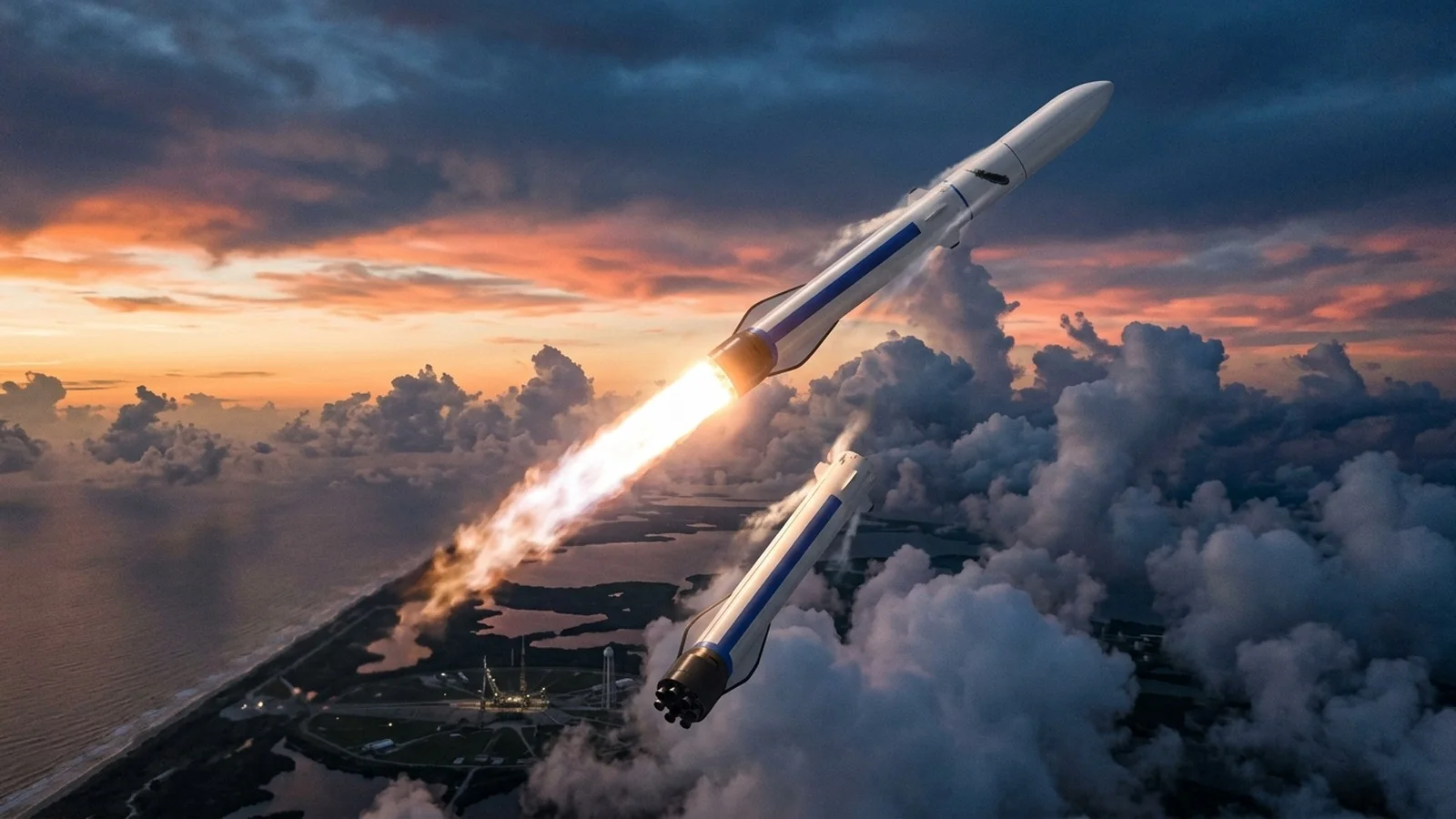
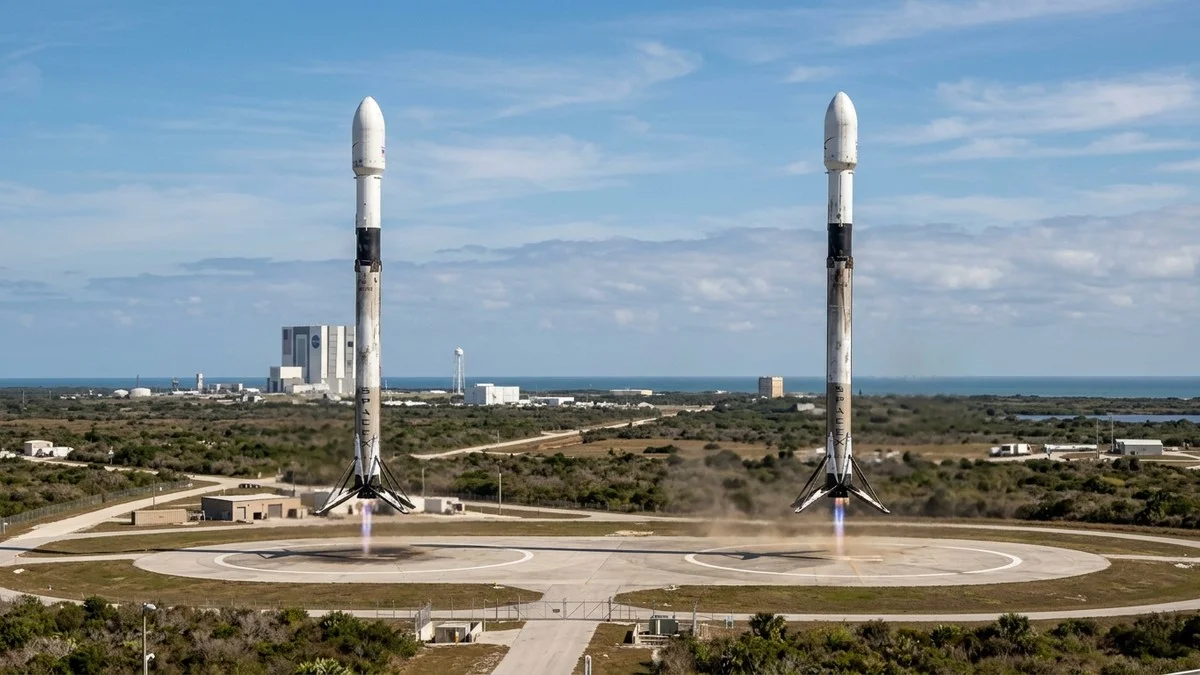
About two and a half minutes after liftoff, the two side boosters separated from the centre core and began their return journey. They flipped around, relit a subset of their engines for a series of burns (boostback, entry, and landing), deployed grid fins to steer through the atmosphere, and touched down simultaneously on Landing Zone 1 and Landing Zone 2 at Cape Canaveral Space Force Station.
Two 47-metre towers of aerospace-grade aluminium and carbon fibre, falling from the edge of space, threading a needle to land upright on concrete pads, within seconds of each other.
These were the 601st and 602nd successful Falcon booster landings for SpaceX. The programme crossed the 600-landing milestone just nine days ago, on 18 April. The centre core was expended on this mission (not recovered), which is standard for heavy geostationary payloads where every kilogram of fuel matters.
Why the 18-Month Gap?
Falcon Heavy's last flight before today was in October 2024, when it launched NASA's Europa Clipper mission toward Jupiter. That's a gap of 18 months, unusually long for a vehicle with a perfect operational record.
The reason is simple: demand. Falcon Heavy only flies when a payload genuinely needs it. Most commercial satellites and government missions fit comfortably on a standard Falcon 9, which is cheaper and flies far more frequently (50 missions already in 2026 alone). Falcon Heavy is reserved for the heaviest payloads headed to the highest orbits: geostationary transfer, deep space, or direct geostationary insertion.
There simply weren't enough heavy payloads in the manifest to fill the gap. With Europa Clipper dispatched and ViaSat-3 F3 ready, today was Falcon Heavy's moment.
It's also worth noting what hasn't happened in those 18 months: SpaceX hasn't retired Falcon Heavy. Despite Starship's development progress, Falcon Heavy remains the workhorse for ultra-heavy commercial payloads. It's expected to continue flying through at least 2028, with several US military and commercial missions on the manifest.
What Comes Next
For ViaSat-3 F3, the next few months will be spent slowly climbing to its operational geostationary slot using electric propulsion. Once there, in-orbit testing begins. If all goes well, Asia-Pacific broadband service starts by late summer.
For Falcon Heavy, the next mission on the manifest is expected later this year, likely another heavy national security payload for the US Space Force under the NSSL (National Security Space Launch) programme.
And for SpaceX's broader operation, today's launch pushes the company's 2026 total past 51 missions. At the current pace, SpaceX is on track to exceed 130 orbital launches this year, roughly one every three days. The Falcon family of rockets has now landed 602 times in 617 attempts, a success rate of 97.6%.
The reusability revolution that seemed like science fiction when Falcon Heavy's test flight launched a sports car into solar orbit in 2018 is now just... Tuesday. Or in this case, Monday.
Frequently Asked Questions
Equipment guides
Related topics
Ian ClaytonAmateur astronomer and founder of WatchTheStars.co.uk, dedicated to helping others explore the wonders of our universe. Full profile →