Key takeaways
- Kacey Musgraves filmed three glowing orbs following her flight from Fort Worth to Nashville on April 10, 2026. They changed colour, formed triangle patterns and kept pace for 45 minutes
- Both pilots confirmed the sighting after landing, telling her they see the same orbs 'every single night' and that other pilots report them too
- UFO analyst Mick West identified the objects as consistent with Starlink horizon flares. Musgraves rejected this, saying she's seen satellites before and this was different
- The sighting fits a growing pattern of commercial pilots reporting unexplained orbs, often reluctantly and off the record
- Musgraves has since launched a dedicated Instagram account (@spaceysightings) to document strange things she witnesses
Jump to section 6 sections
What Happened on the Flight
On the evening of Thursday 10 April 2026, country singer Kacey Musgraves boarded a flight from Fort Worth, Texas to Nashville, Tennessee with her manager Bobby. She was about to take a nap when she noticed lights outside the aircraft window that "just didn't look normal."
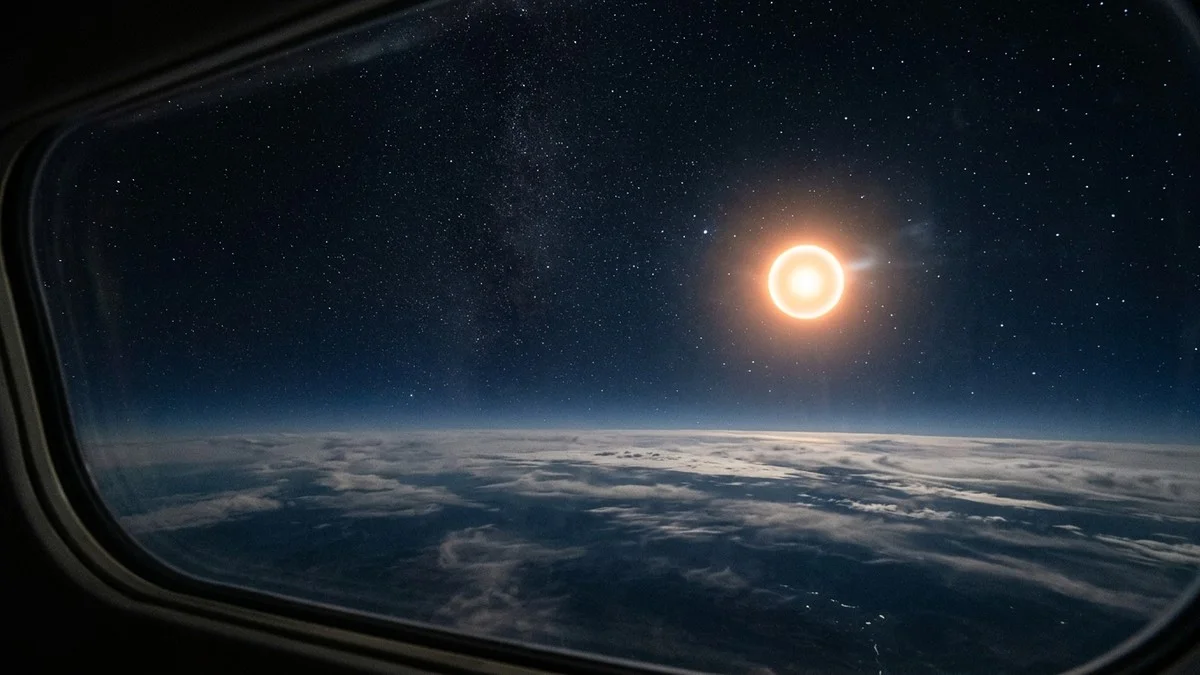
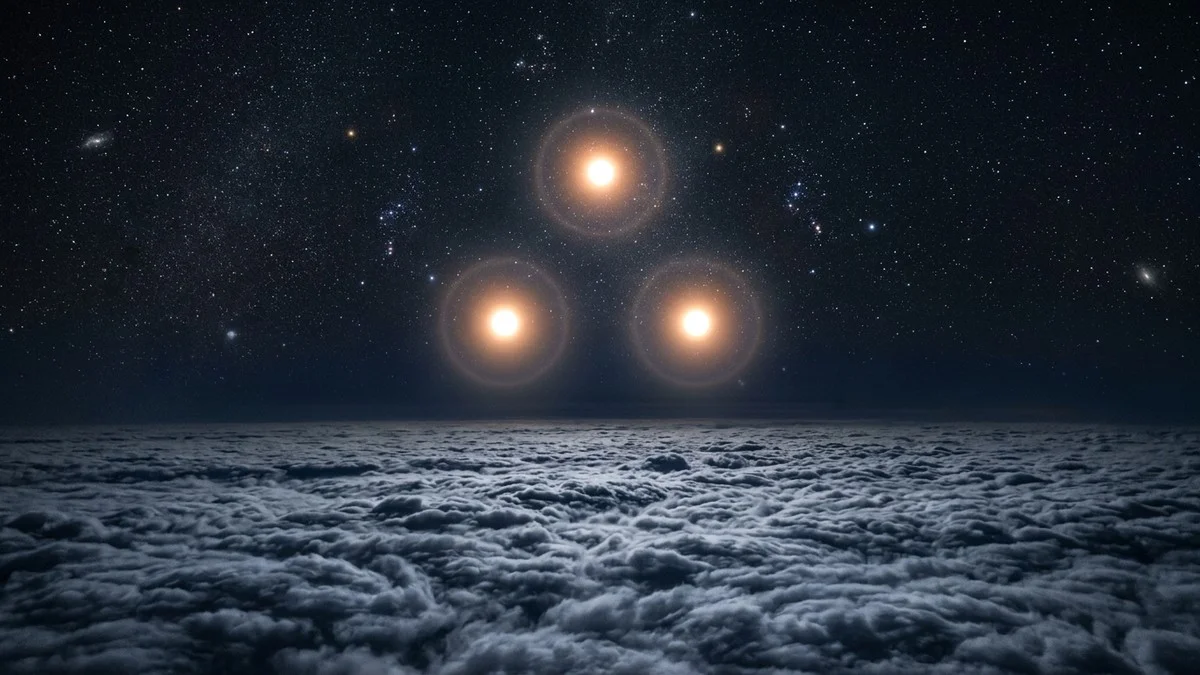
Three glowing orbs were sitting at roughly 50,000 feet, above the plane's cruising altitude, and they weren't behaving like anything she'd seen before. Over the next 45 minutes, from somewhere above Little Rock, Arkansas all the way to Nashville, the objects followed the aircraft. They changed colour. They changed size. They got "extremely bright" and then dimmed. They formed triangle patterns, broke apart, regrouped, and kept pace with the plane.
"These orbs were not moving like any craft that we can control," Musgraves said on her Instagram Story later that night, describing it as the "craziest fing orb UFO experience." She and Bobby filmed several clips on her iPhone, though the nighttime conditions and distance made the footage grainy. "It looks like I filmed them on a fing toaster," she admitted, "but that's the quality we're working with."
She used arrows and circles on the video to point out the orbs: small, bright points of light that moved with apparent purpose, sometimes independently, sometimes in formation.
Musgraves, 37, is an eight-time Grammy winner whose 2018 album Golden Hour won Album of the Year. She's not a UFO enthusiast looking for content. She's one of the most successful musicians in the world who happened to look out of a window.
The Pilots Already Knew
This is the detail that elevates the story from celebrity anecdote to something genuinely worth paying attention to.
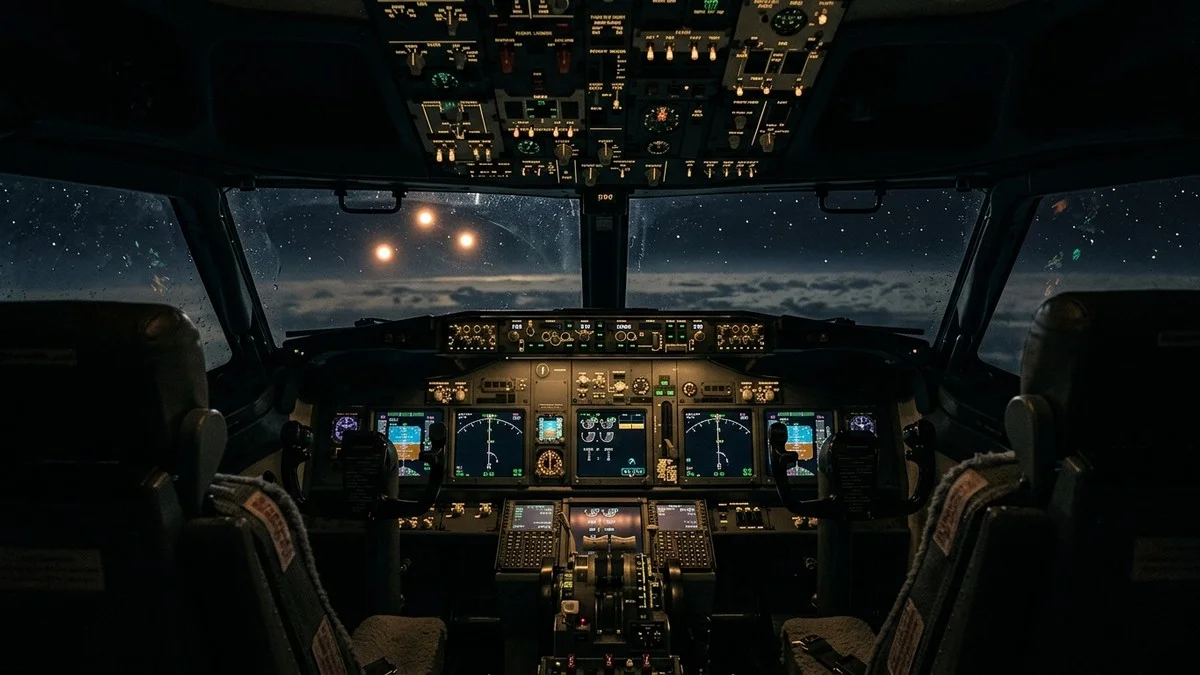
When Musgraves landed in Nashville, she spoke to both pilots. Their reaction wasn't surprise. It wasn't dismissal. It was weary recognition.
"Both pilots were laughing, kind of," Musgraves recounted. "They were like, 'Yeah, we have seen these every single night, and all the other pilots are seeing them too. And nobody knows what they are.'"
One pilot told her he'd seen the same orbs the previous night over New York. The other said he'd seen them over Dallas. The objects weren't confined to one route, one altitude or one region: pilots were encountering them routinely, across the United States, night after night.
This casual confirmation is arguably more significant than the sighting itself. A single witness, even a famous one, can be mistaken. But when the people flying commercial aircraft tell you they see unexplained lights every night and all their colleagues do too, that's a systemic phenomenon, not an isolated incident.
And yet, as the pilots' laughter suggested, there's a resignation to it. They see them. They don't report them. Nobody does anything about it.
The Starlink Explanation
Within 24 hours, the internet had a theory. UFO analyst Mick West, working with satellite tracker @flarkey, announced that the footage was "100% consistent with Starlink horizon flares": sunlight reflecting off SpaceX's satellite internet constellation at the right angle to create bright, moving points of light visible from aircraft at altitude.
It's a reasonable hypothesis. Starlink satellites orbit at around 550 kilometres and can produce brief, bright flares when their flat solar panels catch sunlight at low angles. From a moving aircraft at 35,000–40,000 feet, these flares could appear to track the plane, change brightness and even seem to form patterns as different satellites in the constellation catch the light in sequence.
Musgraves wasn't impressed. When West posted his analysis, she fired back: "Hey Mick, if you zoom way into the videos you can also see a really clear angle of Bigfoot riding your mom."
Crude, but she had a point beyond the joke. Musgraves said she'd seen satellites before and these objects looked and behaved differently: the colour changes, the size variations, the apparent responsiveness to the aircraft's direction, and the fact that they persisted for 45 minutes rather than producing the brief flares typical of satellite reflections.
The Starlink explanation remains the most prosaic answer. But it doesn't fully account for the pilots' testimony. If commercial pilots see these objects "every single night" and still can't identify them as satellites, despite being trained to recognise all manner of aerial phenomena, then either the explanation hasn't reached the people who need it, or the explanation doesn't quite fit what they're seeing.
Spot Your Own Orbs (and Rule Out the Satellites)
Kit we've tested and reviewed in full
You don't need a plane window to see strange lights in the sky. A pair of binoculars lets you check whether what you're seeing is a Starlink flare, a plane, or something that genuinely doesn't add up.
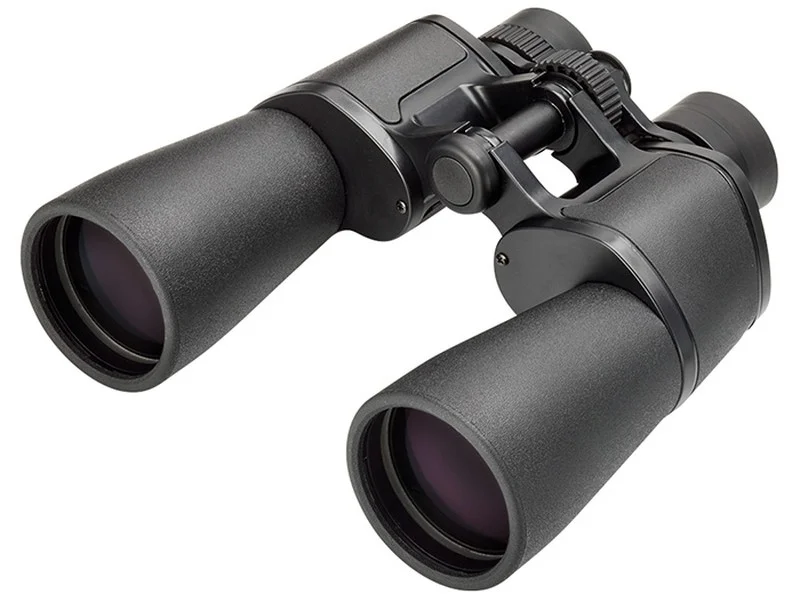
Enough magnification to tell a satellite flare from something with real structure, without breaking the bank.
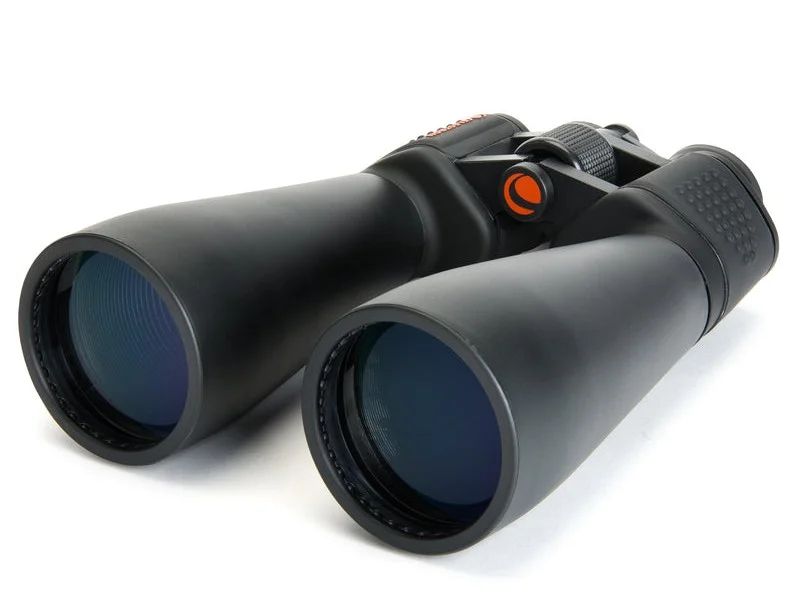
Wider objectives make it easier to follow something moving across the sky, exactly the kind of behaviour Musgraves described.
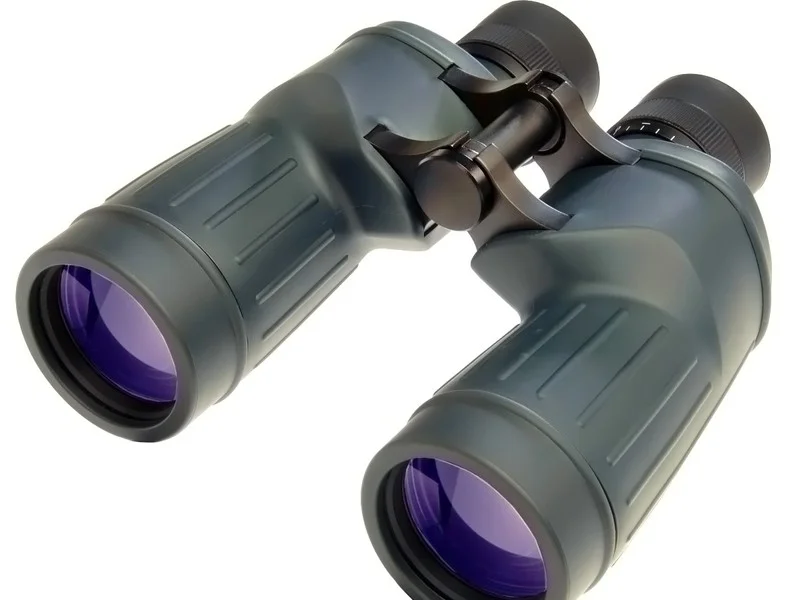
Better glass for anyone who wants to document unusual sightings properly rather than shoot grainy phone footage through a window.
Affiliate links: you pay the same price, we earn a small commission that helps keep WatchTheStars free.
Why Pilots Don't Talk About This
The Musgraves sighting touches on one of the most underreported aspects of the UAP story: commercial pilots see things they can't explain far more often than the public realises, and almost none of them report it officially.
A 2026 analysis by Fliegerfaust found that while pilot UAP reports to AARO have increased since the stigma began lifting in 2017, the vast majority of sightings still go unreported. Pilots worry about career consequences, mandatory medical reviews and being labelled unreliable. The result is a massive data gap: the people best positioned to observe unusual aerial phenomena are the least likely to file formal reports about them.
The pilots on Musgraves' flight demonstrated this perfectly. They'd been seeing orbs every night. Other pilots had confirmed the same. Yet their response wasn't to file a report. It was to laugh nervously and say "nobody knows what they are."
This is the environment Congress is trying to change. The FY2026 National Defense Authorization Act requires the Pentagon to brief lawmakers on UAP intercepts conducted by military commands since 2004. Rep. Anna Paulina Luna's task force has demanded 46 specific classified UAP videos from the Pentagon, with a deadline that was missed in April 2026 and remains unresolved. The goal, at least on paper, is to create reporting systems where pilots, military and civilian, can describe what they see without fear of professional consequences.
What the Orbs Actually Did
It's worth cataloguing the specific behaviours Musgraves described, because they match a pattern that recurs across UAP reporting:
Colour changes. The orbs shifted between an orangish base colour and much brighter states, changing colour and intensity in ways that didn't correlate with the aircraft's position or speed.
Size changes. The objects appeared to grow and shrink: either changing actual luminosity or distance from the observer.
Triangle formation. Three objects arranging themselves in a triangular pattern is one of the most commonly reported UAP configurations, from the Phoenix Lights in 1997 to military encounters documented by AARO.
Persistence. Forty-five minutes of continuous observation from Little Rock to Nashville, roughly 400 miles. That's not a momentary flash or a misidentified star.
Apparent tracking. The objects seemed to follow the aircraft, changing direction when the plane did. This could be a perceptual illusion caused by parallax (distant objects appearing to move with you, like the Moon seeming to follow your car), or it could indicate genuine responsive behaviour.
Multi-location corroboration. The pilots had independently seen identical objects over New York and Dallas on different nights, suggesting a widespread, recurring phenomenon rather than a localised event.
Why This Sighting Matters
Let's be clear about what this is and isn't. A celebrity filming lights from a plane window is not evidence of extraterrestrial technology. The footage is grainy, shot through aircraft glass at night, and Starlink remains a plausible explanation.
But the sighting matters for three reasons.
First, the pilot corroboration transforms it from a single witness account into testimony about a systemic, nightly phenomenon observed by professional aviators across the country. That's not one person seeing something weird. It's an entire profession quietly acknowledging something unexplained in their workspace.
Second, Musgraves' fame means the story reached audiences who'd never visit a UAP subreddit or watch a congressional hearing. Billboard, the Hollywood Reporter, TMZ, Vice, Fox News, E! Online: the coverage was enormous. Whether or not the objects turn out to be satellites, the conversation about what pilots are seeing got amplified to millions of people who weren't previously paying attention.
Third, it highlights the reporting gap that Congress is trying to close. If pilots see these objects "every single night" and still don't file formal reports, then AARO's database, and any conclusions drawn from it, is built on a fraction of the available data. We're making policy decisions about a phenomenon we've barely begun to measure.
Musgraves has since launched a dedicated Instagram account, @spaceysightings, "for all the weird stuff I see." She says she's had "many crazy things" happen in her life, "fire burning in the sky" among them, and this is just the latest.
"S**t is weird," she concluded, "but I'm here for it."
Given what pilots are quietly telling each other every night, she might not be wrong.
Frequently Asked Questions
Equipment guides
Related topics
Ian ClaytonAmateur astronomer and founder of WatchTheStars.co.uk, dedicated to helping others explore the wonders of our universe. Full profile →