Key takeaways
- The Pentagon failed to deliver 46 classified UAP videos by the April 14 deadline set by Rep. Anna Paulina Luna's congressional task force. Nobody from the Department of War responded until Congress chased them.
- Luna accused the Pentagon of stalling: 'It appears that someone did not pass the letter to the appropriate authorities. How convenient.' She added: 'The president has authorized the release, so whoever is trying to be cute at the Pentagon can take a hike.'
- AARO now says it is 'working in close coordination with the White House' to prepare 'never-before-seen UAP information' for release, but gave no date, no specifics, and no explanation for the silence.
Jump to section 7 sections
April 14 came and went. Not a single video was released.
Two weeks ago, Rep. Anna Paulina Luna, chair of the House Task Force on the Declassification of Federal Secrets, sent the Pentagon a formal demand for 46 specific classified UAP videos. She named each file by date, location, military callsign, and platform. She set a hard deadline: April 14, 2026.
The Defence Department's response was silence. Then, when Congress chased them up, the response was worse than silence: it was a contradiction.
The Pentagon Misses Its UAP Video Deadline
As of 8:28 a.m. EDT on April 15, more than twelve hours after the deadline expired, there was no public confirmation that any of the 46 requested UAP videos had been delivered to Congress.
No files. No formal acknowledgement. No statement on the record.
The Pentagon did not release the footage, did not explain why it hadn't been released, and, according to Luna, did not even respond to the original letter until Congress came knocking.
Nobody Answered the Phone
Luna's response was blunt. Writing publicly after the deadline passed, she said: "No one from the Pentagon had responded until we reached out, and it appears that someone did not pass the letter to the appropriate authorities. How convenient."
She followed up: "The president has authorized the release, so whoever is trying to be cute at the Pentagon can take a hike."
That second line is significant. Luna is invoking Trump's February 2026 executive order, which directed all federal agencies to identify and release UAP-related files, as a direct counter to the Pentagon's inaction. In other words: the president already ordered this. You had a congressional deadline on top of that. And you still did nothing.
Luna also made clear she would not accept a vague promise of future cooperation: "We are not waiting for a briefing at some unspecified future date. We will be getting the requested list."
The Pentagon's Contradictory Response
Here is where the story gets more revealing than the Pentagon probably intended.
After the deadline passed and coverage began to build, a US Department of War official provided a statement to Liberation Times: "The Department of War is in receipt of Rep. Luna's letter and will provide a briefing in the future."
That is a direct contradiction of what Luna's office experienced. According to her, nobody at the Pentagon responded until Congress itself reached out, and someone apparently never passed the letter to the appropriate authorities. The Department of War then turned around and told a journalist it was "in receipt" of the letter all along and was planning a briefing.
So which is it? Did nobody receive the letter, or was a response already being prepared?
This is a pattern that UAP researchers and journalists have documented for decades: when pressed on specific records, the government simultaneously claims to not have them, to be working on releasing them, and to need more time to review them. The contradiction is not a bug: it is the strategy.
While Congress waits for the Pentagon, you can just look up
Kit we've tested and reviewed in full
The 46 videos might take months, or they might never surface at all. In the meantime, most UAP sightings reported to AARO started with someone outside on a clear night, and a decent pair of binoculars is still the best tool for working out whether that light is a satellite, a plane, or something worth reporting.
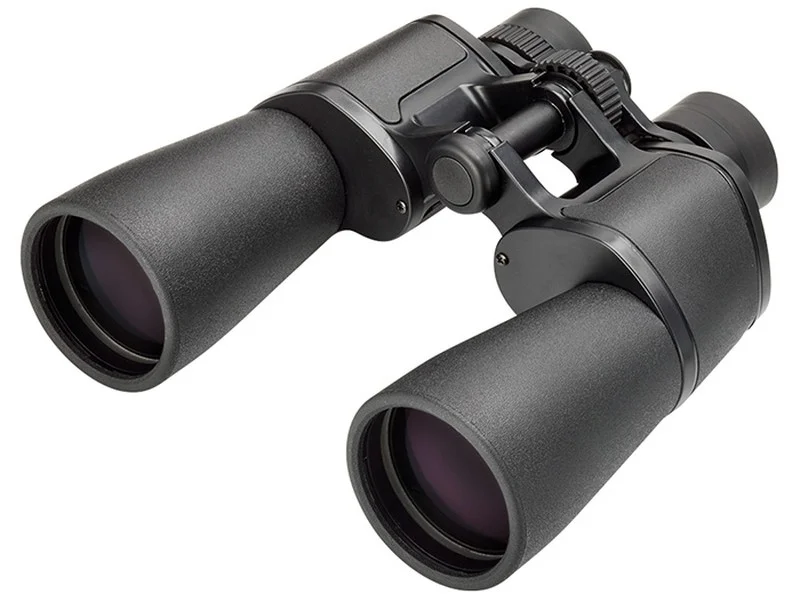
Compact enough to keep in the car or by the door, so you're never caught out if something odd catches your eye after dark.
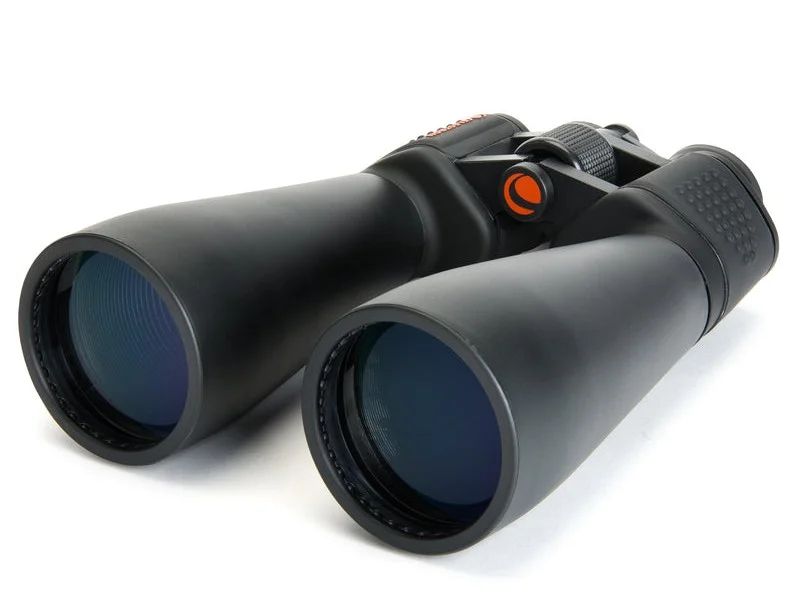
The extra magnification helps you tell a slow-moving satellite train from something genuinely unexplained, rather than waiting on a Pentagon briefing to find out.
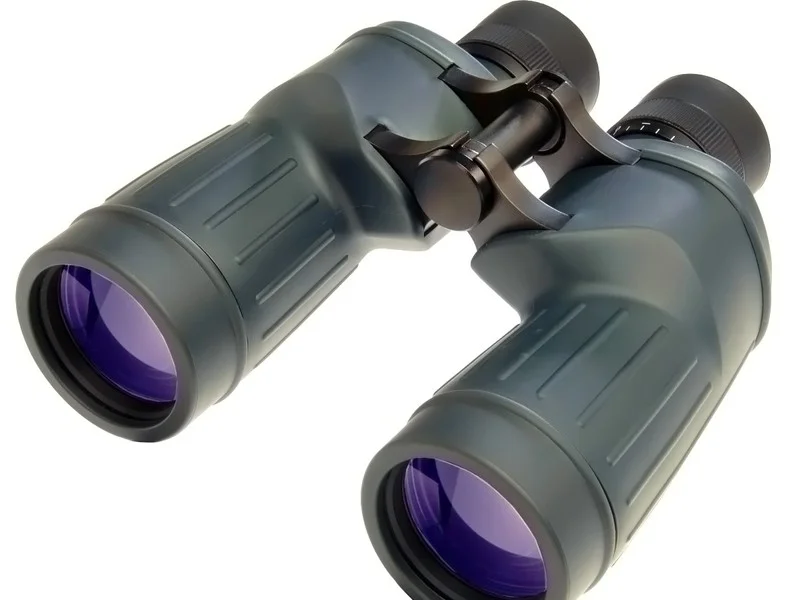
A solid step up in optical quality if you're serious about documenting what you see, whether that's a UAP report or just a good night under the stars.
Affiliate links: you pay the same price, we earn a small commission that helps keep WatchTheStars free.
What Was Requested
It is worth remembering exactly what Luna asked for. These are not hypothetical files. They were identified by whistleblowers who told Congress exactly what AARO's classified archive contains:
The Lake Huron F-16 shootdown (12 February 2023): cockpit footage from the Air National Guard jet that fired an AIM-9X Sidewinder at an octagonal object. The submarine encounter (25 March 2022): spherical objects diving in and out of water near a US submarine. Afghanistan spheres (23 November 2020): footage leaked by Corbell and Knapp but never officially released. A four-UAP formation over Iran (2022). Instant acceleration in Syria (2021). Coast Guard Tic Tacs (24 April 2024): two Tic Tac-shaped objects recorded by a Coast Guard C-144 aircraft.
These are military sensor recordings captured by US personnel during operations. Congress has asked for them by name. The Pentagon has not denied they exist. It simply has not handed them over.
Never-Before-Seen UAP Information
Alongside the "briefing in the future" line, the Department of War offered a more substantive, if still maddeningly vague, statement to Liberation Times:
"The Department of War's All-domain Anomaly Resolution Office (AARO) is working in close coordination with the White House and across federal agencies to consolidate existing UAP records collections and facilitate the expeditious release of never-before-seen UAP information."
That phrase, "never-before-seen UAP information," is doing a lot of work. It is the first official acknowledgement that the government holds UAP material that has never been shared with Congress or the public. AARO is not merely reviewing existing records; it is preparing to release material that nobody outside the classified world has ever seen.
The question is whether this represents genuine progress or another carefully worded delay. AARO's statement gives no timeline, no list of what will be released, and no explanation for why the April 14 deadline was ignored. It is entirely possible that "working in close coordination" means another six months of review, classification disputes, and inter-agency hand-wringing before anything reaches the public.
A Pattern That Never Breaks
For anyone who has followed UAP disclosure efforts over the past decade, this sequence of events is painfully familiar:
Congress makes a specific demand. The Pentagon goes quiet. When the deadline passes, a vague statement appears promising future cooperation. Months go by. Another demand is made. The cycle repeats.
It happened with the UAP Task Force. It happened with AATIP records. It happened with the AARO annual reports, which Congress mandated in the FY2023 NDAA but which consistently arrived late, incomplete, or both. It happened with the Immaculate Constellation whistleblower report, which the Pentagon acknowledged receiving but never addressed publicly.
What makes this round different is the convergence of forces. Luna's task force has subpoena power. Burchett has introduced legislation to shut AARO down entirely. Trump has signed an executive order directing disclosure. And AARO's own statement admits it holds material the public has never seen.
The walls are closing in. But the Pentagon has decades of experience at finding doors nobody else can see.
What Happens Now
Luna has made clear she will not let this go. Her statement explicitly rejects the Pentagon's offer of "a briefing at some unspecified future date" and insists on receiving the actual video files.
The next escalation would be a formal subpoena: a legal compulsion backed by the full authority of the House Oversight Committee. If the Pentagon refuses that, the committee can pursue contempt of Congress proceedings.
Meanwhile, AARO's caseload has surpassed 2,400 reports dating back to 1945. The executive order directing release is on the books. And people connected to UAP programmes continue to disappear.
The Pentagon missed the deadline. The question now is whether Congress has the teeth, and the political will, to make that matter.
We will be watching.
Frequently Asked Questions
Equipment guides
Related topics

Ian ClaytonAmateur astronomer and founder of WatchTheStars.co.uk, dedicated to helping others explore the wonders of our universe. Full profile →