Key takeaways
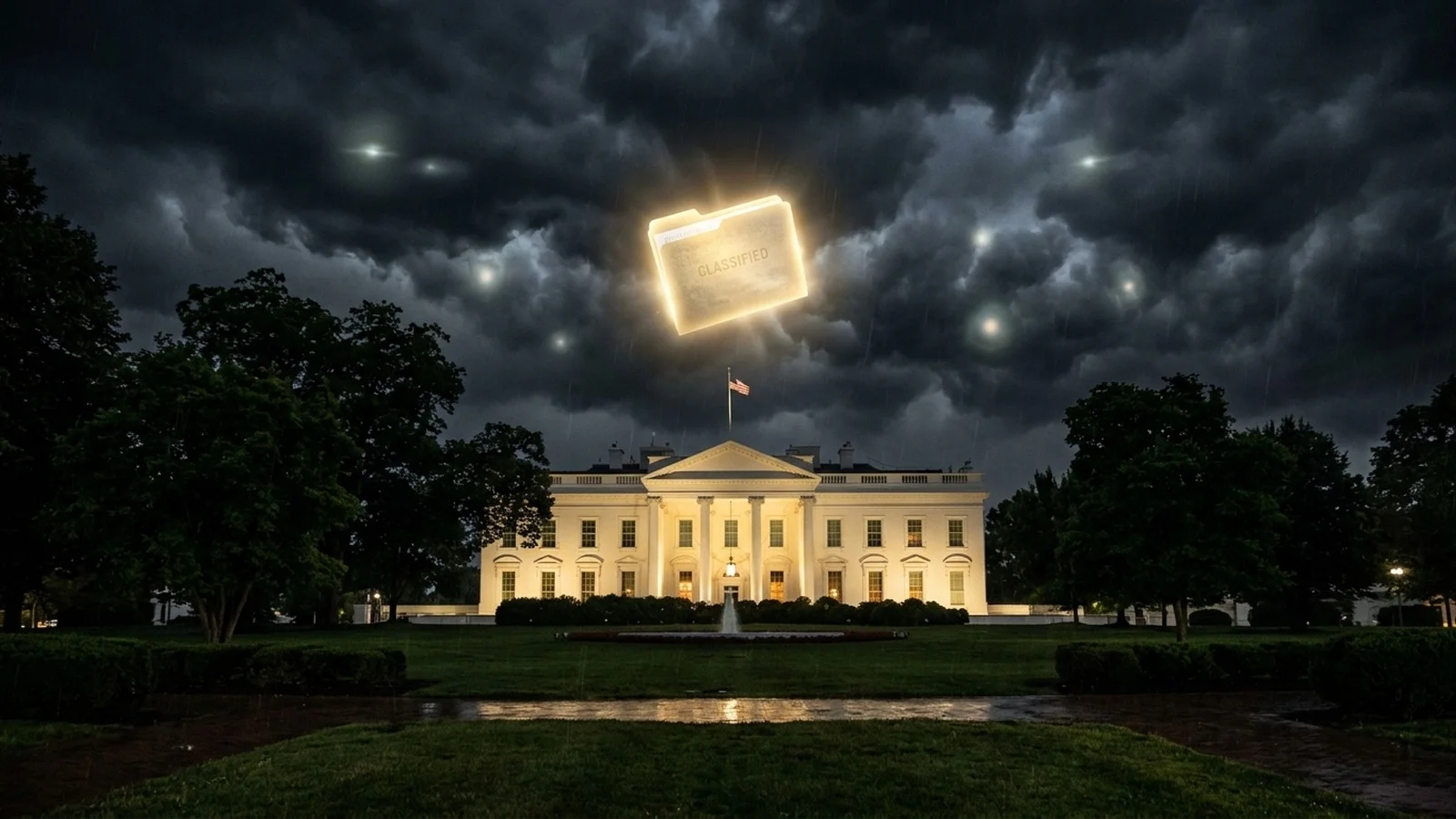
- FBI Director Kash Patel confirmed the FBI has delivered its 'first tranche' of UFO documents to the White House interagency committee
- The interagency process is led by the Department of Defense under Secretary Pete Hegseth, pulling records from the FBI, intelligence community, and 'everywhere else'
- Patel stated: 'The American public wants the documents. We've already delivered the documents. They're coming out. That's it.'
- This is the first time a sitting FBI Director has publicly confirmed sending UFO-related files for declassification review
- Trump's February executive order set a 300-day countdown for agencies to produce declassified records or formally justify continued classification
Jump to section 7 sections
What Patel Said: The Key Quotes
On Tuesday 6 May 2026, FBI Director Kash Patel sat down with Fox News host Sean Hannity and made the most concrete statement yet from any sitting US law enforcement or intelligence official about the status of UFO document releases.
"We already delivered our first tranche of information to that committee," Patel said, "and they're going to be publicly releasing this information very soon."
He wasn't hedging. He wasn't teasing. He was stating, as a matter of fact, that the FBI has physically handed over UFO-related documents to the interagency review committee set up by the White House, and that those documents are heading toward public release.
When Hannity pressed on what the process looks like, Patel went further: "He stood up an interagency process with the Department of War leading that effort to get out the documentation related to everything that you're talking about, not just from the FBI, from the IC and everywhere else."
And then the line that landed hardest: "The American public wants the documents. We've already delivered the documents. They're coming out. That's it."
That is a remarkable sentence from a sitting FBI Director. Not "we're reviewing." Not "we're considering." Not "in due course." The documents have been delivered. They're coming out. Full stop.

The Interagency Machine
What Patel described is a multi-agency declassification pipeline, and the scale of it is worth understanding.
The process is led by the Department of Defense, specifically, Secretary Pete Hegseth's office, but it draws on records from across the federal government. Patel explicitly mentioned the FBI and the broader intelligence community, and used the phrase "everywhere else," suggesting that agencies beyond the usual suspects may be contributing material.
The structure mirrors what Trump's February executive order outlined: an interagency committee that receives documents from individual agencies, reviews them for declassification, and then authorises public release. The committee is the funnel. Patel's announcement means the FBI's files have entered that funnel.
What we don't yet know is how many other agencies have delivered their tranches. The FBI may be the first, or it may simply be the first to say so publicly. Either way, the pipeline is no longer theoretical: it has documents flowing through it.
From February Order to FBI Files
To understand why Patel's statement matters, you need the timeline.
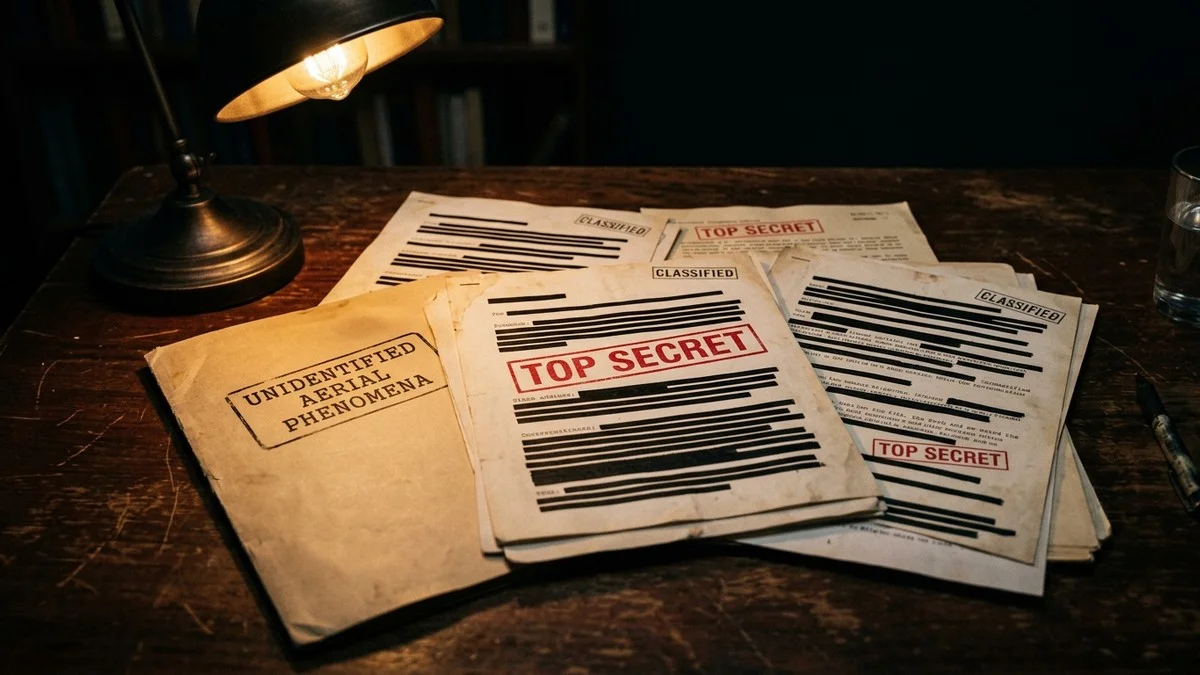
On 19 February 2026, President Trump posted a directive on social media calling for transparency around "alien and extraterrestrial life, unidentified aerial phenomena, and unidentified flying objects." He formally ordered all relevant departments and agencies to begin identifying and releasing government files.
The directive set a 300-day countdown. Agencies must either release their records, partially redact and release them, or formally invoke continued classification, and if they choose the last option, they must provide a written, reviewable justification that itself becomes a public record. In other words, even the act of withholding has to be documented and disclosed.
Defence Secretary Pete Hegseth publicly confirmed his teams were actively working on compliance. AARO, the All-Domain Anomaly Resolution Office, is working in coordination with the White House to consolidate UAP records. The directive also called for a UAP Records Review Board, modelled on the Assassination Records Review Board that handled the JFK files.
On 18 April, Trump himself told a crowd in Phoenix that the review had found "many very interesting documents" and that the first releases would come "very, very soon." Now, less than three weeks later, the FBI Director has confirmed that at least one agency's contribution has already been handed over.
The pace is accelerating.
While You Wait on the FBI's Files, Look Up
Kit we've tested and reviewed in full
Patel says the documents are coming. In the meantime, plenty of people scanning the skies over US bases and elsewhere are doing it with a decent pair of binoculars, not a security clearance. Here's what we'd reach for.

Light enough to keep by the back door for whenever something odd catches your eye. A solid, no-fuss starting point if tonight's the night you decide to actually look up.

Big glass that pulls in far more light than your eyes alone, which matters if you're watching the horizon as it gets dark. Handy for anyone who wants more detail than a quick glance gives you.
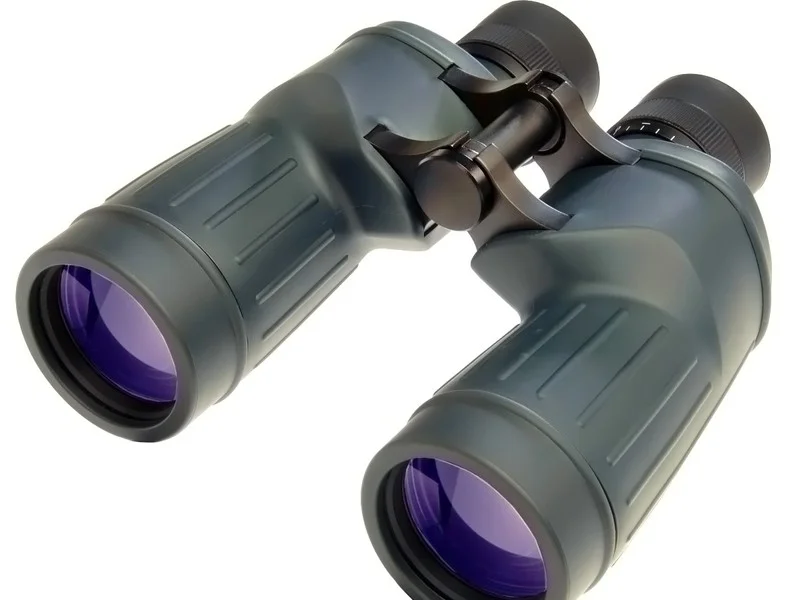
A step up in clarity if you want to actually make out detail rather than just a moving light. Worth it if you're the sort who reads FBI transcripts for fun and wants your own evidence to go with them.
Affiliate links: you pay the same price, we earn a small commission that helps keep WatchTheStars free.
Congress Has Been Pushing for Months
Patel's announcement doesn't exist in a vacuum. For months, Congress has been applying intense, sustained pressure on the executive branch to deliver UAP-related material.
On 31 March, Representative Anna Paulina Luna, who chairs the House Task Force on the Declassification of Federal Secrets, sent a formal letter to Secretary Hegseth demanding 46 specific classified UAP videos by 14 April. The Pentagon missed that deadline entirely. Luna's response was blunt: "How convenient."
She has since threatened subpoena authority. Representative Tim Burchett, meanwhile, introduced H.R. 8197: a bill to permanently abolish AARO and ban any successor office, arguing the Pentagon's own UAP investigation apparatus has become part of the coverup rather than the solution. Burchett told media his classified briefings contained information that would "set the Earth on fire."
And then there's Luna's claim, made in a Newsweek interview on 29 April, that she has personally seen evidence inside a SCIF of objects of "nonhuman origin and creation," which she described as "interdimensional beings" operating "outside of time and space."
Against this backdrop, Patel's confirmation that the FBI has actually delivered files reads less like an isolated announcement and more like part of a converging wave. The executive branch and Congress are, for perhaps the first time, pushing in the same direction, even if they disagree on how fast it should happen.
What Could Be in the Files?
Patel didn't describe the contents of the FBI's tranche. But we can make educated guesses based on what we know the Bureau holds.
The FBI has been involved in UFO-related investigations since at least the late 1940s. Its most famous public release is the so-called "Guy Hottel memo" from 1950, which described a report of three flying saucers recovered in New Mexico. The FBI has consistently downplayed this document as an unverified third-hand account, but the fact remains that the Bureau was receiving and filing such reports 76 years ago.
More recently, the FBI would hold records related to any domestic UAP incidents involving potential national security implications: encounters near military bases, nuclear facilities, or critical infrastructure on US soil. They may also hold records from joint operations with the intelligence community, reports from FBI field offices that documented UAP sightings by credible witnesses, and any materials related to the whistleblower complaints that have been filed through proper channels since 2023.

The question is whether the released material will contain operational intelligence (radar data, sensor footage, incident reports with specific locations and dates) or whether it will be mostly administrative records: memos about the topic, briefing summaries, and policy documents. The former would be genuinely revelatory. The latter, while historically interesting, would likely disappoint.
The Sceptics Have a Point
It's worth noting what we don't know, and what history teaches us about disclosure promises.
Professor Greg Eghigian, a Pennsylvania State University historian who has written extensively on the cultural history of UFO sightings, pointed out that "for people who follow the topic closely, promises of big revelations have never lived up to the hype." He noted that disappointment is almost guaranteed.
Prediction markets reflect this caution. On Kalshi, the probability of Trump actually releasing UFO files before 2027 is priced at a healthy 85%, but the probability of the government confirming extraterrestrial life sits at just 21%. The market, in other words, believes files will come out, but doesn't believe they'll contain a smoking gun.
Vice President JD Vance has added his own curious footnote to the discussion, describing himself as "obsessed" with UFO files and saying he believes some reported sightings are "the work of spiritual demons", an interpretation that aligns with certain religious frameworks for understanding the phenomenon but sits uneasily alongside the materialist, hardware-focused testimony from military pilots and intelligence officers.
There's also the matter of timing. Patel's interview covered several other topics, including the discovery of a hidden "burn bag" room at FBI headquarters linked to the Russia investigation, and some observers have noted that UFO file announcements tend to coincide with periods of political turbulence. Whether that's cynical distraction or genuine parallel momentum is a matter of perspective.
What Happens Next
The 300-day clock from Trump's February order keeps ticking. If agencies comply with the timeline, the deadline for producing declassified records or formal classification justifications falls around mid-December 2026.
But Patel's language suggests we won't have to wait that long for the first releases. "Very soon" has been the refrain for months, but this is the first time someone has confirmed that documents have physically changed hands. The pipeline has contents. The committee has material to review.
What to watch for in the coming weeks:
The first public release of documents from the interagency committee: even if the initial batch is modest, the precedent matters enormously. Any indication of which other agencies have delivered their tranches: the intelligence community and DoD are the big ones. Congressional reaction: Luna and Burchett will almost certainly issue statements about whether the released material matches what they've been shown in classified briefings. And whether the UAP Records Review Board actually gets stood up: that body, if created, would have subpoena power to compel further releases.
After months of "very soon," the conveyor belt finally has something on it. Whether what comes off the other end changes the conversation, or just adds to the pile of tantalising-but-inconclusive government releases, is the question that the next few weeks should begin to answer.
Frequently Asked Questions
Equipment guides
Related topics

Ian ClaytonAmateur astronomer and founder of WatchTheStars.co.uk, dedicated to helping others explore the wonders of our universe. Full profile →