Key takeaways
- Spielberg's 'Disclosure Day' opens June 12, 2026. He describes it as containing 'more truth than fiction'
- The film was directly inspired by the 2017 New York Times report on Navy pilot UAP encounters: the same Tic-Tac case that changed government policy
- Emily Blunt confirmed it answers questions posed by Close Encounters of the Third Kind (1977)
- The film arrives as the US government is under unprecedented congressional pressure to release classified UAP files
- Rep. Luna has publicly claimed she has seen evidence of 'nonhuman origin' technology in a classified briefing
Jump to section 7 sections
- What Is Disclosure Day? Cast, Plot and Release Date
- The Real USS Nimitz UFO Encounter That Inspired Spielberg
- Why Spielberg Says It Has 'More Truth Than Fiction'
- UFO Disclosure 2026: The Real Events Behind the Film
- Why Disclosure Day Arrives at a Turning Point
- Cast, Plot Structure and What to Expect on June 12
- Frequently Asked Questions
What Is Disclosure Day? Cast, Plot and Release Date
On June 12, 2026, Steven Spielberg returns to the genre that made his name with Disclosure Day: a science fiction thriller about what happens when humanity receives undeniable, public, world-shaking proof that we are not alone.
The setup starts simply enough. Emily Blunt plays a Kansas City TV meteorologist who begins speaking in an unknown language mid-broadcast, making her the target of government officials. Josh O'Connor plays a cybersecurity whistleblower inside a shadowy organisation who wants to release data that could change everything. Colin Firth plays the sinister institutional force trying to keep the lid on. Colman Domingo's character traces the thread back to 1947, to Roswell.
Spielberg revealed at CinemaCon that he was deliberately hiding the film's entire third act, and that audiences would need "a seatbelt" to get there. A new TV spot released this week showed the alien design for the first time. Emily Blunt has said directly that Disclosure Day "answers questions posed by Close Encounters of the Third Kind", the 1977 film in which a man is drawn obsessively toward a mountain in Wyoming, eventually making first contact with beings that are benevolent, silent, and extraordinary.
Nearly 50 years later, Spielberg is returning. But this time, he says, it is not speculation.
The Real USS Nimitz UFO Encounter That Inspired Spielberg
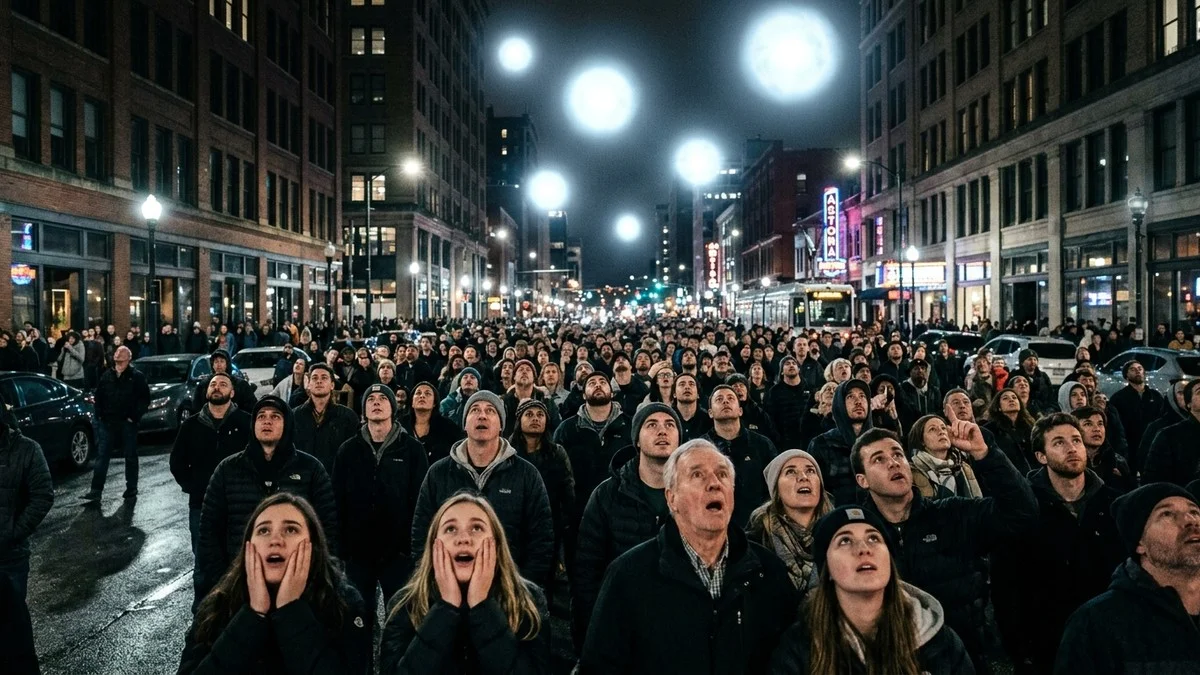
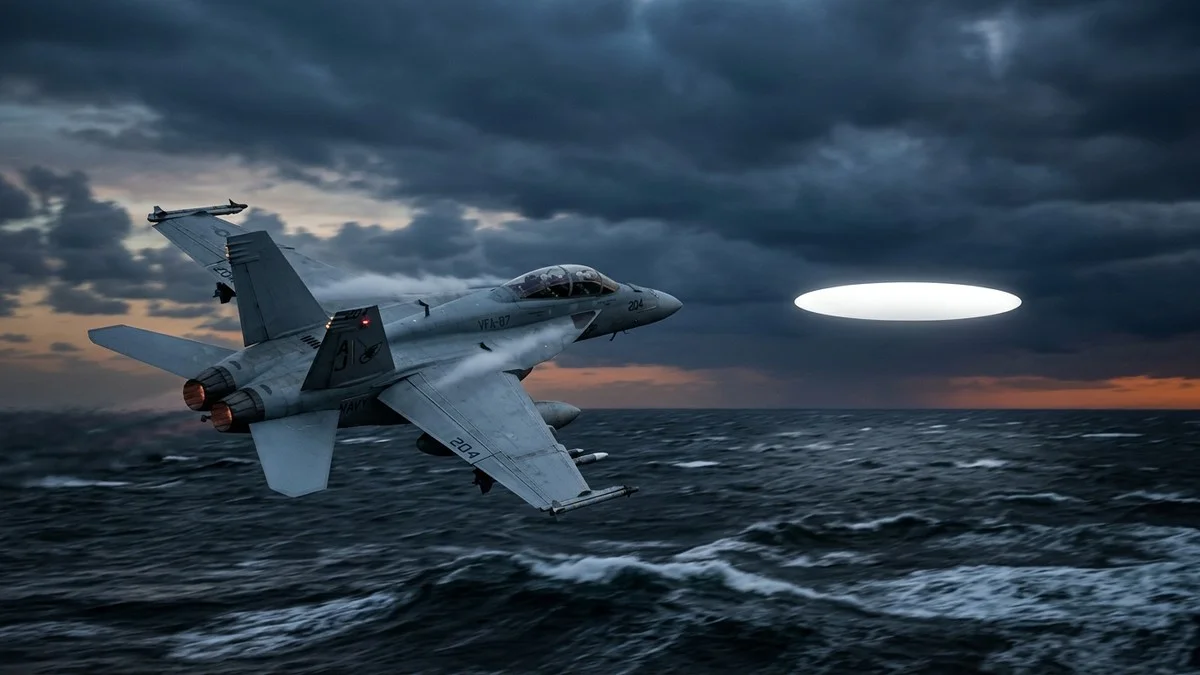
When Spielberg explains what reignited his interest in the subject after half a century, he is specific: a December 2017 New York Times front-page investigation into the Pentagon's secret Advanced Aerospace Threat Identification Program, and the footage of a Navy F/A-18 pilot tracking a white Tic-Tac-shaped object off the coast of San Diego in 2004 that was released alongside it.
That encounter, involving Commander David Fravor and the USS Nimitz carrier strike group, became the most credible and best-documented UAP case in modern history. The object showed no visible propulsion, no wings, no exhaust, and was tracked dropping from 80,000 feet to sea level in seconds before hovering. It then accelerated away faster than any known aircraft. The video, known as FLIR1, was formally acknowledged as genuine by the US Department of Defense in April 2020.
"I read that story and something shifted," Spielberg said. "When I made Close Encounters, that was my speculation. This is different."
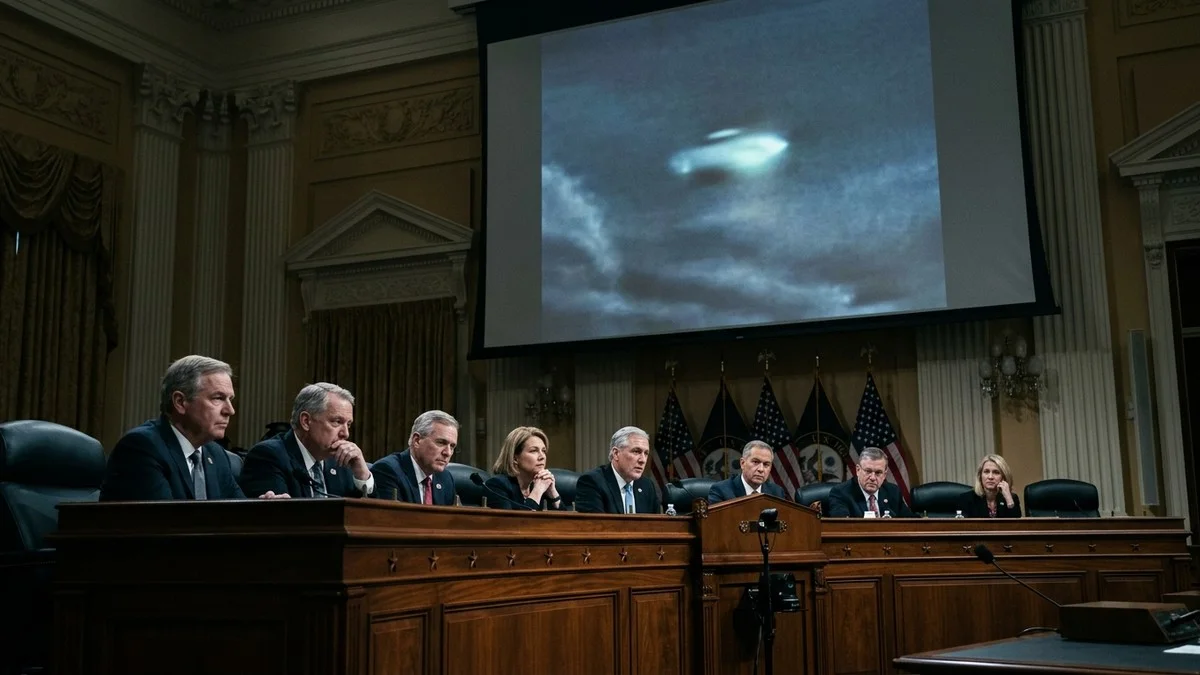
The Nimitz encounter wasn't the end of it. In the years that followed, the US government's posture on UAPs transformed dramatically. The Pentagon's official UAP reporting office, AARO, was established. Congress held hearings with credible military witnesses. A former intelligence official named David Grusch testified under oath that the US government possessed non-human craft and biological remains. And last year, the same Navy pilot encounter that inspired Spielberg's film was cited in congressional proceedings as one of the 46 specific classified UAP videos Congress formally demanded the Pentagon hand over.
Our full Nimitz UAP deep-dive has everything about what Fravor and his crew actually witnessed that day.
Why Spielberg Says Disclosure Day Has 'More Truth Than Fiction'
Spielberg's precise words at CinemaCon were worth sitting with: he described Disclosure Day as containing "a lot more truth than fiction," explicitly contrasting it with Close Encounters, which he called his "speculation."
He's a filmmaker, not a UAP researcher: he's not claiming to have made a documentary. But the gap between 1977-Spielberg speculating and 2026-Spielberg drawing on documented reality shows you how much has changed in what the government is willing to acknowledge.
In 1977, when Close Encounters was released, UAP sightings were officially treated as the province of cranks. The government's response to public inquiry was denial, ridicule, or silence. The idea that senior members of Congress, with Top Secret clearances, would sit in classified briefings and emerge visibly shaken, or that a sitting president would describe Pentagon UFO documents as "very interesting", would have seemed like the plot of the film itself.
Now that is the actual news cycle.
Before the Cinema, Try Scanning the Real Sky
Kit we've tested and reviewed in full
Fravor's Tic-Tac sighting happened with the naked eye and radar, but most of us will only ever get a clear look at something unusual with binoculars in hand. Worth having a pair ready before June 12.
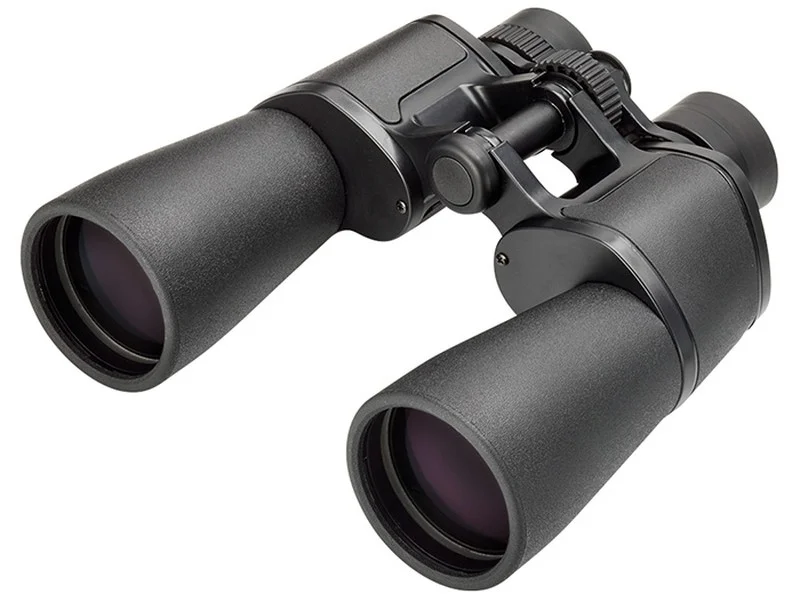
Sharp enough to help you tell a genuine anomaly apart from a plane, satellite or drone at a glance.
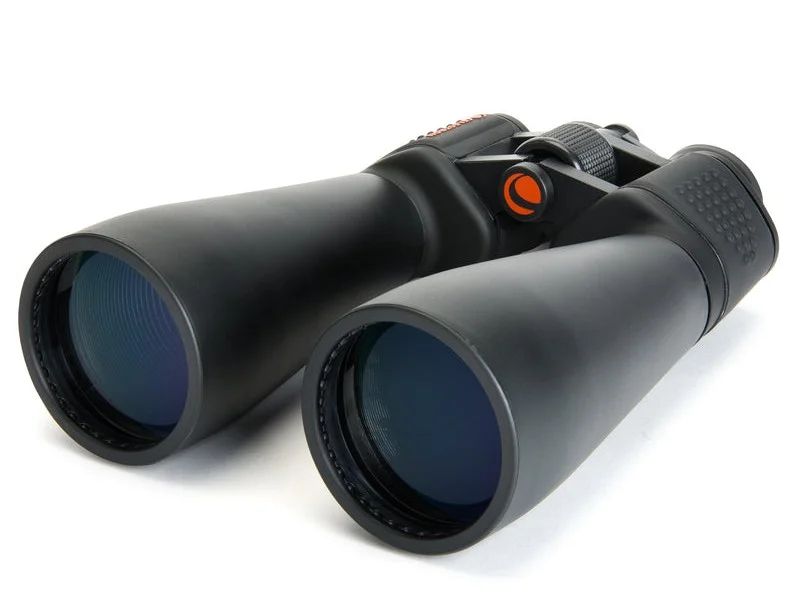
Bigger lenses give you the extra reach to follow a fast-moving object across the sky for longer.
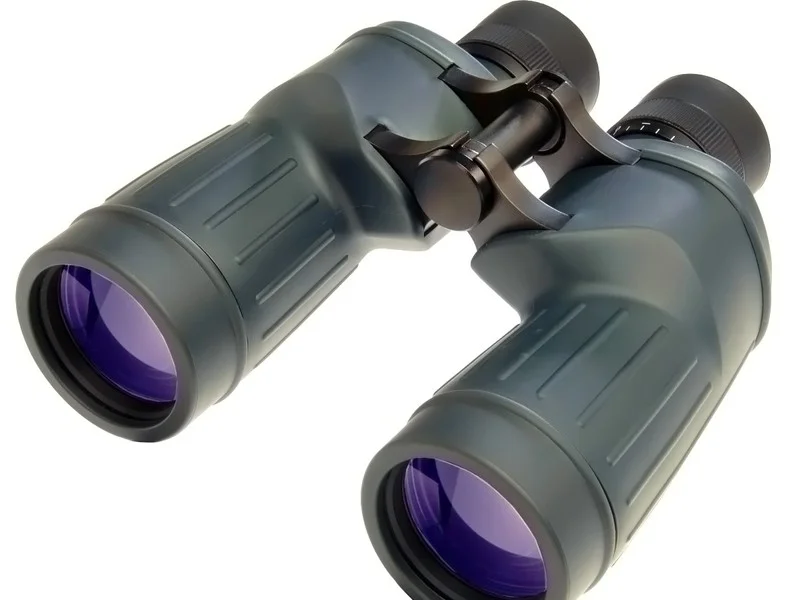
A dependable everyday pair that's just as good for stargazing as it is for keeping an eye on the skies.
Affiliate links: you pay the same price, we earn a small commission that helps keep WatchTheStars free.
UFO Disclosure 2026: The Real Events Behind Disclosure Day
Disclosure Day arrives at one of the most significant moments in UAP disclosure history. Here is where things actually stand, as of this week:
The presidential directive. In February 2026, President Trump signed an executive order directing the Secretary of Defense and all relevant federal agencies to identify and release government UAP files. The order established a 300-day countdown for agencies to either declassify their records or provide specific, legally reviewable justifications for keeping them classified. That clock is running.
The congressional pressure. Representative Anna Paulina Luna, who chairs the House Task Force on the Declassification of Federal Secrets, sent a letter to Defence Secretary Pete Hegseth on 31 March 2026 demanding 46 specific classified UAP videos by April 14. The videos she named included the Lake Huron F-16 shootdown of an octagonal object, spherical objects tracked near a US submarine, and the Coast Guard Tic-Tac footage from 2024. The Pentagon missed that deadline. Luna described the response as "cute" and implied subpoena proceedings were coming.
What Luna claims to have seen. In late April 2026, Luna told Newsweek that inside a classified briefing, she has personally seen evidence of technology of "nonhuman origin and creation." She described the phenomena as potentially "interdimensional beings" operating "outside of time and space." She said she had seen photographic evidence of objects "not made by mankind." These were not the hedged, careful statements of a politician being cautious. She also promised a public press conference once the declassification process allows it.
The Immaculate Constellation allegations. Whistleblower testimony delivered to Congress has described a classified programme, allegedly called Immaculate Constellation, tasked with collecting intelligence on UAP using sensors across satellites, aircraft, and ground-based systems. The DoD has denied its existence. The witnesses have not walked back their testimony.
The AARO caseload. The Pentagon's UAP office now holds more than 2,400 cases dating back to 1945. It has resolved many to ordinary causes. It has not resolved all of them.
Why Disclosure Day Arrives at a Turning Point for UFO Disclosure
Every generation gets the UFO film it deserves. In 1951, The Day the Earth Stood Still arrived in the middle of Cold War nuclear anxiety: the alien was a warning against self-destruction. In 1977, Close Encounters reflected the post-Watergate hunger for something transcendent and good. In 1996, Independence Day captured the action-film bombast of the unipolar moment.
Disclosure Day opens in a week when the sitting US president has signed an executive order about UAP files, a member of Congress has publicly claimed to have seen proof of nonhuman technology, and the Pentagon has just missed a congressional deadline to hand over specific classified footage.
Spielberg has made this film before. He knows what the audience wants, and he knows what the cultural moment is. The fact that he has specifically cited real events as his inspiration, and specifically said this film is "more truth than fiction," is not a marketing line. It is a 79-year-old filmmaker, who has spent his life telling stories about wonder and contact, saying something has changed.
Whether the film delivers on that framing is something we will all find out on June 12. But the conversation it is arriving into is unlike anything that surrounded Close Encounters in 1977.
Disclosure Day: Cast, Plot Structure and What to Expect on June 12
Here's what's been confirmed about the film so far:
The story moves through what appears to be a tightly structured three-act thriller. Act one establishes the strangeness: multiple people across the world, simultaneously, begin exhibiting inexplicable behaviour linked to some form of non-human contact. Blunt's meteorologist is the human anchor. Act two involves the whistleblower material and the institutional effort to suppress the truth, with Firth's character representing the shadowy machinery of concealment. Act three, which Spielberg has deliberately protected from all press coverage, apparently involves something that requires a seatbelt.
The alien design shown in a recent TV spot looks nothing like the standard grey-alien template. They look, according to early reports, less like threat and more like presence.
John Williams has composed the score: his 30th collaboration with Spielberg. That alone is a signal. Williams wrote the five-note motif in Close Encounters, the theme in E.T. Neither of those were action scores. They were scores about awe.
The film runs approximately 138 minutes. It is rated 12A. It opens June 12, 2026.
Frequently Asked Questions
Is Disclosure Day based on a true story?
Not directly: it's a work of fiction. But Spielberg has said it draws on real, documented UAP encounters, particularly the 2004 USS Nimitz incident, and it arrives against a backdrop of real congressional hearings, whistleblower testimony, and government UFO disclosure efforts.
When is Disclosure Day released?
Disclosure Day opens in cinemas on June 12, 2026.
What is Disclosure Day about?
A science-fiction thriller in which humanity receives undeniable proof of non-human contact. Emily Blunt plays a TV meteorologist who begins speaking in an unknown language, Josh O'Connor plays a cybersecurity whistleblower, and Colin Firth plays the institutional force trying to suppress the truth.
What real UFO case inspired Disclosure Day?
Spielberg has specifically cited the 2004 USS Nimitz UAP encounter, in which Navy pilot Commander David Fravor tracked an unidentified white Tic-Tac-shaped object off San Diego, as the incident that reignited his interest in the subject after nearly 50 years.
Is Disclosure Day a sequel to Close Encounters of the Third Kind?
Not a direct sequel, but Emily Blunt has confirmed the film "answers questions posed by Close Encounters of the Third Kind", Spielberg's 1977 landmark that depicted first contact with benevolent alien beings.
For deeper reading on the real-world UAP story behind this film: our Nimitz UAP Incident deep-dive covers the encounter that Spielberg cited as his inspiration. Our Trump UAP Disclosure and Immaculate Constellation posts cover the broader political backdrop.
Frequently Asked Questions
Equipment guides
Related topics
Ian ClaytonAmateur astronomer and founder of WatchTheStars.co.uk, dedicated to helping others explore the wonders of our universe. Full profile →