Key takeaways
- JWST has captured the first detailed images of planetary nebula Tc 1, where buckyballs (C₆₀) were first discovered in space 15 years ago.
- Buckyballs are hollow spheres of 60 carbon atoms arranged like a football, and in Tc 1, they form a thin spherical shell around the dying star, like one giant buckyball made of buckyballs.
- The MIRI instrument combined nine infrared filters to reveal rays, filaments, and a mysterious upside-down question mark that scientists cannot yet explain.
- The discovery helps answer a 15-year-old puzzle about why buckyballs in Tc 1 glow so exceptionally brightly.
Jump to section 6 sections
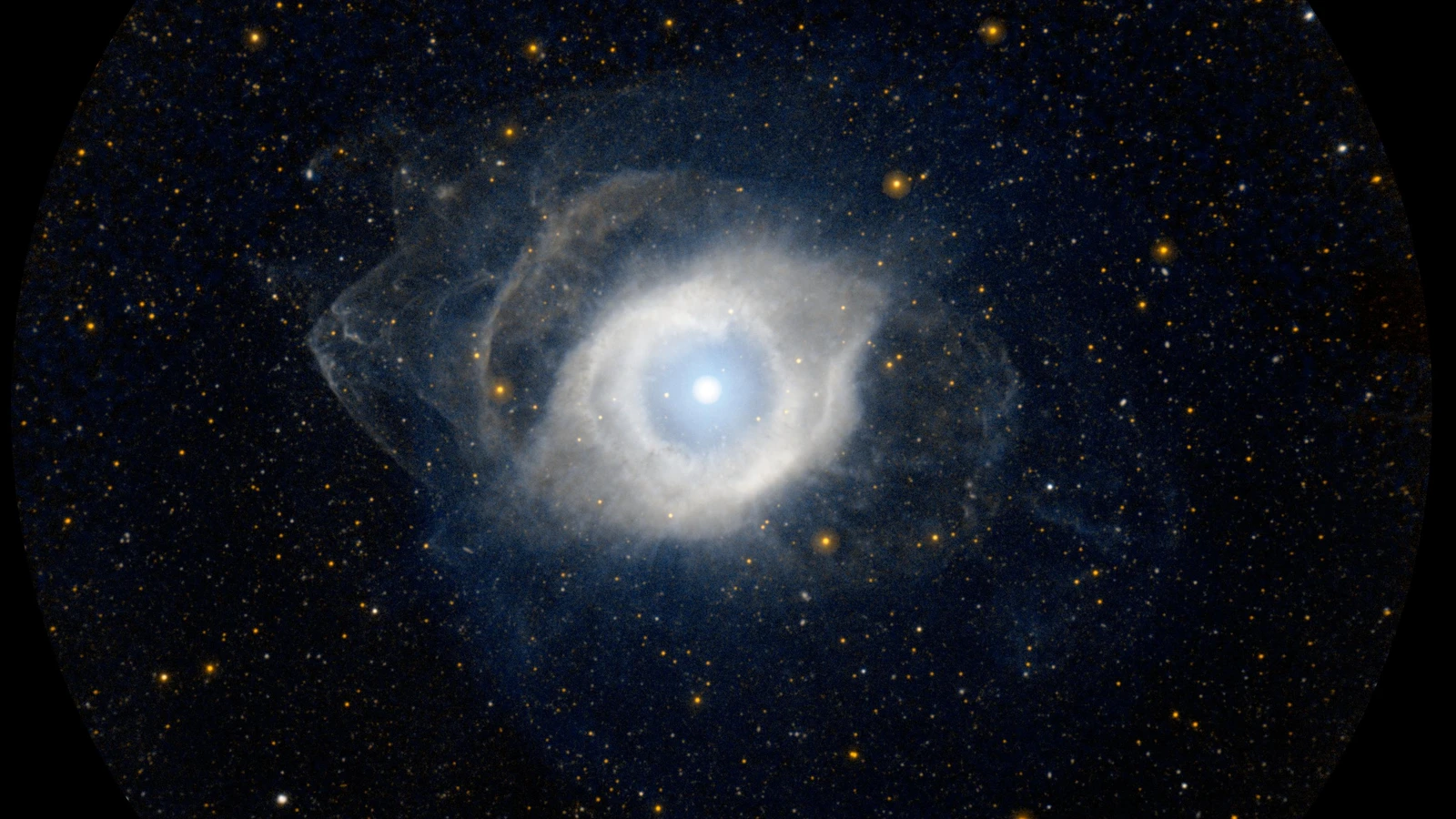
Somewhere in the constellation Ara, more than 10,000 light-years from Earth, a star is dying. It has already shed its outer layers into space, leaving behind a dense, fading core surrounded by expanding shells of glowing gas, what astronomers call a planetary nebula. It's beautiful in the way that destruction can be beautiful, and the James Webb Space Telescope has just given us our best look at it yet.
But the reason scientists pointed JWST at this particular nebula isn't the glowing gas. It's what's floating inside it: trillions upon trillions of tiny, hollow spheres made of exactly 60 carbon atoms each, arranged in a pattern that looks, at the molecular level, like a football.
They're called buckyballs. And this nebula, Tc 1, is where they were first discovered in space.
What Are Buckyballs?
A buckyball, formally buckminsterfullerene, or C₆₀, is a molecule made of 60 carbon atoms bonded together in a hollow cage. The shape has 32 faces: 12 pentagons and 20 hexagons, arranged exactly like the panels on a football. If you've ever held a football, you've held the shape of a buckyball, just scaled up by a factor of about a billion.
They were discovered in a laboratory in 1985 by Harold Kroto, Robert Curl, and Richard Smalley, who won the 1996 Nobel Prize in Chemistry for the work. The name comes from the architect Buckminster Fuller, whose geodesic domes use the same geometric pattern. Before buckyballs, scientists knew of only two forms of pure carbon: diamond (where carbon atoms are locked in a rigid 3D lattice) and graphite (where they're arranged in flat sheets). C₆₀ was something entirely new, a third allotrope of carbon, and an astonishingly elegant one.
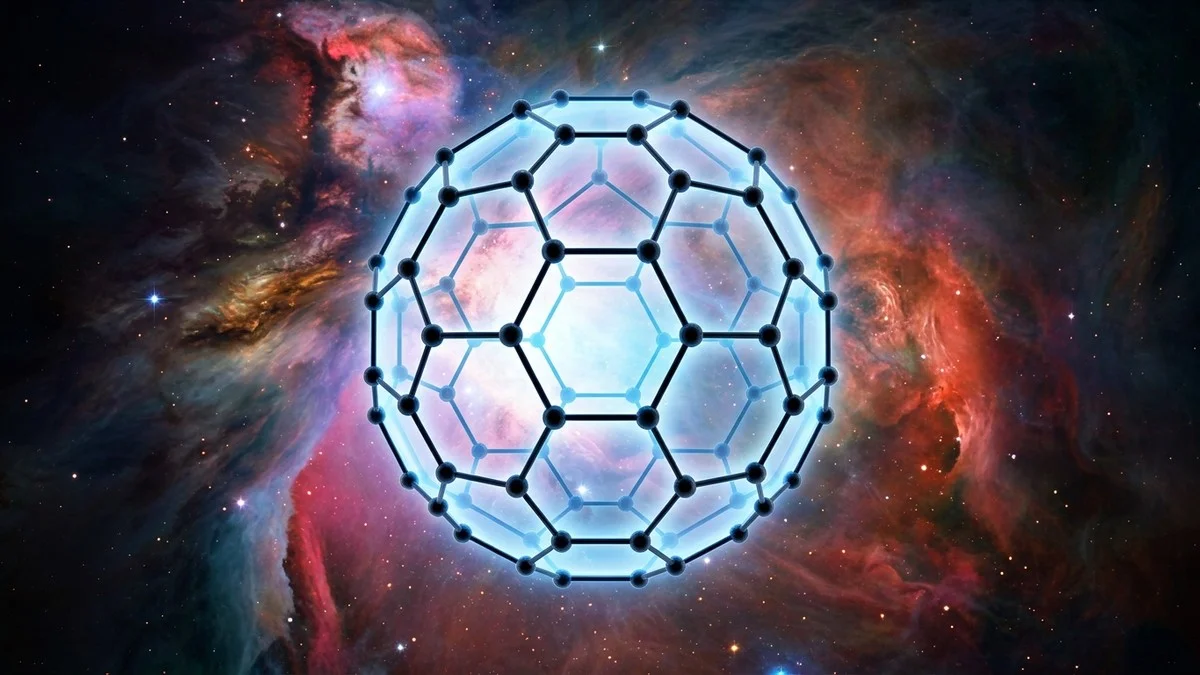
In 2010, astronomer Jan Cami and his team at Western University in Ontario, Canada, made a startling discovery. Using NASA's Spitzer Space Telescope, they detected the unmistakable infrared signature of C₆₀ in a planetary nebula called Tc 1. It was the first time buckyballs had been conclusively identified in space. The finding raised an immediate question: how are these impossibly symmetrical molecules being manufactured in the chaos surrounding a dying star? And why do they glow so brightly here?
Fifteen years later, Cami's team is back, this time with the most powerful infrared telescope ever built.
Tc 1: The Nebula Where It All Started
Tc 1 sits in the southern constellation Ara (the Altar), more than 10,000 light-years from Earth. It's a planetary nebula, which, despite the name, has nothing to do with planets. The term is a historical accident from the 18th century, when these round, glowing shells of gas reminded astronomers of planetary discs through small telescopes.
What a planetary nebula actually is: the final chapter of a Sun-like star's life. When a star roughly the mass of our Sun exhausts the hydrogen fuel in its core, it swells into a red giant, then sheds its outer layers over tens of thousands of years. What's left behind is a white dwarf, the dense, fading remnant of the star's core, surrounded by an expanding envelope of gas and dust that glows as ultraviolet radiation from the white dwarf ionises it.
Tc 1 is one of these. The star at its centre has already lost its outer layers. The gas around it is still expanding, still glowing, and, as the Spitzer telescope showed in 2010, riddled with buckyballs.
What JWST Found
JWST observed Tc 1 using its Mid-Infrared Instrument (MIRI), combining data from nine separate filters spanning wavelengths from 5.6 to 25.5 microns, far beyond what the human eye can see, deep into the thermal infrared where warm gas and complex molecules reveal themselves.
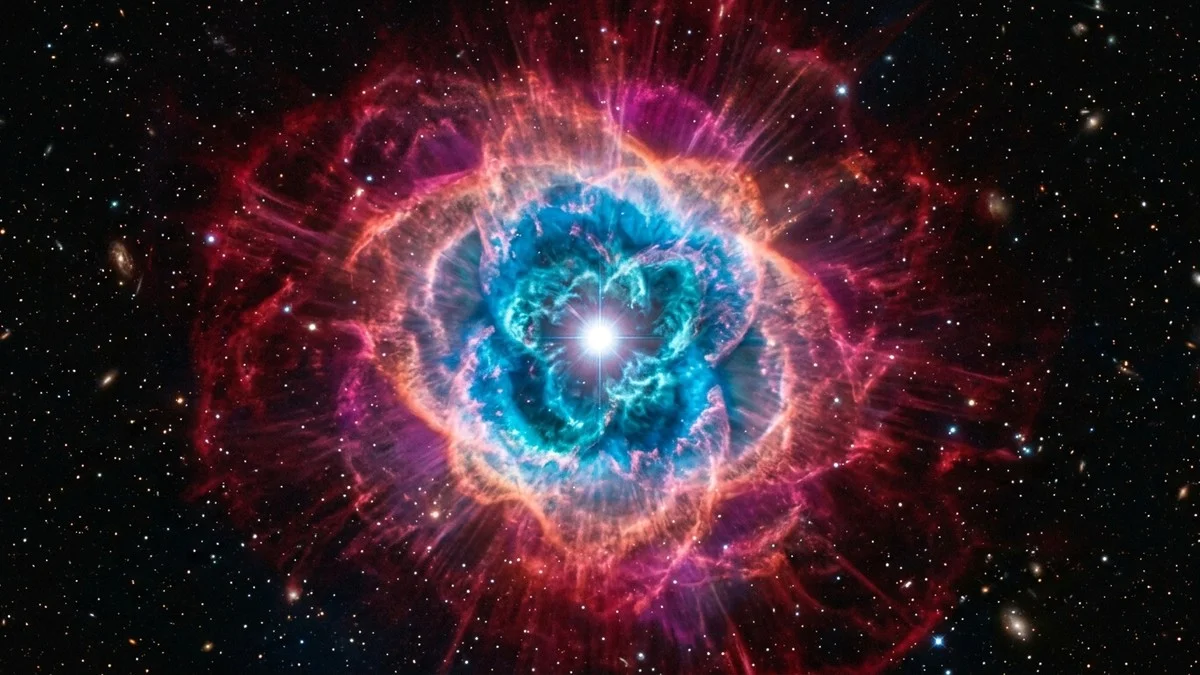
The result is the most detailed image of Tc 1 ever taken. Where Spitzer, which ceased operations in 2020, saw a smudge with a buckyball signature, JWST reveals structure. Delicate rays radiate outward from the central star. Wispy filaments thread through the expanding gas. Concentric shells of material, hotter gas glowing blue, cooler dust traced in red, show the star's death throes in exquisite detail.
But the most important finding isn't visual. It's spectroscopic. JWST's integral field unit spectroscopy doesn't just take a picture. It takes a chemical fingerprint of every point across the nebula. The team can now map exactly where different molecules sit, how hot the gas is at each location, and how the chemistry changes with distance from the central star.
"The structures we're seeing now are breathtaking," said Jan Cami in the announcement from Western University. Several scientific papers based on the new data are currently in preparation.
Tc 1 Is Too Faint for Any Back-Garden Setup: Here's What You Can See
Kit we've tested and reviewed in full
A planetary nebula 10,000 light-years away and only visible to JWST's infrared eyes is well beyond amateur reach. But the same category of object, dying stars shedding gas, has plenty of accessible targets closer to home.
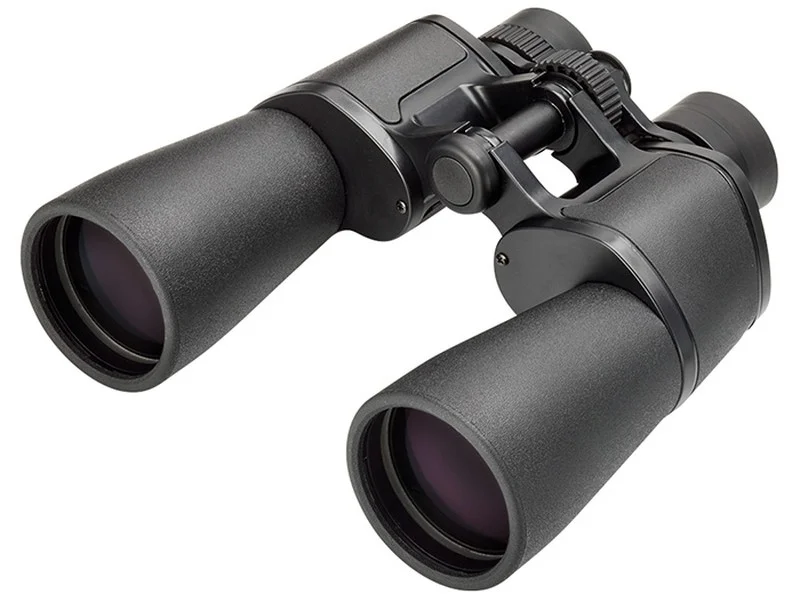
A great first step for scanning the Milky Way's star fields, where plenty of stellar nurseries and dying stars await.
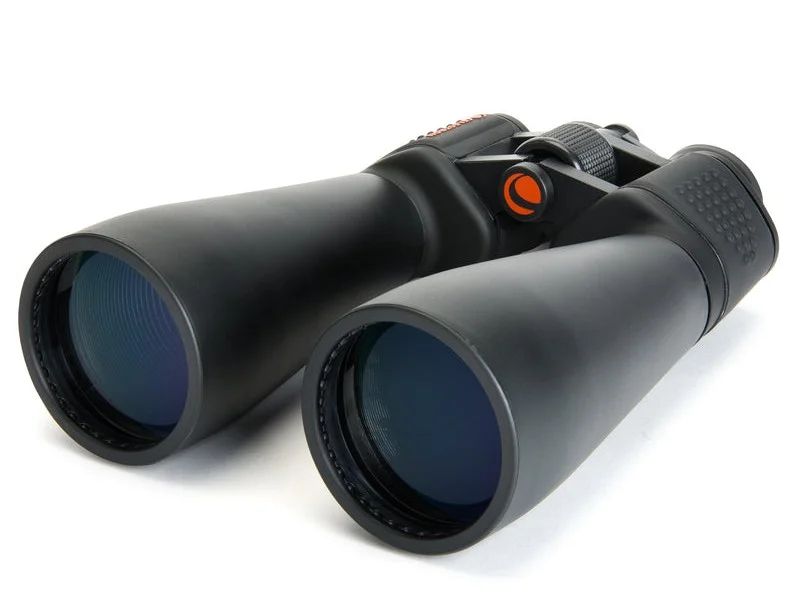
Bright enough to start picking out brighter planetary nebulae like the Ring or Dumbbell from a dark site.
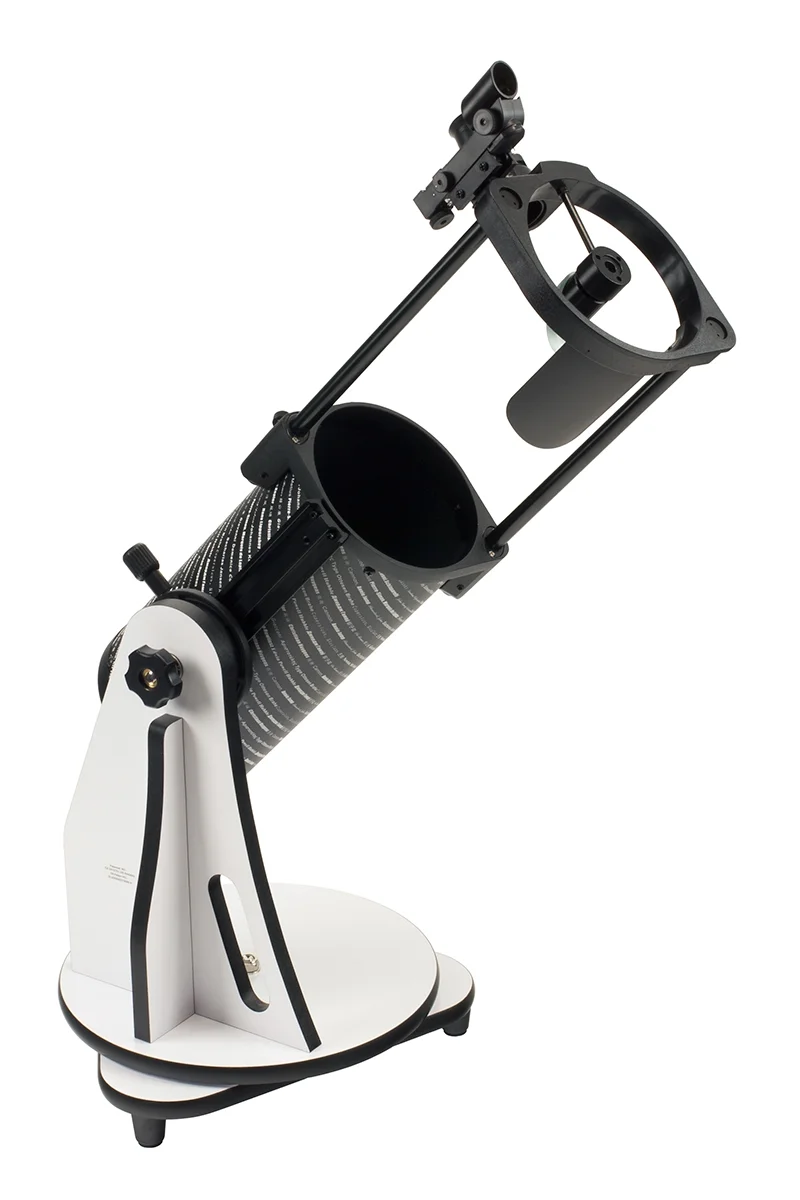
A proper tabletop reflector that will actually resolve the shape of nearby planetary nebulae rather than just a smudge.
Affiliate links: you pay the same price, we earn a small commission that helps keep WatchTheStars free.
A Buckyball Made of Buckyballs
Here's the finding that caught everyone's attention: the buckyballs in Tc 1 aren't scattered randomly through the nebula. They're concentrated in a thin spherical shell surrounding the central star.
Think about that for a moment. Buckyballs are hollow spheres of carbon atoms. And in Tc 1, those hollow spheres are themselves arranged in the shape of a hollow sphere, a giant shell of buckyballs, like a cosmic Russian doll. As multiple outlets put it: a buckyball made of buckyballs.
This distribution tells scientists something important about how and where the molecules form. They're not being created everywhere in the nebula. They're being manufactured in a specific zone, at a specific distance from the dying star, where the temperature, radiation field, and available carbon are all in the right balance. Too close to the star and the intense ultraviolet radiation destroys them. Too far out and the conditions aren't right for their formation. The thin shell is a Goldilocks zone for buckyball chemistry.
The Cosmic Question Mark
At the heart of the JWST image, there's something nobody expected: an ethereal structure that looks uncannily like an upside-down question mark.
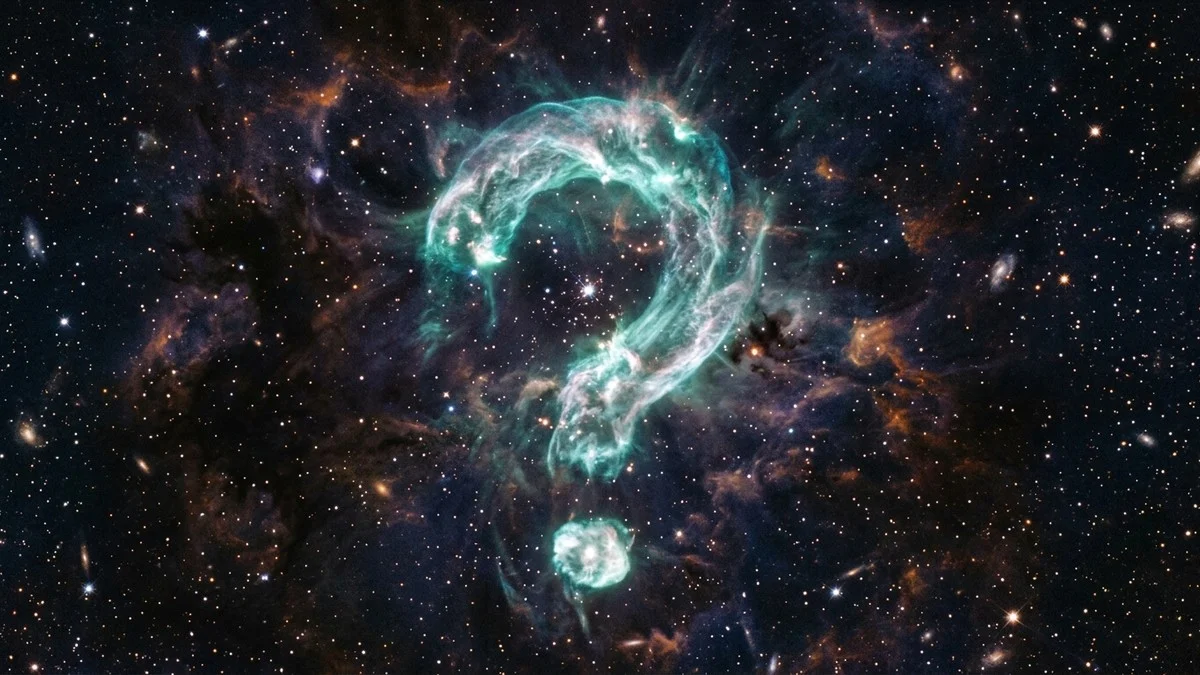
Scientists don't yet know what this feature is. It could be a jet of material from the central star interacting with the surrounding gas. It could be a density wave, a magnetic field structure, or the imprint of a companion star that hasn't been detected yet. Whatever it is, it's a reminder that even with the most powerful telescope ever built, planetary nebulae still hold surprises.
The shape has already captured public imagination, a dying star leaving a literal question mark in its wake feels almost too poetic for real science. But the JWST data is real, and the question mark is in the data.
Why This Matters
Buckyballs aren't just a curiosity. Carbon is the fourth most abundant element in the universe and the backbone of all known life. Understanding how carbon gets processed in the cosmos, how it moves from the interior of dying stars into the gas and dust that eventually forms new stars and planets, is fundamental to understanding where the ingredients for life come from.
C₆₀ is a particularly hardy form of carbon. Its cage structure makes it remarkably stable: resistant to radiation, extreme temperatures, and the harsh vacuum of interstellar space. Buckyballs have been found not just in planetary nebulae but in the interstellar medium, in meteorites, and in Earth's geological record. Some astrobiologists have speculated that buckyballs could act as molecular cages, trapping smaller molecules inside and protecting them during the violent early stages of planet formation. Whether this plays any role in the delivery of prebiotic chemistry to young worlds is still an open question, but it's the kind of question that observations like these help us ask more precisely.
For Jan Cami and his team, this is a 15-year journey from discovery to detailed understanding. Spitzer told them buckyballs were there. JWST is telling them where, how, and why. The papers are coming. The answers, at least some of them, are close.
And at the centre of it all, a dying star has left us a question mark. Which feels about right.
Frequently Asked Questions
Equipment guides
Related topics
Ian ClaytonAmateur astronomer and founder of WatchTheStars.co.uk, dedicated to helping others explore the wonders of our universe. Full profile →