Key takeaways
- Two independent teams using JWST have found the strongest evidence yet for Population III stars, the very first stars to form after the Big Bang, made entirely of hydrogen and helium.
- The signal comes from a tiny companion object called Hebe, orbiting galaxy GN-z11, just 400 million years after the Big Bang, when the universe was barely 3% of its current age.
- Critically, both teams detected the telltale signatures independently using different methods, and neither found any trace of heavier elements, exactly what you'd expect from truly primordial stars.
- The first stars were likely enormous, between 10 and 100 times the mass of our Sun, and burned so fiercely they helped forge the heavier elements that everything else is made of, including us.
Jump to section 6 sections
For decades, cosmologists have been looking for something they've never seen: the very first stars. Not the oldest stars we can find in our galaxy today: those are second- or third-generation objects, formed from gas that had already been enriched by earlier stellar explosions. The true first stars, born from nothing but the raw hydrogen and helium left over from the Big Bang itself, have remained stubbornly invisible.
Until, possibly, now.
Two independent research teams, working with data from the James Webb Space Telescope, have published the strongest evidence yet that Population III stars, the theoretical first generation, actually existed. The signal comes from a tiny clump of gas called Hebe, sitting just outside one of the most distant galaxies ever observed, at a time when the universe was barely 400 million years old.
What makes this different from every previous claim is simple: two separate groups, using different analytical methods, looked at the same patch of sky and found the same thing. No metals. No heavier elements. Just the pure, primordial signatures of hydrogen and helium being blasted by radiation so intense that only massive, pristine stars could produce it.
What Are Population III Stars?
To understand why this matters, you need to know how astronomers classify stars, and the naming system, confusingly, counts backwards.
Population I stars are the youngest. Our Sun is one. They're rich in elements heavier than hydrogen and helium, what astronomers call "metals" (which, in astronomy, means everything that isn't hydrogen or helium, including things like carbon and oxygen that a chemist would never call a metal). These stars formed from gas clouds that had been seeded with heavy elements by billions of years of previous stellar explosions.
Population II stars are older. They contain far fewer metals because they formed earlier, when the universe had been through fewer cycles of star birth and death. You can find them in the halos of galaxies and in ancient globular clusters, stellar retirement communities, essentially.
Population III stars are the ones nobody has ever seen. They're the theoretical first generation: stars that formed from the pristine gas left over from the Big Bang, containing nothing but hydrogen, helium, and traces of lithium. No carbon, no oxygen, no iron, because those elements didn't exist yet. They hadn't been made. The only way to make them was inside a star, and no stars had existed before.
Theory predicts these first stars were enormous, between 10 and several hundred times the mass of our Sun, because without heavier elements to help gas clouds cool and fragment efficiently, only very large clumps of gas could collapse under their own gravity. They would have burned incredibly hot and bright, lived fast, and died young, exploding as supernovae and seeding the universe with the first batch of heavier elements. Every atom of carbon in your body, every molecule of oxygen you breathe, traces its lineage back to stars like these.
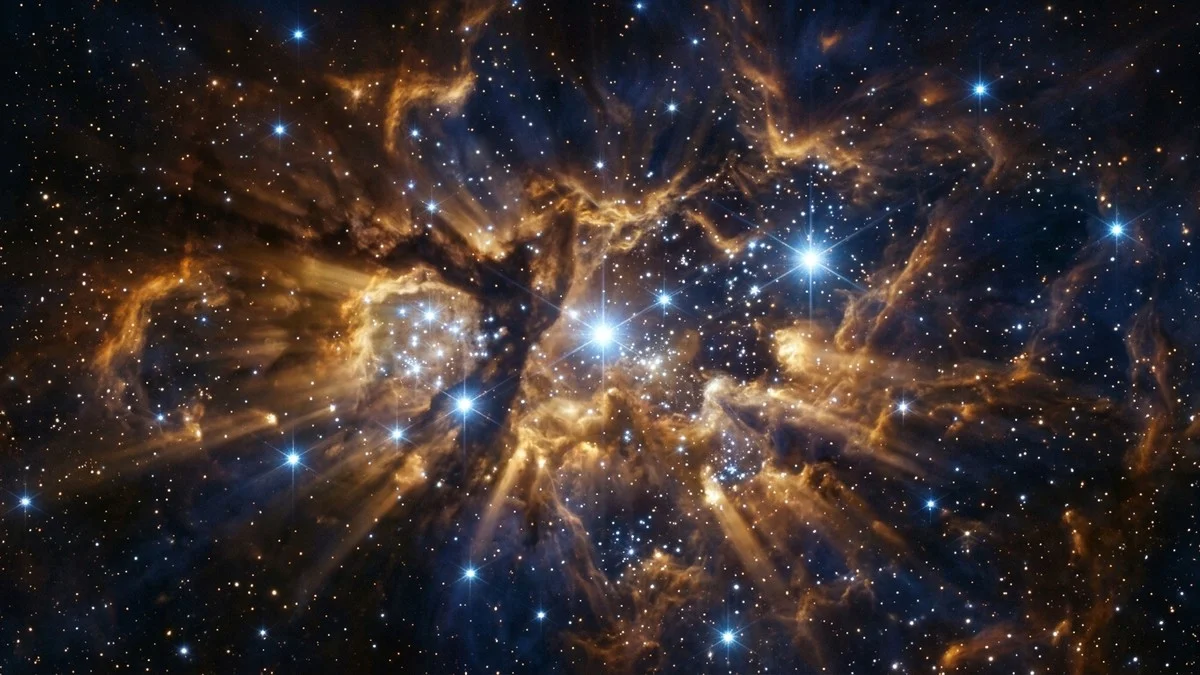
The problem is that Population III stars, if they existed, are extraordinarily difficult to observe. They formed so long ago and so far away that their light has been travelling for over 13 billion years. And because they burned through their fuel quickly, they're long dead: what we're looking for isn't the stars themselves, but the faint fingerprints they left behind in the gas around them.
The Galaxy at the Edge of Time
The story begins with GN-z11, a galaxy that has been breaking records since it was first spotted by the Hubble Space Telescope in 2015. At a redshift of 10.6, its light has been travelling for 13.4 billion years. We're seeing it as it looked just 400 million years after the Big Bang, when the universe was barely 3% of its current age.
For a galaxy that young, GN-z11 is surprisingly busy. It's about one twenty-fifth the size of the Milky Way and contains roughly a billion solar masses of stars, but it's forming new ones at twenty times the Milky Way's rate. In 2024, JWST data revealed that it harbours the most distant supermassive black hole ever found, about 1.6 million solar masses, which is remarkable for a galaxy so young.
But what caught the attention of Population III hunters wasn't the galaxy itself. It was something much smaller, sitting just outside it.
Finding Hebe
In 2023, a team led by Roberto Maiolino at the University of Cambridge published a tantalising hint. Using JWST's NIRSpec instrument, a near-infrared spectrograph that can break light into its component wavelengths, they detected a faint emission line from a small gas clump in the halo of GN-z11. The signal matched the signature of doubly ionised helium: helium atoms that have been stripped of both their electrons by extremely energetic ultraviolet radiation.
That, on its own, was intriguing but not conclusive. Doubly ionised helium requires photons with energies above 54.4 electron volts, an enormous amount of energy. Only a handful of astrophysical sources can produce radiation that intense: very massive, very hot stars, active galactic nuclei, or direct collapse black holes. But what made the clump interesting was what wasn't there: no trace of carbon, nitrogen, oxygen, or any other element heavier than helium. If stars were responsible for the ionisation, they would have to be stars made entirely of pristine gas, Population III stars.
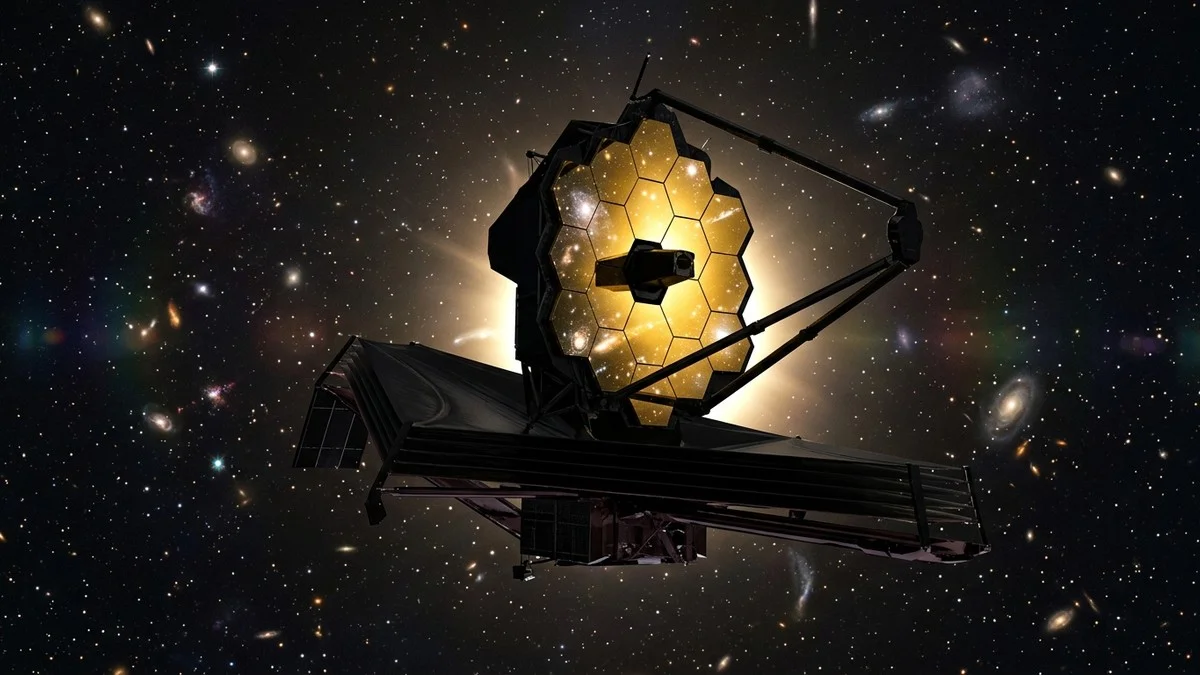
The 2023 result was promising but left room for doubt. The detection was at the edge of statistical significance, and the spectral resolution wasn't high enough to fully separate the clump's emission from the much brighter galaxy next door. Maiolino's team needed better data.
They got it. In the new 2026 study, published as a preprint on arXiv in March, the team returned to GN-z11 with JWST's NIRSpec integral field unit, a mode that doesn't just take a single spectrum, but maps spectra across an entire area of sky. This allowed them to cleanly separate the tiny companion from its host galaxy for the first time. They named it Hebe, after the Greek goddess of youth, fitting, given that these might be among the youngest stars in the history of the universe.
The higher-resolution data confirmed the helium signal and resolved it into two distinct spectral components, separated by 120 km/s. And crucially, even with the deeper observations, there was still no trace of metals. The upper limits on carbon and oxygen are extremely tight, far below what you'd expect from any normal stellar population.
You can't see Hebe, but you can see plenty tonight
Kit we've tested and reviewed in full
Nothing short of JWST will ever resolve a star 13.4 billion light-years away, and that's fine. Point a decent pair of binoculars or a small scope skyward instead and you'll still get proper jaw-drop moments, just from objects a bit closer to home.

Light enough to keep by the back door for a quick look at the Moon or a bright cluster whenever the mood strikes.

Big enough aperture to start picking out faint smudges of light from distant galaxies and nebulae, the closest most of us will get to peering toward the early universe.
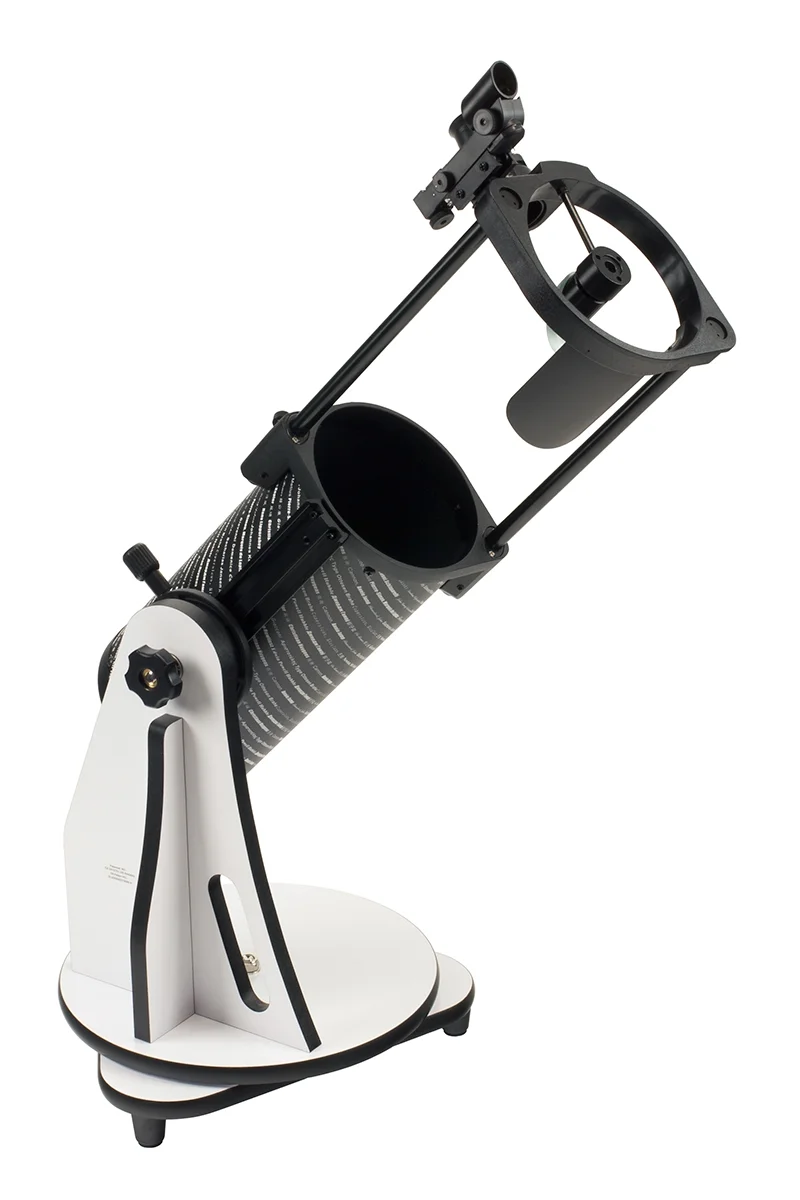
A compact tabletop reflector that'll show you star clusters and galaxies with real detail, a good next step once binoculars aren't enough anymore.
Affiliate links: you pay the same price, we earn a small commission that helps keep WatchTheStars free.
Two Teams, One Answer
What elevates this from an intriguing hint to genuinely compelling evidence is the independent confirmation.
A second team, led by Elka Rusta at the University of Florence, published a companion paper on the same day. Working independently with the same JWST dataset but using different analytical approaches, Rusta's group not only confirmed the helium detection but also identified a hydrogen emission line from the same spatial location, a second chemical anchor that hadn't been detected before.
Neither team found any evidence of heavier elements. Two studies, using different methods, pointing at the same tiny patch of sky 13.4 billion light-years away, and finding the same pristine, metal-free signatures. In science, independent confirmation is the gold standard. It's one thing for a single group to claim a detection; it's quite another when two groups do it independently and agree.
Using the observed ratio of helium to hydrogen emission, Rusta's team was able to constrain the likely properties of the stars producing the radiation. Their modelling favours a top-heavy mass distribution, with most of the stars falling between roughly 10 and 100 times the mass of our Sun. This is exactly what theoretical models of Population III star formation have predicted for decades: without metals to help gas fragment into smaller clumps, the first stars should have been massive, hot, and short-lived.
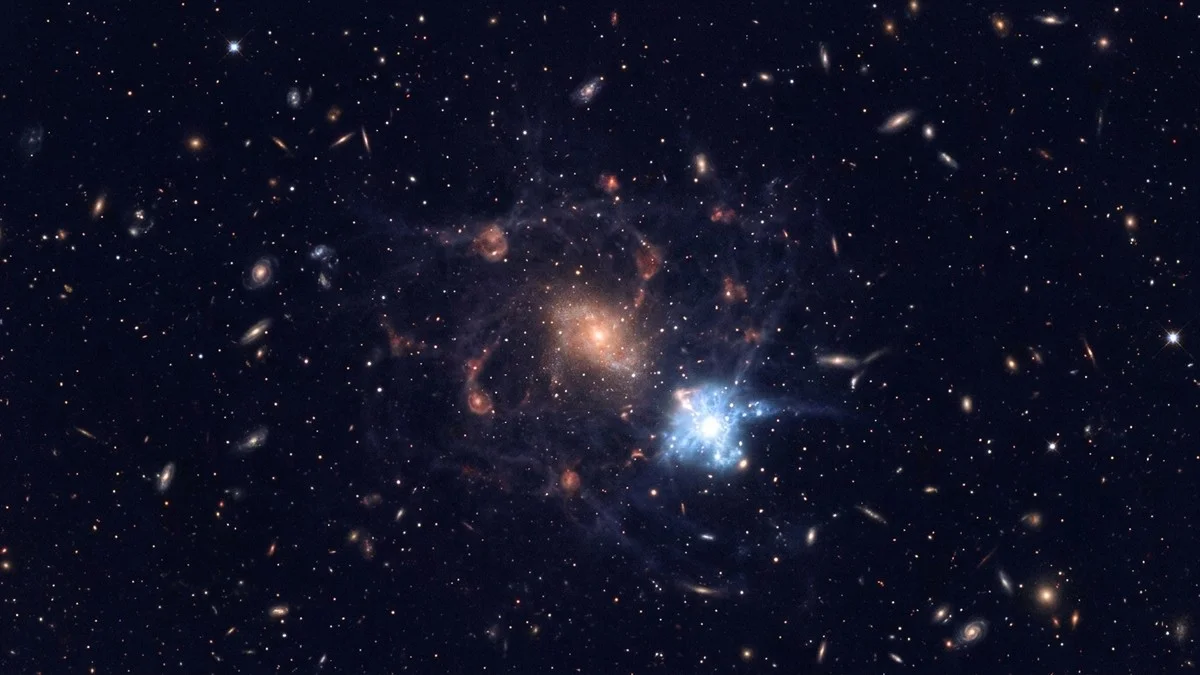
Why the First Stars Matter
Population III stars aren't just an academic curiosity. If they existed, and this evidence strongly suggests they did, they were the engines that transformed the universe from a featureless fog of hydrogen and helium into the rich, chemically complex cosmos we see today.
When these massive first-generation stars died, they exploded as supernovae, scattering the first heavy elements into the surrounding gas. Carbon, oxygen, silicon, iron, elements that would eventually form rocky planets, organic molecules, and the biochemistry of life, were all forged inside Population III stars and distributed by their deaths. Every subsequent generation of stars formed from slightly more enriched material, allowing smaller, cooler, longer-lived stars like our Sun to eventually emerge.
Population III stars are also thought to have driven the epoch of reionisation, one of the most dramatic transformations in cosmic history. In the first few hundred million years after the Big Bang, the universe was filled with neutral hydrogen gas that was opaque to ultraviolet light. The intense radiation from the first stars gradually ionised this gas, making the universe transparent. Without this process, galaxies as we know them could not have formed, and the universe would look radically different today.
In a very real sense, Population III stars made everything else possible. They were the cosmic kickstarter: the first link in a chain that runs from primordial hydrogen, through stellar nucleosynthesis, through planet formation, through chemistry, all the way to biology. Finding direct evidence that they actually existed isn't just confirming a theoretical prediction. It's observing the origin of complexity itself.
What Comes Next
The Maiolino and Rusta papers are preprints. They've been submitted for peer review but haven't yet been formally published in a journal. The peer review process will subject the analysis to scrutiny from other experts in the field, which is exactly how science should work. But the fact that two independent teams reached the same conclusion using different methods is a strong sign that the detection is robust.
If the results hold up, the next step will be to look for more examples. Hebe is one tiny gas clump orbiting one galaxy at the edge of the observable universe. JWST has the capability to survey other galaxies at similar redshifts, searching for the same pristine helium signatures. Finding multiple instances of Population III star formation would transform this from a single landmark detection into a population-level understanding of how the first stars ignited across the cosmos.
There's also the question of what happened to Hebe's stars after they died. If they were as massive as the models suggest, 10 to 100 solar masses, they would have burned through their hydrogen fuel in just a few million years before exploding as supernovae. Those explosions would have enriched the surrounding gas with the first heavy elements, potentially triggering a second wave of star formation. Somewhere in the data, there may be evidence of that chemical enrichment spreading outward from Hebe into the halo of GN-z11.
For now, what we have is the clearest signal yet from the very beginning of the story. A tiny clump of pristine gas, 13.4 billion light-years away, glowing with the unmistakable signature of stars made from nothing but the raw material of the Big Bang. The first stars. The ones that made everything else possible.
We've been looking for them for decades. JWST may have just found them.
Frequently Asked Questions
Equipment guides
Related topics
Ian ClaytonAmateur astronomer and founder of WatchTheStars.co.uk, dedicated to helping others explore the wonders of our universe. Full profile →