Key takeaways
- JWST has discovered EGS-z11-R0, a massive, dust-rich galaxy at redshift 11.45, just 400 million years after the Big Bang
- The galaxy contains roughly 1–4 billion solar masses of stars plus carbon and dust, making it far too evolved for its age under current models
- It's the most distant spectroscopically confirmed 'red monster' galaxy ever found, joining a growing class of objects that challenge galaxy formation theory
Jump to section 6 sections
What Did JWST Find?
A team of astronomers led by Giulia Rodighiero at the University of Padua in Italy has identified what appears to be the most distant "red monster" galaxy ever confirmed, an object so massive and dust-rich that it looks like it belongs billions of years later in cosmic history.
The galaxy, designated EGS-z11-R0, sits at a redshift of 11.45, which means its light has been travelling for over 13.3 billion years. When it emitted that light, the universe was barely 400 million years old, a cosmic infant still assembling its first structures from hydrogen and helium gas.
And yet EGS-z11-R0 already contains between one and four billion solar masses worth of stars. It has substantial quantities of dust. It shows clear spectroscopic signatures of carbon. By every measure, it looks like a galaxy that has already lived through intense rounds of star formation and stellar death, cycles that current models say should take far longer to complete.
The discovery was made using publicly available data from JWST's NIRSpec instrument, and the preprint paper was posted to arXiv in March 2026. It has already sent ripples through the astronomical community.

Why This Galaxy Shouldn't Exist
To understand what makes EGS-z11-R0 so unsettling, you need to think about what was supposed to be happening 400 million years after the Big Bang.
At that point in cosmic history, the universe was still emerging from the "dark ages": the long period after the cosmic microwave background was released, when there were no stars at all. The very first stars were only just beginning to ignite, flooding the cosmos with ultraviolet light and gradually ionising the hydrogen fog that filled intergalactic space. This process, called the Epoch of Reionisation, was still underway.
Galaxies at this stage should be small, chemically primitive, and largely dust-free. The first generation of stars (Population III) were made almost entirely of hydrogen and helium, heavier elements like carbon, oxygen, and silicon had to be forged inside those stars and blasted into space when they died. Dust grains, which are made of those heavier elements, should take additional time to accumulate.
EGS-z11-R0 breaks this picture. Its ultraviolet light is reddened, not by distance, but by dust within the galaxy itself absorbing and scattering the shorter wavelengths. The team measured a UV continuum slope of roughly −1.0, far redder than the typical −2.0 to −2.5 seen in galaxies at similar distances. The dust attenuation is estimated at about 1.2 magnitudes in the visual band, meaning this galaxy is shrouded in a veil of its own stellar debris.
The carbon detections are equally striking. The team found clear emission from C IV (ionised carbon at 1548/1551 Ångströms) and C III] (semi-forbidden carbon at 1908 Ångströms). Carbon is produced in the cores of massive stars and expelled when those stars explode as supernovae or shed their outer layers as they die. For carbon to be present in detectable quantities, at least one full generation of massive stars must have already lived and died within this galaxy.
In 400 million years. That is an extraordinarily tight schedule.
Carbon and Dust at the Dawn of Time
The carbon and dust in EGS-z11-R0 tell us something specific about its history: this galaxy has already been through multiple cycles of star formation and stellar death.
Here is how the process works. First-generation stars form from pristine hydrogen and helium. The most massive ones, perhaps 50 to 300 times the mass of the Sun, burn through their fuel in just a few million years, then explode as supernovae. Those explosions seed the surrounding gas with carbon, oxygen, silicon, iron, and other heavy elements. The next generation of stars forms from this enriched material. When those stars die, they produce even more heavy elements, and dust grains begin to condense in their expanding remnants and stellar winds.
For EGS-z11-R0 to have accumulated the dust and carbon the team detected, several things had to happen in rapid succession: the first stars had to form, live, and die; their debris had to mix back into the interstellar medium; a second (and possibly third) generation of stars had to form and begin dying; and enough dust grains had to condense to measurably redden the galaxy's light.
All of this in a universe that was only 400 million years old, and where the first stars probably didn't begin forming until at least 100–200 million years after the Big Bang. That leaves a window of perhaps 200 million years for an entire galaxy's worth of chemical evolution to unfold.

The Red Monsters: A Growing Problem
EGS-z11-R0 is not an isolated oddity. It is the latest and most extreme example of a pattern that JWST has been revealing since its first deep observations in 2022.
The term "red monster" was coined in a landmark November 2024 Nature paper, when an international team led by the University of Geneva (including researchers from the University of Bath, UC Santa Cruz, and Yale) identified three ultra-massive galaxies within the first billion years after the Big Bang. Each contained stellar masses comparable to the Milky Way, and each was forming stars nearly twice as efficiently as lower-mass galaxies from the same era. Their high dust content gave them a distinctive red colour in JWST images, invisible to Hubble, which couldn't peer deep enough into the infrared.
What makes the red monsters collectively troubling is not that individual galaxies are massive. Rare outliers are expected in any population. The problem is how efficiently they formed. Standard galaxy formation models predict that in the early universe, processes like supernova feedback, radiation pressure, and gas heating should slow down star formation, acting as cosmic brakes that prevent gas from collapsing into stars too quickly. The red monsters suggest those brakes were less effective than predicted, at least in certain environments.
EGS-z11-R0 pushes this tension to a new extreme. At redshift 11.45, it is the most distant spectroscopically confirmed member of the red monster class, nearly 500 million years earlier than the original trio. If massive, dusty galaxies existed this early, the rapid formation problem becomes even harder to resolve.
And the red monsters are just one facet of a broader "too much, too soon" puzzle. JWST has also found mysterious "little red dots" that appear to be enormous gas clouds powered by growing supermassive black holes, and evidence for Population III stars, the theoretical first generation, in a companion object near galaxy GN-z11. Each discovery adds another piece to a picture that is becoming increasingly clear: the early universe was far more active, far more chemically evolved, and far more structurally complex than anyone predicted.
Explore galaxies you can actually see
Kit we've tested and reviewed in full
You'll never see the Red Monster yourself, it's over 13 billion light years away and only Webb can reach it. But the same sky holds galaxies within reach of modest kit, from Andromeda with the naked eye to spiral structure through a small scope. Here's where to start.

From a dark site, 10×50 binoculars show the Andromeda Galaxy as an obvious oval smudge: the most distant thing you can see with the naked eye, brought closer. The simplest way to look at another galaxy for the first time.

The extra aperture pulls in fainter galaxies and turns Andromeda into a bright core with a hint of the surrounding disc. Best on a tripod under a clear, dark sky.
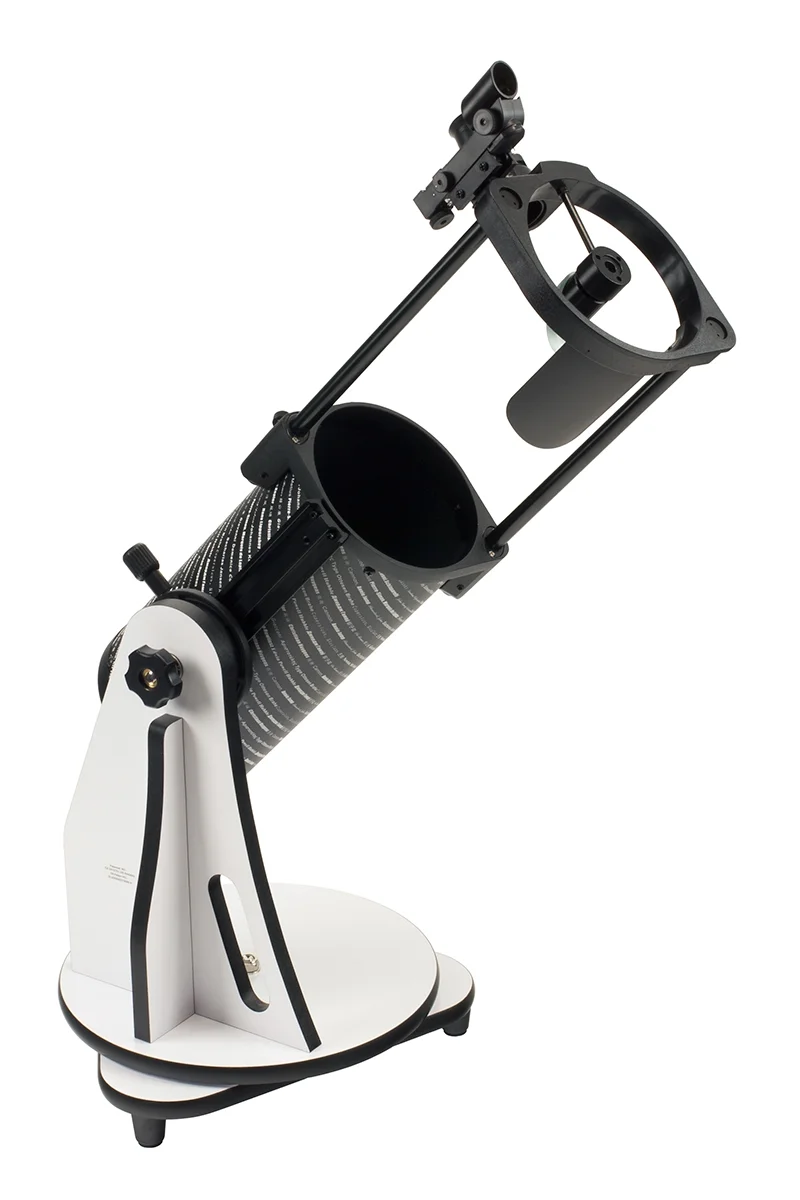
A 130mm scope starts to show real structure: the dust lane in Andromeda, the shape of the brighter galaxies, and hundreds of deep-sky targets a lifetime won't exhaust. Our top budget pick for galaxy hunting.
Affiliate links: you pay the same price, we earn a small commission that helps keep WatchTheStars free.
What This Means for Cosmology
It is worth being precise about what EGS-z11-R0 does and does not challenge.
It does not break the standard cosmological model: the broad framework of the Big Bang, dark matter, and dark energy that describes the universe's expansion and large-scale structure. That model is supported by multiple independent lines of evidence (the cosmic microwave background, the distribution of galaxies, the abundances of light elements) and remains robust.
What EGS-z11-R0 challenges is our understanding of galaxy formation within that framework. The physics of how gas cools, collapses, forms stars, and is recycled by feedback processes is immensely complex, and the computer simulations that model it require assumptions about processes that happen on scales too small to resolve directly. The discovery of objects like EGS-z11-R0 tells us that some of those assumptions, about how quickly dust forms, how efficiently gas converts to stars, how effective feedback is in the earliest galaxies, need revisiting.
Several possible explanations are on the table. Star formation efficiency may have been higher in the early universe because the gas was denser and cooler relative to the background radiation. The initial mass function, the distribution of masses among newly formed stars, may have been "top-heavy," meaning early galaxies produced proportionally more massive stars that lived fast, died young, and enriched their surroundings more rapidly. Or there may be dust production mechanisms we haven't fully accounted for, such as grain growth in the interstellar medium rather than formation exclusively in supernovae remnants.

What Comes Next
The Rodighiero et al. paper is currently a preprint on arXiv and has not yet been through formal peer review. That is standard practice in astronomy: teams share results quickly via preprint servers, and the community evaluates the work in parallel with journal review. Given the strength of the spectroscopic data and the significance of the result, it will attract intense scrutiny.
The immediate next step will be deeper follow-up observations. JWST's Mid-Infrared Instrument (MIRI) could provide better constraints on the galaxy's stellar mass by probing longer wavelengths where older, cooler stars emit most of their light. Additional NIRSpec observations could map the spatial distribution of the carbon emission, revealing whether the enrichment is concentrated in the galaxy's core or spread throughout.
More broadly, EGS-z11-R0 adds urgency to one of the defining questions of the JWST era: how did the universe assemble its first large structures so quickly? Every new discovery, from red monsters to little red dots to Population III star candidates, narrows the range of theories that can explain the early universe. The answer, when it comes, will reshape our understanding of the first few hundred million years of cosmic history.
For now, the message is clear: the universe was building galaxies faster, and more efficiently, than anyone expected. And JWST keeps finding the evidence to prove it.
Frequently Asked Questions
Equipment guides
Related topics
Ian ClaytonAmateur astronomer and founder of WatchTheStars.co.uk, dedicated to helping others explore the wonders of our universe. Full profile →