Key takeaways
- The Lyrids peak every year around the night of 22–23 April, with up to 18 meteors per hour and occasional bright fireballs
- Next peak: the early hours of 23 April 2027 (peak night 22–23 April)
- The Lyrids are the oldest recorded meteor shower: Chinese astronomers first documented them in 687 BCE
- No equipment needed: find a dark spot, lie back, and look northeast after midnight for the best rates
Jump to section 7 sections
Looking ahead? Peak dates and viewing advice for every annual shower are in our meteor showers guide.
What Are the Lyrids?
The Lyrid meteor shower is the oldest meteor shower on record. Chinese astronomers first documented it in 687 BCE, more than 2,700 years ago, noting "stars fell like rain" during what we now know was an exceptional Lyrid outburst. Every April since, Earth has ploughed through the same ribbon of debris, and every April, the sky puts on a show.
The debris comes from Comet C/1861 G1 (Thatcher), a long-period comet that orbits the Sun roughly every 415 years. It was last seen in 1861, and it won't return until around 2283. But the trail of dust and gravel it leaves behind is still here, strewn along a path that Earth crosses every spring.
When those tiny fragments, most no bigger than a grain of sand, hit our atmosphere at 49 kilometres per second (110,000 mph), they burn up in a flash of light. That flash is a meteor. And from mid-April to late April, those meteors appear to radiate from a point near the brilliant star Vega in the constellation Lyra, hence "Lyrids."
When to Watch (and the Moon)
The Lyrids are active each year from around 16 April to 25 April, with activity building gradually toward a peak on or about 22 April. The exact timing shifts by a few hours from one year to the next, but the pattern barely changes: this is one of the most dependable dates in the meteor calendar.
For UK observers the radiant only climbs high enough for good rates in the small hours, so the best window is almost always the early morning of the peak night, from about 2am to 4:30am, once the radiant has risen and before dawn starts to brighten the eastern sky. The nights either side of the peak are worth a look too, with rates of 5–8 per hour in the run-up to the maximum.
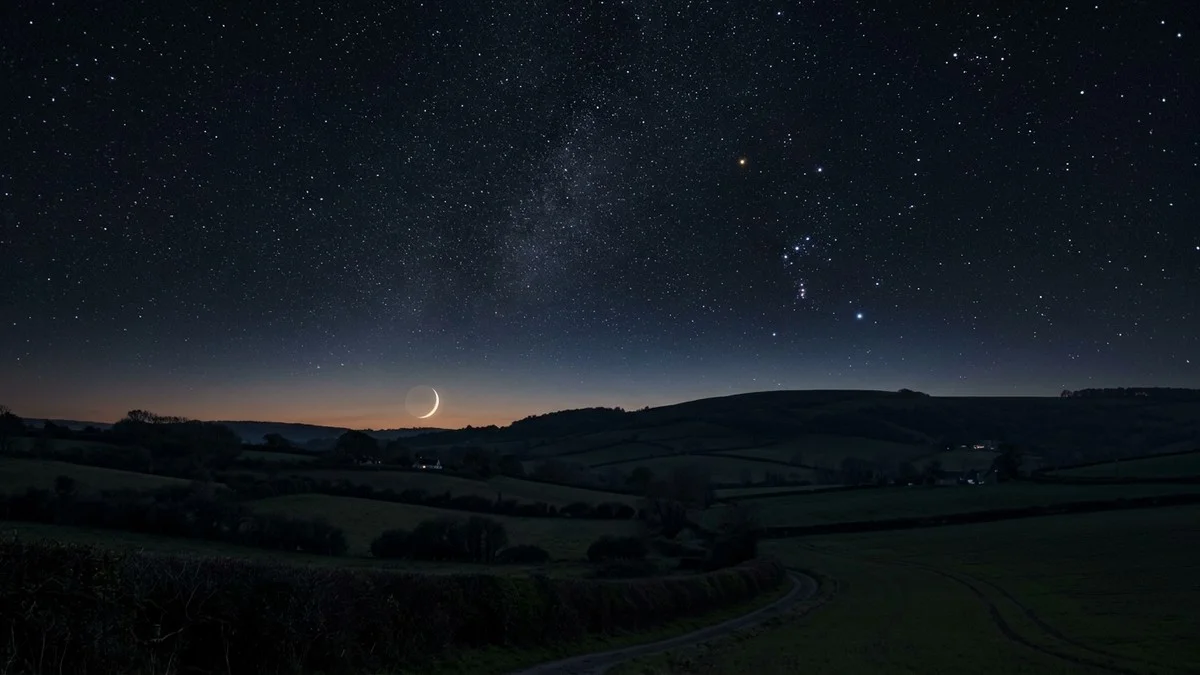
After the weather, the one thing that makes or breaks a given year is the Moon. A bright Moon washes out the fainter meteors and can cut your count in half. The best Lyrid years are the ones where peak night falls close to a new Moon, or where the Moon sets before those prime predawn hours. Before you head out, check the Moon phase for 22–23 April that year, or let our stargazing tonight tool score your local sky in a few seconds.
Next peak: the early hours of 23 April 2027 (peak night 22–23 April).
You don't need binoculars for meteors, but you'll want them for everything else
Kit we've tested and reviewed in full
While you're waiting for the next Lyrid to streak past, a wide-field pair of binoculars is perfect for sweeping the area around Vega and Lyra, or picking out the summer Milky Way starting to rise. Here's what we'd pack alongside the flask and the reclining chair.
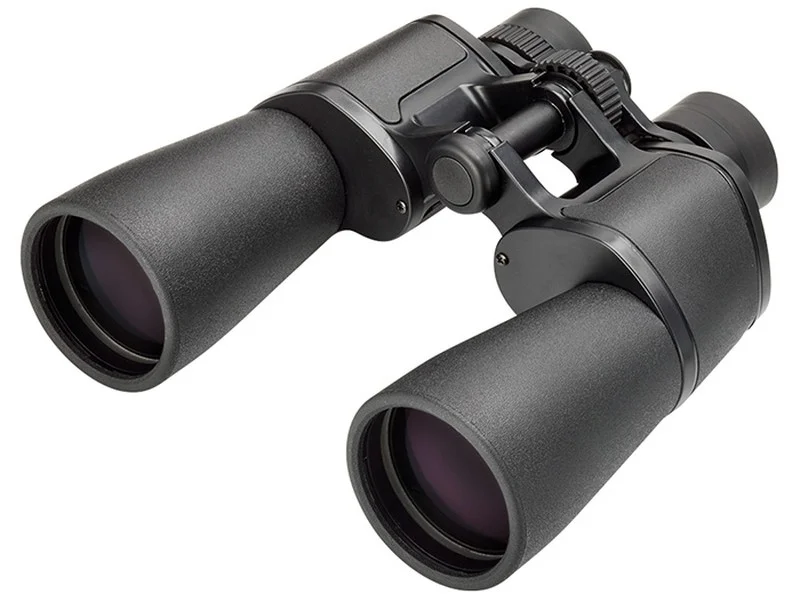
Light enough to hold one-handed while you're lying back in a chair, which is exactly how you'll spend the small hours waiting for a fireball.
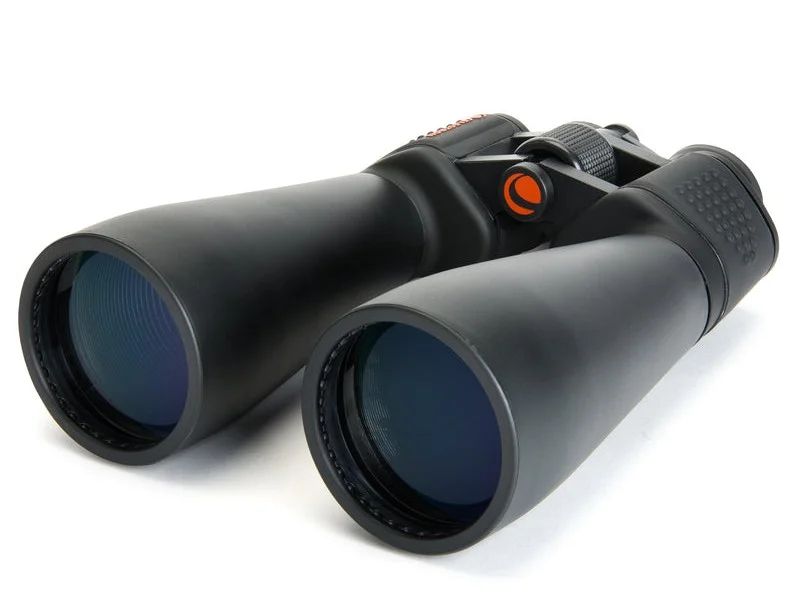
Once you've had your fill of shooting stars, these are big enough to show real detail on Vega's neighbours and the fainter stars of Lyra between meteors.
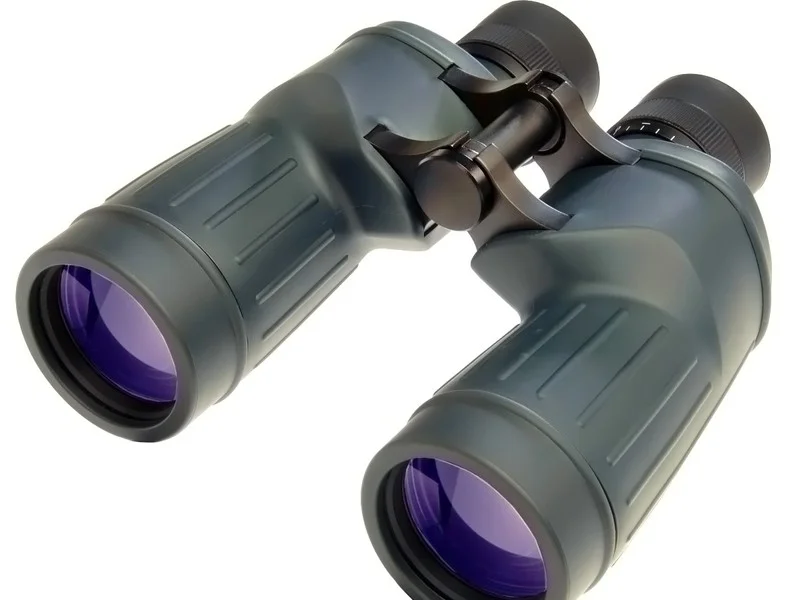
Sharper optics for anyone who's caught the meteor bug and wants a pair that'll also do justice to star clusters on the darkest nights.
Affiliate links: you pay the same price, we earn a small commission that helps keep WatchTheStars free.
Where to Look
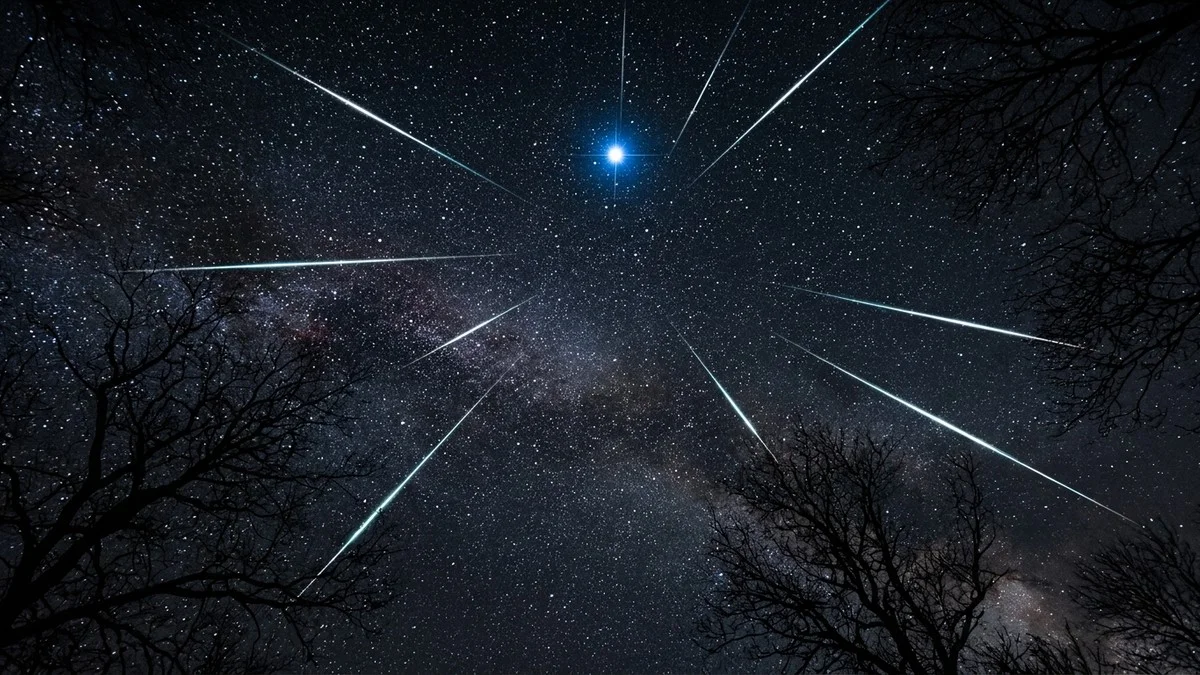
The radiant point, the patch of sky meteors appear to stream from, sits near Vega, the fifth-brightest star in the entire sky. Vega is hard to miss: it's a piercing blue-white point that rises in the northeast around 9–10pm in mid-April, climbs through the east overnight, and is almost directly overhead by dawn.
But here's the key tip: don't stare directly at the radiant. Meteors that appear right at the radiant have very short trails because they're coming straight toward you. Instead, look about 40–50 degrees away, roughly four clenched fists held at arm's length. The southeast or due east are ideal directions. Meteors will appear longer and more spectacular there.
The best technique is the simplest one. Lie on your back (a reclining garden chair or a sleeping bag on a groundsheet works brilliantly), let your eyes relax, and take in as much sky as possible. Give your eyes at least 15–20 minutes to fully adapt to the dark. Avoid checking your phone: even a brief glance at the screen resets your night vision.
What You Might See
Under clear, dark skies away from city lights, expect to see 10 to 18 meteors per hour at peak, roughly one every four to six minutes. For the best rates, consider heading to one of the UK's dark sky reserves or parks: Bortle 2–3 sites like Galloway, Northumberland, or the Brecon Beacons will show you roughly twice as many meteors as a typical rural location. That might sound modest compared to the Perseids or Geminids, but the Lyrids have a trick up their sleeve: fireballs.
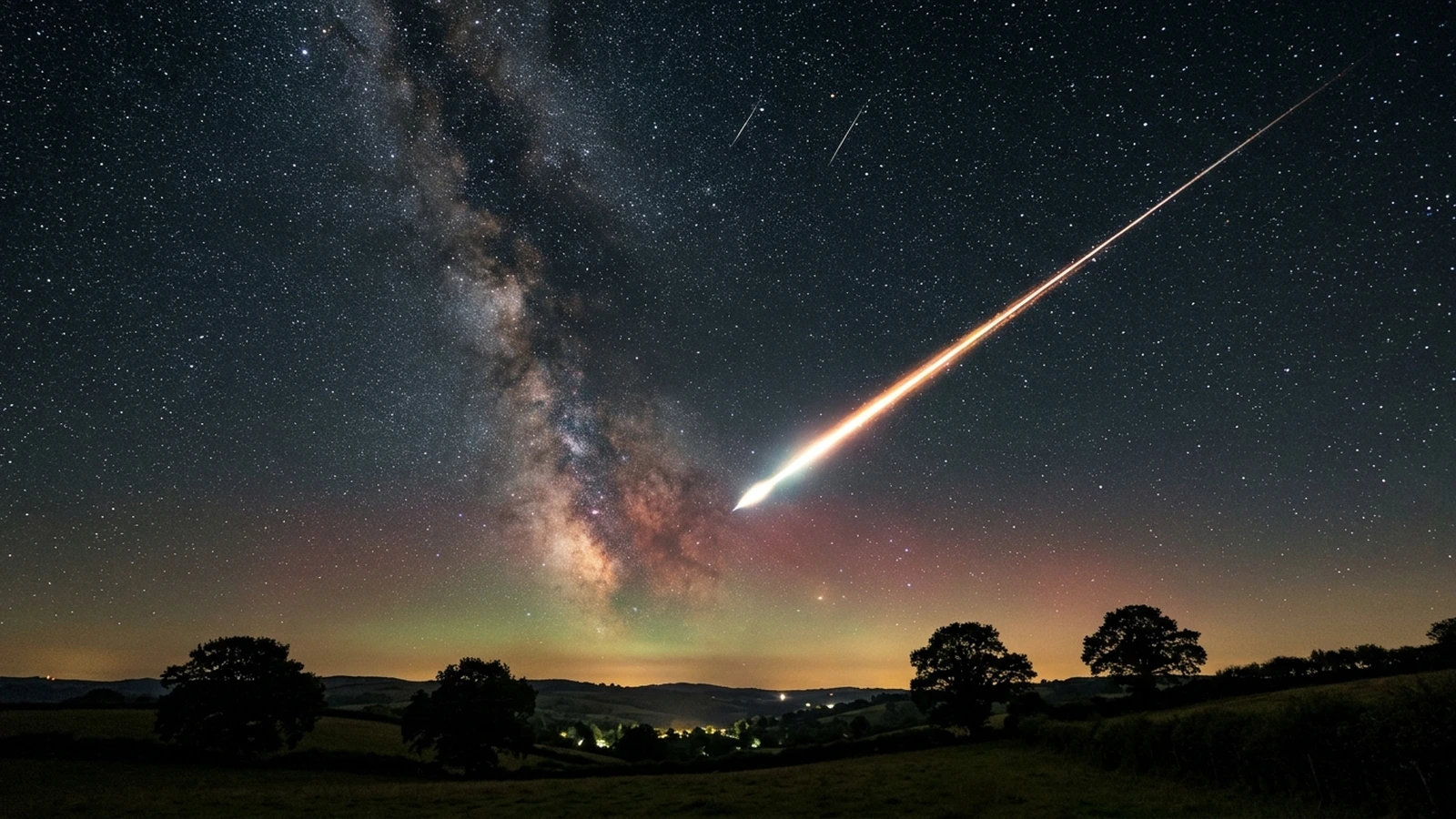
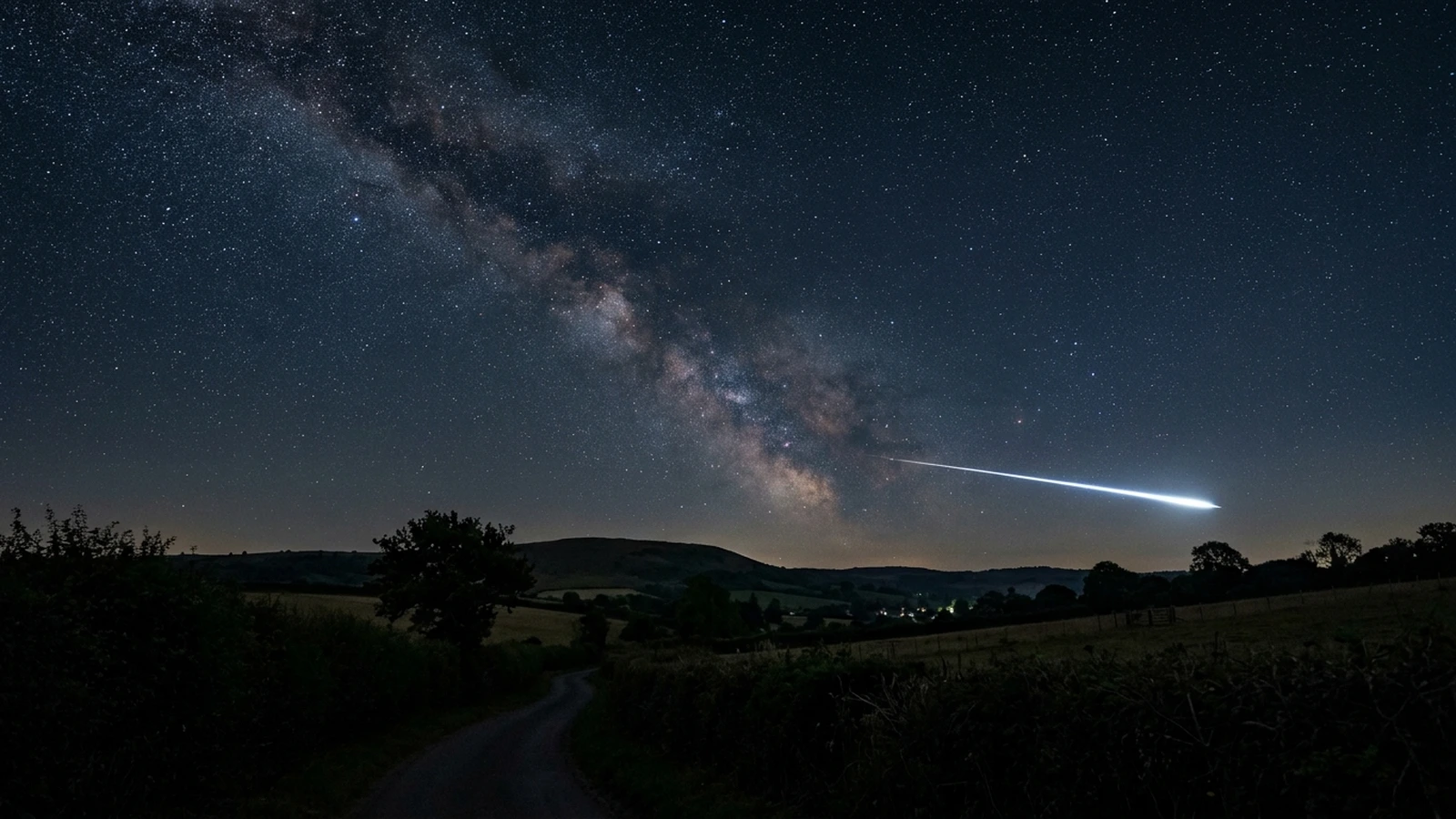
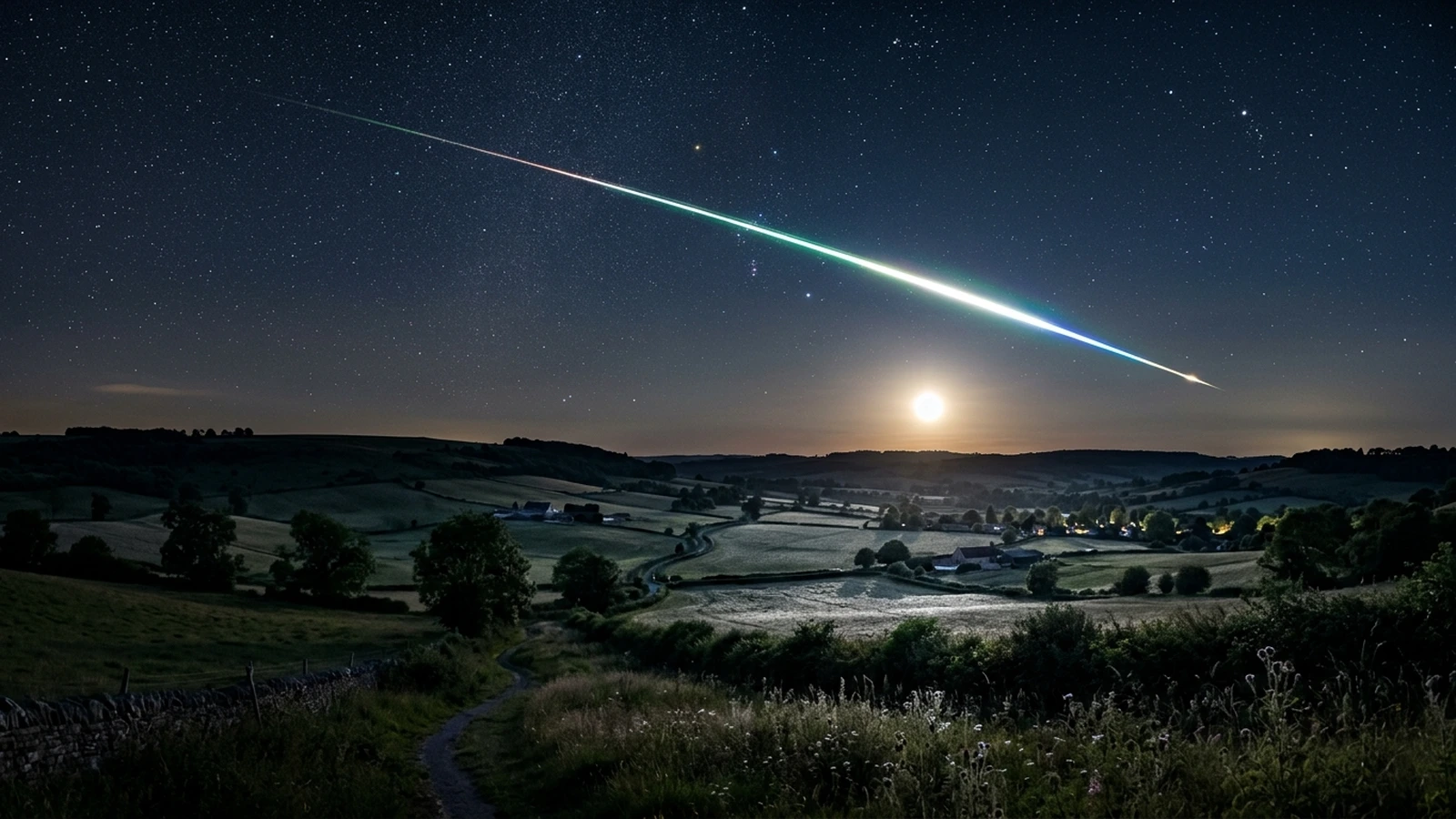
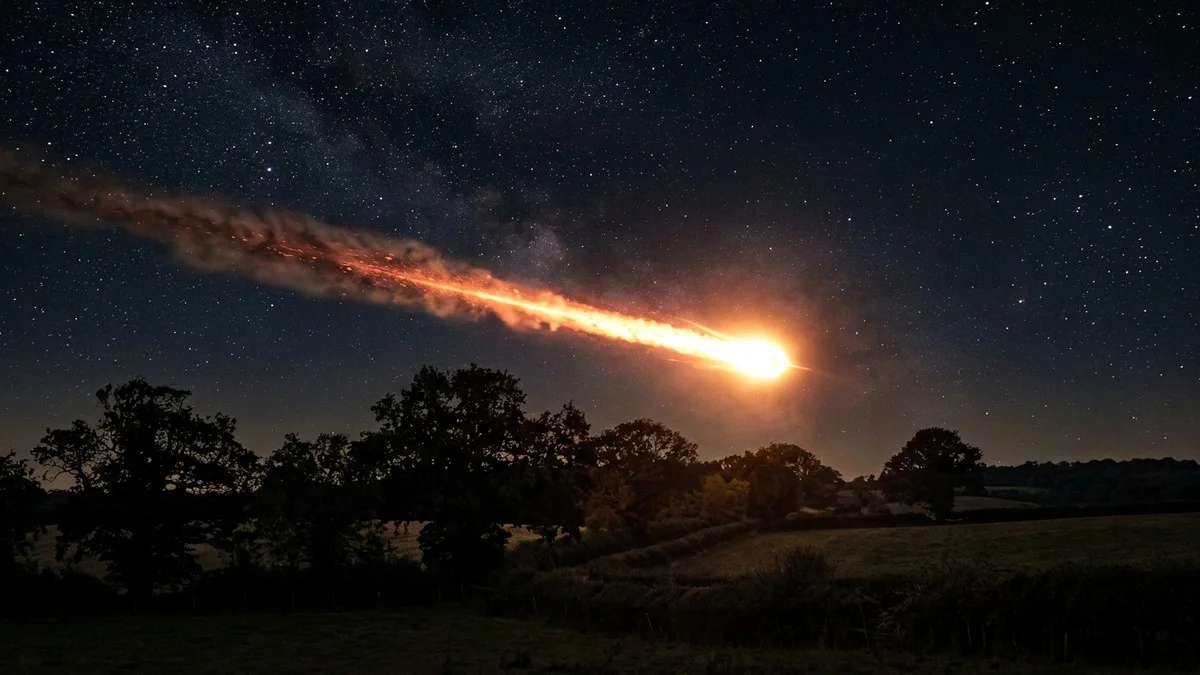
Lyrid fireballs are some of the most impressive in any shower. They're caused by meteoroids the size of a large marble rather than a grain of sand, and they can light up the entire sky for a second or two, sometimes leaving glowing smoke trails (called persistent trains) that hang in the atmosphere for several minutes. About 15–20% of Lyrid meteors are bright enough to be classed as fireballs.
At the very least, you'll see a handful of bright, fast shooting stars on a beautiful dark spring night. At best, you might catch a fireball that makes you gasp.
The Lyrids' Surprise Outbursts
The Lyrids also have a history of surprise outbursts. These happen roughly every 60 years when Earth passes through a particularly dense strand of Comet Thatcher's debris trail. The most recent confirmed outburst was in 1982, when rates briefly surged to around 90 per hour. The next is expected around 2042, but the Lyrids have caught observers off guard before, with rates jumping for an hour or two in years no one predicted. It's part of what makes them worth watching: most years are quietly reliable, but any year could be the one that surprises everyone.
How to Photograph a Meteor
Capturing a meteor on camera is partly skill, partly luck, but the Lyrids' fireballs improve your odds significantly.
With a smartphone: Modern phones (iPhone 12+, Samsung Galaxy S21+, Google Pixel 4+) have excellent night modes. Mount your phone on a small tripod, aim at the sky roughly 40° from Vega, and set the exposure to the longest available (often 10–30 seconds in Night Mode or Pro mode). Set ISO to 800–1600. Take frame after frame: think of it as casting a net. The more exposures you take, the more likely one will contain a meteor.
With a DSLR or mirrorless camera: Use a wide-angle lens (14–24mm), set to f/2.8 or wider, ISO 1600–3200, and exposures of 15–25 seconds. Focus manually on a bright star (Vega works perfectly). Use an intervalometer or the camera's built-in interval timer to shoot continuously. Over an hour, you'll accumulate dozens of frames: stack the best ones later to create a composite showing multiple meteor trails.
The secret: Point your camera at an interesting foreground: a treeline, a church spire, a ruin. A meteor alone is impressive; a meteor above a recognisable landscape is a photograph people share.
Key Dates Each Year
| Date | Event |
|---|---|
| ~16 April | Lyrid shower becomes active: early meteors possible |
| 19–21 April | Rates building: 5–8 meteors/hour on clear nights |
| ~22 April (night of 22–23) | Peak: best rates 10–18/hour; watch 2am–4:30am |
| ~25 April | Lyrid shower ends: activity fades to background |
What to bring: Warm clothing (April nights are still cold, expect 3–7°C after midnight), a reclining chair or groundsheet, a flask of something warm, and patience. No binoculars or telescope needed: your eyes are the best meteor detector there is.
Clear skies, and happy hunting.
Frequently Asked Questions
Equipment guides
Related topics
Ian ClaytonAmateur astronomer and founder of WatchTheStars.co.uk, dedicated to helping others explore the wonders of our universe. Full profile →