Key takeaways
- The Lyrid meteor shower peaked on the night of April 22/23: the best window was 02:00–04:30 BST
- The crescent Moon set around 01:30 BST, leaving over three hours of dark sky before dawn
- Rates of 10–20 meteors per hour were expected at peak, with a chance of bright fireballs: the Lyrids are famous for them
- No equipment was needed: just a dark spot, warm clothes, and patience
Jump to section 5 sections
Looking ahead? Peak dates and viewing advice for every annual shower are in our meteor showers guide.
Conditions on the Night of 22/23 April
The Lyrid meteor shower, the oldest on record, watched by humans for over 2,700 years, peaked on the night of 22–23 April 2026, and the predicted conditions were about as good as they get.
The predicted peak was 20:15 BST on April 22, but meteor showers don't run to a strict schedule. Activity was expected to be strong all night, and the real sweet spot for UK observers came after the Moon set. The waxing crescent Moon (3% illuminated) dropped below the horizon around 01:30 BST, leaving over three hours of genuinely dark sky before astronomical twilight began at roughly 04:45 BST.
That dark window, 02:00 to 04:30 BST, was when the most meteors were expected. The radiant point near Vega climbed higher in the northeast throughout this period, which meant more meteors visible overhead rather than skimming the horizon.
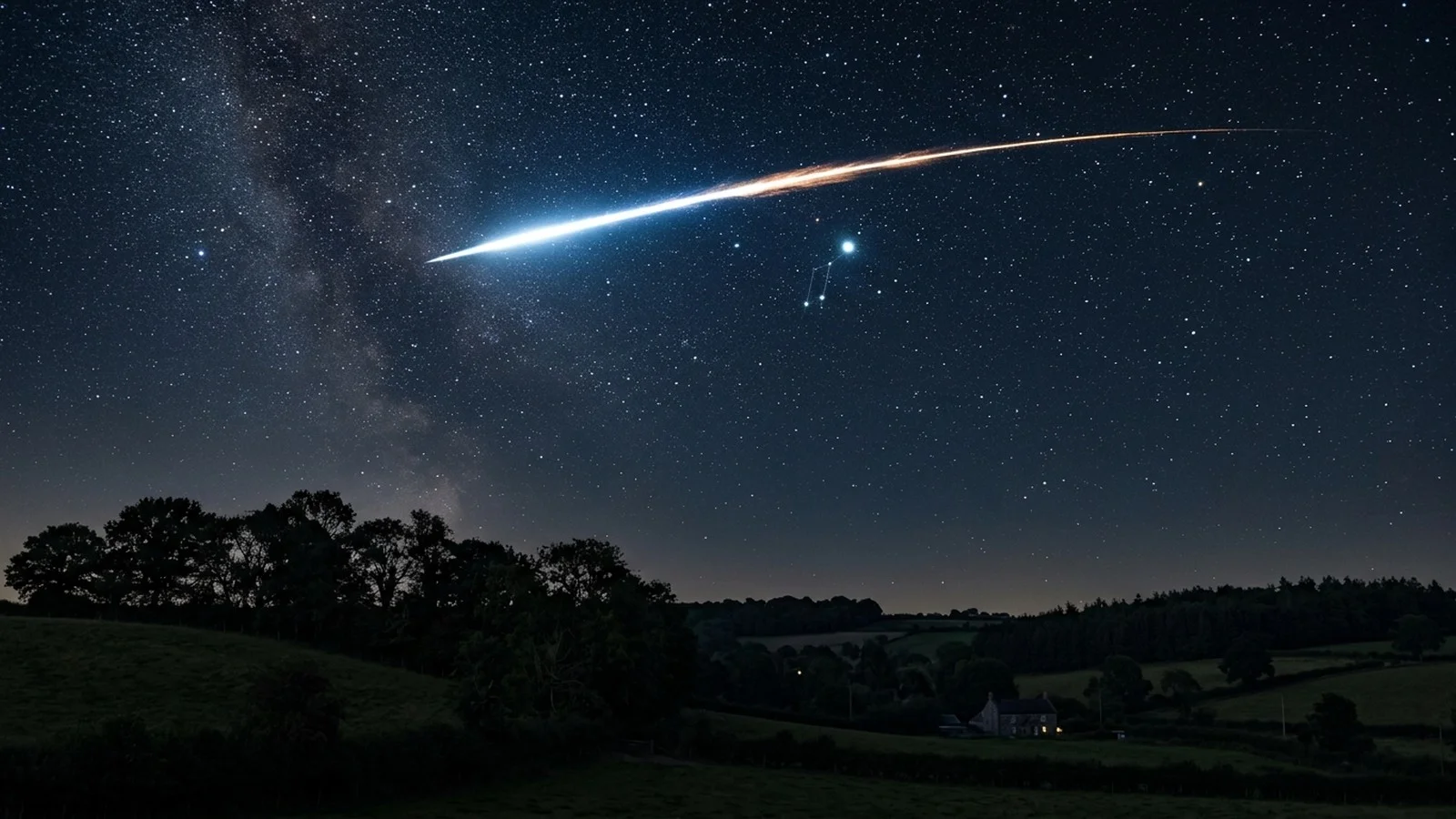
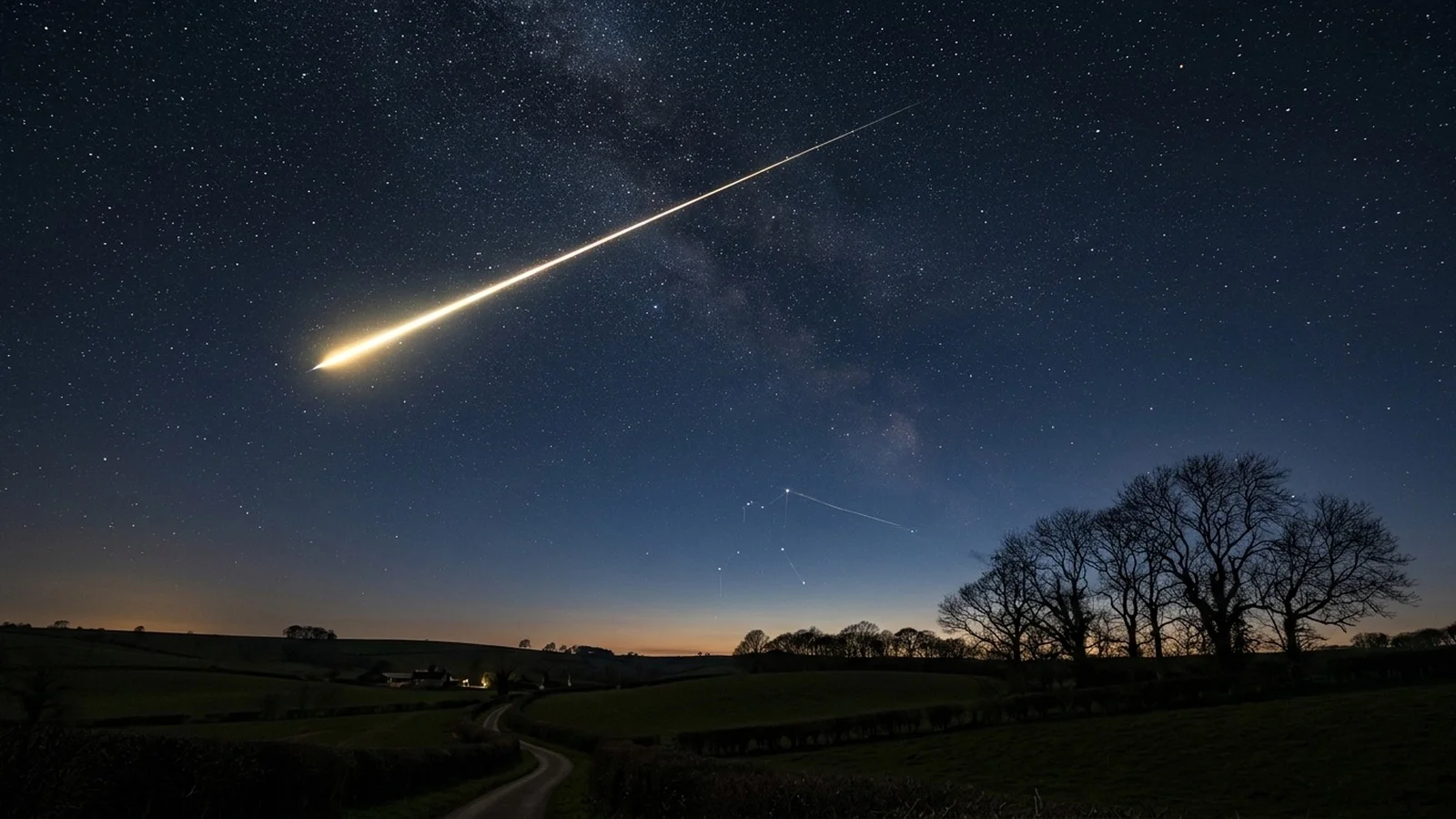
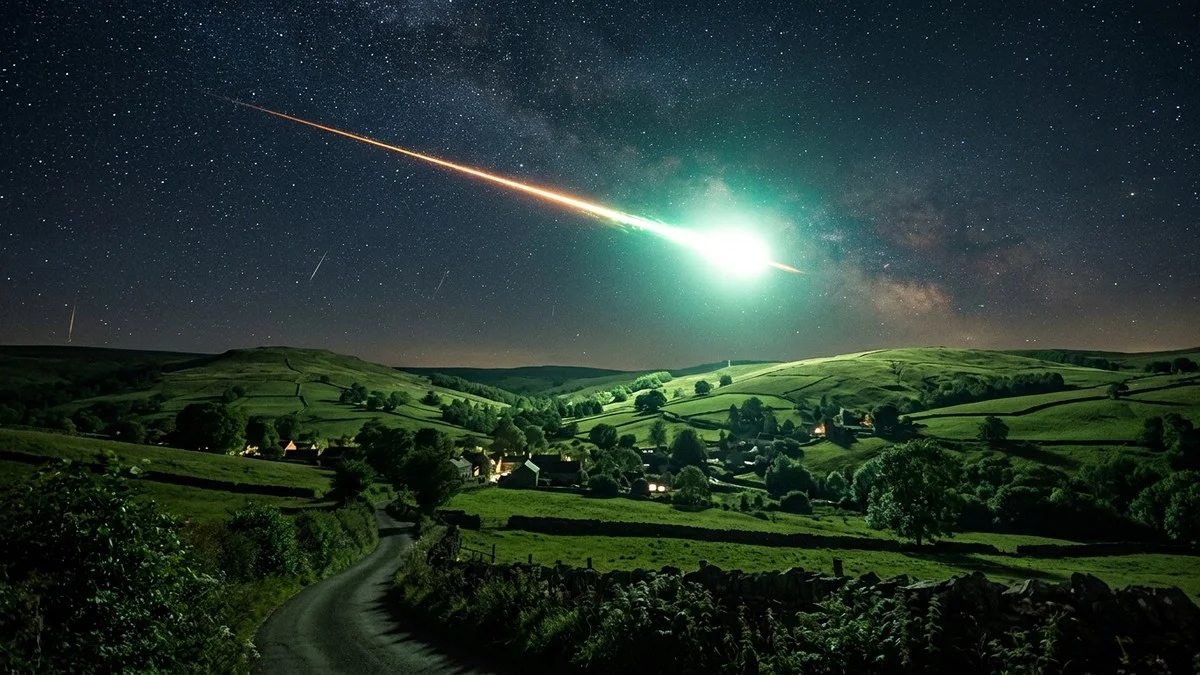
The expected rate was 10–20 meteors per hour under dark skies. The Lyrids are famous for occasional fireballs: exceptionally bright meteors that can briefly light up the entire landscape. About 15–20% of Lyrids are fireballs, which is a high rate compared to most showers.
Hour-by-Hour BST Guide
Here's what was expected through the night from the UK:
22:00–00:00 BST: The crescent Moon was still up, low in the west. A few early Lyrids were possible, but the Moon's glare and the radiant's low position meant rates would be modest. A good time to set up a spot and let the eyes adjust.
00:00–01:30 BST: Rates picked up as Vega climbed higher in the northeast. The Moon was very low and about to set. Rates of 5–10 meteors per hour were possible.
01:30–02:00 BST: The Moon set. Eyes needed 15–20 minutes to fully dark-adapt. This was the transition into prime time.
02:00–04:30 BST: The golden window. Dark skies, radiant high in the northeast, and the shower at or near peak activity. This was when 15–20 meteors per hour and a fireball were most likely. The best single hour was typically 03:00–04:00 BST, when the radiant was highest before dawn started to intrude.
04:30–05:15 BST: Twilight began to wash out the sky. The brightest meteors would still show, but fainter ones would be lost. A good time to pack up, or to stay for the dawn.
While waiting for meteors
Kit we've tested and reviewed in full
Binoculars were best skipped for the shower itself, as they only narrow your view. But between meteors, a pair of binoculars was a great way to pass the time exploring what else was up near Vega that night.
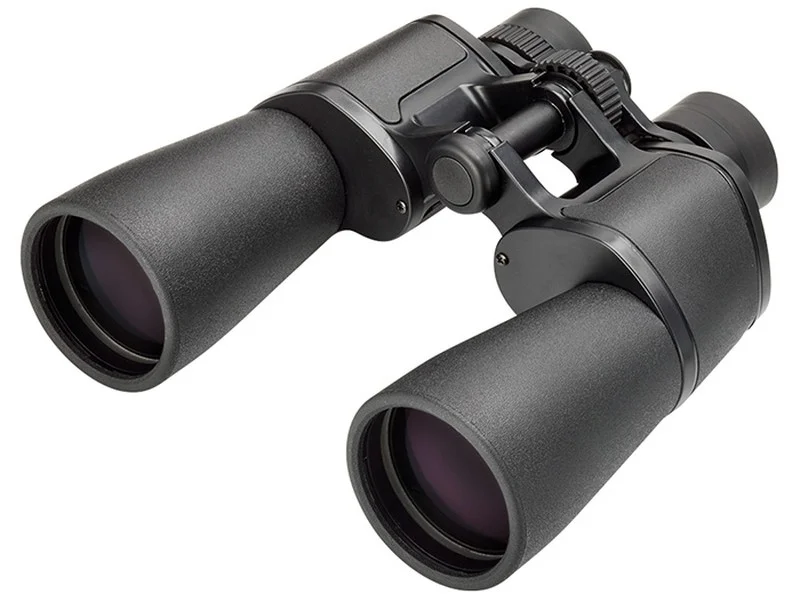
Light enough to leave beside your blanket and pick up for a quick look while waiting for the next fireball.
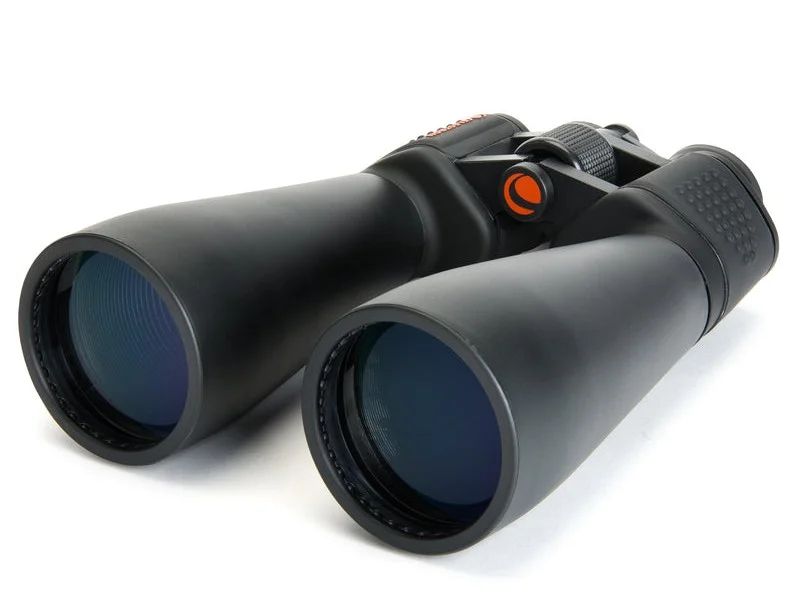
Good for a look at Comet PanSTARRS low in the west during twilight, before the main event got going after midnight.
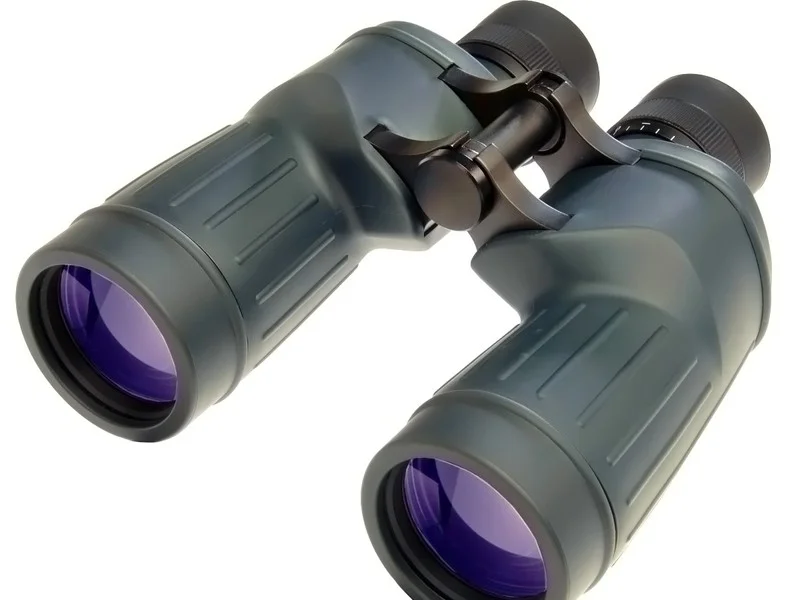
Sharp enough to make Vega itself, the radiant marker for that night, properly pin-sharp before settling in for the golden window.
Affiliate links: you pay the same price, we earn a small commission that helps keep WatchTheStars free.
Where the Lyrids Were Best Watched
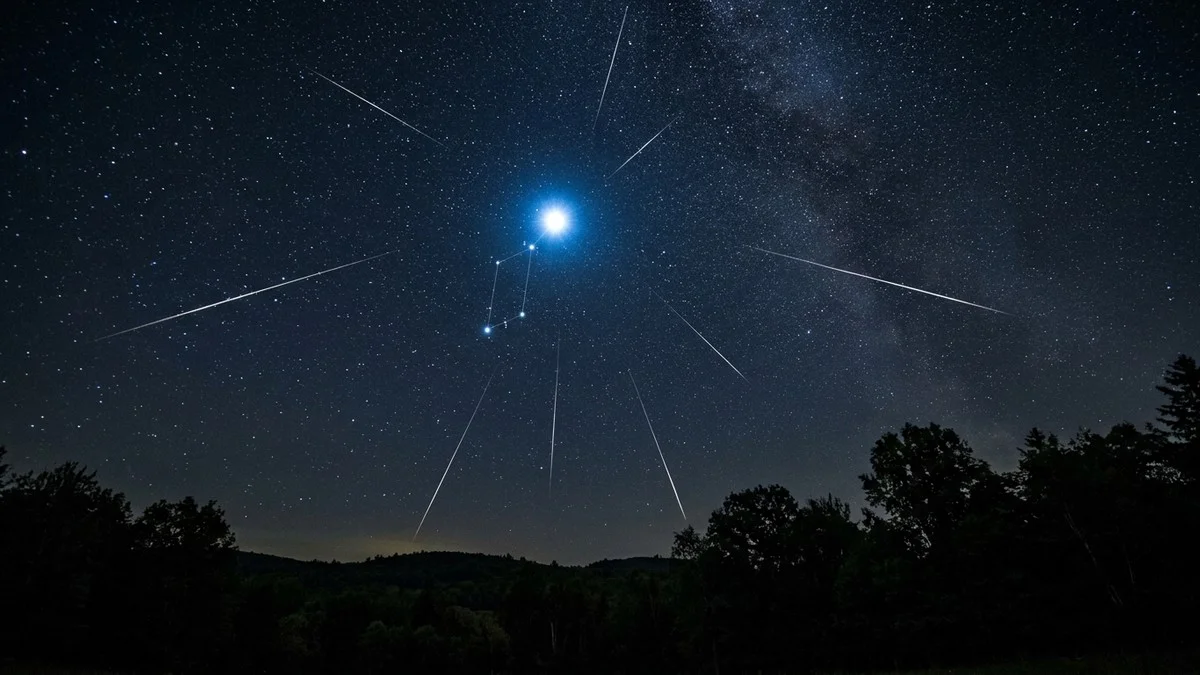
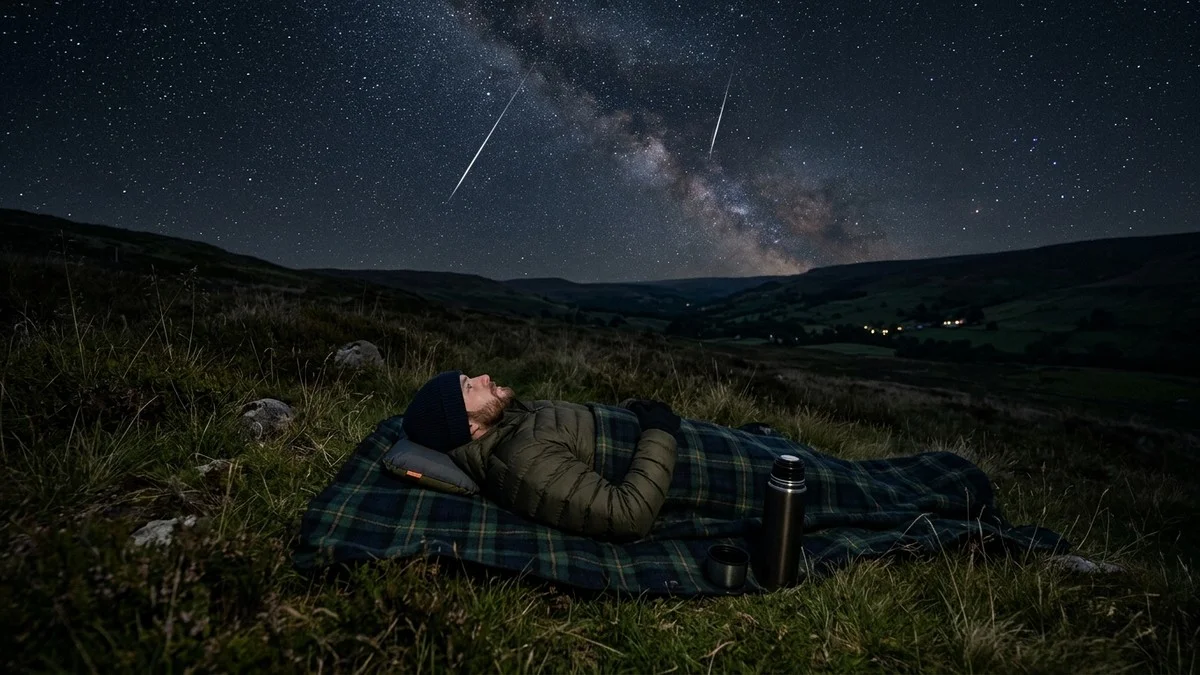
The radiant was not the place to stare. Meteors appear to originate from a point near Vega in the northeast, but the longest, most spectacular trails appear 40–50 degrees away from that point. The best strategy was to lie on your back and look roughly overhead or slightly to the east, letting peripheral vision do the work.
Finding Vega was easy: it was the brightest star in the northeast after midnight: a brilliant blue-white point you couldn't miss. If you could see Vega, you were looking in the right direction.
Essentials for the night:
No equipment was needed at all: binoculars and telescopes actually make meteor watching worse because they narrow your field of view. All you need is a dark location away from streetlights, a reclining chair or blanket on the ground, and warm layers. April nights are still cold in the UK: 3–6°C by 03:00 BST was expected in most areas. A flask of tea helps.
Quick Photography Tips
For anyone trying to capture a meteor that night, this was the quick setup:
Smartphone: Use night mode with the phone propped against something stable (a shoe works), pointed northeast, and take long exposures. Modern iPhones and Pixels can capture meteors: it just takes patience and luck.
Camera: Use your widest lens at f/2.8 or wider, ISO 1600–3200, and take continuous 10–15 second exposures pointed northeast. A tripod is essential. Shoot hundreds of frames: it only takes one meteor crossing the field of view.
The key trick: Compose the shot with Vega in frame but not dead centre, so that meteors radiating outward from near Vega would streak across the image beautifully.
What Else Was in the Sky That Night
Anyone out watching for Lyrids had a few other things in the sky to look at:
Jupiter and the Moon made a lovely pairing earlier that evening: the half-lit Moon sat just 3° from Jupiter in Gemini, low in the west after sunset. By the time the Lyrids picked up, they had both set.
Comet PanSTARRS (C/2025 R3) was by then post-perihelion and around magnitude 4.6. It was transitioning from the morning to the evening sky and might be tricky to spot that night, but it was worth checking low in the west during twilight for anyone already outside. It was due to reach closest approach to Earth on April 26, when forward scattering could give it a final brightness boost.
Vega itself deserved a moment. It's the fifth-brightest star in the entire sky, just 25 light-years away, and was the first star (other than the Sun) ever photographed, back in 1850. It's also the star that will become Earth's "North Star" in about 12,000 years as our planet's axis slowly precesses. That night, it was the beacon for finding Lyrids.
If you caught a fireball that night, we want to hear about it.
Want a heads-up before the next clear night? Our free Tonight tool scores your local sky conditions and sends you an email alert when they hit 7/10 or above. Enter your UK postcode and never miss another clear night.
Frequently Asked Questions
Equipment guides
Related topics
Ian ClaytonAmateur astronomer and founder of WatchTheStars.co.uk, dedicated to helping others explore the wonders of our universe. Full profile →