Key takeaways
- The Eta Aquariid meteor shower peaks before dawn on May 5–6, with 10–30 meteors per hour visible from the UK
- Every meteor is a piece of Halley's Comet: the most famous comet in history, not due back until 2061
- 2026's challenge: a bright waning gibbous Moon will wash out fainter meteors, but the brightest fireballs will punch through
- Best UK window: 3:00–4:30am BST on May 5 or 6, looking east-southeast with the Moon behind you
Jump to section 8 sections
Looking ahead? Peak dates and viewing advice for every annual shower are in our meteor showers guide.
What Are the Eta Aquariids?
The Eta Aquariid meteor shower is one of the best meteor showers of the year, and certainly the best of spring. Active from 15 April to 27 May, it peaks around 5–6 May when Earth ploughs through the densest part of a debris trail left behind by the most famous comet in human history: Halley's Comet.
At its peak, the shower produces a Zenithal Hourly Rate (ZHR) of around 40–60 meteors per hour under ideal conditions. That figure is what you'd see if the radiant were directly overhead in perfectly dark skies. From the UK, where the radiant never climbs very high, realistic rates are lower, typically 10–30 meteors per hour, but the ones you do see tend to be spectacular. Getting to a UK dark sky site makes a significant difference: from a Bortle 2–3 location like Galloway or Northumberland, you'll see far more of the fainter meteors that city skies wash out entirely.
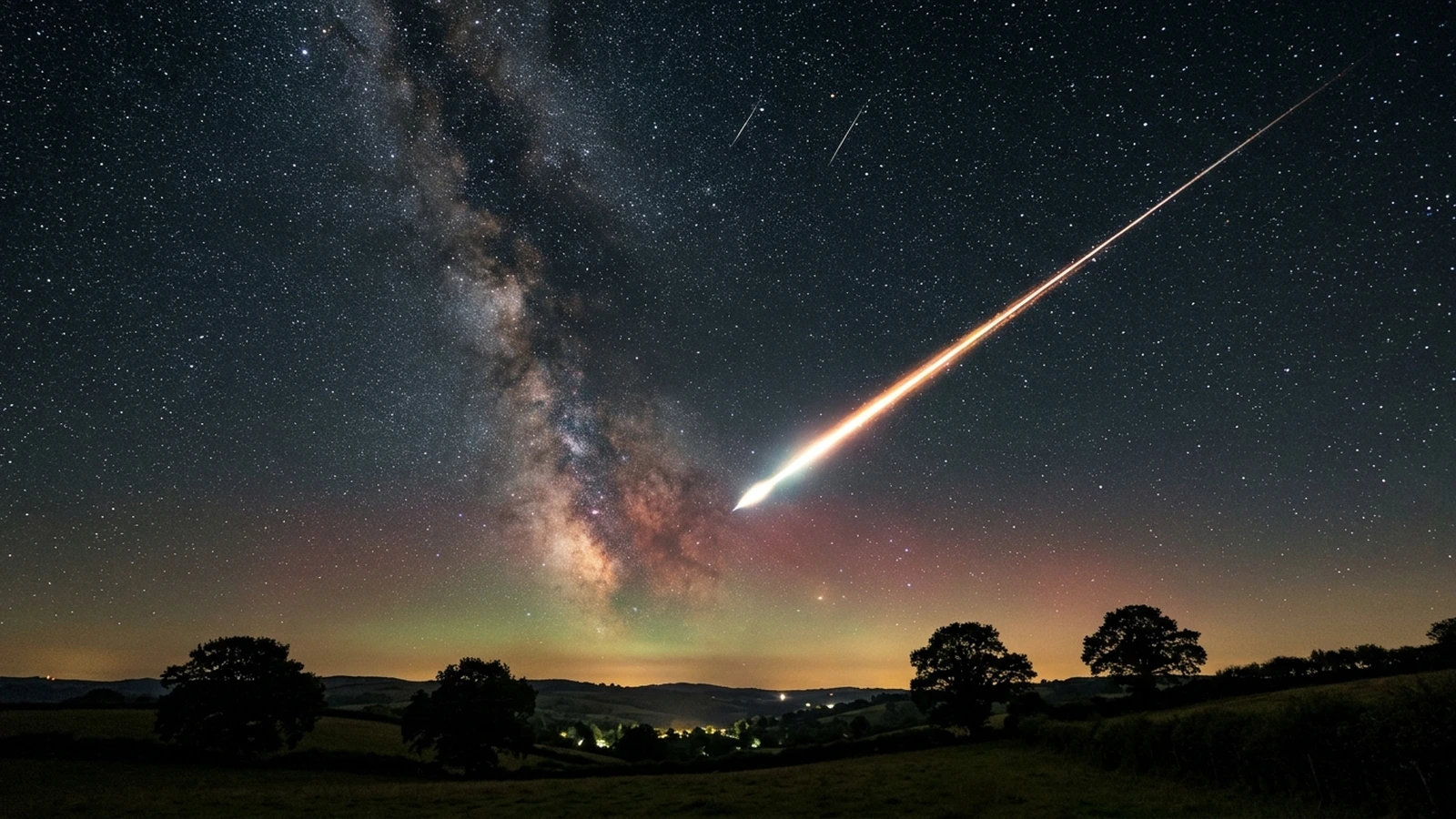
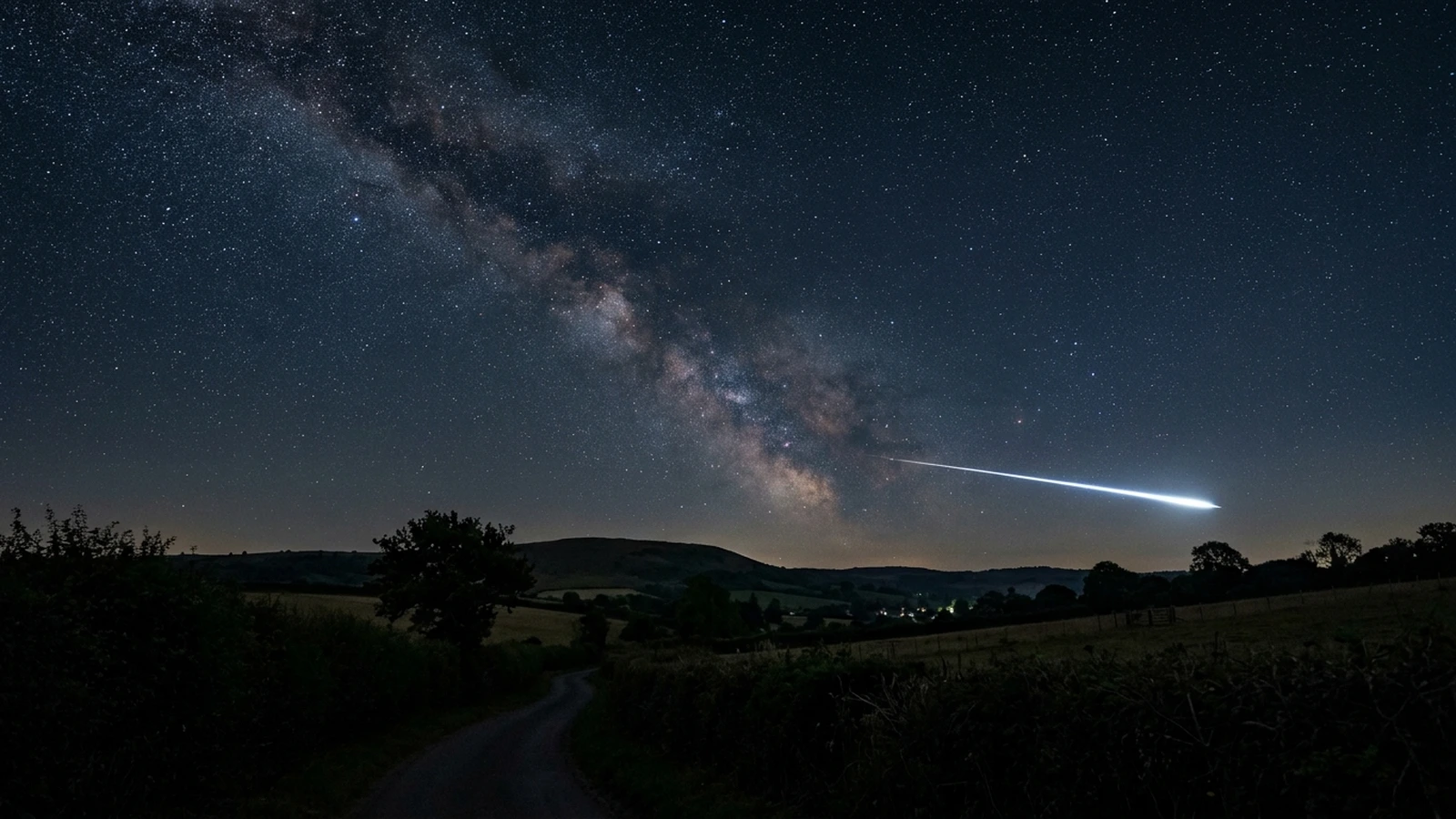
That's because Eta Aquariid meteors are fast. Very fast. They hit our atmosphere at 66 kilometres per second, roughly 150,000 miles per hour, making them among the fastest meteors of any annual shower. At those speeds, many leave bright, persistent trains that can glow for several seconds after the meteor itself has vanished.
The Halley's Comet Connection
Every Eta Aquariid meteor is a piece of Comet 1P/Halley. Each time Halley swings through the inner Solar System on its 76-year orbit, the Sun's heat boils away a layer of ice from the comet's nucleus, releasing dust, rock fragments, and frozen gases into space. Over thousands of years, this debris has spread out along Halley's entire orbital path, forming a vast tube of particles that Earth intersects twice a year.
The first crossing, in May, produces the Eta Aquariids. The second, in October, gives us the Orionid meteor shower. Both are pieces of the same comet: just encountered at different points in Earth's orbit.
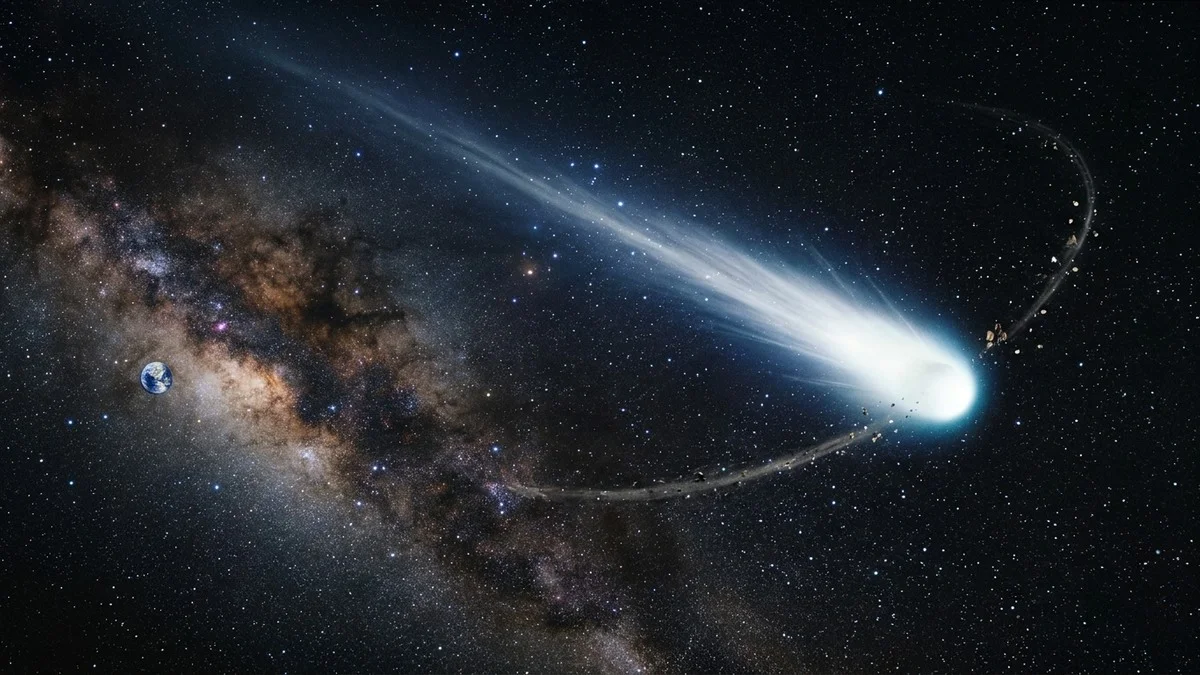
Halley was last visible from Earth in 1986, and it won't return until the summer of 2061. But you don't have to wait 35 years to experience it. Every bright streak you see during the Eta Aquariids is a tiny fragment of Halley, some no bigger than a grain of sand, burning up in our atmosphere at 66 km/s. It's the closest encounter with history's most famous comet that any of us will have for decades.
The Eta Aquariids hold another distinction: they were the first meteor shower ever linked to Halley's Comet, and historical records of Eta Aquariid outbursts stretch back more than 2,000 years. Chinese astronomers recorded unusually intense displays in 74 BCE and again in 401, 443, and 466 CE.
When to Watch From the UK
The Eta Aquariids don't have a sharp, narrow peak like some showers. Instead, they produce a broad plateau of good activity spanning roughly 4–5 May through 7–8 May. This means you have several mornings to try, which is particularly useful in the UK where cloud cover can ruin any single night.
The radiant point, the spot in the sky where meteors appear to originate, lies near the star Eta Aquarii in the constellation Aquarius. From the UK (latitude ~51–55°N), this radiant doesn't rise above the eastern horizon until around 2:00–2:30am BST. It's still quite low at 3:00am and only reaches a modest altitude of about 15–20° by the start of astronomical twilight around 4:00–4:30am.
This means your prime viewing window is short but productive:
Best window: 3:00am–4:30am BST on the mornings of May 5, 6, or 7.
The good news about a low radiant is that it produces "earthgrazer" meteors: long, bright streaks that skim across the sky at shallow angles. These are often the most impressive meteors of any shower, and they're actually more common when the radiant is low.
The Moon Problem, and How to Beat It
Let's address the elephant in the sky: 2026 is not the best year for the Eta Aquariids. The Full Flower Moon fell on 1 May, which means the peak nights of 5–6 May coincide with a waning gibbous Moon at roughly 70–75% illumination. That's bright enough to wash out many of the fainter meteors.
But it's not a write-off. Here's how to work around it:
Put the Moon behind you. The Moon will be in the southwestern sky during the predawn hours. Face east or east-southeast toward the radiant, and the Moon will be at your back. Your eyes will be looking into the darker part of the sky.
Use a building, hill, or tree line. Position yourself so that a physical obstruction blocks the Moon from your direct line of sight. Even partially shading the Moon from your peripheral vision will help your eyes adapt to darkness.
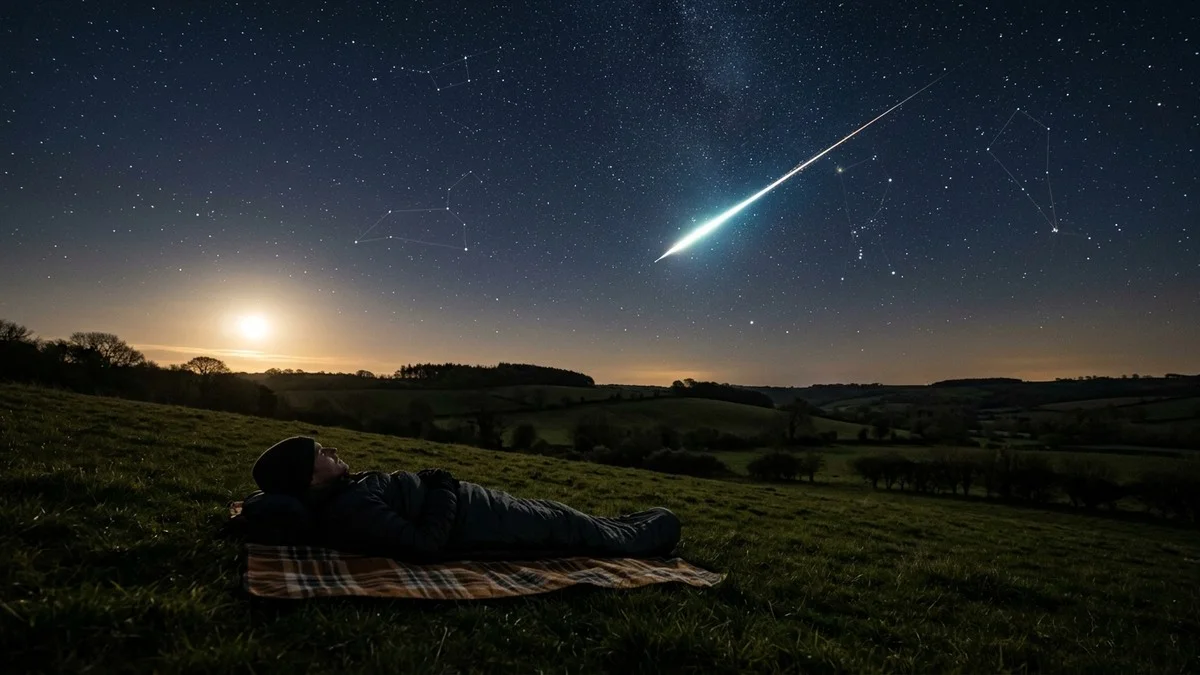
Focus on the bright ones. Moonlight doesn't affect all meteors equally. The faintest ones disappear, but the bright fireballs, and the Eta Aquariids produce plenty of these, will still punch through the moonlight. You might see 8–15 meteors per hour instead of 20–30, but the ones you see will be genuinely impressive.
Try the mornings of May 7–8. By this point the Moon is down to 55–60% illumination and rises later, giving you a slightly longer dark window before moonrise. The shower rates are still near peak levels thanks to the broad plateau.
Where to Look
Don't stare directly at the radiant in Aquarius. Meteors appear to originate from the radiant, but they can appear anywhere in the sky. The longest, most spectacular trails are typically seen 40–60° away from the radiant point.
From the UK, a good strategy is to lie back and look roughly east-southeast at an altitude of about 40–50° above the horizon. This puts you looking into the darkest sky (away from the Moon in the southwest) while still catching meteors radiating out from Aquarius low in the east.
Finding Aquarius itself is easy in early May: look for the bright "Summer Triangle", Vega, Deneb, and Altair, dominating the eastern sky. Aquarius sits well below and to the right (south) of Altair. But you don't need to find the constellation. Just face east, look up, and let your peripheral vision do the work.
What You'll See
Eta Aquariid meteors are distinctive. Their extreme speed (66 km/s, compared to 41 km/s for the Perseids or 35 km/s for the Geminids) means they tend to produce:
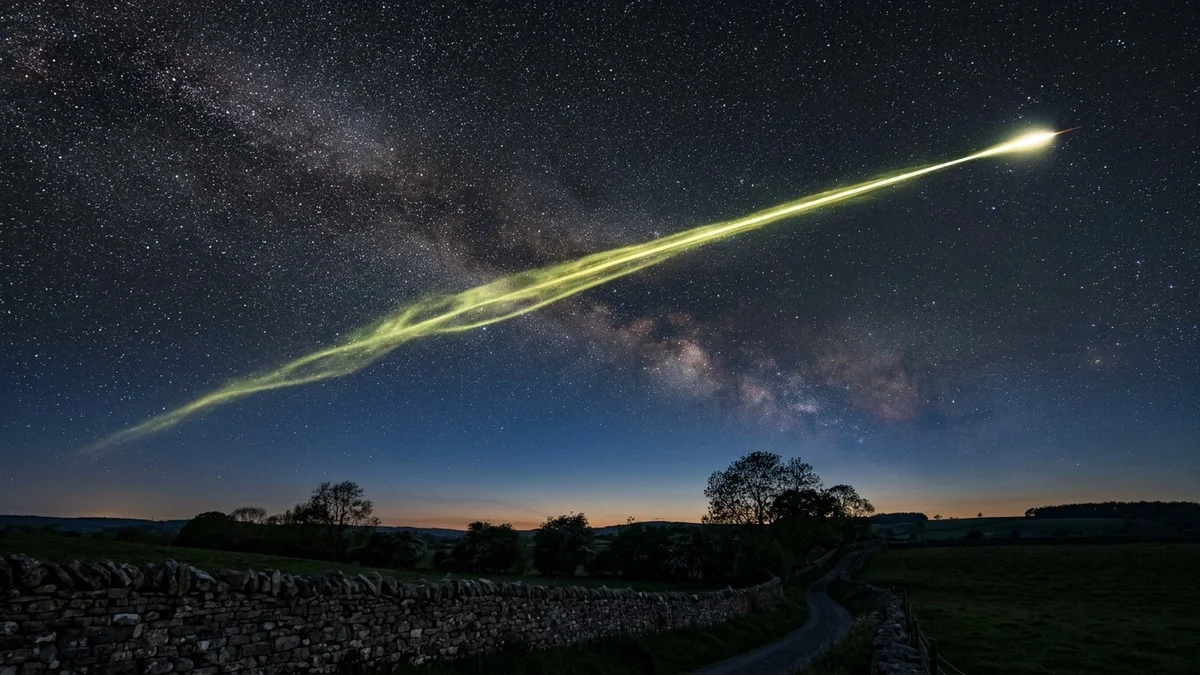
Long trains. Many Eta Aquariids leave glowing trails of ionised gas that persist for 1–3 seconds after the meteor itself has gone. On a good night, you might see several of these "ghost trails" fading in the sky simultaneously.
Earthgrazers. Because the radiant is low from the UK, some meteors skim the upper atmosphere at shallow angles, producing long, slow-moving streaks that can cross 30° or more of sky. These are the highlight of the shower: rare from most showers but relatively common from the Eta Aquariids.
Occasional fireballs. Like most showers linked to a large parent comet, the Eta Aquariids include some larger debris particles. These produce fireballs brighter than Venus (magnitude –4 or brighter) that are visible even in moonlit skies.
The meteors themselves are typically white or yellowish-white, though some leave green or blue-tinted trains as the ionised magnesium and nickel in the debris glows at specific wavelengths.
What to take out for the Eta Aquariids
Kit we've tested and reviewed in full
Meteors are a naked-eye event, so keep the optics down while you're watching for streaks. But the radiant sits low before dawn, and binoculars are what fill the quiet spells between meteors: the rising summer Milky Way, star clusters, the crescent Moon. Here's what we'd have on the groundsheet next to us.
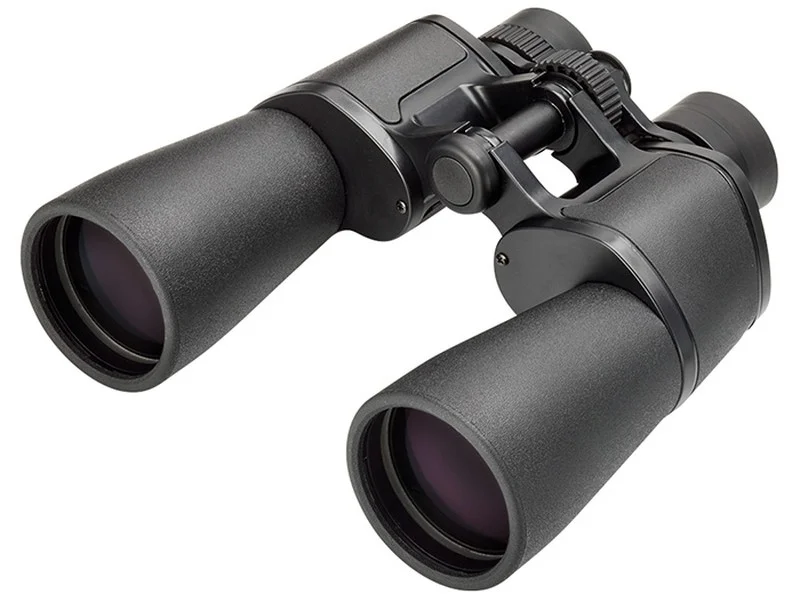
Between meteors, a wide 10×50 view sweeps the summer Milky Way rising in the east and picks out star clusters near the radiant. Light enough to lift one-handed from a reclining chair.
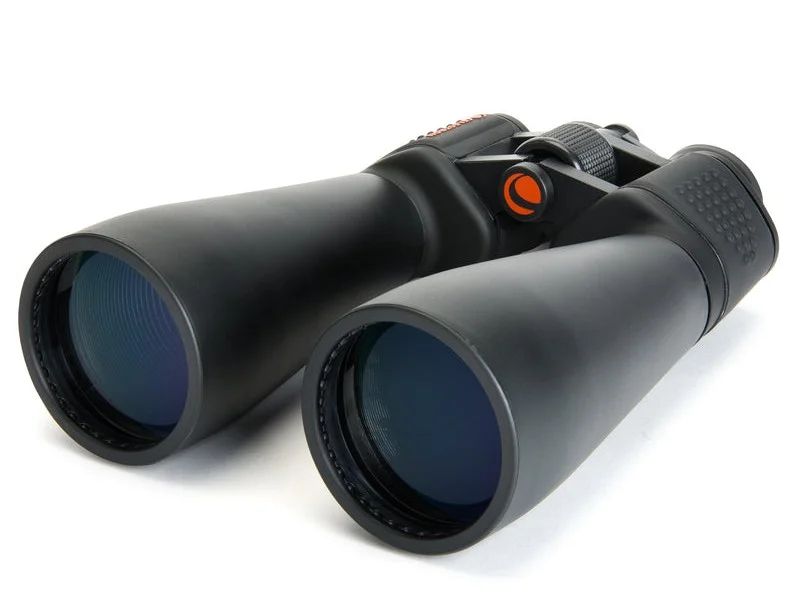
For the crescent Moon low in the pre-dawn sky and the brighter deep-sky objects around Aquarius, the extra aperture and magnification pay off. Bring a tripod at this power.
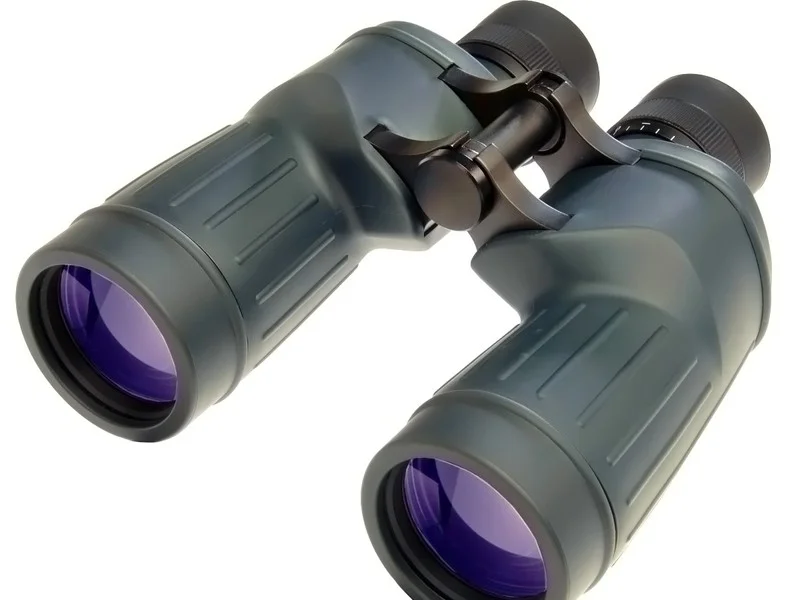
Cleaner, higher-contrast views than the entry pair, so faint clusters stand out from the twilight. A single do-everything pair if you only buy once.
Affiliate links: you pay the same price, we earn a small commission that helps keep WatchTheStars free.
How to Photograph Eta Aquariid Meteors
Meteor photography is fundamentally a waiting game: you point your camera at the sky and take long exposures until a meteor crosses the frame. The Eta Aquariids' bright trains make them rewarding photographic targets.
Smartphone: Modern night modes (iPhone Night Mode, Google Astrophotography Mode) can capture bright meteors. Prop the phone against something stable, aim east, and take a series of 10–30 second exposures. You'll need patience: expect to take 30–50 frames to capture one meteor.
DSLR/mirrorless: Use a wide-angle lens (14–24mm), f/2.8 or wider, ISO 1600–3200. With the Moon up, keep exposures to 10–15 seconds to avoid a washed-out sky. Point the camera east-southeast at about 40° altitude. Use an intervalometer to take continuous exposures and walk away: review later for captures.
Key tip for 2026: The Moon will brighten the sky background significantly. Reduce your ISO to 800–1600 and shorten exposures to 8–12 seconds compared to what you'd use on a moonless night. The brighter Eta Aquariids will still register clearly against the lighter background.
Key Dates at a Glance
| Date | Event | Notes |
|---|---|---|
| 15 April | Shower becomes active | Sporadic Eta Aquariids possible |
| 1 May | Full Flower Moon | Moon begins waning: conditions slowly improve |
| 4–5 May | Plateau begins | Good rates; Moon ~75% illuminated |
| 5–6 May | Peak night | Best rates 3:00–4:30am BST; Moon ~70% |
| 6–7 May | Strong activity continues | Moon ~63%; almost as good as peak |
| 7–8 May | Last Quarter Moon | Moon ~55%, rises later: best dark window |
| 27 May | Shower ends | Activity fades to background levels |
No telescope or binoculars needed: in fact, they'll make things worse by narrowing your field of view. The best equipment for any meteor shower is your eyes, a reclining chair or blanket, warm clothing, and a flask of something hot. Get out of the city, give your eyes 20 minutes to fully dark-adapt, lie back, and let Halley's Comet put on its annual show.
The next major meteor shower after the Eta Aquariids is the Perseid meteor shower in August: widely considered the best shower of the year for Northern Hemisphere observers, with rates of 80–100 meteors per hour and warm summer nights. But for now, the Eta Aquariids offer a chance to see fragments of Halley's Comet, and that connection to the most storied object in the night sky is worth setting an alarm for.
Frequently Asked Questions
Equipment guides
Related topics
Ian ClaytonAmateur astronomer and founder of WatchTheStars.co.uk, dedicated to helping others explore the wonders of our universe. Full profile →