Halley's Comet
The most famous comet of all, last here in 1986, back in 2061, and already on its way
Halley's Comet last visited the inner solar system in 1986 and will next return in July 2061. It's the only bright comet that comes back within a human lifetime, which is why, for over 2,000 years, it's been the comet everyone remembers. And here's the bit most people don't know: it has already turned around. Halley passed its furthest point from the Sun in December 2023 and is now falling back towards us.
Why this comet, of all comets?
Comets brighter than Halley turn up from time to time, but they're one-off visitors from the distant Oort Cloud on orbits thousands of years long. Nobody alive when they leave will see them again. Halley is different. Its 75–76 year orbit means a typical person sees it once, and the lucky ones twice. Your grandparents may have seen it in 1986. Children born around now will watch it blaze over Britain in 2061.
It's also the comet that taught us what comets actually are. In 1705, the English astronomer Edmond Halley noticed that bright comets recorded in 1531, 1607 and 1682 followed suspiciously similar paths. He proposed they were the same object on a closed orbit, and predicted it would return around 1758. It did, sixteen years after his death, and the comet has carried his name ever since. Before that, comets were seen as omens. After it, they were physics.
Records of Halley go back much further than Halley himself. Chinese astronomers logged it in 240 BC, and probably earlier. Its 1066 appearance, weeks before the Battle of Hastings, was stitched into the Bayeux Tapestry: a crowd of Saxons pointing at a streaming star, with King Harold looking distinctly unhappy beneath it.
The 1986 visit: a flop for the public, a triumph for science
If you asked anyone who went out to look in 1986, they'll probably tell you it was a let-down. The geometry was about as bad as it can get: when the comet reached perihelion on 9 February 1986, it was on the opposite side of the Sun from Earth, and by the time it came round for viewing it was already fading and stayed low in the sky for northern observers. Through binoculars from the UK it was a dim smudge, not the spectacle the newspapers had promised.
For science, though, 1986 was a landmark. An international fleet of five spacecraft (Europe's Giotto, the Soviet Vega 1 and 2, and Japan's Suisei and Sakigake) flew out to meet the comet. Giotto passed within about 600 km of the nucleus and sent back the first close-up images of a comet's heart ever taken: a dark, peanut-shaped lump roughly 15 by 8 km, blacker than coal, venting jets of gas and dust from cracks in its crust. Almost everything in the textbooks about comet nuclei traces back to that one flyby.
Where is Halley's Comet right now?
Halley spends most of each orbit loafing in the cold outer solar system. It reached aphelion (its furthest point, about 35 times the Earth–Sun distance, out beyond the orbit of Neptune) in December 2023. That was the turning point. Since then it has been inbound, very slowly at first, picking up speed as the Sun's gravity reels it back in.
Don't bother pointing a telescope at it, though. Right now it's millions of times too faint for amateur equipment: only the world's largest professional telescopes can pick it out against the stars. It won't show up in backyard telescopes until the late 2050s.
You can watch pieces of it burn up twice a year
Here's the consolation prize, and it's a good one. Every orbit, Halley sheds dust along its path, and Earth ploughs through that debris trail twice a year. The result is two annual meteor showers: the Eta Aquariids in early May and the Orionids in late October. Every meteor you see in those showers is a fleck of Halley's Comet, some of it shed centuries ago, ending its journey as a streak of light over your head.
From the UK, the Orionids are the better bet: the radiant climbs reasonably high after midnight in October, and rates reach about 20 meteors an hour from a dark site. The Eta Aquariids favour the Southern Hemisphere, but early risers in Britain can still catch a few in the hour before dawn in the first week of May.
2061: a far better show than 1986
Halley reaches perihelion on 28 July 2061, and this time the geometry works in our favour. The comet will be on the same side of the Sun as Earth around its peak, so it should appear considerably brighter than in 1986 and better placed for Northern Hemisphere observers. Predictions suggest it could rival the brightest stars, with a tail visible to the naked eye in evening skies.
It sounds a long way off, but the maths is oddly cheering: a child stargazing in 2026 will be in their forties when Halley comes back, younger than Edmond Halley was when he worked out it would.
Kit for comet watching (and the two meteor showers Halley leaves behind)
Kit we've tested and reviewed in full
Halley itself is a 2061 job, but bright comets turn up every few years and the Orionids and Eta Aquariids are Halley's dust burning up twice a year. Wide-field binoculars are the comet-watcher's tool, not a telescope. See our binocular reviews for more.
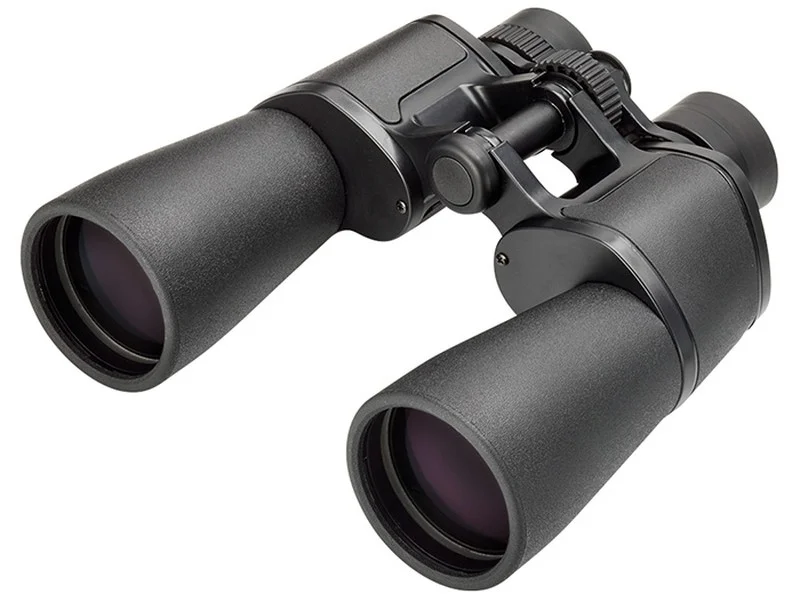
A wide, bright field is exactly what a comet's tail needs, and this is the pair we point most UK beginners to first. Ideal for the wait between Orionid meteors, too.
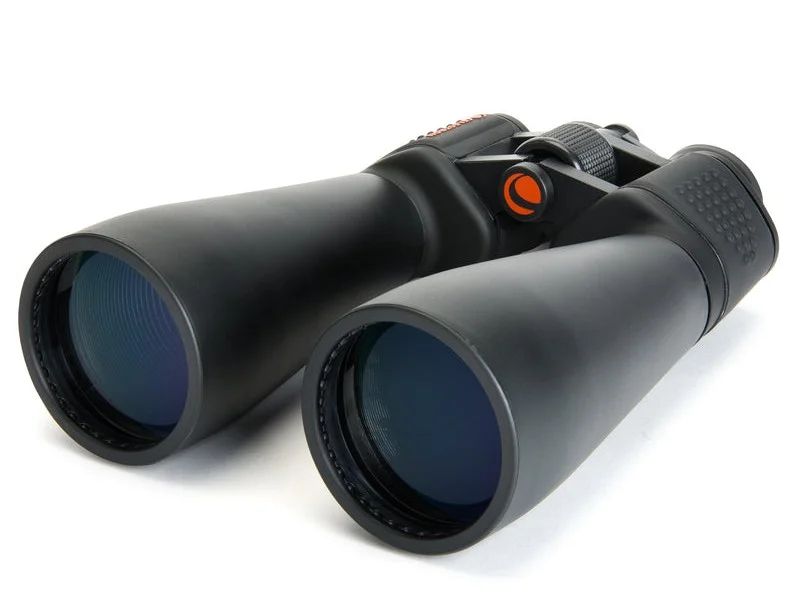
Big 70mm lenses pull in a fainter comet and show the coma's structure. Use a tripod.
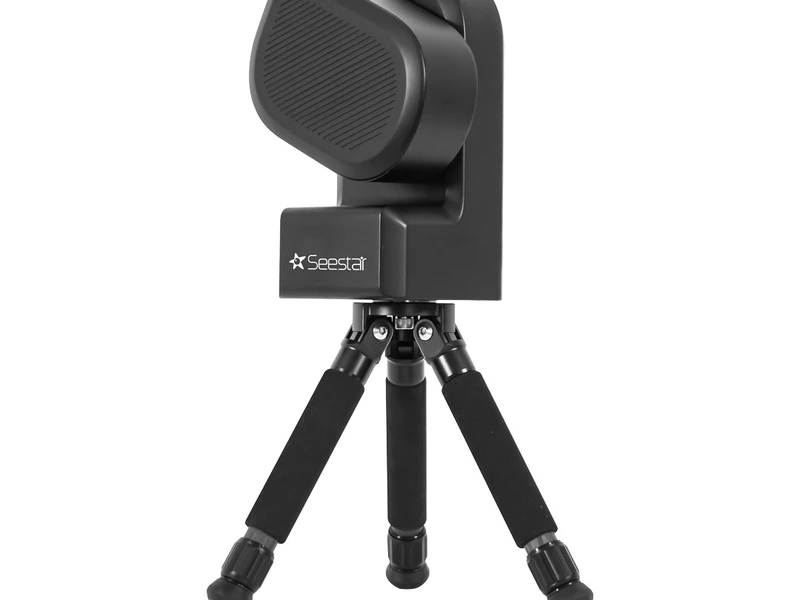
A smart telescope that tracks and stacks automatically, so a comet photo from a back garden is a few taps rather than a night of fiddling.
Browse all our equipment reviews
Honest, research-based recommendations for every budget.
Browse all →Affiliate links: you pay the same price, we earn a small commission that helps keep WatchTheStars free.