Key takeaways
- The Moon formed around 4.5 billion years ago from debris left by a collision between Earth and a Mars-sized body called Theia
- It's tidally locked: the same face always points toward Earth, so the far side was completely unknown until the Space Age
- The lunar south pole holds billions of tonnes of water ice in permanently shadowed craters, the reason both NASA and China are racing to land there
- Tycho, Copernicus, and Clavius are the most dramatic craters visible through binoculars or a small telescope
Jump to section 8 sections
What Is the Moon?
The Moon is Earth's only natural satellite, orbiting us at an average distance of 384,000 km. It's big enough to be a world in its own right, about a quarter the width of Earth, and its gravity is powerful enough to drive our ocean tides and stabilise Earth's axial tilt, which keeps our climate relatively stable over long timescales.
It formed around 4.5 billion years ago, probably from the debris left when a Mars-sized body called Theia smashed into the early Earth. The impact was so violent that both bodies were partially vaporised. Material from the collision was flung into orbit and eventually coalesced into the Moon we see today, which is why its composition is so similar to Earth's outer layers.
Can You See the Moon Tonight?
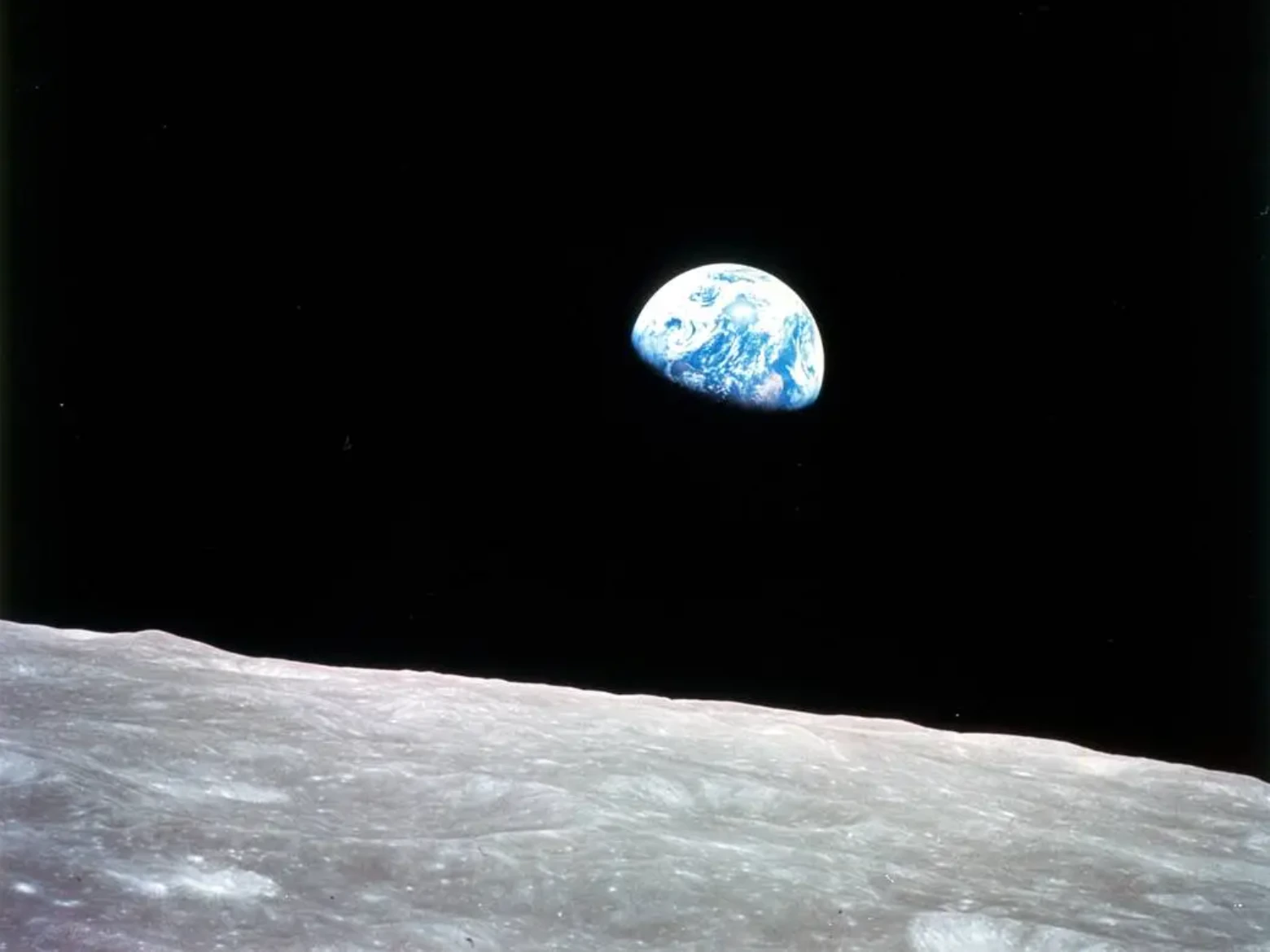
Most nights, yes, but not all night and not every night. Around new Moon it is lost in the Sun's glare for two or three days, and a waning Moon does not rise until after midnight. The phase decides the timing: a first-quarter Moon is high in the south at sunset and sets around midnight, a full Moon rises at sunset and stays up all night, and a last-quarter Moon rises around midnight and is best before dawn.
Our Moon phase tonight page gives tonight's phase, how much of the disc is lit, and moonrise and moonset times for your postcode, plus the dates of the next full and new Moon.
The Near Side
Because the Moon is tidally locked, the same face always points toward Earth. This is the near side: the one covered in the dark patches you can see with the naked eye on a clear night.
Those dark areas are called maria (the plural of "mare," Latin for sea, early astronomers thought they were bodies of water). They're actually ancient lava plains that formed when enormous asteroid impacts punched through the crust billions of years ago, letting molten rock flood to the surface. The lava cooled and solidified, leaving the dark, relatively flat plains we see today.
The brighter areas are the highlands, older, more heavily cratered terrain that makes up most of the far side. The contrast between the two is why you can see a face in the Moon: the dark maria form the eyes and mouth of what people across many cultures have called the "Man in the Moon."
The Major Maria (Seas)
Ocean of Storms: the largest dark feature on the Moon, covering 4 million km². Sprawls across the western near side.
Sea of Rains: a large, roughly circular basin in the northwest. One of the most prominent features visible to the naked eye.
Sea of Tranquility: where Apollo 11 landed on 20 July 1969. Neil Armstrong's "one small step" happened here.
Sea of Serenity: 674 km wide, just east of Imbrium. Apollo 17 landed on its southeastern rim in December 1972.
Sea of Crises: a distinctive oval basin near the eastern limb, easy to identify in binoculars.
Sea of Clouds: a southern mare, good for finding Tycho's famous ray system during full moon.
Interactive Map
Hover over any sea or crater on the map to see what it is and why it matters. The dark blue-grey areas are the maria; the white dots are crater locations.
Want to zoom in and explore the Moon in full detail? NASA Moon Trek uses high-resolution LRO imagery and lets you search any named feature.
Explore on NASA Moon Trek →Major Craters
The Moon has no atmosphere and no weather, so craters can survive for billions of years without eroding. The youngest craters are the most dramatic: their sharp edges and bright ray systems haven't been worn down yet by billions of subsequent micro-impacts.
Key Craters to Find
The Far Side
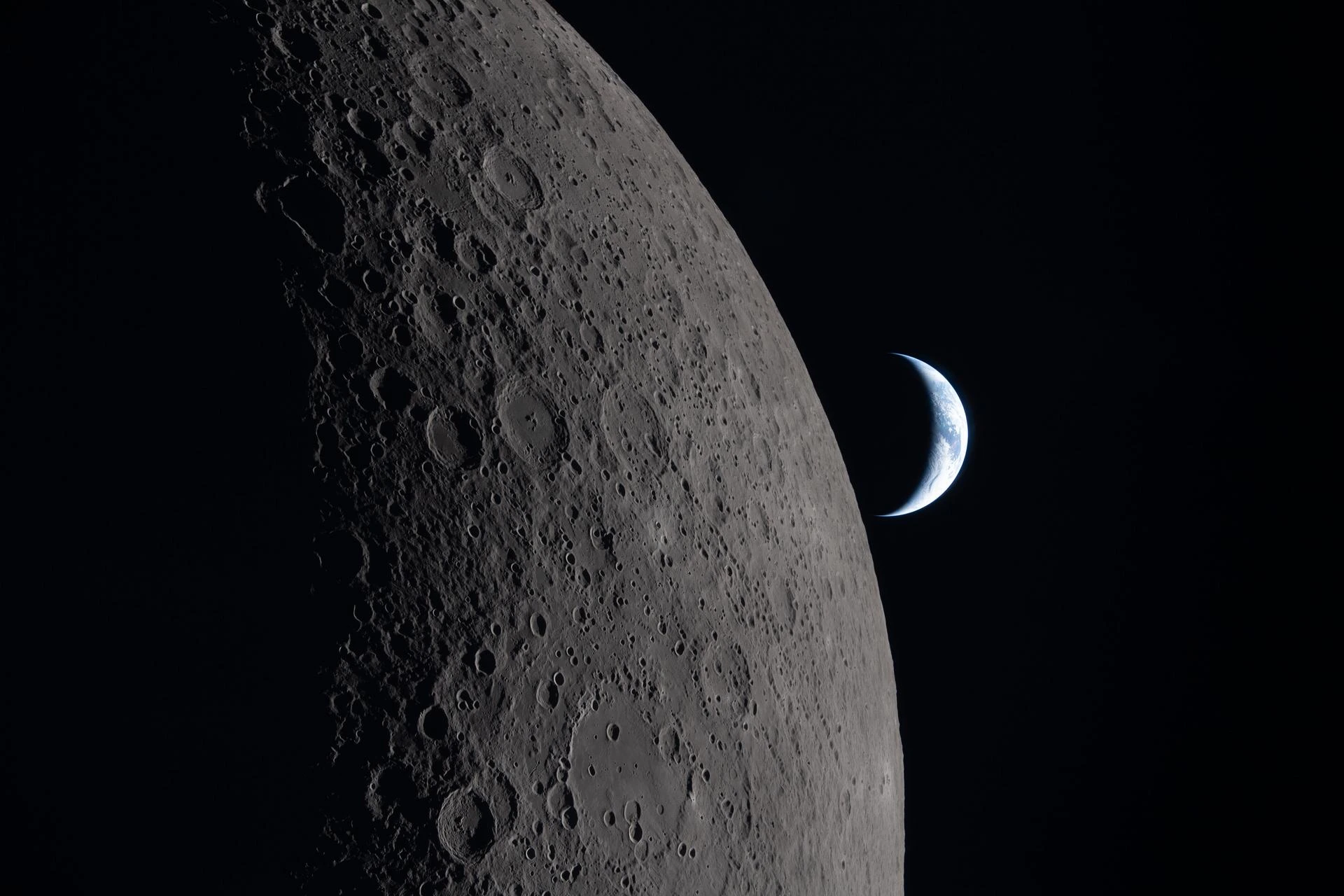
The far side of the Moon, often called the dark side, though that's a misnomer (it gets as much sunlight as the near side), was completely unknown to humans until 1959, when the Soviet Luna 3 spacecraft photographed it for the first time.
It's dramatically different from the near side. Where the near side is covered in dark lava plains, the far side is almost entirely ancient highlands: heavily cratered, pale, and ancient. The crust is also about twice as thick on the far side (around 150 km vs 70 km on the near side), which is probably why less volcanic material broke through.
The most remarkable feature on the far side is the South Pole–Aitken Basin, a circular impact scar roughly 2,500 km across and up to 8 km deep. It's one of the largest confirmed impact craters in the Solar System. China's Chang'e 4 lander and Yutu-2 rover have been exploring within this basin since January 2019, the first spacecraft ever to operate on the lunar far side.
The South Pole
The Moon's south pole is the most scientifically interesting, and now geopolitically significant, place on the Moon. Both NASA's Artemis programme and China's Chang'e programme are targeting it for crewed landings and permanent bases. Here's why.
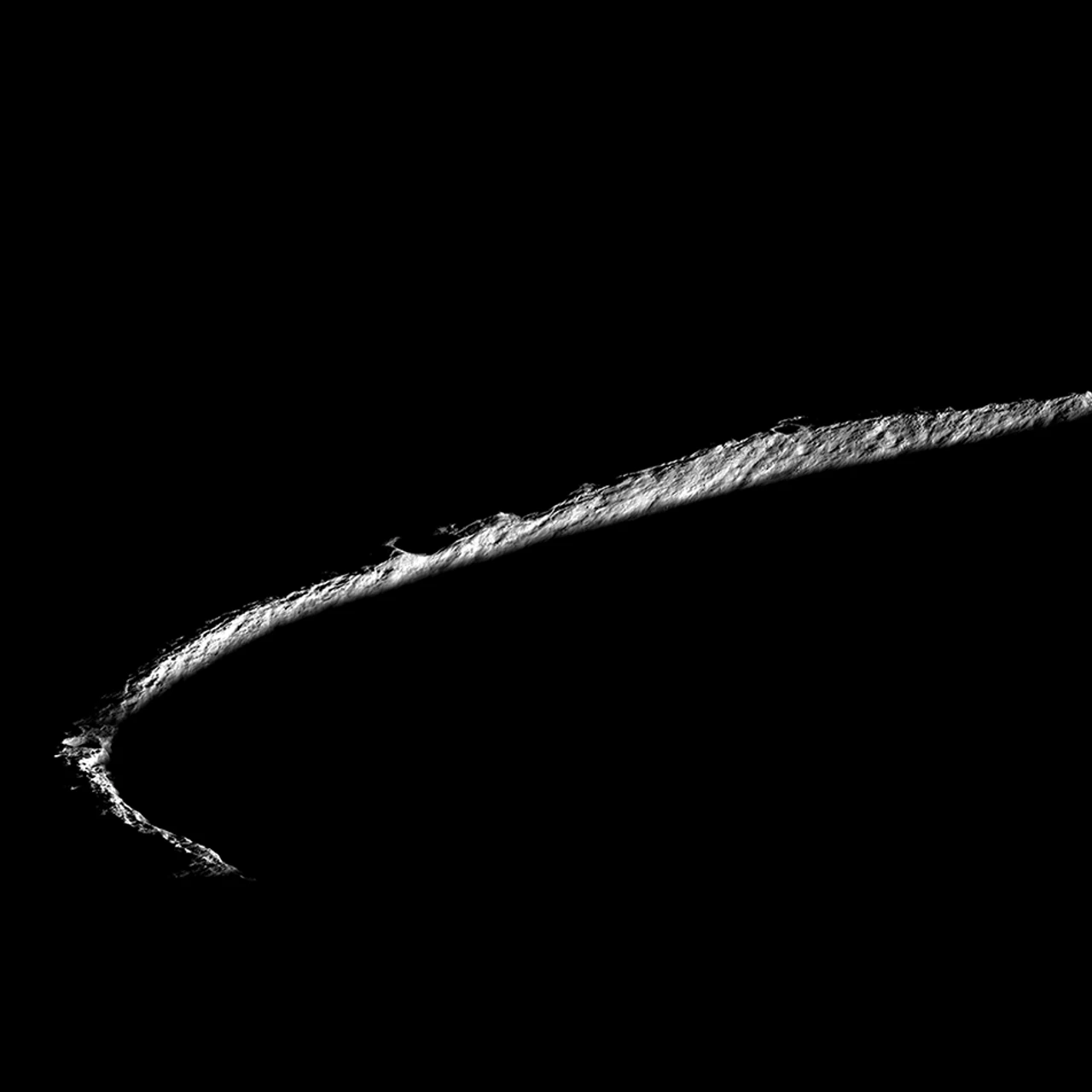
Earth is tilted at 23.5°, which gives us seasons. The Moon is only tilted 1.54°, which means the Sun barely rises above the horizon at the poles. At the south pole, the Sun skims along the horizon all year, never getting high enough to illuminate the floors of deep craters. Some of those crater floors haven't seen sunlight for billions of years.
Shackleton Crater
Shackleton is the crater that sits almost exactly at the south pole. It's about 21 km wide and 4 km deep. Three points on its rim are collectively lit for more than 90% of the year: these are the famous "Peaks of Eternal Light." Meanwhile, the crater floor has never seen sunlight at all, and sits at around −173°C, one of the coldest places in the Solar System.
Water Ice
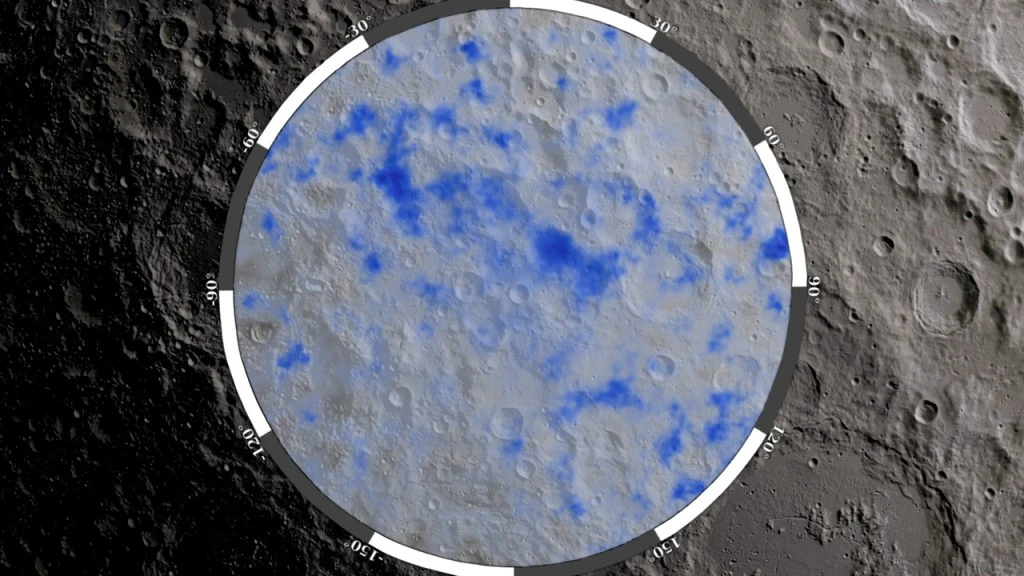
Because Shackleton and dozens of other south polar craters are permanently dark, they act as cold traps. Over billions of years, water delivered by comets and asteroids has frozen on their floors and never evaporated. In 2018, India's Chandrayaan-1 spacecraft gave us the first direct spectroscopic confirmation of surface water ice in these permanently shadowed regions (PSRs), with concentrations of up to 30% by weight in some areas.
This isn't just scientifically fascinating. It's practically transformative. Water ice can be split into hydrogen and oxygen, which are the components of rocket propellant. A base that can make its own fuel changes the economics of exploring the rest of the Solar System entirely.
Why Both Space Agencies Want to Go There
The south pole has everything a permanent base needs: near-continuous solar power from the peaks of eternal light, confirmed water ice within reach, and a cold, stable environment that preserves a record of the Solar System's history in its ice. The crater floors are also scientifically invaluable: the ice layers may contain a chronological record of cometary and asteroid activity going back billions of years.
NASA's Artemis IV mission is targeting a crewed landing at the south pole in 2028. China's first crewed landing, using the Mengzhou and Lanyue spacecraft, is planned for 2029–2030, also at the south pole. Both programmes intend to build permanent outposts there in the 2030s. There are no international rules governing who builds where or who can use what resources, which makes the south pole one of the most consequential and contested destinations in the history of exploration.
We have detailed pages covering both programmes: what they're planning, what hardware they're using, and what's at stake. Read the Moon Race overview →
Observing the Moon
Not sure what the Moon is doing right now? Our Moon phase tonight page shows tonight's phase, how much of the disc is lit, moonrise and moonset for your location, and the date of the next full Moon. The Moon is the most accessible target in astronomy. You don't need any equipment at all to start: the maria, highlands, and the bright glow of Tycho's ray system at full moon are all visible to the naked eye. Each month's full moon even has its own traditional name, from the Wolf Moon to the Cold Moon, our guide to the full moon names covers what they all mean, with every UK date for 2026 and 2027.
Binoculars are a big upgrade. Even a modest 7×50 or 10×50 pair will show you the major craters, the darker floors of the maria, and the mountainous terrain around the mare basins. The best time to use them is during the crescent or quarter phases: the low-angle sunlight creates dramatic shadows that reveal the terrain far more clearly than a flat-lit full moon does.
A small telescope in the 70–150mm range will keep you busy for years. Focus on the terminator line, the boundary between the lit and unlit sides, where shadows are at their most extreme and the landscape looks its most dramatic. Features that look flat at full moon suddenly reveal craters, mountains, and valleys that could have been invisible an hour before.
Best Phases for Different Targets
Moon is invisible: best night for deep sky objects and galaxies.
Look for Earthshine on the dark side: faint blue-grey glow. Beautiful in binoculars.
Ideal for telescopes: shadows along the terminator reveal maximum crater detail.
Stunning to look at, but poor for crater detail. Best for seeing Tycho's bright ray system.
What to use for Moon-watching
Kit we've tested and reviewed in full
The Moon is unique because it looks better at quarter phase than full: the low-angle sunlight creates shadows that reveal everything. Unlike planets, more aperture doesn't always help; what matters is magnification and how still the atmosphere is that night.
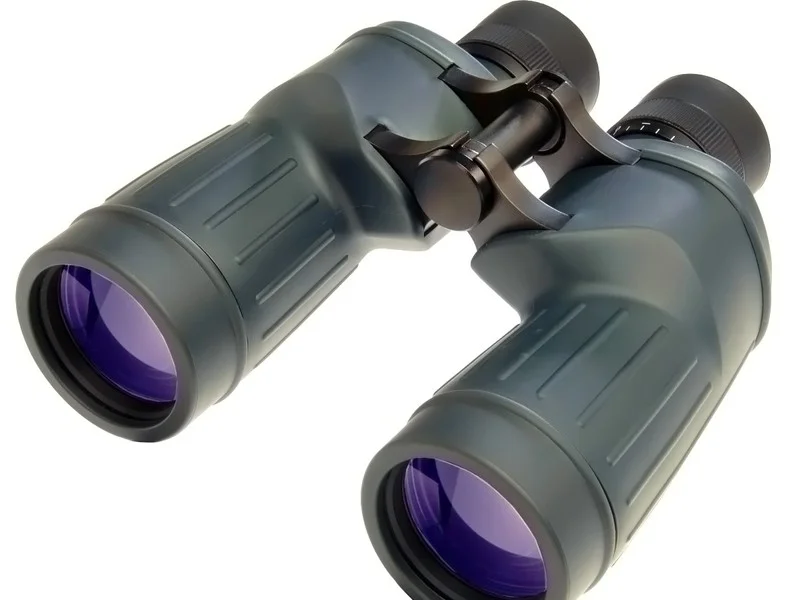
The Moon fills the whole field of view. You'll see Mare Crisium, Mare Tranquillitatis, the bright splash of Tycho's rays, and Plato's unusually dark floor. Binoculars are perfect for getting your bearings before switching to a telescope.
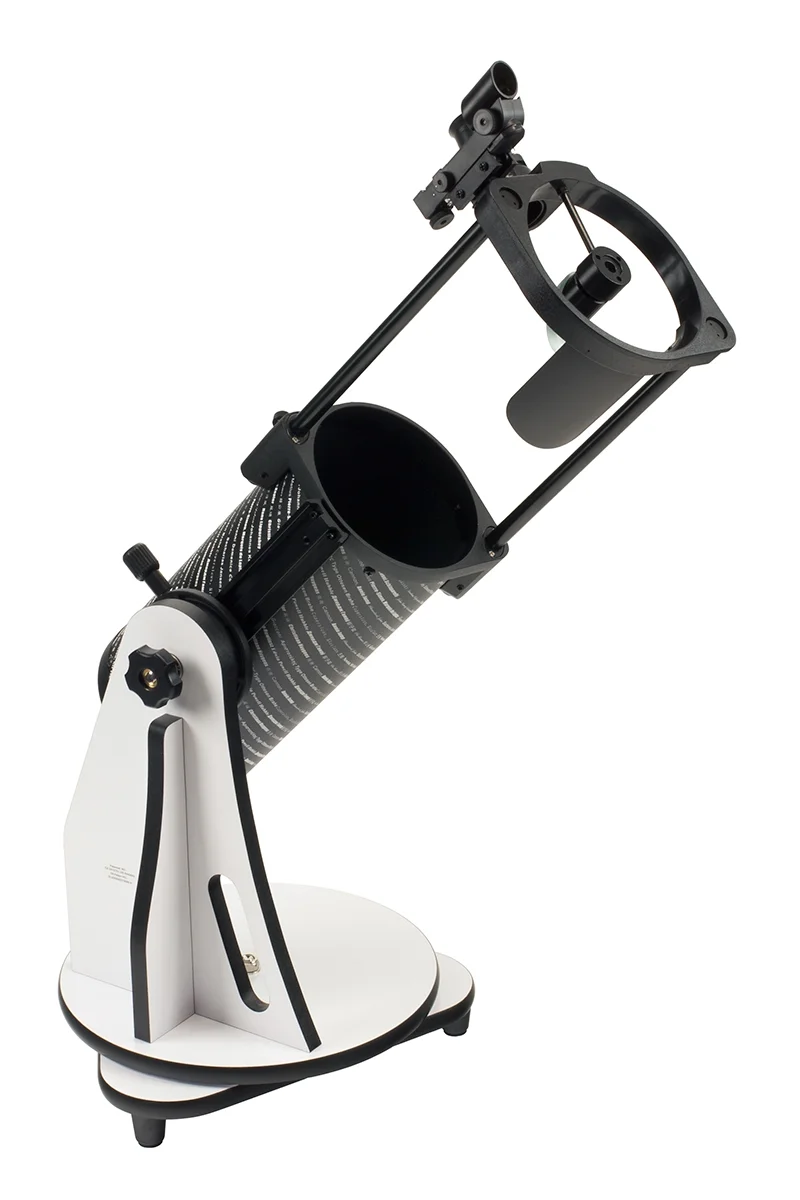
Honestly, any telescope transforms the Moon. A 130P at 100x shows Clavius's curved chain of floor craters, the rilles crossing Mare Imbrium, and the terraced inner walls of Copernicus in extraordinary detail. The terminator line is always the best place to look.
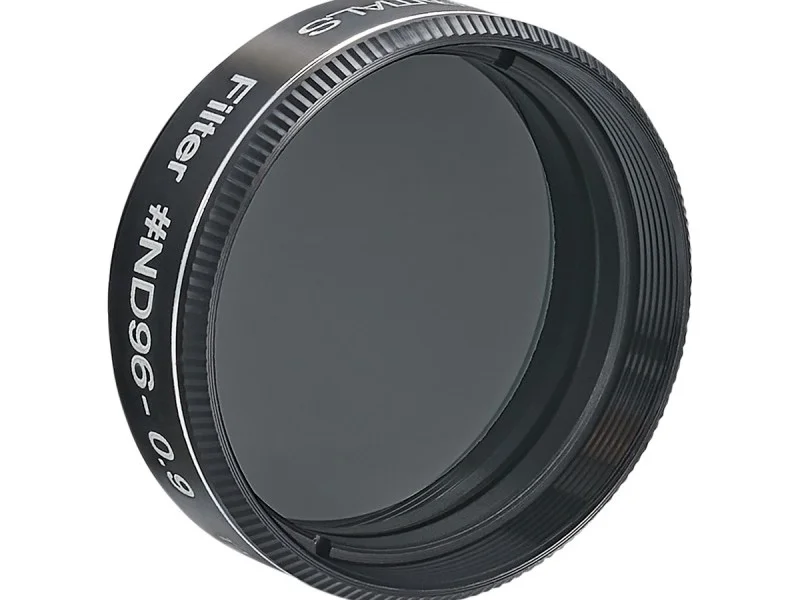
Astro Essentials ND96 Moon Filter
Near full moon the glare is intense enough to be genuinely uncomfortable. A neutral density moon filter screws onto your eyepiece and reduces the brightness by 87%. That makes the difference between squinting and actually being able to examine the surface comfortably. Around £10.
Affiliate links: you pay the same price, we earn a small commission that helps keep WatchTheStars free.