The Moon Race
Who gets to the lunar south pole first, and who gets to stay
For the first time since the 1960s, two superpowers are in a genuine race to the Moon. The United States has flown its first crew around it. China is launching its most ambitious robotic mission to scout the landing site. Both are targeting the same patch of terrain at the lunar south pole: a place rich in water ice, bathed in near-permanent sunlight, and entirely ungoverned. This is the definitive guide to who's doing what, when, and why it matters.
April 2026
postponed, new date TBC
(south pole)
(south pole)
target: ~2030
target: 2035
The last Moon race ended in 1972. America had won, the Soviets had quietly stepped back, and for half a century the Moon was left to robots. That era is over.
In April 2026, four NASA astronauts became the first humans to travel beyond Earth orbit since Apollo 17. They flew around the Moon, looked down at a landscape no person had seen up close since 1972, and came home. They didn't land, but the landing is coming, and so is China's.
This is not a replay of Apollo. Both the US and China have moved beyond prestige launches. Both have long-term infrastructure plans. Both are targeting the same destination: the lunar south pole, where water ice makes permanent human habitation possible for the first time in history. There is no agreed rulebook for who builds where or who uses what. The race is on.
The Two Programmes at a Glance
🇺🇸 Artemis (USA)
Commercial-Led, Coalition-BackedNASA leads, but the landers are SpaceX and Blue Origin. 70 countries have signed the Artemis Accords. The first crewed flyby (Artemis II) completed in April 2026. First crewed landing (Artemis IV) targeted for early 2028. Gateway space station cancelled in 2026 and replaced with the Moon Base: a roughly $30B, three-phase surface plan targeting a permanent outpost around 2030, starting with the Moon Base I, II and III robotic landers. Key risk: Starship HLS not yet certified for crew.
Full Artemis programme guide →
🇨🇳 Chang'e / ILRS (China)
State-Led, Infrastructure-FocusedCNSA leads a wholly state-managed programme. Every Chang'e mission to date has succeeded. Chang'e 7's planned 24 August 2026 launch to scout the south pole for water ice and landing sites was postponed at the last minute, a typhoon closed in on Wenchang, and a new date hasn't been set. Crewed landing targeted for 2029–2030. The International Lunar Research Station (ILRS), a permanent base, targets basic operation by 2035, with a nuclear reactor and a 17-country partner coalition. Key risk: the full crewed Long March 10 is still unflown, though its single-core 10B variant flew and landed in July 2026.
Full China moon programme guide →
The Race Timeline: Mission by Mission
This is the combined view of both programmes: every significant mission between now and the early 2030s, in chronological order.
✅ Artemis II: US Crewed Lunar Flyby
Four astronauts flew around the Moon and returned safely. The first crewed mission beyond Earth orbit since 1972. Commander Reid Wiseman, Pilot Victor Glover, Mission Specialist Christina Koch, and Canadian Jeremy Hansen. Their Orion capsule was named Integrity. A 10-day, 2.25 million kilometre mission. No landing, but proof that the hardware and crew are ready.
🇨🇳 Chang'e 7: China's South Pole Scout
Five-component robotic mission: orbiter, lander, rover, relay satellite, and a unique mini hopping probe that will fly into permanently shadowed craters to directly sample for water ice: a world first. The rocket was rolled to the pad on 19 August ahead of a planned 24 August launch on a Long March 5 from Wenchang, but China's space agency postponed it on 23 August as Typhoon Narra approached. No new launch date has been announced. Chang'e 7 will identify China's crewed landing sites and ILRS base location. If successful, it is the most complex robotic mission ever flown at the Moon.
🇺🇸 Moon Base Robotic Landers Begin
NASA's surface infrastructure programme launches its first robotic landers, Moon Base I, II and III, to the south pole, delivering rovers, power systems, communications relays, and science equipment ahead of crewed landings. They fly on Blue Origin's Blue Moon Mark 1, Astrobotic's Griffin and Intuitive Machines' Nova-C Trinity under NASA's commercial programme. More than a dozen missions are planned this decade. Blue Origin's New Glenn pad explosion in May 2026 slowed preparations, but all four Phase One landers cleared environmental testing in August and Moon Base I is now targeted for no earlier than autumn 2026.
🇺🇸 Artemis III: Crewed Lander Test in Earth Orbit
Not a lunar landing. Crew launches on SLS/Orion and rendezvous in Earth orbit with SpaceX Starship HLS and Blue Origin Blue Moon, both launched separately. Docking, crew transfer, and AxEMU spacesuit tests. Essential dress rehearsal for Artemis IV. The SLS core stage is already at Kennedy Space Center as of April 2026.
🇺🇸 Artemis IV: First US Crewed Landing Since 1972 🎯
Orion carries crew to the Moon; a lander (Starship HLS or Blue Moon) is pre-positioned in lunar orbit. Astronauts transfer, descend to the south pole, conduct EVAs, and return. Assuming Starship HLS is certified in time. If not, Blue Moon is the backup. A second crewed landing (Artemis V) is expected to follow closely, in 2028 or 2029, an aggressively accelerated tempo.
🇨🇳 Chang'e 8: South Pole ISRU Demonstrator
China's most technologically ambitious robotic mission. Tests in-situ resource utilisation: printing habitat bricks from lunar regolith, and processing water ice. If successful, Chang'e 8 validates the technology the entire ILRS depends upon. Results will directly inform the design and scale of China's permanent base.
🇨🇳 First Chinese Crewed Lunar Landing 🎯
The Mengzhou crew vehicle and Lanyue lander launch separately on Long March 10 rockets, rendezvous in lunar orbit, and land at the south pole. China becomes the second country to put humans on the Moon, and the first to land at the south pole (if the US has not done so there before). Officially confirmed by CNSA: 'we will spare no effort.'
🇺🇸 Moon Base Surface Outpost Target
NASA's target for an operational permanent surface presence at the south pole, several years earlier than China's equivalent ILRS Phase 1 target. Whether this timeline holds depends heavily on how quickly the Moon Base's robotic precursor missions can deliver infrastructure, how reliably crewed missions can expand it, and whether Congress funds the programme through the decade.
🇨🇳 ILRS Construction Begins
International Lunar Research Station construction missions launch using super heavy-lift Long March 9 and Russian Yenisei rockets. Habitat modules, power systems (including a nuclear reactor co-developed with Russia), and science facilities delivered over multiple missions.
🇨🇳 ILRS Phase 1: Basic Facility Operational
China's target for a functioning permanent base at the south pole. Long-term unmanned operation with periodic crewed visits. Partners from 17 countries and 50+ institutions contributing science instruments and expertise in exchange for data access. Helium-3 extraction technology under development.
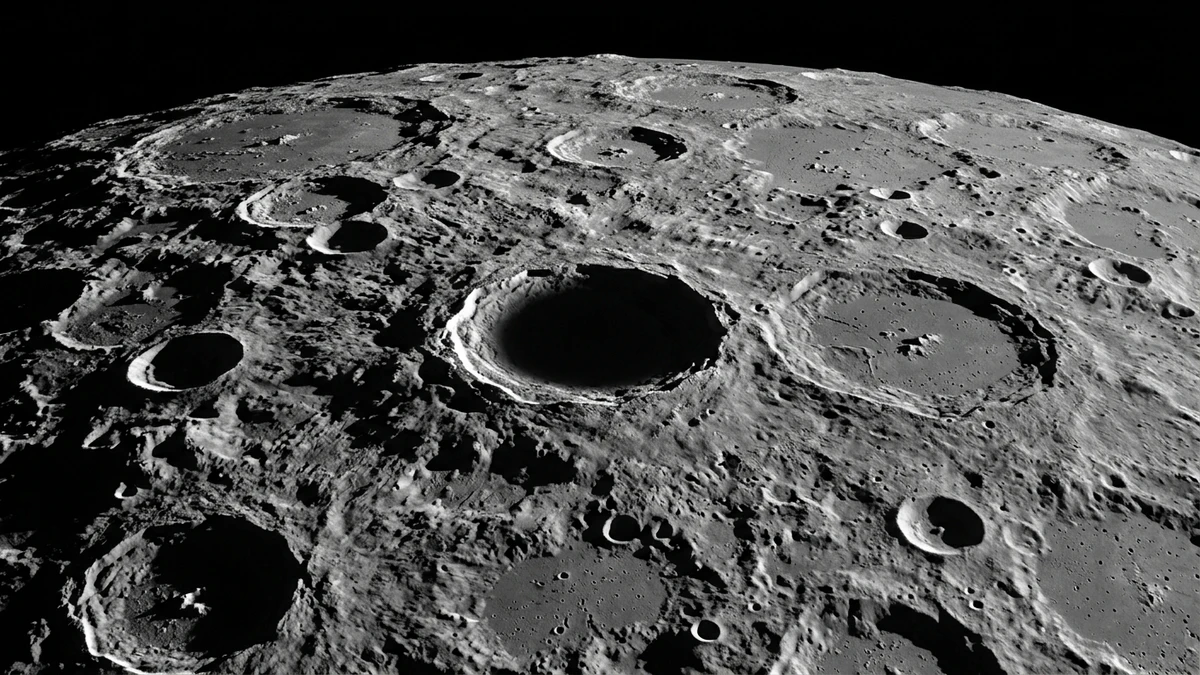
Why the South Pole? The Prize Both Sides Are After
The convergence of two separate superpowers on the same small region of the Moon is not a coincidence. The lunar south pole is uniquely valuable, and the reasons tell you a great deal about the long-term ambitions of both programmes.
| Water ice | Billions of tonnes in permanently shadowed craters. Confirmed by NASA's LCROSS impact (2009) and China's Chang'e data. Can be electrolysed into hydrogen and oxygen: rocket propellant. Can supply drinking water and breathable air. The most important resource for long-term lunar habitation. |
| Sunlight | 'Peaks of Eternal Light': elevated terrain near the pole that receives near-continuous sunlight year-round. A solar-powered base here can operate without interruption, unlike any equatorial site that must survive two-week lunar nights. |
| Helium-3 | Implanted in the lunar regolith by the solar wind over billions of years. Potential fuel for fusion reactors producing minimal radioactive waste. China has explicitly cited helium-3 as a long-term extraction target. Extremely rare on Earth; the Moon's supply is estimated at over 1 million tonnes. |
| Science | The south pole's South Pole–Aitken Basin is the oldest and largest impact crater in the Solar System, offering access to some of the earliest material from the Moon's formation. The permanently shadowed craters also preserve a record of the early Solar System's volatile history. |
| Strategic value | No international rules govern where a base can be sited or who can access nearby resources. Being first to the best locations, the richest ice deposits, the best-lit peaks, confers practical advantages that are difficult to undo later. |
Two Very Different Visions for What the Moon Is For
Both programmes say they are going to the Moon for science. Both are right, but science is not the whole story for either of them. The deeper objectives reveal fundamentally different views of what the Moon represents and what winning looks like.
"We're not going to the Moon to plant a flag and leave. We're going to stay."
· NASA Administrator Jared Isaacman, April 2026The US vision is the Moon as a bridge to Mars. NASA's primary stated rationale for Artemis is using the lunar surface to test deep space life support, propulsion, and in-situ resource utilisation in preparation for a crewed Mars mission. The Moon is the proving ground; Mars is the destination. That framing also means US lunar infrastructure is designed to be modular and reusable: a series of building blocks that inform the architecture for eventually much longer missions.
The geopolitical dimension is equally important, even if less officially stated. The Artemis Accords, the US-led framework now signed by 70 nations, represent an effort to make American norms for space the default norms globally. Maintaining leadership in space is directly tied to broader US strategic interests, and the Moon Base's creation, at roughly $30 billion, reflects the political will to stay ahead of China at essentially any cost.
"We will spare no effort to achieve the goal of landing Chinese astronauts on the Moon before 2030."
· Zhang Hailian, Deputy Chief Designer, China crewed moon missionChina's vision is the Moon as a permanent destination in its own right. The ILRS is not framed as a stepping stone to Mars: it is framed as a research platform, an energy resource base, and an international coalition-building exercise. The explicit mention of helium-3 extraction reveals a long-term energy security dimension that goes beyond exploration. China is building a base, not a waypoint.
The partnership model also differs in telling ways. Where the Artemis Accords are a set of principles any country can endorse, the ILRS is an operational project where partners contribute hardware or expertise and receive access to data and facilities in return. China is actively recruiting the nations that have been excluded from or chosen not to join the US framework: building an alternative coalition that, if successful, would represent a genuinely parallel order for human activity in space.
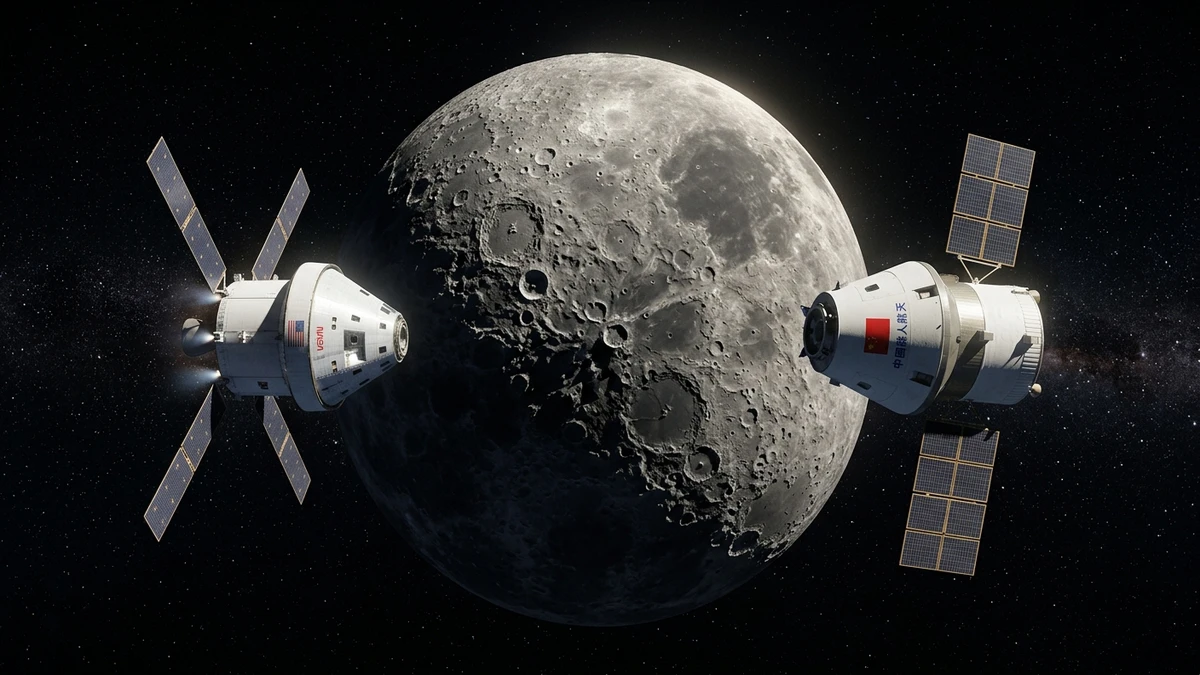
No Rules for the Moon: The Legal Grey Zone
The 1967 Outer Space Treaty, still the foundation of international space law, states that no nation can claim sovereignty over the Moon or any other celestial body. The Moon belongs to all of humanity. But the Treaty says nothing about where a base can be built, who can extract resources from a specific crater, or what happens if two nations' operations are adjacent or overlapping.
The Artemis Accords attempt to fill this gap by establishing the concept of "safety zones", areas around active operations where other actors should not interfere, and by affirming that extracted resources can be owned by the extractor. These positions are accepted by 70 Accords signatories. China rejects them, viewing the Accords as a US attempt to unilaterally establish rules that favour American interests.
Outer Space Treaty (1967)
No Sovereignty: But No Resource RulesThe foundational document of space law. Prohibits national appropriation of the Moon or other celestial bodies by claim of sovereignty. Does not address resource extraction, base siting, or safety zones. Both the US and China are signatories. Neither has violated it, yet.
Artemis Accords
US-Led Norms: 70 SignatoriesEstablished 2020. Covers transparency, interoperability, safety zones, and resource rights. Not a treaty, legally non-binding but politically significant. China and Russia are not signatories. China has called the Accords 'a tool for space hegemony.'
ILRS Framework
China-Led Alternative: 17 CountriesThe ILRS Guide for Partnership establishes China's own governance model for its lunar base. Open to any country not excluded by China, which in practice means non-Accords nations dominate the partner list. Russia, Pakistan, South Africa, Venezuela, and others have signed up.
The Gap
No Agreement on the GroundNeither framework addresses what happens when two nations' operations are physically close to each other at the south pole. Who decides who builds next to Shackleton crater, the richest known ice deposit? There is no answer yet. This is the most consequential unresolved question in 21st-century space policy.
Who Is Winning? An Honest Assessment
The honest answer is: it depends on your metric.
| Crewed hardware proven | US leads: Artemis II flew April 2026. China's Mengzhou/Lanyue not yet flown. |
| South pole robotic missions | China leads: Chang'e 4, 6, 7 (upcoming) all south-pole focused. US CLPS missions have had mixed results. |
| First crewed landing | US likely first: 2028 vs 2029–30. But Starship HLS must be certified. |
| Permanent base timeline | US more aggressive: 2030 target vs China's 2035. But US plan is less detailed. |
| International coalition | US broader: 70 Accords signatories vs 17 ILRS countries. |
| Long-term roadmap detail | China more specific: ILRS plan goes to 2050. US equivalent is vaguer. |
| Key risk: US | Starship HLS certification. Propellant transfer demo now scheduled for late 2026; design review still outstanding. |
| Key risk: China | Full crewed Long March 10 unflown, though the single-core 10B flew and landed in July 2026, and Mengzhou and Lanyue have passed abort and landing tests. |
The US is likely to land humans on the Moon first, by roughly one to two years. That matters enormously for national prestige, political momentum, and the symbolic power of planting the first 21st-century footprints. But a first landing is not a permanent base. The race to establish sustained infrastructure, the competition that will actually determine who shapes the future of the lunar south pole, is far more open, and it runs well into the 2030s.
Key Events to Watch
The next 18 months will be the most consequential since the 1960s for lunar exploration. These are the milestones that matter most:
| Postponed 23 Aug 2026 | Chang'e 7 launch delayed by Typhoon Narra: new date for the south pole scout not yet set |
| Late 2026 | SpaceX Starship HLS orbital propellant transfer demo: determines US 2028 landing viability |
| 2026 | Moon Base I, II and III: first robotic landers head to the south pole |
| Late 2027 | Artemis III: crewed docking test with Starship HLS and Blue Moon in Earth orbit |
| 2028 | Artemis IV: first US crewed lunar landing since 1972 (if Starship HLS is ready) |
| 2028–29 | Chang'e 8: China tests habitat brick-printing and water ice processing at south pole |
| 2029–30 | First Chinese crewed landing: officially confirmed, 'progressing smoothly' |
| ~2030 | Moon Base permanent outpost target: can the US actually deliver? |
Watch the race from your own garden
Kit we've tested and reviewed in full
You can't see the landers from Earth, but you can see exactly where they're headed. A small telescope brings the lunar south pole into focus on any clear night.

A tabletop reflector with enough aperture to pick out craters, ridgelines and the terminator in real detail.
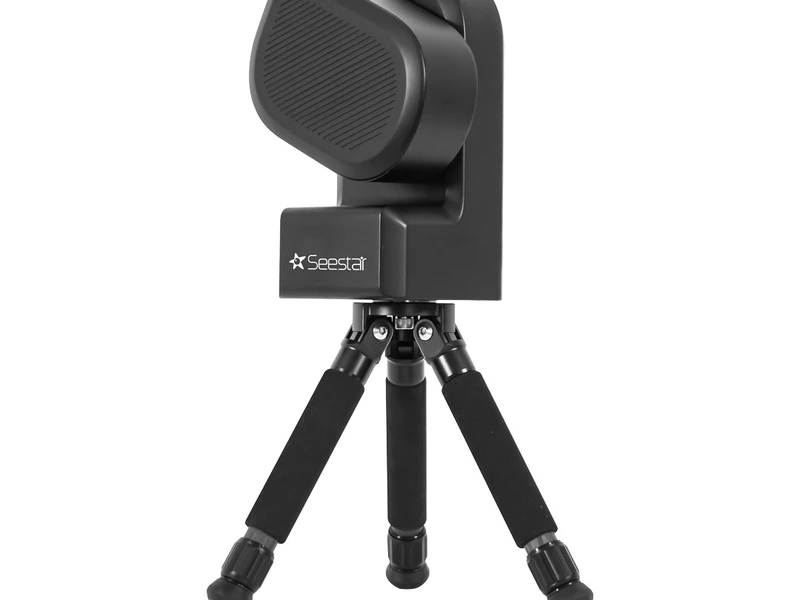
A smart scope that finds and tracks the Moon on its own and streams the view straight to your phone.
Affiliate links: you pay the same price, we earn a small commission that helps keep WatchTheStars free.
Go Deeper
For more on the Moon itself (its geography, major craters, and the south pole in detail), see our dedicated Moon page. For the full breakdown of each space programme, see the deep-dives below.
🌕 The Moon: interactive map, craters, south pole guide →
NASA Artemis Program →
The complete guide to Artemis: SLS, Orion, Starship HLS, Blue Moon, the Moon Base, the Artemis Accords, and the Artemis II crew. Every mission from Artemis I through the 2030s, with hardware specs and a full objectives breakdown.
China's Moon Program →
The complete guide to the Chang'e programme, Long March 10 and 9, the Mengzhou and Lanyue crew vehicles, the International Lunar Research Station, and China's long-term vision for the Moon through 2050.
Related Posts
Sources and Further Reading
- Artemis program · Wikipedia
- Chinese Lunar Exploration Program · Wikipedia
- International Lunar Research Station · Wikipedia
- US–China space race accelerates · Christian Science Monitor
- The race back to the Moon · Space.com
- China confirms crewed Moon landing by 2030 · The Defense News
- ILRS Guide for Partnership · CNSA
- Artemis Accords · NASA
- The Moon race explained · Bloomberg