Guide · Beginners · Updated 3 September 2026
Stargazing for beginners UK: how to start tonight
You can start stargazing tonight with no equipment: the Moon, five planets and the brightest constellations are visible from any UK garden with your eyes alone. This astronomy-for-beginners guide covers the five things that matter in your first month, from letting your eyes adapt to choosing binoculars, with links to the live tools for tonight's sky.
How do you start stargazing? Five steps for your first month
- Let your eyes adapt20 minutes outside, no phone screen. You'll see five times more stars than you did at minute one.
- Pick a dark, moonless nightCheck the Moon phase and cloud cover first; a full Moon hides everything faint.
- Find tonight's targetsThe tonight tool lists what's up for your postcode: planets, the Moon, the ISS.
- Learn three constellationsThe Plough, Cassiopeia and Orion. Everything else is found from those.
- Add binoculars, not a telescope10×50s for about £84 show the Moon's craters and Jupiter's moons. A telescope comes later.
Is tonight worth going out?
Why does dark adaptation matter more than any equipment?
Your eyes take about 20 minutes to adapt to darkness, and a single glance at a phone screen resets them. Step outside on a clear night and you'll see a handful of bright stars. Wait 20–30 minutes without looking at any white light, and you'll see thousands. That's dark adaptation: your pupils dilate and your eyes switch from cone-based daytime vision to rod-based night vision, which is far more sensitive to faint light.
The catch: it resets almost instantly. A single glance at your phone screen, a car passing with headlights, or someone nearby switching on a torch will undo it in seconds. This is why experienced stargazers use red torches: red light is at the end of the spectrum that affects night vision least.
When Is the Best Time to Go Stargazing in the UK?
The best UK stargazing is from October to March, on a moonless night, after 10pm; summer nights never get fully dark in the north. Two things you can't control: cloud cover and the Moon. Both matter a lot.
Moon phase: A full Moon is stunning but it floods the sky with light and wipes out faint objects. For deep-sky work (nebulae, galaxies, the Milky Way) you want nights around new Moon when the sky is properly dark. For the Moon itself or planets, phase doesn't matter. If you're planning around a full Moon, every date for 2026 and 2027 is in our full moon names guide.
Weather: The UK forecast can look clear and turn foggy within an hour. Thin high cloud (cirrus) is almost invisible to the eye but blurs stars noticeably. Cleartoutside.com and the Met Office Astronomy pages are better than general weather apps for planning. Our Tonight tool gives you a quick stargazing score for your location each evening.
Season: Every season has its highlights. Winter brings Orion and the longest, darkest nights. Spring brings Leo and the galaxy season. Summer nights are short but the Milky Way arches overhead and the Perseid meteor shower peaks in August. Autumn brings Andromeda and the return of long nights.
Not sure if tonight's worth going out?
Our Tonight tool gives you a live stargazing score, cloud cover, and what's visible from your location.
Check Tonight's Conditions →What should you look at first when stargazing?
Start with the Moon, then the brightest planet up tonight, then three constellations: the Plough, Cassiopeia and Orion. Start with things that are obvious and rewarding. Build confidence before chasing faint fuzzies.
The Moon
The Moon is the single best target for a beginner. Even with the naked eye you can see the dark maria (ancient lava plains) and bright crater rays. Through binoculars the craters, mountains, and cliffs along the terminator (the shadow line) are spectacular: the low-angle lighting throws everything into sharp relief. The Moon is at its most dramatic not when it's full, but around first or last quarter when the terminator runs across the middle and the shadows are deepest. Our guide to moon phases explains what to expect at each stage.
Planets
Venus is the brightest object in the sky after the Sun and Moon: if there's a very bright "star" low in the west after sunset (or the east before sunrise), it's almost certainly Venus. Jupiter is the next brightest planet and through binoculars you can see its four largest moons as tiny dots alongside it. Saturn rises well into summer and autumn evenings; even a small telescope at 50× will show the rings clearly. Mars is recognisably red-orange and brightens dramatically at opposition. Check what's up tonight at our night sky guide, or browse our full planets hub for every world in the Solar System. Worth watching too: the International Space Station, which glides silently overhead as a bright, steadily moving point of light several times a week.
Constellations to Learn First
You don't need to learn all 88: a handful of key patterns will anchor you. In the UK, these are worth knowing:
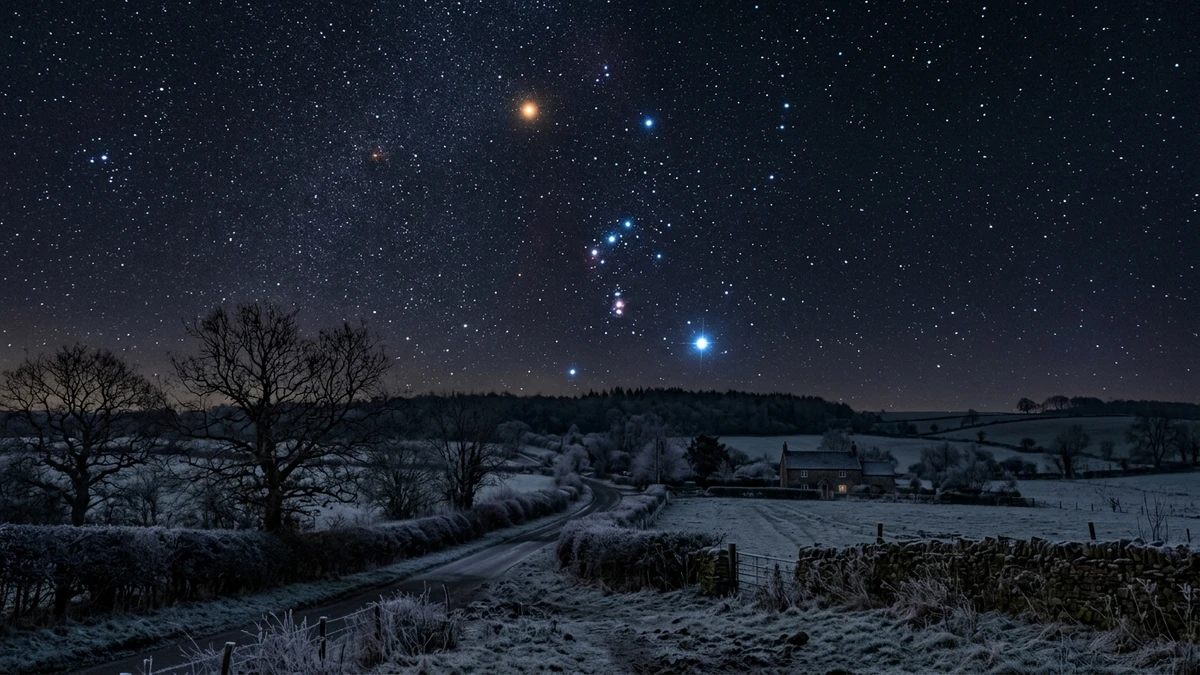
- Orion (winter): the most recognisable constellation in the sky. The three-star belt is unmistakeable. The fuzzy smudge below the belt is the Orion Nebula.
- Ursa Major / The Plough (year-round): the seven-star saucepan shape is circumpolar from the UK, meaning it never sets. Its two "pointer" stars point to Polaris, the north star.
- Cassiopeia (year-round): the W-shape on the opposite side of Polaris from the Plough. Also circumpolar and sits in a rich region of the Milky Way.
- Leo (spring): a backwards question mark with bright Regulus at the bottom. Rises in the east after dark in March and April.
- Scorpius (summer): stays low in the south from the UK but bright Antares and the curve of the "tail" are easy to spot on a clear summer night.
Deep Sky: Naked Eye and Binoculars
A few objects you can see without a telescope that will stop you in your tracks:
- The Pleiades: the Seven Sisters star cluster in Taurus. Naked eye they look like a tiny dipper; binoculars reveal dozens of blue-white stars.
- The Orion Nebula (M42): that fuzzy patch below Orion's belt. A gas cloud where new stars are forming right now. Binoculars show it clearly; a telescope reveals structure.
- The Andromeda Galaxy (M31): on a dark autumn night, a naked-eye smudge in Andromeda. The furthest thing you can see without a telescope, 2.5 million light years away.
- The Double Cluster in Perseus: two side-by-side star clusters between Perseus and Cassiopeia. Binoculars are perfect for this one.
- The Milky Way: not visible from cities, but from a dark sky site on a summer night the band of our galaxy stretching overhead is something you won't forget.
Which stargazing apps are best for beginners?
Stellarium is the best free stargazing app for beginners; SkySafari is the paid upgrade once you have a telescope. A sky atlas app is pretty much essential: hold your phone at any part of the sky and it shows you exactly what's there. Just switch it to night mode before you go outside or you'll ruin your dark adaptation.
The best free option. Real-time sky view, red night mode, satellite tracking, and a desktop version too. Does everything a beginner needs.
More detail than Stellarium: better object database, eyepiece simulation, and telescope control. Worth it once you've got a scope.
Built for astronomers, not just weather. Shows seeing, transparency, cloud cover, humidity and wind hour by hour. Once you've used it, you won't go back to a normal weather app for stargazing planning.
Do You Need a Telescope to Start Stargazing?
No, and most astronomers will tell you the same. You can have a great evening with just your eyes and a free app. When you do want kit, the order nearly everyone recommends is: naked eye first, then binoculars, then a telescope. The telescope is last for a reason.
Why Binoculars Come First
A decent pair will show you more than a cheap telescope, need no setting up, and work for wildlife and travel too. The wide field of view makes learning the sky far easier when you're just starting out. Avoid anything under ~£50: the optics rarely deliver.
We earn a small commission if you buy via these links, at no extra cost to you. We only recommend gear we'd genuinely point a friend towards. Browse all astronomy binoculars →
When should you get a telescope?
When binoculars leave you wanting more, craving a closer look at Saturn's rings, or wanting to split double stars, that's the right time. Just know that a telescope has a real learning curve. Very rewarding once it clicks, but it's not a weekend impulse buy.
A compact tabletop Dobsonian: the simplest design there is. No computerised alignment, no complicated setup. Put it on a table or wall and you're observing in minutes. Aperture is what matters in a telescope, and 130mm delivers views that will genuinely surprise you.
More options: full telescope guide · a halfway house is the Celestron StarSense Explorer DX130AZ, a traditional scope with your phone's camera helping it find targets · smart telescopes (like the Seestar S50, which does the aiming for you)
How do you find dark skies near you in the UK?
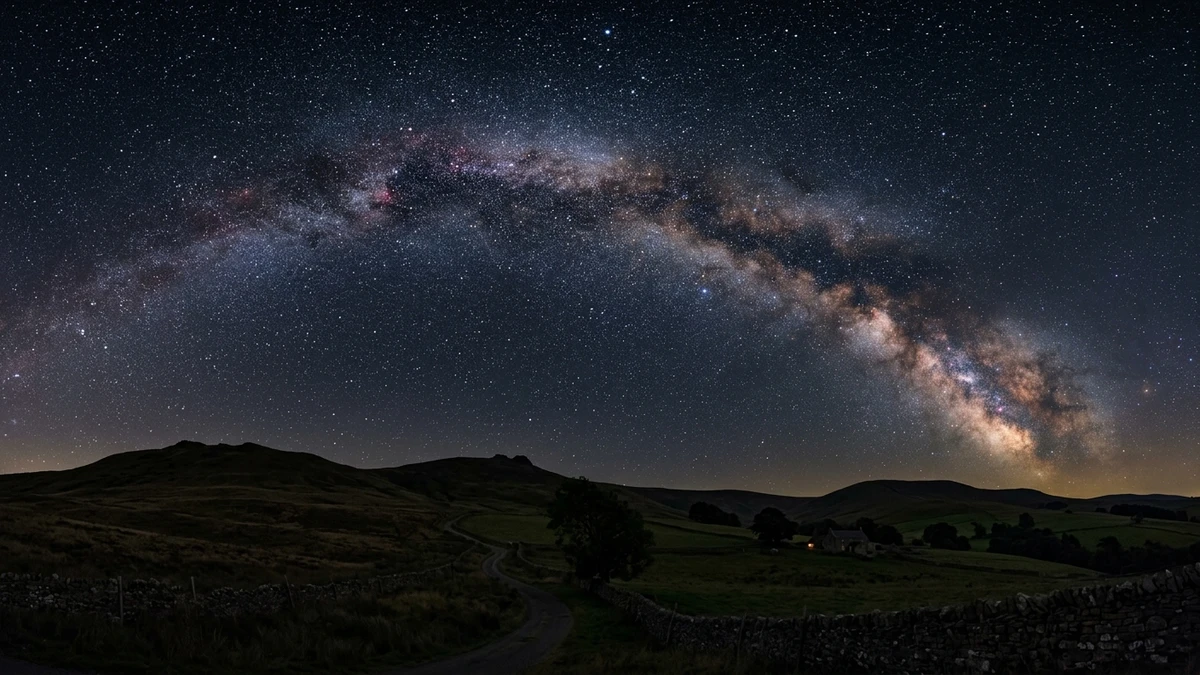
The darkest skies in the UK are the Dark Sky Reserves and Parks, and most people live within two hours of one; enter your postcode on our dark sky map to find the nearest. Light pollution is the biggest challenge for UK stargazers. Most of England is either orange-glowing suburbia or only properly dark in a few pockets. Scotland, Wales, and parts of Northern England have the best dark skies.
The Bortle scale rates sky darkness from 1 to 9. Bortle 9 is a city centre where you might see 20 bright stars. Bortle 1 is a remote desert or ocean. Most UK rural areas sit around Bortle 4–5, which is perfectly decent. Dark sky reserves reach Bortle 2–3.
Even if you can't get to a dark sky reserve, driving 30 minutes from a town often drops you two or three Bortle classes. Find a lane with no nearby houses, face away from the orange glow, and the difference is real.
The UK's best dark sky destinations include Galloway Forest Park (Scotland), Kielder Water (Northumberland), Exmoor and Dartmoor, Snowdonia and the Brecon Beacons, and several others. We have a full guide to all of them:
What are the best stargazing tips for beginners?
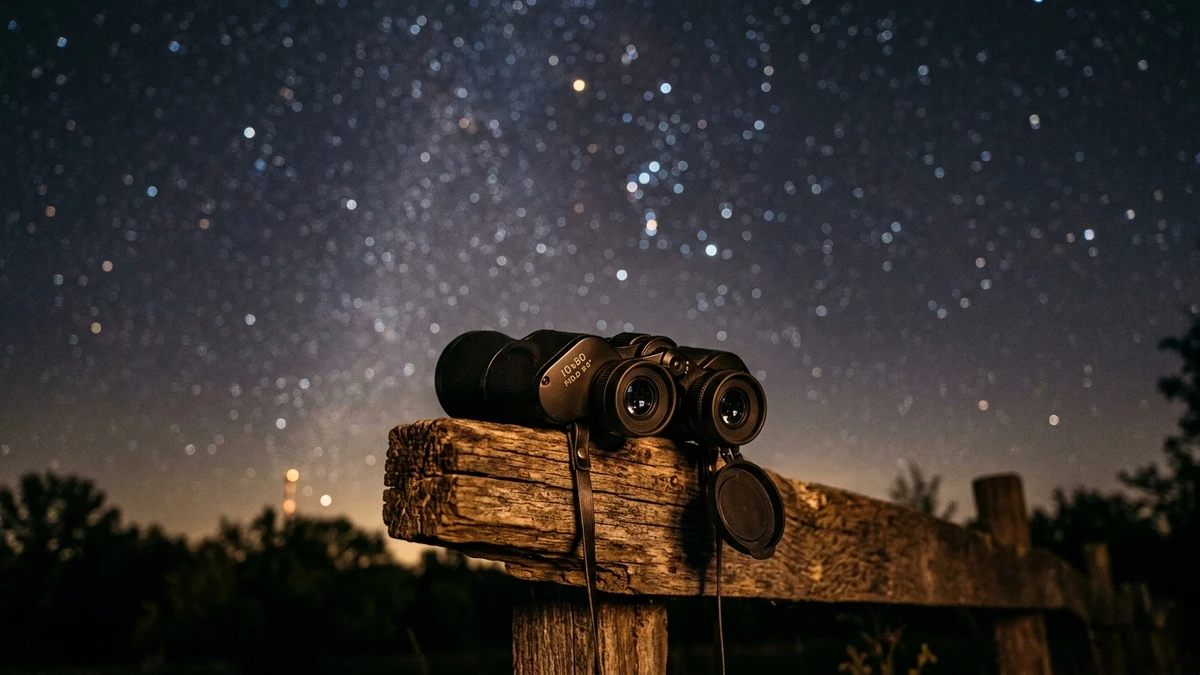
The three stargazing tips that matter most: go on a moonless night, give your eyes 20 minutes, and use a red torch. These are the essentials: the full list of fifteen, including averted vision and how to time sessions around the Moon, lives on our stargazing tips page.
See the beginner tips (and the full fifteen on our stargazing tips page)
Dress warmer than you think. Standing still in the cold at 11pm is very different from walking briskly. Layers, a hat, gloves, and insulated boots. In winter, a sleeping bag or blanket for lying back to look up is a serious suggestion, not a joke. Cold hands make eyepiece focusing miserable.
Don't over-magnify. Beginners often assume more magnification = better. It doesn't. High magnification narrows your field of view dramatically, making objects hard to find and keep in frame. Most experienced observers spend most of their time at low-to-medium magnification.
Use averted vision. When trying to see a very faint object, don't look directly at it. Look slightly to one side. The edge of your retina has more light-sensitive rods than the centre. It sounds odd but it really works.
Let your eyes adjust. If you just walked out of a lit house, give it 20 minutes before trying to find faint things. Many people give up thinking the sky is poor when they just haven't adapted yet.
Start with a low-power eyepiece. If you have a telescope, always start with your lowest-power (highest mm number) eyepiece. Find the object, then switch to higher power if you want more detail.
Keep a rough log. Even just jotting down what you saw and when is worth doing. You notice more when you're trying to describe it, and it's oddly satisfying to look back at six months later.
Join a local club. Our guide to astronomy clubs in the UK lists societies near you, a great shortcut to bigger telescopes and experienced observers happy to show you around the sky.
What stargazing equipment do beginners need?
Kit we've reviewed in full
You can do everything on this page with your eyes. When you're ready for the next step, these are the three things we tell every UK beginner to buy, in this order. See our equipment reviews for the full list.
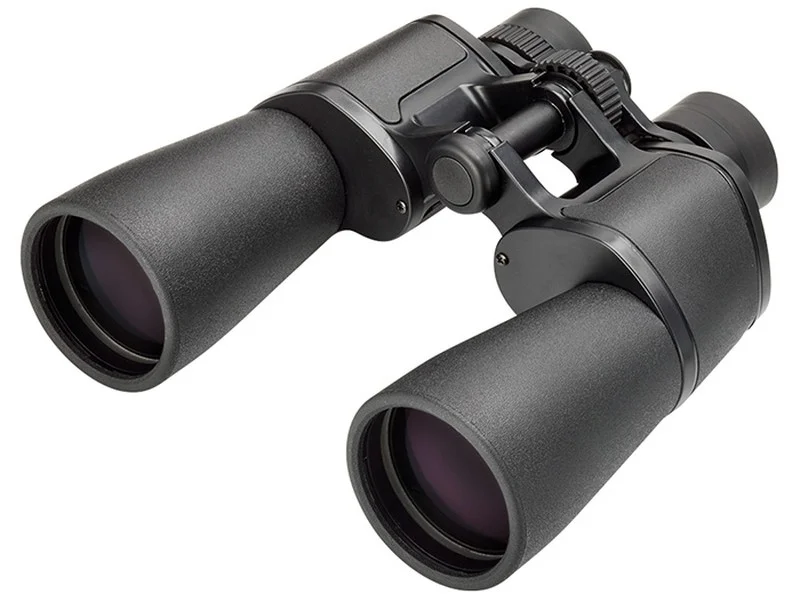
A 10×50 shows you the Moon's craters, Jupiter's moons and a dozen star clusters, and you'll still use it after you buy a telescope. Light enough to hand-hold.
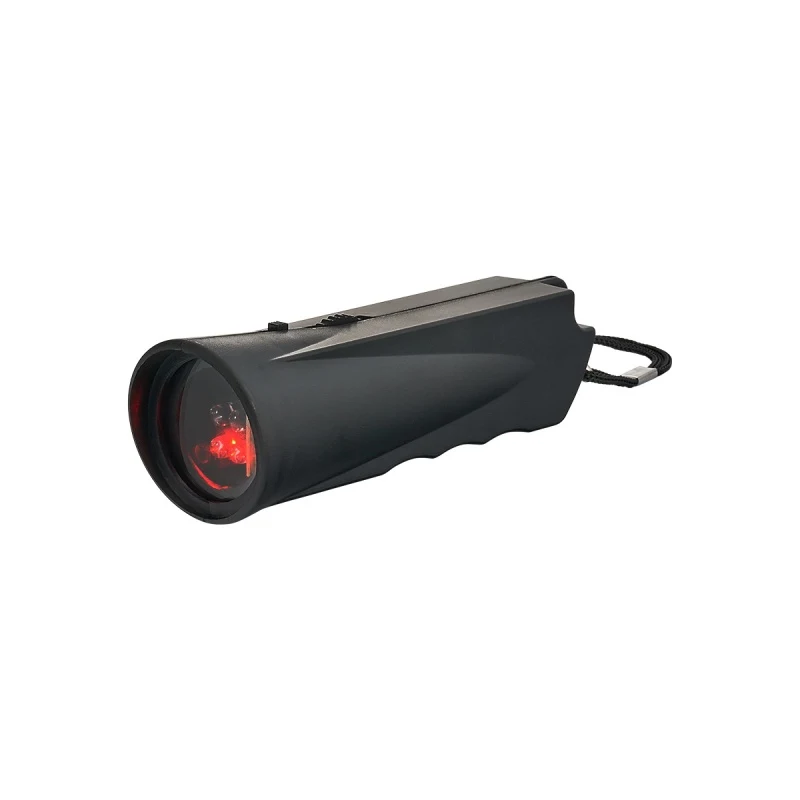
Astro Essentials Red Light Torch
Red light keeps your night vision. A white torch or phone screen undoes 20 minutes of dark adaptation in a second.
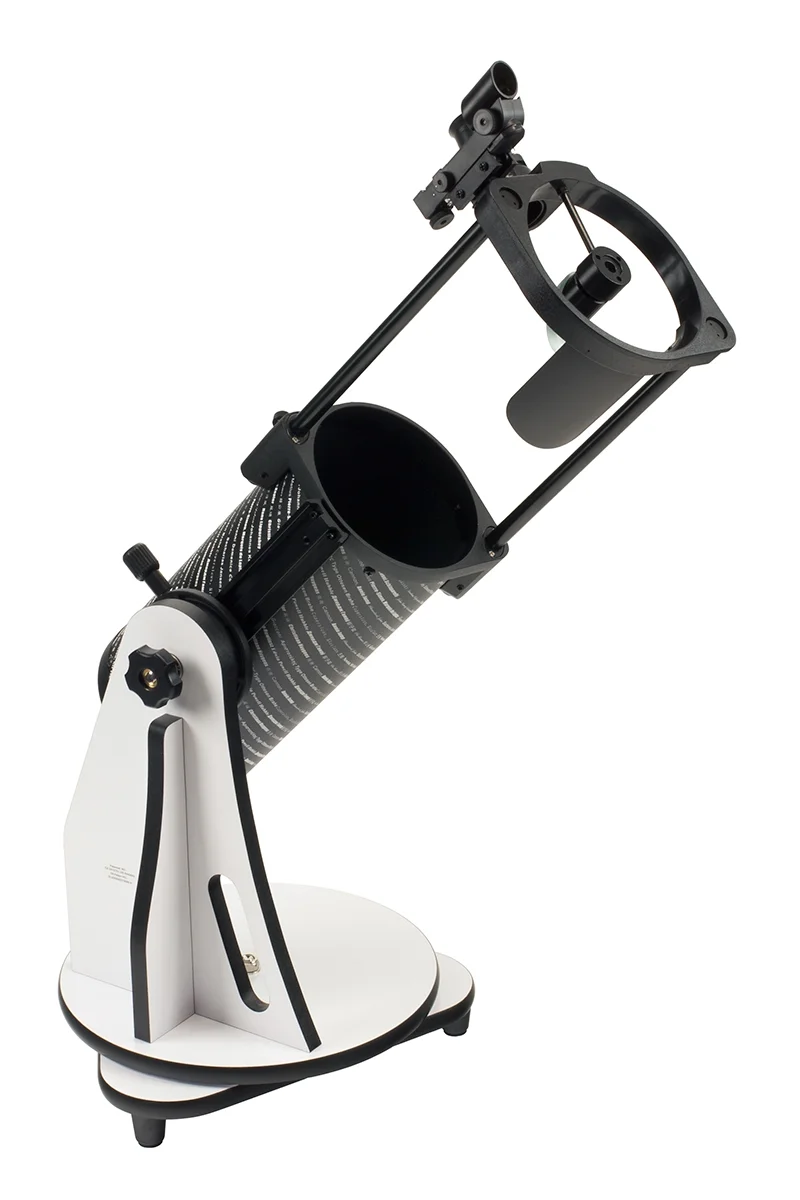
The best-value first telescope we've tested: enough aperture for Saturn's rings and the Orion Nebula, no fiddly setup, fits on a table.
Browse all our equipment reviews
Honest, research-based recommendations for every budget.
Browse all →Affiliate links: you pay the same price, we earn a small commission that helps keep WatchTheStars free.