Planets of Our Solar System
Eight planets, one dwarf planet, and hundreds of moons: each a unique world with its own geology, atmosphere, and history. Explore our in-depth guides to every planet and discover how to spot them from your back garden.
The Terrestrial Planets
The four inner planets, Mercury, Venus, Earth, and Mars, are dense, rocky worlds with solid surfaces. They formed inside the frost line, where temperatures were too high for ices to condense. Two of them, Mercury and Venus, orbit closer to the Sun than we do, which is why they show phases through a telescope and Mars doesn't.
Mercury
The smallest planet and fastest in its orbit, completing a year in just 88 days. With virtually no atmosphere, surface temperatures swing from −180°C at night to 430°C by day, the most extreme range of any planet.
Venus
Earth's twisted twin: almost identical in size but a runaway greenhouse catastrophe. At 465°C it's hotter than Mercury, with crushing atmospheric pressure 90 times Earth's. The brightest object in the sky after the Sun and Moon.
Earth
The only known world to harbour life: a blue marble of liquid water, oxygen-rich atmosphere, and a magnetic field that shields its surface from solar radiation. Uniquely placed in the habitable zone, with plate tectonics that recycle its surface.
The Moon
The most rewarding target in the night sky: craters, mountains and ancient lava seas visible through any binoculars, plus an interactive map of the near side. Includes every full moon name and UK date for 2026 and 2027.
Mars
A frozen desert world with the Solar System's largest volcano, Olympus Mons, three times the height of Everest, and a canyon, Valles Marineris, wide enough to span the USA. Once had liquid water on its surface. Naked eye visible as a distinctive red-orange point.
Gas Giants & Ice Giants
Beyond the asteroid belt, the Solar System belongs to the giants. Two gas giants, Jupiter and Saturn, formed mostly from hydrogen and helium. Two ice giants, Uranus and Neptune, have interiors rich in water, methane, and ammonia ices.
Jupiter
More than twice as massive as all other planets combined. The Great Red Spot, a storm wider than Earth, has raged for at least 350 years. Jupiter's Galilean moons include ocean-harbouring Europa and volcanic Io. Bright and impressive through binoculars.
Saturn
The jewel of the Solar System, wearing a ring system of ice and rock spanning 282,000 km. So light it would float on water. Saturn's moon Titan has a thick atmosphere and liquid methane lakes. Its rings are clearly visible through even a small telescope.
Uranus
The oddest planet in the Solar System: tilted 98° on its side, rolling along its orbit rather than spinning upright. Its blue-green colour comes from methane ice. At −224°C it holds the record for the Solar System's coldest planetary atmosphere.
Neptune
The most distant planet, never visible to the naked eye. Home to the fastest winds in the Solar System at 2,100 km/h. Its largest moon Triton orbits backwards, almost certainly a captured Kuiper Belt Object, and is slowly spiralling inward.
Pluto & the Dwarf Planets
In 2006 the IAU introduced the dwarf planet category for bodies that orbit the Sun and have achieved hydrostatic equilibrium, but haven't cleared the neighbourhood around their orbit. Pluto is the most famous, but hundreds more are suspected in the outer Solar System.
Spotting Planets from the UK
Five planets are visible to the naked eye from UK skies, and all eight can be seen with modest equipment. Here's what to look for.
Five planets have been known since antiquity because they're bright enough to see without a telescope: Mercury, Venus, Mars, Jupiter, and Saturn. Unlike stars, they don't twinkle: they shine with a steady light because they're close enough to show a small disc rather than a point source. Venus is the brightest object in the sky after the Sun and Moon, while Jupiter is usually the second brightest star-like object. Mars is unmistakable at opposition, glowing a distinctive orange-red. Saturn, though dimmer, is immediately recognisable through any telescope: even a 60mm refractor will show its rings.
Uranus is just at the limit of naked-eye visibility (magnitude +5.7) under very dark skies, but binoculars pick it out easily as a tiny blue-green disc. Neptune requires at least 7×50 binoculars and a good star chart to locate at magnitude +7.8. For the best viewing of any planet, use our Tonight tool to check which planets are visible on any given night from your location, and visit the individual planet guides for current observing tips and opposition dates.
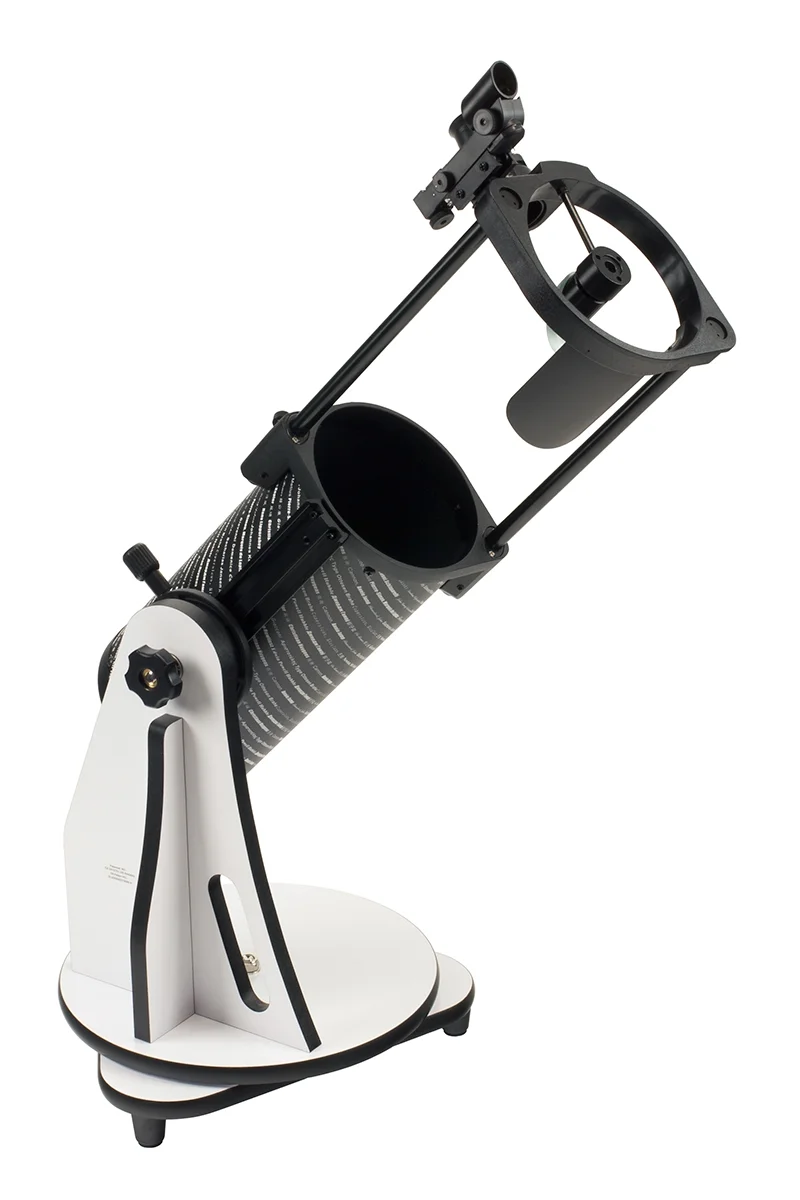
The most recommended first telescope in the UK. Shows Jupiter's cloud bands and moons, Saturn's rings, the crescent of Venus, and Mars's polar caps at opposition. Compact enough to grab and use without setup time.
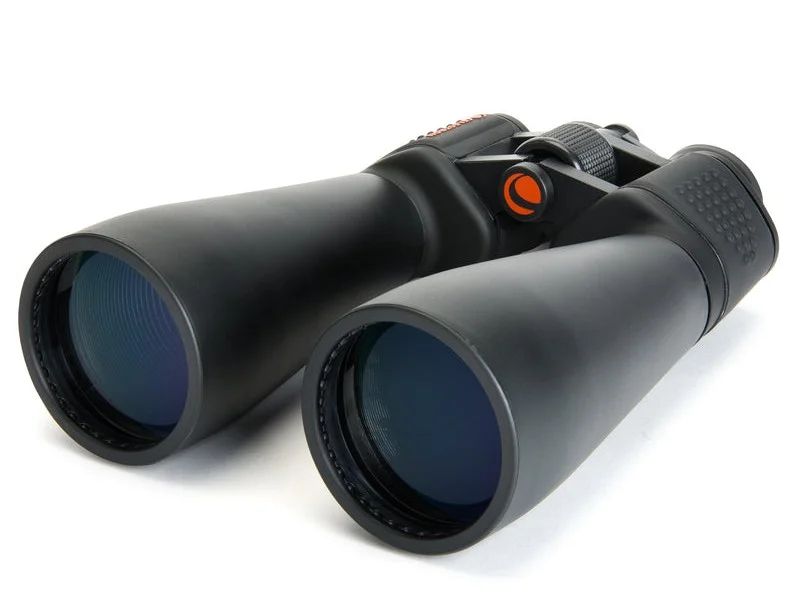
If you're not ready to commit to a telescope, 15×70 binoculars show Jupiter's four Galilean moons, Venus changing phase, and Mars as a clearly non-stellar disc. Also excellent for the Moon, star clusters, and the Milky Way.
Equipment guides
Not sure where to start? Our equipment section covers telescopes, binoculars, mounts, cameras, and accessories, with honest, research-based recommendations for every budget.
Browse all →Affiliate links: you pay the same price, we earn a small commission that helps keep WatchTheStars free.
Affiliate disclosure: links to First Light Optics use our referral code. You pay the same price: we earn a small commission.