Key takeaways
- Largest planet in solar system: over 1,300 Earths could fit inside Jupiter
- Famous Great Red Spot storm has been raging for at least 350 years
- Has 101 confirmed moons including the four large Galilean satellites (March 2026)
Jump to section 7 sections
Jupiter: The Largest Planet in the Solar System
Jupiter is the largest planet in the solar system by a long way. If you combined the mass of every other planet, Jupiter would still outweigh them all by more than two to one. It's the fifth planet from the Sun, and has been visible to humans throughout history, bright enough to cast a shadow on Earth on its best nights.
Named after the king of the Roman gods, Jupiter is a gas giant with no solid surface. Its atmosphere is mostly hydrogen and helium, banded into cloud belts by its rapid 10-hour rotation. Below the clouds, pressures build until the hydrogen becomes liquid, and possibly metallic.
Jupiter is composed mainly of hydrogen and helium: the same as the Sun. If it had formed about 80 times more massive, it would have ignited nuclear fusion and become a star rather than a planet.
Jupiter vs Earth: Key Numbers
- Diameter: 142,984 km, 11 times Earth's diameter
- Volume: 1,321 Earths fit inside
- Mass: 318 times Earth's mass, more than twice all other planets combined
- Surface gravity at cloud tops: 2.4× Earth's
- Day length: just under 10 hours (fastest rotation in the solar system)
- Year length: 11.9 Earth years
Is Jupiter Visible Tonight from the UK?
For most of the year, yes. Jupiter is above the horizon at some point in the night for around ten months out of twelve, missing only the few weeks either side of solar conjunction when it sits behind the Sun. It is the brightest thing in the night sky after the Moon and Venus, a steady cream-white point that outshines every star, so if it is up you will not mistake it.
Put your postcode into our what's visible tonight tool to see whether Jupiter is above your horizon right now and where to look. The observing section below has this year's opposition date, when it is biggest and brightest.
The Galilean Moons: Io, Europa, Ganymede and Callisto
Jupiter has four large moons: Io, Europa, Ganymede and Callisto. These are called the Galilean moons after Galileo Galilei, who first observed them in 1610. They were the first moons discovered orbiting a planet other than Earth, and their existence helped confirm that not everything in the solar system orbits the Earth.
Ganymede is the largest moon in the solar system: bigger than the planet Mercury. Europa has a global ocean of liquid water beneath its icy crust, making it one of the most promising places to search for life beyond Earth. Io is the most volcanically active body in the solar system. Callisto's surface is the most heavily cratered of any object we've mapped.
How Many Moons Does Jupiter Have?
As of April 2026, Jupiter has 115 confirmed moons: the second-highest count of any planet in the solar system, behind Saturn's 292. Beyond the four Galilean moons, most of Jupiter's other satellites are no more than a few kilometres across. These irregular moons are likely captured asteroids or fragments from ancient collisions pulled in by Jupiter's gravity.
In March 2026, the Minor Planet Center confirmed four new Jupiter moons: S/2011 J 4, S/2011 J 5, S/2018 J 5, and S/2024 J 1, discovered by Scott Sheppard's team at the Carnegie Institution for Science using telescopes in Chile and Hawaii. All four belong to known irregular moon families. Read the full story →
Jupiter's Named Moons (selected)
2. Europa
3. Ganymede
4. Callisto
5. Amalthea
6. Himalia
7. Elara
8. Pasiphae
9. Sinope
10. Lysithea
11. Carme
12. Ananke
13. Leda
14. Thebe
15. Adrastea
16. Metis
17. Callirrhoe
18. Themisto
19. Megaclite
20. Taygete
21. Chaldene
23. Kalyke
24. Iocaste
25. Erinome
26. Isonoe
27. Praxidike
28. Autonoe
29. Thyone
30. Hermippe
31. Aitne
32. Eurydome
33. Euanthe
34. Euporie
35. Orthosie
36. Sponde
37. Kale
38. Pasithee
39. Hegemone
40. Mneme
41. Aoede
42. Thelxinoe
44. Kallichore
45. Helike
46. Carpo
47. Eukelade
48. Cyllene
49. Kore
50. S/2003 J2
51. S/2003 J3
52. S/2003 J4
53. S/2003 J5
54. S/2003 J9
55. S/2003 J10
56. S/2003 J12
57. S/2003 J15
58. S/2003 J16
59. S/2003 J17
60. S/2003 J18
61. S/2003 J19
62. S/2003 J23
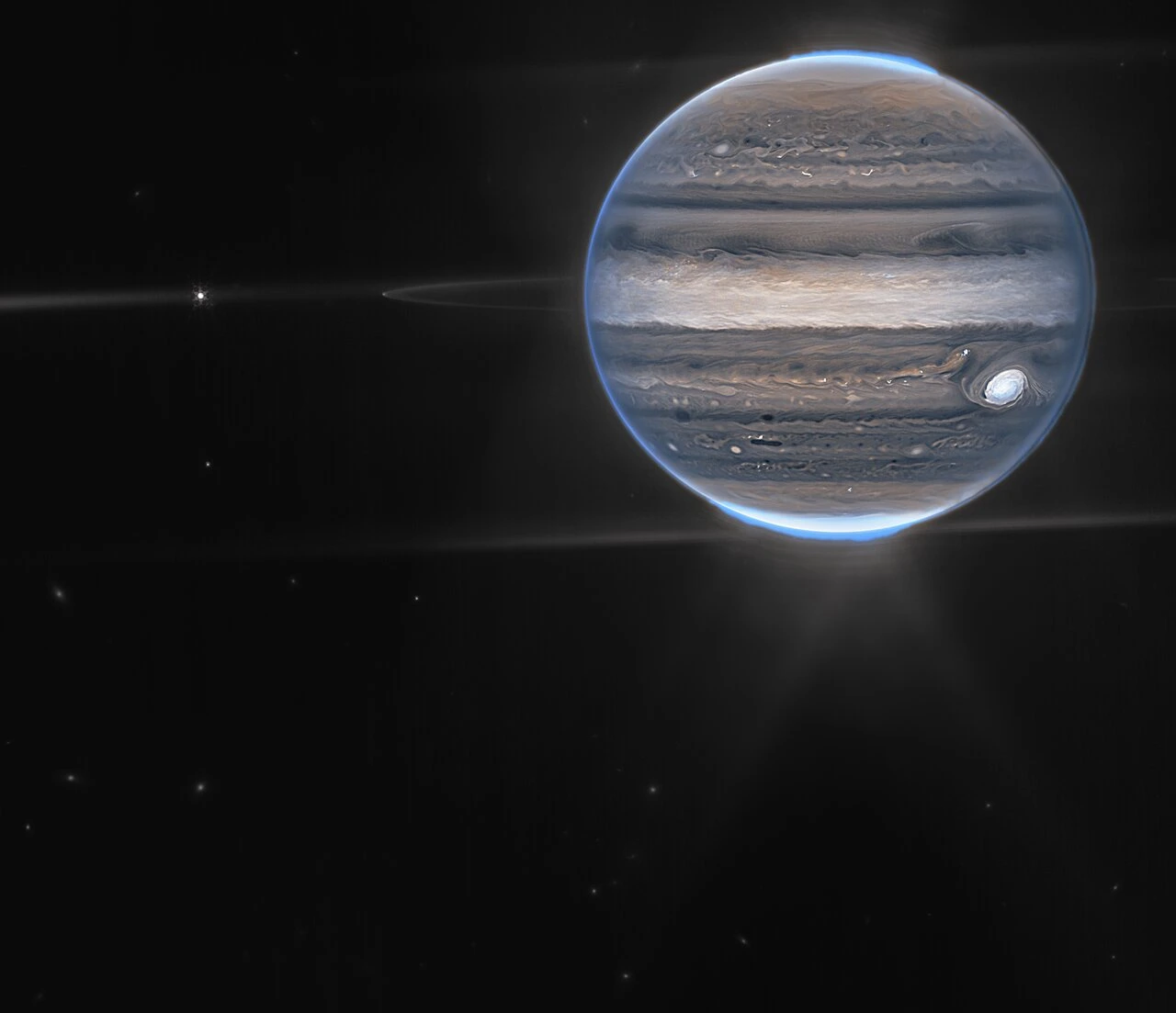
The Great Red Spot: Jupiter's Ancient Storm
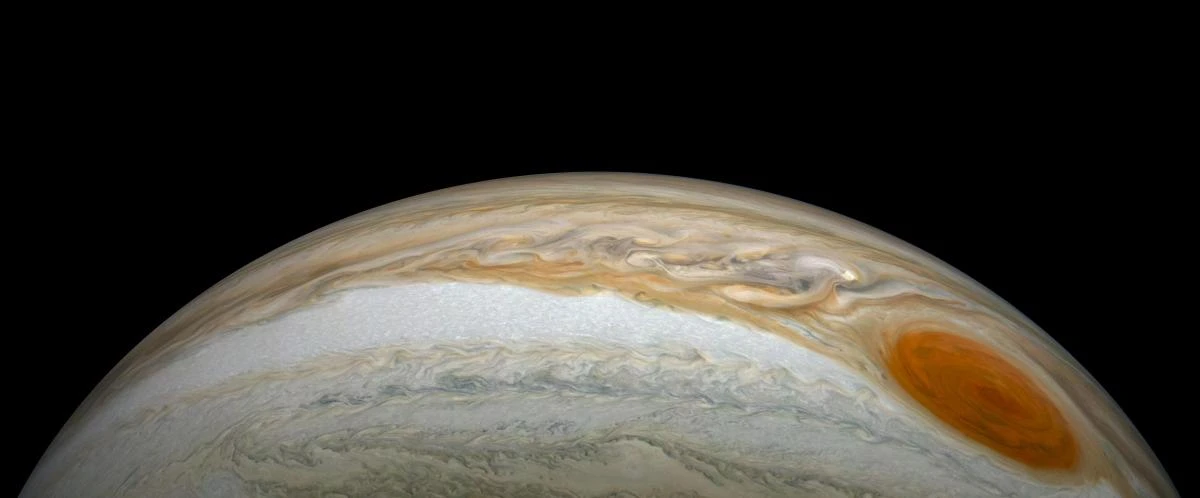
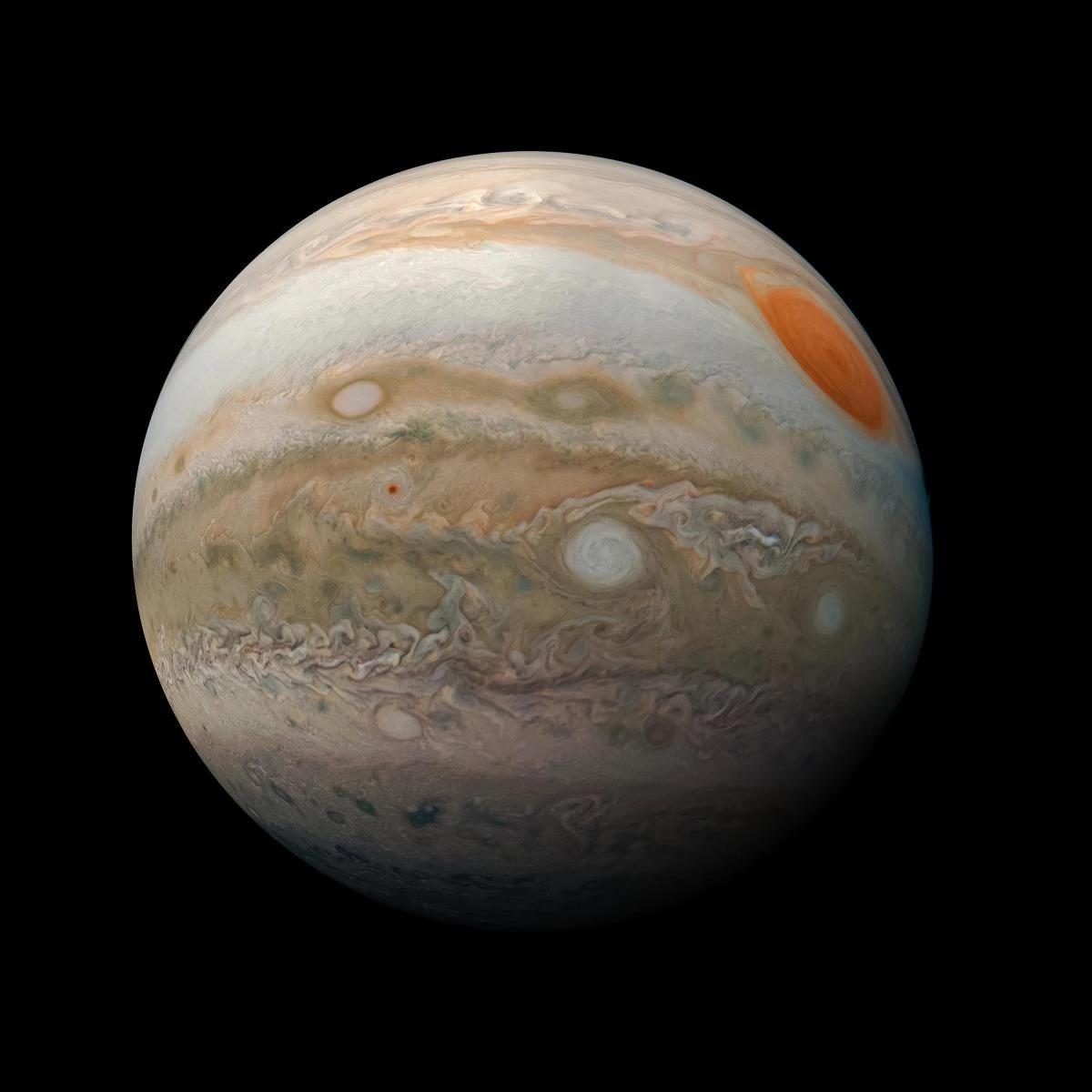
The Great Red Spot is Jupiter's most recognisable feature: a persistent storm system that has been observed continuously since the 17th century. At its largest it was around three times the width of Earth; today it's roughly Earth-sized after decades of gradual shrinkage.
The storm is an anticyclone, high pressure spinning anticlockwise, with wind speeds at its edges reaching around 640 km/h. NASA's Juno spacecraft, which has been orbiting Jupiter since 2016, has captured the most detailed views ever taken of the storm, revealing swirling cloud structures down to scales of a few kilometres.
Io: The Most Volcanically Active Body in the Solar System
Io is driven by the immense tidal forces Jupiter exerts on it. As Io orbits Jupiter, gravitational squeezing from Jupiter and the other Galilean moons flexes its interior, generating heat that powers hundreds of active volcanoes. The surface is constantly resurfaced by lava flows and sulphur deposits, making it the geologically youngest solid surface in the solar system.
When New Horizons flew past Jupiter in February 2007 on its way to Pluto, it captured some of the most dramatic images of Io ever taken, including a real-time eruption of the Tvashtar volcano, hurling lava 330 kilometres above the surface.


New Horizons captured five images over eight minutes showing lava spraying 330km above Io's surface. Click here to watch the Tvashtar eruption animation, one of the most dramatic sequences ever captured in planetary science. Credit: NASA / JHU APL / SwRI
Observing Jupiter in 2026
Jupiter reached opposition on 10 January 2026, when it was at its closest to Earth and at its brightest. It passed behind the Sun (solar conjunction) on 29 July 2026 and, as of September 2026, is back in the morning sky: look east before dawn, where it climbs higher each week through the autumn. The next Jupiter opposition is 11 February 2027.
Even away from opposition, Jupiter is one of the easiest objects to find in the night sky. It's consistently one of the brightest points of light visible, and its four Galilean moons are accessible with almost any optical aid.
- Binoculars: All 4 Galilean moons visible as dots in a line, changing position night to night
- Small telescope (50×): Cloud belts: the North and South Equatorial Belts are obvious
- Medium telescope (100×): Great Red Spot, multiple cloud bands, moon shadow transits
- Good telescope (150×+): Festoons, white ovals, detail within the Great Red Spot
What you need to see Jupiter
Kit we've tested and reviewed in full
Jupiter rewards whatever you've got. Even cheap binoculars will show you the four Galilean moons. A small telescope turns the planet into a striped disc. Step up to a 200mm Dobsonian and on a steady night you can watch the Great Red Spot rotate into view.
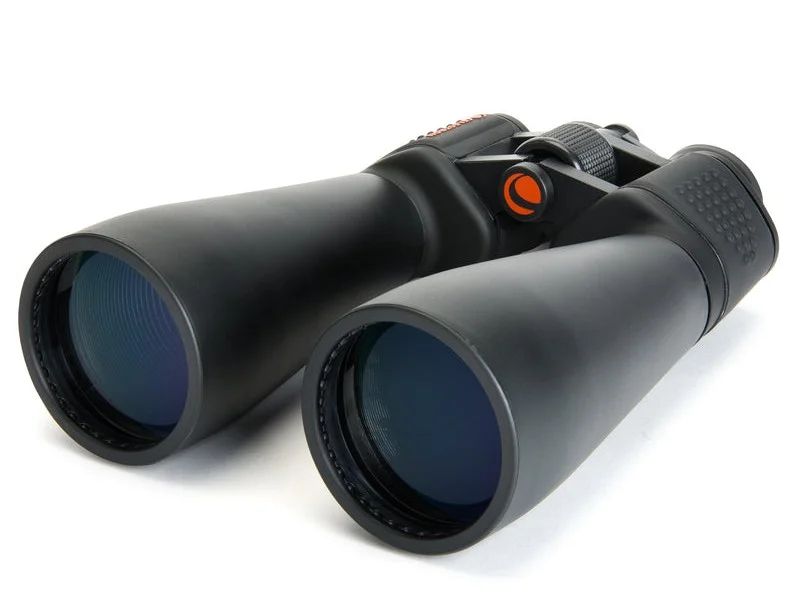
You'll see all four Galilean moons as tiny dots in a neat line, and they shift position noticeably night to night. Same view Galileo had in 1610.
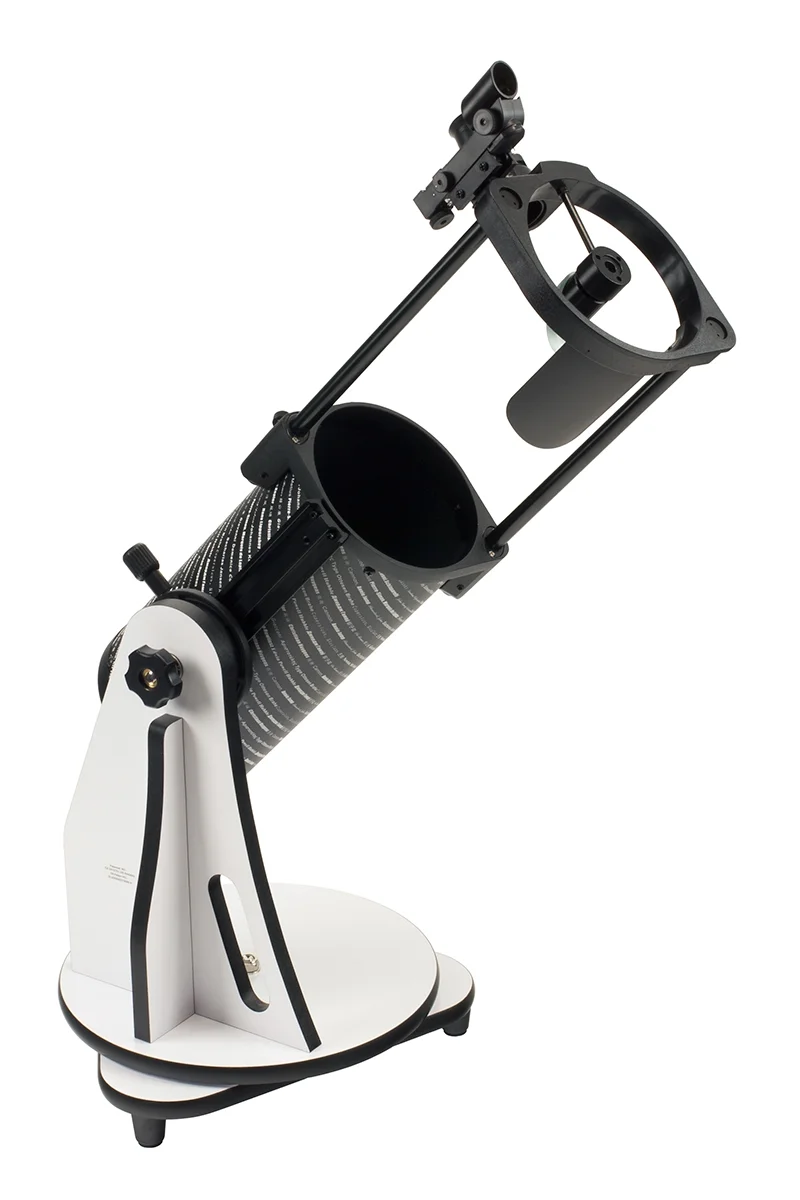
At 130x you'll see the North and South Equatorial Belts clearly. On a good night, Jupiter looks like the NASA photos. Moons are obvious. First sight of the Great Red Spot is unforgettable.
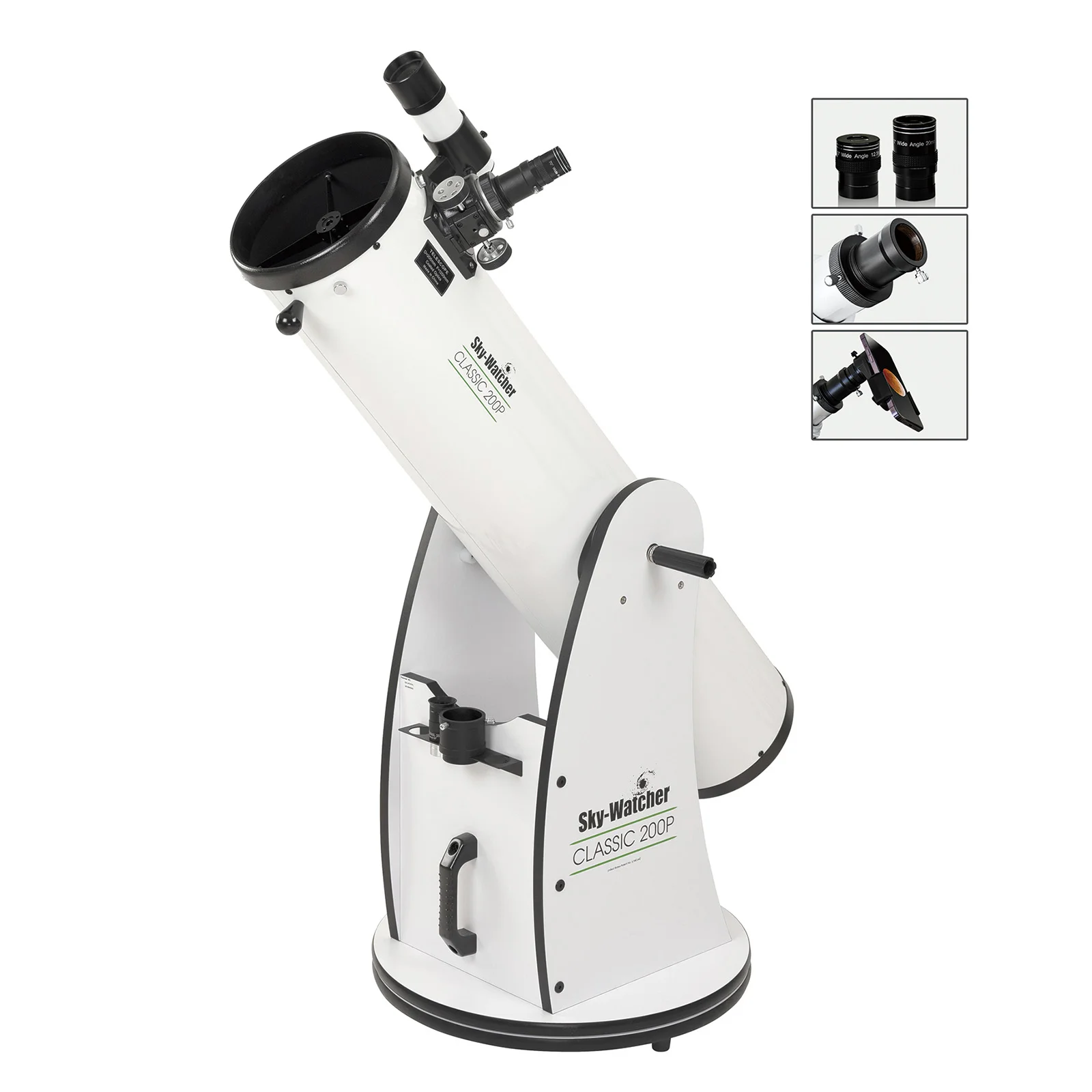
200mm of aperture at 200x pulls out the festoons, the white ovals, and the Great Red Spot's collar. On an exceptional night you'll see detail that would have been professional-grade 50 years ago.
Affiliate links: you pay the same price, we earn a small commission that helps keep WatchTheStars free.