Key takeaways
- Brightest natural object in the night sky after the Moon: visible even in daylight
- Hottest planet in the solar system at 465°C despite being second from the Sun
- A day on Venus lasts longer than its year: 243 Earth days rotation vs 225 Earth day orbit
- Nearly identical in size to Earth, 94.9% of Earth's width, but completely different in every other way
Jump to section 8 sections
- Venus: Earth's Twin in Size, Hell in Practice
- Is Venus Visible Tonight from the UK?
- Venus in 2026: When Can You See It?
- How Big Is Venus Compared to Earth?
- Venus Phases: What Galileo Saw That Changed Everything
- Why Is Venus the Hottest Planet?
- Why the Sun Rises in the West on Venus
- Spacecraft That Have Visited Venus
Venus: Earth's Twin in Size, Hell in Practice
Venus is the second planet from the Sun and the closest planet to Earth. At first glance, it looks like it should be Earth's near-identical twin: it's almost the same size, almost the same mass, and made of similar rocky material. The Romans named it after their goddess of love and beauty because it shines so brilliantly in the sky.
The surface, though, is as inhospitable as anywhere in the solar system. The temperature never drops below 450°C, day or night, pole to equator. The atmosphere presses down with 92 times the force of Earth's, equivalent to being 900 metres underwater. The clouds are made of concentrated sulphuric acid. No lander has ever survived more than two hours on its surface.
Venus is the brightest object in the sky after the Sun and Moon, which is why it's been noticed by every civilisation in human history. Its brilliance comes from those same sulphuric acid clouds: they're highly reflective, bouncing about 70% of incoming sunlight back into space.
Is Venus Visible Tonight from the UK?
Quite often, yes. Venus never gets more than about 47° from the Sun, so it is either an evening star low in the west after sunset, a morning star in the east before dawn, or lost in the Sun's glare for a few weeks around conjunction. Each apparition lasts months, so if Venus is visible at all it is obvious: a steady, brilliant white point far brighter than any star.
To check tonight, put your postcode into our what's visible tonight tool and look for Venus in the planet list. The dated guide below covers this year's evening and morning windows, and our UK night sky this week guide rounds up everything else worth looking for right now. If you're completely new to this, our stargazing for beginners guide is a good place to start.
Venus in 2026: When Can You See It?
Venus is the evening star for most of 2026. After passing behind the Sun on 6 January (superior conjunction), it climbed into the western evening sky from early March and stayed there until late September, when it sank into the sunset glare as seen from the UK. Through most of October it is too close to the Sun to see.
The show builds through the year. Greatest elongation came on 15 August, when Venus stood furthest from the Sun in the evening sky, and peak brightness followed on 18–19 September at around magnitude −4.4, bright enough to cast faint shadows from a dark site. Through a telescope Venus showed a narrowing crescent through September, though from the UK it was sinking into bright twilight by the end of the month.
On 24 October Venus passes between Earth and the Sun (inferior conjunction) and switches sides: from early November it's the morning star, blazing in the east before dawn through the end of the year and reaching peak morning brightness on 29 November. There's a month-by-month breakdown in our guide to observing Venus in 2026, and our astronomy events calendar has every other date worth diarising through 2026 and 2027.
Evening star (March–September): over for this year. Morning star (November–December): look east before sunrise. No telescope needed: Venus is the brightest thing in the sky after the Moon. Greatest elongation was on 15 August and peak brightness on 18–19 September; Venus is now lost in the Sun's glare until it reappears before dawn in early November. See exactly where it sits right now with our Tonight tool.
How Big Is Venus Compared to Earth?
Venus and Earth are often called twins because they're so close in size, but the resemblance stops at the numbers.
- Diameter: 12,104 km vs Earth's 12,756 km: 94.9% of Earth's width
- Mass: 4.87 × 10²⁴ kg: 81.5% of Earth's mass
- Surface gravity: 0.9g: you'd weigh about 90% of your Earth weight on Venus
- Surface pressure: 92 times Earth's atmospheric pressure
- Surface area: 460 million km²: about 90% of Earth's
The size similarity is genuine: no other planet comes as close to Earth's dimensions. But the conditions are entirely different. The same mass that holds a breathable atmosphere on Earth holds a crushing, toxic one on Venus. The same distance from the Sun that gives Earth mild seasons gives Venus a permanent 465°C regardless of latitude or time of day.
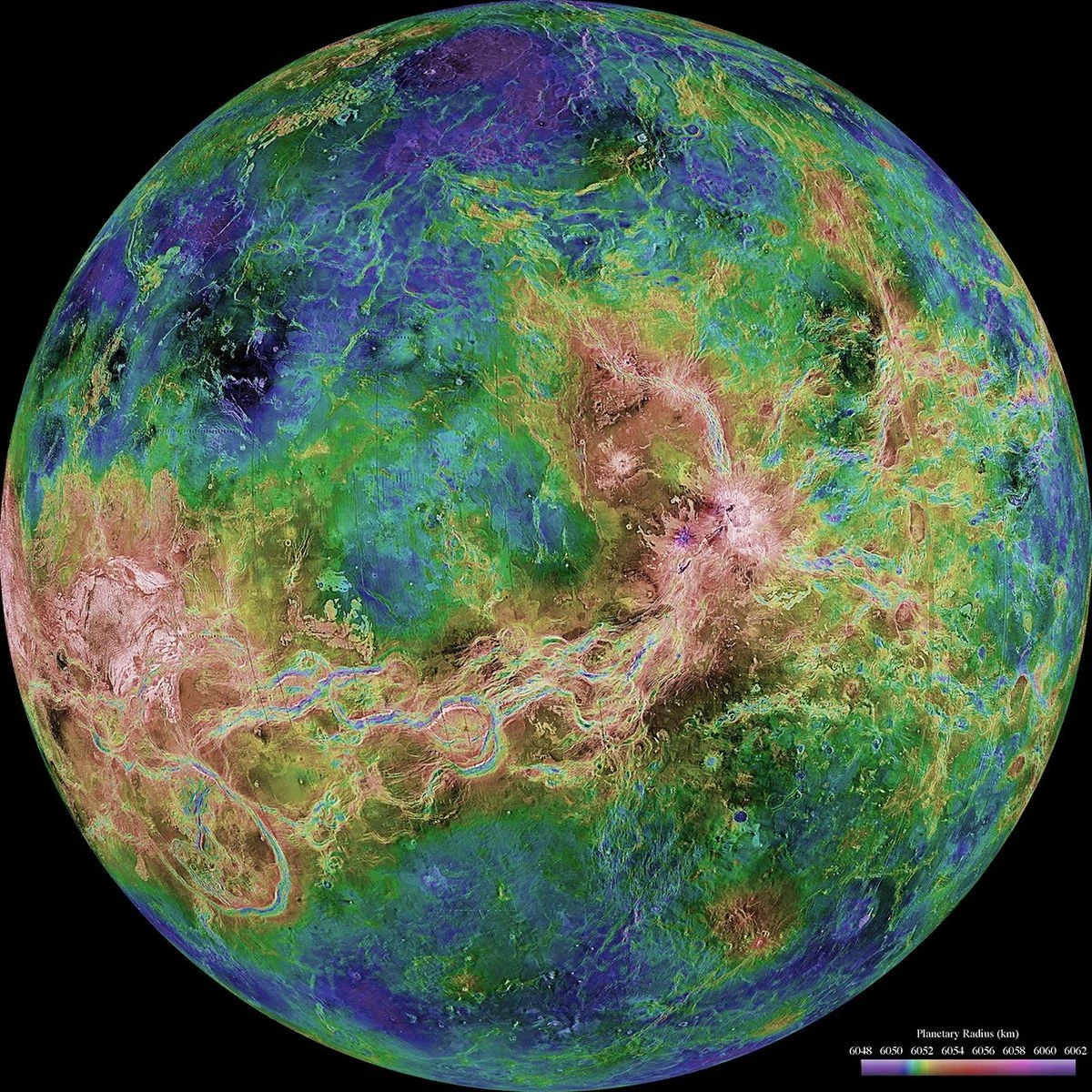
Venus Phases: What Galileo Saw That Changed Everything
In 1610, Galileo Galilei pointed his telescope at Venus and noticed something that would help overturn 1,400 years of accepted cosmology. Venus showed phases, like the Moon, it cycled from a small, fully-lit disc to a large, thin crescent.
This was only possible if Venus orbited the Sun, not Earth. Under the prevailing geocentric model (Earth at the centre of everything), Venus should always appear roughly the same size with only partial illumination. The fact that Venus could appear as a large crescent, meaning it was close to Earth and between Earth and the Sun, proved it was orbiting the Sun.
You can see the same thing Galileo saw with a small telescope or even good binoculars. When Venus is on the far side of the Sun from Earth (small, fully lit), it looks like a tiny full circle. When it's on our side and close to us (large, mostly unlit), it looks like a thin crescent about the apparent size of a small Moon. The changing size and phase together are one of the cleaner demonstrations of orbital mechanics you can do from your back garden.
For the orbital geometry behind all this, and why Mars and Jupiter never do the same thing, see our guide to why Venus and Mercury have phases but Mars doesn't.
Why Is Venus the Hottest Planet?
Venus has a surface temperature of around 465°C, hotter than Mercury despite being nearly twice as far from the Sun. The reason is its atmosphere.
Venus's atmosphere is 96.5% carbon dioxide, with a pressure 92 times that of Earth's at sea level. Carbon dioxide is a greenhouse gas: it lets sunlight through but traps the heat it generates at the surface. On Venus, this process has run completely out of control. Billions of years ago, Venus may have had liquid oceans, but as the Sun slowly increased in brightness, surface water evaporated, adding more water vapour (also a greenhouse gas) to the atmosphere. This drove temperatures higher, evaporating more water, which drove temperatures higher still, a runaway greenhouse effect that stripped the planet of its oceans and baked the surface to its current state.
The temperature on Venus's surface stays around 465°C whether you're at the equator or the poles, on the day side or night side. The thick atmosphere distributes heat so efficiently that there's no meaningful temperature variation anywhere on the planet.
The clouds that make Venus so visually bright from Earth are made of sulphuric acid droplets. They sit in layers between about 45 and 70 km altitude and are constantly moving: wind speeds at cloud-top level reach 350 km/h. At the surface, the atmosphere is so dense that the wind barely moves, but the pressure alone would crush an unprotected human instantly.
Mercury gets more solar energy per square metre but has no atmosphere to hold it. Venus is further from the Sun but its CO₂ atmosphere acts like a pressure cooker: heat gets in but can't escape. The result is a surface temperature that never drops below 450°C, anywhere on the planet, at any time.
Why the Sun Rises in the West on Venus
Venus rotates backwards, in the opposite direction to Earth and most other planets. If you could stand on Venus and see the Sun through the clouds, it would rise in the west and set in the east. This retrograde rotation is one of the more puzzling features of Venus and scientists don't fully agree on why it happens.
One leading theory is that Venus was hit by a large object early in its history that flipped its rotation. Another is that gravitational tides from the Sun and the planet's thick atmosphere gradually braked and then reversed its spin over billions of years.
Venus also rotates extremely slowly: one full rotation takes 243 Earth days, which is longer than Venus's year (225 Earth days). This makes a Venusian day longer than a Venusian year. Combined with retrograde rotation, a solar day on Venus (the time between two sunrises at the same location) works out to about 117 Earth days.
Spacecraft That Have Visited Venus
Venus was one of the first targets for robotic exploration in the Space Age, and no one paid it more attention than the Soviet Union.
- Venera programme (USSR, 1961–1985): A series of 16 spacecraft. Early missions were crushed by the atmosphere before reaching the surface. Venera 7 (1970) made the first successful landing and transmitted data for 23 minutes. Venera 9 (1975) sent back the first photographs from Venus's surface. Venera 13 (1982) survived 127 minutes on the surface, a record that still stands, and returned colour photographs and soil analysis.
- Mariner 2 (NASA, 1962): The first successful interplanetary mission, a flyby of Venus that confirmed the extreme surface temperatures.
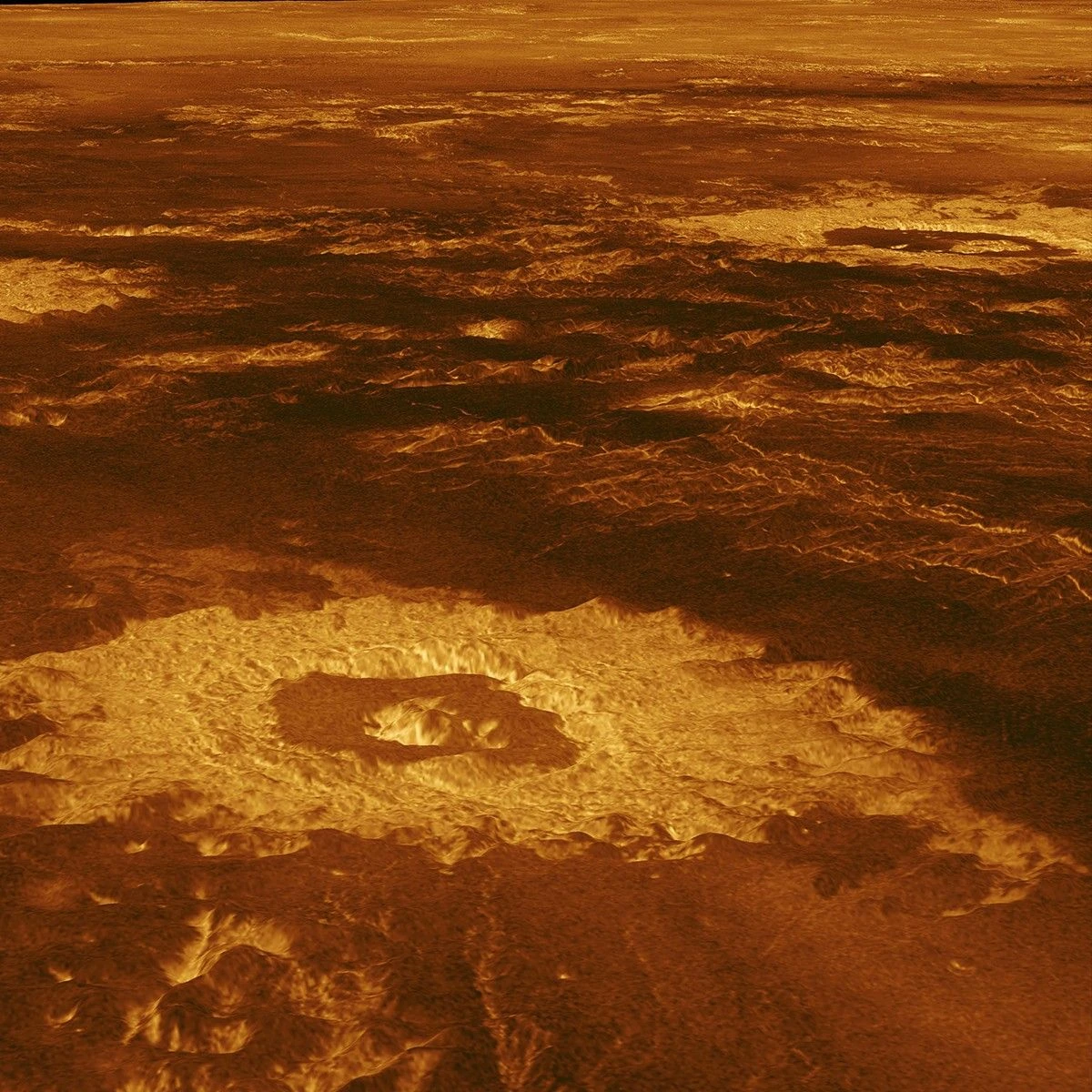
- Magellan (NASA, 1990–1994): Used synthetic aperture radar to map 98% of Venus's surface through the clouds. Revealed thousands of volcanoes, vast lava plains, and mountain ranges.
- Venus Express (ESA, 2006–2014): Studied Venus's atmosphere and confirmed that the planet may still be volcanically active.
- DAVINCI and VERITAS (NASA): Approved in 2021: one will plunge a probe through the atmosphere, the other will map the surface in high resolution. Both have since faced NASA budget uncertainty, and their launch dates remain unconfirmed.
What you need to see Venus
Kit we've tested and reviewed in full
Venus is the easiest planet to observe: you don't need any equipment at all to find it. But binoculars and a small telescope reveal something that stopped Galileo in his tracks in 1610: Venus has phases, just like the Moon. Watching it cycle from a small, fully-lit disc to a large, thin crescent over weeks is one of the more striking things you can do with a modest setup.
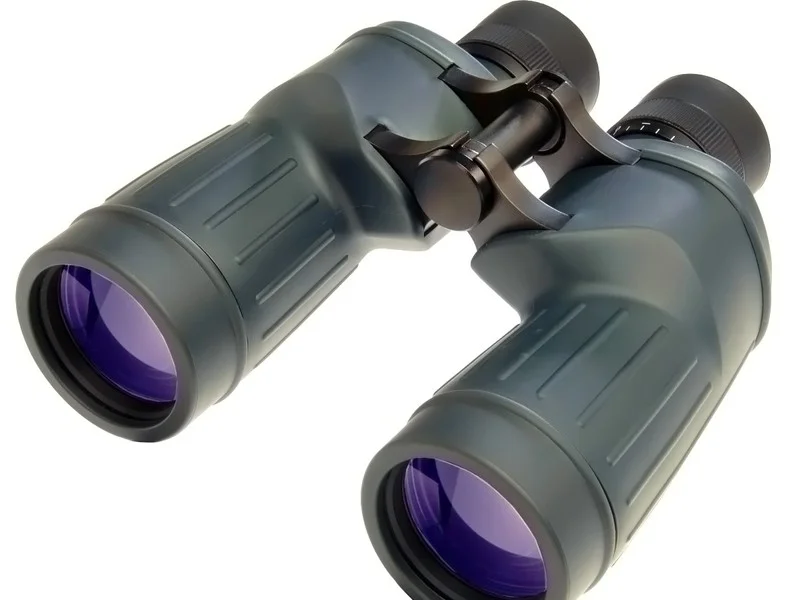
Binoculars start to show Venus as a disc rather than a point, and if you watch it over a few weeks you'll see it gradually change from a full circle to a crescent. Hold them steady against a wall if the image wobbles, it's worth it.
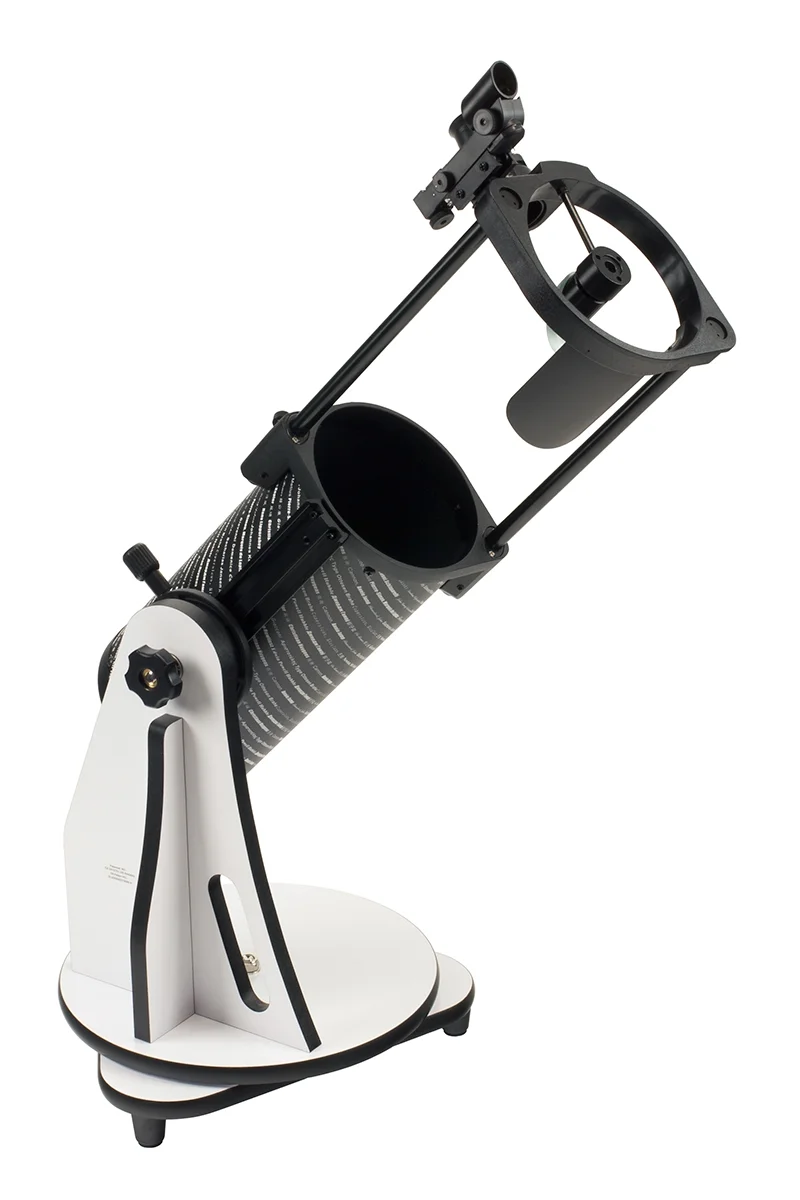
A small telescope makes the crescent phase unmistakable: it looks exactly like a tiny crescent Moon. This is the observation that proved the heliocentric model to Galileo. More aperture won't help with Venus; the surface is permanently hidden under cloud, so there's nothing more to see with a bigger scope.
Affiliate links: you pay the same price, we earn a small commission that helps keep WatchTheStars free.