Key takeaways
- Ring system spans 282,000 km, wider than the distance between Earth and the Moon
- 95 times Earth's mass yet so low in density it would float in water
- 293 confirmed moons as of June 2026, more than any other planet in the solar system
Jump to section 8 sections
Saturn: An Overview
Saturn is the sixth planet from the Sun and the second-largest in the solar system. It sits about 886 million miles (1.4 billion km) from the Sun and takes 29.5 years to complete one orbit, meaning it moves slowly and deliberately through the night sky, staying in the same constellation for two to three years at a time.
It is one of the five planets visible to the naked eye and has been known since antiquity. But it was Galileo in 1610 who first noticed something odd about its shape, and Christiaan Huygens in 1655 who worked out what he was seeing: a ring system unlike anything else in the solar system.
That ring system is still the reason most people point a telescope at Saturn for the first time. Even through a cheap 70mm refractor, it stops you cold. A planet with rings, hanging in the eyepiece. It looks too good to be real.
Saturn reached opposition on 4 October 2026, its closest point to Earth, and it stays a fine evening target through the autumn, due south a little earlier each night. The rings are slowly reopening after their edge-on crossing in March 2025, so this year you'll see a narrow but clear tilt. Viewing gets better every year through to 2032, and the next opposition is on 18 October 2027.
Where Is Saturn Tonight? Can You See It from the UK?
For most of the year Saturn is above the horizon at some point in the night, away from the few weeks around solar conjunction. It is dimmer than Jupiter, about as bright as the brightest stars, with a steady, slightly yellow light that does not twinkle. It moves slowly, spending two to three years in each zodiac constellation, so once you have found it you can find it again for months.
As of Wednesday 21 October 2026: Saturn is an evening object: 14° up in the east-south-east as the sky gets fully dark (about 19:15), highest at about 23:45 when it is 39° up in the south and sets at about 06:00. Times are for central England and move by a few minutes a day.
For tonight's position, put your postcode into our what's visible tonight tool: it shows whether Saturn is up and which direction to look. The observing section below has this year's opposition date and what the rings are doing.
Saturn's Ring System
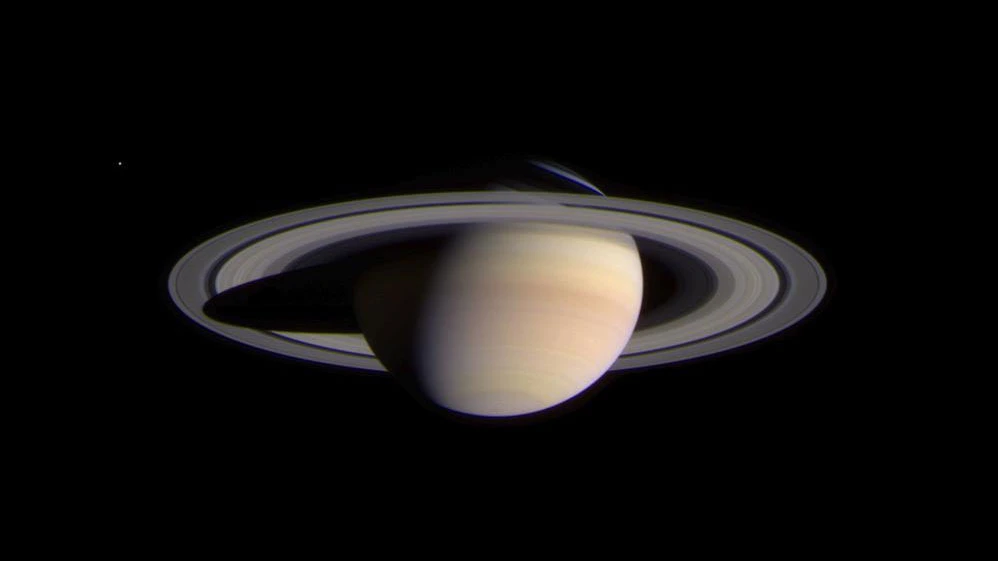
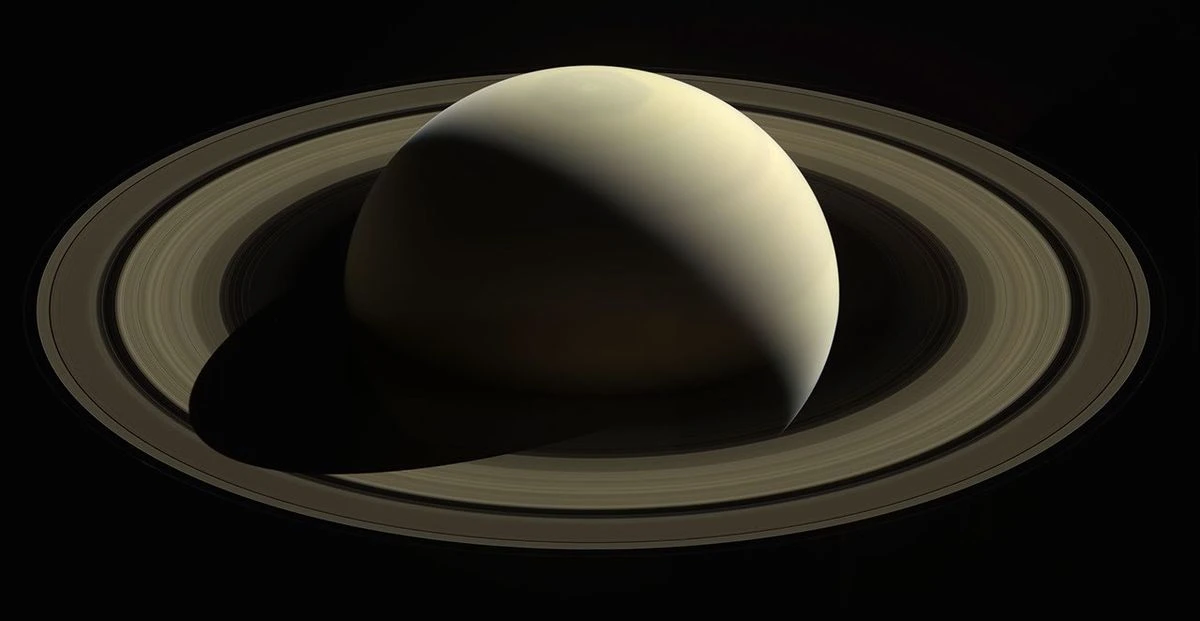
Saturn's rings are the largest and most complex ring system of any planet in the solar system. They stretch up to 282,000 km across, wider than the distance between Earth and the Moon, yet in places they are only about 10 metres thick. For scale, if you shrank the rings to the width of a football pitch, they would be thinner than a sheet of paper.
The rings are made of billions of pieces of ice and rock, ranging from microscopic grains to chunks several metres across. They are divided into several sections labelled alphabetically in order of discovery. The main rings visible from Earth are the A, B and C rings. Between the A and B rings lies the Cassini Division: a 4,800 km gap wide enough to fit the planet Mercury.
Saturn's rings are tilted relative to its orbit, so from Earth they appear to change angle over a 30-year cycle. In March 2025 they were edge-on, nearly invisible even through a telescope. They are now slowly opening up again. By 2032 they will be at their maximum tilt of 27°, giving the best views in a generation. Right now in 2026, the rings show a narrow, crisp tilt, not the full glory, but unmistakably there.
How Big Is Saturn?
Saturn is enormous. Its diameter is 120,536 km, about 9.5 times wider than Earth. You could fit roughly 764 Earths inside Saturn by volume. It is the second-largest planet in the solar system, with only Jupiter beating it.
Its mass is 95 times that of Earth, yet despite its size, Saturn is the least dense planet in the solar system. Its average density is just 0.687 g/cm³, less than water (1 g/cm³). In theory, if you could find an ocean large enough, Saturn would float.
That low density also explains something surprising about Saturn's gravity. At cloud-top level, the gravitational pull is only about 1.07g, barely more than what you feel standing on Earth. The planet is big, but it is mostly very light gas spread across a huge volume.
- Diameter
- 120,536 km vs 12,756 km, 9.5× wider
- Mass
- 95× Earth
- Gravity
- 1.07g
- Volume
- 764 Earths
- Density
- Would float in water
What Is Saturn Made Of?
Saturn is a gas giant with no solid surface. Its atmosphere is made up of roughly 96% hydrogen and 3% helium, with small amounts of methane, ammonia and water vapour. As you go deeper into Saturn, the pressure increases until the hydrogen gas transitions into liquid hydrogen, and then, at extreme depths, into a strange state called metallic hydrogen that conducts electricity.
At Saturn's cloud tops, the temperature is around -178°C (-288°F). Further down, it gets colder before becoming dramatically hotter. The core is thought to reach around 11,700°C, hotter than the surface of the Sun. Saturn also radiates about 2.5 times more energy than it receives from the Sun, which means it has its own internal heat source, probably leftover heat from its formation.
Saturn's pale yellow colour comes from ammonia ice crystals in the upper atmosphere. Unlike Jupiter, Saturn's cloud bands are much more subdued: the planet has a thick upper haze layer that mutes the contrast.
The Cassini Mission to Saturn
The Cassini-Huygens mission, a joint project between NASA, ESA and the Italian Space Agency, spent 13 years studying Saturn up close. It arrived in 2004 and ended in September 2017, when it was deliberately steered into Saturn's atmosphere to avoid any risk of contaminating the moons.
Cassini completely changed what we know about Saturn. It found that the rings are far more dynamic than anyone expected, constantly shaped by tiny embedded moonlets. It discovered new moons, tracked massive storms, and captured images of the ring structure in extraordinary detail. It also deployed the Huygens probe onto Titan's surface in 2005, the first and only landing on a moon in the outer solar system.
In its final months, Cassini performed 22 dives between Saturn and its innermost ring, a gap no spacecraft had ever entered. These passes gave scientists precise measurements of Saturn's gravitational and magnetic fields. On 15 September 2017, Cassini transmitted data until it burned up in Saturn's atmosphere. The last signal arrived at Earth 83 minutes later.
How Many Moons Does Saturn Have?
Saturn has 293 confirmed moons as of June 2026, more than any other planet in the solar system. They range from Titan, which is larger than the planet Mercury, down to tiny irregular fragments just a few kilometres across that were almost certainly captured asteroids.
In March 2026, astronomers led by Edward Ashton at the University of British Columbia confirmed 11 new Saturnian moons after analysing years of CFHT telescope data. Nearly all travel in retrograde orbits, backwards relative to Saturn's spin, which points to captured objects rather than moons that formed alongside the planet. Read the full story →
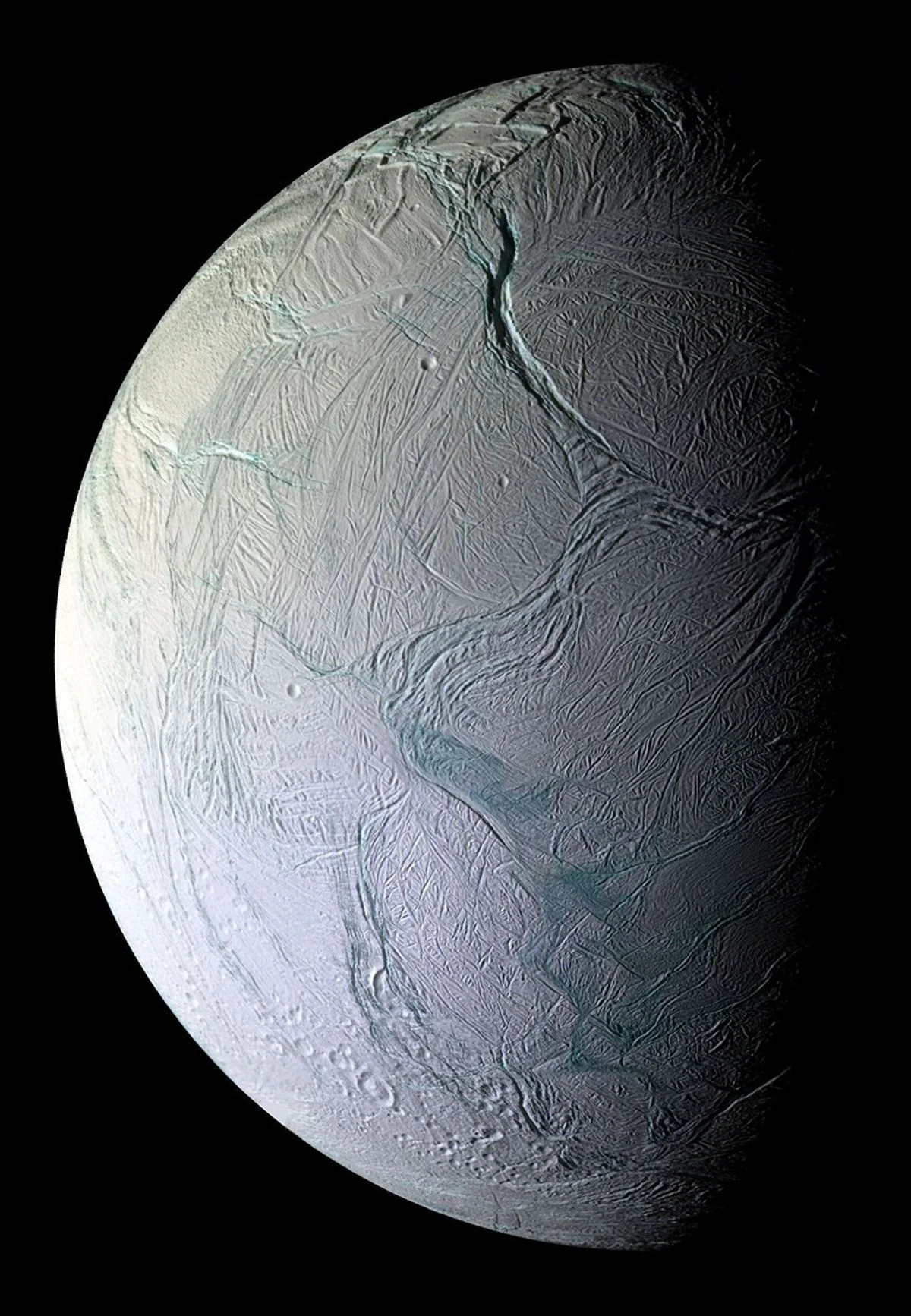
The most interesting moons are at opposite ends of the scale. Titan has a thick nitrogen atmosphere, lakes of liquid methane on its surface, and is one of the few places in the solar system where liquid exists on the ground, the other being Earth. Enceladus, meanwhile, is tiny but remarkable: its south pole shoots geysers of water ice hundreds of kilometres into space, fed by a subsurface ocean that scientists think could support life.
Saturn's notable moons
- Titan: Larger than Mercury; thick atmosphere, liquid methane lakes, surface rivers
- Enceladus: Shoots water-ice geysers from its south pole; has a subsurface ocean
- Mimas: Known as the Death Star moon for its enormous Herschel crater
- Iapetus: One hemisphere is jet black, the other bright white
- Rhea: Saturn's second-largest moon; may have a faint ring of its own
- Dione: Shows evidence of past geological activity and has a thin oxygen atmosphere
Seeing Saturn in 2026
Saturn is one of the most rewarding planets to observe because even a small telescope shows you something extraordinary. At 25x magnification you can see the rings. At 50x you can see the gap between the rings and the planet's disc. At 100x or more on a steady night, the Cassini Division, the dark line in the ring system, snaps into focus and you can pick out Titan as a faint dot nearby.
Opposition was on 4 October 2026, with Saturn in Cetus just over the border from Pisces, due south around 1am BST and about 40° up from London. It is still well placed through October and November, highest a little earlier each evening, and the next opposition is on 18 October 2027. The rings are tilted at about 7.5° from edge-on, narrow compared to what we'll see in a few years, but clear enough to show structure on a calm night. You do not need a perfect night to see the rings; you need a night that isn't terrible.
The planet is visible for several months either side of opposition. Check a planetarium app to find it: Saturn moves slowly enough that the same general area of sky works for weeks at a time.
Best telescopes for viewing Saturn's rings
Kit we've tested and reviewed in full
Saturn is the one planet that reliably stops people in their tracks. Even a cheap 70mm refractor shows the rings. A 130mm Dobsonian makes the gap between the rings and the disc obvious. Step up to 200mm and the Cassini Division, that dark line in the ring system, snaps into focus on a steady night.
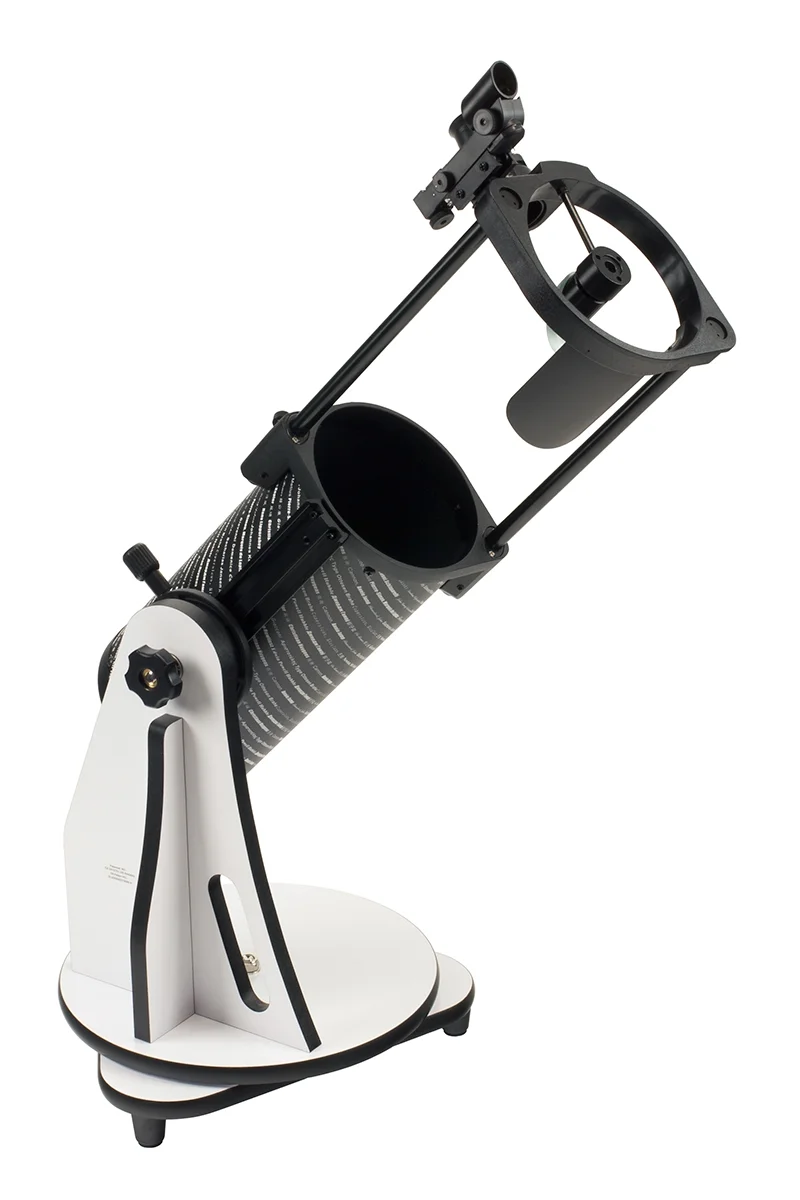
At 65x the rings are unmistakable. At 130x you'll see them tilted away from the disc with a clear gap between the two. Titan is visible as a faint star. Most people who see it for the first time can't quite believe it's real.
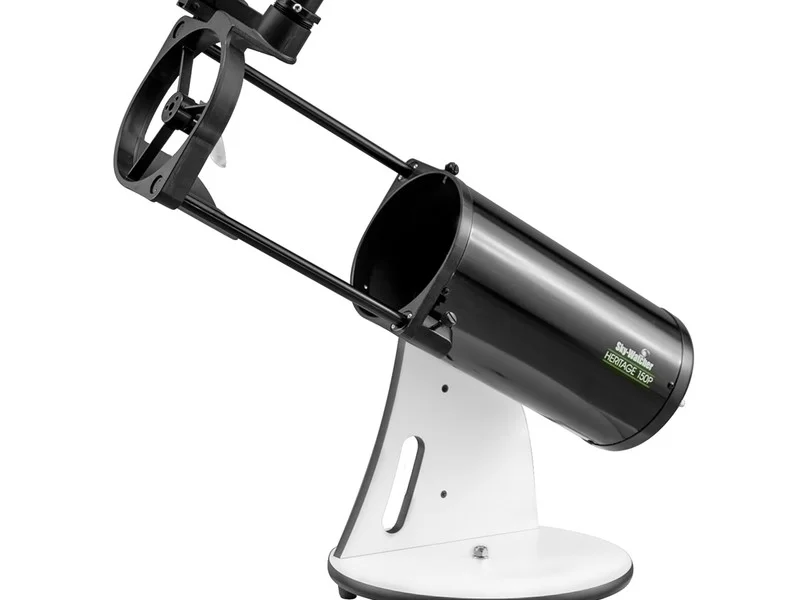
50mm more aperture makes a real difference on Saturn. The Cassini Division becomes easy, you'll pick out the cloud bands on a good night, and you can count several moons. This is where Saturn goes from impressive to extraordinary.
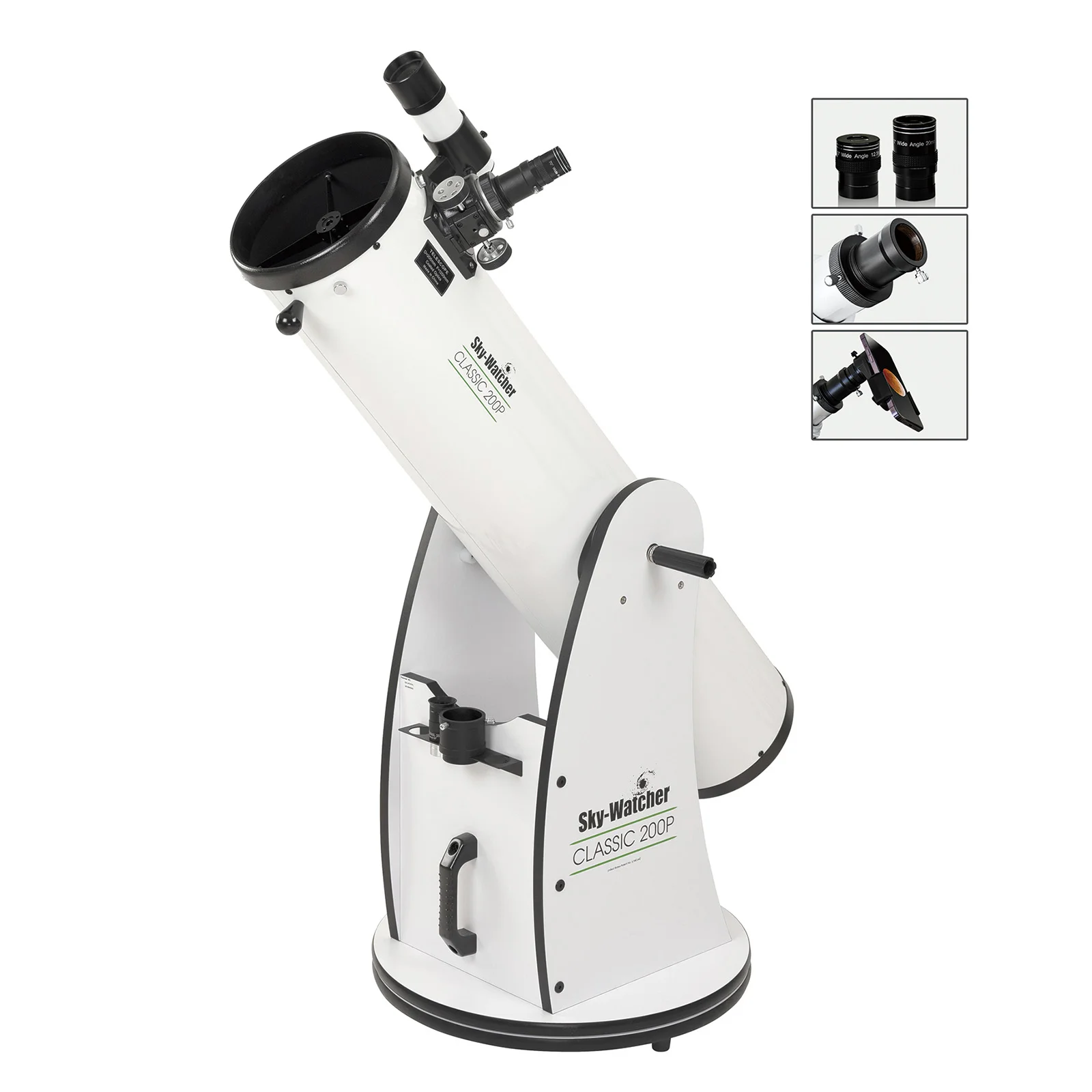
The 200mm aperture reveals the Cassini Division as a crisp dark line even at moderate magnification. The Encke minima becomes visible at 200x on the best nights. Ring detail that would have needed a professional telescope in the 19th century.
Affiliate links: you pay the same price, we earn a small commission that helps keep WatchTheStars free.