Key takeaways
- Only known planet to support life, with 71% of its surface covered in liquid water
- Located in the habitable zone: the right distance from the Sun for liquid water to exist
- Protected by a magnetic field generated by its liquid iron outer core
- The densest planet in the solar system at 5.51 g/cm³
Jump to section 7 sections
Earth: The Third Planet from the Sun
Earth is the third planet from the Sun and the fifth largest in the solar system, 12,742 km (7,918 miles) in diameter. It formed about 4.54 billion years ago, and life appeared somewhere between 3.7 and 4.1 billion years ago, though the exact date is still debated. As far as we know, it's the only planet anywhere that supports life, though the search continues.
Earth sits in what astronomers call the habitable zone: the range of distances from a star where liquid water can exist on a planet's surface. Not too hot, not too cold, and crucially, Earth also has the right atmospheric pressure and composition to keep that water liquid rather than boiling off or freezing solid.
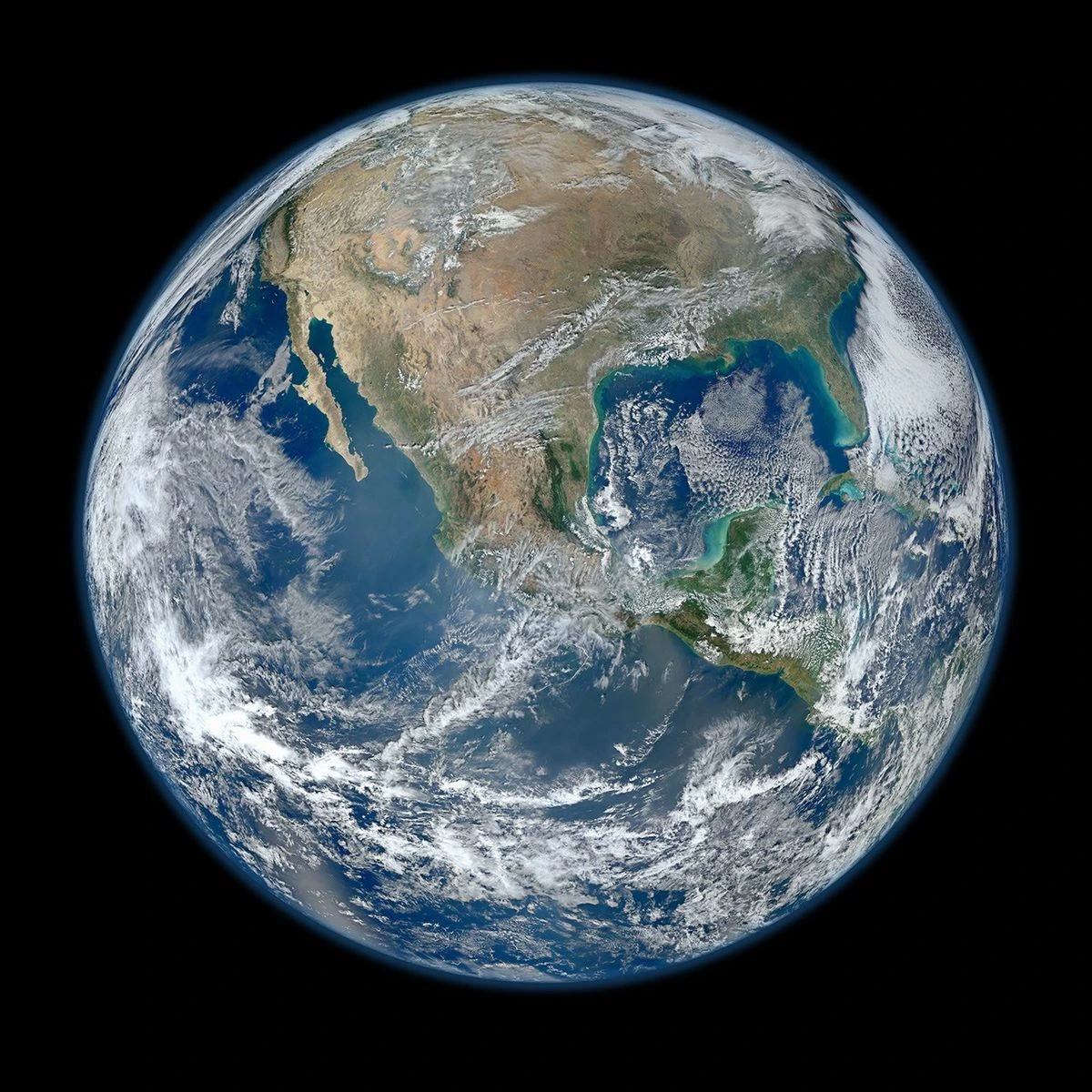
From space, Earth is immediately distinguishable from every other planet in the solar system: blue oceans, white clouds, brown and green land masses, and white polar ice caps. No other planet comes close to this combination.
How Big Is Earth?
Earth is the largest of the four rocky inner planets (Mercury, Venus, Earth, Mars), and the reference point for measuring all other planets.
- Diameter at equator: 12,756 km (7,926 miles)
- Diameter pole to pole: 12,714 km. Earth is slightly flattened at the poles due to its rotation
- Circumference at equator: 40,075 km. A jet plane at 900 km/h would take 44 hours to circle the planet
- Surface area: 510 million km², of which 361 million km² is ocean (71%)
- Mass: 5.97 × 10²⁴ kg. This is literally the definition of 1 Earth mass, the unit all other planetary masses are measured against
- Age: 4.54 billion years
- Density: 5.51 g/cm³: the densest planet in the solar system
For comparison: Venus is 94.9% of Earth's width. Mars is 53%. Mercury is only 38%. Jupiter, the largest planet, has a diameter about 11 times wider than Earth's.
What Is Earth Made Of? Structure and Layers
Earth has four distinct layers, each with different composition and properties:
- Inner core: A solid ball of iron-nickel about 2,440 km in diameter, roughly the size of the Moon. Temperatures here reach around 5,400°C, similar to the surface of the Sun. Despite the extreme heat, it stays solid because of the immense pressure bearing down on it.
- Outer core: A liquid shell of iron-nickel about 2,200 km thick, surrounding the inner core. Convection currents in this liquid layer generate Earth's magnetic field through a process called the geodynamo. Without this layer, Earth would lose its magnetic protection and, over millions of years, its atmosphere.
- Mantle: A thick layer of silicate rock about 2,900 km thick, making up about 84% of Earth's volume. The mantle is solid rock, but under extreme pressure and heat it can flow extremely slowly, driving plate tectonics over millions of years. Mantle convection carries heat from the core to the surface.
- Crust: The thin outer shell we live on. Oceanic crust is only 5–10 km thick. Continental crust is 30–70 km thick. The crust makes up less than 1% of Earth's total volume but contains all the geology, ecosystems, and human history we know.
By mass, the dominant elements in Earth are iron (32%), oxygen (30%), silicon (15%), magnesium (14%), sulphur (3%), and nickel (2%), with calcium, aluminium, and trace elements making up the rest.
Earth is the densest planet in the solar system, 5.51 g/cm³, mainly because of that large iron core. For comparison, Saturn is less dense than water (0.69 g/cm³).
Earth's Atmosphere: The Air We Breathe
Earth's atmosphere is a thin layer of gas held in place by gravity. By mass, it's 78% nitrogen, 21% oxygen, 0.9% argon, and 0.04% carbon dioxide, with trace amounts of water vapour, methane, ozone, and other gases.
The oxygen we breathe was not always there. For the first two billion years of Earth's history, the atmosphere had almost no free oxygen. It was the emergence of photosynthetic life, cyanobacteria, that gradually added oxygen to the atmosphere over hundreds of millions of years, in what's sometimes called the Great Oxidation Event.
The atmosphere does several jobs simultaneously. It absorbs and redistributes heat, keeping the surface at a habitable average of 15°C. Without any atmosphere, average surface temperatures would fall to around −18°C. It also contains the ozone layer in the stratosphere, which blocks the most harmful ultraviolet radiation from the Sun. And it provides the air pressure that keeps water liquid at the surface.
The atmosphere extends to about 10,000 km altitude in a technical sense, but 99% of its mass sits below 32 km. Above 80 km it becomes so thin it's barely distinguishable from the vacuum of space. This is why the International Space Station orbits at about 400 km without significant drag.
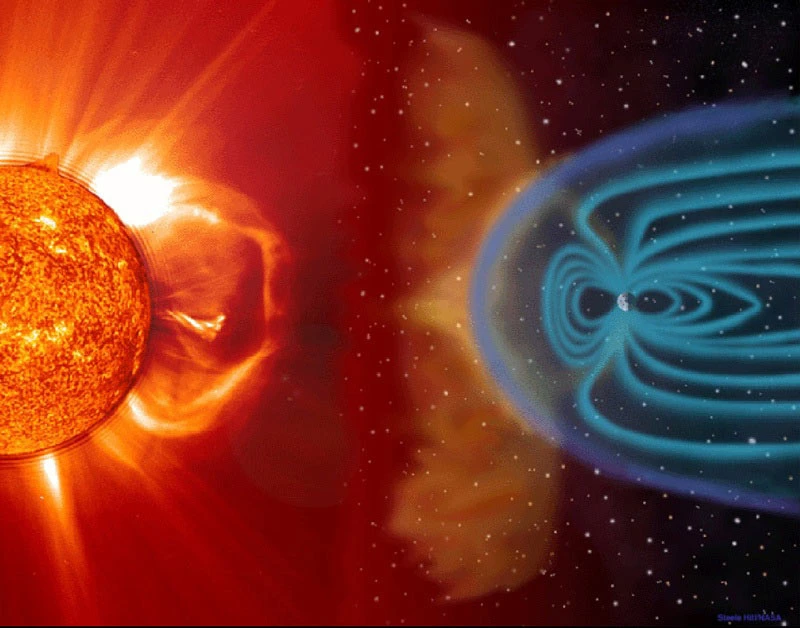
That same interaction between the solar wind and Earth's magnetic field is what produces the aurora. Check our UK aurora forecast to see if it's active tonight.
Earth's Oceans: Why Liquid Water Matters
Seventy-one per cent of Earth's surface is covered in liquid water, a larger proportion than any other known planet. The oceans contain 97% of all Earth's water. Of the remaining 3%, about 2% is locked in ice (glaciers, ice caps, permafrost), and just 1% is fresh liquid water accessible in lakes, rivers, and groundwater.
The average depth of the ocean is 3,688 metres. The deepest known point is the Challenger Deep in the Mariana Trench in the Pacific Ocean, at 10,935 metres below sea level, deep enough to submerge Mount Everest with over a mile to spare.
The oceans play a critical role in regulating Earth's climate. Water has a high specific heat capacity, meaning it absorbs and stores large amounts of solar energy without changing temperature dramatically. The oceans act as a global thermal buffer, absorbing heat in summer, releasing it in winter, which is why coastal climates are generally milder than continental interiors.
Liquid water is also central to virtually every biological process on Earth. It's the solvent in which chemistry happens inside cells, the medium through which nutrients are transported, and the environment in which life almost certainly first evolved. Water is common in the universe, but liquid water on a planetary surface requires a very specific combination of temperature, pressure, and atmospheric conditions, which is part of why Earth is considered so unusual.
Why Is Earth the Only Known Planet With Life?
Several factors work together to make Earth habitable, and removing any one of them would likely end the conditions for complex life:
- Distance from the Sun: Earth sits at 1 AU: close enough for liquid water at the surface, far enough that the greenhouse effect doesn't run away like it did on Venus. Mars is outside the inner edge of the habitable zone for complex surface life; Venus is inside it.
- Right mass: Earth is large enough for its gravity to hold a dense atmosphere, but not so large that it accumulated a hydrogen-helium envelope like Jupiter and Saturn. A smaller Earth might have lost its atmosphere to the solar wind; a larger one might have become a mini-Neptune.
- Magnetic field: Generated by the liquid outer core, Earth's magnetic field deflects the solar wind. Without it, the upper atmosphere would be slowly stripped away, exactly what happened to Mars once its core cooled and its magnetic field faded.
- Plate tectonics: Earth's crust is broken into moving plates that constantly recycle material between the surface and the mantle. This process regulates carbon dioxide levels over geological timescales through the carbon-silicate cycle, acting as a thermostat that has kept Earth's temperature within habitable bounds for billions of years.
- Liquid water: The most fundamental requirement for life as we know it, and Earth has it in abundance, in the right state, held there by the combination of all the above.
- Oxygen atmosphere: The current 21% oxygen concentration didn't exist for the first half of Earth's history. It was produced by photosynthetic life over billions of years. Complex animal life depends on it.
None of these factors is unique to Earth individually: Mars has a rocky surface, Venus has the right mass, some moons of Jupiter have liquid water under their ice. What's unusual about Earth is having all of them at once, in the right combination, for billions of years continuously.
Earth sits in the Sun's habitable zone: the range of distances where liquid water can exist on a planet's surface. But being in the habitable zone is necessary, not sufficient. Mars is technically in (or near) the habitable zone but has no magnetic field, almost no atmosphere, and no liquid water on the surface. Earth's combination of factors is what makes the difference.
Earth's Moon: More Important Than You'd Think
Earth has one natural satellite, the Moon, orbiting at an average distance of 384,400 km. The Moon is large relative to Earth: it's about 27% of Earth's diameter, which makes it unusually big compared to the moons of other rocky planets. Mars's moons (Phobos and Deimos) are tiny, irregularly shaped captured asteroids.
The Moon's size and gravitational influence have significant effects on Earth. The most obvious is ocean tides: the Moon's gravity pulls on Earth's oceans, creating the tidal bulges that cause twice-daily tides at most coastlines. Tidal friction has also gradually slowed Earth's rotation over billions of years (Earth's days were shorter in the ancient past) and pushed the Moon slowly further away.
Less obviously, the Moon helps stabilise Earth's axial tilt. Earth currently tilts at about 23.5° relative to its orbital plane, the source of our seasons, and of the twice-yearly equinox. Without the Moon's gravitational stabilisation, Earth's axial tilt could vary chaotically between near-zero and over 85° over millions of years, causing climate swings far more extreme than anything in Earth's recorded history. This stability may have been important for the long-term evolution of complex life.
Every so often the Moon lines up precisely between Earth and the Sun, and its shadow sweeps across our surface as a solar eclipse. The next one visible from the UK is the 2027 solar eclipse from the UK, though it's a shallow partial one, nothing like the deep eclipse of August 2026.
Earth's Moon plays a vital role in stabilising our planet's axial tilt, driving ocean tides, and influencing life on Earth. It's also the next destination for human explorers, with NASA and China both racing to land crews at the lunar south pole before 2030.
Explore The Moon: interactive map, craters, south pole guide →
Read: Understanding Moon Phases: A Complete Guide →
Equipment for exploring the night sky from Earth
Kit we've tested and reviewed in full
You're already on Earth: no spacecraft required. But a pair of binoculars or a small telescope transforms what you can see from it. The ISS passes overhead every couple of nights, visible to the naked eye and unmistakable through binoculars. The rest of the solar system is waiting above you every clear night.
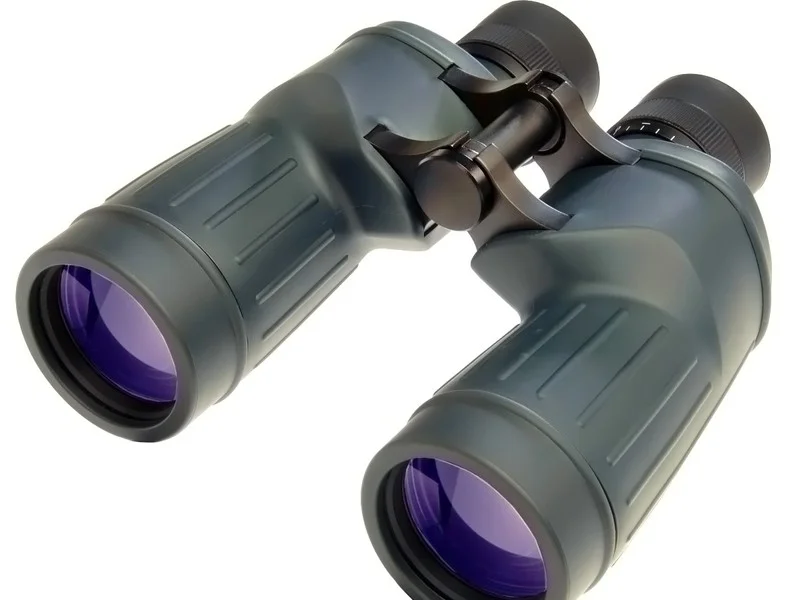
Binoculars are the most versatile astronomy tool. Perfect for ISS passes (on a good night you can trace the T-shape of the solar panels), watching the Moon's craters, tracking Venus and Jupiter across the sky, and aurora watching. Compact enough to grab in 30 seconds when there's something to see.
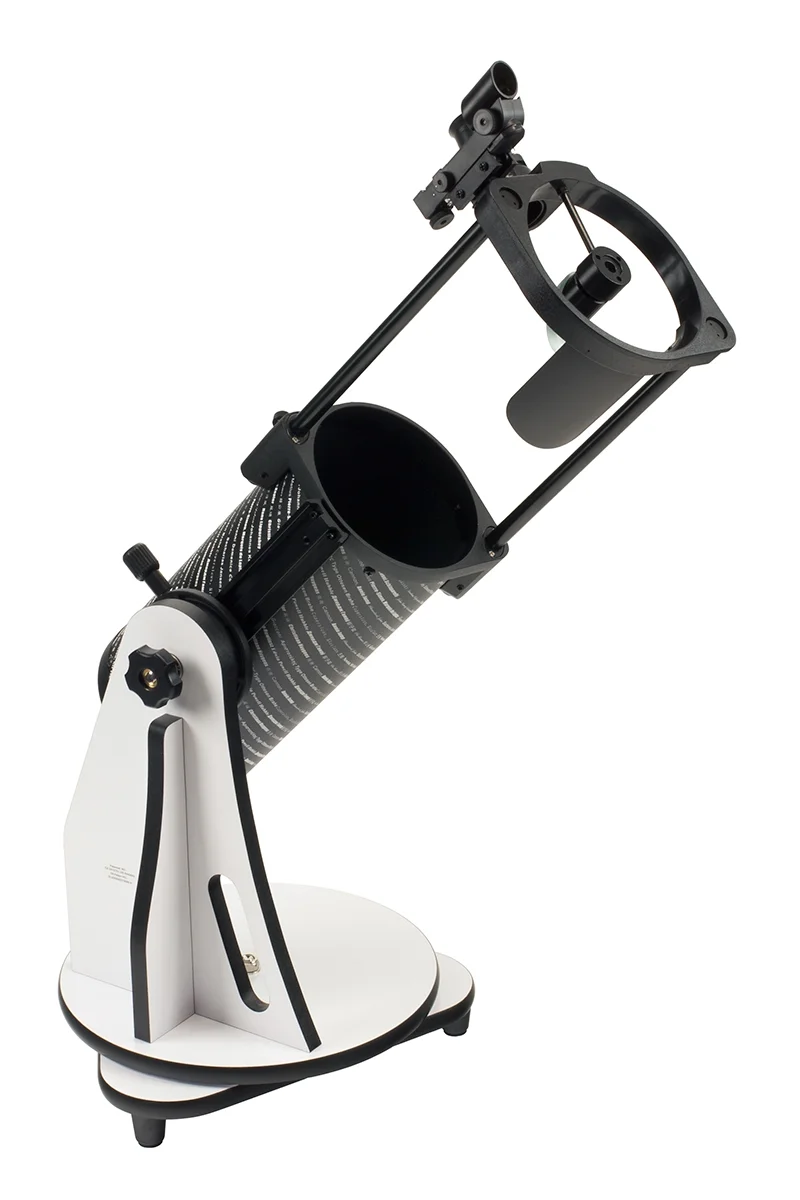
A tabletop Dobsonian with no fiddly mount, just point and look. Saturn's rings, Jupiter's cloud belts, Venus's crescent phase, the Moon's craters in extraordinary detail, all visible from a UK back garden on a clear night. The Heritage 130P is the telescope most beginners wish they'd bought first rather than second.
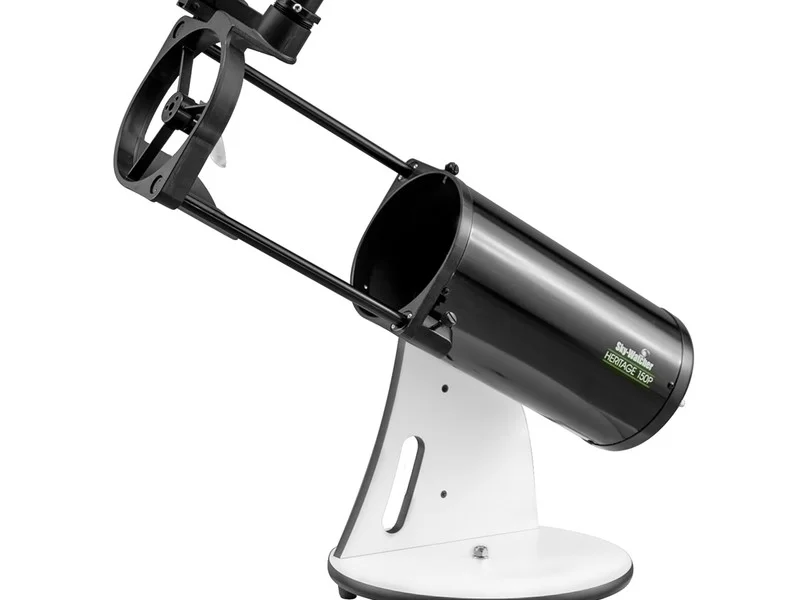
50mm more aperture makes a real difference across every target. Saturn's Cassini Division becomes easy. Jupiter's Great Red Spot is unmistakable. The Moon's craters have genuine three-dimensional depth. If you're getting serious about what Earth's night sky has to offer, the 150P is where most people end up wanting to be.
Affiliate links: you pay the same price, we earn a small commission that helps keep WatchTheStars free.