Key takeaways
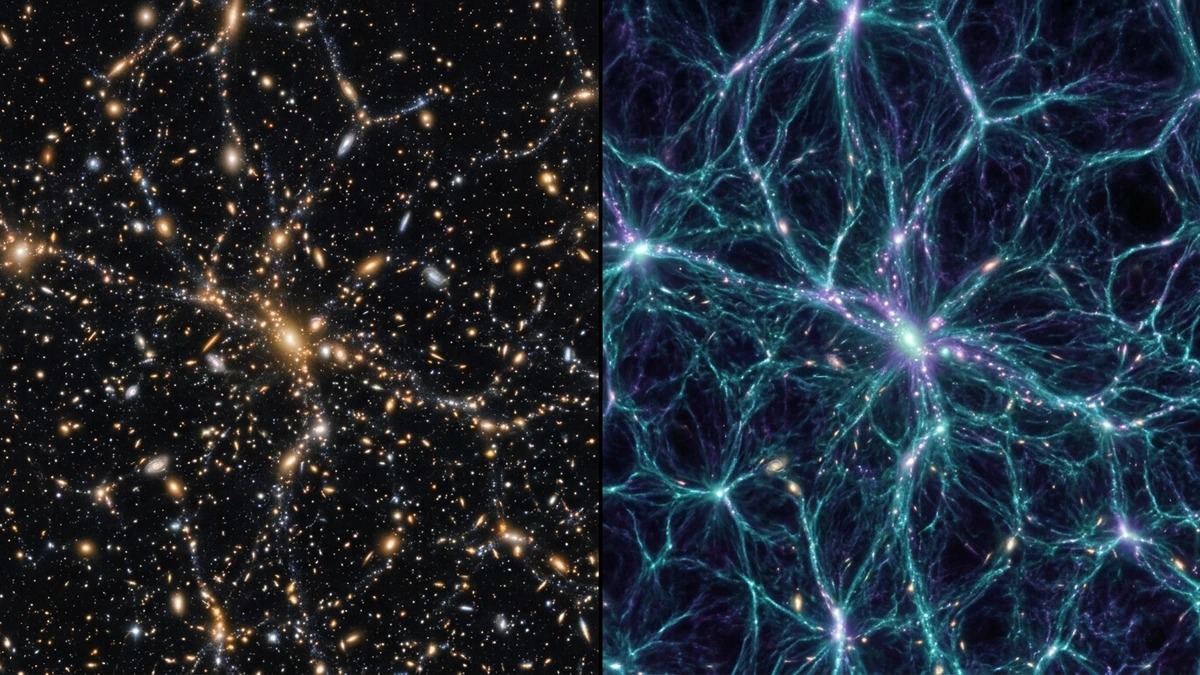
- The cosmic web is the large-scale skeleton of the universe: a network of dark matter filaments connecting all galaxies
- James Webb's COSMOS-Web survey analysed over 164,000 galaxies to build the most detailed map ever made
- The new map traces the cosmic web back to when the universe was just one billion years old
- This week's new moon means dark skies, perfect for deep-sky observing while the news is fresh
- The full dataset has been released publicly, marking a milestone for open science
Jump to section 6 sections
What Is the Cosmic Web?
Imagine you could zoom out far enough to see the entire universe at once. Not just our galaxy, not just our local group of galaxies, but everything, billions of galaxies spread across 93 billion light-years of space. What would it look like?
Not a random scatter. Something far stranger: a vast web.
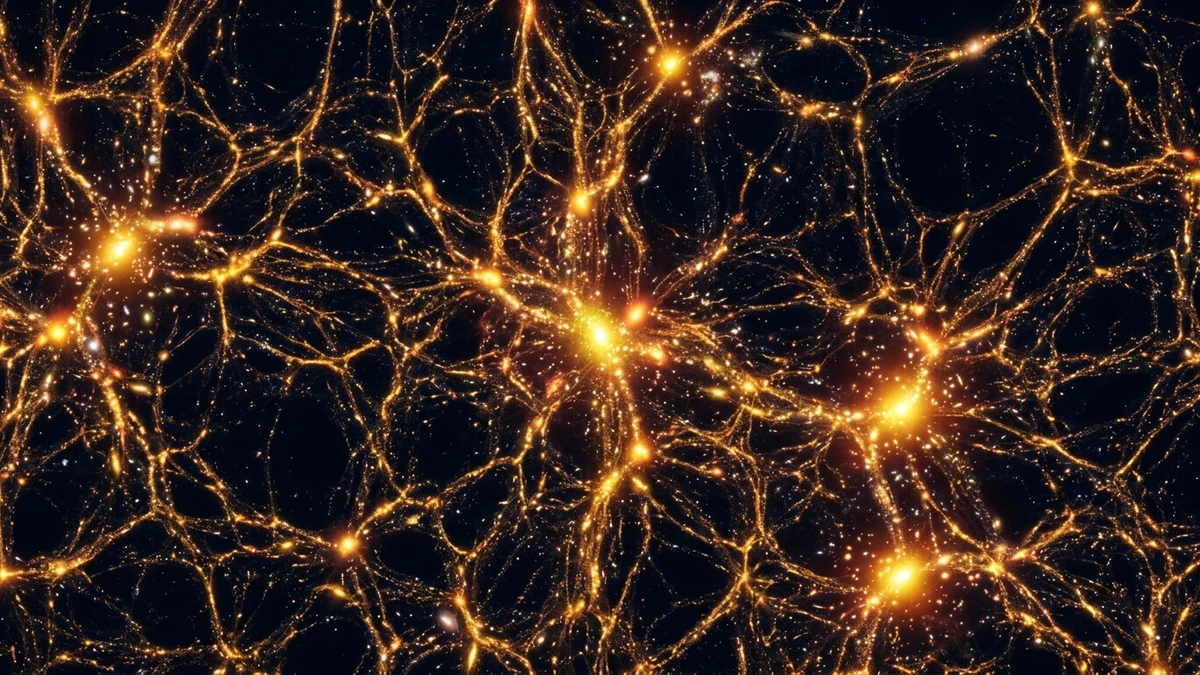
Galaxies and galaxy clusters don't float freely in space. They're connected by immense filaments, threads of dark matter and gas hundreds of millions of light-years long, that form a sprawling, three-dimensional skeleton. Between those filaments sit enormous voids: regions of near-total emptiness so large that the Milky Way, dropped into one, wouldn't even be noticeable.
This is the cosmic web: the large-scale structure of the universe itself. It is the biggest thing that exists.
Astronomers have known it was there for decades, but mapping it in detail, especially tracing it back to the early universe, has always been beyond reach. Until now.
This week, a team using NASA's James Webb Space Telescope published the most detailed map of the cosmic web ever produced. It's the clearest picture yet of the skeleton that underpins everything.
What James Webb Actually Did
The new map comes from COSMOS-Web, the largest survey James Webb has conducted so far. Astronomers analysed more than 164,000 galaxies, each one a data point, to trace how they cluster, cluster together, and leave voids between them.
Previous maps of the cosmic web existed, but they were blurry. Ground-based telescopes couldn't see faint enough or far enough. Webb changed that in two key ways.
First, it detects galaxies that were simply invisible before, far fainter objects, far more of them per patch of sky. Second, it measures the distances to those galaxies with much greater precision. You can't map a three-dimensional structure accurately if you're not sure how far away each point is. Webb's infrared capabilities give astronomers sharp distance measurements even for the most distant, ancient galaxies.
The result is a map that doesn't just show us the cosmic web today, it shows us how it evolved over 13.7 billion years of cosmic history, from the universe's first billion years right up to the present.
"The jump in depth and resolution is truly significant," said one of the researchers involved. "We can now see the cosmic web at a time when the universe was only a few hundred million years old, an era that was essentially out of reach before JWST."
In keeping with COSMOS's tradition of open science, the full dataset is being made publicly available.
What Dark Matter Has to Do With It
Here's the puzzling part: most of the cosmic web isn't made of anything we can see.
The filaments connecting galaxies are built primarily from dark matter: a substance that doesn't emit, absorb, or reflect light, and which makes up roughly 27% of the universe. We've never directly detected a dark matter particle. We only know it exists because of its gravitational effects on normal matter.
The cosmic web is, in effect, a map of dark matter's influence. Normal matter, the stuff that makes up stars, planets, and everything you've ever touched, tends to flow toward the densest concentrations of dark matter. Galaxies form and cluster where dark matter filaments intersect and thicken. Voids mark the places dark matter avoids.
So when astronomers map the cosmic web using galaxies as their data points, they're really tracing the invisible skeleton underneath. The galaxies are flags stuck into a dark matter terrain we can't photograph directly.
This is part of why the new Webb map is so valuable. The more precisely we can see how galaxies distribute themselves across the web, the more we learn about the nature of dark matter itself.
You Can't See the Cosmic Web, But You Can See Its Nearest Knot
Kit we've reviewed in full
No amateur setup will ever resolve dark matter filaments, but the Andromeda Galaxy, a fellow node in our small corner of the web, is genuinely visible from a dark UK sky with the right gear.

Enough light-gathering power to turn Andromeda from a faint naked-eye smudge into a proper glowing oval.

Big enough apertures to start picking out Andromeda's brighter satellite galaxies alongside it.
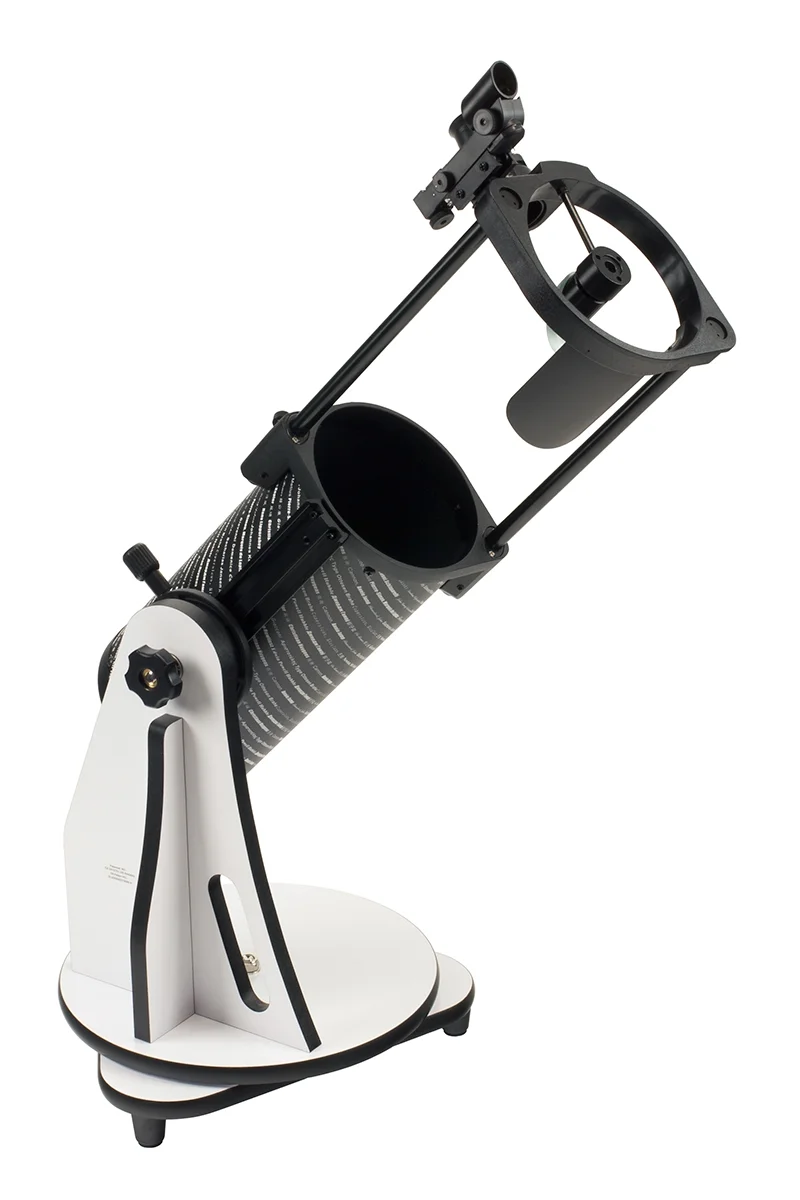
Enough aperture to reveal Andromeda's bright core and dust lanes properly under a dark, moonless sky.
Affiliate links: you pay the same price, we earn a small commission that helps keep WatchTheStars free.
How Far Back Does the Map Go?
The new COSMOS-Web map traces the cosmic web back to when the universe was just one billion years old, roughly 13 billion years ago. The universe is currently about 13.8 billion years old, so this reaches almost to the very beginning.
At that early stage, the web was less developed than it is today. Filaments were thinner, clusters were smaller, voids were less pronounced. What Webb allows us to see is the web in its infancy, and then trace its growth across billions of years into the elaborate structure we see surrounding us now.
This evolutionary view is extremely valuable for cosmologists. By comparing the web's appearance at different epochs, different moments in cosmic history, they can test their models of how the universe grows and changes, and probe the role of dark matter and dark energy in driving that growth.
Previous surveys (like the Hubble-era COSMOS survey) had glimpsed the cosmic web's early stages, but with far fewer galaxies and far less precision. Webb's version is, in the researchers' own words, a step change.
Why This Discovery Matters
It's worth asking: why should you care about a structure so vast it makes our entire galaxy feel like a grain of sand?
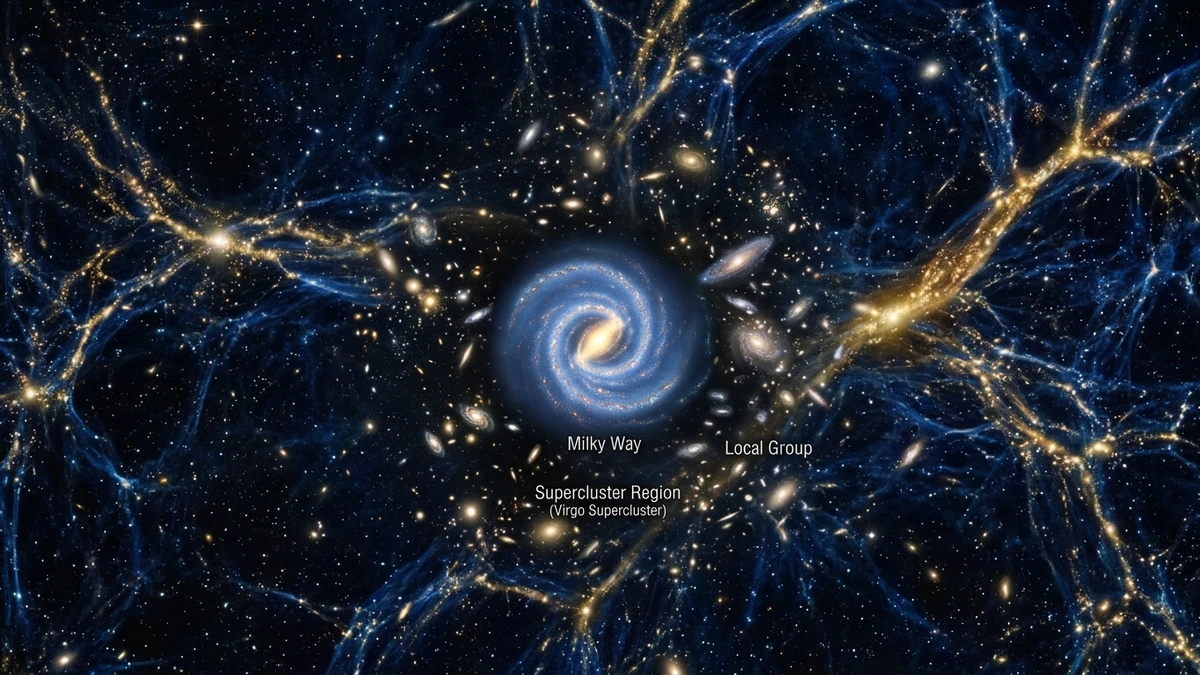
One answer is that the cosmic web explains where we live. The Milky Way sits in a particular corner of the cosmic web, near a filament, in a region connected to the Virgo Supercluster. The web shaped where our galaxy formed and how it evolved. In a very real sense, you exist where you do because of the cosmic web.
Another answer is that the web is our best large-scale probe of dark matter and dark energy: two of the deepest unsolved problems in physics. The way the web grows, the way its filaments thicken and its voids expand, encodes information about forces we don't yet fully understand.
And a third answer: the map is simply one of the most extraordinary objects in science. A portrait of the entire universe's skeleton, traced across 13.7 billion years. There's nothing like it.
What You Can See From the UK Tonight
There's a neat coincidence to this week's announcement: tonight (16 May) is a new moon. The sky is as dark as it gets.
You won't be able to see the cosmic web. No telescope available to the public comes close to that. But new moon nights are ideal for galaxies. With binoculars, the Andromeda Galaxy (M31) is visible to the naked eye on a clear night from a dark site, a smudge of light representing 1 trillion stars, roughly 2.5 million light-years away.
That galaxy, like ours, is part of the Local Group, itself a small knot in the larger cosmic web. Tonight's darkness is as good as it gets for exploring the neighbourhood.
Check out our UK stargazing guide for May for what else is up.
Sources:
- James Webb Space Telescope maps the cosmic web in unprecedented detail · Space.com
- James Webb telescope reveals the clearest map ever of the Universe's cosmic web · ScienceDaily
- Astronomers produce most detailed map of the cosmic web · UC Riverside
- JWST maps cosmic web in record detail back to universe's first billion years · Phys.org
Frequently Asked Questions
Equipment guides
Related topics
Ian ClaytonAmateur astronomer and founder of WatchTheStars.co.uk, dedicated to helping others explore the wonders of our universe. Full profile →